
Bachelor Party – A Day Between Everyday Life and Wedding

Bachelor/Bachelorette Party – Ideas, Schedule, Preparation, Origin
In groups, there is often a distinct need before the wedding: to be together one last time before daily life rearranges itself. The bachelor/bachelorette party acts like a brief parenthesis. Not as a show. Rather as a shared evening that remembers who is there. Different circles of friends meet. Some are loud, many are quiet. The atmosphere usually develops between the planned activities.
Where the Term Comes From
The term "Junggesellenabschied" literally describes the farewell to bachelorhood. In German-speaking usage, it refers to the conscious gathering before marriage. Formerly often in a manageable circle, not infrequently in a pub or at friends' houses. Today it is understood more freely. The core remains: a shared marking of "before".
Who Gets Invited
- People who are truly present in everyday life: female friends, male friends, siblings, close female or male colleagues
- Friendships from different periods, if they get along
- Not necessarily all acquaintances: a smaller group often works better
- One person as an anchor in the group, who smooths over tensions without talking about it
It's noticeable: groups become easier when it's clear who is there and for what reason. This relieves pressure. Then there's room for encounters.
What the Groom or Bride Should Consider
- State preferences and boundaries beforehand, briefly and without explanation
- Keep wishes small: a common thread is enough
- Embrace the pace, don't feel the need to lead
- Designate a trusted person who can mediate if in doubt
The center of attention is visible, even without announcement. This works best when it's not emphasized.
Preparation and Organization
In practice, a simple division helps. One person keeps the overview. Two or three take on individual tasks. Budget, times, routes, reservations. The clearer this is beforehand, the more relaxed it will be later. A plan with breathing room feels more coherent than a tight schedule.
- Clarify early: date, location, rough budget, who is staying overnight
- Clarify late: exact times, meeting points, dress code only if desired
- A kitty: an amount per person, managed transparently
- Contact list: names, numbers, emergency contact, allergies if relevant
Schedule – a Pattern That Often Works
- Arrival: a shared start, brief, without a warm-up game
- Activity: something that happens together and allows for conversation
- Break: coffee, walk, short time to retreat
- Food: reserved table, quiet setting, clear contact person
- Evening: leave it open whether it continues or winds down
Many evenings remain memorable because nothing was forced. A sentence at the table. A brief glance that says: good that you are here.
Ideas for Men
- Joint cooking (cooking studio or holiday apartment) – assign roles, no competition
- City tour with a local theme (beer culture, architecture, music venues) – good for mixed groups
- Sports without performance pressure (canoeing, climbing with a guide, mini-golf, padel) – followed by time at the table
- Escape Room or puzzle tour – useful if the group enjoys solving puzzles together
- Day trip with a destination (lake, mountains, port city) – one route, one place, one meal
Ideas for Women
- Workshop (ceramics, flowers, jewelry, photography) – calm, tangible, good for conversation
- Wellness or sauna day with fixed breaks – if retreat is part of the group's preference
- Picnic or long table in the countryside – with prepared snacks, no forced program
- Culinary tour (market, tasting, small local eateries) – small stages, lots of exchange
- Weekend in accommodation with a kitchen – eat together, keep games short
Ideas for Mixed Groups
- Joint cooking evening with a playlist and clear dining time
- Boat tour or walking route with two stops
- Cultural program (small concert, theater, special cinema screening) followed by dinner
- Game round at the table, maximum 45 minutes, then free time
Games – short, personal, voluntary
Games work when they celebrate the person, not put them on display. Short rounds are enough. Whoever opts out, opts out. This is not commented on.
- "Who Knows It?": 10 questions about the bride or groom, answers on cards, points don't matter
- "Timeline": Each person brings a small memory (a photo, a sentence) and arranges them in order
- "Letter to Tomorrow": Each person writes two lines, collected in an envelope for after the wedding
- "Good Reasons": Each person states one reason why they appreciate the person. Once around, done
- "Mini-Tasks": three tasks in the location that don't embarrass anyone (e.g., a group photo at a well-known spot)
Tips That Often Prove Useful
- Plan for contingencies: time buffer and a Plan B for weather or delays
- Reserve food early: a table makes the evening calmer
- Clarify transport: shared taxi, public transport, carpools, no loose ends
- Keep budget visible: briefly share cost list before booking
- Allow for quiet moments: don't fill every minute
TESTIMONIALS
"It was a day without pressure. In the end, there was this feeling: now the wedding can come."— Friend of the Bride
"The plan was simple. That's exactly why it worked. No one had to pretend anything."— Best Man
"The best part was the meal at the big table. The conversations flowed naturally."— Close Friend
Conclusion
A successful bachelor/bachelorette party rarely feels like a scheduled event. It feels like a small collection of moments. Voices that fit together. Hands briefly resting on a shoulder. An evening that doesn't have to be perfect to be memorable.
Related Articles
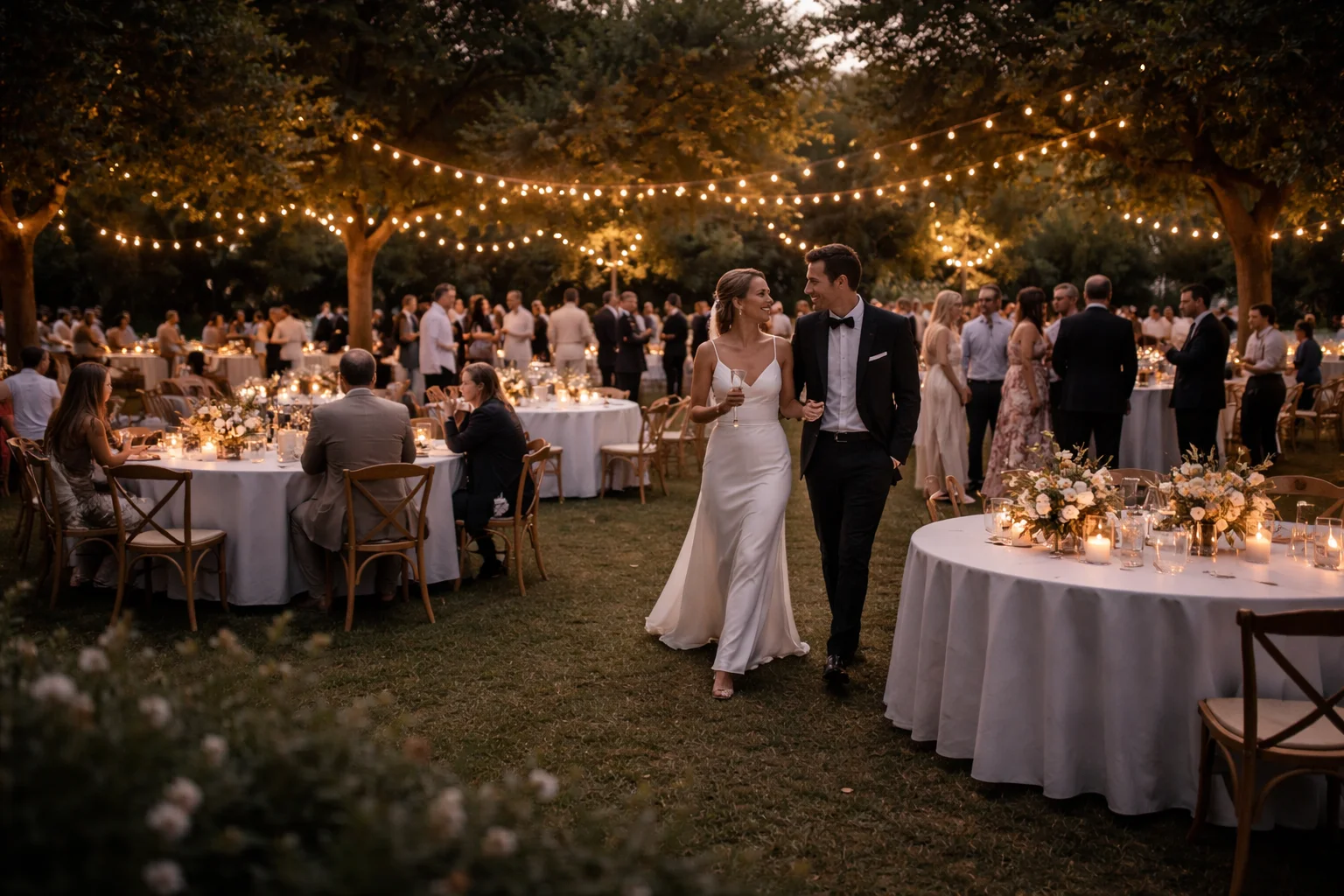
Second Dress for the Wedding Reception
At many weddings the clothing does not stay the same from start to finish. After the ceremony and formal photographs, a quiet shift sometimes happens. The bride disappears for a short time and later returns wearing something different. Guests notice it in small ways. A lighter fabric. Shorter hem. Movement that feels easier during the evening.

The engagement ring as a sign of a decision
The engagement ring stands on the edge of a big moment and remains present for a long time afterwards. It is part of everyday life, not just a memory of a proposal. This text describes what makes an engagement ring, how it is selected, and why decisions regarding shape, material, ring size, and wearing style mostly arise from observation. It is about common variants, the handling of diamonds and alternatives, as well as developments that have quietly established themselves. In the foreground are experiences, voices from practice, and the question of how a ring fits a person without defining them.

Conversations Before Marriage – Life Questions That Clarify the Relationship
A marriage is not just about feelings, but also expectations, imprints, and ideas about everyday life. This text compiles central life questions that couples should clarify with each other before saying 'I do': regarding money, family, children, conflicts, division of tasks, and personal values. Grown from observations, objectively considered, and close to lived everyday life. Conversations that make differences visible – and thereby strengthen connection.
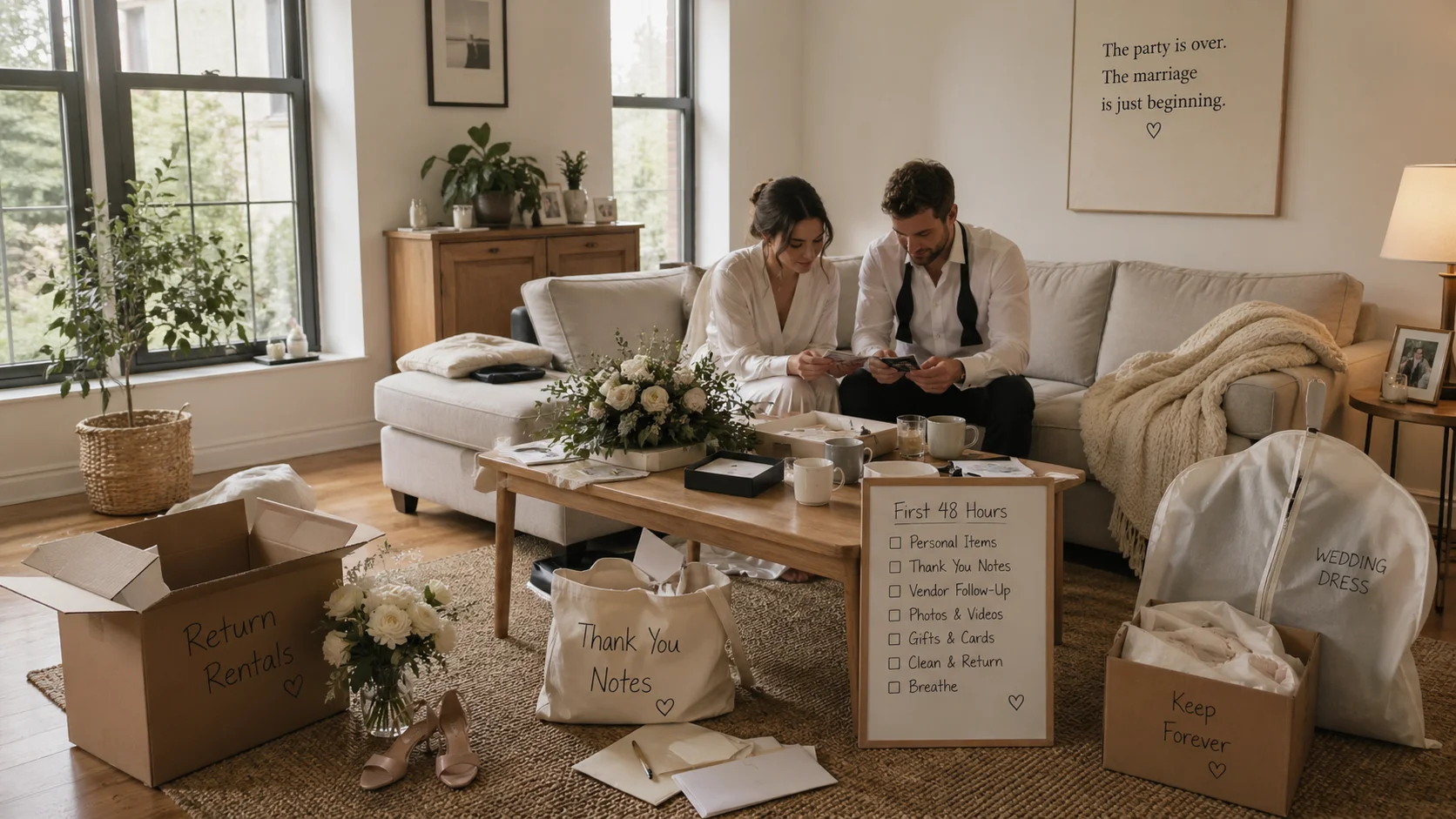
After-the-Wedding Checklist: What Needs Attention in the First 48 Hours
The first 48 hours after a wedding are quiet, practical, and easy to underestimate. This article looks at personal items, gifts, clothing, vendor closure, early photos, and the small tasks that help the after feel lighter instead of turning into scattered errands.
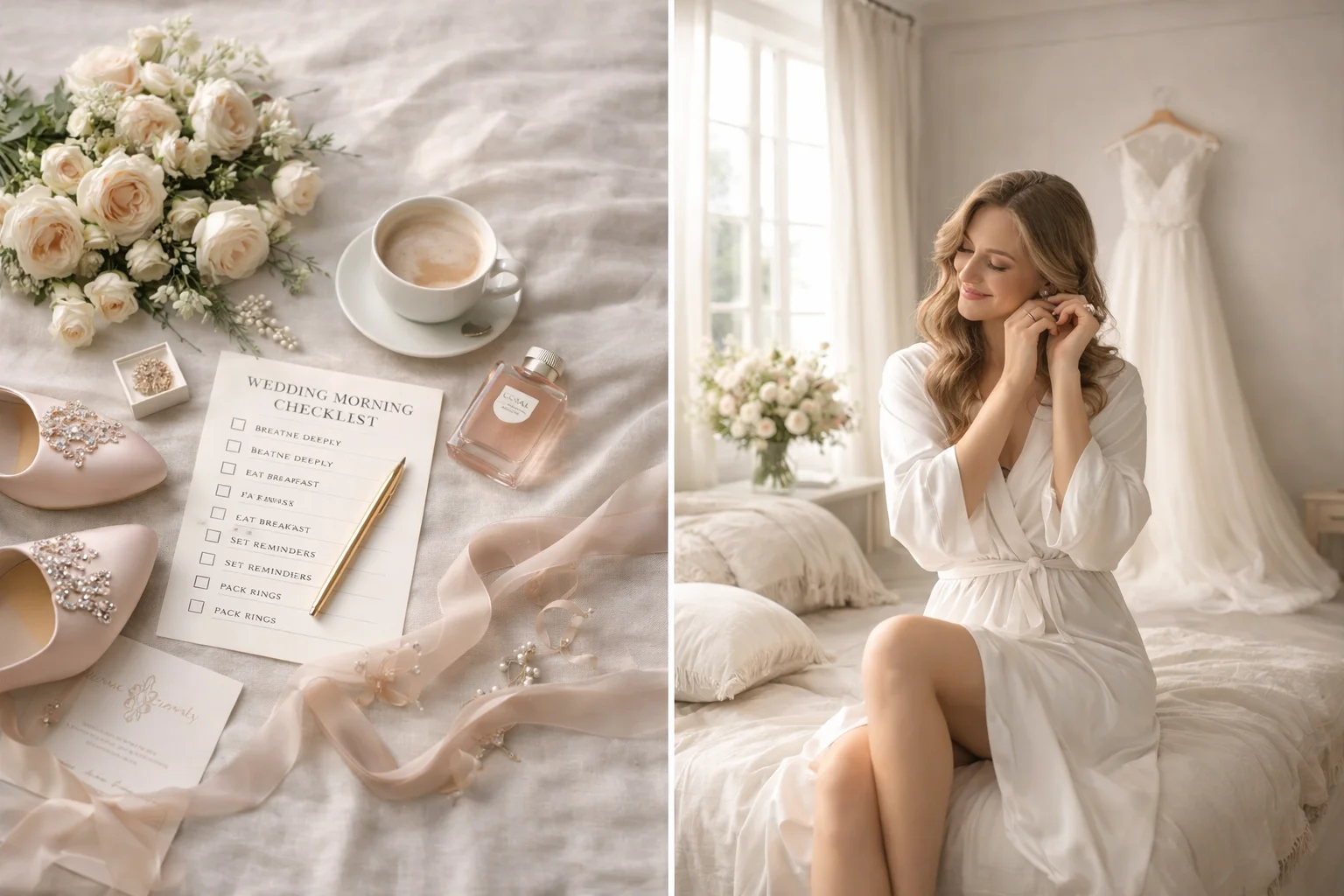
Wedding Morning Checklist: What Helps the First Hours Stay Calm
A wedding morning checklist helps protect the first hours of the day from avoidable stress. It keeps essential items, timing, room atmosphere, and communication clear, while leaving enough space for the morning to still feel calm and human.
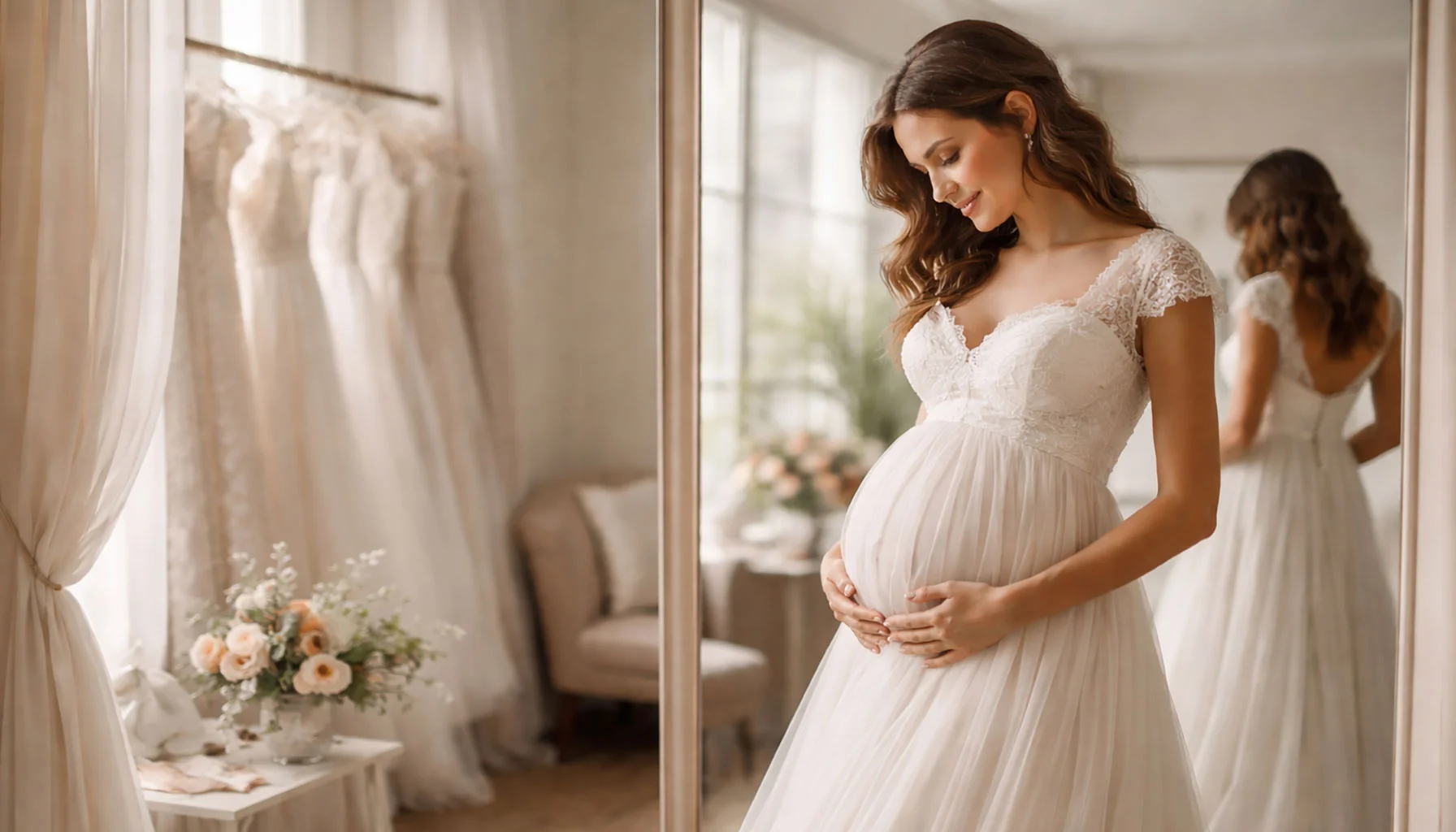
The Wedding Dress During Pregnancy
A wedding dress chosen during pregnancy follows different rules, even when no one names them. The body leads. The day sets limits. Decisions are shaped by comfort, timing, and how the dress behaves over hours rather than moments. This text looks at maternity wedding dresses as they appear in fittings, ceremonies, and recollections afterward. Not as ideals, but as garments that had to work. The focus stays on what proved suitable, calm, and lasting, without dramatizing the process or framing it as exception.

Engagement Ring and Wedding Ring: Two Moments, One Commitment
Engagement ring and wedding ring mark different stages of the same decision. One appears at the beginning, often tied to a single moment. The other enters daily life and stays there. Their forms, materials, and proportions follow different needs, yet they are meant to exist together. Understanding how they differ helps explain why both matter, and why their combination often says more than either ring alone.

The Groom’s Suit Guide: Planning, Fittings, Trends & Timeline
A wedding suit does not come from a single decision, but from alignment over time. Cut, fabric, and fit develop in relation to occasion, movement, and personality. When these elements settle into place, the suit supports the day quietly and allows the groom to remain fully present.
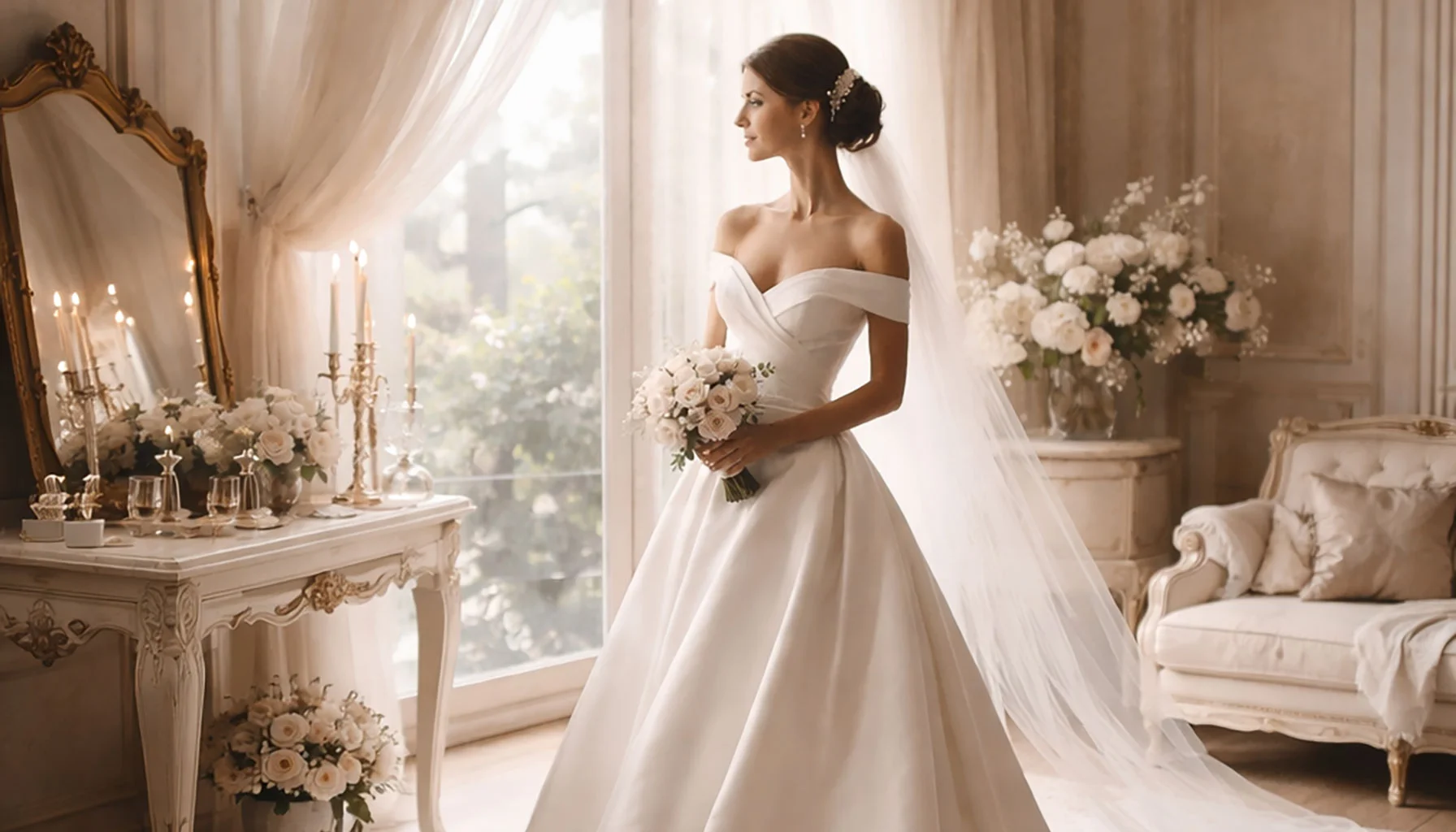
Beyond the Wedding Dress: What Truly Defines the Bridal Look and Experience
The bridal look is shaped long before the wedding day itself. It is created through thoughtful preparation, careful attention to detail, and a sense of inner calm that carries the bride through every moment. When styling, timing, and presence align naturally, beauty feels effortless rather than staged. Hair, makeup, accessories, and posture work together to support the bride rather than overshadow her. Yet what truly defines her appearance is how grounded and supported she feels. A bride who trusts her choices and releases the need for perfection radiates authenticity and quiet confidence. In this balance between outer expression and inner state, the bridal look becomes more than an image. It becomes an atmosphere — one that is felt, remembered, and carried far beyond the day itself.

The Wedding Ring – A Quiet Companion in Everyday Life
A wedding ring is not chosen for a single moment, but for daily wear. Shape, material, and comfort determine how naturally it becomes part of life. When chosen with care, it supports routine and movement without asking for attention.
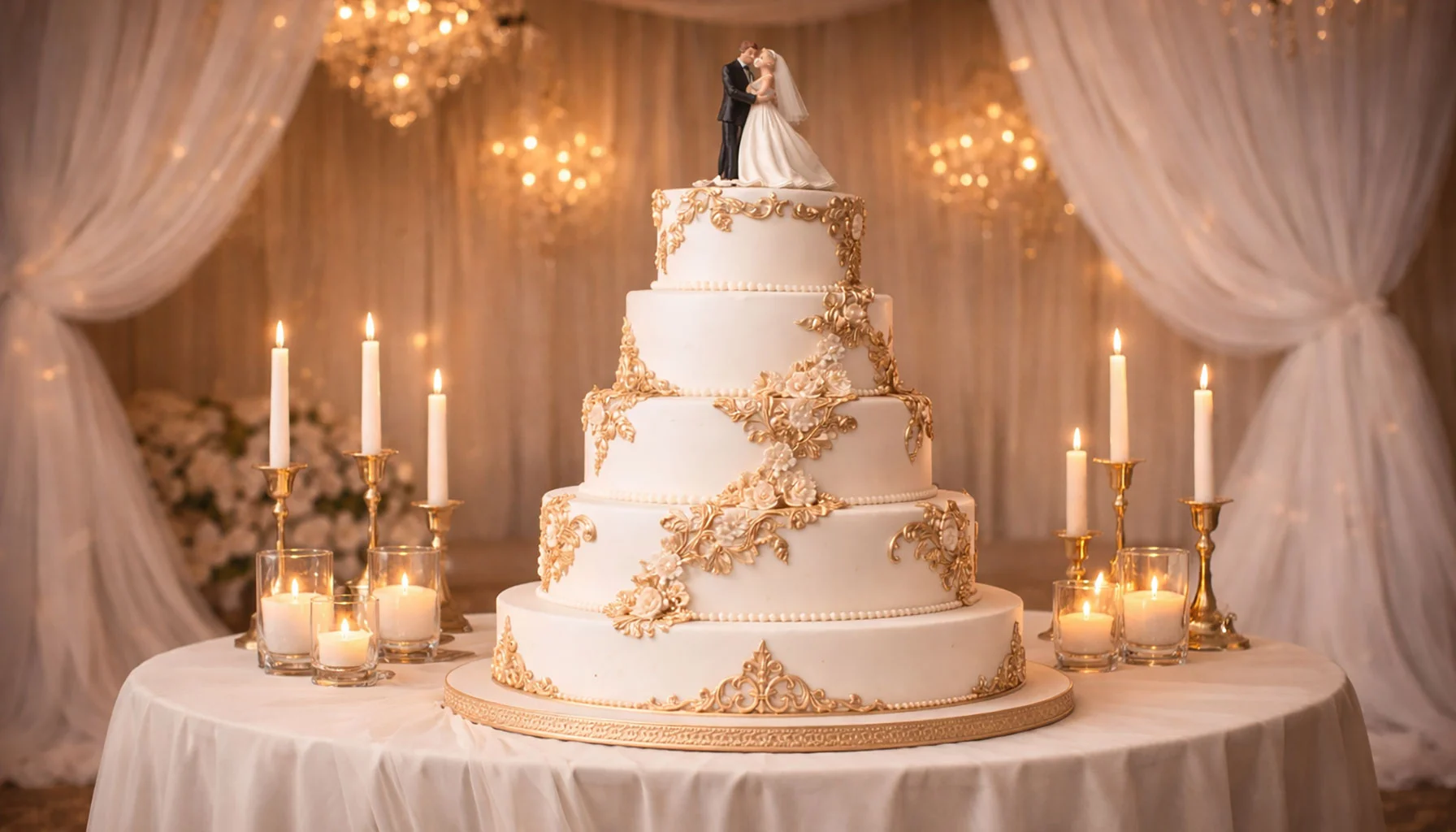
The Wedding Cake – Where Romance, Craftsmanship and Love Meet
The wedding cake is rarely the loudest element of a celebration, yet it often becomes one of the most shared moments. It appears later in the day, when guests have settled, conversations have softened, and attention can gather without effort. More than a dessert, it marks a pause in the rhythm of the wedding. Its presence is quiet, its impact collective. When design, taste, and timing align, the cake becomes part of the experience rather than a separate program point.

Groom’s Morning Checklist: What Keeps the First Hours Clear and Unforced
The groom’s morning often looks simple from the outside, but it depends on small decisions made early. This article looks at clothing, food, rings, timing, communication, photography, transport, and the quiet rituals that keep the first hours clear without making them feel staged.