
DJ or Live Band: What Actually Fills a Wedding Dance Floor
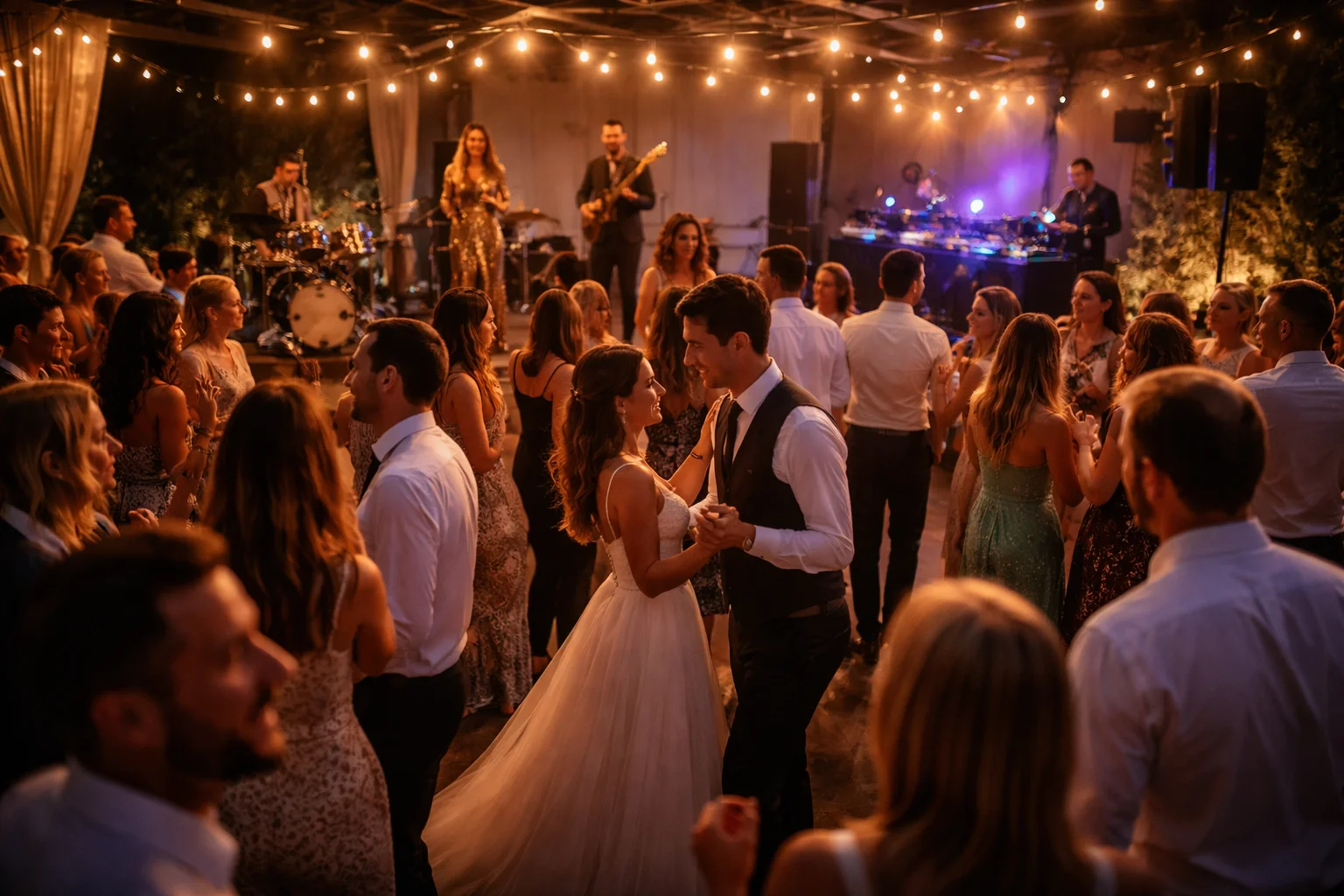
DJ or Live Band: What Actually Fills a Wedding Dance Floor
Couples often frame the decision as taste. A DJ feels flexible. A live band feels atmospheric. But weddings do not respond to music as an abstract preference. They respond to rhythm, timing, confidence, and how quickly guests understand what kind of night they are in. That is why the question is not only whether you prefer a DJ or a band. It is how you want the room to move.
This is where the category of DJ versus band meets something quieter. Great wedding music is not only about what is played. It is about the pause before the room commits. The few seconds before people step onto the dance floor, the hesitation before a chorus lands, the held breath between one part of the evening and the next. That is why this choice connects so naturally to the pause. The best music decisions understand timing before volume.
DJ vs Band The PauseDefinition
The choice between DJ and live band is a decision about control, pacing, and social energy. A DJ offers speed, range, and precise reading of the room. A band offers live presence, texture, and visible performance. Neither is automatically better. The better option is the one that fits the emotional tempo of the wedding.
Band or DJ for a Full Dance Floor
If the goal is a consistently full dance floor, a strong DJ usually has the advantage. The reason is simple. DJs can change direction within seconds, extend momentum without interruption, and bridge age groups more efficiently. A live band can create powerful peaks, but it is less agile when the room changes. For most mixed guest lists, adaptability wins.
What Guests Actually Want
Guests rarely want a concept. They want recognition. They want the pleasure of hearing something they know at the exact moment they are ready to move. They want confidence from whoever is leading the room. This matters more than genre purity. At weddings, people respond less to musical identity than to emotional timing.
Why Music Matters More Than Decoration
Decoration shapes the room once. Music reshapes it all night. It changes posture, conversation volume, movement, and memory. A beautiful room with weak musical pacing becomes static very quickly. A simpler room with exact musical control can feel charged for hours. That is why music often has more influence on the lived experience of a wedding than visual design does.
Which One Feels More High-End
A live band often looks more luxurious at first because performance is visible. People can see where the atmosphere comes from. But perceived quality does not hold if the pacing drops. A refined DJ with excellent sound, restraint, and timing can feel more elevated over the course of the evening because the experience stays intact. What feels premium is not the format alone. It is the control.
The One Decision That Changes Everything
The most important decision is not DJ or band. It is whether you want the music to perform for the guests or move with them. Once that is clear, the right option becomes easier to choose. If you want spectacle and live presence, the band leads. If you want responsiveness and sustained momentum, the DJ leads.
What to Decide First
Start with the social shape of the night. Is this a wedding where guests will dance hard across generations, or a wedding with shorter peaks and more conversation? Decide that before you compare artists. The clearer your answer, the less likely you are to choose based on image instead of function.
Conclusion
DJ versus live band is not really a battle of formats. It is a decision about timing, movement, and how a room crosses from watching into participating. The weddings that get this right understand something simple but often missed. The dance floor fills not when the music gets louder, but when the moment is read correctly.
Related Articles
Transportation Checklist: How Not to Lose Time Between Wedding Locations
Wedding transportation is rarely only about the drive. This article looks at pickup points, buffers, driver contacts, guest movement, accessibility, and the pause between locations that either keeps the day together or quietly costs time.
How Requests Move Through a Wedding Night
Music requests at weddings are rarely just about songs. They move through timing, confidence, mood, and the different logic of DJs and live bands, shaping the social texture of the night as much as the playlist itself.
Live Music or Playlist: Subtle Differences in How Guests Respond
The difference between live music and recorded tracks at weddings is often described in larger terms than it appears in the room. In practice, it shows up in smaller shifts. Where people look. When they stop talking for a second. Or don’t.
Free Ceremony Officiants: Presence, Voice, and the Shape of Attention
In a free ceremony, the officiant cannot lean on inherited authority or a structure everyone already recognizes. What carries the moment instead is subtler: presence, voice, timing, and the ability to hold attention without gripping it too tightly. This article looks at how officiants shape free ceremonies through the smallest visible forms of guidance.
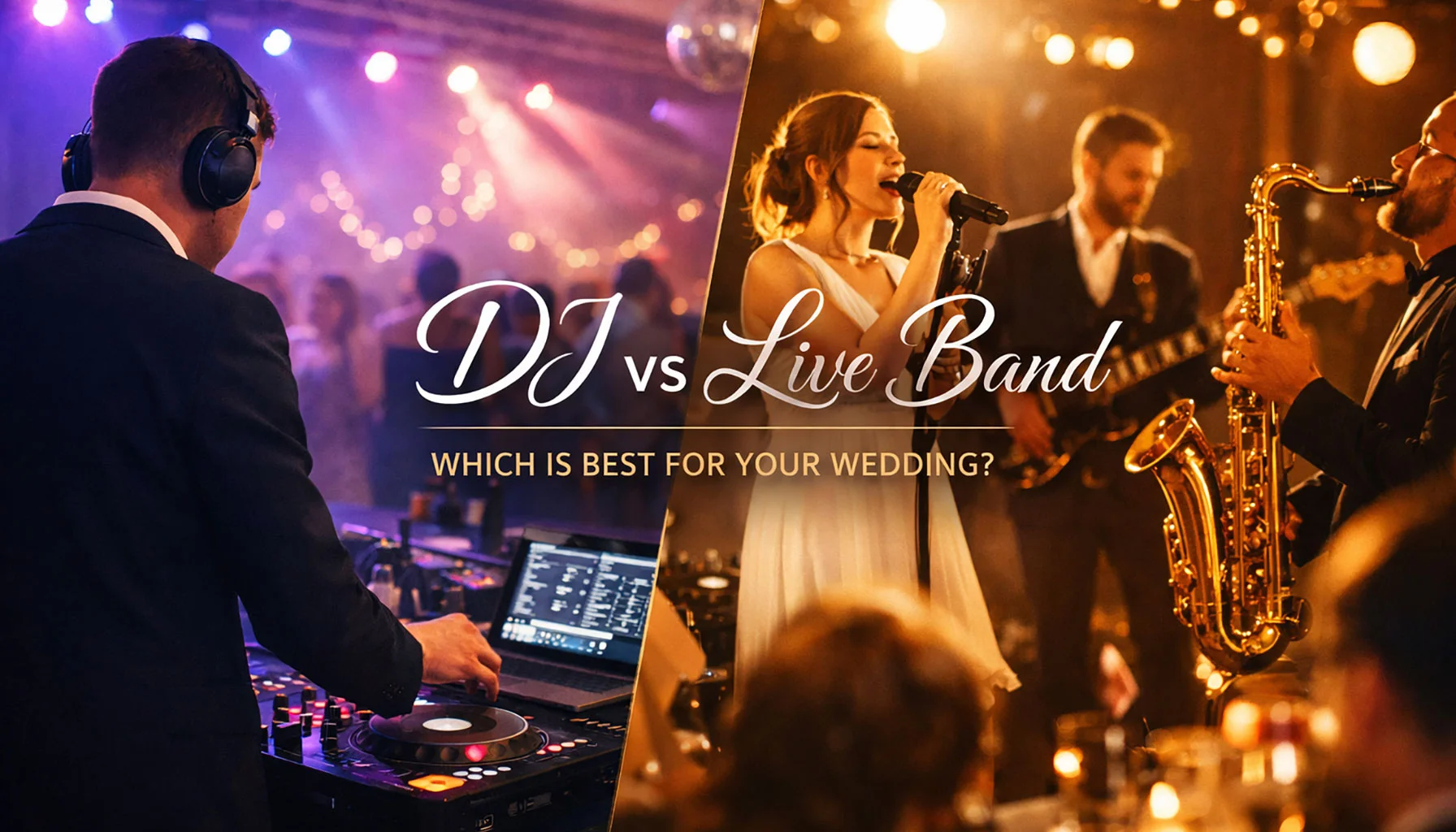
DJ, Live Band or Hybrid Concept: Choosing What Truly Fits
Music is one of the earliest wedding decisions and one of the least understood until the day begins to take real shape. The choice between a DJ, a live band, or a hybrid concept is rarely only about taste. It changes timing, movement, conversation, and how the evening is allowed to breathe.
What Guests Notice First in Wedding Decoration — and Why
Guests rarely notice wedding decoration in the order planners imagine. They register proportion, spacing, light, and the calm or tension of a room long before they name a flower or a fabric. This is why the visual intelligence of luxury cars offers an unexpectedly useful lens: both rely on line, restraint, material confidence, and the power of a well-held pause.
Ceremony Transition Checklist: What Should Be Ready Before Attention Has to Gather
Ceremony transitions often seem brief on paper, but they carry the difficult shift from movement into shared attention. This article looks at what needs to be ready before that moment arrives, from seating and sound to cues, stillness, and the quieter emotional readiness of the room.
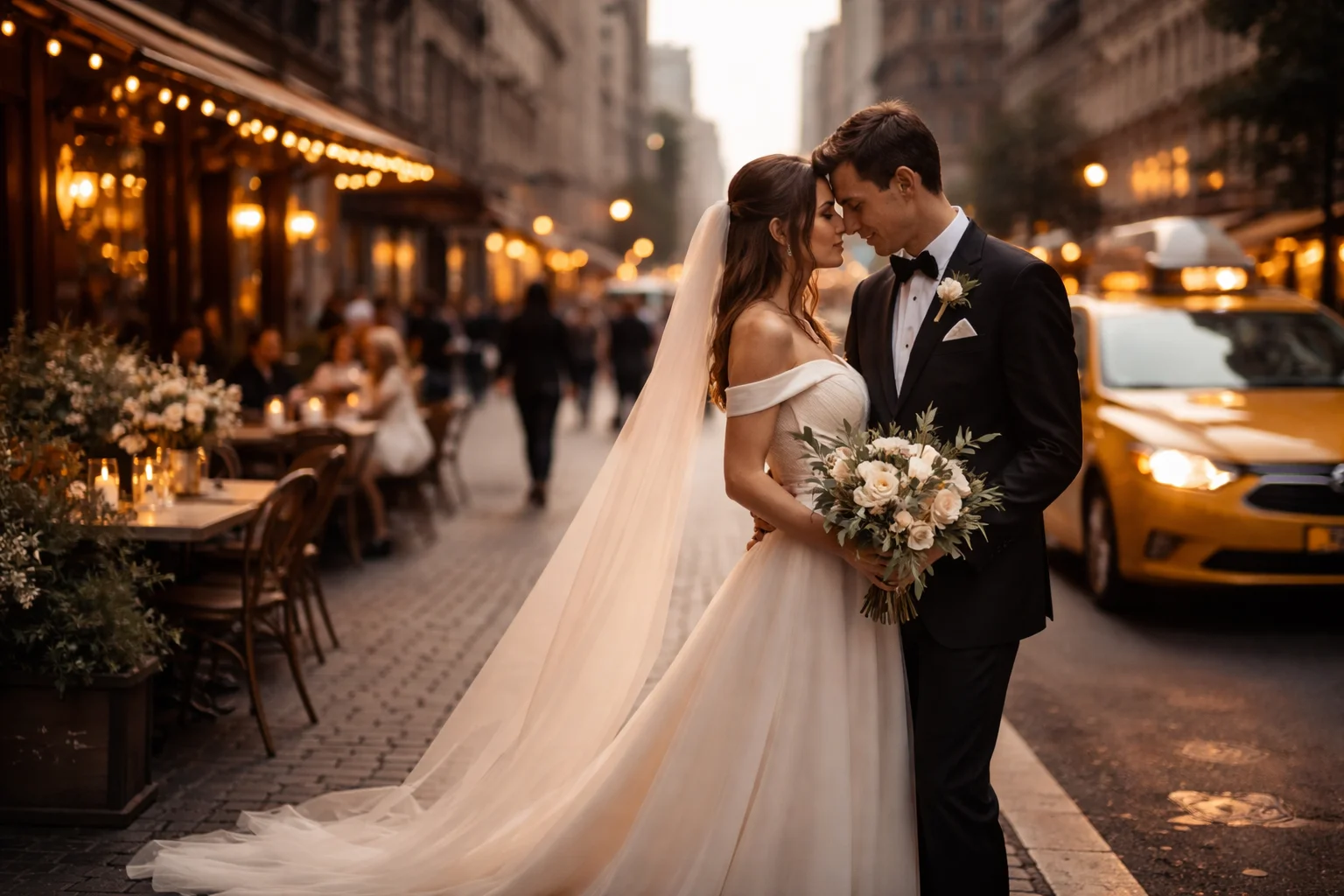
A City Wedding Moves Fast Until It Pauses
City weddings are shaped by movement. Traffic, schedules, tight timelines, elevators, crowded sidewalks, the constant awareness that everything is happening in the middle of something else. Planning one often means working with constraints rather than against them.
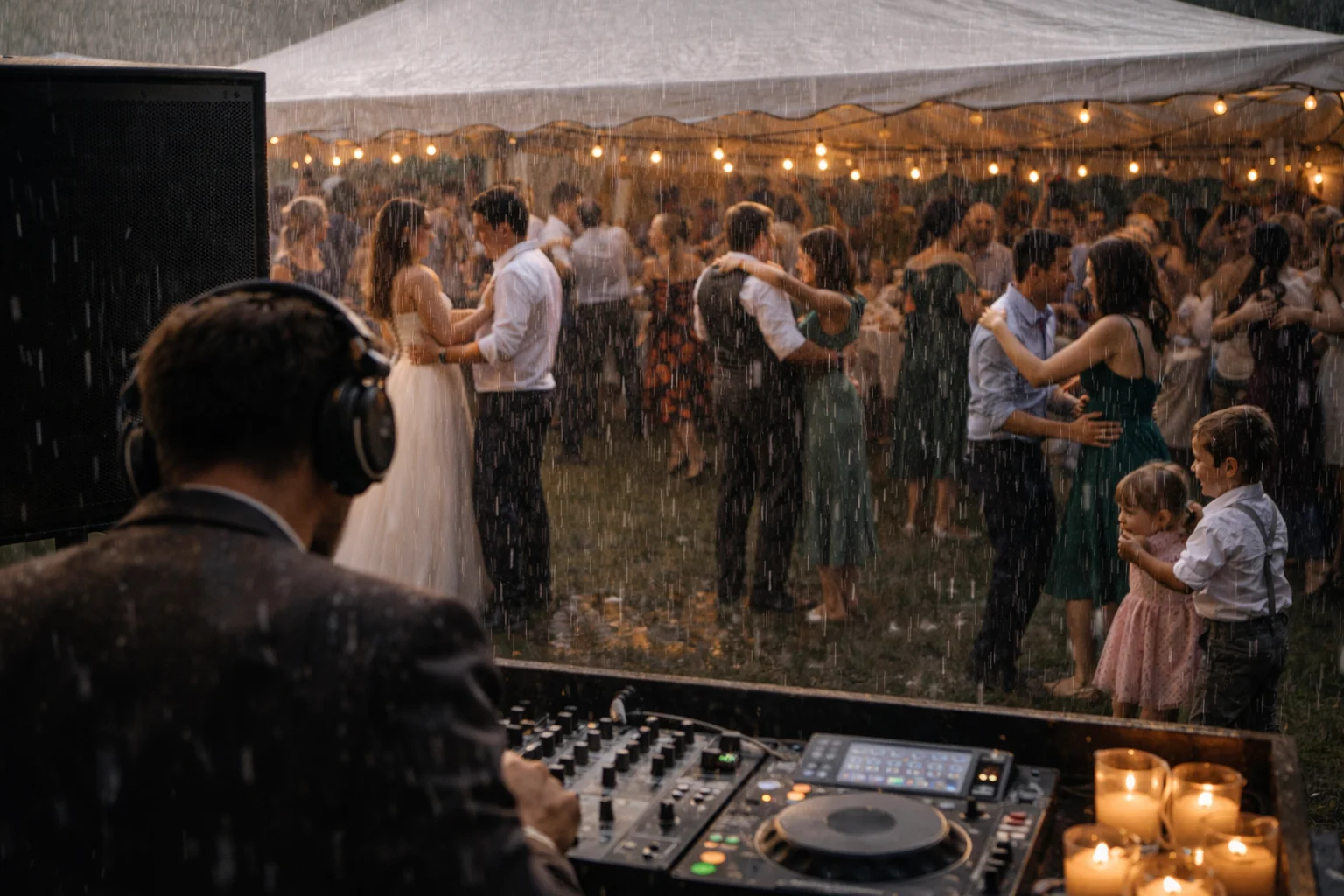
Rainy Wedding Playlist: Music That Works When the Weather Changes Everything
Rain changes a wedding faster than almost anything else. It alters timing, mood, movement, and expectation. This article explores how a rainy wedding playlist can steady the atmosphere, guide guests through uncertainty, and support practical decisions when the day suddenly shifts.
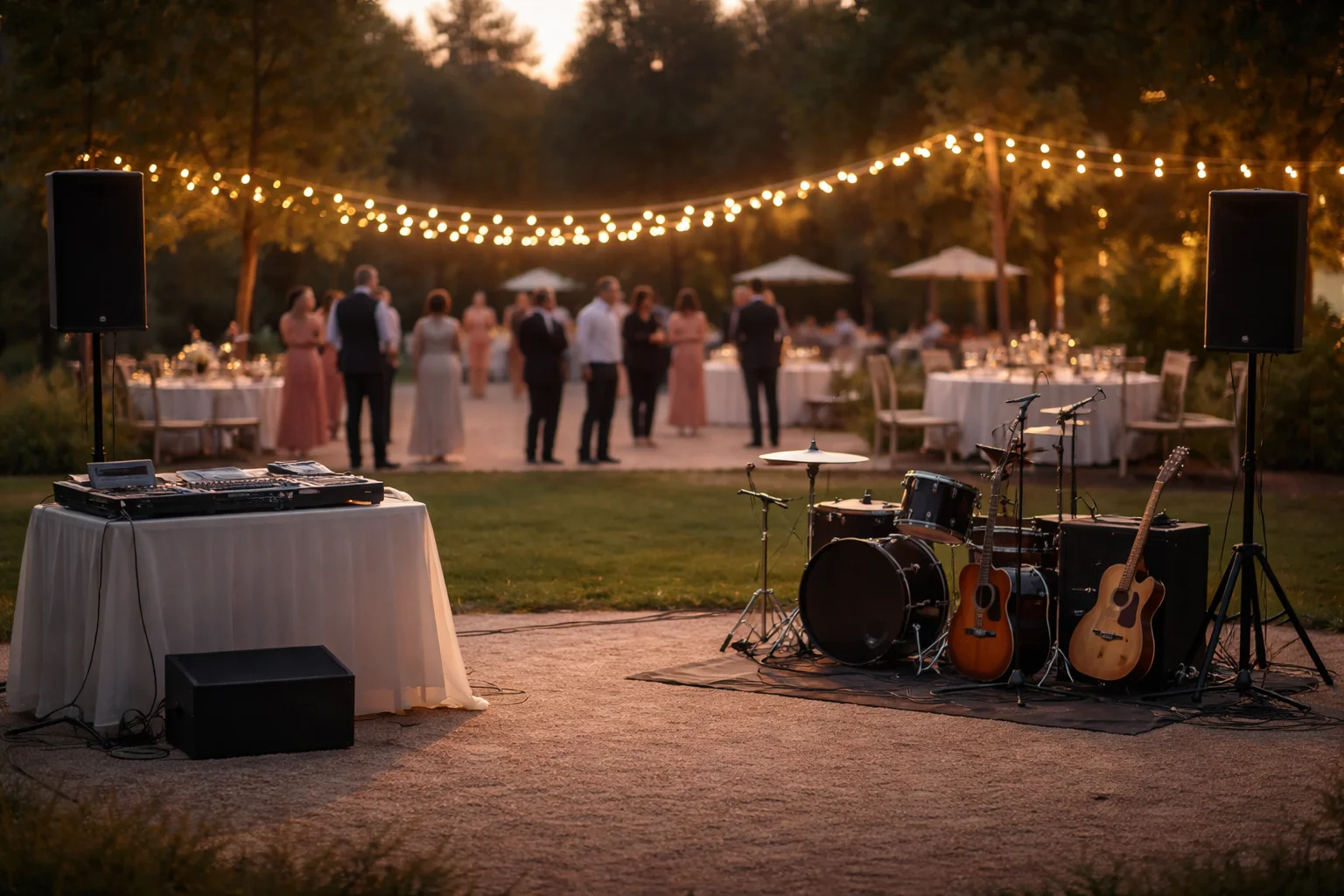
Music Budget: DJ, Band or Playlist at Weddings
Music is part of almost every wedding reception, although it is not always the first topic during planning. Venue, food, guest numbers. Those decisions tend to appear earlier. Later the conversation moves toward sound in the room. How the evening should feel once dinner ends and people begin to gather near the dance floor.