
How Requests Move Through a Wedding Night
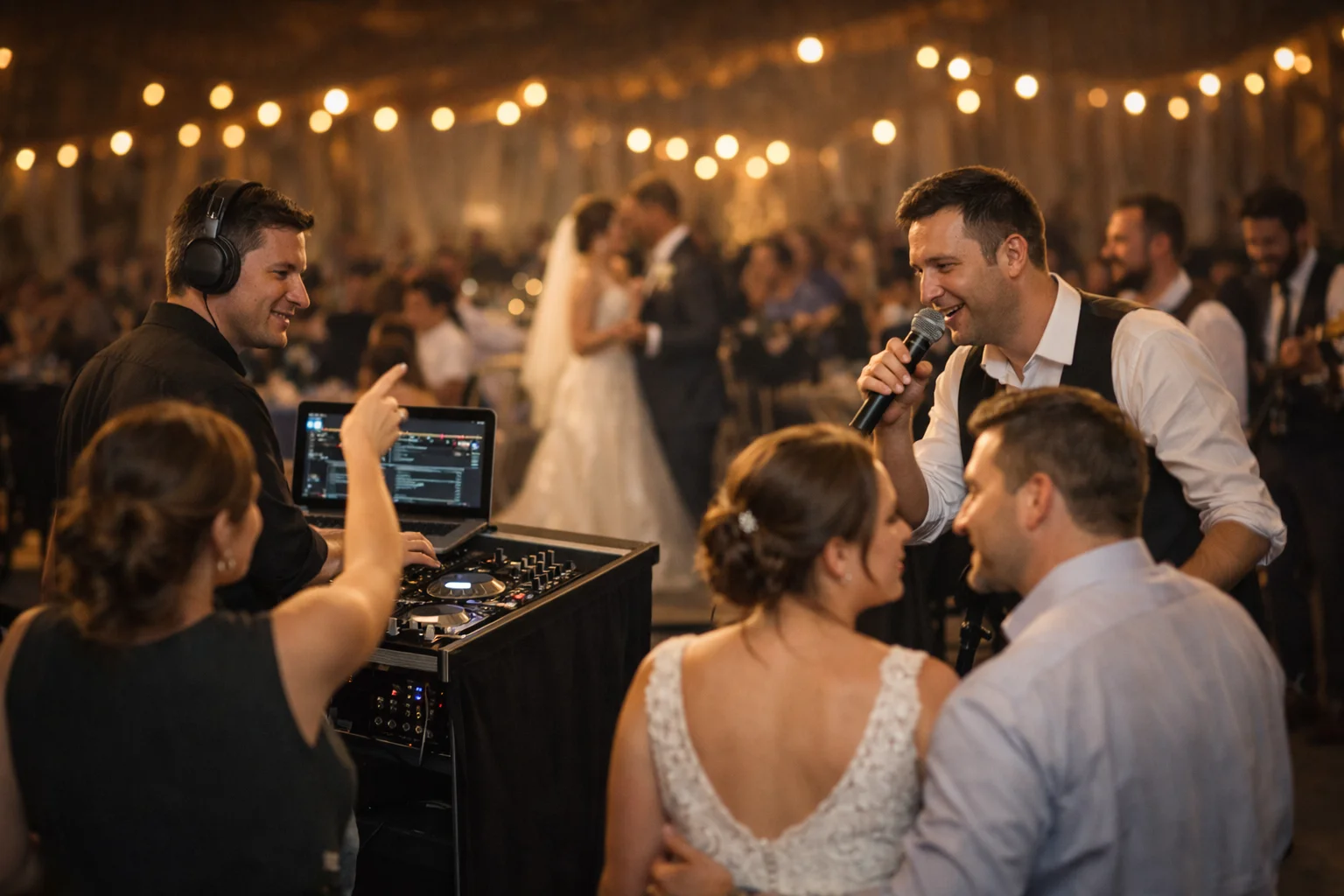
Music requests at weddings rarely move in a straight line from one person asking to one song being played. What looks simple from the dance floor is usually filtered through timing, mood, access, confidence, and the unspoken hierarchy of the room. A guest approaches with certainty, then hesitates halfway through the title. A couple makes clear decisions before the wedding, then relaxes them once the evening starts to carry itself. A song is requested, understood, delayed, translated, or quietly set aside. The process is social before it is musical.
That is why requests say something about the shape of the night, not only about taste. They reveal who feels entitled to interrupt the flow, who waits too long, who reads the room well, and who mistakes personal preference for collective timing. They also reveal the difference between a DJ and a live band more clearly than many couples expect. The request itself may be brief. The space it moves through rarely is.
Definition
A request in a wedding music setting is any attempt to influence what is played, when it is played, or how the energy of the room should shift. It may be direct, indirect, implied, or never fully spoken. Its meaning depends less on the song itself than on timing, delivery, and how the request meets the structure already shaping the night.
Direct Requests Sound Clearer Than They Usually Are
A direct request often arrives as a title, an artist name, and perhaps a quick explanation that becomes less convincing halfway through. From the guest side, this can feel straightforward. From the music side, it is often not. A DJ may recognize the song immediately but still know that the timing is wrong. A live band may like the suggestion but need to check whether the piece sits inside their set, their instrumentation, or their preparation. A wedding musician once put it bluntly: hearing a request and using a request are two different skills.
Indirect Requests Depend On Interpretation
Many requests are not actually framed as requests. A guest says the mood feels slower now, mentions a song that used to work at another wedding, or gestures toward a different kind of energy without naming it precisely. This is where the difference between DJ and band becomes especially visible. DJs are usually better placed to translate vague signals into something usable in the moment. Bands tend to work through a more defined set of internal decisions, which can make indirect requests harder to absorb quickly, even when the musicians understand them perfectly well.
DJ vs Live Band – CategoryMusic shapes the energy and flow of a wedding celebration. Whether choosing a DJ for seamless transitions and a wide music selection or a live band for dynamic performances and a unique atmosphere, the right choice sets the mood from the first song to the last dance. Thoughtful planning ensures the music reflects the couple’s style and keeps guests engaged throughout the day.
Unspoken Wishes Still Change The Night
Some of the strongest preferences at a wedding are never voiced at all. Guests wait for the right moment to ask, then do not find it. Couples decide not to interfere once the floor is moving. A parent hopes for one familiar song and assumes it might still appear. None of this is neutral. It creates a quiet layer of expectation that sits around the dance floor whether or not it becomes visible. DJs and bandleaders often read these silences through posture, repetition, or who lingers near the booth without fully approaching.
Timing Can Turn The Same Request Into Help Or Interruption
Requests are easiest to absorb earlier in the evening, when there is still room to adjust without breaking momentum. Later, once a dance floor has found its own continuity, even a very reasonable request can feel like pressure arriving at the wrong point. That is why guests sometimes mistake delay for indifference. Usually it is not refusal. It is sequencing. A good DJ knows that one misplaced song can flatten a room more quickly than a guest realizes. A good band knows that even the right song can fail if it asks the set to bend too sharply around a single voice.
What People Remember Is Often The Interaction, Not The Track
This is where the link to imprints becomes more interesting than the playlist itself. Guests often remember the feeling around a request more clearly than the song that followed. A nod from the DJ booth, a delayed smile, a band member leaning over to listen, the sense that a suggestion was quietly accepted or gently refused. These moments leave marks because they expose the social texture of the night. The music matters, but so does the way access to that music is negotiated in real time.

Some moments do not pass. They settle. Imprints are the emotional traces left by rituals, decisions, and answers that continue shaping relationships long after the moment is gone.
Conclusion
Requests move through a wedding night as part of a larger social system, not as isolated musical choices. They pass through timing, confidence, mood, access, and the different working logics of DJs and live bands. Some are fulfilled, some are reshaped, some dissolve before they are fully spoken. What matters is not whether every request becomes a song. It is whether the evening can absorb these small interventions without losing its own direction. When that happens, the room feels both guided and alive, which is usually exactly right.
Related Articles
Light and Time at Weddings: How Daylight Subtly Shifts Flow and Perception
Daylight changes more than the look of a wedding. It shifts pacing, delays transitions, draws guests toward or away from certain spaces, and leaves behind some of the strongest visual impressions of the day.
Dress Expectations at International Weddings: What Guests May Read Differently
Dress codes at international weddings are rarely just about clothing. Guests interpret formality, respect, family signals, and cultural meaning differently. This article looks at how attire is understood across contexts and why what seems obvious to one guest can feel unclear to another.
The Wedding Checklist That Grounds You: Turning Planning Into Something Meaningful
A wedding checklist isn’t just about tasks—it’s about clarity, intention, and trust. Here’s how to approach it in a way that feels calm, structured, and truly yours.
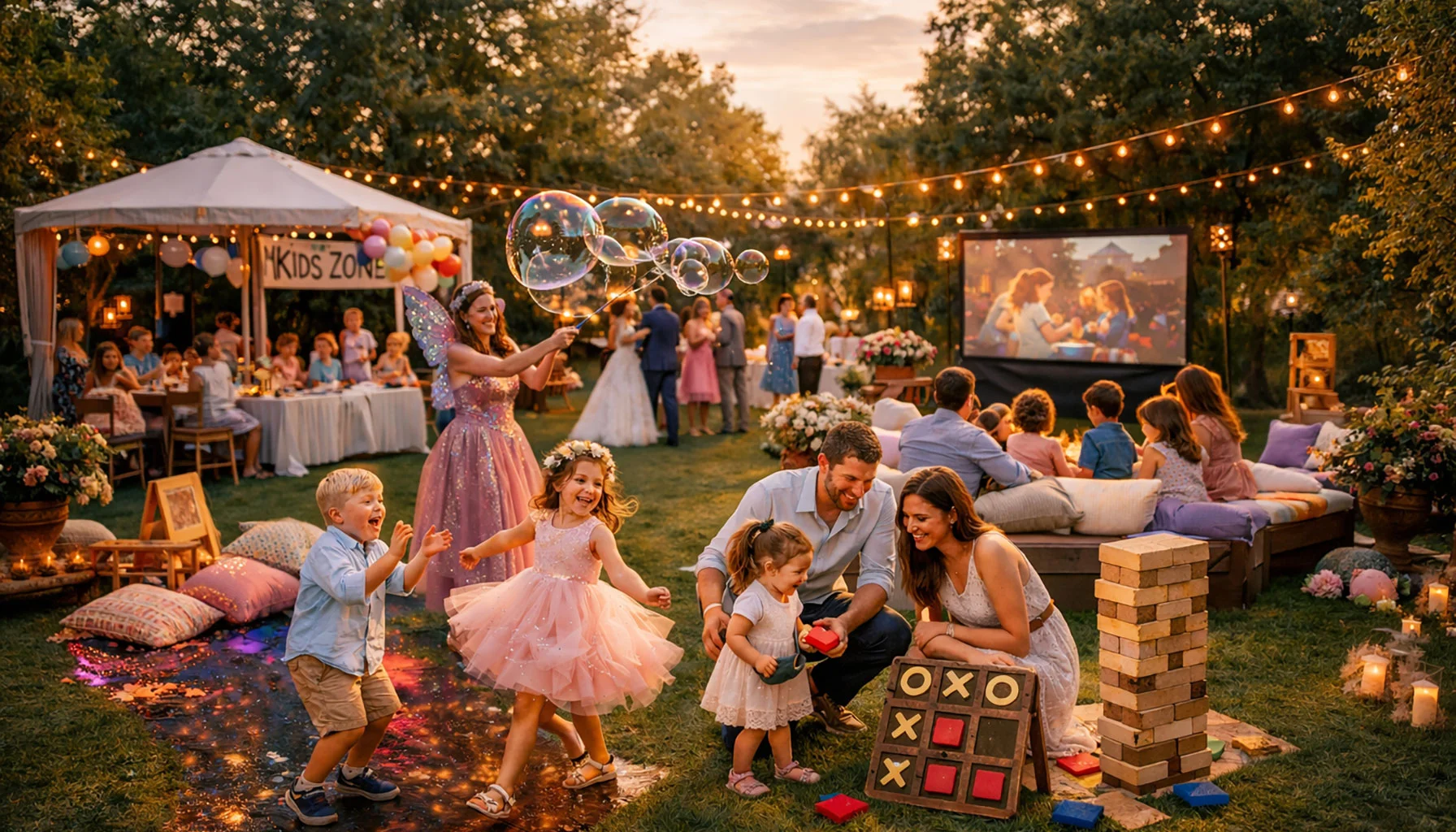
Creating Magical Moments for All Ages: Children and Family Entertainment at Modern Weddings
At weddings with children, the question is rarely whether entertainment exists. It emerges on its own the moment formal structure loosens. This article looks at family entertainment not as a side program, but as a quiet system of options that helps the day remain steady, generous, and memorable for guests of different ages.
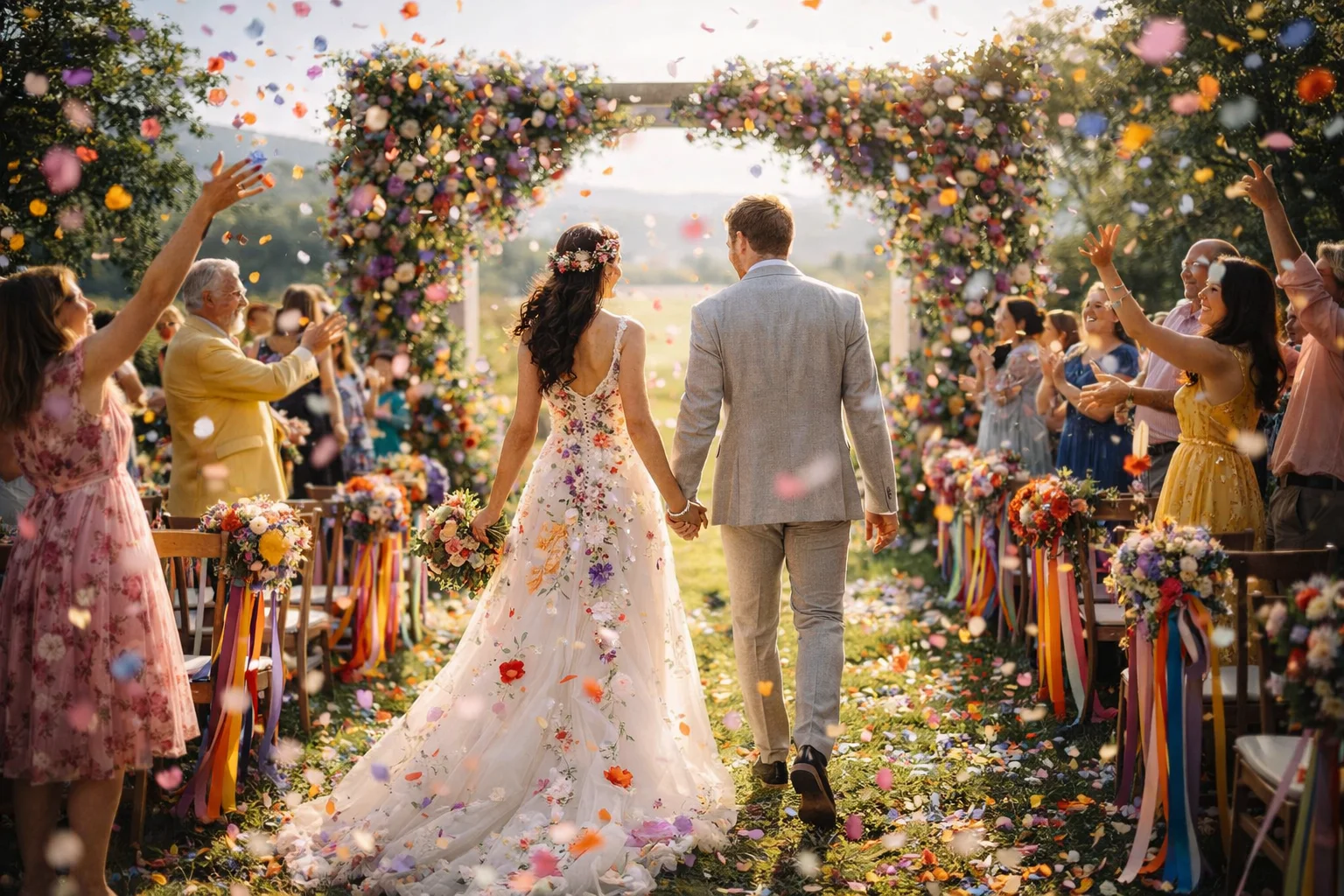
What Wedding Colors Leave Behind
Wedding colors are usually chosen for beauty, balance, or season. But they also leave a trace. Long after flowers fade and fabrics are packed away, certain tones remain attached to a promise, a room, a feeling. This article looks at wedding color not only as styling, but as part of the emotional imprint a ceremony leaves behind.
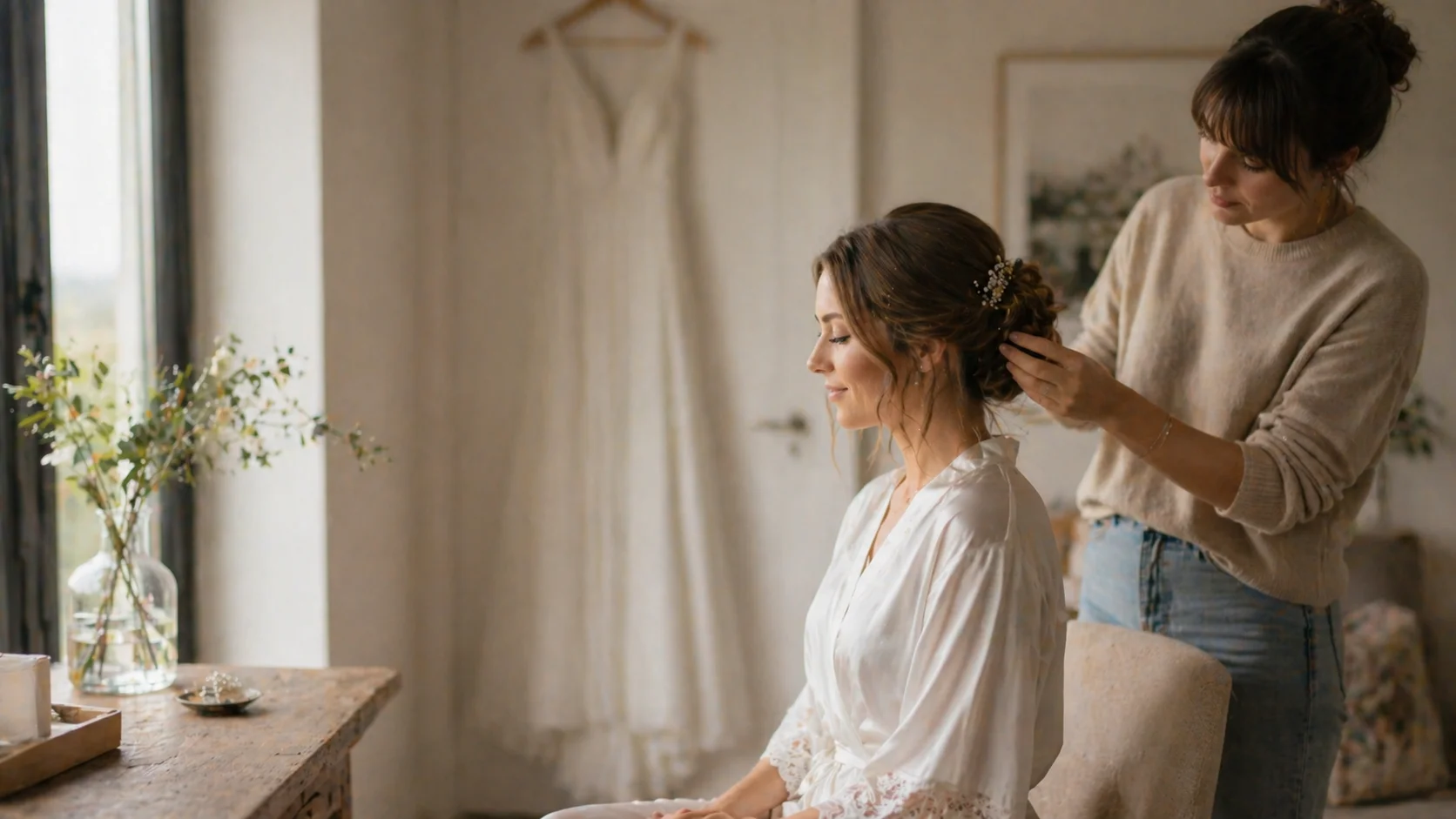
Bridal Getting-Ready Room Checklist: Light, Surfaces, Noise, and Movement
A bridal getting-ready room does more than hold hair, makeup, and dresses. This article looks at light, surfaces, noise, movement, privacy, and the quiet traces the room leaves on the morning before the ceremony.
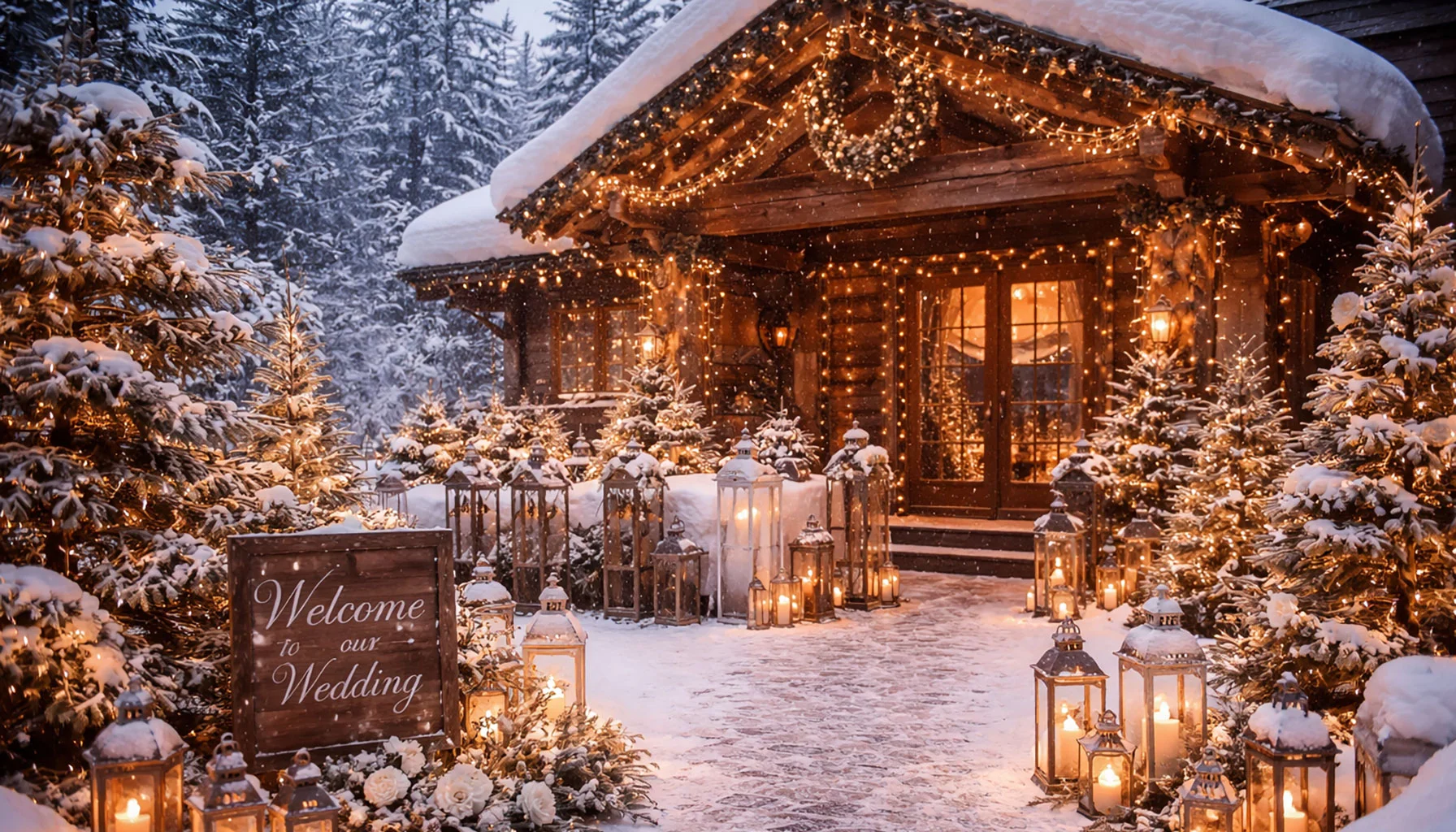
Winter Weddings: Beautiful Locations, Planning Tips and Ideas
Winter weddings move by a different clock. Light shortens, rooms gather people more closely, and warmth becomes part of the structure of the day. This article looks at winter weddings not only as a seasonal style, but as a form of celebration shaped by atmosphere, containment, and the emotional trace a winter setting leaves behind.
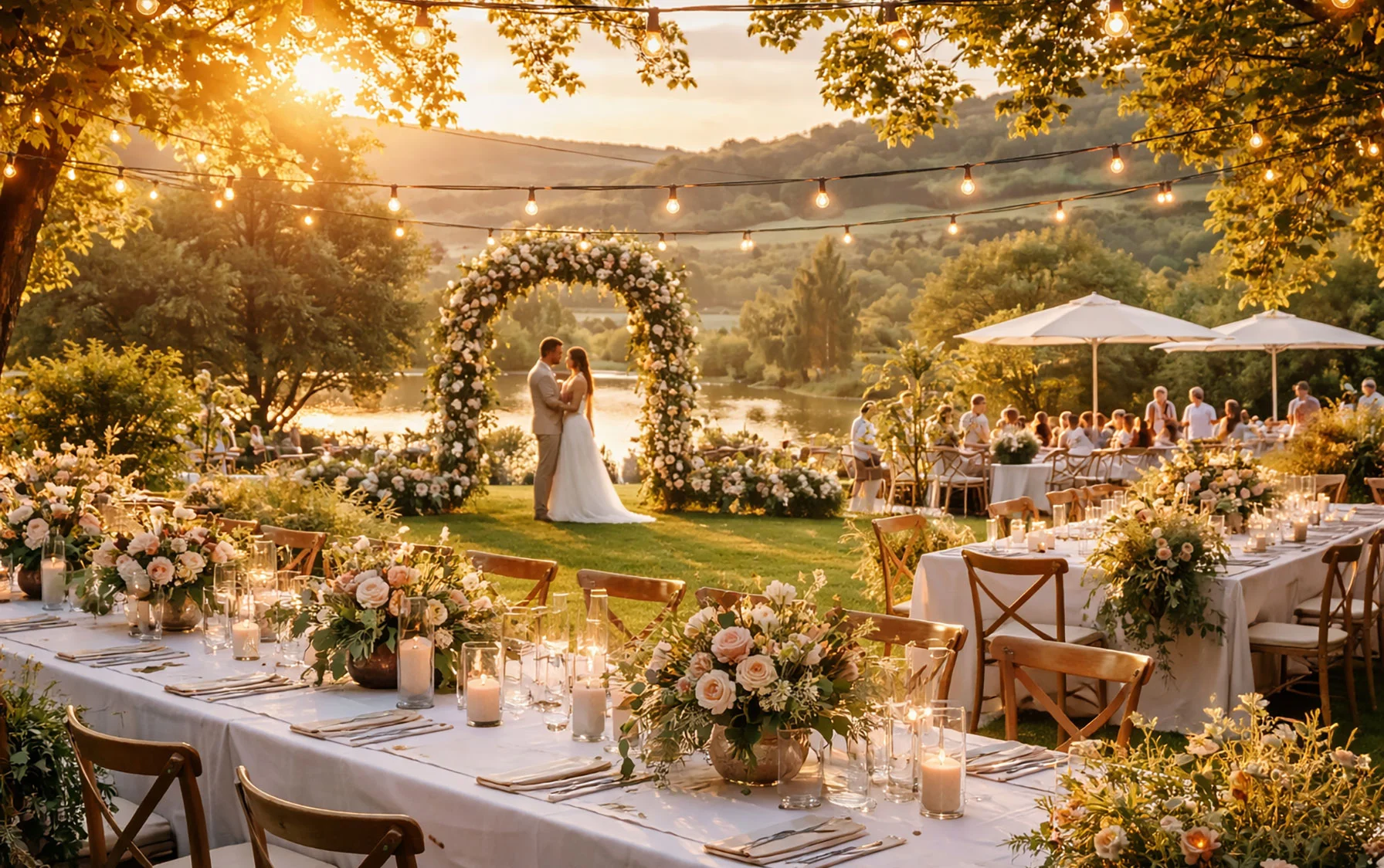
Sun-Kissed Celebrations: How to Plan a Beautiful Summer Wedding
Summer weddings often feel open before they feel formal. Light lasts longer, movement spreads outward, and the day seems able to hold more air, more time, and more ease. This article looks at summer weddings not only as a season of beauty, but as a form of celebration shaped by rhythm, weather, and the emotional trace a sunlit day leaves behind.
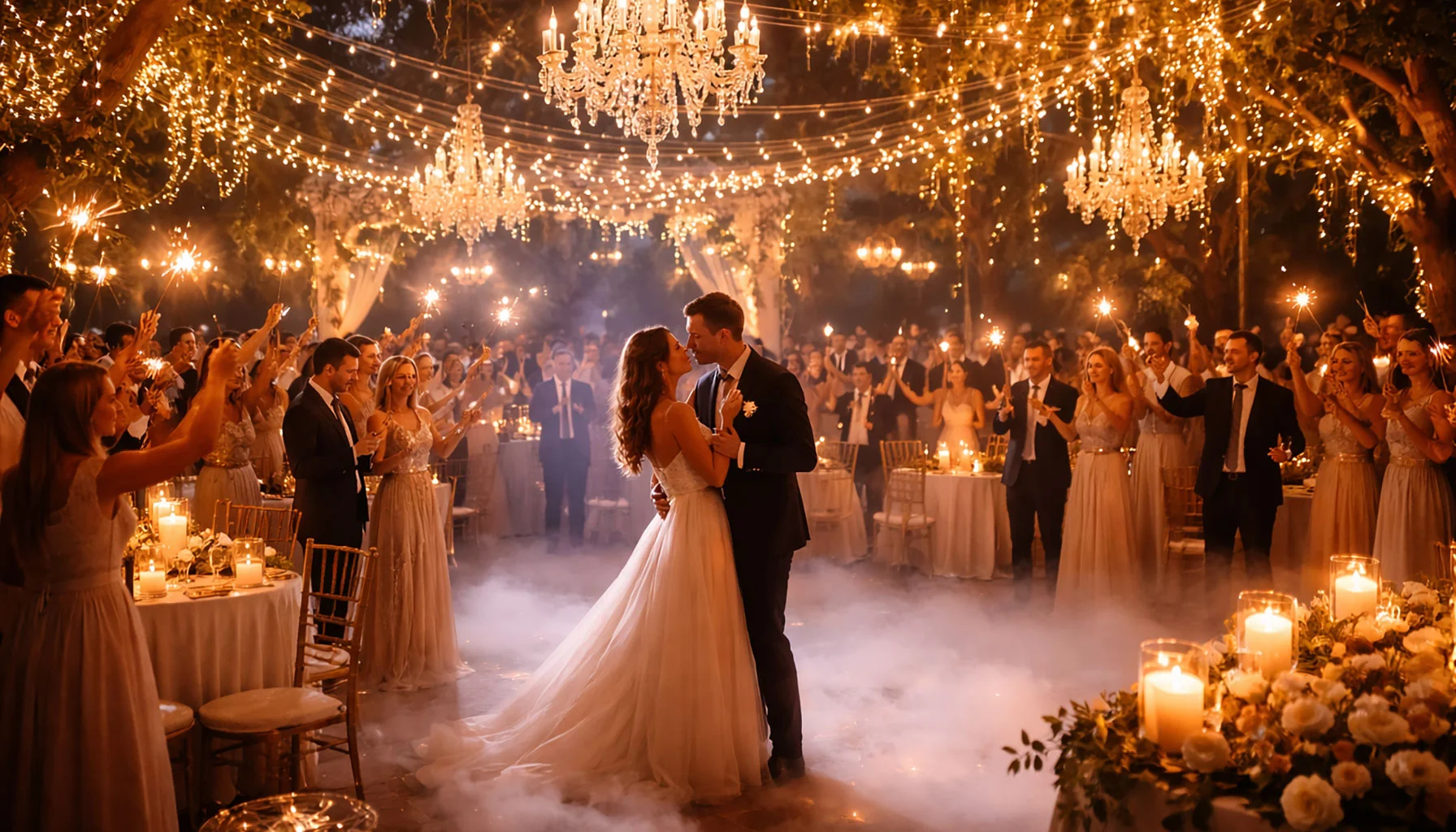
Wedding Lighting: Creating Atmosphere That Lasts
Wedding lighting is rarely remembered as equipment. What remains is how a room felt when people entered it, how the evening softened, and how different parts of the celebration seemed to belong together without visible effort. This article looks at wedding lighting as a quiet structure that shapes atmosphere and leaves a lasting imprint.
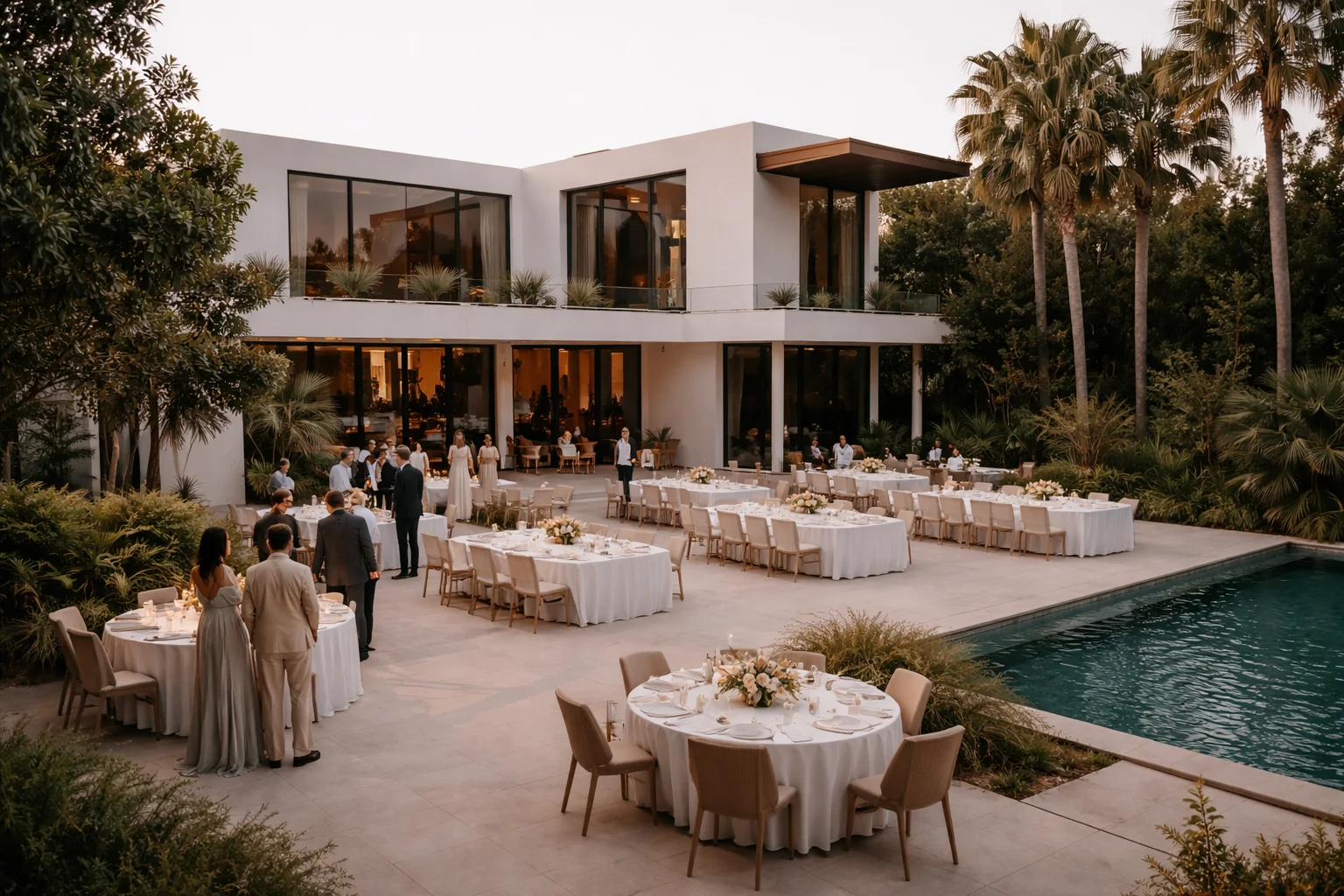
Venues & Concepts in Weddings
Wedding venues and wedding concepts are often treated as separate decisions. In practice, they rarely stay separate for long. The place changes the idea, the idea changes the place, and somewhere between the two an atmosphere begins to form that guests later remember more clearly than the plan itself.
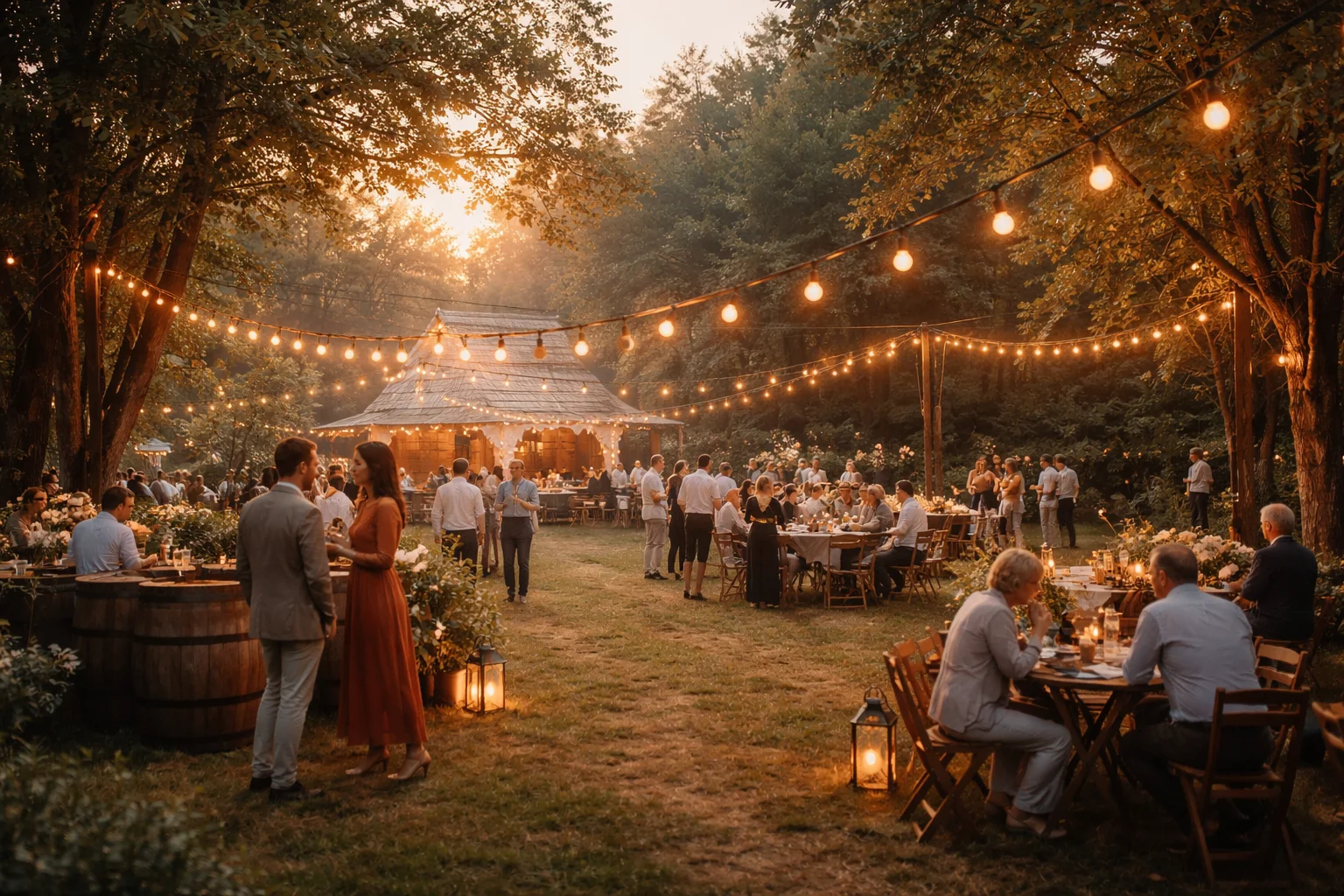
When the Day Builds Itself in Small Moments
Some weddings are held together less by formal program points than by short, unplanned interactions that quietly take over the day. This article looks at how micro-moments shape flow, attention, memory, and atmosphere, especially in smaller celebrations.
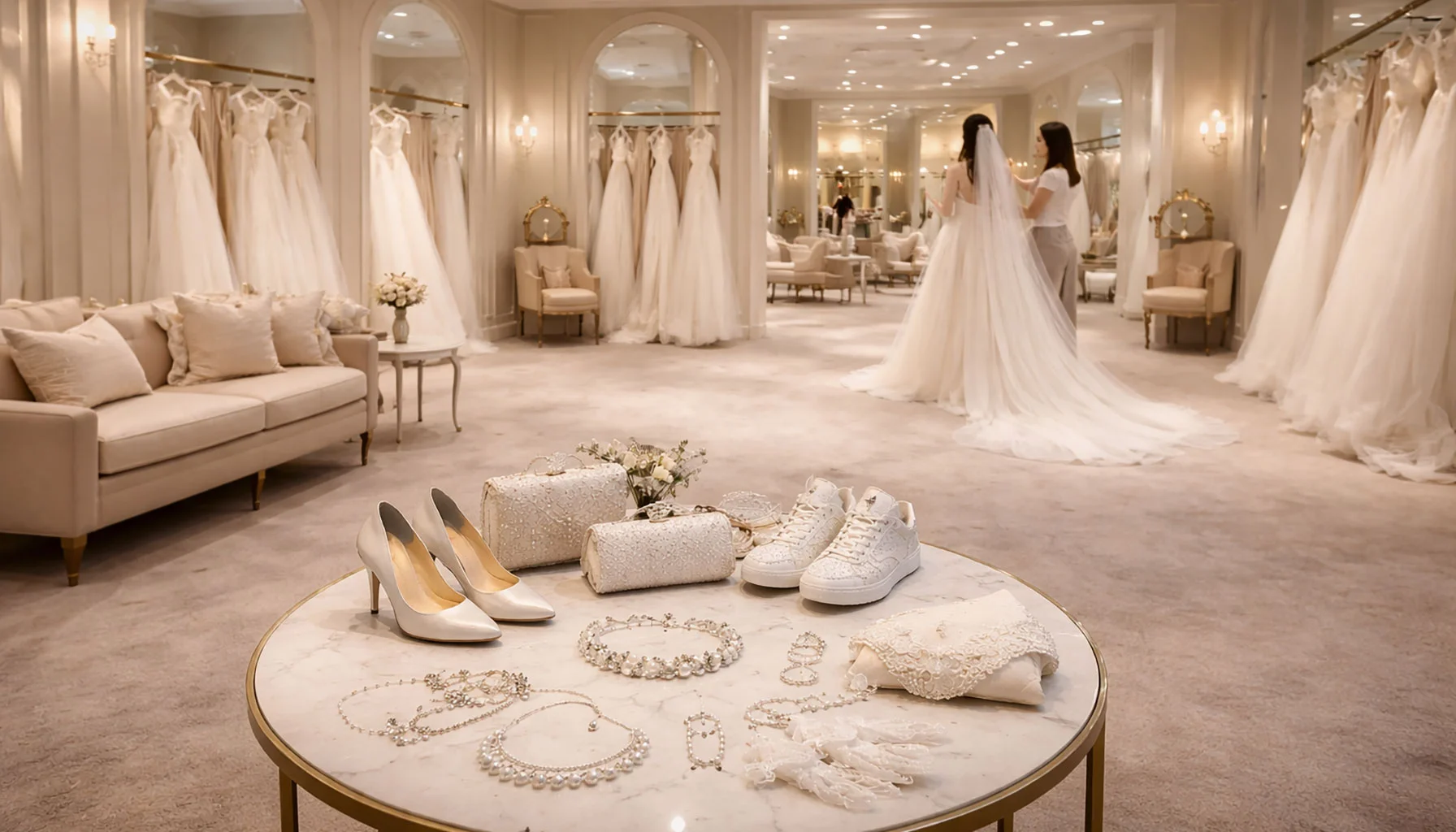
Bridal Accessories in Interplay – A Silent Addition
Accessories for the bride mostly remain in the background. They don't impose themselves and are rarely noticed first. In bridal shops, however, it repeatedly becomes apparent that precisely these pieces structure and round off the overall look. Veils, shoes, jewelry or small accessories do not change the dress, but rather the bride's effect. Observations from practice show how subtle decisions are made and why accessories are often chosen only late – and then stay.