
Venues & Concepts in Weddings
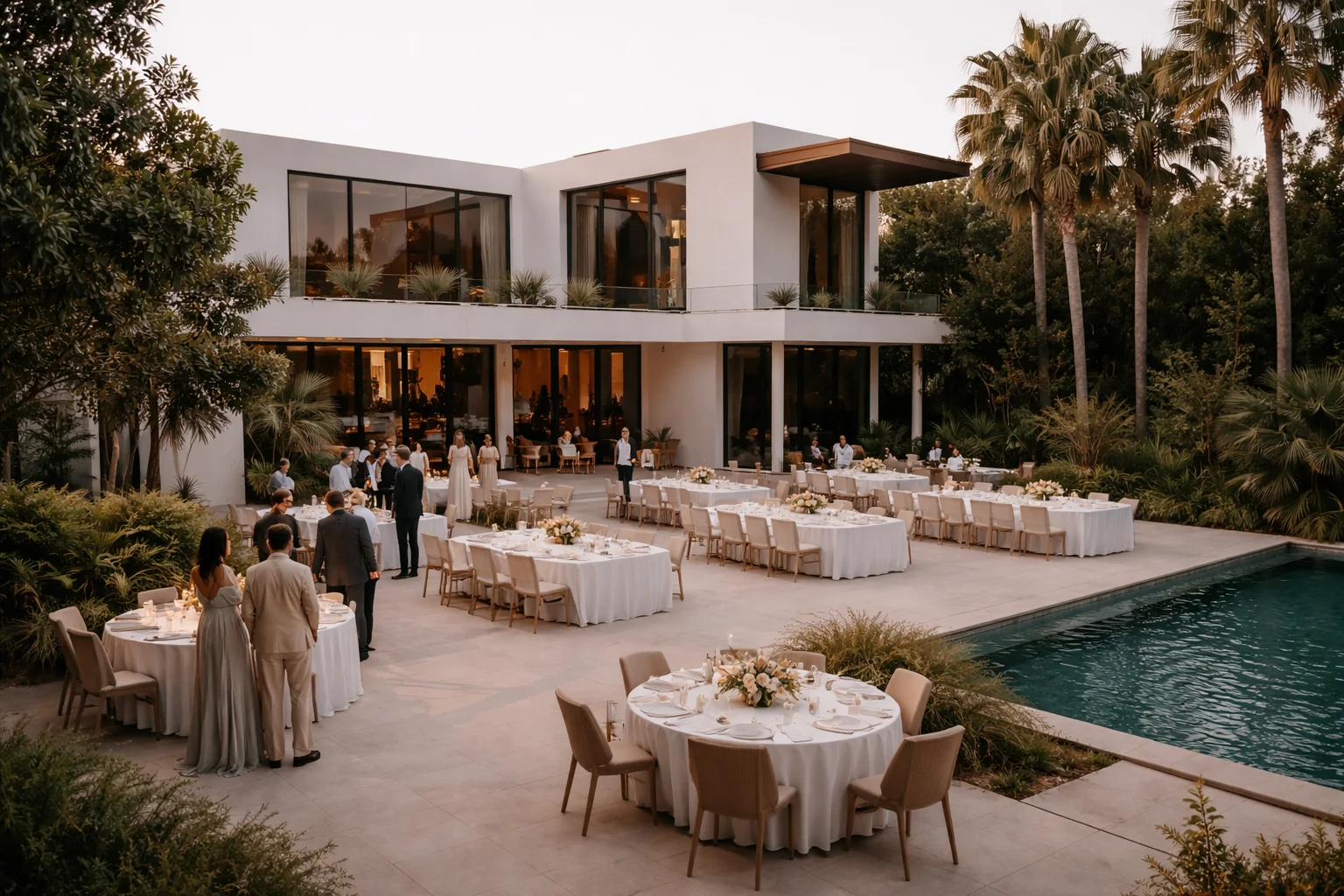
In actual weddings, the relationship between venue and concept rarely shows up as one big decision. It appears in smaller observations. Tables pushed into longer lines because the room narrows unexpectedly. A ceremony moved a few meters because the wind reaches one side of the terrace too strongly. Decorative plans adjusted after somebody notices how the walls change color in afternoon light. These details often seem minor, yet they quietly decide how the day will feel once people arrive.
This is why the subject belongs not only to places, but also to imprints. Loving Rocks describes places as quiet frames around a wedding, while imprints are the emotional traces that remain active after a moment has passed. Venues and concepts meet exactly there. A concept may begin as a plan, but what guests later remember is often the way the place made that plan feel: spacious, intimate, delayed, warm, exposed, fluid, or unexpectedly calm.
PlacesGood places for weddings are usually simple spaces that allow people to gather comfortably. Gardens, historic houses, restaurants, or open event halls often appear in this context because they handle groups and movement naturally. In the end, the location mostly works as a quiet frame around the celebration, giving the day a place to unfold.
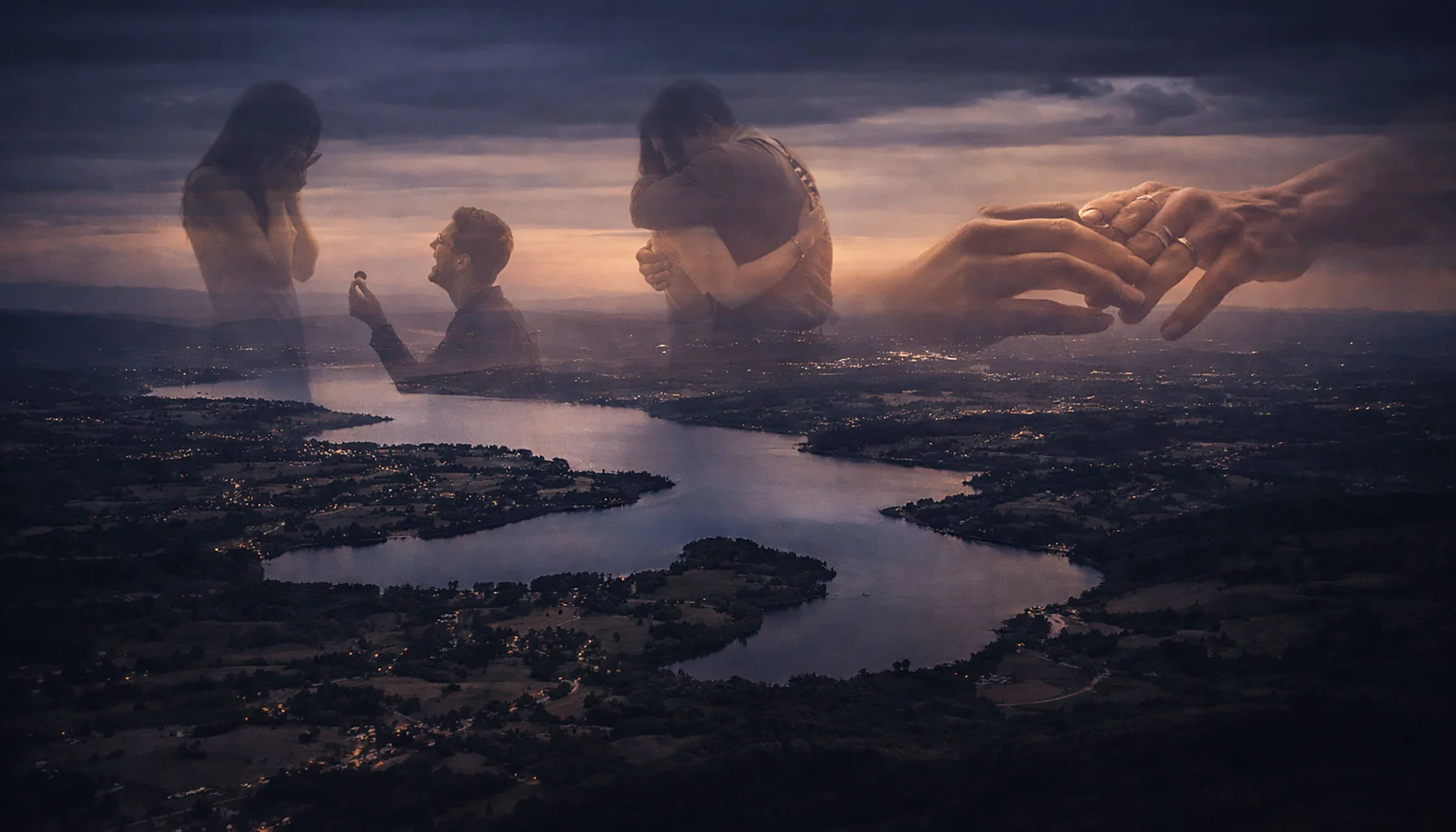
Some moments do not pass. They settle. Imprints are the emotional traces left by rituals, decisions, and answers that continue shaping relationships long after the moment is gone.
Definition
In wedding planning, venue and concept describe the ongoing relationship between a physical place and the idea guiding the event. The venue is the actual setting in which people gather. The concept is the structure shaping tone, sequence, movement, and visual logic. In practice, the two rarely stay fixed. They adjust to each other gradually until the celebration takes on a workable form.
The Character of a Place Organizes More Than Layout
Different wedding venues influence events in ways that are easy to underestimate before the day. Historic halls tend to collect attention around central rooms. Rural properties spread gatherings across courtyards, gardens, and outdoor paths. Industrial spaces allow flexibility but often require more active shaping to feel coherent. Guests notice these things without naming them directly. They gather near windows, pause in thresholds, return to terraces, and treat some corners as informal centers even when nobody planned them that way.
A Concept Usually Starts Simpler Than It Ends
Wedding concepts often begin as a loose sentence rather than a master plan. A long shared dinner. A garden celebration that unfolds slowly. A quiet ceremony followed by an open evening. But these ideas rarely stay untouched. They shift during site visits, after noticing distances between spaces, after learning where music can realistically stand, or after seeing how guests will actually move from one part of the day to another. Good concepts are usually not rigid. They survive because they adapt.
The Venue Often Reshapes the Concept More Than Expected
Observation shows that venues quietly rewrite wedding concepts all the time. A staircase becomes a natural entrance almost by accident. A courtyard starts functioning as a welcome area because people drift there before the schedule begins. A narrow interior slows down what was imagined as a fluid reception. These changes are not failures of planning. They are the point at which the wedding begins responding to the reality of its setting instead of staying inside abstraction.
Details Connect Place and Idea Most Clearly
Decor, light, flowers, table shape, and printed materials often appear late in the planning process, yet they are where venue and concept become legible together. Neutral rooms can absorb stronger styling choices. Architecturally marked spaces usually require less intervention. In many weddings, small visual details repeat across the day until a certain tone starts to feel inevitable. Sometimes this repetition is planned carefully. Sometimes it emerges almost on its own once the place and the concept begin settling into each other.
Guests Reveal Whether the Fit Was Real
Guest movement is often the clearest test of whether venue and concept truly align. When ceremony, dinner, reception, and pauses between them feel naturally connected, people move with little instruction. When the fit is weaker, small hesitations appear. Guests cluster near doors, wait too long between spaces, or repeatedly return to the same familiar zone because the rest of the environment has not fully invited them in. These moments matter because they become part of the wedding's imprint, even if nobody describes them that way at the time.
Conclusion
Venues and concepts in weddings are rarely separate for long. A location offers constraints, possibilities, textures, and unexpected rhythms. A concept offers direction, tone, and a way of organizing those possibilities. Between them, a wedding gradually becomes specific. Not abstractly beautiful, but inhabitable. And what remains afterward is often not the plan itself, but the emotional trace of how place and idea finally settled into one another.
Venues and Concepts in Weddings
In actual weddings, the relationship between venue and concept rarely shows up as one big decision. It appears in smaller observations. Tables pushed into longer lines because the room narrows unexpectedly. A ceremony moved a few meters because the wind reaches one side of the terrace too strongly. Decorative plans adjusted after somebody notices how the walls change color in afternoon light. These details often seem minor, yet they quietly decide how the day will feel once people arrive.
This is why the subject belongs not only to places, but also to imprints. Loving Rocks describes places as quiet frames around a wedding, while imprints are the emotional traces that remain active after a moment has passed. Venues and concepts meet exactly there. A concept may begin as a plan, but what guests later remember is often the way the place made that plan feel: spacious, intimate, delayed, warm, exposed, fluid, or unexpectedly calm.
PlacesGood places for weddings are usually simple spaces that allow people to gather comfortably. Gardens, historic houses, restaurants, or open event halls often appear in this context because they handle groups and movement naturally. In the end, the location mostly works as a quiet frame around the celebration, giving the day a place to unfold.
Some moments do not pass. They settle. Imprints are the emotional traces left by rituals, decisions, and answers that continue shaping relationships long after the moment is gone.
Definition
In wedding planning, venue and concept describe the ongoing relationship between a physical place and the idea guiding the event. The venue is the actual setting in which people gather. The concept is the structure shaping tone, sequence, movement, and visual logic. In practice, the two rarely stay fixed. They adjust to each other gradually until the celebration takes on a workable form.
The Character of a Place Organizes More Than Layout
Different wedding venues influence events in ways that are easy to underestimate before the day. Historic halls tend to collect attention around central rooms. Rural properties spread gatherings across courtyards, gardens, and outdoor paths. Industrial spaces allow flexibility but often require more active shaping to feel coherent. Guests notice these things without naming them directly. They gather near windows, pause in thresholds, return to terraces, and treat some corners as informal centers even when nobody planned them that way.
A Concept Usually Starts Simpler Than It Ends
Wedding concepts often begin as a loose sentence rather than a master plan. A long shared dinner. A garden celebration that unfolds slowly. A quiet ceremony followed by an open evening. But these ideas rarely stay untouched. They shift during site visits, after noticing distances between spaces, after learning where music can realistically stand, or after seeing how guests will actually move from one part of the day to another. Good concepts are usually not rigid. They survive because they adapt.
The Venue Often Reshapes the Concept More Than Expected
Observation shows that venues quietly rewrite wedding concepts all the time. A staircase becomes a natural entrance almost by accident. A courtyard starts functioning as a welcome area because people drift there before the schedule begins. A narrow interior slows down what was imagined as a fluid reception. These changes are not failures of planning. They are the point at which the wedding begins responding to the reality of its setting instead of staying inside abstraction.
Details Connect Place and Idea Most Clearly
Decor, light, flowers, table shape, and printed materials often appear late in the planning process, yet they are where venue and concept become legible together. Neutral rooms can absorb stronger styling choices. Architecturally marked spaces usually require less intervention. In many weddings, small visual details repeat across the day until a certain tone starts to feel inevitable. Sometimes this repetition is planned carefully. Sometimes it emerges almost on its own once the place and the concept begin settling into each other.
Guests Reveal Whether the Fit Was Real
Guest movement is often the clearest test of whether venue and concept truly align. When ceremony, dinner, reception, and pauses between them feel naturally connected, people move with little instruction. When the fit is weaker, small hesitations appear. Guests cluster near doors, wait too long between spaces, or repeatedly return to the same familiar zone because the rest of the environment has not fully invited them in. These moments matter because they become part of the wedding's imprint, even if nobody describes them that way at the time.
Conclusion
Venues and concepts in weddings are rarely separate for long. A location offers constraints, possibilities, textures, and unexpected rhythms. A concept offers direction, tone, and a way of organizing those possibilities. Between them, a wedding gradually becomes specific. Not abstractly beautiful, but inhabitable. And what remains afterward is often not the plan itself, but the emotional trace of how place and idea finally settled into one another.
Related Articles
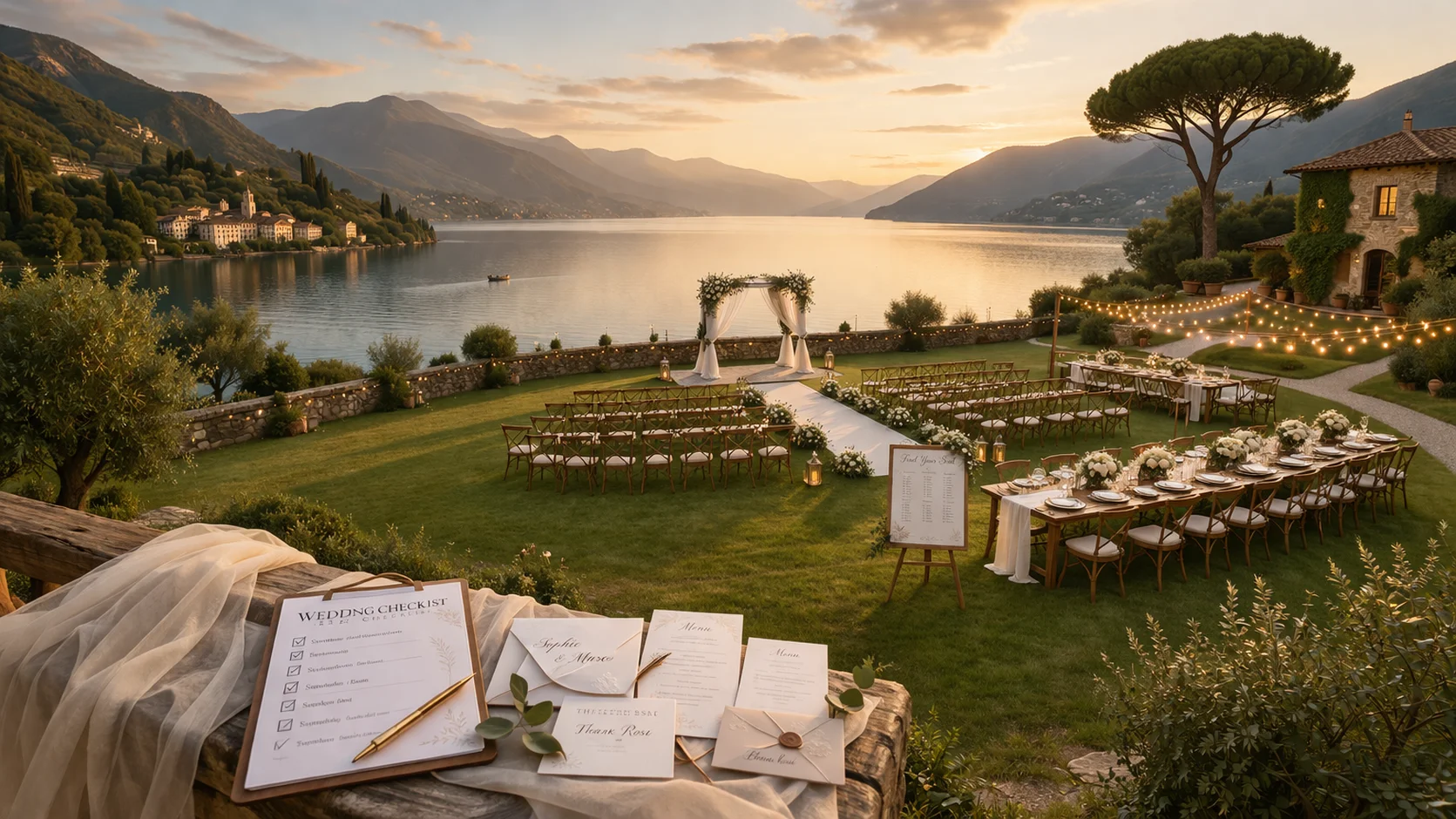
The Wedding Checklist That Grounds You: Turning Planning Into Something Meaningful
A wedding checklist isn’t just about tasks—it’s about clarity, intention, and trust. Here’s how to approach it in a way that feels calm, structured, and truly yours.
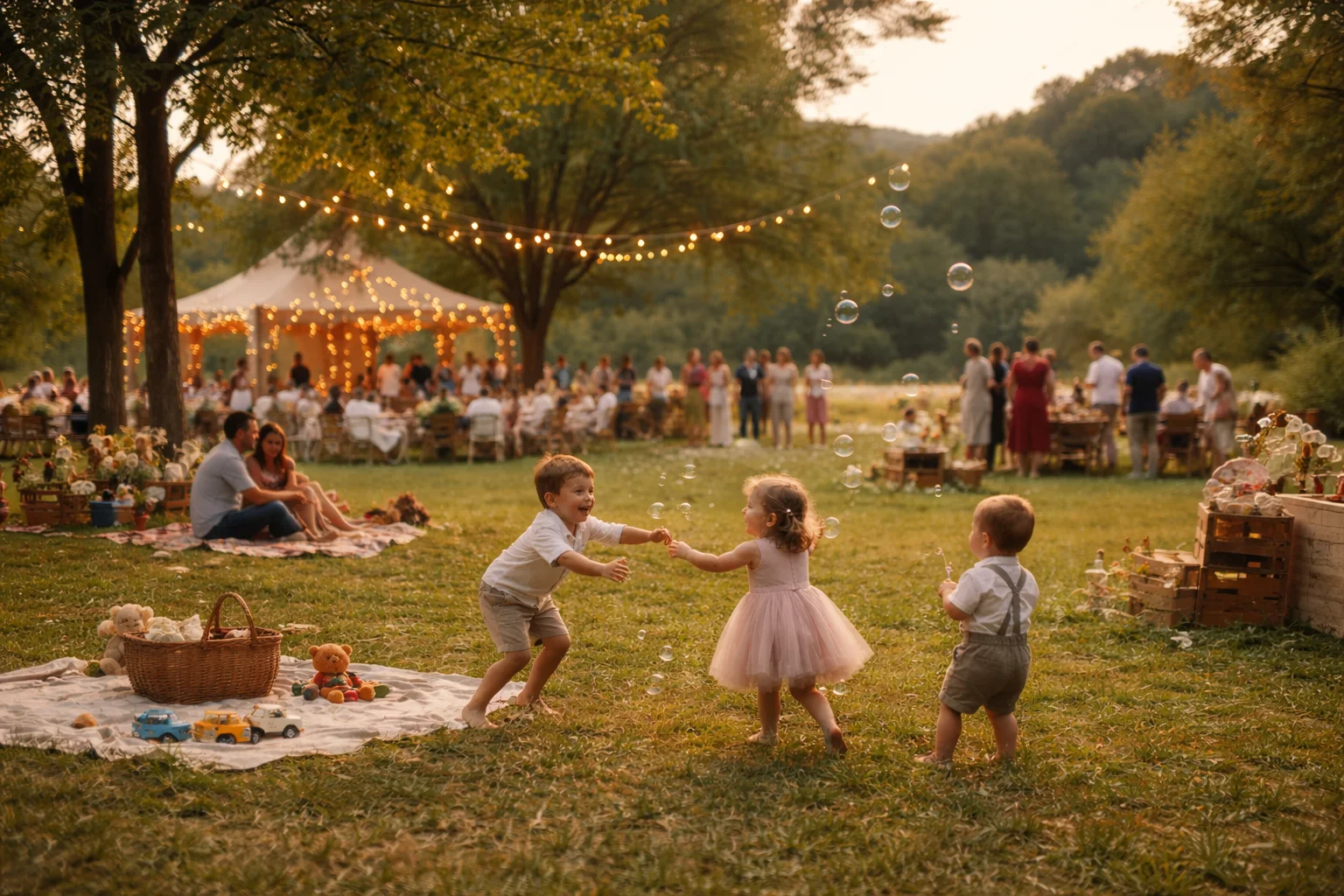
Outdoor Weddings With Children: Freedom, Boundaries, and Attention
Outdoor weddings often feel easier with children because there is more room to move, but that same openness changes how boundaries work and how attention is held. This article looks at how freedom, supervision, fatigue, and small shifting moments shape child-friendly outdoor celebrations.
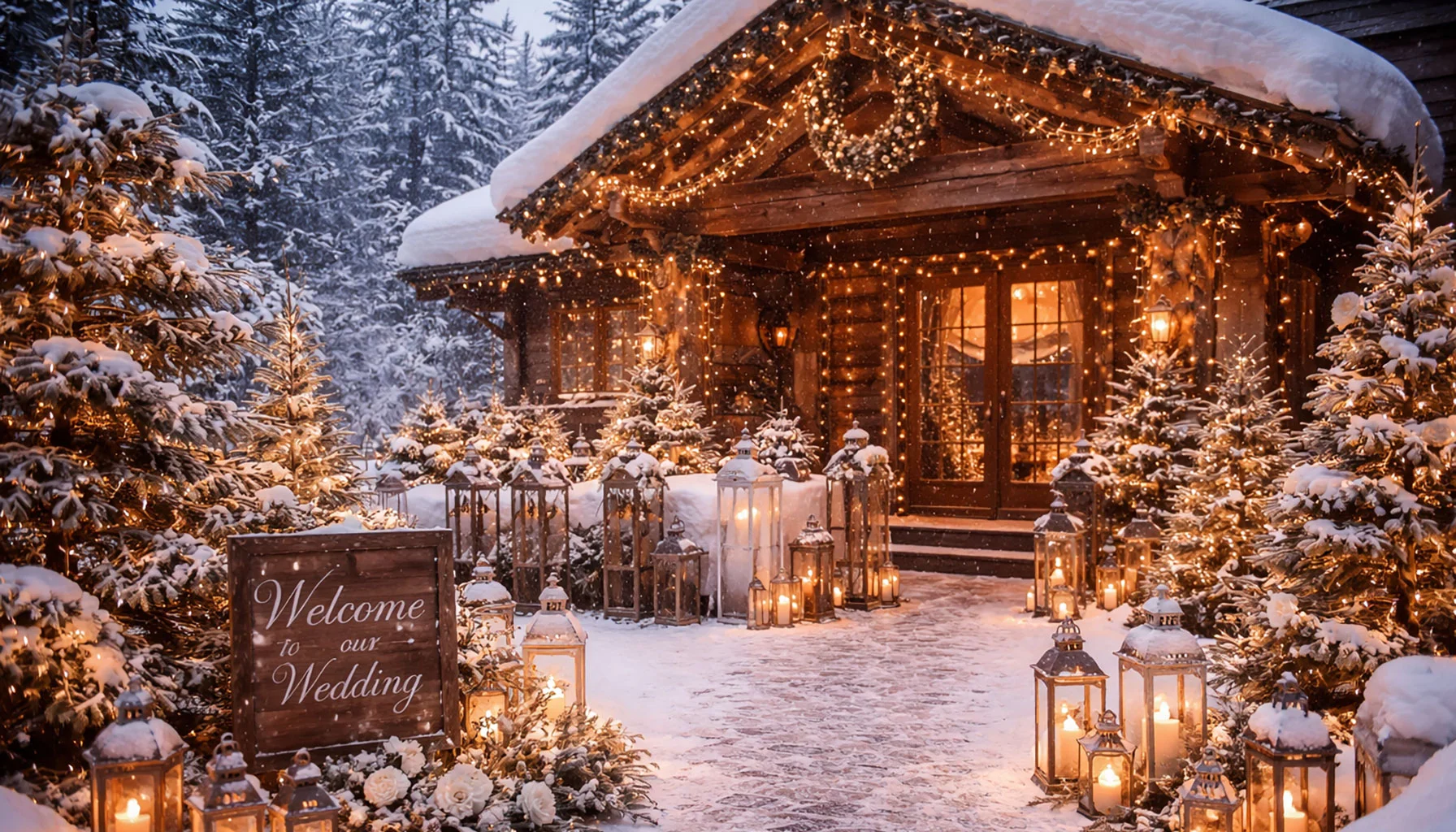
Winter Weddings: Beautiful Locations, Planning Tips and Ideas
Winter weddings move by a different clock. Light shortens, rooms gather people more closely, and warmth becomes part of the structure of the day. This article looks at winter weddings not only as a seasonal style, but as a form of celebration shaped by atmosphere, containment, and the emotional trace a winter setting leaves behind.
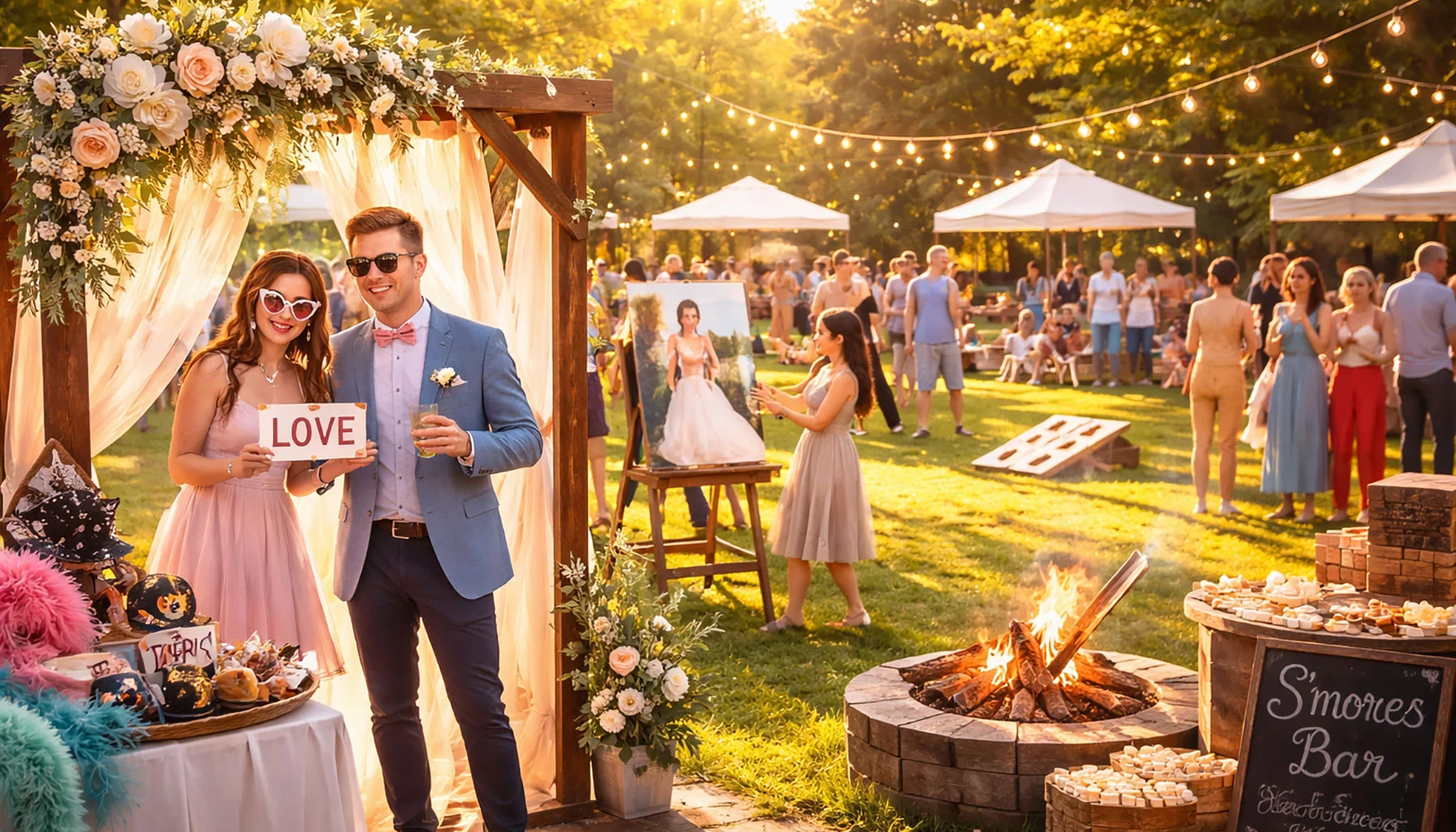
Wedding Guest Activities That Create Lasting Memories
The wedding activities guests remember most are rarely the loudest. They are the ones that give people something gentle to enter, something quiet to touch, and something small to carry away afterward. This article looks at which kinds of wedding guest activities tend to stay with people and why they often leave a deeper imprint than more spectacular entertainment.
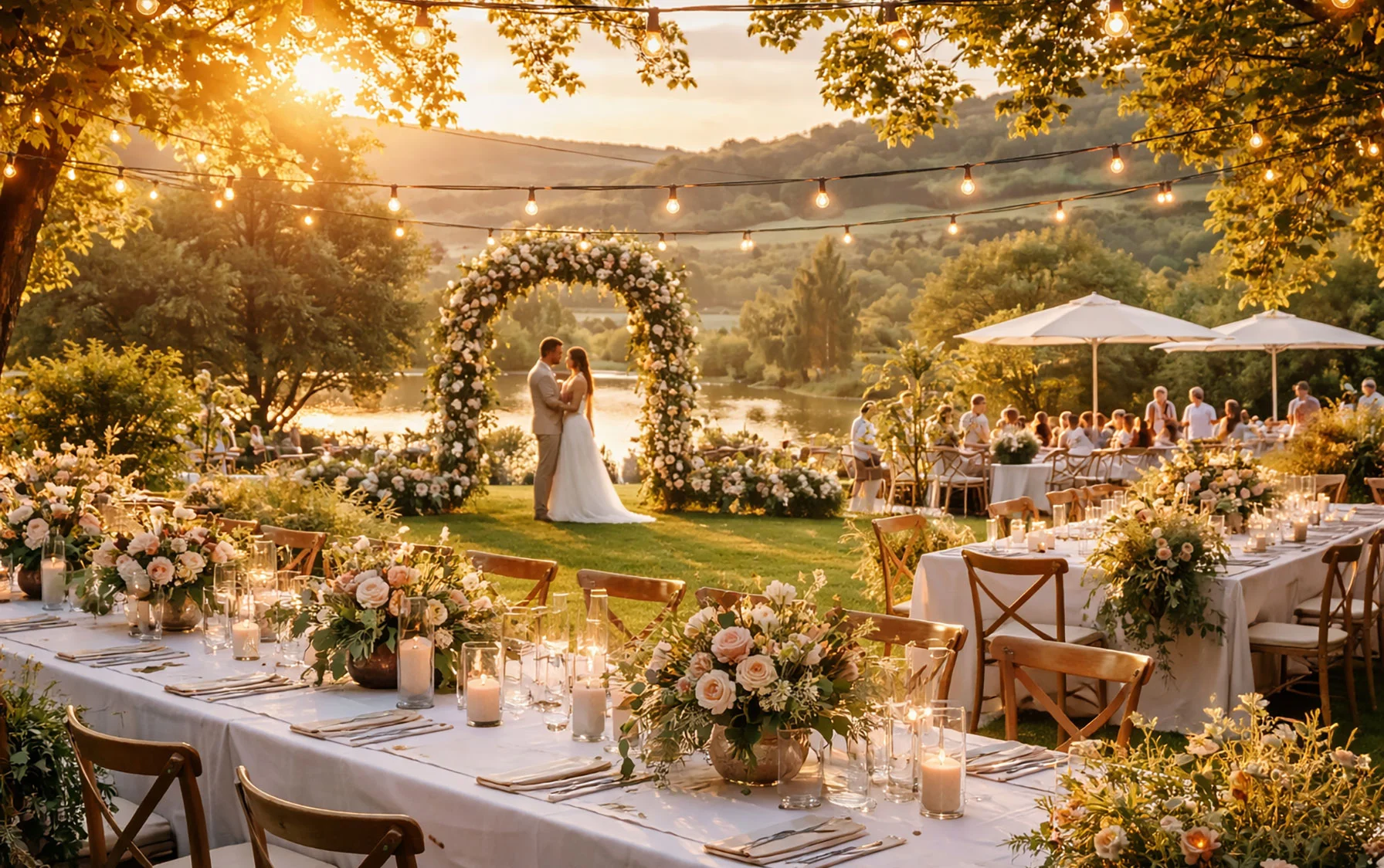
Sun-Kissed Celebrations: How to Plan a Beautiful Summer Wedding
Summer weddings often feel open before they feel formal. Light lasts longer, movement spreads outward, and the day seems able to hold more air, more time, and more ease. This article looks at summer weddings not only as a season of beauty, but as a form of celebration shaped by rhythm, weather, and the emotional trace a sunlit day leaves behind.
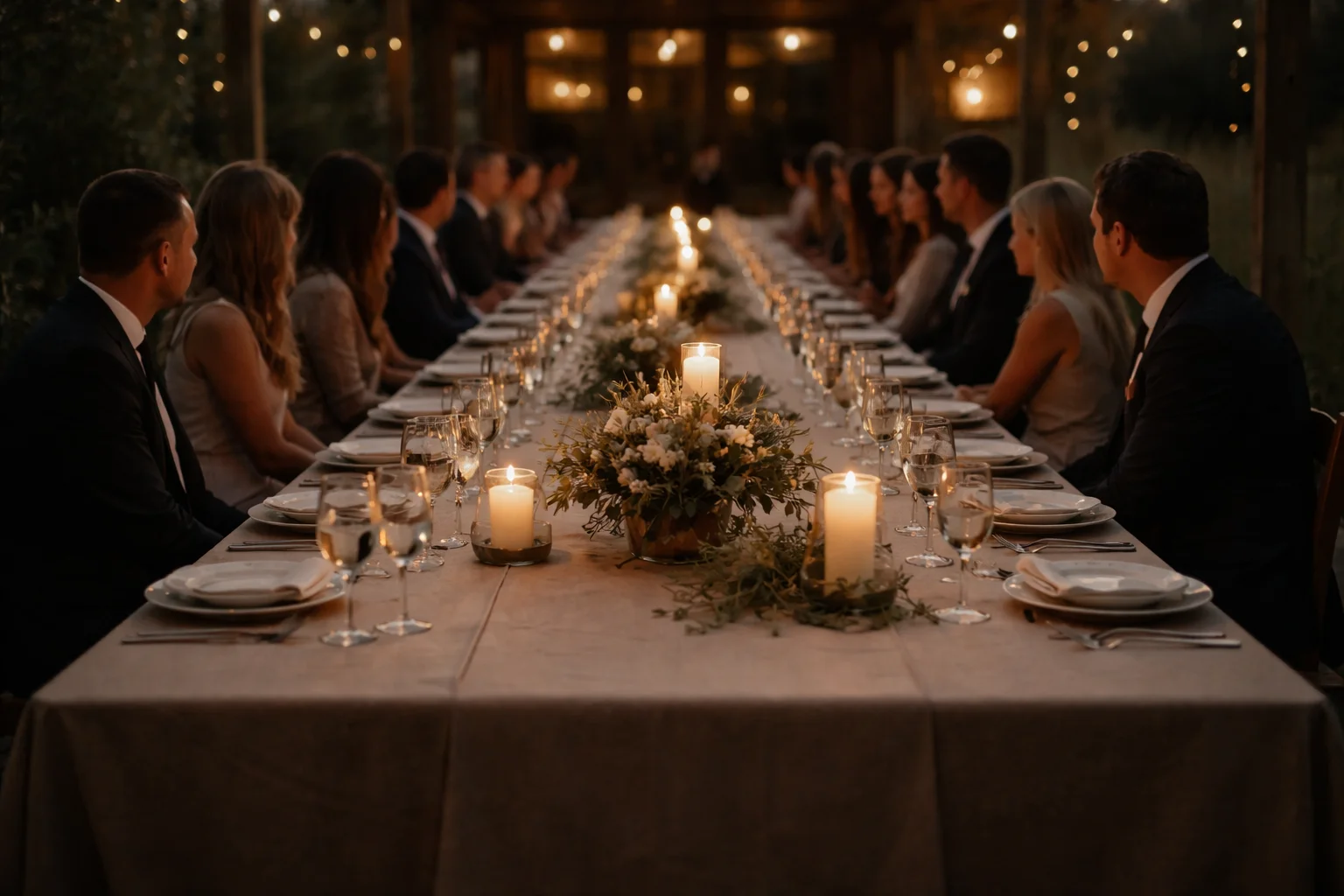
Candlelight at Wedding Tables: Local Light Zones
Candlelight at wedding tables rarely behaves as one smooth glow. It gathers in small zones, shifts across faces and objects, and leaves behind a more fragmentary, memorable atmosphere than even lighting ever could.
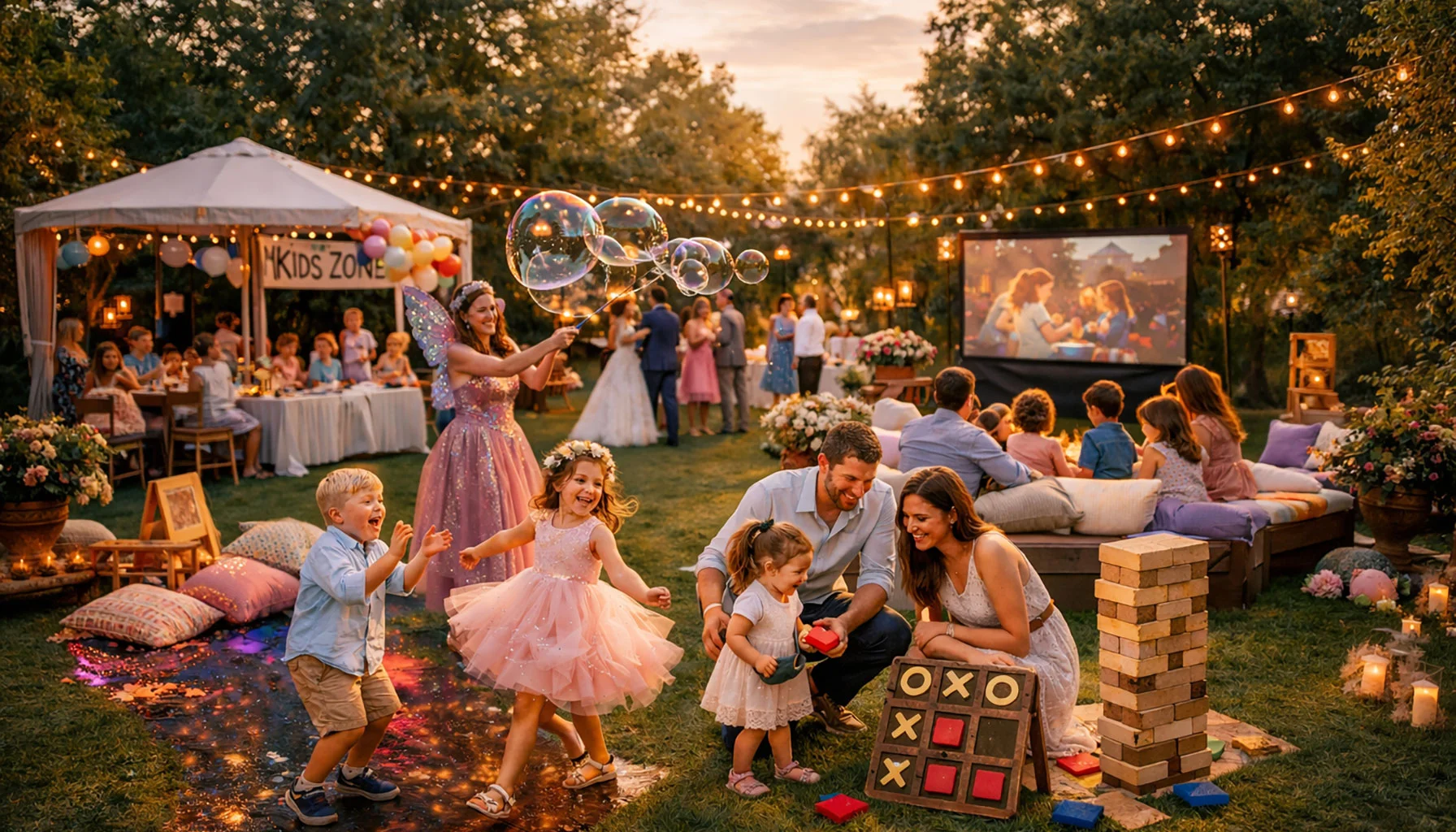
Creating Magical Moments for All Ages: Children and Family Entertainment at Modern Weddings
At weddings with children, the question is rarely whether entertainment exists. It emerges on its own the moment formal structure loosens. This article looks at family entertainment not as a side program, but as a quiet system of options that helps the day remain steady, generous, and memorable for guests of different ages.
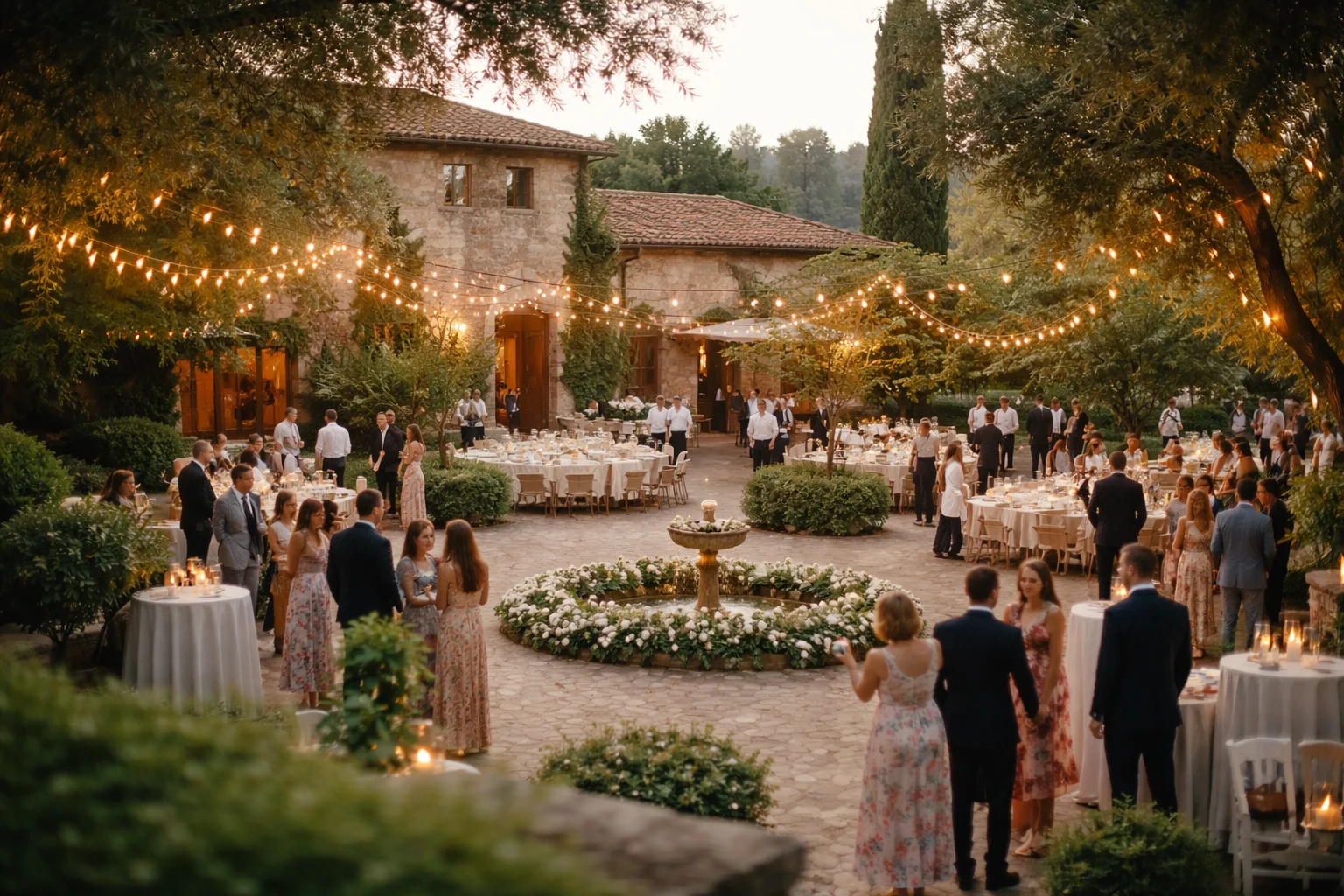
Location vs Expectation: How Wedding Spaces Actually Feel on the Day
A location is usually known before the day. Seen in photos, maybe visited once, talked through. It already exists in a certain way. Then the wedding happens inside it. People arrive, move, wait. The space stays the same, but it starts to read differently.
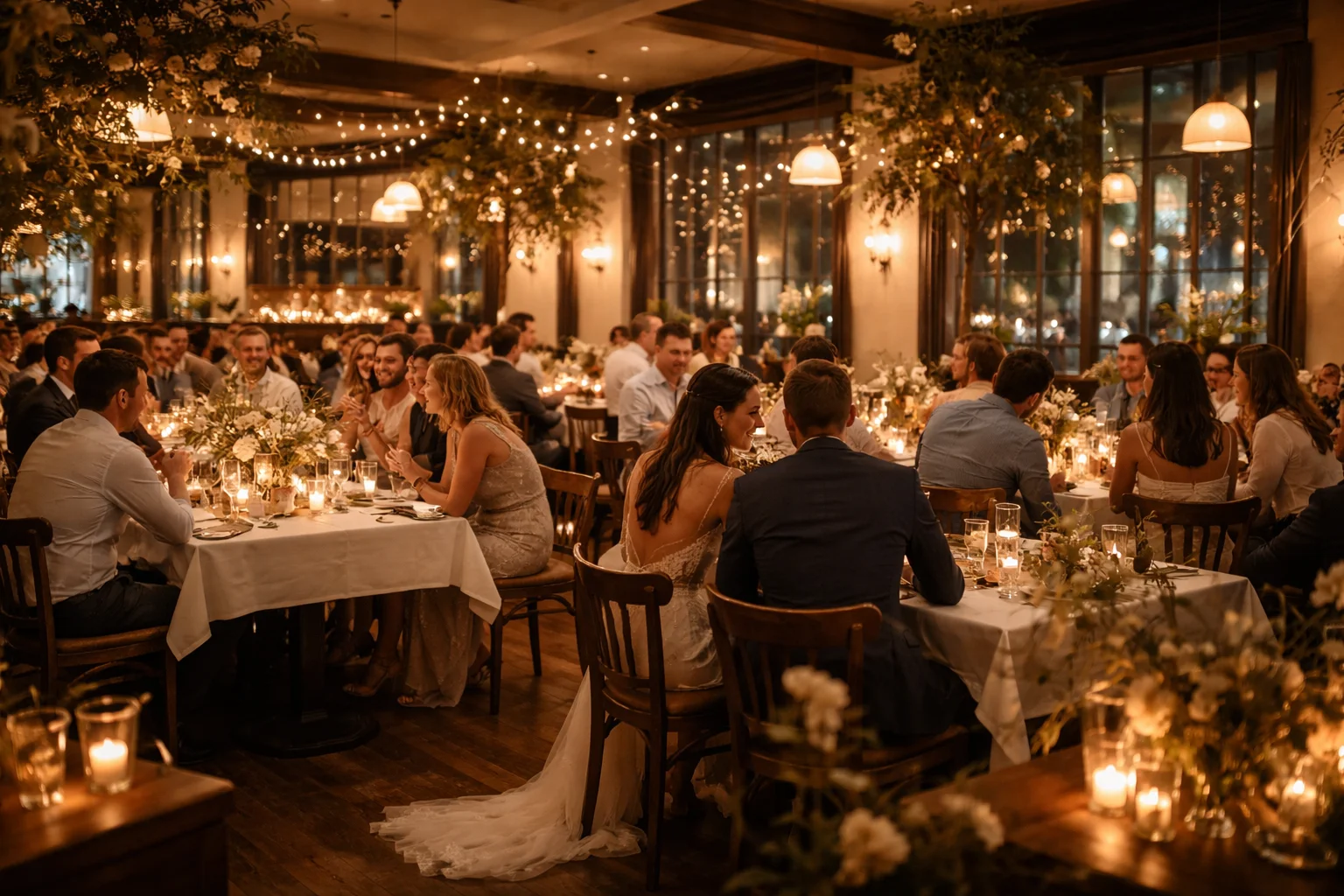
Restaurant Weddings: Why Some Rooms Feel Social Without Much Effort
Restaurant weddings often feel warmer more quickly than larger, more neutral venues. This article looks at why certain dining rooms support conversation, movement, and shared atmosphere so naturally, and how that ease turns into the small social scenes people later remember.
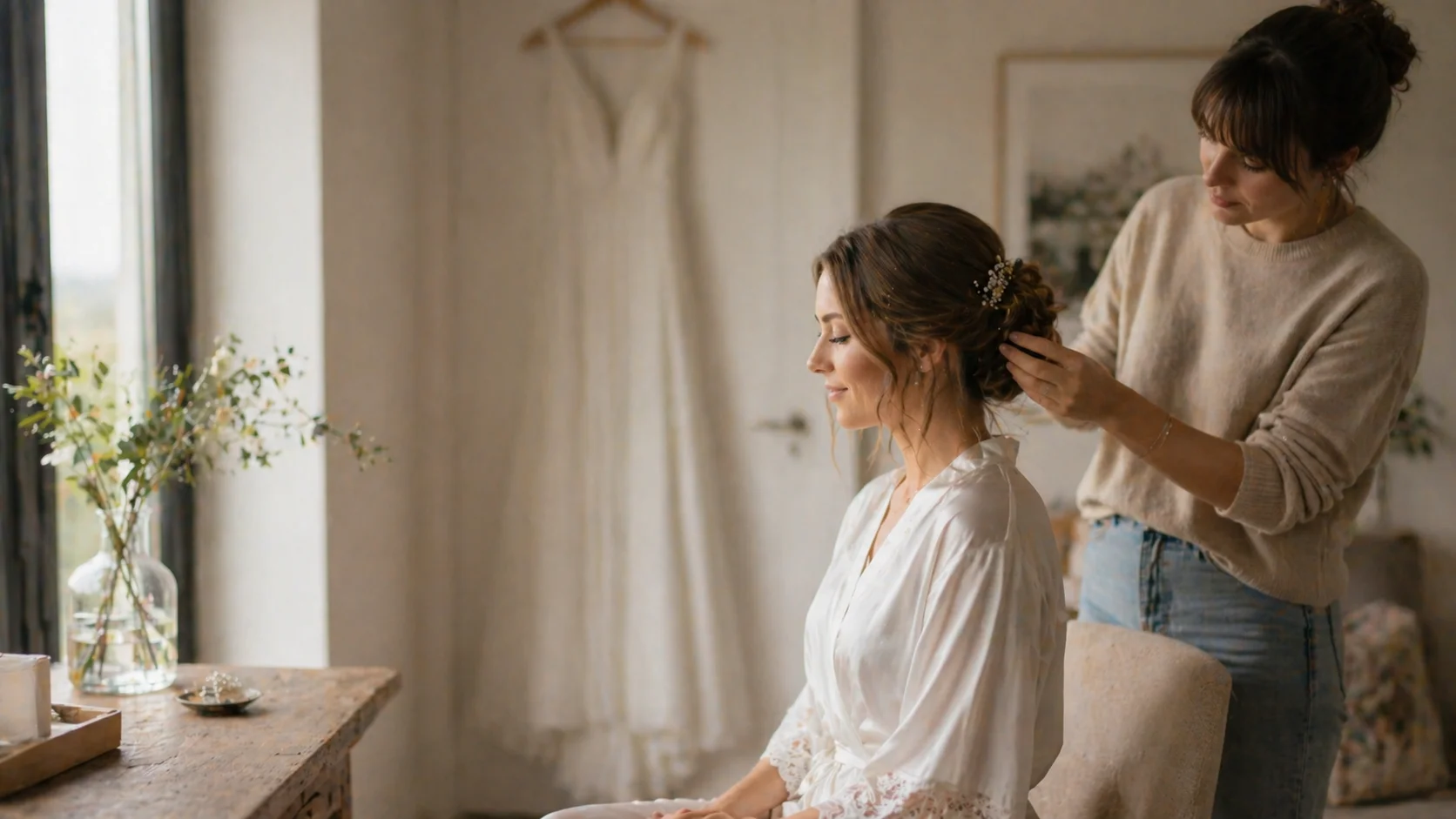
Bridal Getting-Ready Room Checklist: Light, Surfaces, Noise, and Movement
A bridal getting-ready room does more than hold hair, makeup, and dresses. This article looks at light, surfaces, noise, movement, privacy, and the quiet traces the room leaves on the morning before the ceremony.
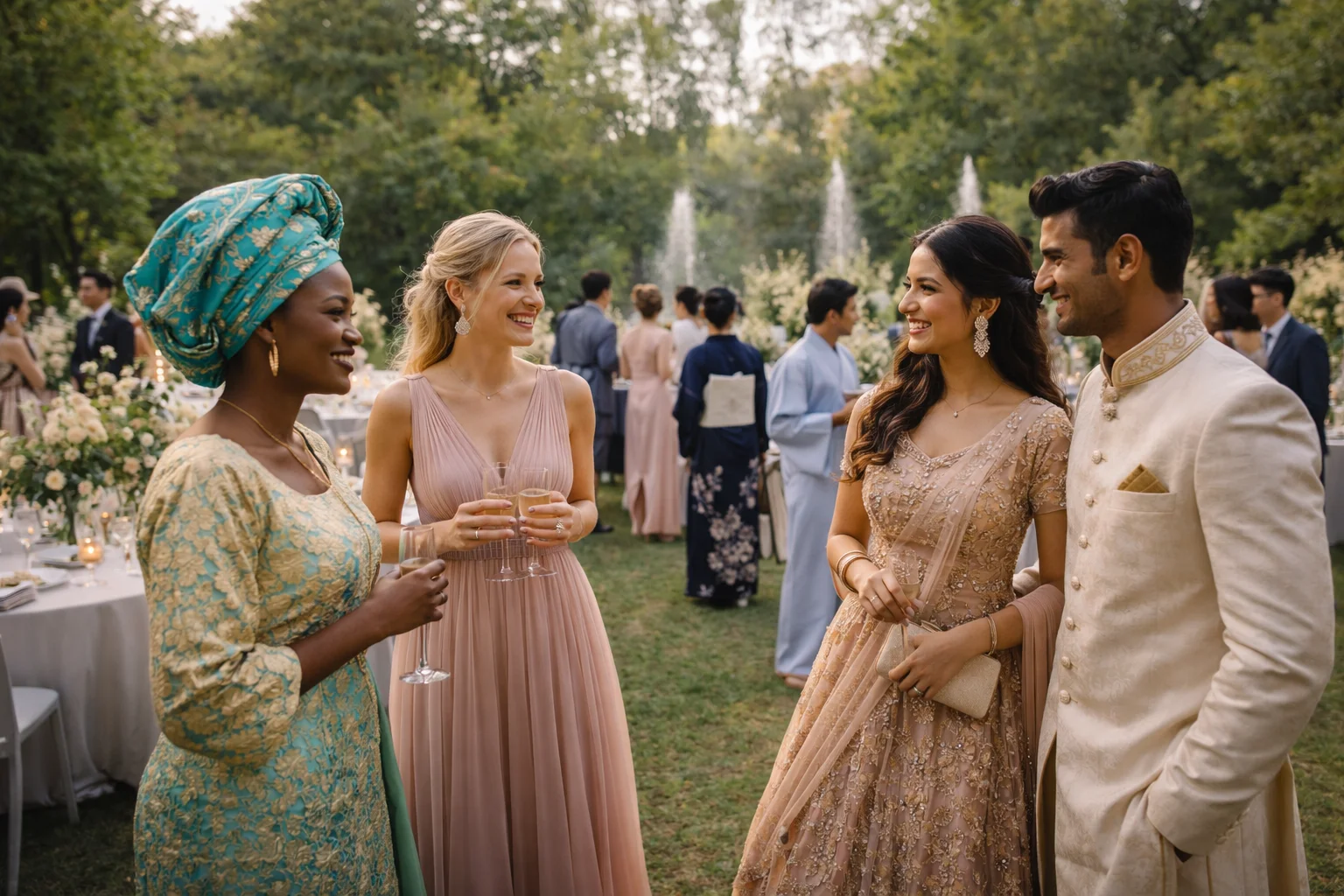
Dress Expectations at International Weddings: What Guests May Read Differently
Dress codes at international weddings are rarely just about clothing. Guests interpret formality, respect, family signals, and cultural meaning differently. This article looks at how attire is understood across contexts and why what seems obvious to one guest can feel unclear to another.
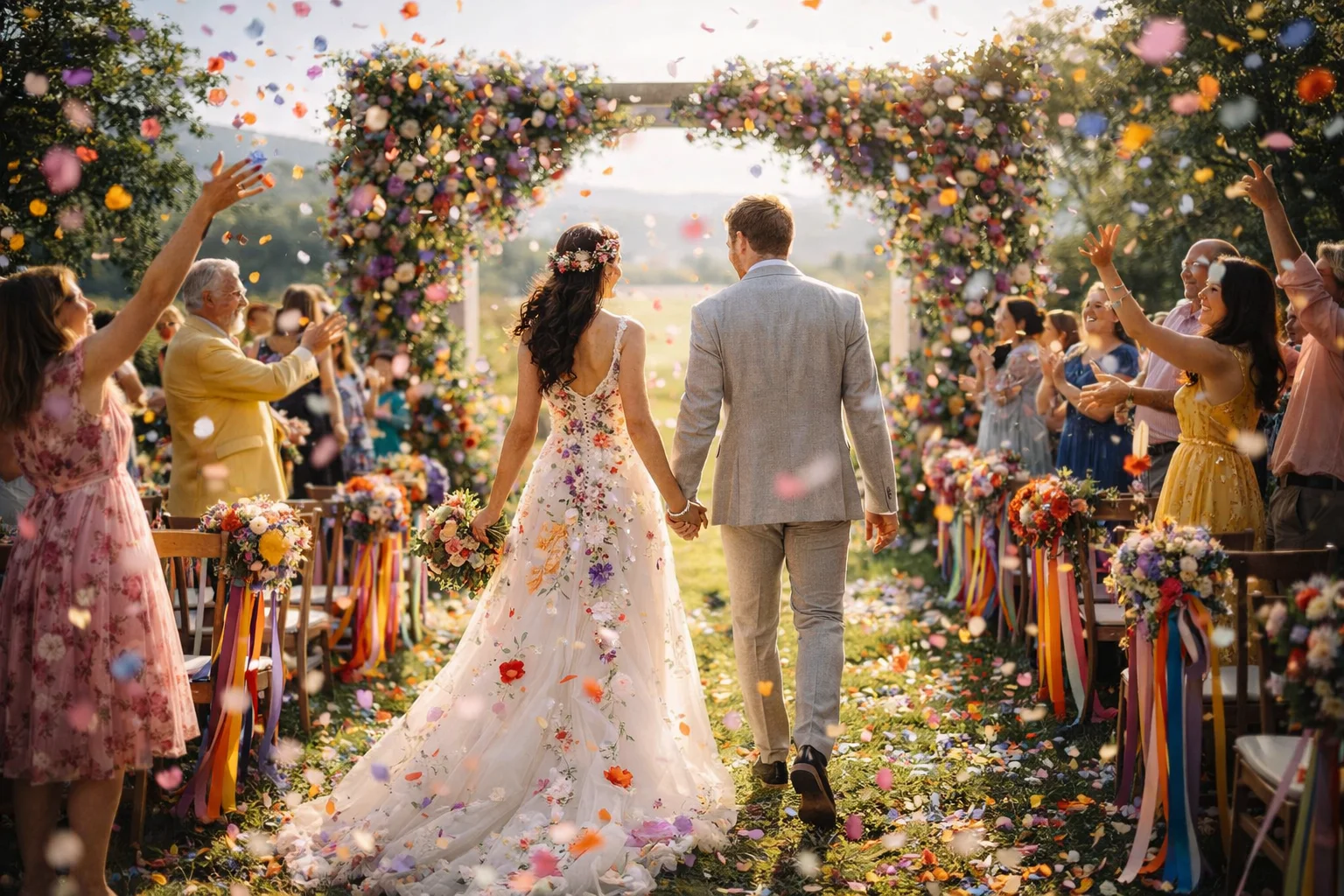
What Wedding Colors Leave Behind
Wedding colors are usually chosen for beauty, balance, or season. But they also leave a trace. Long after flowers fade and fabrics are packed away, certain tones remain attached to a promise, a room, a feeling. This article looks at wedding color not only as styling, but as part of the emotional imprint a ceremony leaves behind.