
Dress Expectations at International Weddings: What Guests May Read Differently
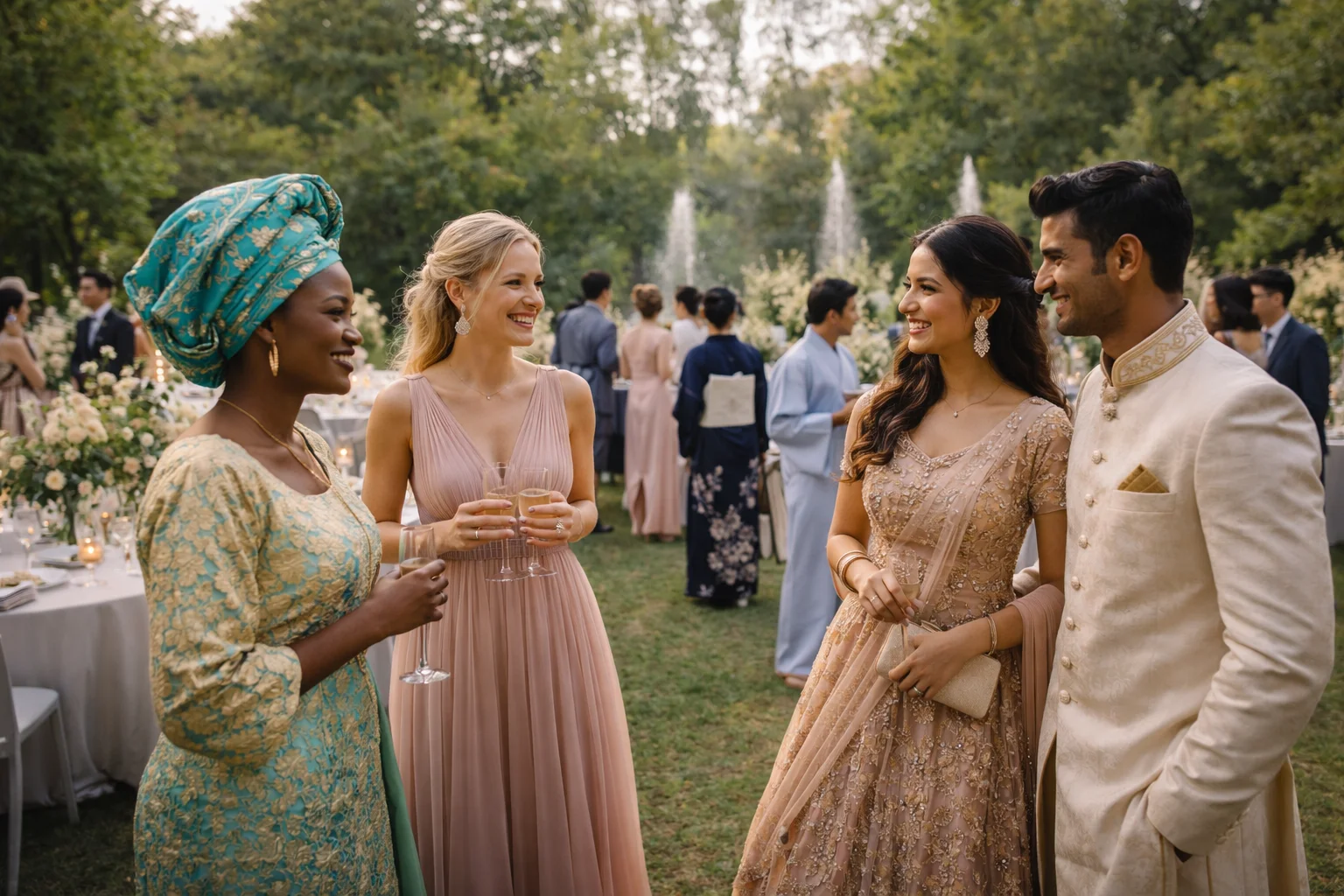
Clothing at weddings is rarely neutral. Even when invitations include clear instructions, guests arrive with their own cultural reading of what formal, festive, modest, or respectful means. At international weddings, these readings start to diverge in quiet but visible ways. A dress that feels entirely appropriate in one context can seem slightly too bold, too restrained, or simply out of rhythm in another.
This is exactly why the subject belongs not only to international wedding planning, but also to imprints. Loving Rocks describes imprints as the traces left behind by emotionally charged moments and social situations. Clothing can become one of those traces. Guests often remember less about the official wording of a dress code than about how a room looked, how dressed or underdressed they felt, and whether their presence aligned with the emotional tone around them.
International Weddings (Info) – CategoryWhat to Know When Love Crosses Borders bring together different cultures, traditions, and legal systems. Planning an international wedding often involves additional considerations such as legal requirements, documentation, cultural customs, language differences, and travel logistics for you and your guests. With the right preparation and understanding, international weddings can become a deeply meaningful celebration that reflects both your backgrounds and creates a truly unforgettable experience.

Some moments do not pass. They settle. Imprints are the emotional traces left by rituals, decisions, and answers that continue shaping relationships long after the moment is gone.
Definition
Dress expectations at international weddings describe the visible and invisible rules guests attach to clothing when cultures, families, and social codes meet in one celebration. These expectations are rarely fixed. They exist between written dress guidance and unspoken interpretation.
When Dress Codes Do Not Translate Cleanly
Words like black tie, cocktail, elegant, or festive do not carry the same weight everywhere. For some guests, they function as strict categories. For others, they are loose orientation at best. This is one of the central practical realities of international weddings: even when the wording looks clear, the social meaning behind it may still shift from one background to another.
Guests Read More Than the Invitation
People do not rely only on the dress code line. They also read the venue, the ceremony form, the season, the role of family, the religion of the setting, and even the posture of the people greeting them. A church wedding, a civil room, a garden dinner, or a multi-day destination celebration all suggest different forms of respect. At international weddings, these signals can be read unevenly, especially by guests who do not share the same visual reference points.
What Feels Respectful Is Culturally Shaped
In some places, restraint is read as elegance. In others, visible effort is part of showing honor to the couple and the family. One guest may choose quiet understatement to avoid drawing attention. Another may arrive in richer color, stronger jewelry, or more formal styling for exactly the same reason. Neither is necessarily wrong. The difficulty lies in assuming that respect looks the same everywhere.
Clarity Helps, But Precision Has Limits
Couples can reduce uncertainty by giving directional context rather than endless detail. Outdoor evening ceremony, formal indoor dinner, covered shoulders requested for the ceremony, or celebration on grass usually helps more than long fashion instructions. Guests do not need a fully managed aesthetic system. They need enough cultural and situational orientation to make an intelligent choice without fear of accidental disrespect.
Why Clothing Leaves a Trace
What people wear becomes part of how the wedding is remembered. Not because clothes matter more than vows or ritual, but because appearance shapes first reading. It leaves an imprint on how welcome, exposed, aligned, or out of place guests felt in the room. In that sense, dress expectations matter not only socially but emotionally. They affect how the atmosphere settles into memory after the event is over.
Conclusion
Dress expectations at international weddings are less about perfect correctness than about interpretation. Guests are reading culture, tone, ritual form, and each other at the same time. That is why clothing can become so revealing in these settings. It shows where assumptions differ, but also how much people are trying to meet the moment with care.
Related Articles
Visa and Travel Rules for International Wedding Guests
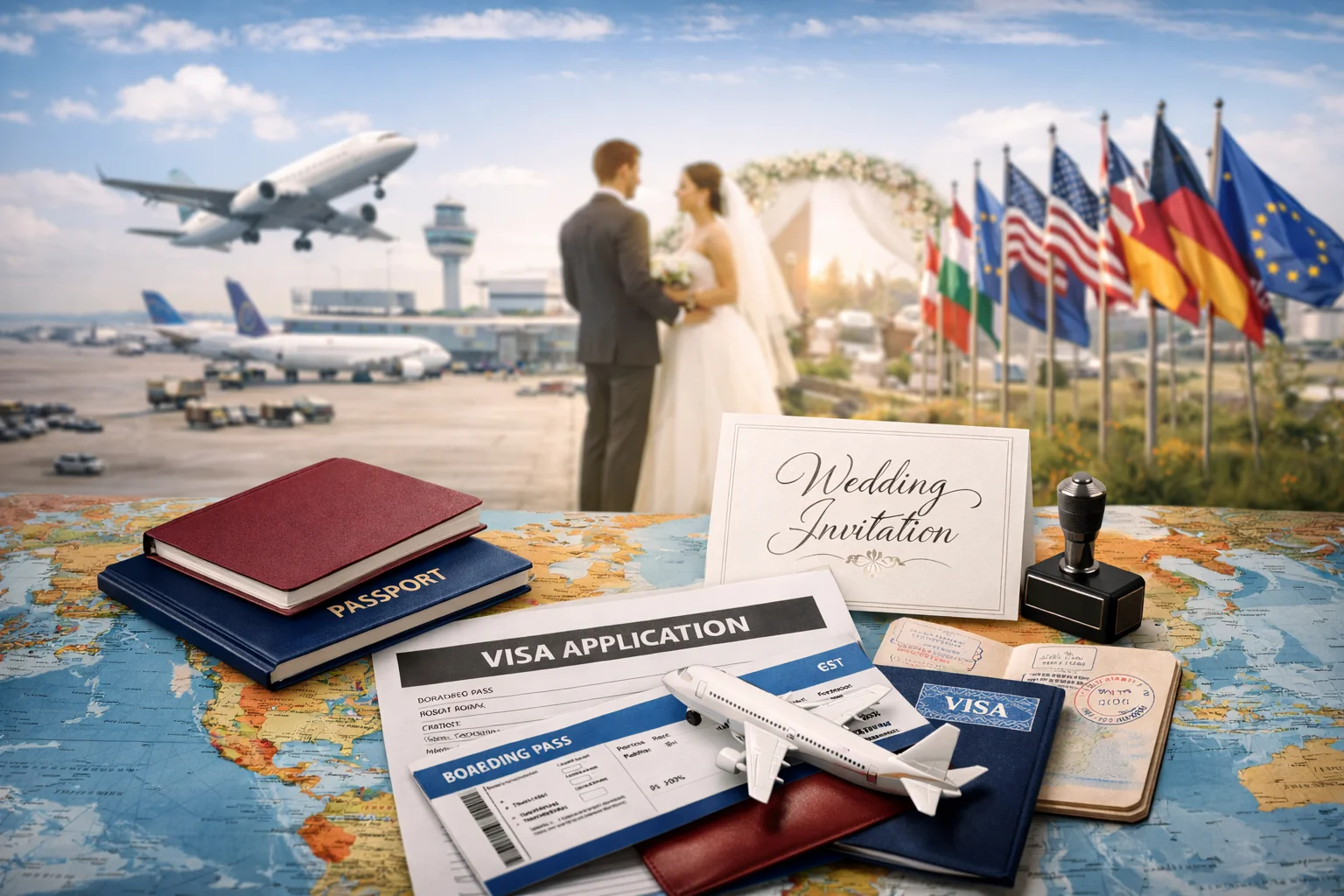
At international weddings, the guest list and the travel list are often two different things. An invitation may be accepted quickly, warmly, without much hesitation. Then the paperwork starts. Passport dates are checked. Entry rules are read again. A short family trip suddenly sits inside a formal border process.
Who Is Invited to the Ceremony and Who Only to the Celebration
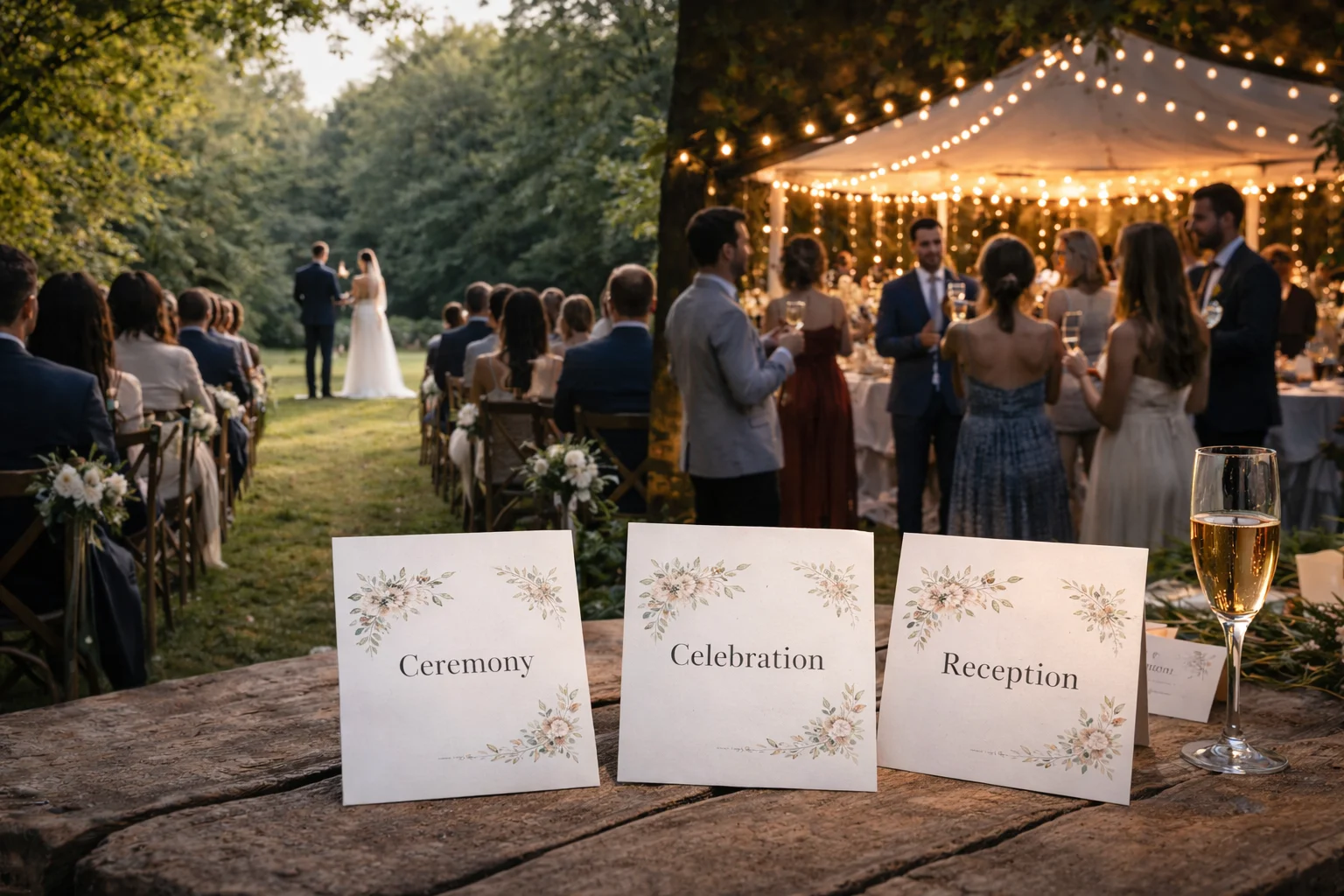
Not every wedding invitation has to include every part of the day. But the difference between being invited to the ceremony and being invited only to the celebration carries more meaning than many couples first assume. This article looks at how to make that distinction clearly, gracefully, and in a way that fits both the ritual weight of the ceremony and the social reality of the celebration.
Weddings in Comparison
This text brings together impressions from weddings in different countries and social settings. It describes how rituals, timing, and atmosphere appear in practice, without explanation or judgment. The focus is on closeness, structure, and the way community becomes visible during a public moment.
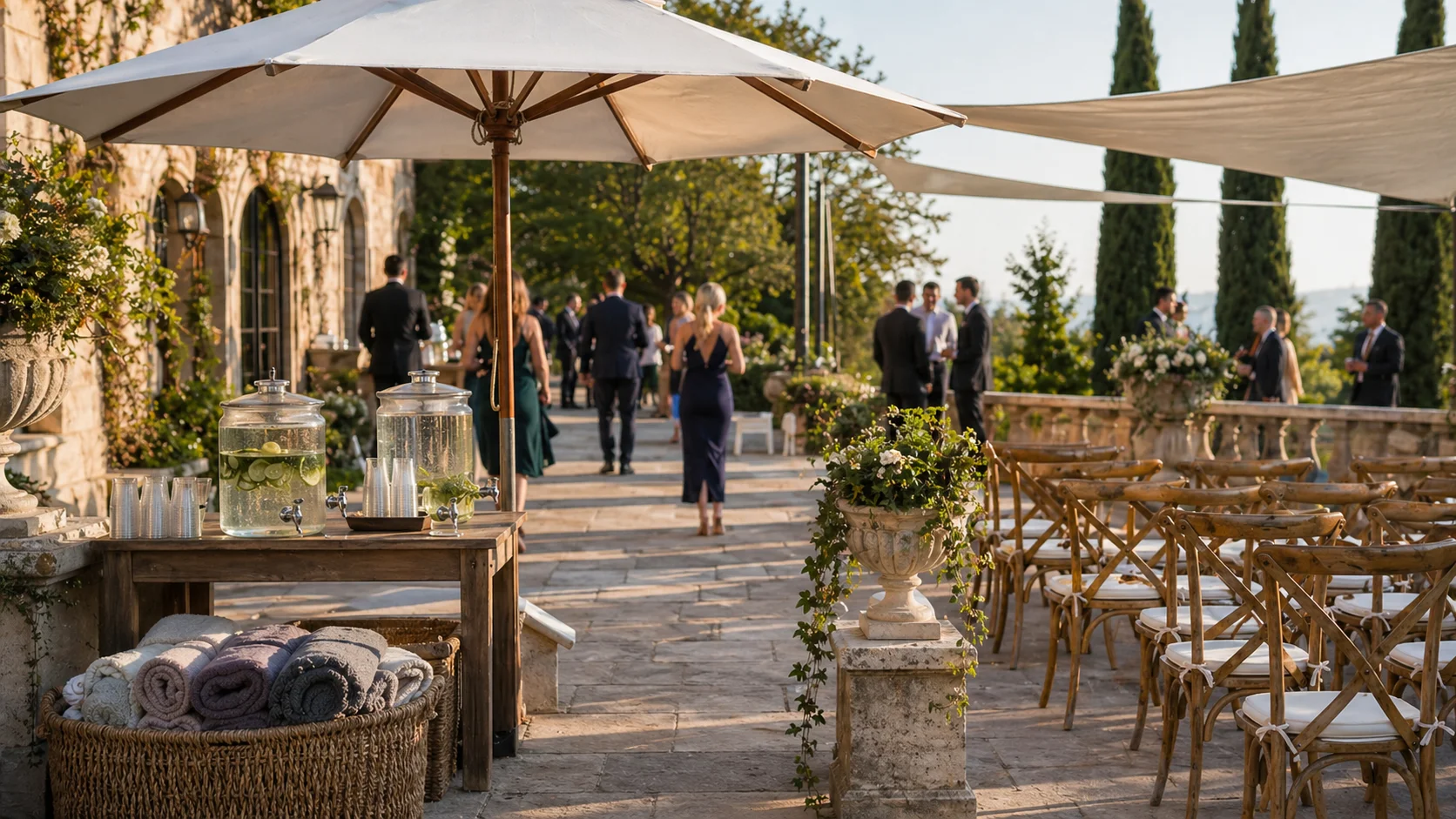
Backup Checklist for Outdoor Weddings: Shade, Wind, Cold, and the Things People Forget
Outdoor wedding backup plans are not only about rain. This article looks at shade, wind, cold, ground conditions, paths, loose details, guest comfort, and the small weather traces that shape how an outdoor celebration is remembered.
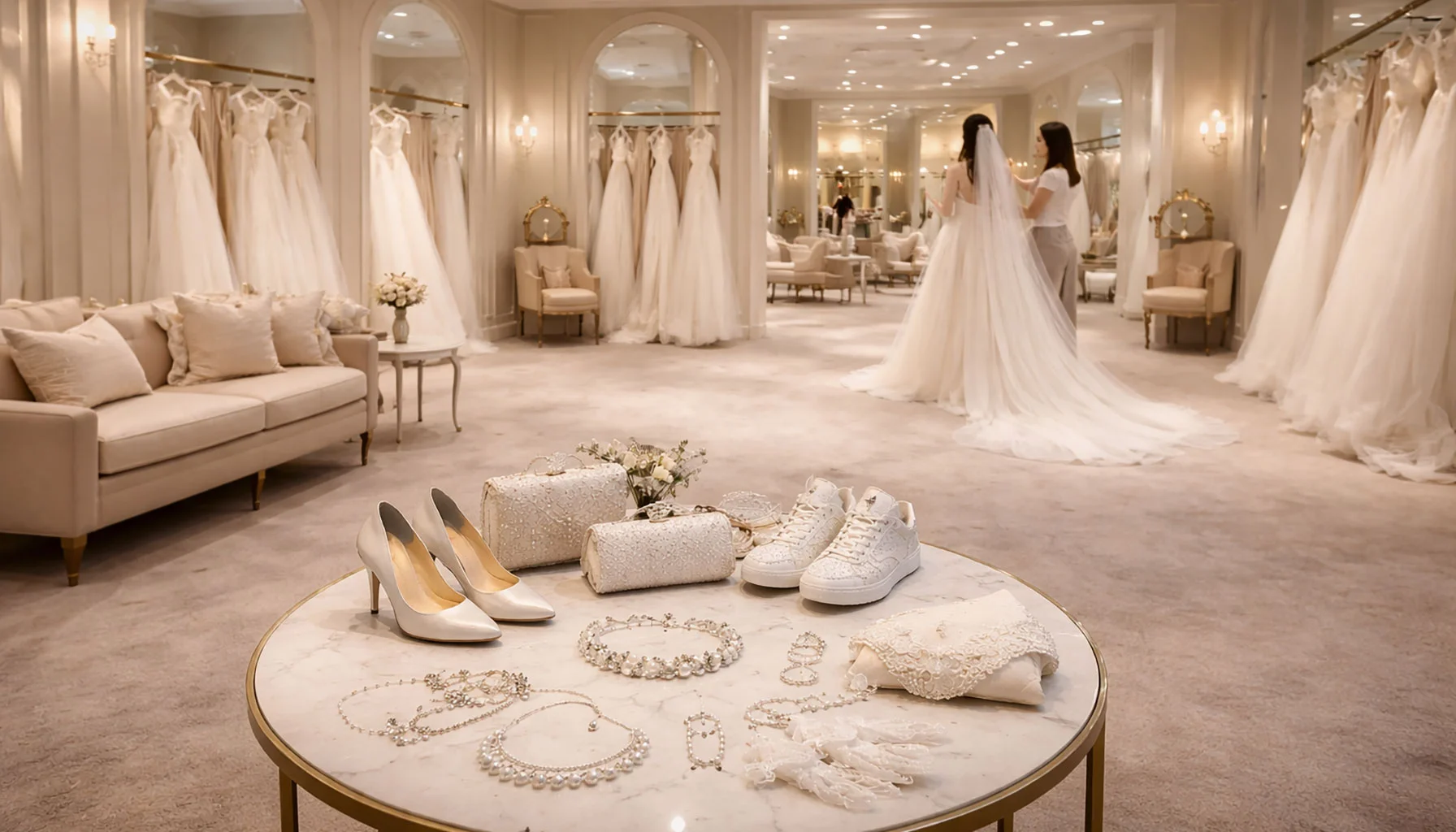
Bridal Accessories in Interplay – A Silent Addition
Accessories for the bride mostly remain in the background. They don't impose themselves and are rarely noticed first. In bridal shops, however, it repeatedly becomes apparent that precisely these pieces structure and round off the overall look. Veils, shoes, jewelry or small accessories do not change the dress, but rather the bride's effect. Observations from practice show how subtle decisions are made and why accessories are often chosen only late – and then stay.
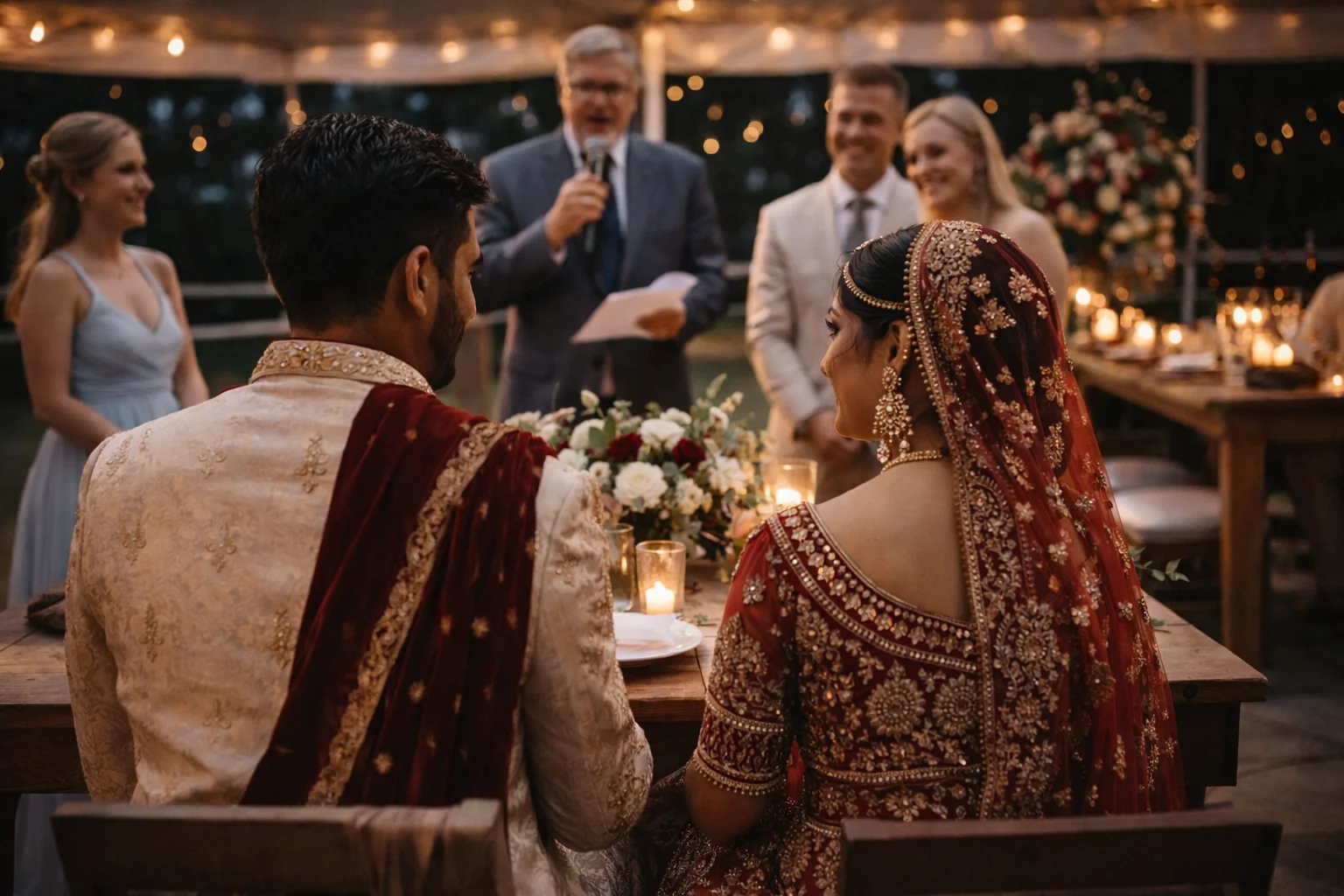
International Weddings and the Meaning of What Is Not Said
An international wedding brings visible complexity, but its deeper challenge often lives in the quiet layer beneath logistics. Between cultures, traditions, and expectations, what remains unspoken can shape the ceremony as much as anything that is formally planned.
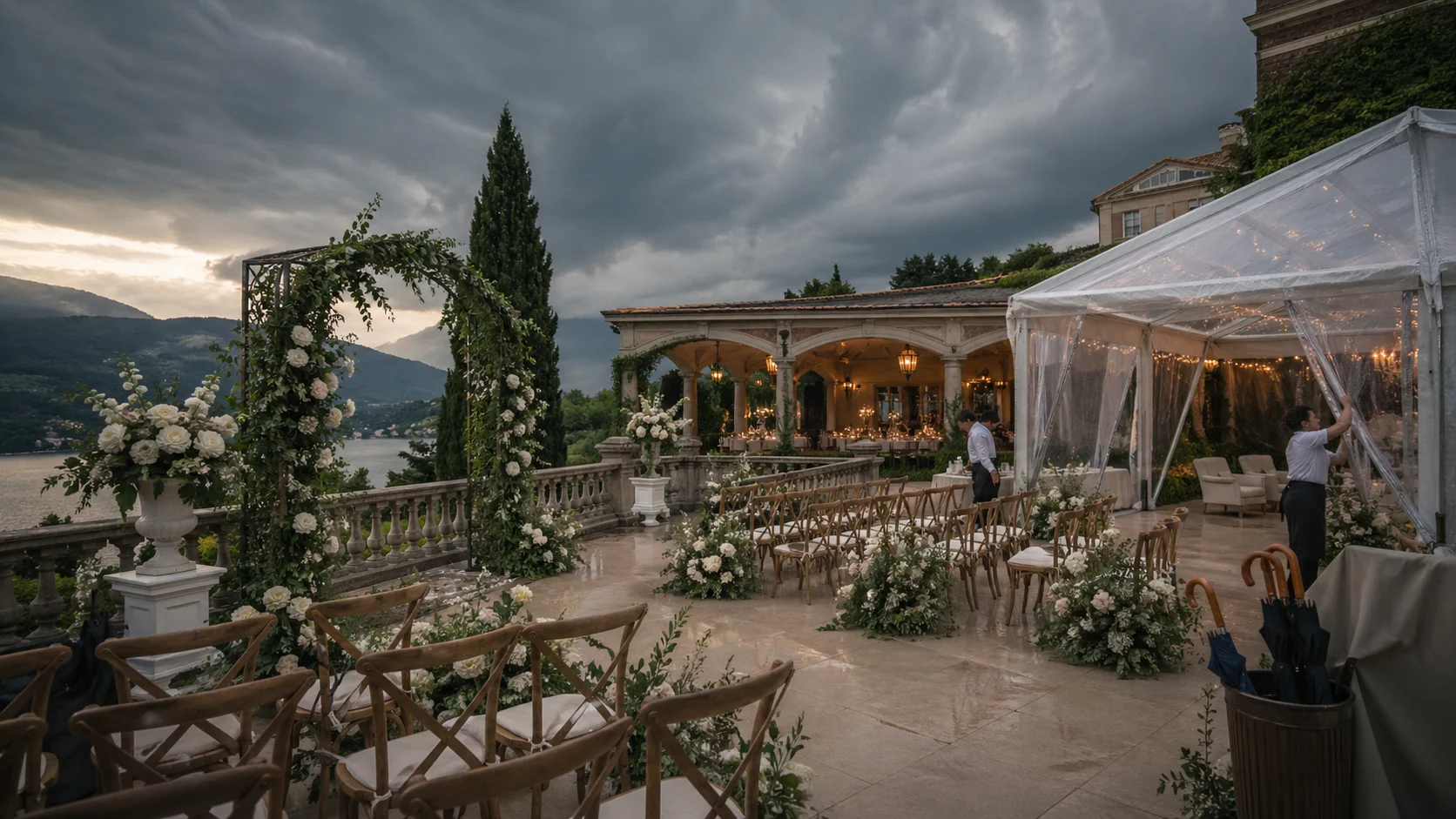
Rain Plan Checklist: What Needs Deciding Before Weather Becomes the Mood
A wedding rain plan is rarely just a backup for logistics. It also shapes whether weather stays manageable or quietly takes over the emotional tone of the day. This article looks at what needs to be decided early, so rain changes the setting without deciding the atmosphere.
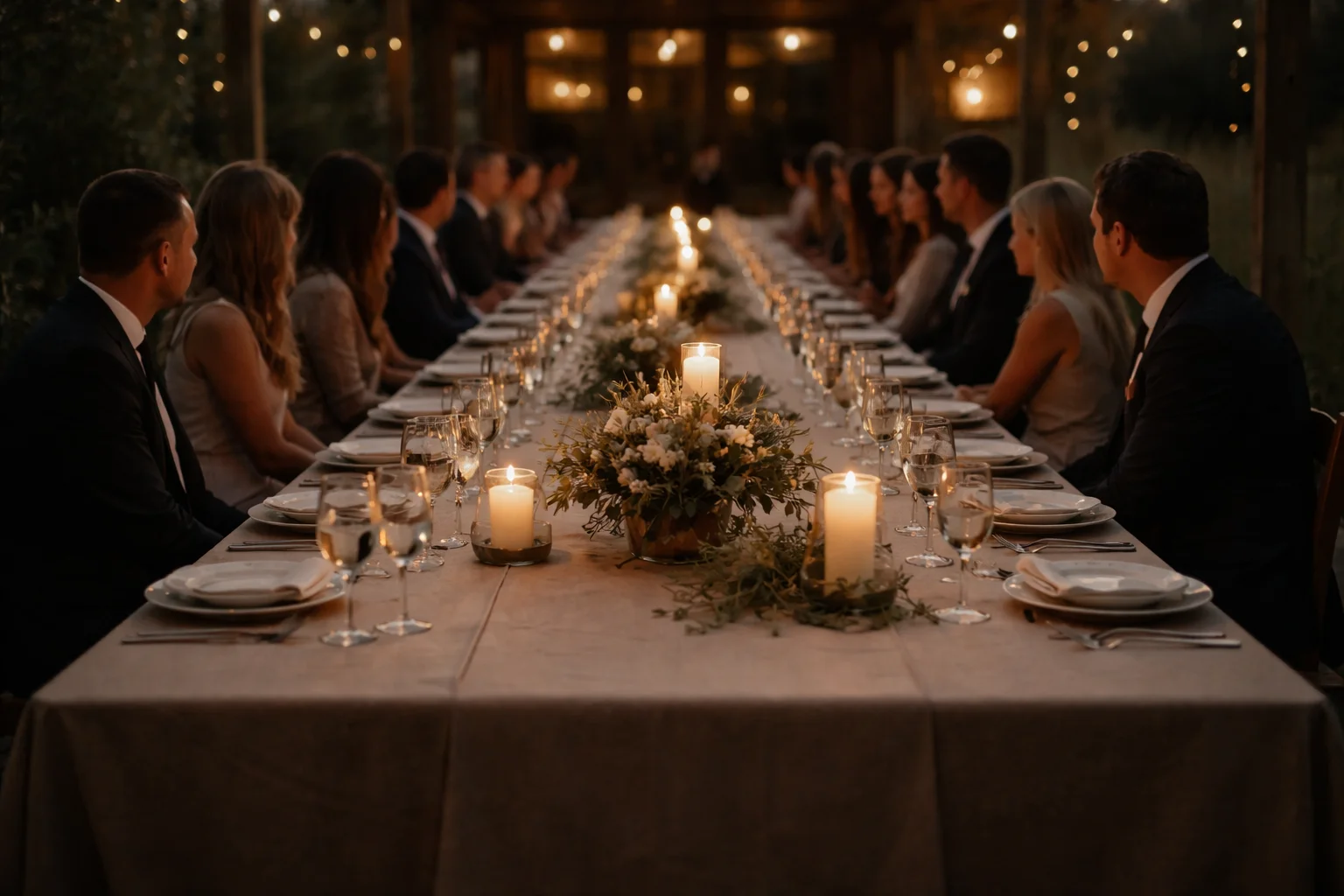
Candlelight at Wedding Tables: Local Light Zones
Candlelight at wedding tables rarely behaves as one smooth glow. It gathers in small zones, shifts across faces and objects, and leaves behind a more fragmentary, memorable atmosphere than even lighting ever could.
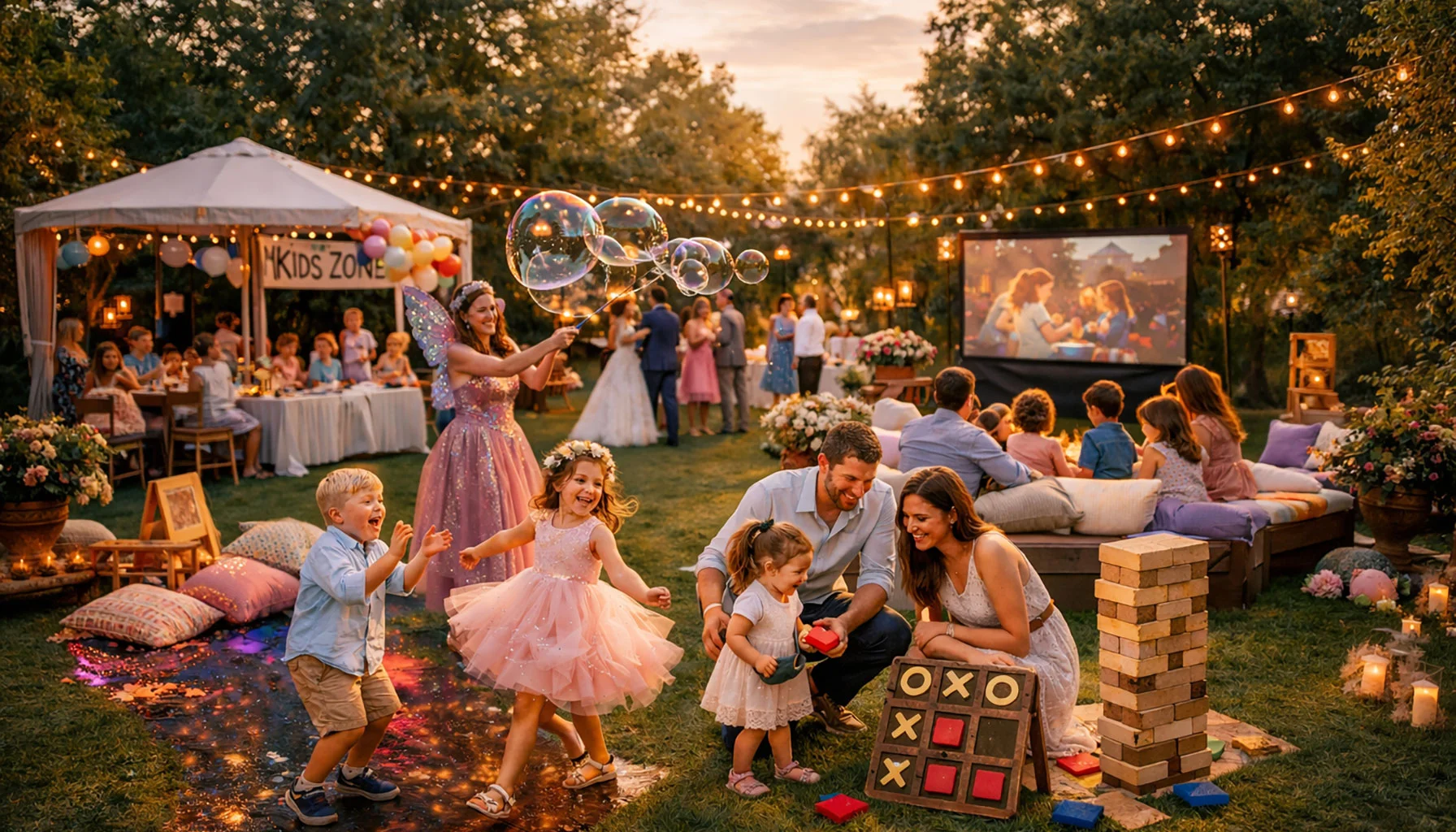
Creating Magical Moments for All Ages: Children and Family Entertainment at Modern Weddings
At weddings with children, the question is rarely whether entertainment exists. It emerges on its own the moment formal structure loosens. This article looks at family entertainment not as a side program, but as a quiet system of options that helps the day remain steady, generous, and memorable for guests of different ages.
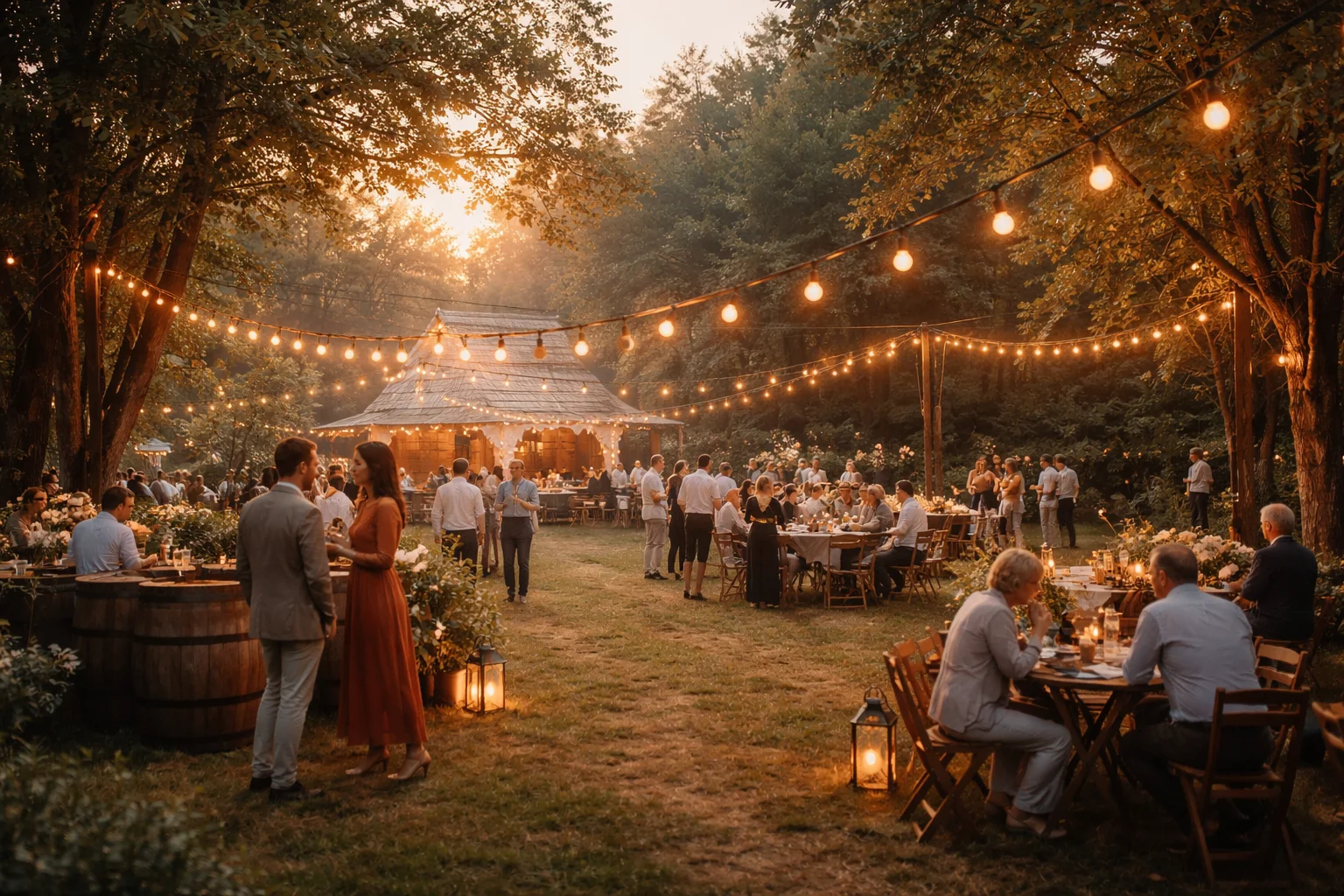
When the Day Builds Itself in Small Moments
Some weddings are held together less by formal program points than by short, unplanned interactions that quietly take over the day. This article looks at how micro-moments shape flow, attention, memory, and atmosphere, especially in smaller celebrations.
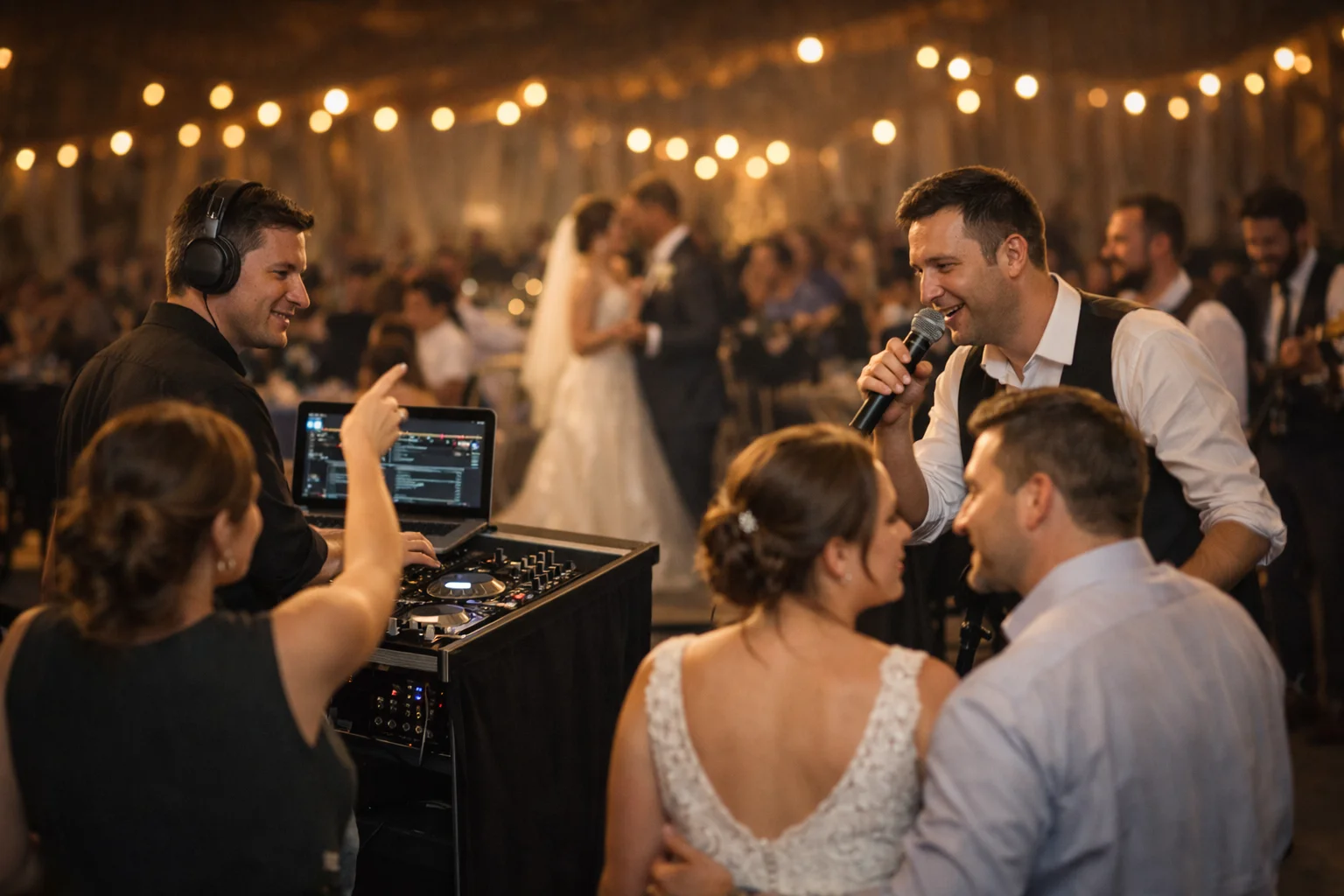
How Requests Move Through a Wedding Night
Music requests at weddings are rarely just about songs. They move through timing, confidence, mood, and the different logic of DJs and live bands, shaping the social texture of the night as much as the playlist itself.

Post-Wedding Gatherings Across Countries: When the Celebration Continues Elsewhere
Some weddings do not end when the official day is over. They continue in another city, another country, another family home, or another social circle that could not be present the first time. This article looks at what post-wedding gatherings across countries actually mean and why they are often less like an encore than a second form of the wedding itself.