
Wedding Lighting: Creating Atmosphere That Lasts
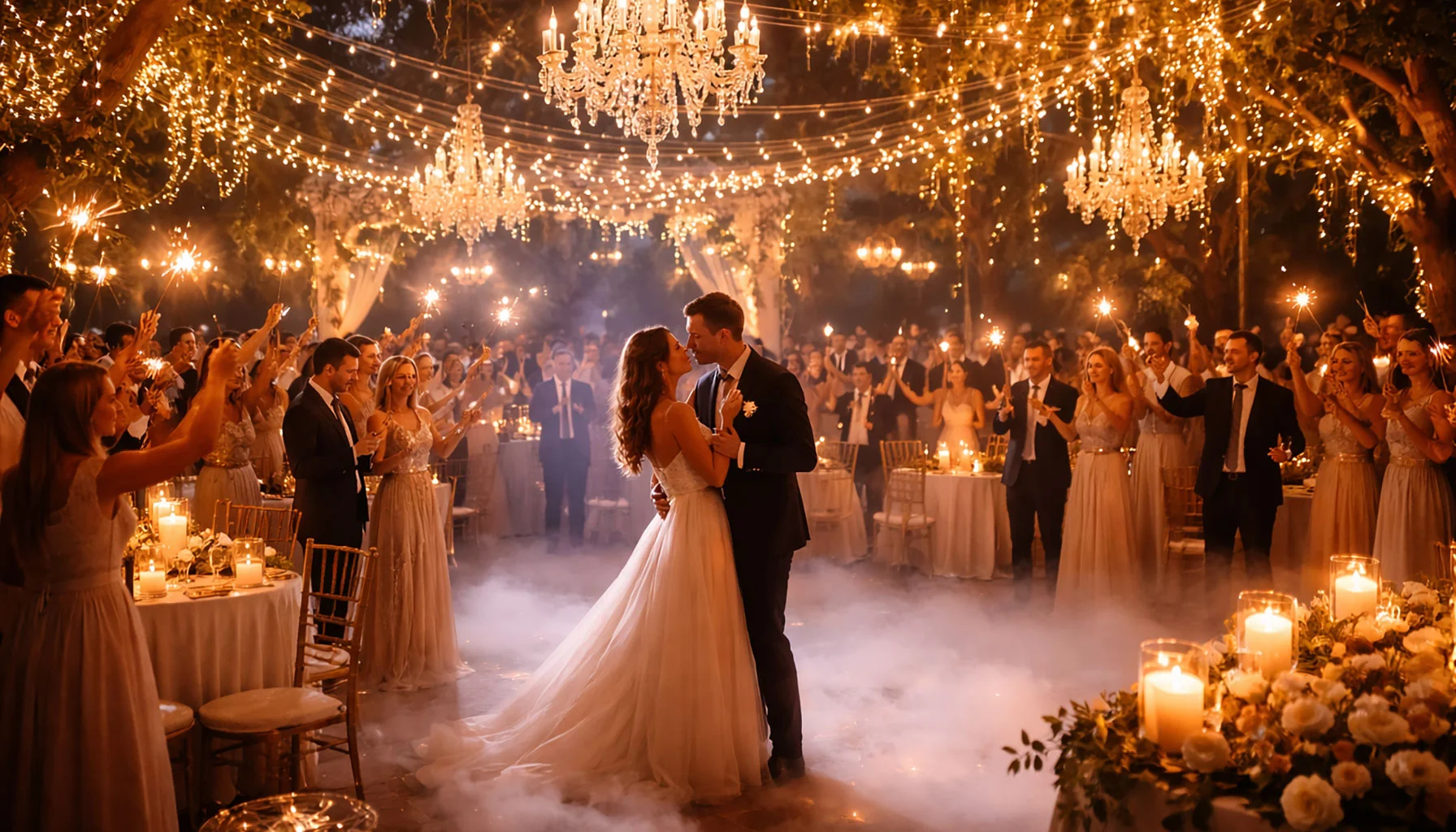
Lighting quietly determines how a wedding is perceived. It defines space, directs attention, and influences how moments are remembered. Guests rarely talk about fixtures or technology, yet they notice how a room feels. Calm. Open. Focused. Thoughtful lighting does not decorate. It supports the rhythm of the day and allows people to settle into it.
This is why the subject belongs naturally to both Lighting Concepts and Imprints. On Loving Rocks, lighting is already treated as something that shapes tone, movement, and guest experience, while imprints are the emotional traces that remain active after a meaningful moment has passed. Wedding light often works in exactly that way. It is not always consciously noticed while the day unfolds, but it remains afterward as a feeling of warmth, clarity, intimacy, or ease.
Lighting ConceptsThe right lighting transforms a wedding space and sets the emotional tone of the celebration. From soft ambient light to dramatic highlights, thoughtful lighting enhances décor, creates atmosphere, and guides guests through different moments of the day. Carefully planned lighting concepts bring warmth, elegance, and depth to every setting.
Some moments do not pass. They settle. Imprints are the emotional traces left by rituals, decisions, and answers that continue shaping relationships long after the moment is gone.
Definition
Wedding lighting is not only a technical necessity or decorative layer. It is a spatial and emotional structure that shapes how rooms are read, how transitions are felt, and how guests remain oriented and comfortable from arrival to late evening. Its strongest effect is often indirect. It helps the celebration feel coherent without demanding attention for itself.
Lighting Concepts Begin with Observation
Effective wedding lighting starts early. Not with equipment, but with observation. How the venue behaves. How daylight changes. How people move through the space. Architectural features benefit from light that defines rather than overwhelms. Daylight, dusk, and night require different responses. Each phase of the wedding carries a different emotional tone, and lighting works best when it supports those shifts quietly instead of trying to announce them.
A Good Lighting Plan Gives the Day Continuity
A lighting plan creates clarity because it lets creative ideas work reliably across the whole day. The strongest plans define an overall mood first, divide the venue into zones such as ceremony, dinner, lounge, and dance areas, and then work in layers. Ambient light helps orientation. Accent light gives depth. Decorative light adds atmosphere. The key is that transitions should follow the flow of the event rather than interrupt it.
Different Spaces Need Different Kinds of Light
Layered candle and glow setups often work well for dinner and conversation focused areas because they create intimacy without flattening the room. Overhead lighting can define shared spaces when used with restraint. Architectural lighting helps shape walls, columns, and large interiors without fully flooding them. Outdoors, tree lighting, pathway lighting, and focused light around ceremony backdrops give orientation without disturbing the night. Dance areas usually need a different balance again, with more contrast and gentle movement, but still enough ambient ease that people do not feel cut off from the rest of the celebration.
Guests Feel Good Lighting as Comfort
Guests rarely notice when lighting is done well in a technical sense. They simply stay longer, talk more, and feel comfortable. Warm white light, soft neutral tones, limited accent colors, and dimmed layers that still allow faces and plates to remain readable usually support that feeling. Strong lighting rarely draws attention to itself. It feels settled, considered, and easy to inhabit.
Why Lighting Leaves Such a Strong Imprint
Lighting shapes memory because it changes how moments are emotionally stored. It affects whether a ceremony felt open or concentrated, whether dinner seemed relaxed or formal, and whether an evening softened gradually or broke too sharply from one phase into the next. Most guests would not describe this in technical terms. What remains is the imprint of the atmosphere itself. Light becomes one of the reasons a wedding later feels warm, close, steady, or quietly unforgettable.
Conclusion
Wedding lighting shapes how a celebration is remembered because it connects spaces, people, and moments without drawing attention to itself. When planned carefully, it gives the day rhythm, supports comfort, and leaves behind a feeling that lasts beyond the event. That is why good lighting matters. Not as visible spectacle, but as part of the emotional atmosphere guests carry with them afterward.
Related Articles
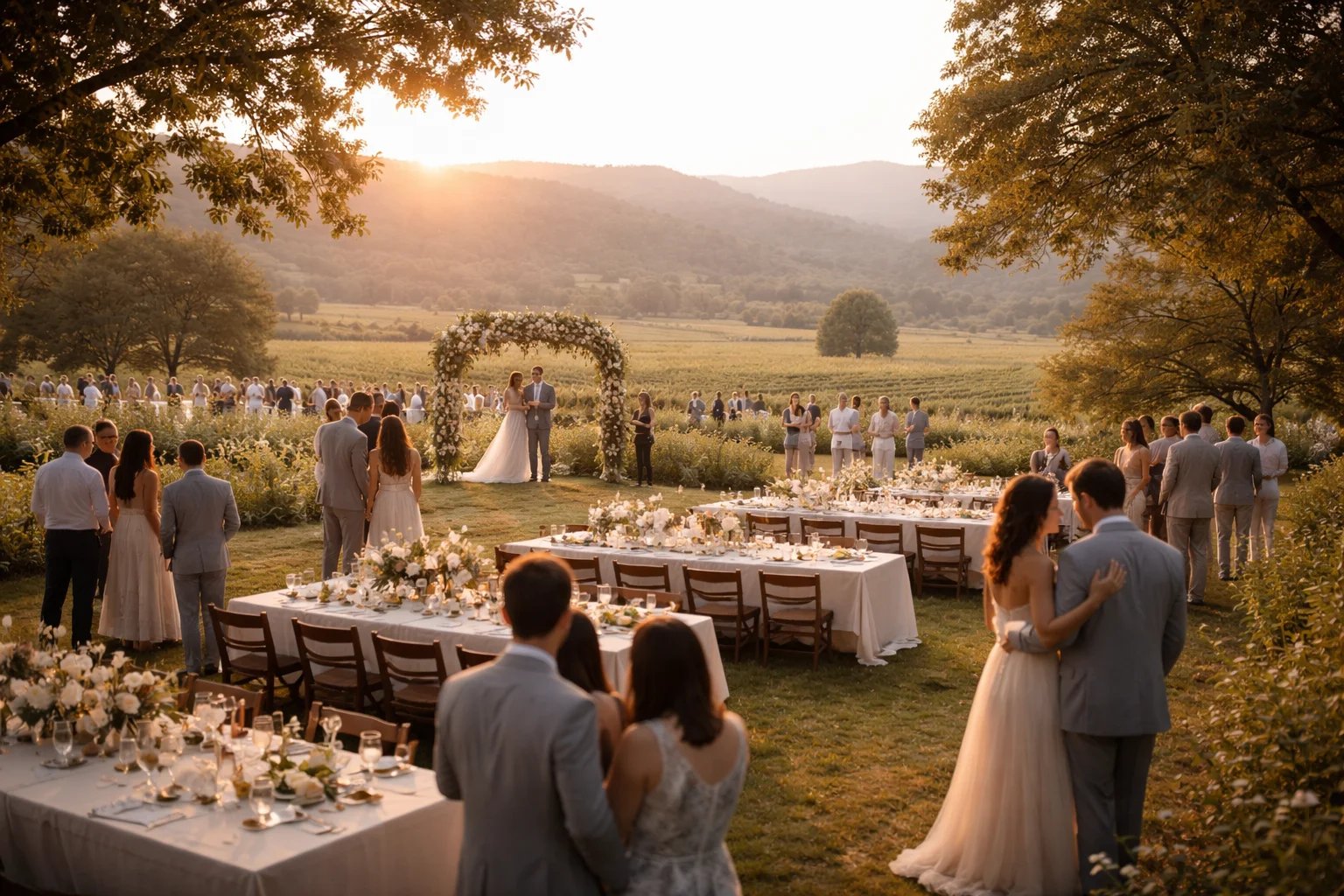
Light and Time at Weddings: How Daylight Subtly Shifts Flow and Perception
Daylight changes more than the look of a wedding. It shifts pacing, delays transitions, draws guests toward or away from certain spaces, and leaves behind some of the strongest visual impressions of the day.
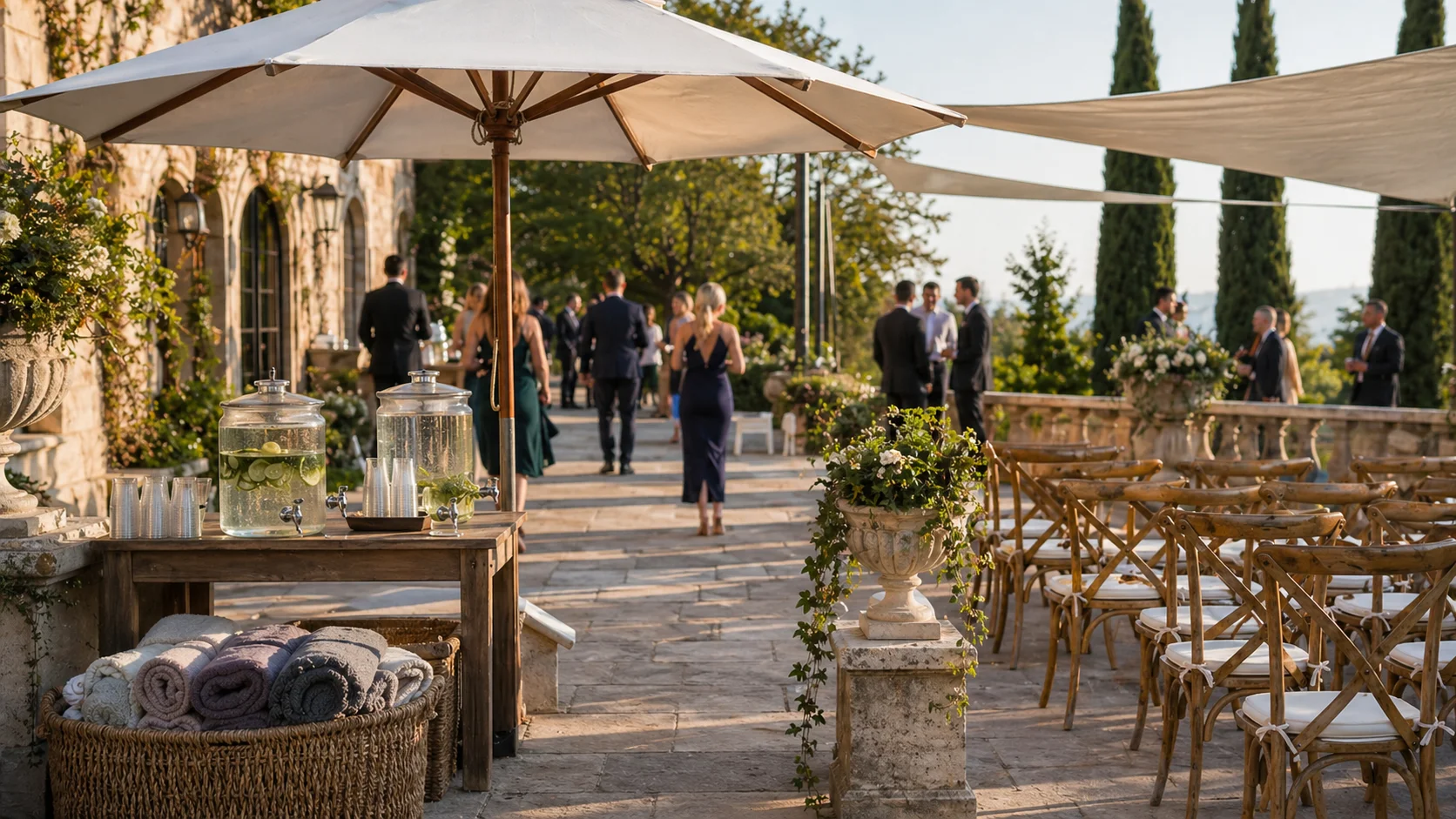
Backup Checklist for Outdoor Weddings: Shade, Wind, Cold, and the Things People Forget
Outdoor wedding backup plans are not only about rain. This article looks at shade, wind, cold, ground conditions, paths, loose details, guest comfort, and the small weather traces that shape how an outdoor celebration is remembered.
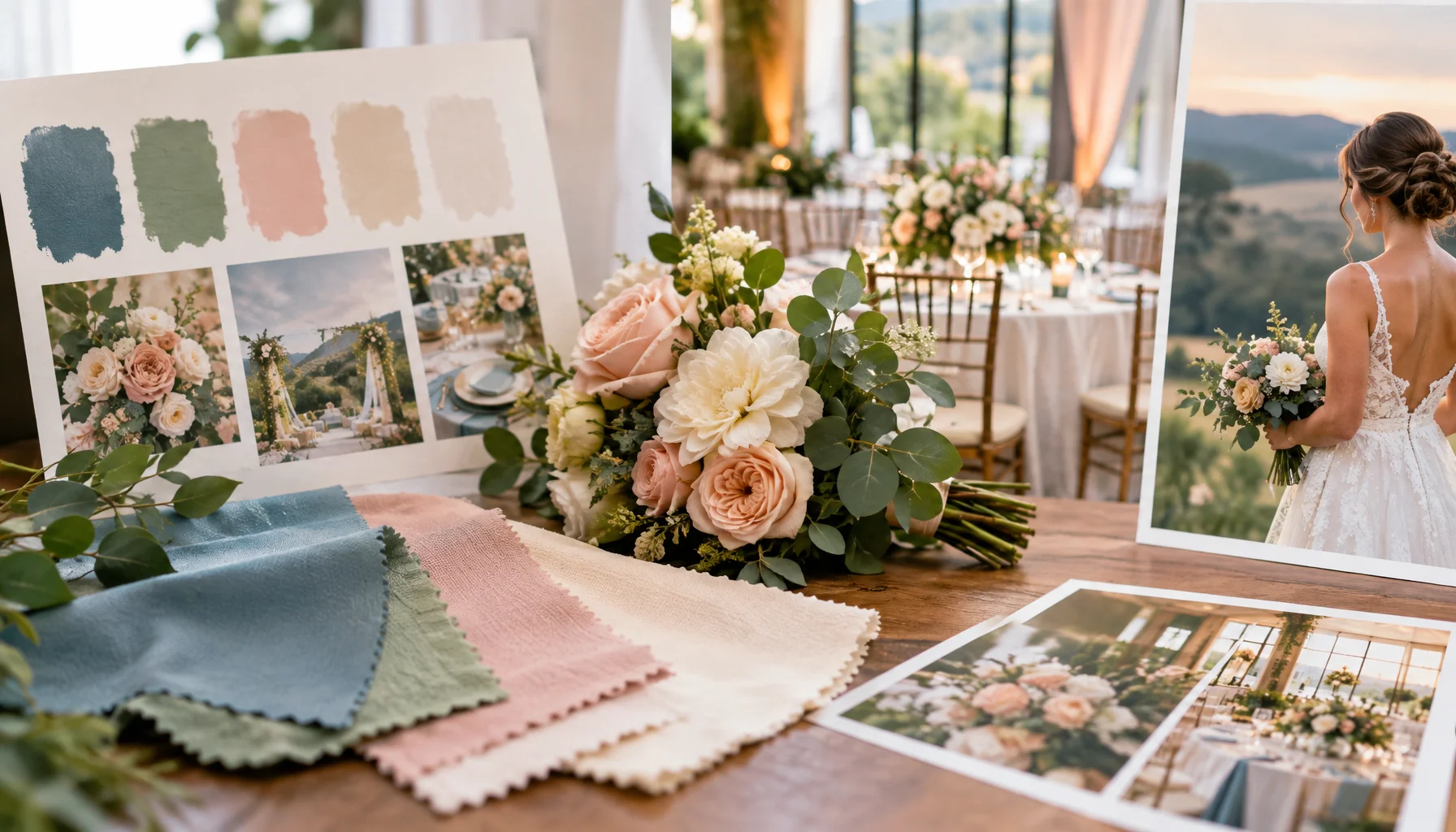
Will Your Wedding Colors Actually Photograph the Way You Imagine?
Wedding colors do not travel unchanged from a mood board to fabric, flowers, venue lighting and finished photographs. This guide explains why colors shift and gives couples a practical way to test whether their palette will remain recognizably itself throughout the day.
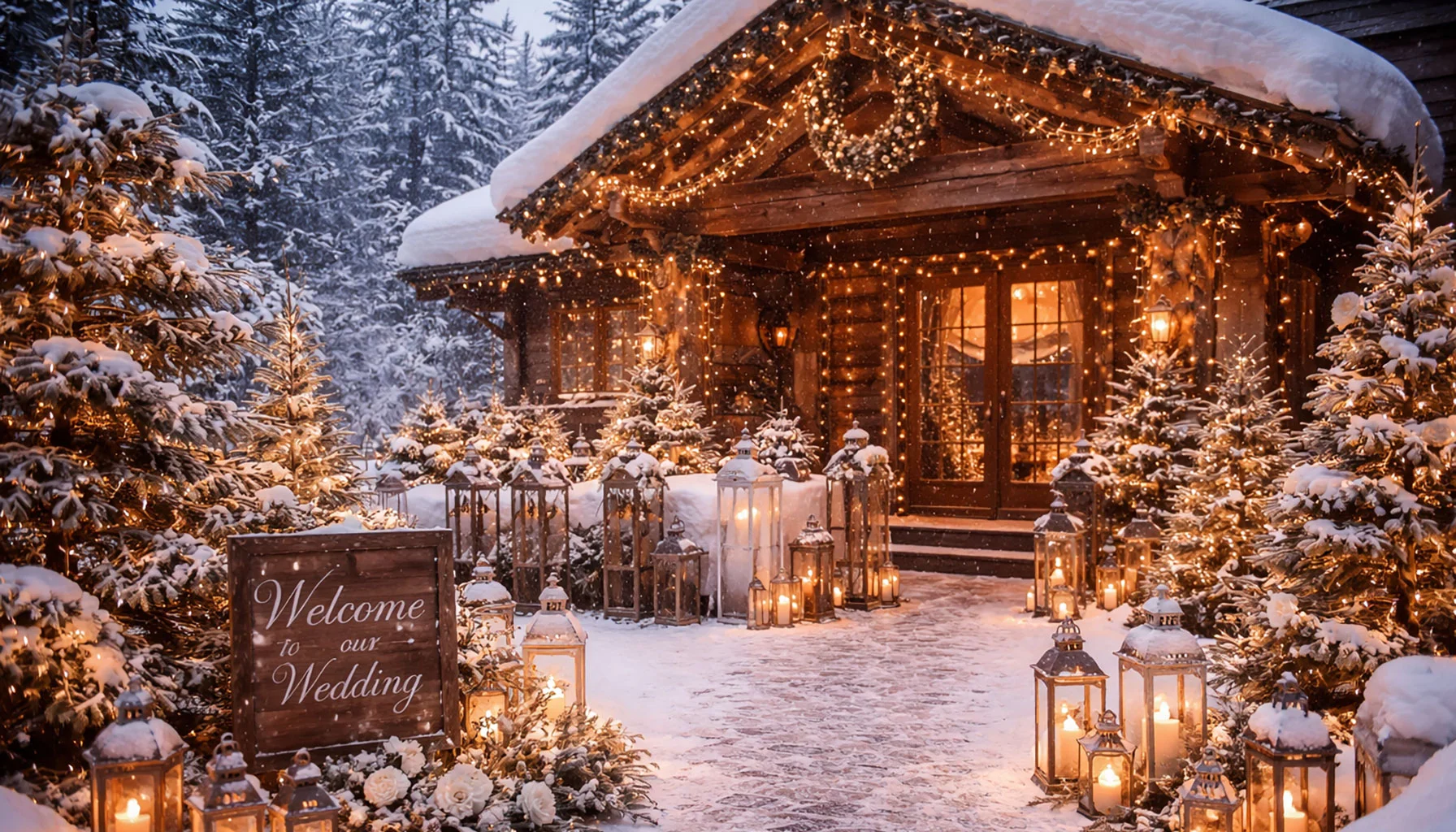
Winter Weddings: Beautiful Locations, Planning Tips and Ideas
Winter weddings move by a different clock. Light shortens, rooms gather people more closely, and warmth becomes part of the structure of the day. This article looks at winter weddings not only as a seasonal style, but as a form of celebration shaped by atmosphere, containment, and the emotional trace a winter setting leaves behind.
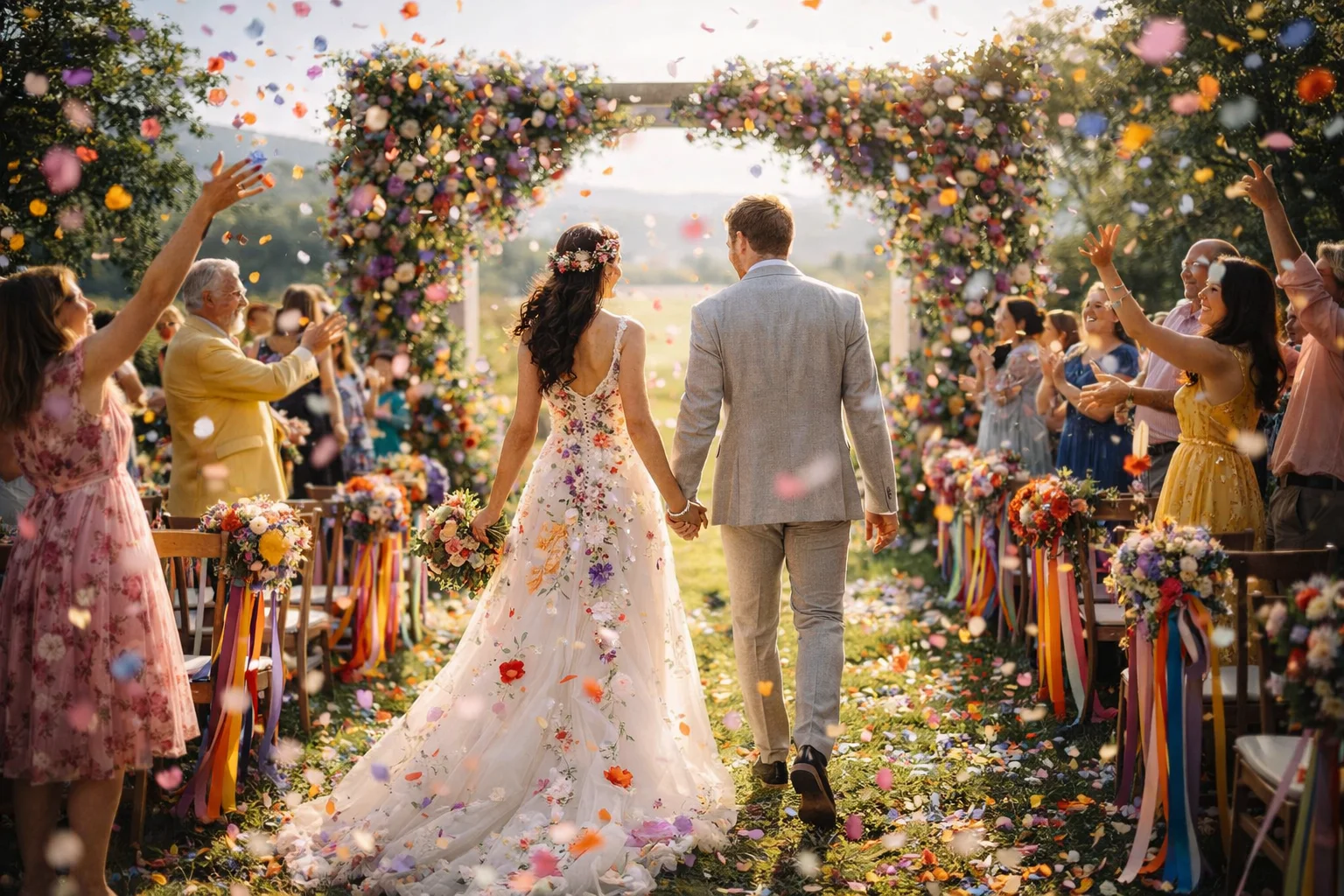
What Wedding Colors Leave Behind
Wedding colors are usually chosen for beauty, balance, or season. But they also leave a trace. Long after flowers fade and fabrics are packed away, certain tones remain attached to a promise, a room, a feeling. This article looks at wedding color not only as styling, but as part of the emotional imprint a ceremony leaves behind.
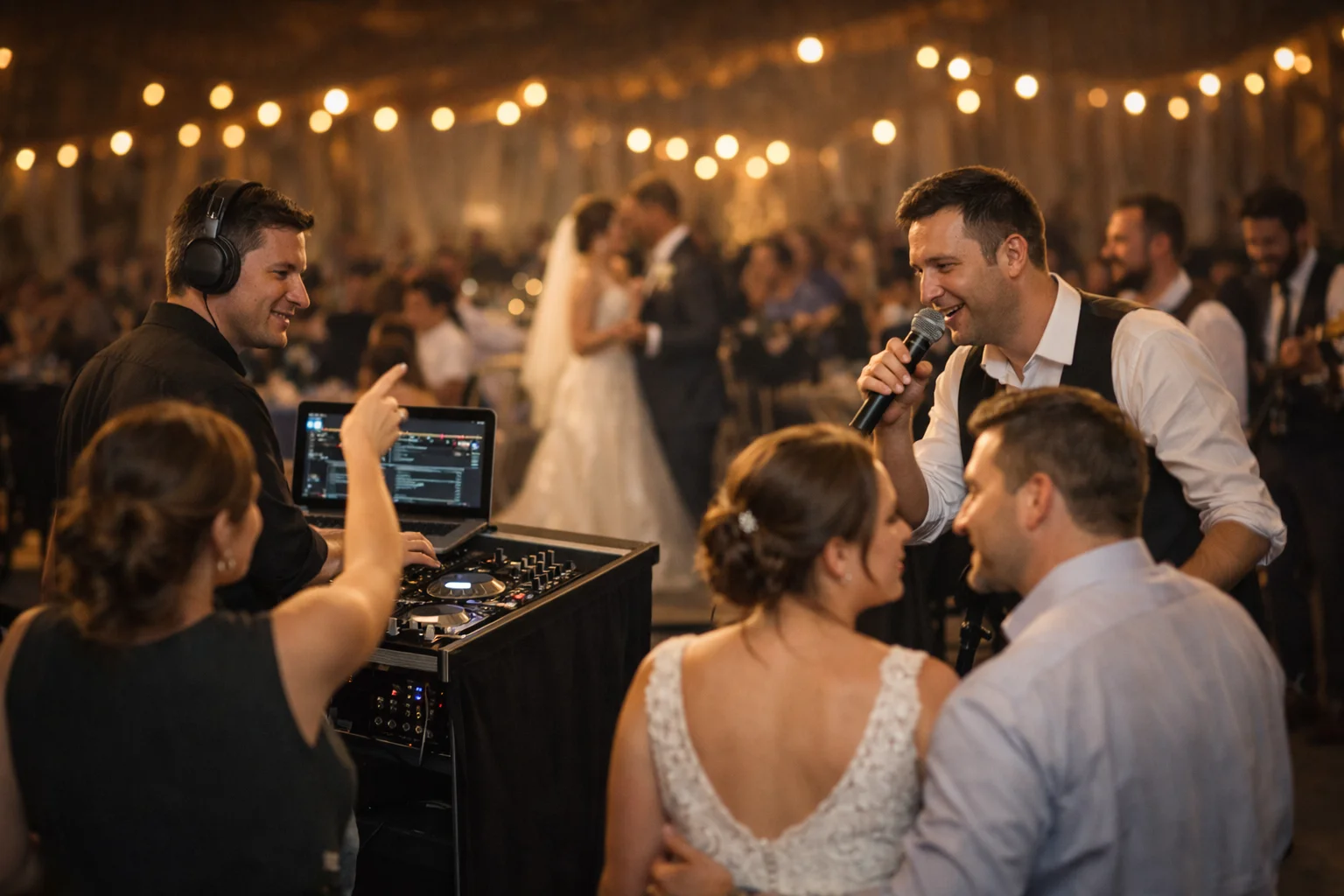
How Requests Move Through a Wedding Night
Music requests at weddings are rarely just about songs. They move through timing, confidence, mood, and the different logic of DJs and live bands, shaping the social texture of the night as much as the playlist itself.
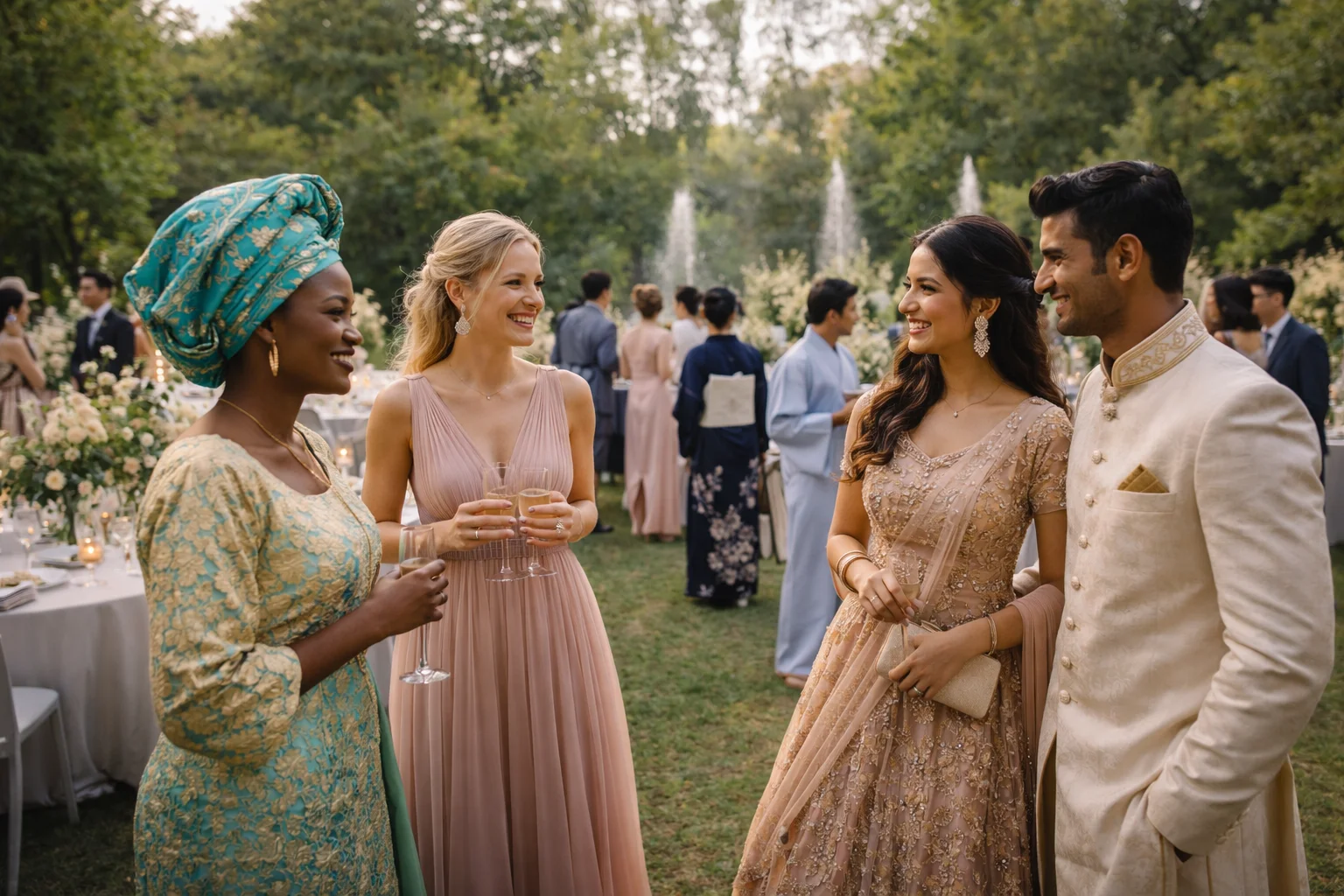
Dress Expectations at International Weddings: What Guests May Read Differently
Dress codes at international weddings are rarely just about clothing. Guests interpret formality, respect, family signals, and cultural meaning differently. This article looks at how attire is understood across contexts and why what seems obvious to one guest can feel unclear to another.
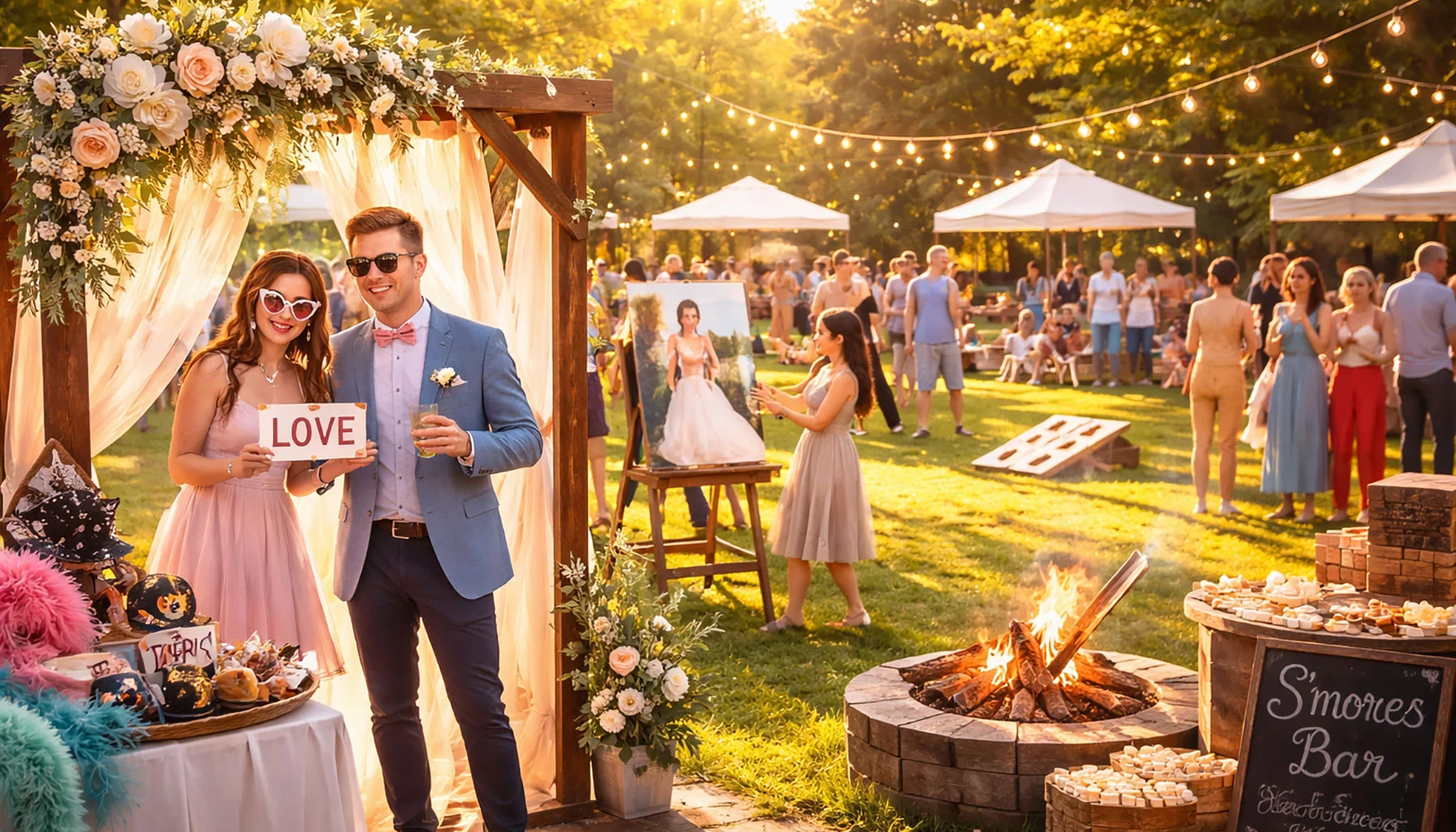
Wedding Guest Activities That Create Lasting Memories
The wedding activities guests remember most are rarely the loudest. They are the ones that give people something gentle to enter, something quiet to touch, and something small to carry away afterward. This article looks at which kinds of wedding guest activities tend to stay with people and why they often leave a deeper imprint than more spectacular entertainment.
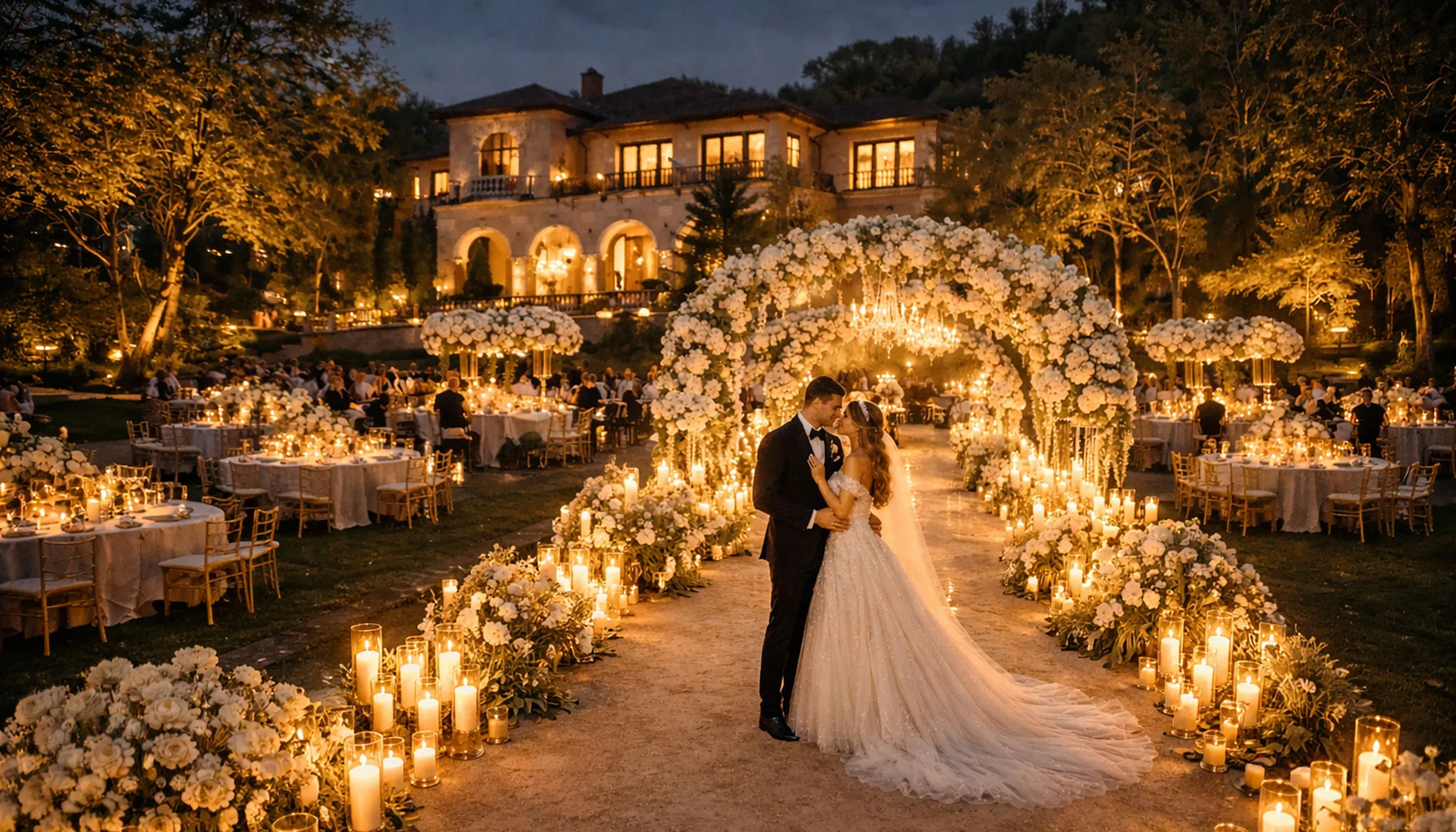
A day, carried by closeness
This wedding thrived on closeness and attention. Everything quietly intertwined and created a framework in which guests felt safe, welcome, and connected. From arrival to departure, a shared flow emerged that left room for conversations, laughter, and quiet togetherness. What remained was a feeling of warmth and cohesion that outlasted the day.
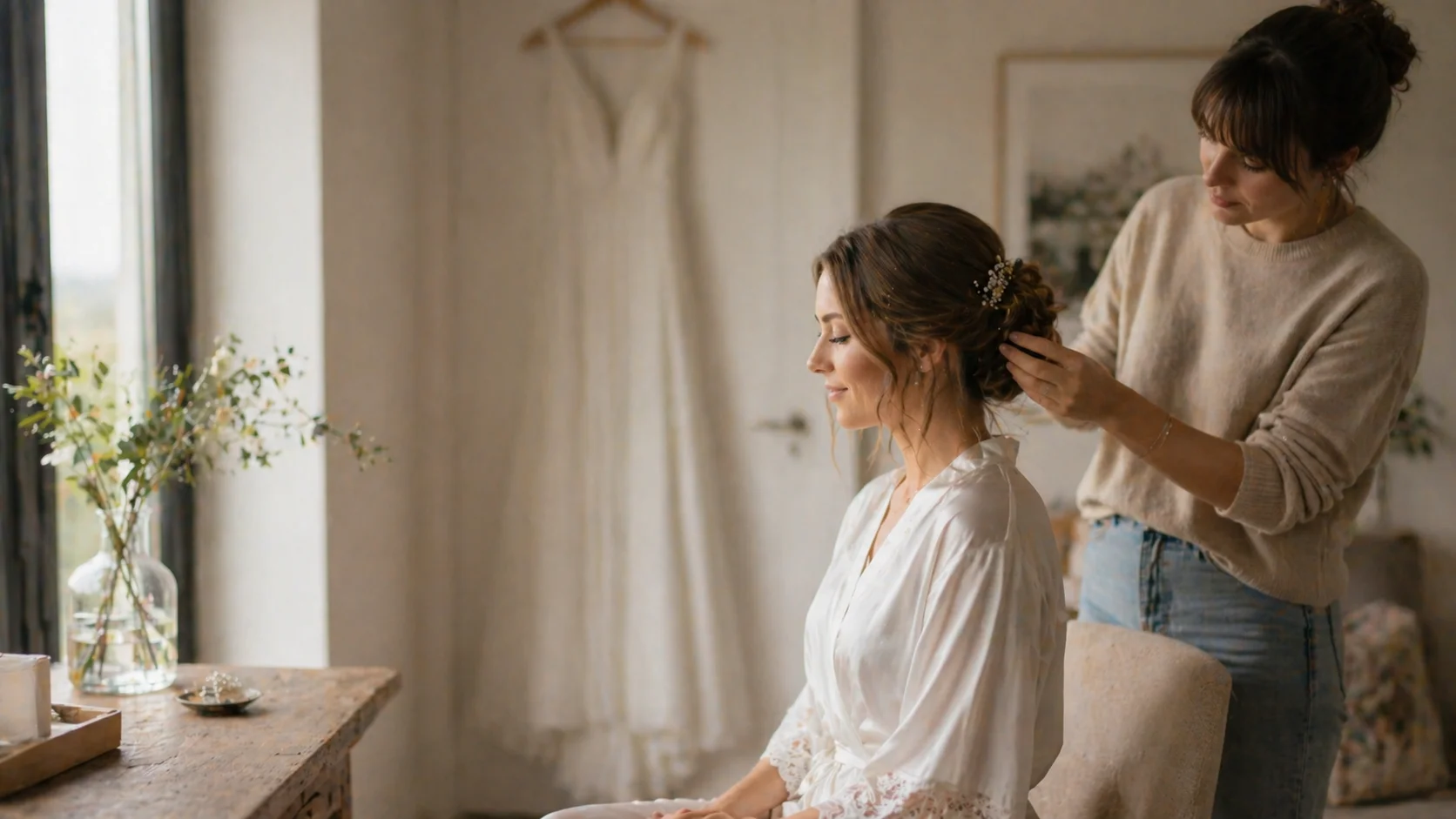
Bridal Getting-Ready Room Checklist: Light, Surfaces, Noise, and Movement
A bridal getting-ready room does more than hold hair, makeup, and dresses. This article looks at light, surfaces, noise, movement, privacy, and the quiet traces the room leaves on the morning before the ceremony.
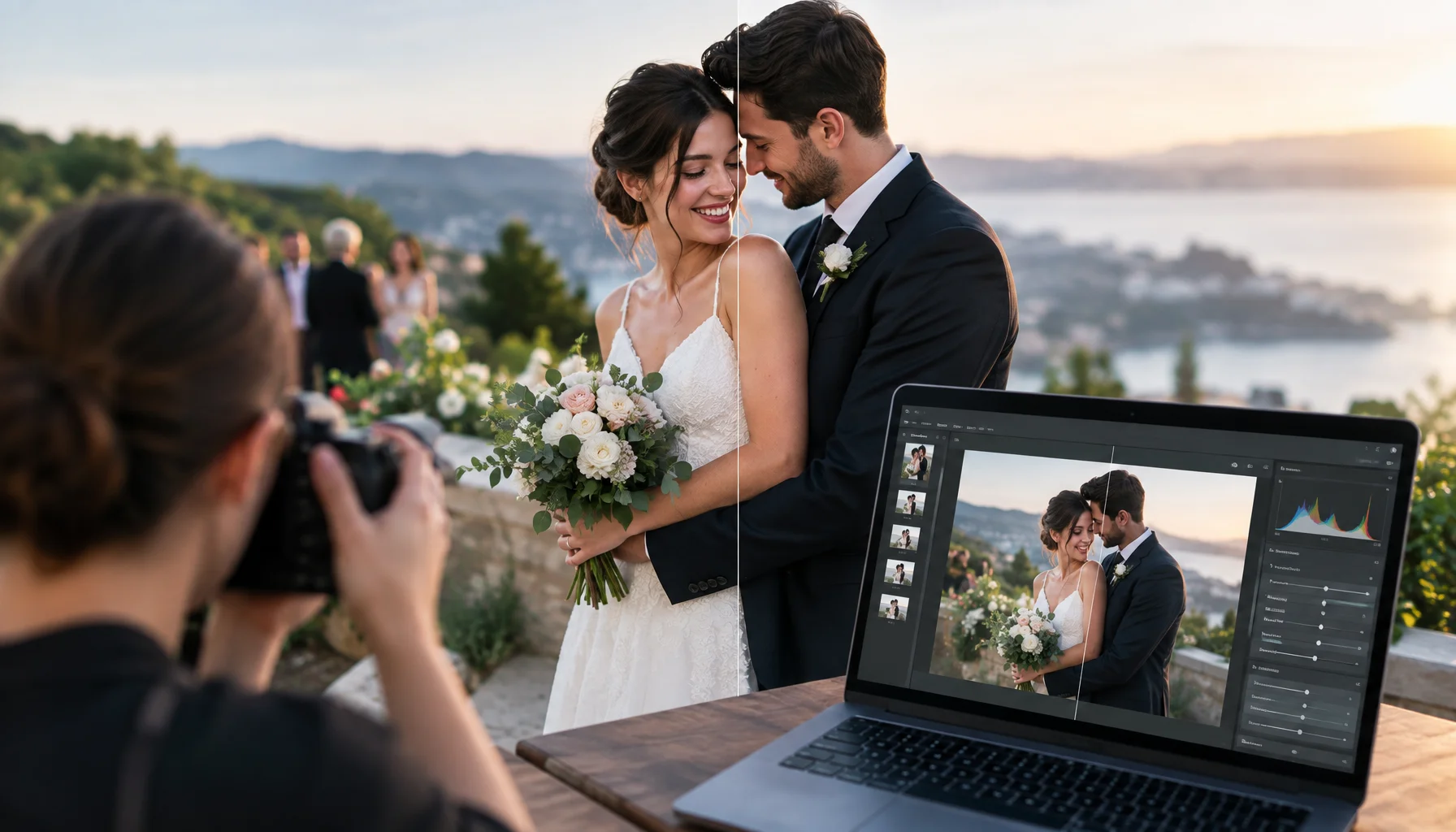
AI-Edited Wedding Photos in 2026: Where Should the Documentary Boundary Be?
Generative AI can now remove people, reconstruct missing details, replace backgrounds and create wedding images that look completely photographic. This guide helps couples decide which edits are normal photography, which cross into factual alteration, and what to agree with the photographer before the wedding.
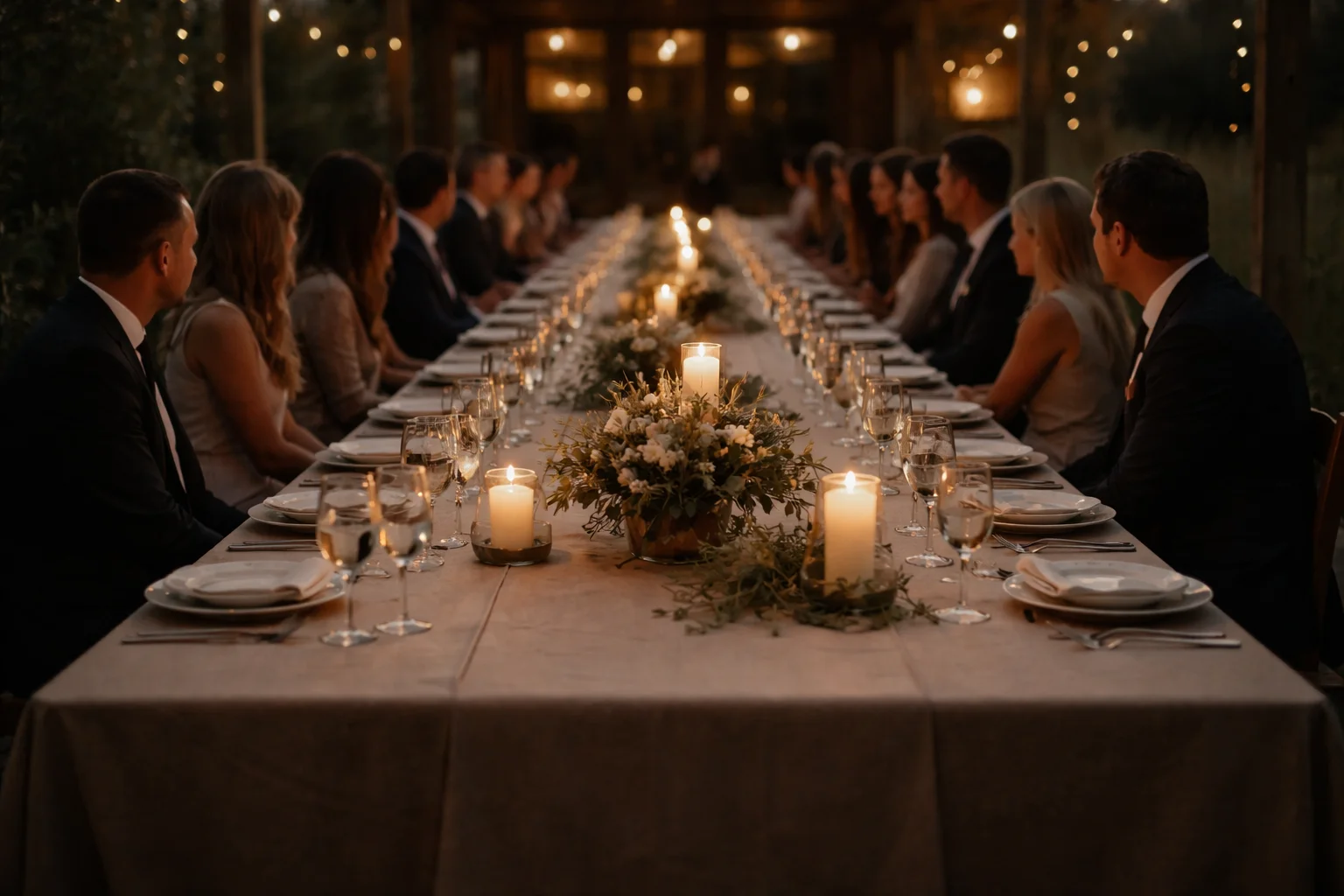
Candlelight at Wedding Tables: Local Light Zones
Candlelight at wedding tables rarely behaves as one smooth glow. It gathers in small zones, shifts across faces and objects, and leaves behind a more fragmentary, memorable atmosphere than even lighting ever could.