
Insects Around Light Sources at Weddings
Insects Around Light Sources at Weddings
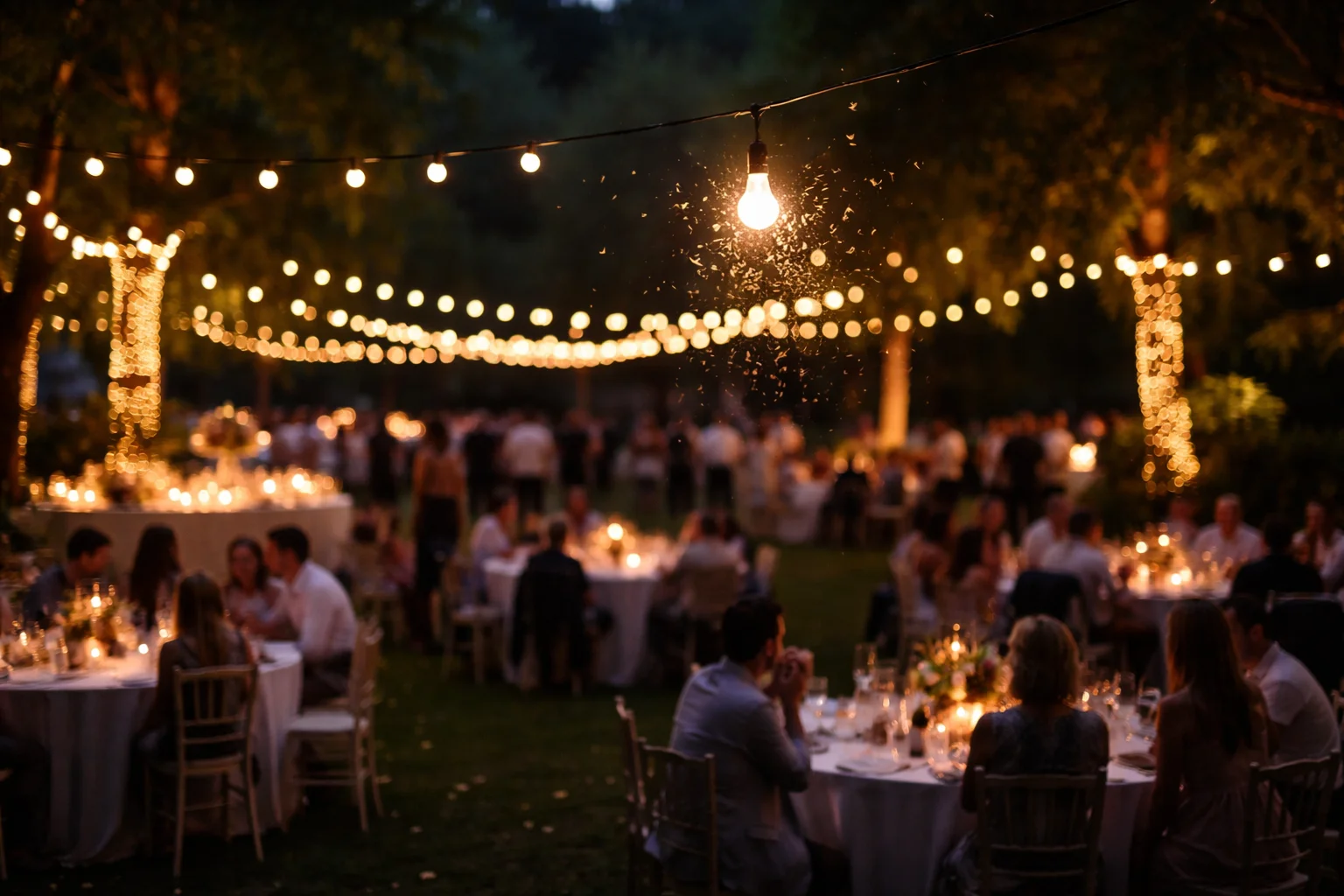
Later it becomes more noticeable. Small movements near the light, something crossing a glass, a guest brushing at the air without really stopping the conversation. It does not take over the event. It just sits there, part of the scene, repeating in small ways across the space.
Definition
Insects around light sources describes the tendency of flying insects to gather near artificial lighting after dusk. It is a common behavior and not a sign of anything unusual or poorly arranged.
Early Evening Presence
At the beginning, there are only scattered insects. One near a bulb, another drifting across a table. People mostly ignore it. The light still feels dominant. The insects are there, but they do not yet shape how the space is used.
Build-Up Around Bright Spots
Stronger lights gather more activity. It becomes visible without needing to look closely. A small cluster forms, then shifts, then forms again. Softer lighting spreads things out a bit, though it does not remove it. The difference shows, but not sharply.
Guest Movement
Guests adjust in small ways. Chairs move a little, people lean away from direct light, then lean back again. Some continue talking without reacting much. Others pause for a second, then continue. It does not become a shared focus, more a series of quiet, individual reactions.
Tables and Food Areas
Food placed directly under light attracts more movement. Open dishes show it more clearly. Covered items remain calmer, though not completely untouched. Staff sometimes shift things slightly, not in a visible or announced way, just small corrections.
Late Shift in Activity
As the night goes on, the pattern changes again. Some insects disappear, others remain near the same lights. The crowd thins or moves elsewhere. What felt active earlier becomes quieter, though still present if someone looks up toward the bulbs.
Conclusion
Insects around light sources remain a steady part of outdoor evening weddings. They appear gradually, gather, and shift without clear boundaries. The effect stays in the background, noticeable but not dominant, and settles into the overall flow of the event.
Related Articles
Winter Light and Compressed Timelines in Weddings
Winter weddings are shaped less by one obvious restriction than by a series of quieter adjustments. This article looks at how shorter days, colder air, and earlier shadows compress the timeline, tighten transitions, and give the day a more deliberate rhythm.
Outdoor Weddings With Children: Freedom, Boundaries, and Attention
Outdoor weddings often feel easier with children because there is more room to move, but that same openness changes how boundaries work and how attention is held. This article looks at how freedom, supervision, fatigue, and small shifting moments shape child-friendly outdoor celebrations.
Backup Checklist for Outdoor Weddings: Shade, Wind, Cold, and the Things People Forget
Outdoor wedding backup plans are not only about rain. This article looks at shade, wind, cold, ground conditions, paths, loose details, guest comfort, and the small weather traces that shape how an outdoor celebration is remembered.
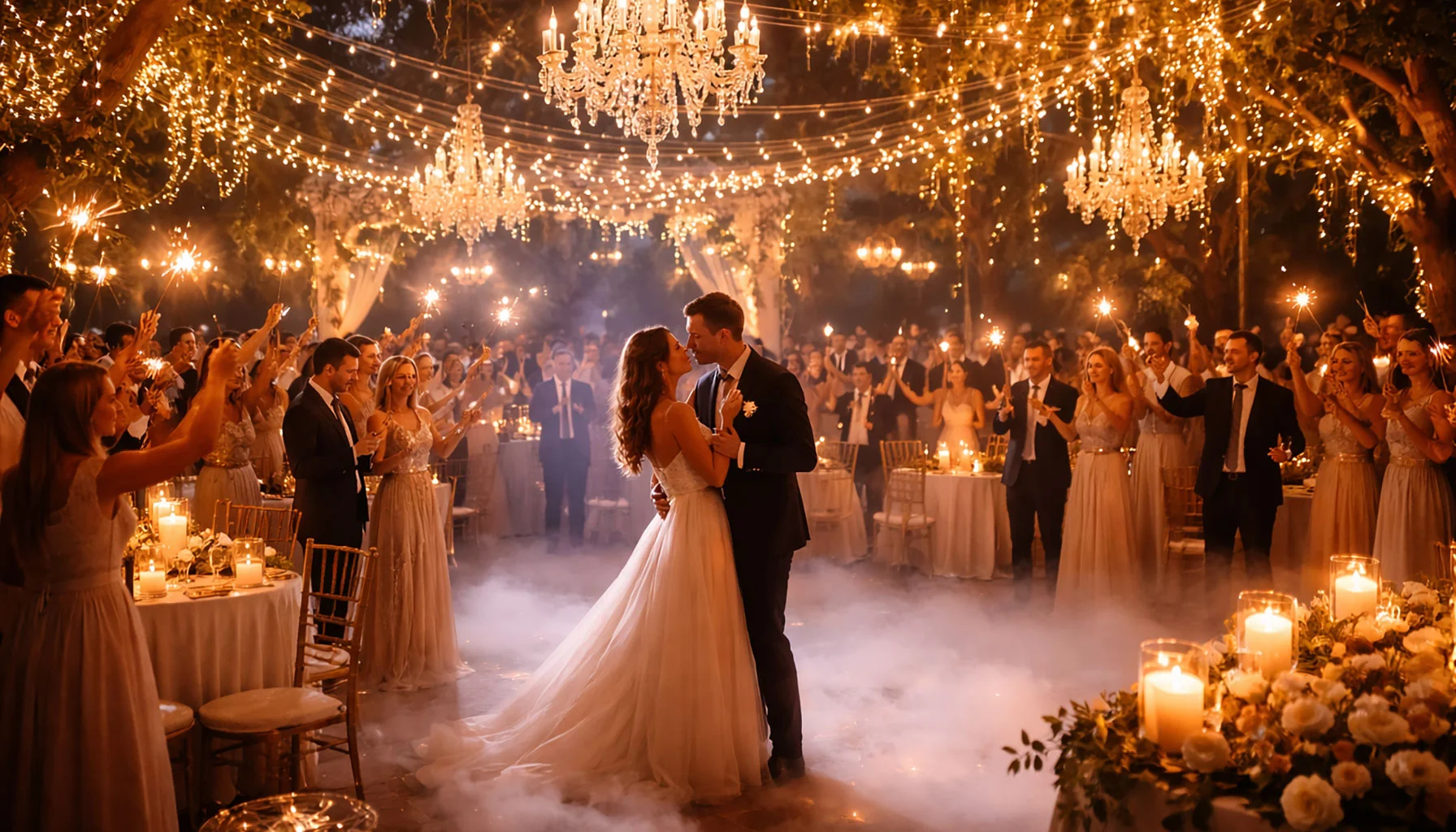
Wedding Lighting: Creating Atmosphere That Lasts
Wedding lighting is rarely remembered as equipment. What remains is how a room felt when people entered it, how the evening softened, and how different parts of the celebration seemed to belong together without visible effort. This article looks at wedding lighting as a quiet structure that shapes atmosphere and leaves a lasting imprint.
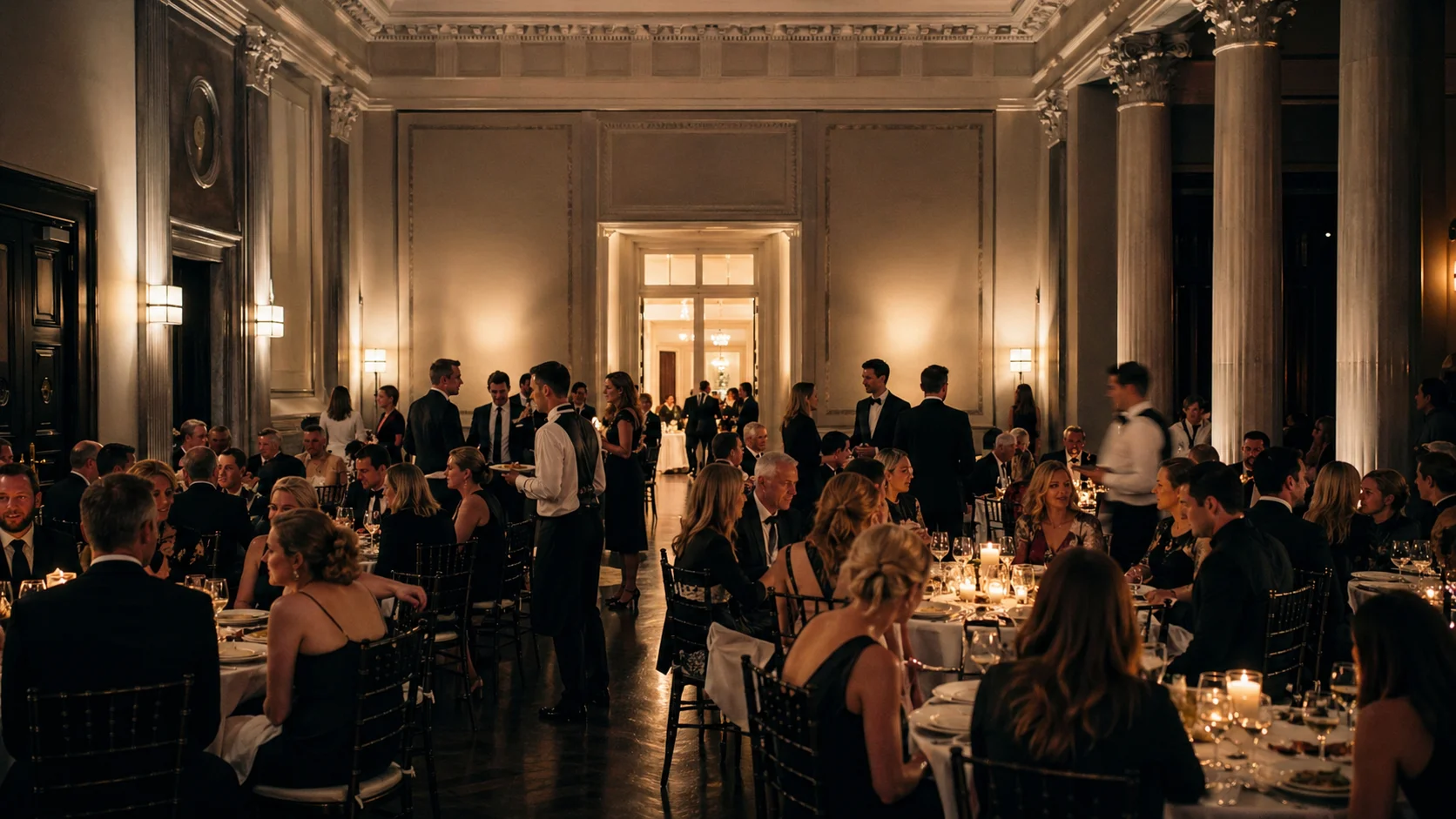
Wedding Dinner Flow Checklist: What Keeps the Room Together Between Courses
Wedding dinners usually drift or hold together in the moments between courses, not during the food itself. This article looks at service rhythm, guest movement, music, speeches, and the small in-between conditions that keep the room socially connected.
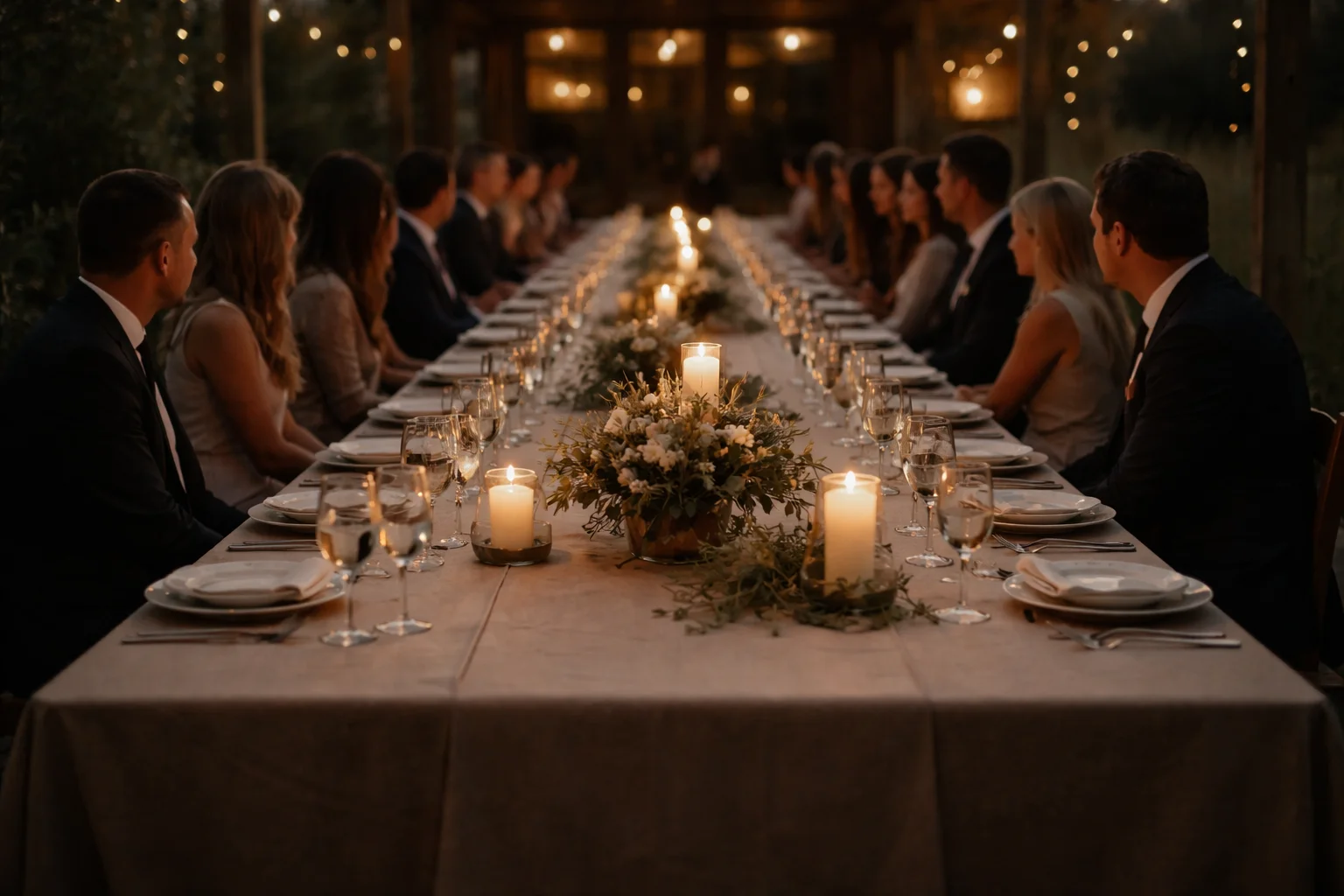
Candlelight at Wedding Tables: Local Light Zones
Candlelight at wedding tables rarely behaves as one smooth glow. It gathers in small zones, shifts across faces and objects, and leaves behind a more fragmentary, memorable atmosphere than even lighting ever could.
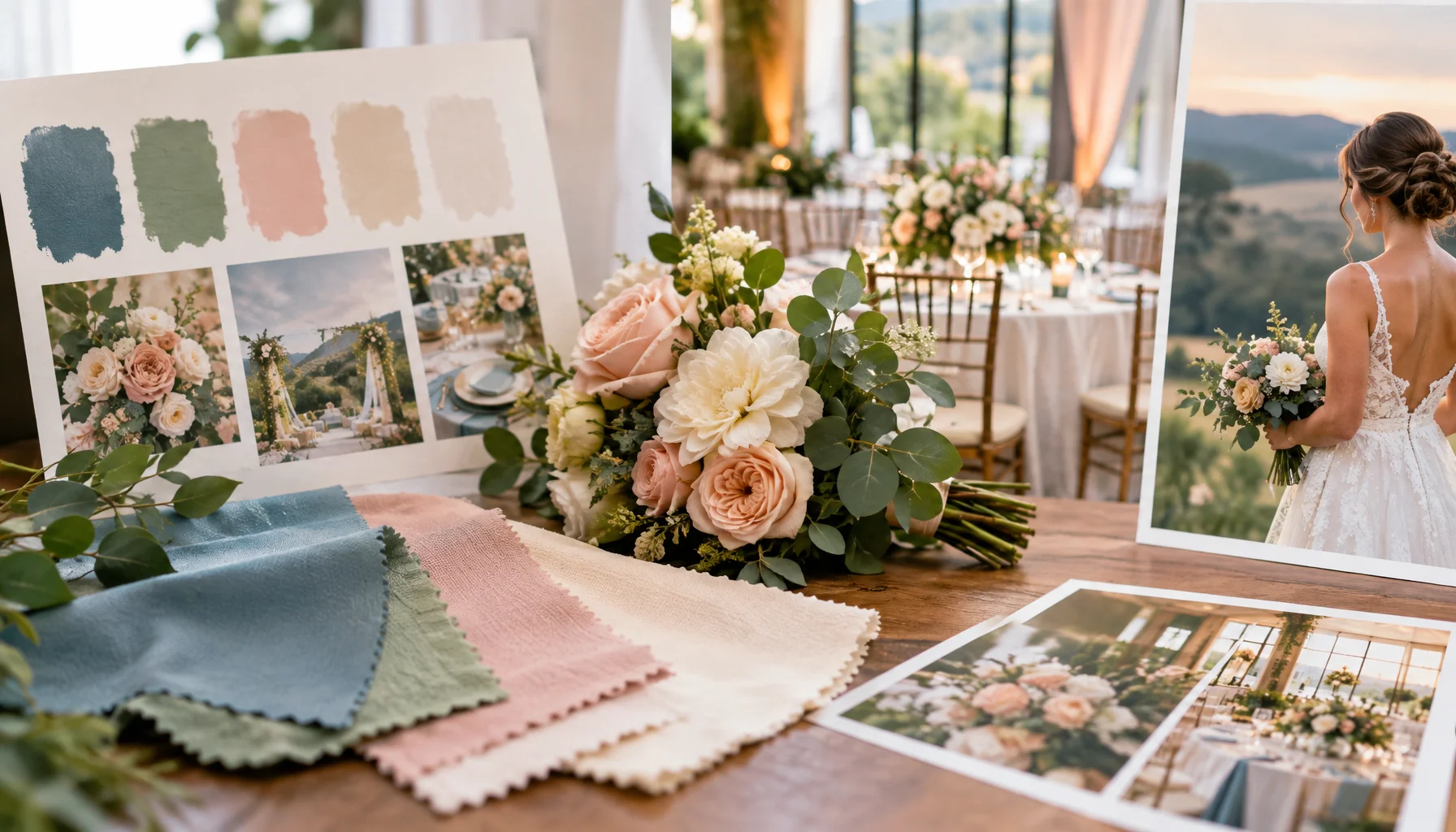
Will Your Wedding Colors Actually Photograph the Way You Imagine?
Wedding colors do not travel unchanged from a mood board to fabric, flowers, venue lighting and finished photographs. This guide explains why colors shift and gives couples a practical way to test whether their palette will remain recognizably itself throughout the day.
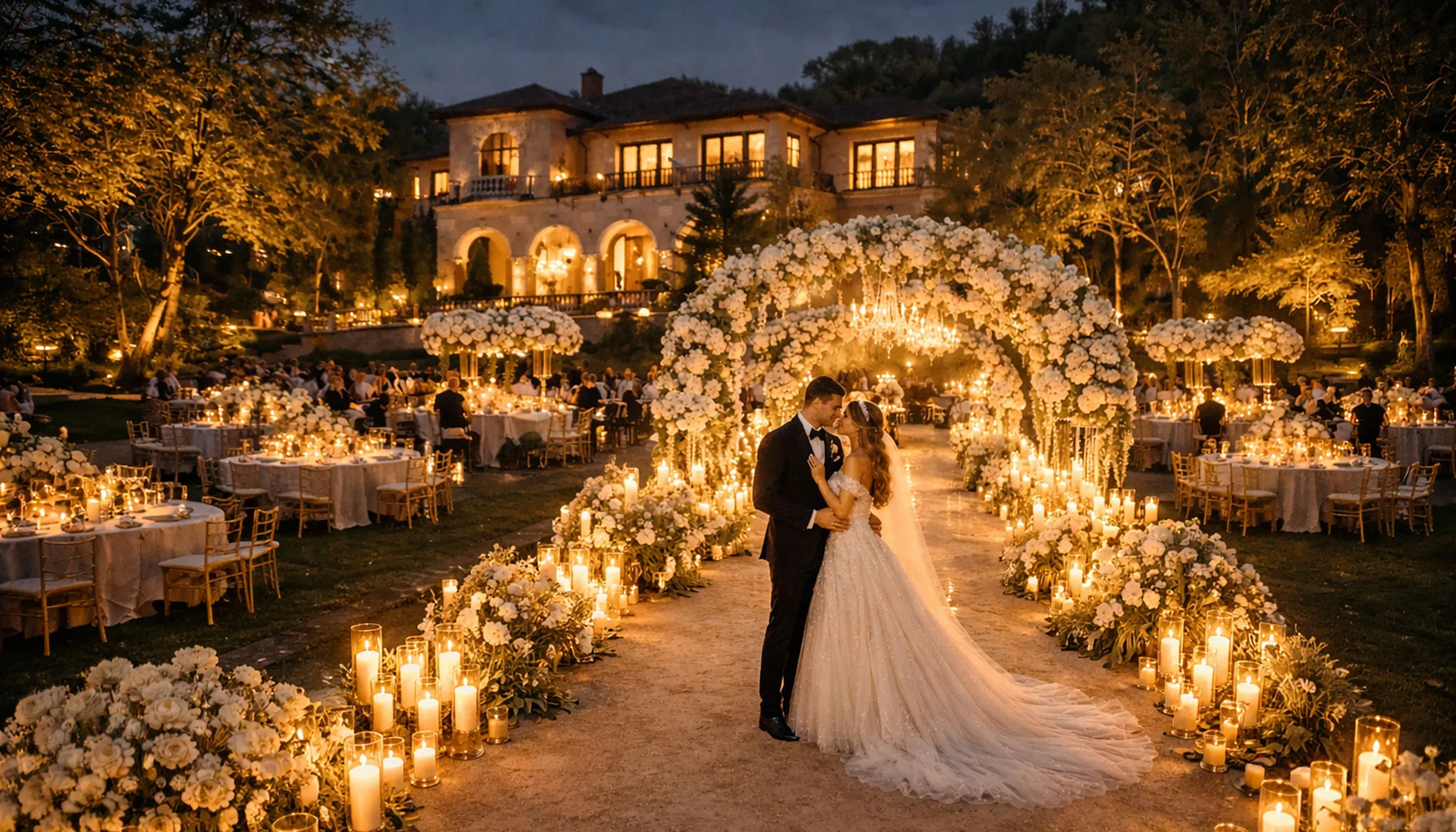
A day, carried by closeness
This wedding thrived on closeness and attention. Everything quietly intertwined and created a framework in which guests felt safe, welcome, and connected. From arrival to departure, a shared flow emerged that left room for conversations, laughter, and quiet togetherness. What remained was a feeling of warmth and cohesion that outlasted the day.
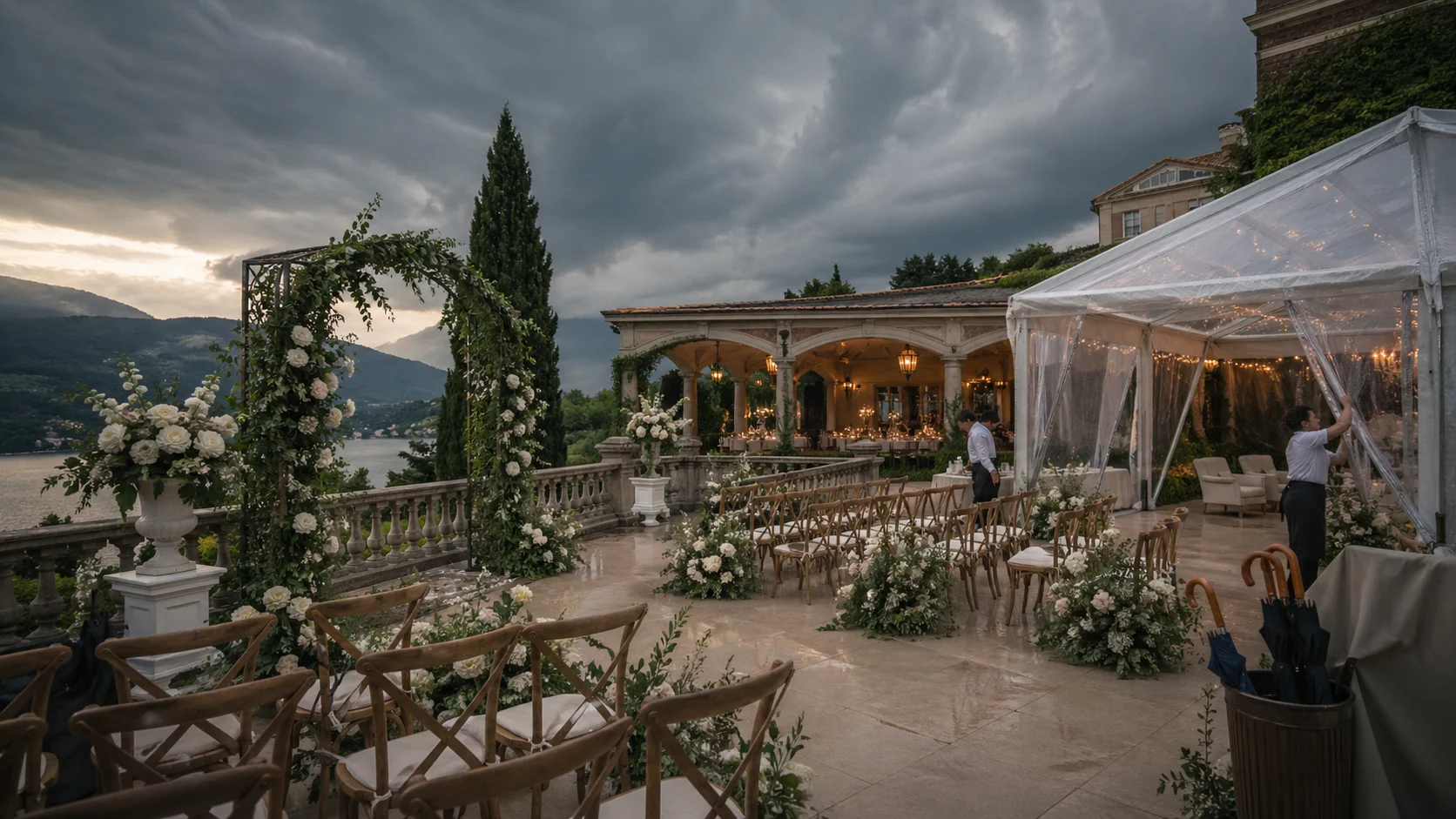
Rain Plan Checklist: What Needs Deciding Before Weather Becomes the Mood
A wedding rain plan is rarely just a backup for logistics. It also shapes whether weather stays manageable or quietly takes over the emotional tone of the day. This article looks at what needs to be decided early, so rain changes the setting without deciding the atmosphere.
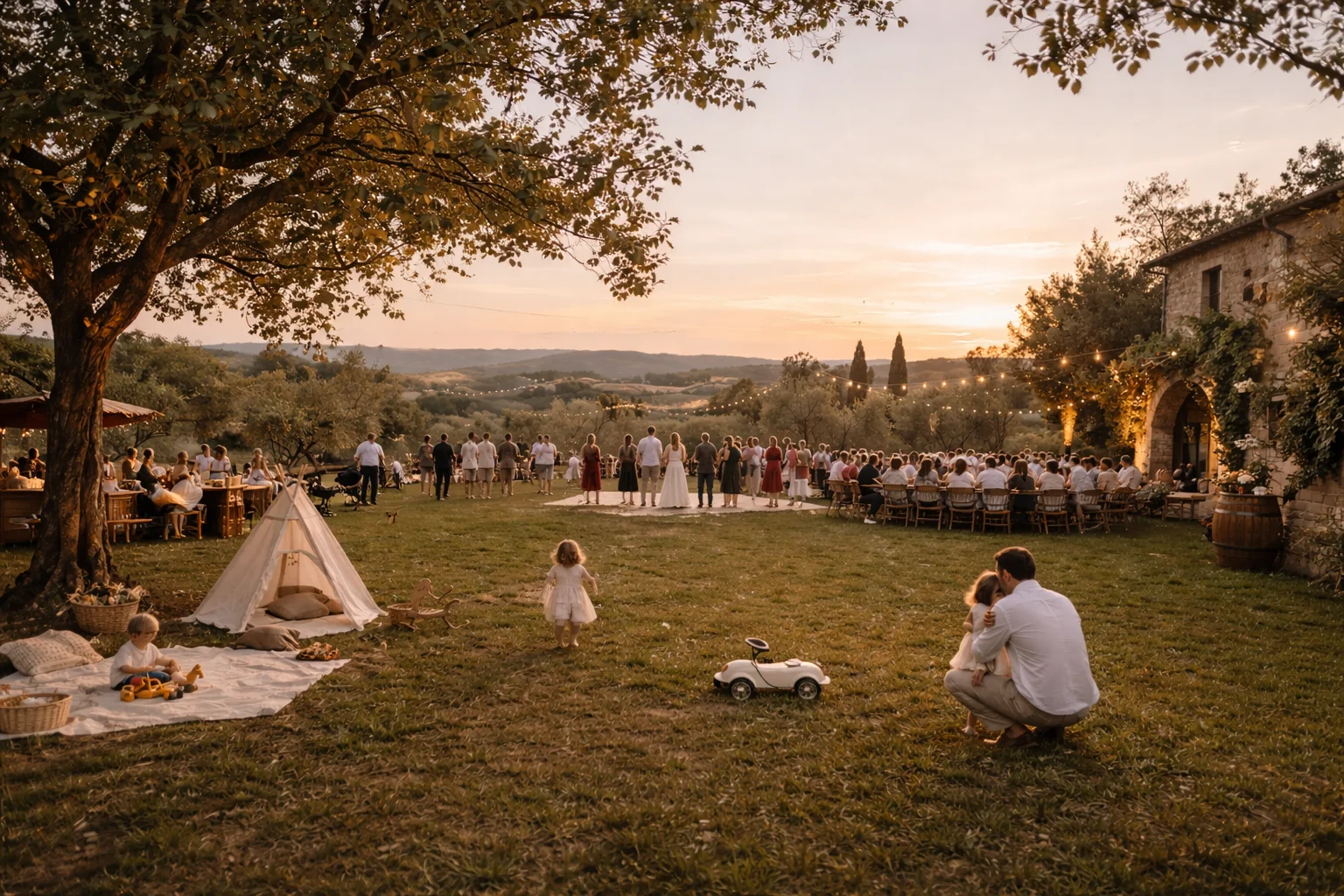
Nap Times, Early Goodbyes, and the Hidden Rhythm of Weddings With Small Children
Weddings with small children often follow two timelines at once: the visible schedule of ceremony, dinner, and dancing, and the quieter rhythm of naps, tiredness, comfort, and early departures. This article looks at how those hidden shifts shape the day in practical and emotional ways.
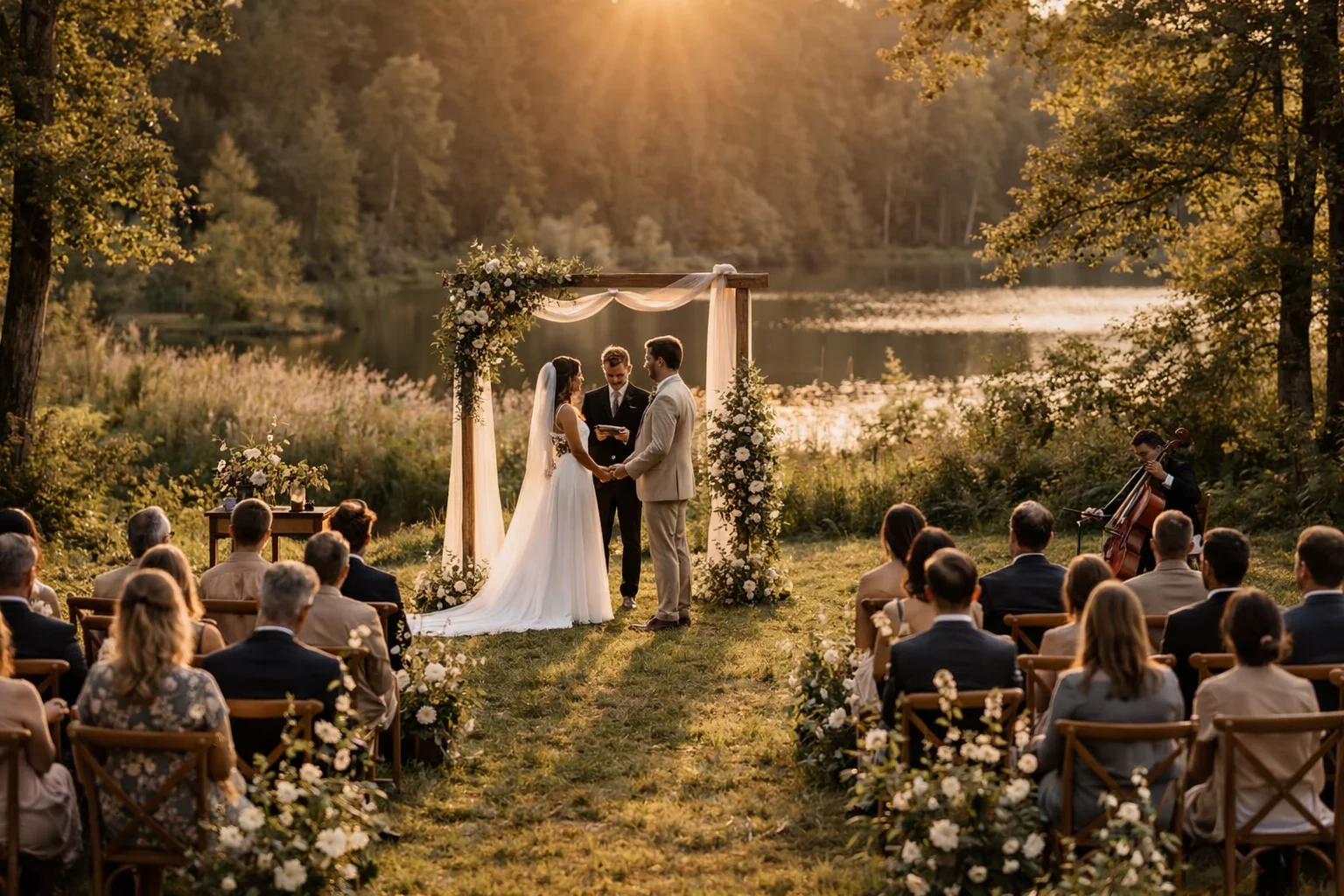
Where an Outdoor Wedding Finds Its Quiet Moments
Outdoor weddings are often chosen for what they seem to promise: openness, air, light, a sense that the ceremony is not confined but allowed to unfold in a wider space. There is movement in everything, from the wind in the trees to the shifting light across the day.

Where Nature Meets Love: Unforgettable Outdoor Weddings
Outdoor weddings combine natural beauty with thoughtful planning to create relaxed, unforgettable celebrations where guests feel comfortable, inspired, and truly connected.