
Long Tables vs Round Tables: Observed Use in Wedding Settings
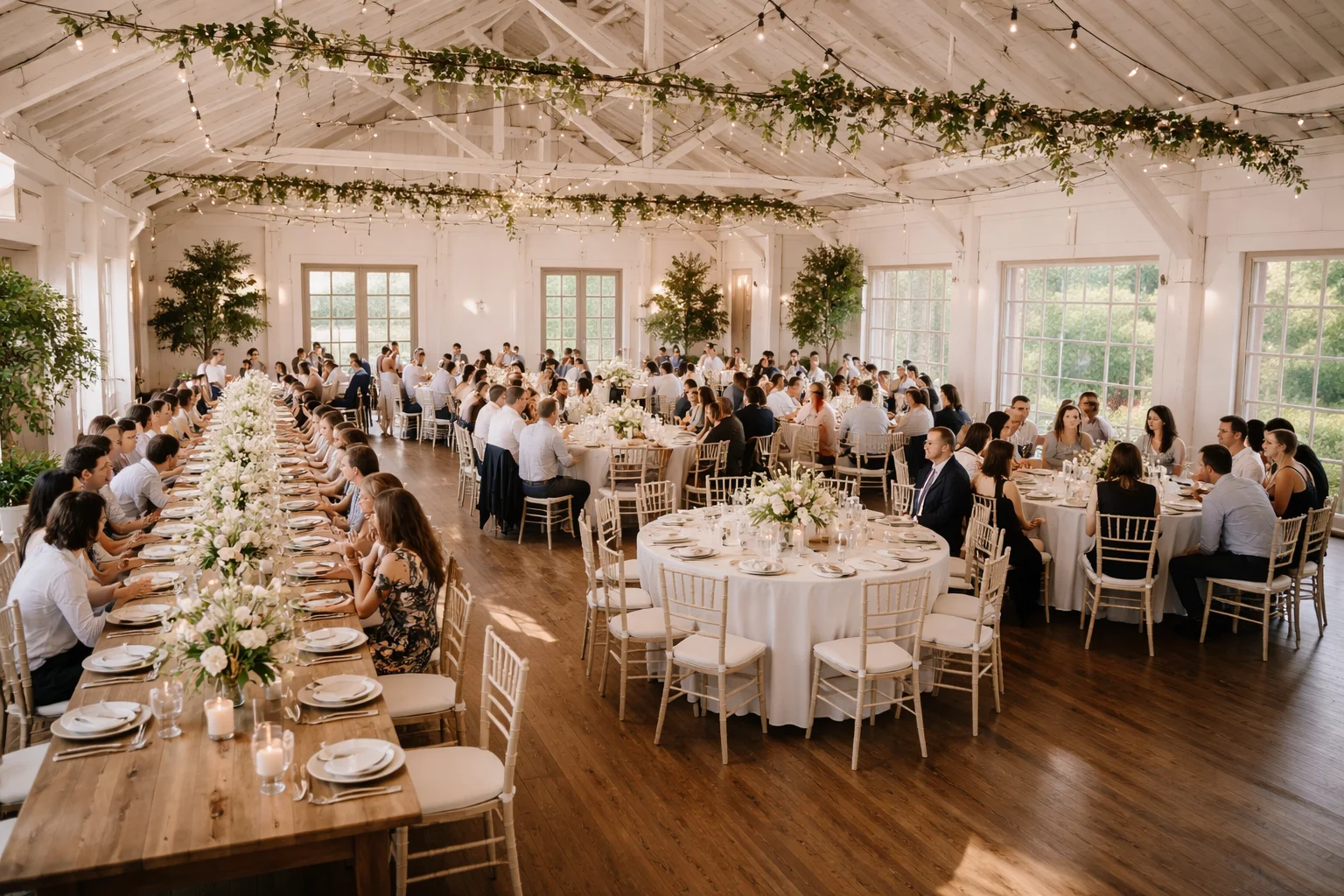
Across different weddings, both formats appear without clear preference. Sometimes the decision feels planned. Other times it follows the room almost automatically. The result is rarely about style alone. It tends to come from small constraints adding up, quietly.
This is also why the subject belongs naturally to both /category/table and /silence/. Table shape is practical first, but it changes how a room settles. It affects where pauses form, how voices travel, and whether a dinner feels continuous or broken into smaller islands. In that sense, the difference between long and round tables is not only visual. It shapes the quiet structure of the celebration.
Table Styling – CategoryThoughtful table styling plays a key role in shaping the overall dining experience at a wedding. From table linens and place settings to candles, flowers, and small details, a well-designed table creates atmosphere and visual harmony. Carefully chosen elements bring the wedding style to life and make guests feel welcomed and part of a beautifully curated celebration.
Silence is not absence. It is the space where meaning gathers before words, decisions, and rituals take shape.
Definition
Long tables are rectangular arrangements where guests sit along extended sides, facing across a narrow distance. Round tables group guests evenly around a circular surface. The difference is structural. Decoration usually follows later and adjusts without much resistance.
Spatial Use and Layout Density
Long tables tend to stretch through a space. They align, sometimes slightly uneven, depending on the floor. The room can feel more continuous this way. Round tables break that continuity. They sit as separate units. There is more space between them, even when the guest count is the same. It is not always visible in plans, but becomes clear when chairs are pulled out. Long tables often make narrow rooms feel resolved more quickly, while round tables tend to need width before they look settled.
Guest Interaction Patterns
At long tables, conversations move sideways. People speak to neighbors first. Across the table happens too, but less sustained. Round tables create a different situation. Everyone is visible at once. Still, after some time, smaller circles form inside the group. It does not stay evenly distributed for long. What changes most is not friendliness, but rhythm. Long tables create a slower spread of attention, while round tables gather it briefly and then let it divide again.
Seating Flexibility
Round tables work well when seating plans are fixed early. Groups are contained. It is clear who belongs where. Long tables allow a bit more drift. Guests adjust slightly, a chair shifts, someone joins at the end. Nothing major, just small movements that happen without calling attention. For mixed family structures or guest groups that are expected to soften over the evening, long tables often absorb these small changes more quietly.
Service Flow
Service moves in patterns that depend on the table shape. With round tables, it is circular and repetitive. Table after table. With long tables, it becomes linear. Staff move along edges, sometimes reaching across for plates in the middle. There can be a brief pause there, then it continues. Neither system is better in general. But each produces a different tempo in the room, and guests notice this even when they would not describe it directly.
Visual Rhythm in the Room
Long tables create lines that guide the eye, though not always perfectly straight. A slight shift is common. Round tables repeat instead. The room reads in clusters. Neither feels more filled or empty in general. It depends on spacing, which is rarely exact once everything is in place. Candlelight, florals, and tableware behave differently as well. On long tables they often read as a continuous surface. On round tables they repeat as separate compositions.
Adaptation to Venue Type
Certain rooms seem to accept one format more easily. Narrow spaces tend to take long tables without much adjustment. Wider rooms allow round tables to spread out. Still, mixed layouts appear often. Not as a design decision in every case, sometimes just because the room does not resolve cleanly otherwise. This is where practice matters more than preference. The room usually decides first, and style follows after.
Conclusion
In practice, the difference between long and round tables settles gradually during the event. It is less about a clear advantage. More about how people move, sit, and adjust over time. The initial plan matters, but the lived layout shifts slightly once the room is in use. That is why table choice belongs not only to design, but also to the quieter logic of a wedding: how space holds people, how conversation spreads, and how the celebration learns its own shape.
Related Articles

Meaning of Marriage and Love
Marriage and love are not built on constant passion or perfect moments. They survive because two people decide to stay, even when feelings change and life becomes difficult. Real love is quiet, steady, and intentional. It grows through honesty, shared responsibility, and the willingness to choose each other every day—not because it’s easy, but because it matters.
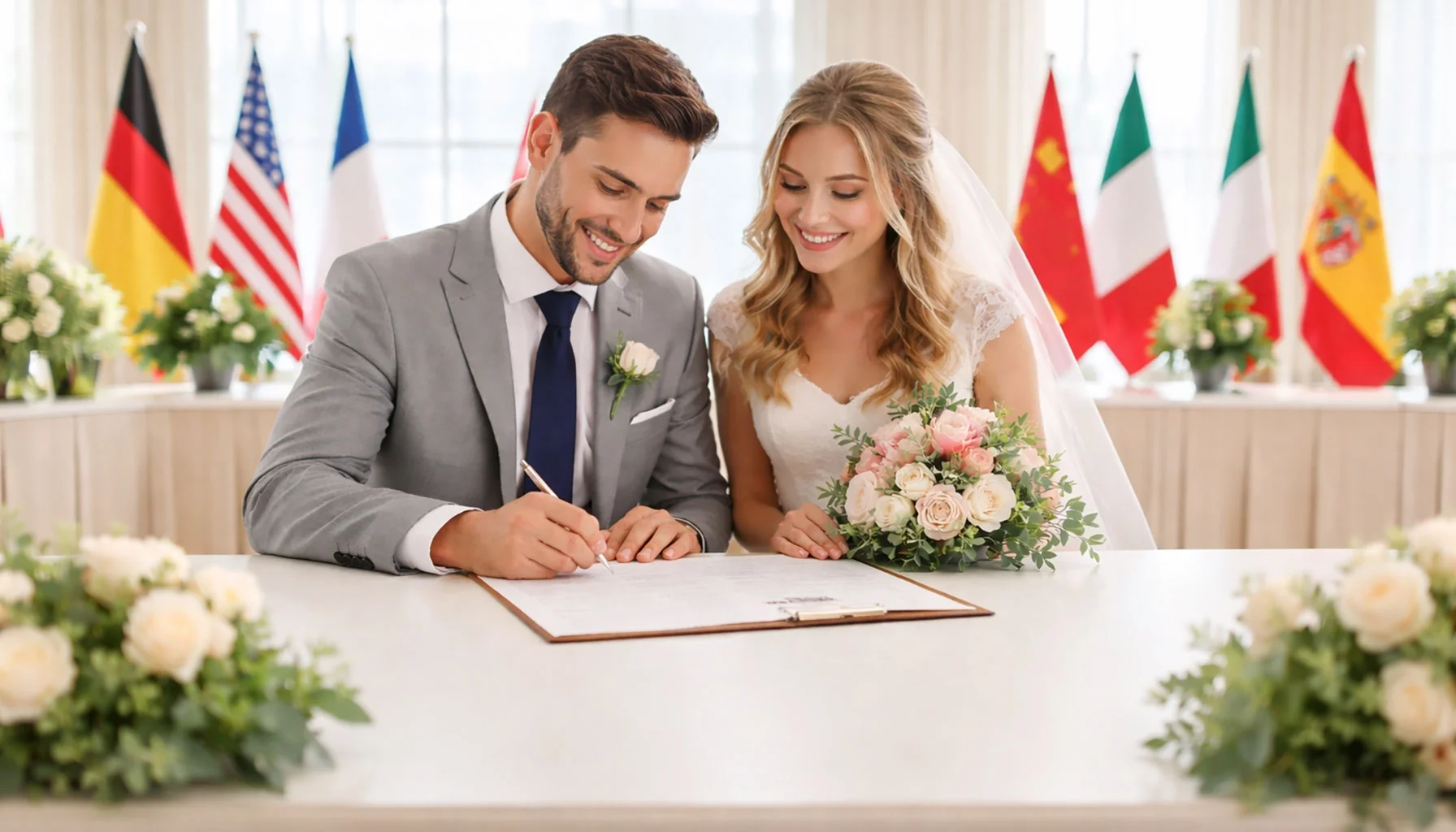
Civil Ceremonies Worldwide: Legal Requirements, Processes, Costs, and Cultural Differences
Civil ceremonies are rarely dramatic, yet they often carry one of the most decisive thresholds in a wedding journey. This article looks at civil marriage across countries through legal requirements, observed processes, cost ranges, and the quieter atmosphere that often surrounds the moment a marriage becomes official.
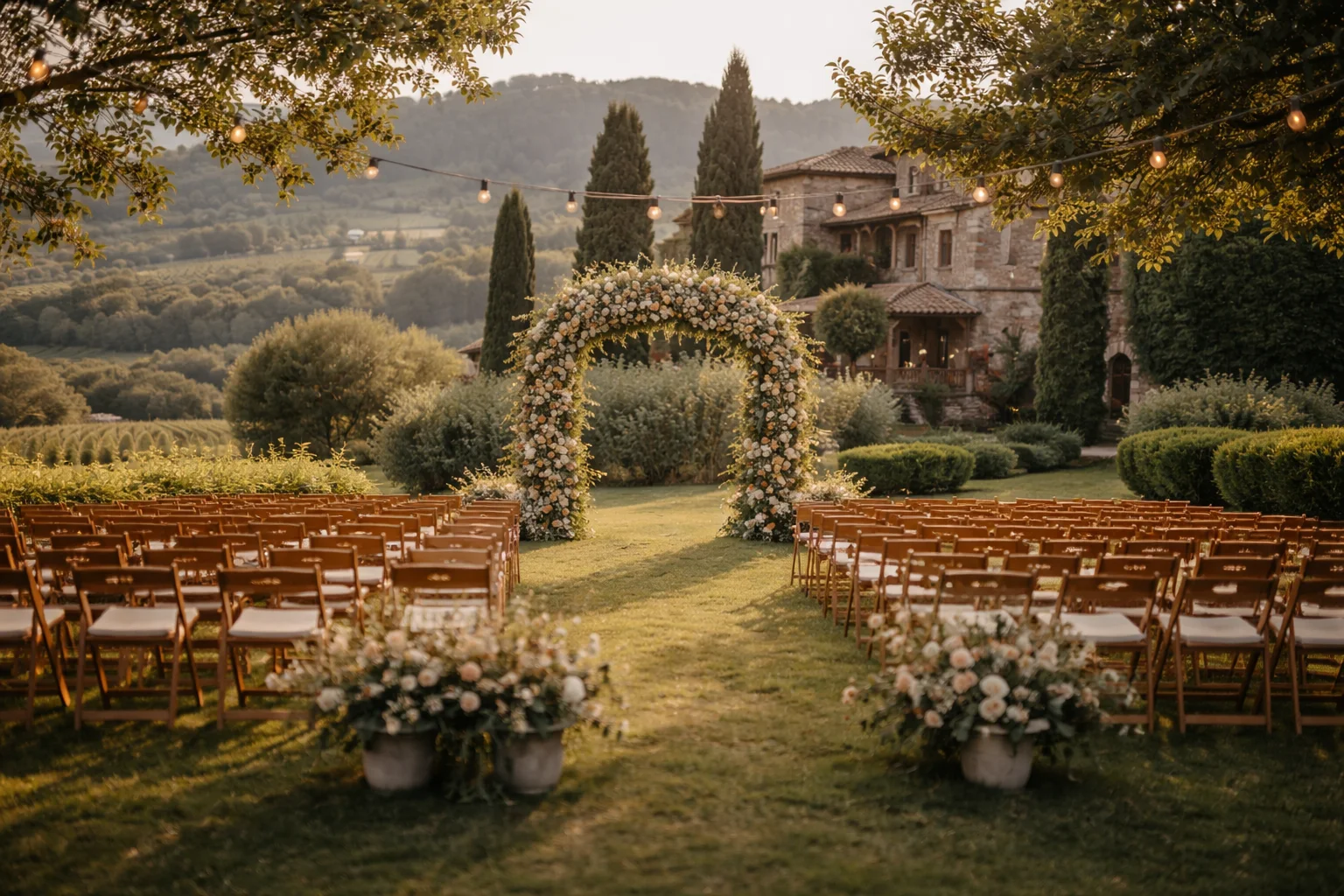
Quiet Observations on Wedding Locations and Gathering Spaces
Discussions about wedding venues often circle around style or decoration. In practice the location itself shapes the event long before flowers or lighting appear. The way guests arrive, how rooms connect, how sound travels in an old hall or across a garden terrace. These things quietly determine the rhythm of the day.

Why Notebooks Matter More Than You Think at Weddings
Notebooks at weddings are often treated as simple guest books, but their role goes deeper. They capture pauses, unfinished thoughts, and quiet moments that rarely surface in spoken form. This article explores how notebooks connect the visible ritual of a wedding with the invisible space of silence.
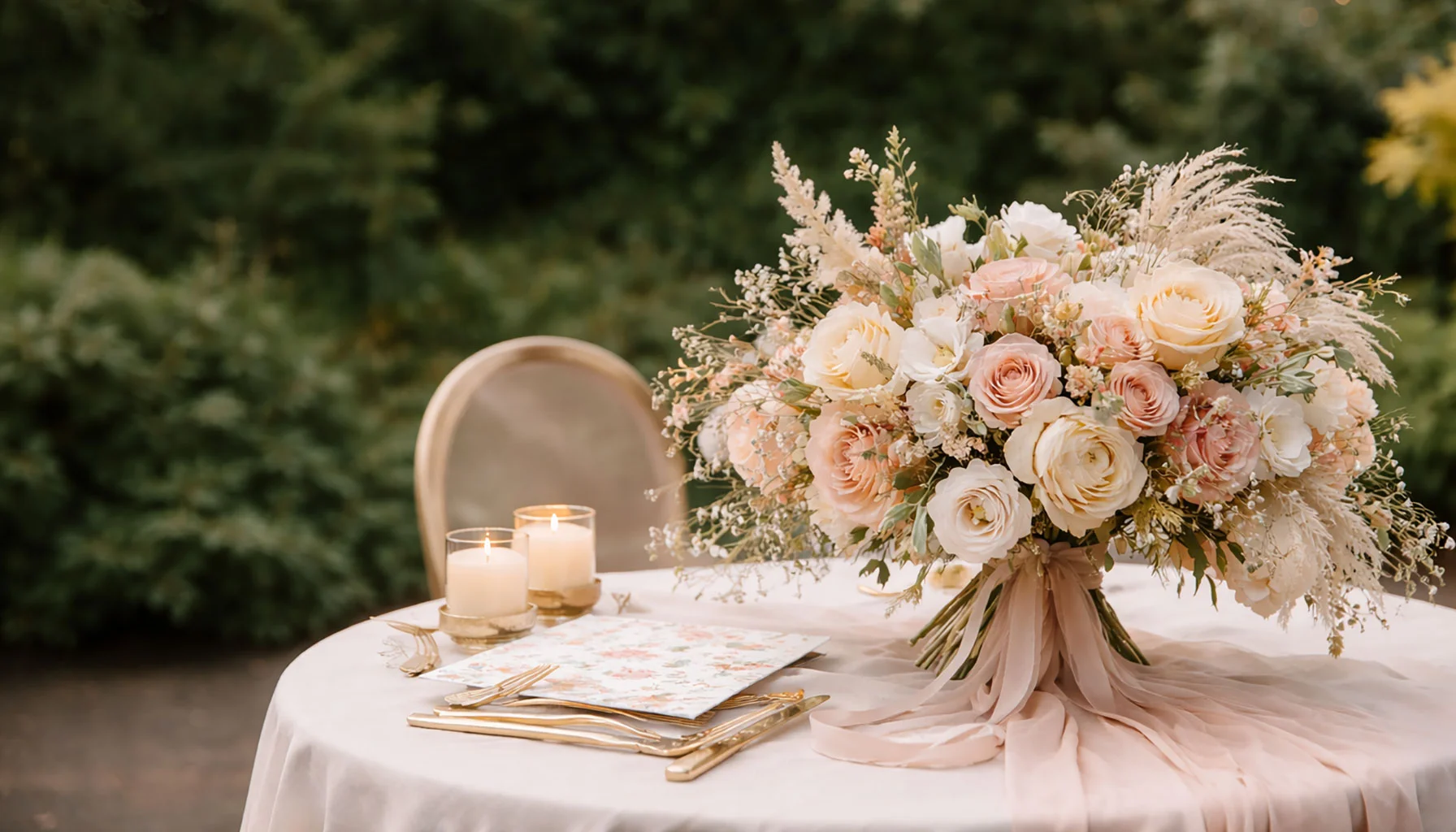
Bloom by Design: Flowers and Florals for a Modern Perfect Wedding
Flowers rarely carry a wedding by themselves. What they do, when chosen well, is quieter and often more lasting. They soften transitions, give rhythm to rooms, and help guests feel oriented without ever being told where to look. This article looks at wedding flowers through atmosphere, restraint, and the silent structure they create across the day.
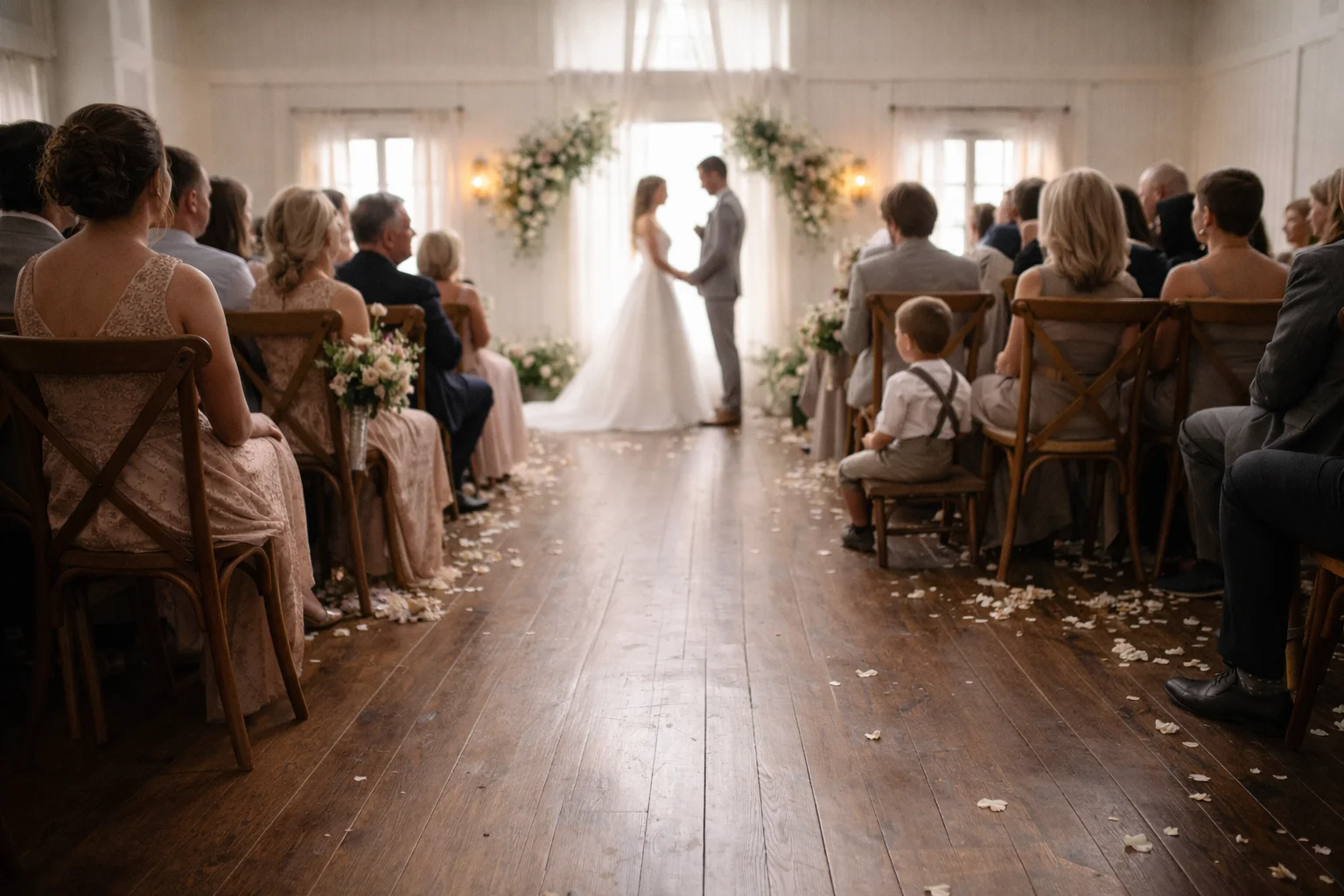
When Attention Shifts: Kids in Formal Wedding Situations
Children rarely stop a formal wedding moment outright, but they often redirect attention for a few seconds in ways adults immediately notice. This article looks at how those shifts happen, why they usually matter less than feared, and how weddings absorb different rhythms without losing their structure.
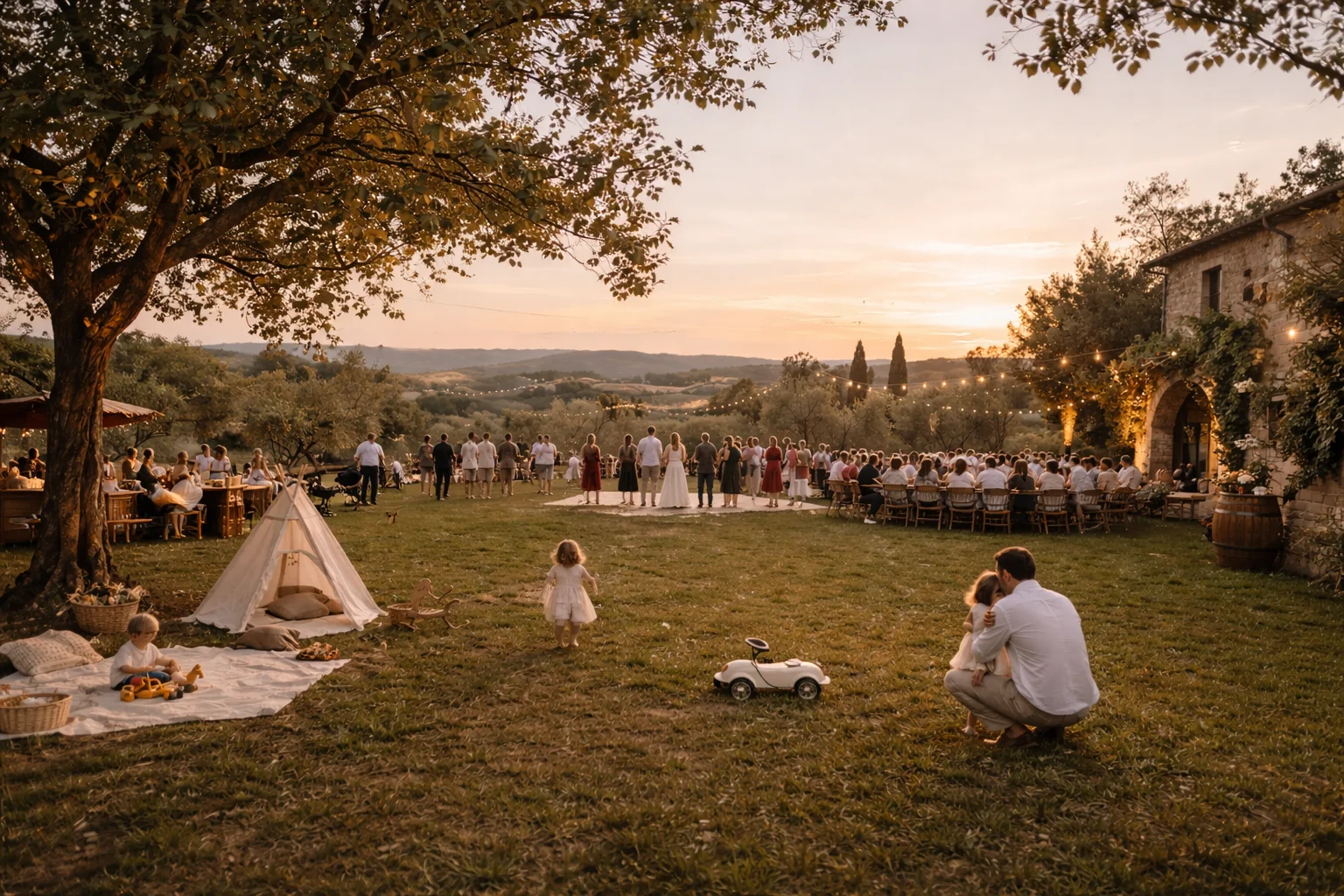
Nap Times, Early Goodbyes, and the Hidden Rhythm of Weddings With Small Children
Weddings with small children often follow two timelines at once: the visible schedule of ceremony, dinner, and dancing, and the quieter rhythm of naps, tiredness, comfort, and early departures. This article looks at how those hidden shifts shape the day in practical and emotional ways.
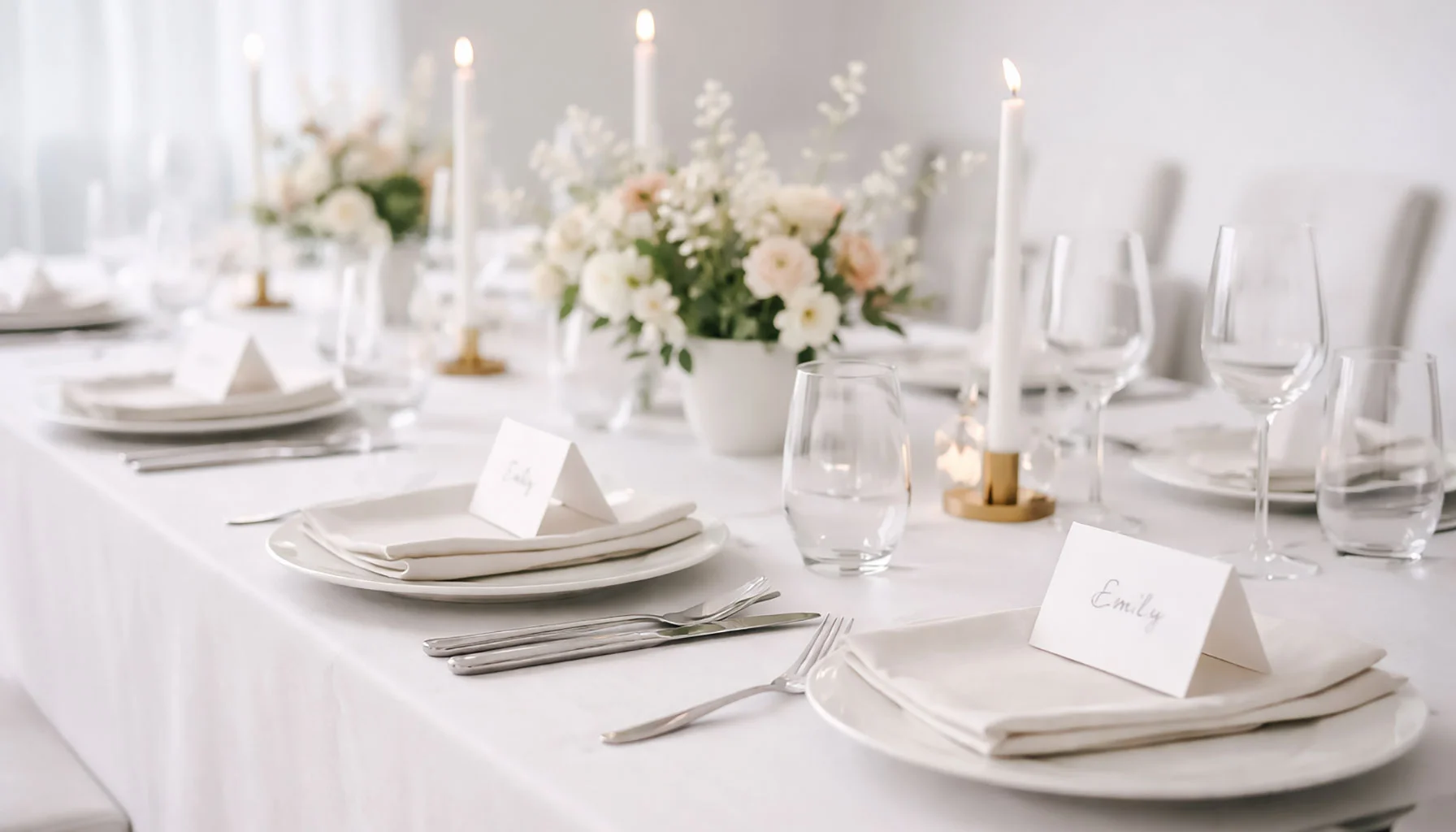
Where Love Meets the Table: Thoughtful Wedding Styling That Brings Guests Together
Wedding tables do more than organize a meal. They shape how guests arrive into conversation, how long they stay, and how easily the evening begins to feel shared. This article looks at thoughtful table styling not as decoration alone, but as a quiet form of structure: one that creates comfort, supports closeness, and helps the celebration unfold naturally around the people gathered there.
Multilingual Wedding Communication: What Guests Need to Understand Without Constant Explanation
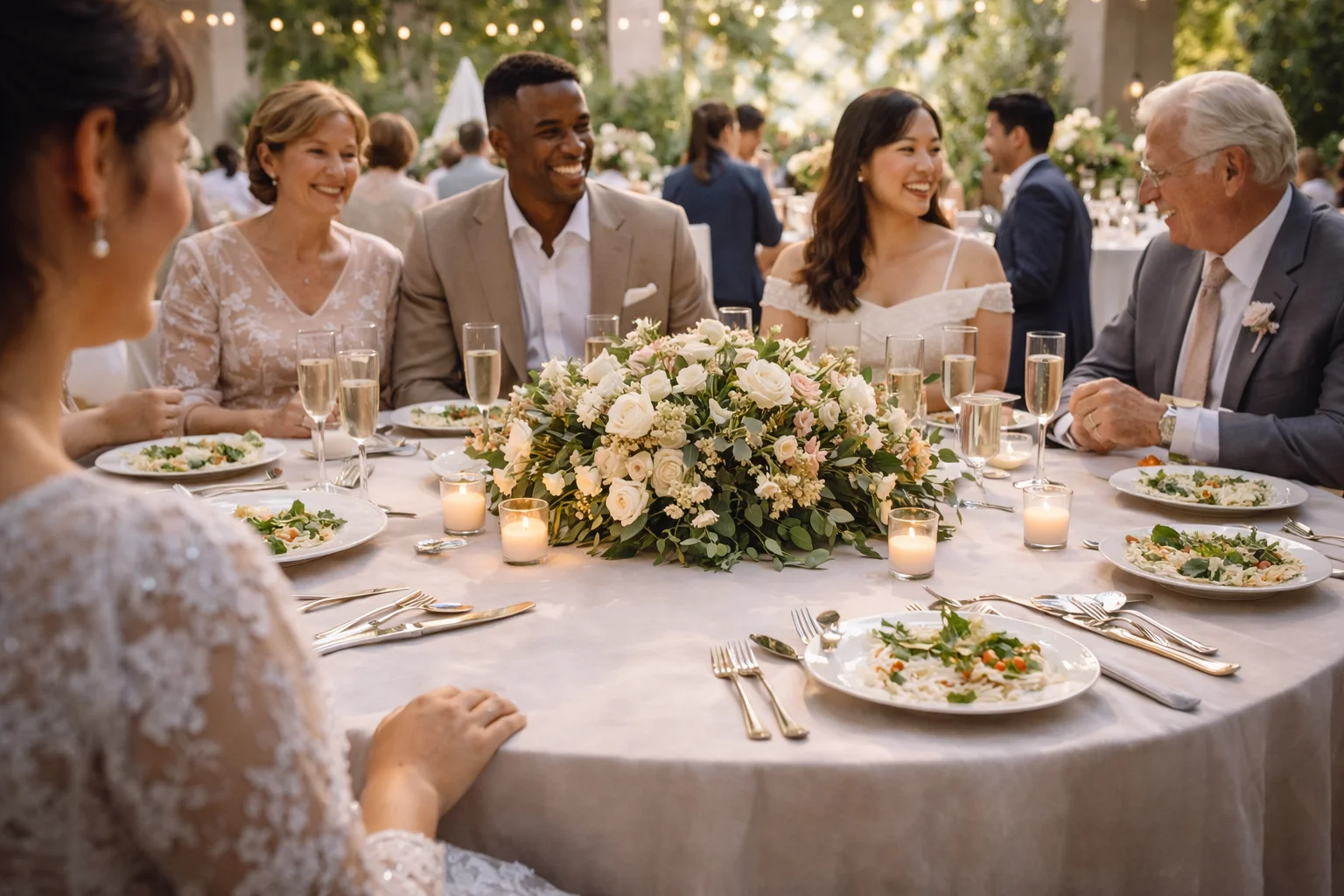
A multilingual wedding does not fail because different languages are present. It becomes difficult when guests are left unsure what they need to understand, what they can simply feel, and what requires translation in the moment. This article looks at how to create clarity in multilingual wedding communication without overexplaining every part of the day.
Where an Outdoor Wedding Finds Its Quiet Moments
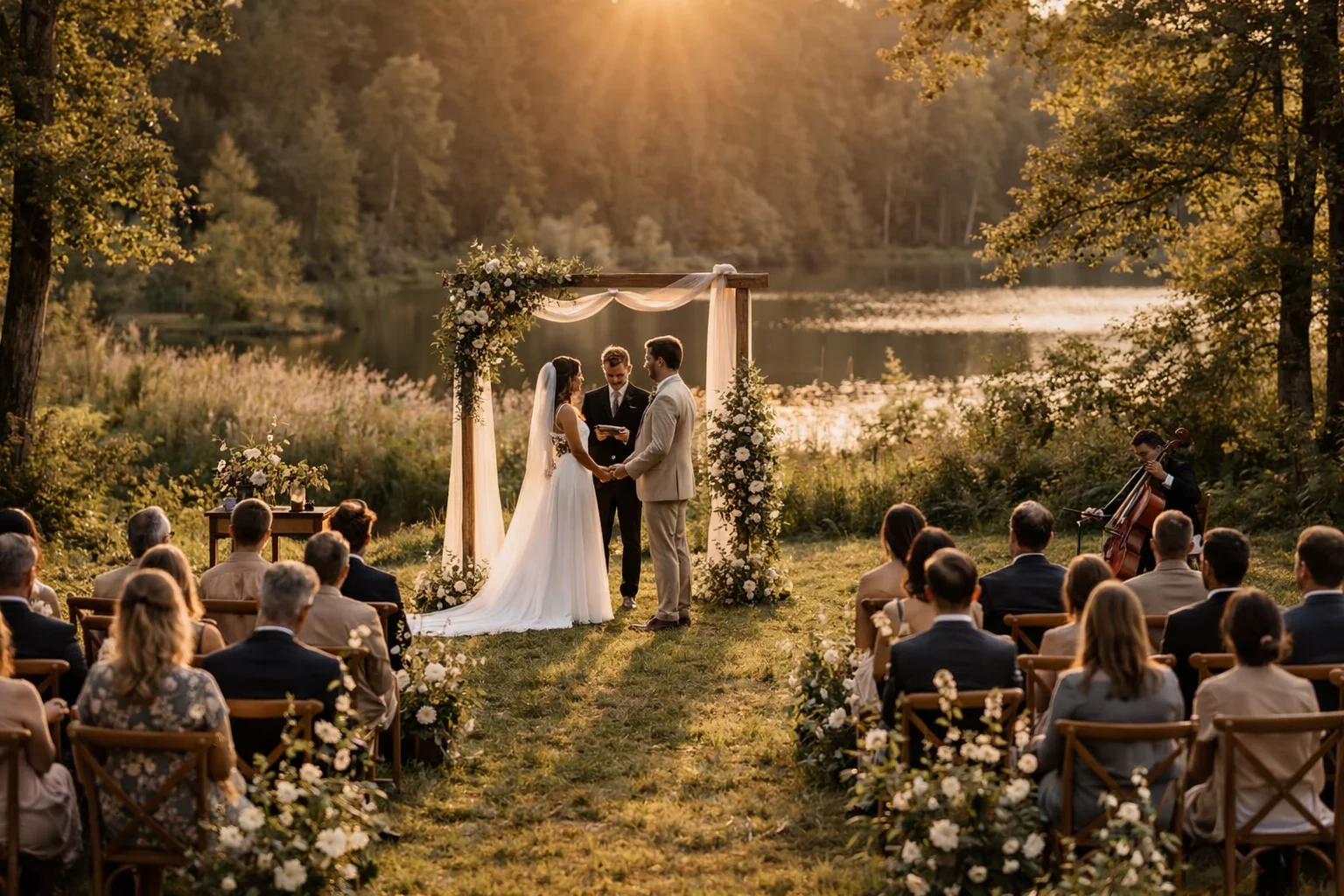
Outdoor weddings are often chosen for what they seem to promise: openness, air, light, a sense that the ceremony is not confined but allowed to unfold in a wider space. There is movement in everything, from the wind in the trees to the shifting light across the day.
Winter Light and Compressed Timelines in Weddings
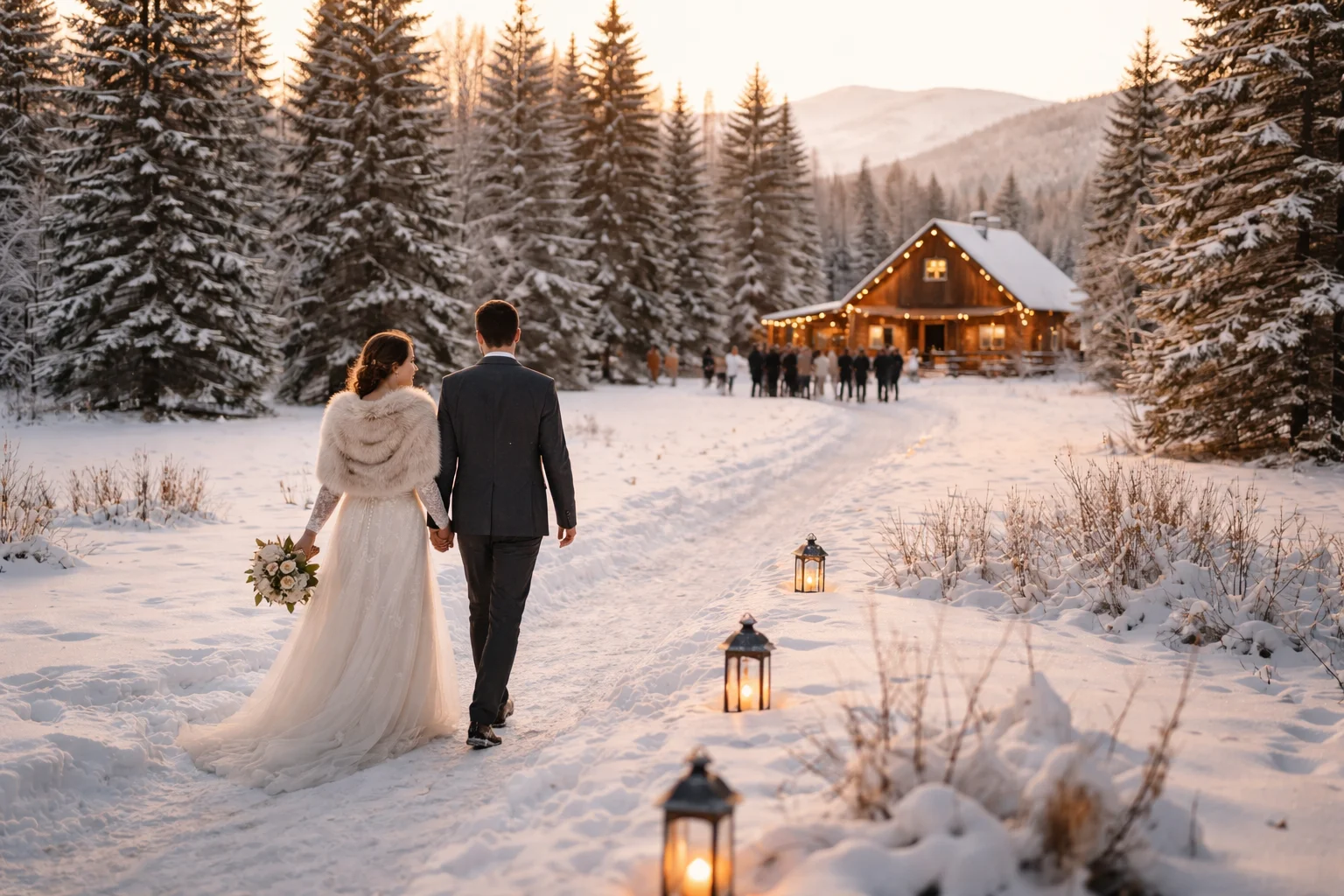
Winter weddings are shaped less by one obvious restriction than by a series of quieter adjustments. This article looks at how shorter days, colder air, and earlier shadows compress the timeline, tighten transitions, and give the day a more deliberate rhythm.
Family Table Checklist: What Helps Mixed Generations Sit More Easily Together
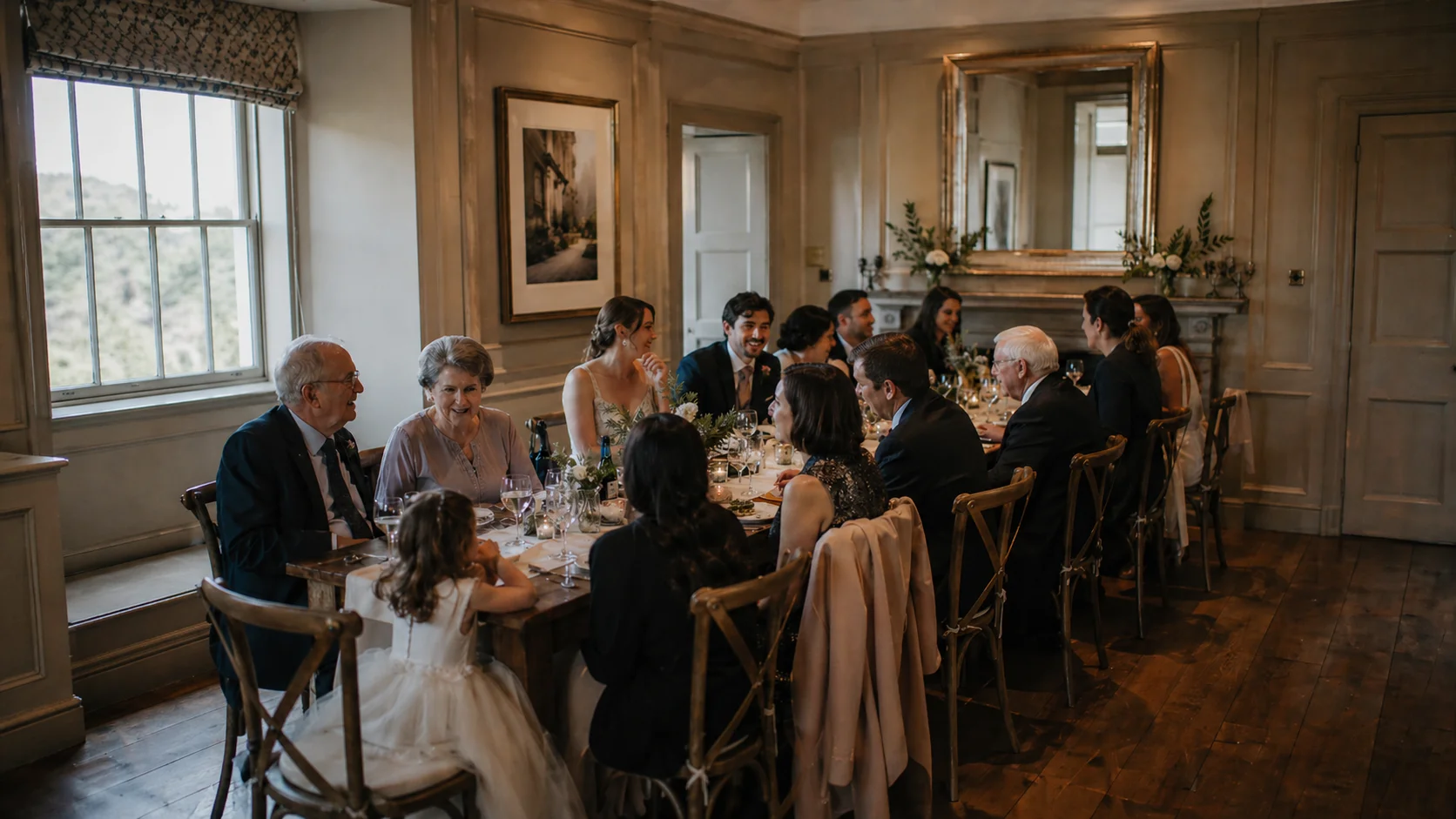
Family tables at weddings rarely depend on seating order alone. They work better when physical comfort, conversational balance, newer relationships, and older family stories are all considered before dinner begins.