
Where Nature Meets Love: Unforgettable Outdoor Weddings
Outdoor Weddings Under Open Skies
Weddings held outdoors tend to slow people down. Arrival feels different when there is no doorway. Light changes during the ceremony. Sound carries unevenly. These elements shape the day without needing explanation. Guests often notice this quietly. The atmosphere feels less contained, more shared.
What stands out is not the setting itself, but how people respond to it. Conversations start earlier. Children move more freely. Pauses feel natural. Outdoor weddings seem to invite presence rather than attention.
Settings That Guests Settle Into Easily
Gardens
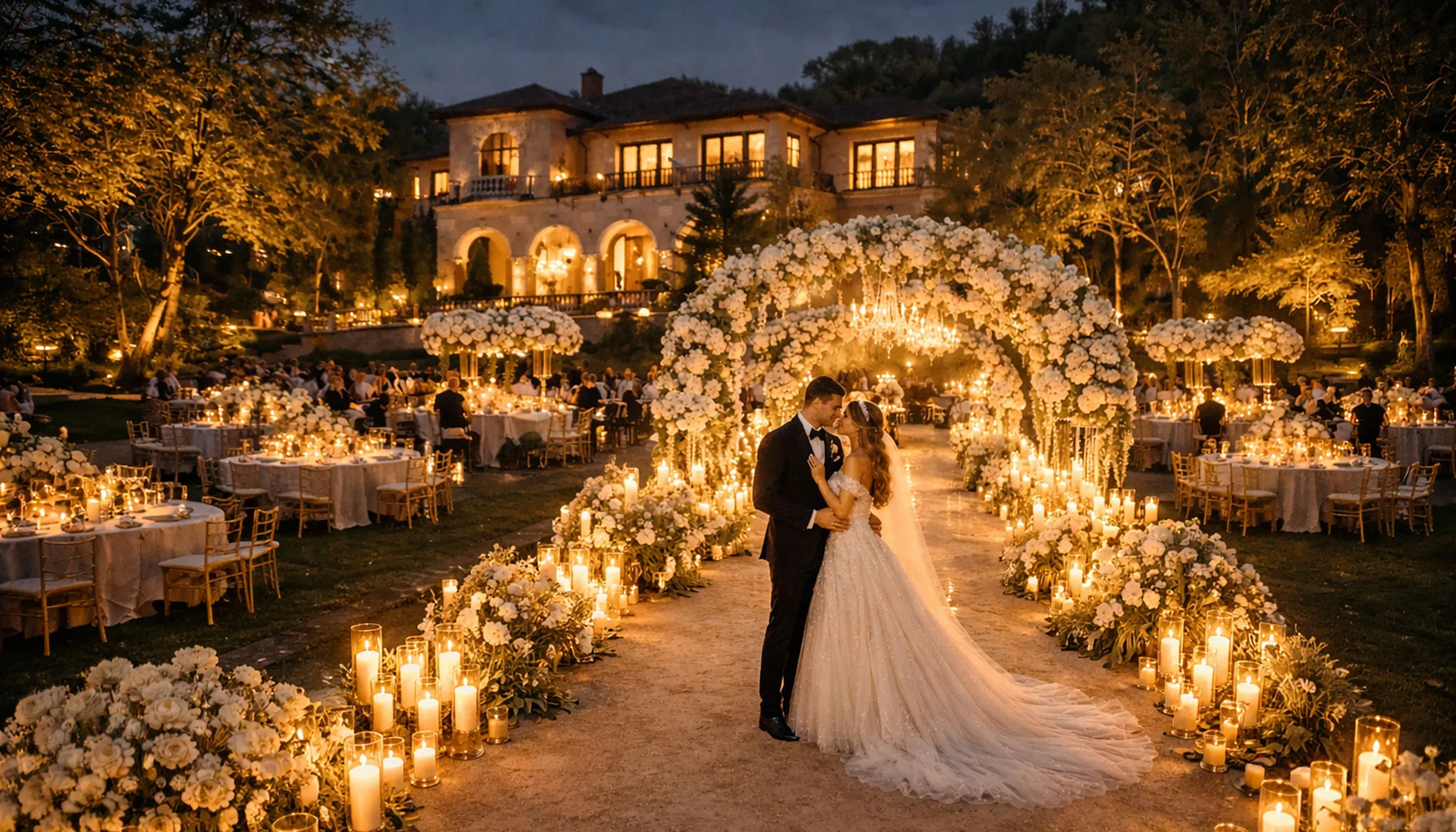
Garden weddings often feel familiar. Guests recognize the environment and adjust quickly. Shaded seating, open paths, and visible gathering points help people find their place. When lighting is added later in the day, the shift feels gradual rather than staged.
Beaches
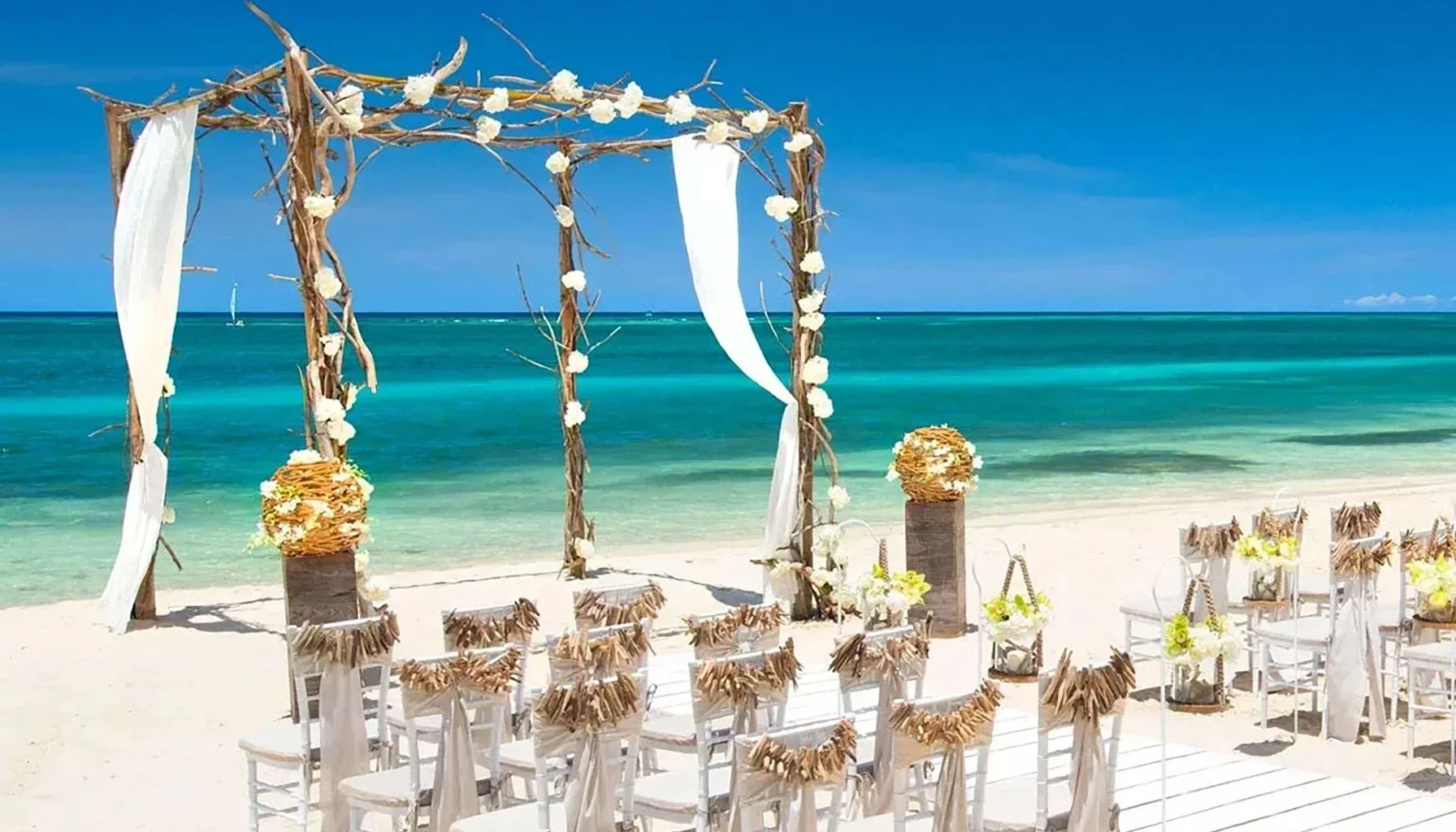
Beach ceremonies tend to feel unforced. Shoes are optional. Movement is slower. Guests appreciate clarity around timing and comfort. Simple measures like water, shade, and clear walking paths shape the experience more than decoration.
Forests and Woodlands
Wooded settings create a sense of enclosure without walls. Sound softens. Light filters in unevenly. Guests often respond with quieter behavior. Seating that follows the terrain and subtle lighting later in the evening support this tone.
Fields and Countryside
Open landscapes allow flexibility. Layouts expand and contract throughout the day. Guests tend to move more, choosing where to stand or sit. Clear orientation points and weather protection help maintain ease as conditions shift.
What Helps an Outdoor Wedding Flow
- A visible weather alternative that does not interrupt the setting
- Seating that allows movement without drawing attention
- Sound support that feels integrated rather than technical
- Lighting that grows slowly as daylight fades
- Clear paths and signage that reduce uncertainty
- Rest areas that invite pauses without isolating guests
“It felt easy to be there. Nothing needed explaining.”— Guest comment
Details That Support the Setting
Outdoor weddings tend to work best when the environment is allowed to lead. Materials that belong outside age well during the day. Wood, linen, simple glass. When additional elements are introduced, guests respond more positively if they appear useful rather than decorative.
- Welcome tables with drinks or towels matched to the temperature
- Lounge areas placed slightly away from the main gathering
- Food concepts that allow movement and informal timing
- Lighting placed low enough to guide without dominating
“People stayed longer than expected. It didn’t feel rushed.”— Couple, after the celebration
Closing Observation
Outdoor weddings rarely rely on emphasis. Their strength lies in rhythm, light, and shared space. When structure is clear and comfort is considered, guests tend to adapt naturally. The day unfolds with fewer cues and more quiet agreement. That atmosphere often stays with people longer than expected.
Related Articles
Insects Around Light Sources at Weddings
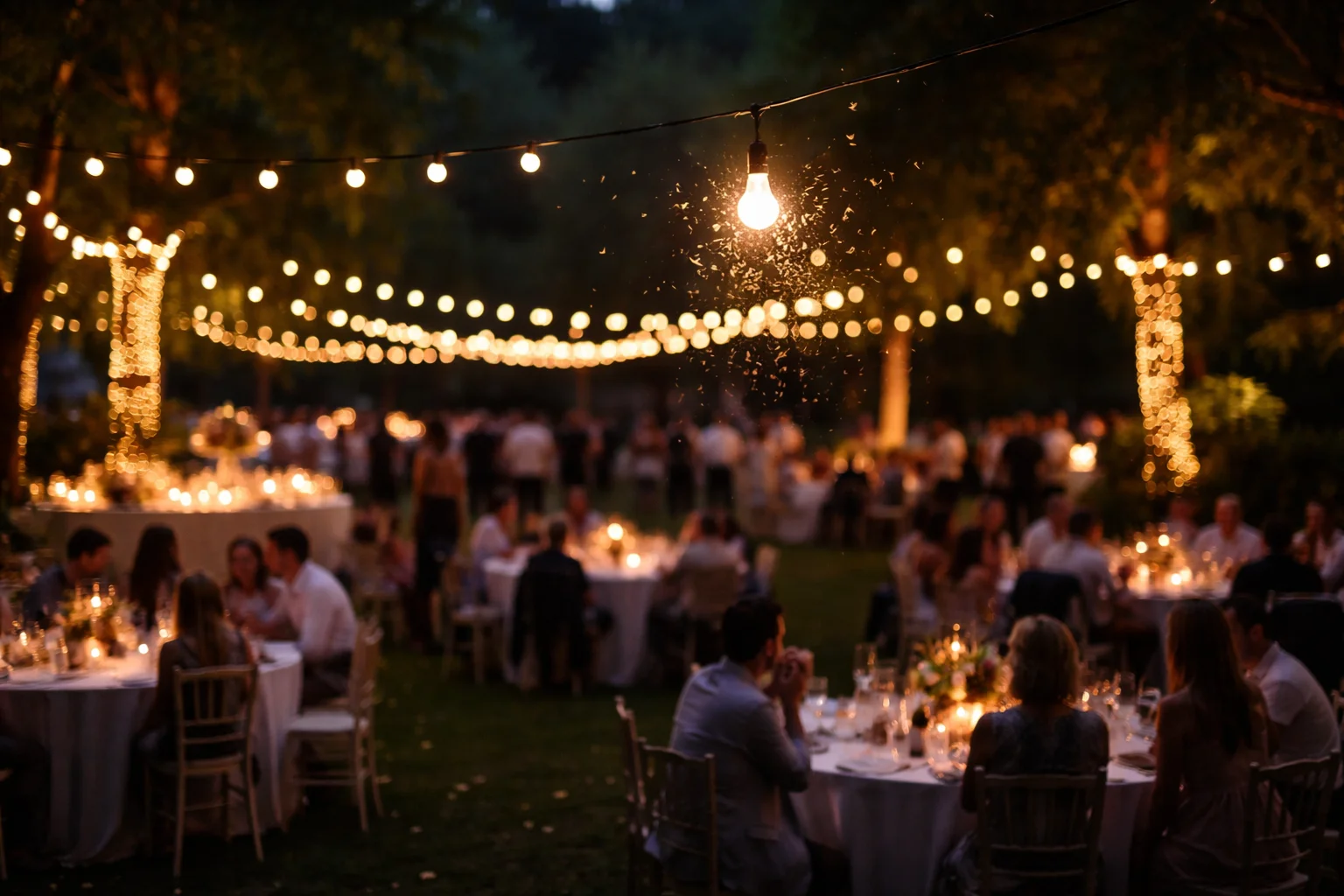
Outdoor weddings shift once the light fades. What looked calm in late afternoon starts to move differently. Lamps switch on, strings of bulbs hum a bit, faces turn toward brighter spots. And then, slowly, insects begin to show up. Not all at once. Just a few at first, easy to miss.
Backup Checklist for Outdoor Weddings: Shade, Wind, Cold, and the Things People Forget
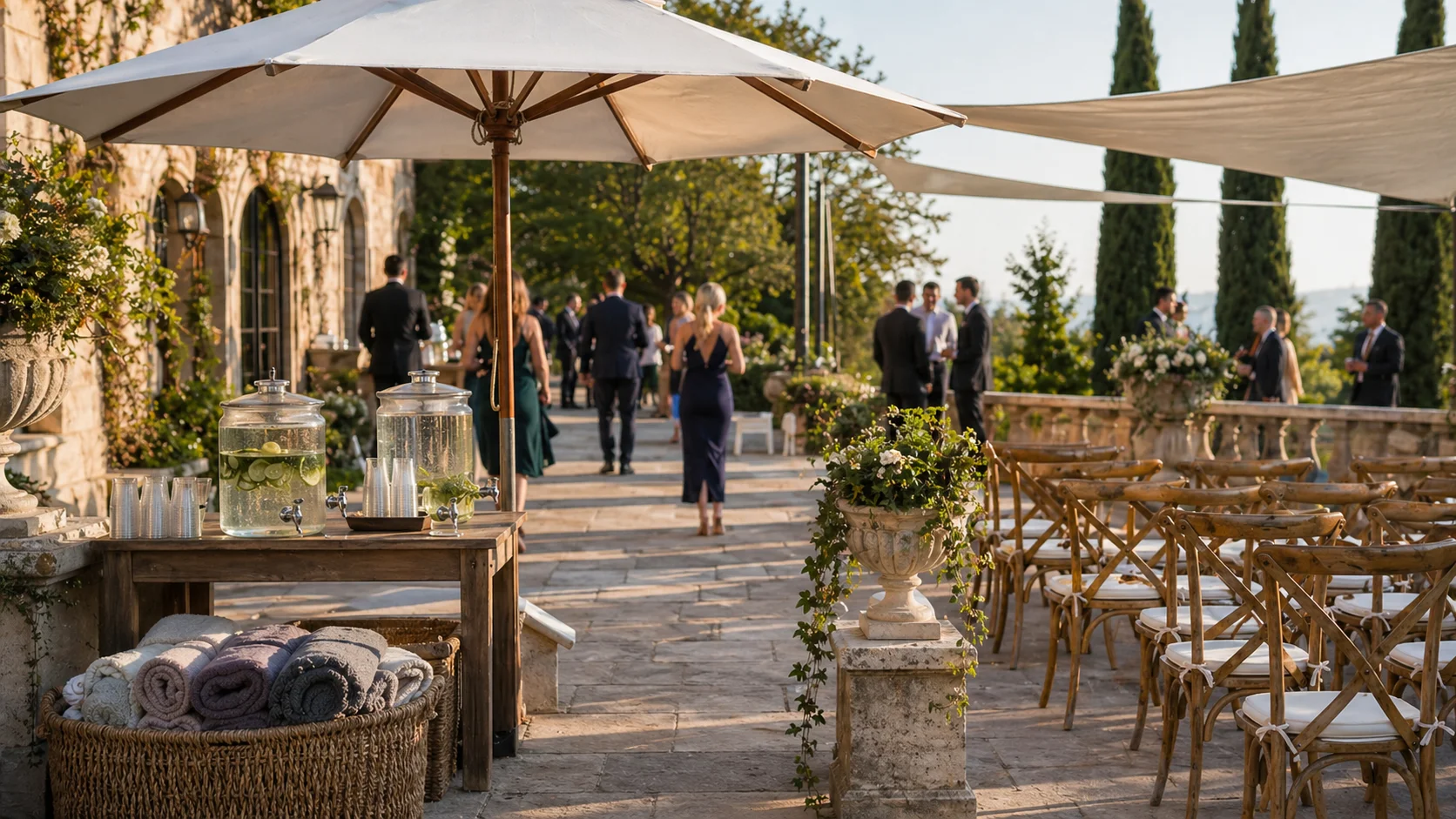
Outdoor wedding backup plans are not only about rain. This article looks at shade, wind, cold, ground conditions, paths, loose details, guest comfort, and the small weather traces that shape how an outdoor celebration is remembered.
Outdoor Weddings With Children: Freedom, Boundaries, and Attention
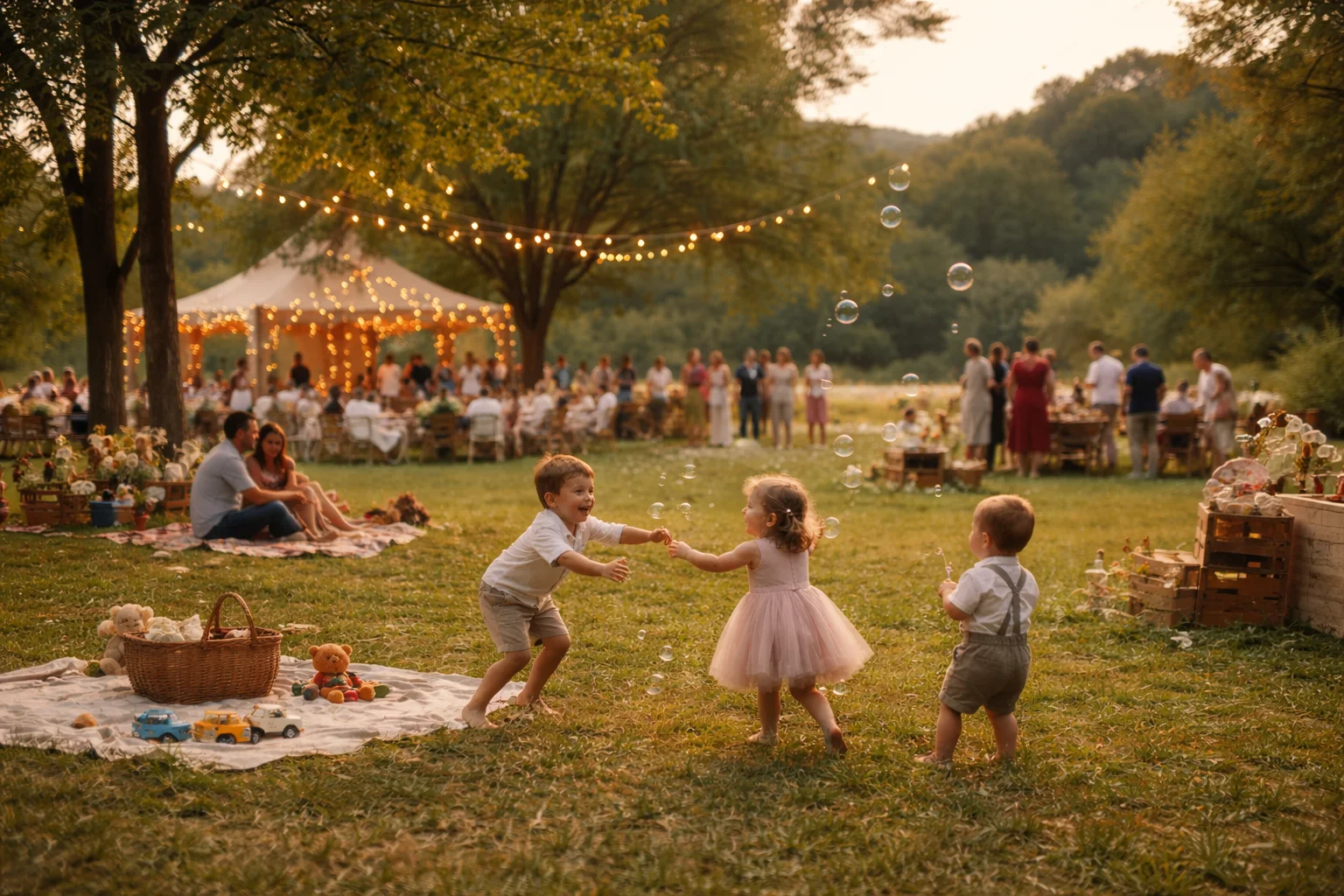
Outdoor weddings often feel easier with children because there is more room to move, but that same openness changes how boundaries work and how attention is held. This article looks at how freedom, supervision, fatigue, and small shifting moments shape child-friendly outdoor celebrations.
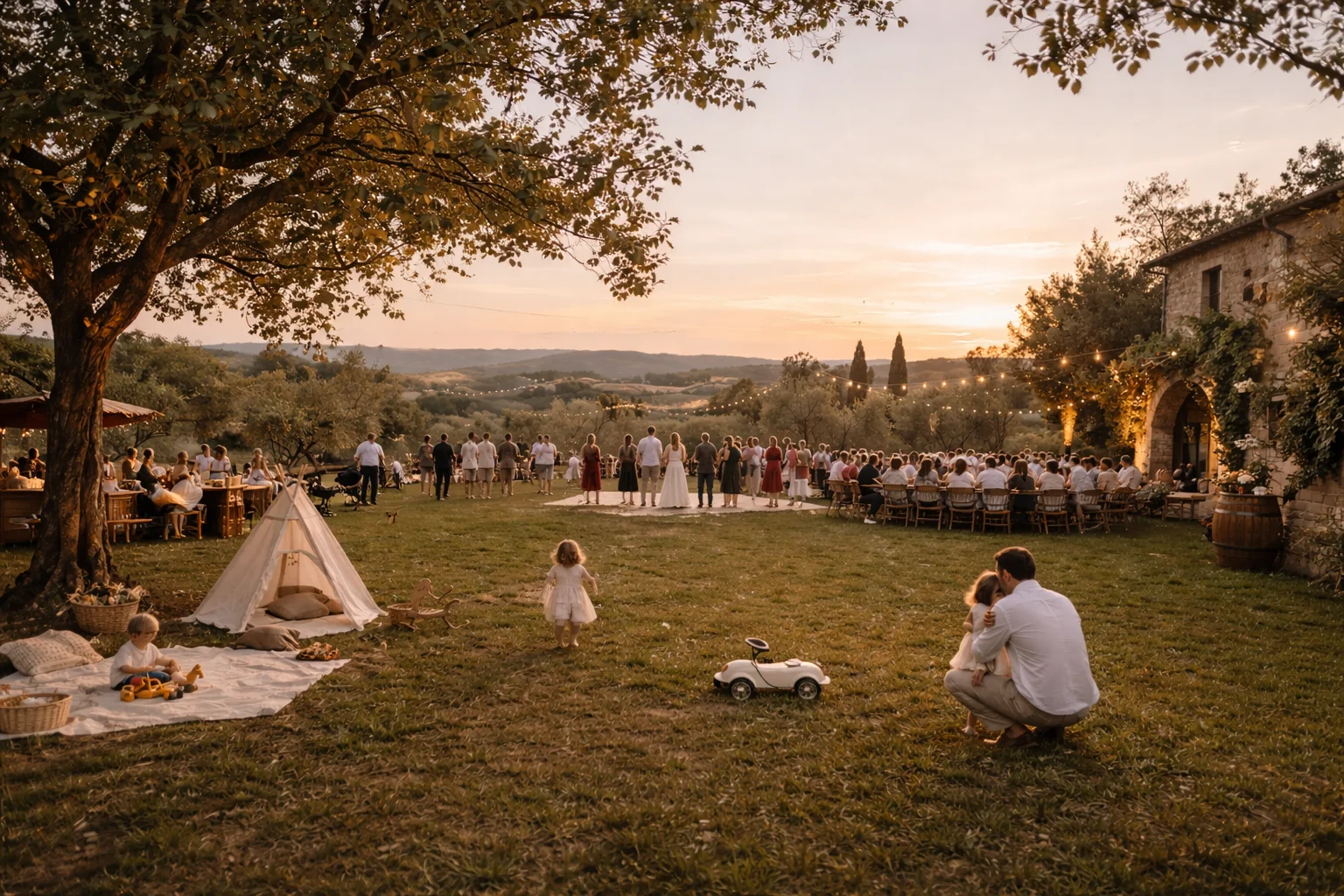
Nap Times, Early Goodbyes, and the Hidden Rhythm of Weddings With Small Children
Weddings with small children often follow two timelines at once: the visible schedule of ceremony, dinner, and dancing, and the quieter rhythm of naps, tiredness, comfort, and early departures. This article looks at how those hidden shifts shape the day in practical and emotional ways.
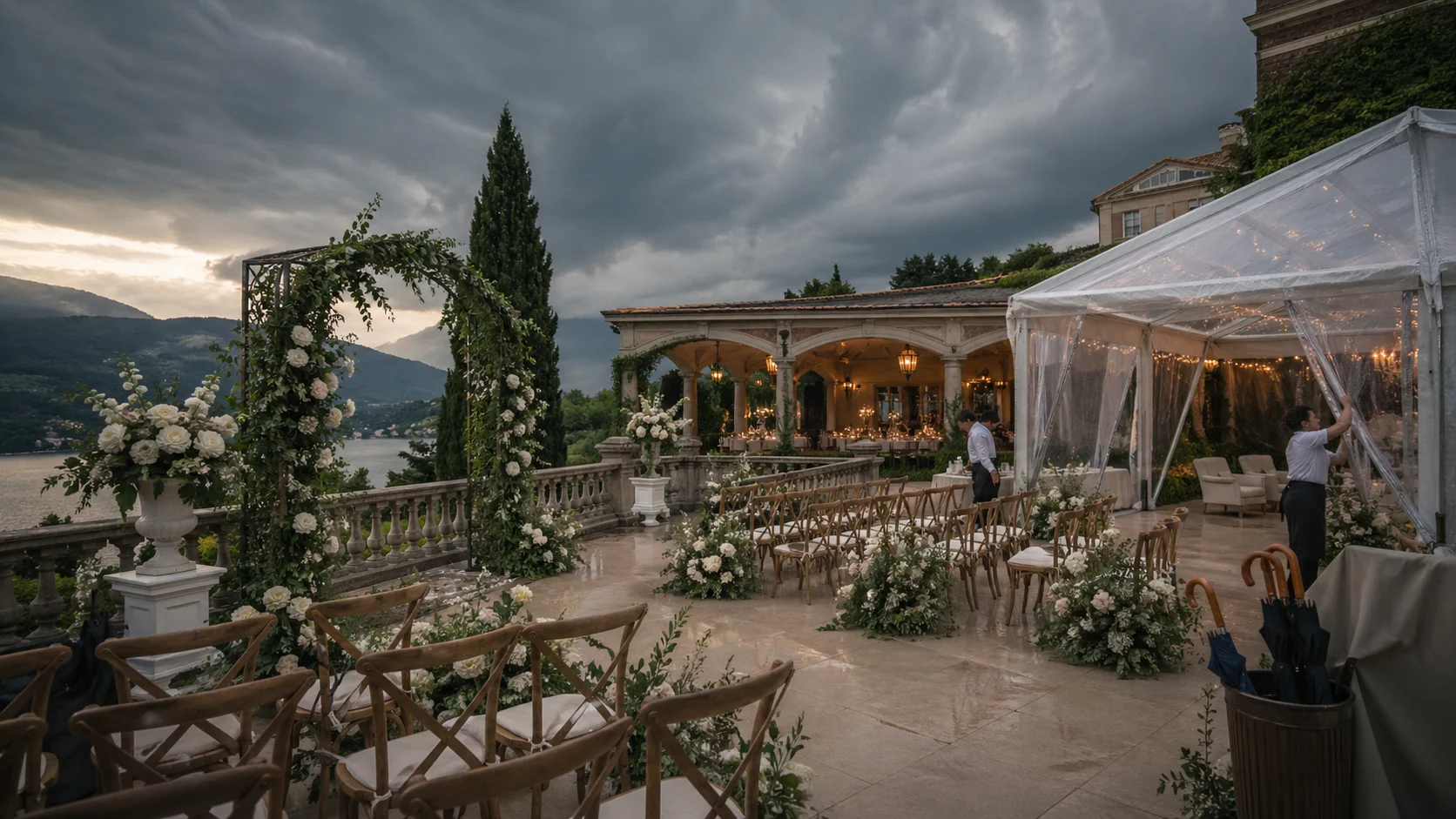
Rain Plan Checklist: What Needs Deciding Before Weather Becomes the Mood
A wedding rain plan is rarely just a backup for logistics. It also shapes whether weather stays manageable or quietly takes over the emotional tone of the day. This article looks at what needs to be decided early, so rain changes the setting without deciding the atmosphere.
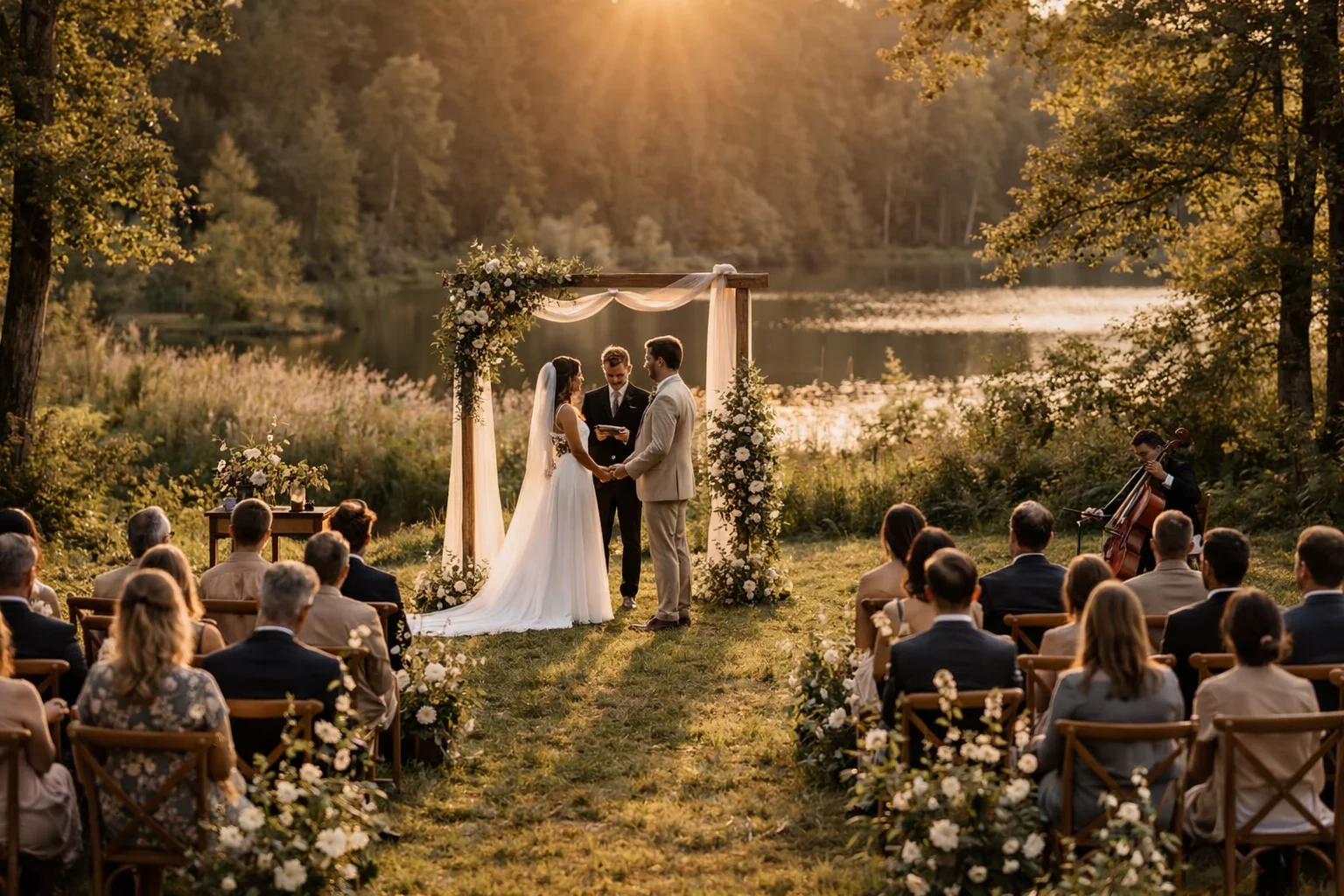
Where an Outdoor Wedding Finds Its Quiet Moments
Outdoor weddings are often chosen for what they seem to promise: openness, air, light, a sense that the ceremony is not confined but allowed to unfold in a wider space. There is movement in everything, from the wind in the trees to the shifting light across the day.
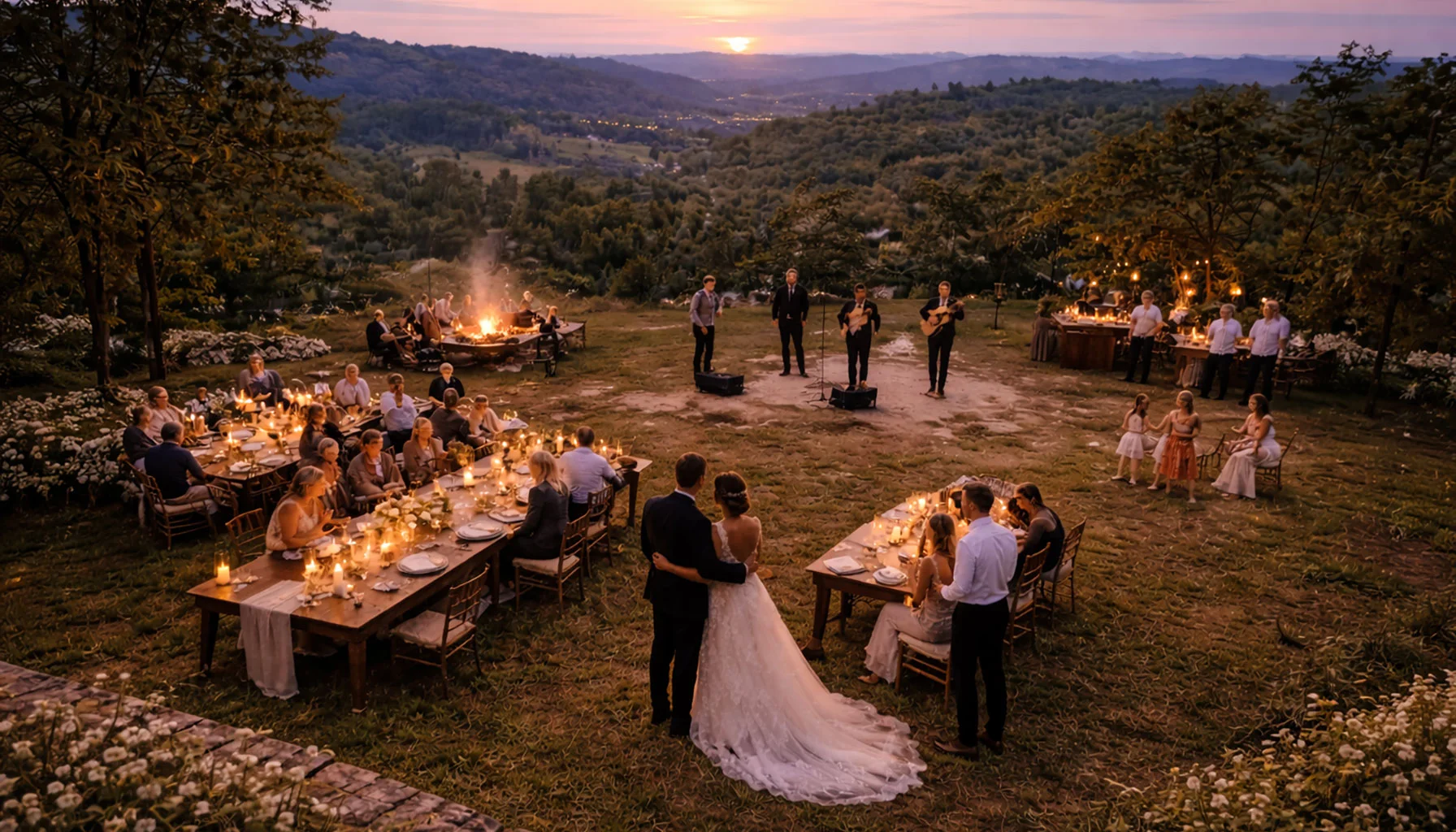
If love belonged to everyone
This wedding was experienced as a shared moment, not as a staged event. From arrival to departure, closeness, openness, and a calm rhythm shaped the day. Guests felt involved, not invited in the formal sense. The celebration thrived on genuine encounters, shared conversations, and an atmosphere that carried throughout the entire day. What remained was the feeling of having been part of something organic – borne of connection and quiet joy.
A day, carried by closeness
This wedding thrived on closeness and attention. Everything quietly intertwined and created a framework in which guests felt safe, welcome, and connected. From arrival to departure, a shared flow emerged that left room for conversations, laughter, and quiet togetherness. What remained was a feeling of warmth and cohesion that outlasted the day.