
Outdoor Weddings With Children: Freedom, Boundaries, and Attention
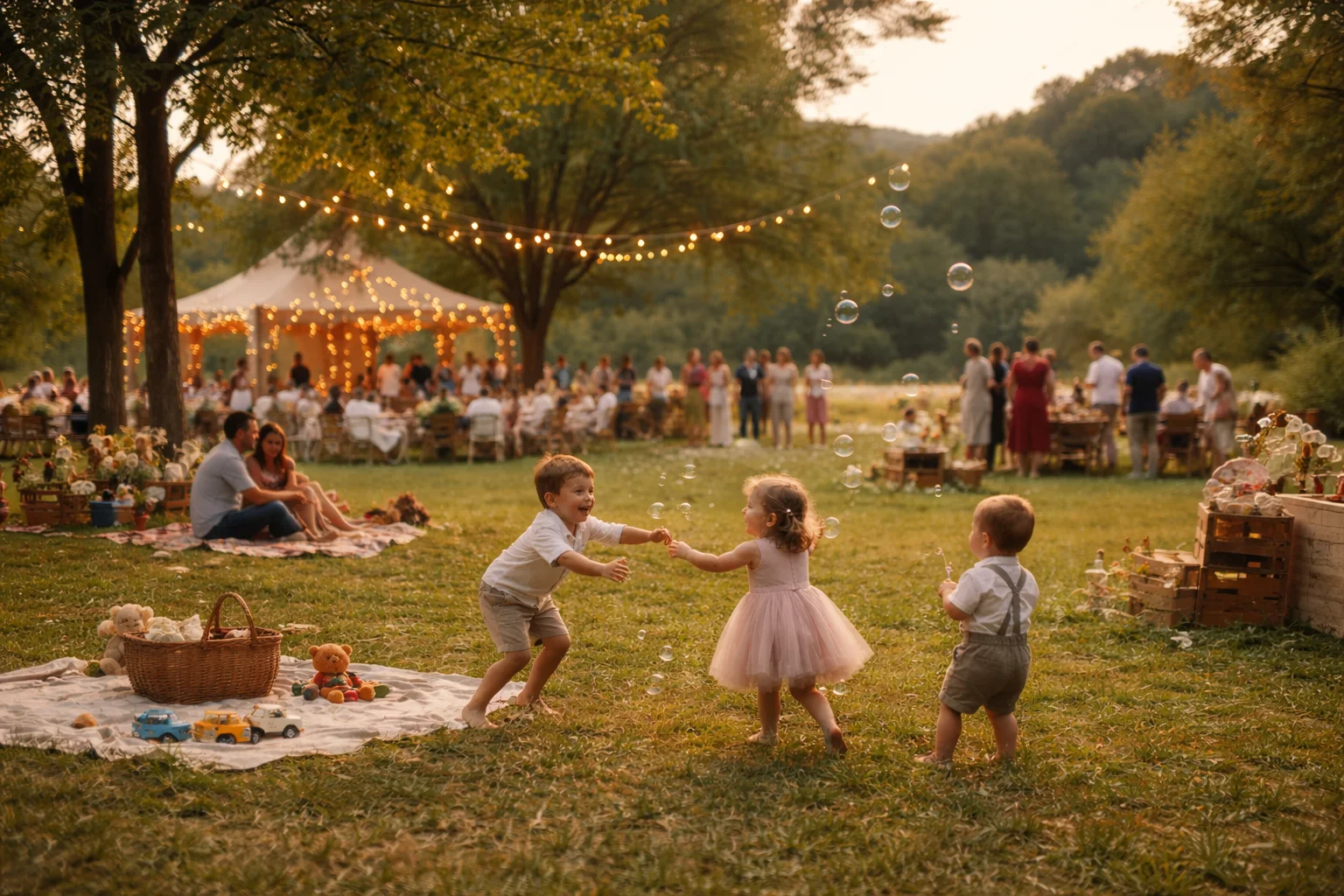
Outdoor weddings often feel easier with children at first glance. There is more space, more air, more visible freedom. Children can move without immediately pressing against the formal structure of the day. That helps. But it also changes the shape of attention. In open settings, movement expands, boundaries become less obvious, and adults spend more time reading where children are rather than assuming they remain where they were last seen. The atmosphere may feel looser, yet it asks for a different kind of awareness.
This is what makes outdoor weddings with children so distinct. They are rarely defined by major problems. They are shaped by small negotiations: how far a child can wander before someone follows, where freedom still feels safe, how adults keep a ceremony intact while allowing some movement at the edges, and how the day holds its tone when younger guests are not moving to the same rhythm as everyone else. The strongest versions do not eliminate this tension. They make room for it.
Definition
Outdoor weddings with children involve a different balance of freedom, boundaries, and attention than indoor celebrations. Open space gives children more room to move, explore, and regulate themselves physically, but it also makes supervision less contained and shifts how focus is held during ceremonies, meals, and transitions across the day.
Freedom Helps, But It Also Expands The Field
Children usually cope better with outdoor weddings when they are given some physical range. Grass, paths, trees, changing light, and room to move can soften the pressure that builds when children are expected to sit still for too long. That is one reason many kids seem calmer outside than they do in tightly structured indoor settings. At the same time, open space means attention has to widen. A child who is quietly occupied under a table indoors may be fifty meters away near a hedge outdoors before anyone fully registers the shift. Freedom is real, but so is its radius.
Boundaries Work Best When They Are Legible Rather Than Strict
The most effective boundaries at outdoor weddings are usually not the most heavily enforced ones. They are the ones children can read. A visible ceremony edge, a clear path that adults continue to use, a seating area that signals where the formal moment is happening, a nearby play zone that feels intentionally allowed: these work better than repeated correction alone. When the environment quietly explains where different kinds of behavior belong, parents spend less energy intervening and children spend less energy testing every limit at once.
Kids & Family – CategoryThoughtful entertainment helps families of all ages enjoy a wedding celebration together. Child-friendly activities, quiet play areas, and interactive moments allow younger guests to feel included while adults can relax and celebrate. Well-planned family entertainment creates a warm, welcoming atmosphere and ensures everyone feels comfortable throughout the day.
Attention Rarely Holds In One Place For Long
Formal moments outdoors often have softer edges to begin with. Wind moves fabrics, birds cross the background, guests glance toward shifting light, and children add another layer to that distributed attention. A child running briefly at the side of the ceremony or asking a question in a normal voice does not always break the moment, but it does redistribute focus for a few seconds. This is less a disruption than a reminder that outdoor weddings are rarely experienced as one tightly framed scene. They are lived more peripherally, with attention moving in and out rather than staying fixed.
Fatigue, Hunger, and Weather Change Everything Faster Outside
Outdoor freedom works best when basic needs are handled earlier than adults think necessary. Children tire faster in sun, cool down faster in wind, and move from absorbed play to total frustration with less warning when food, shade, water, or quiet retreat space are missing. Parents often experience this not as one obvious crisis, but as a series of small corrections that gradually take them out of the event. The practical answer is simple and often overlooked: shorter formal sections, visible snacks, easy access to water, familiar seating, and somewhere slightly removed where a child can step out without leaving the wedding altogether.
What Children Notice Often Becomes Part Of What Everyone Remembers
The quieter connection to imprints lies in how outdoor weddings stay in memory. Children often register fragments rather than structure: the feel of grass under formal shoes, a path behind the chairs, petals caught in wind, light through leaves, the taste of something sweet, the moment an adult suddenly turned and smiled at them during the ceremony. Adults remember differently, but not entirely separately. Many of the strongest impressions from child-friendly outdoor weddings come from these same small scenes. The day leaves marks less through control than through atmosphere, movement, and brief moments of shared noticing.

Some moments do not pass. They settle. Imprints are the emotional traces left by rituals, decisions, and answers that continue shaping relationships long after the moment is gone.
Conclusion
Outdoor weddings with children work best when freedom is treated as part of the design, not as an accident that has to be corrected later. Open space can make children calmer, but only if boundaries are readable, practical needs are anticipated, and adults accept that attention will sometimes move differently than the formal plan suggests. When that balance is right, the day feels neither over-controlled nor careless. It feels inhabited. And that is often what makes it memorable for everyone involved.
Related Articles
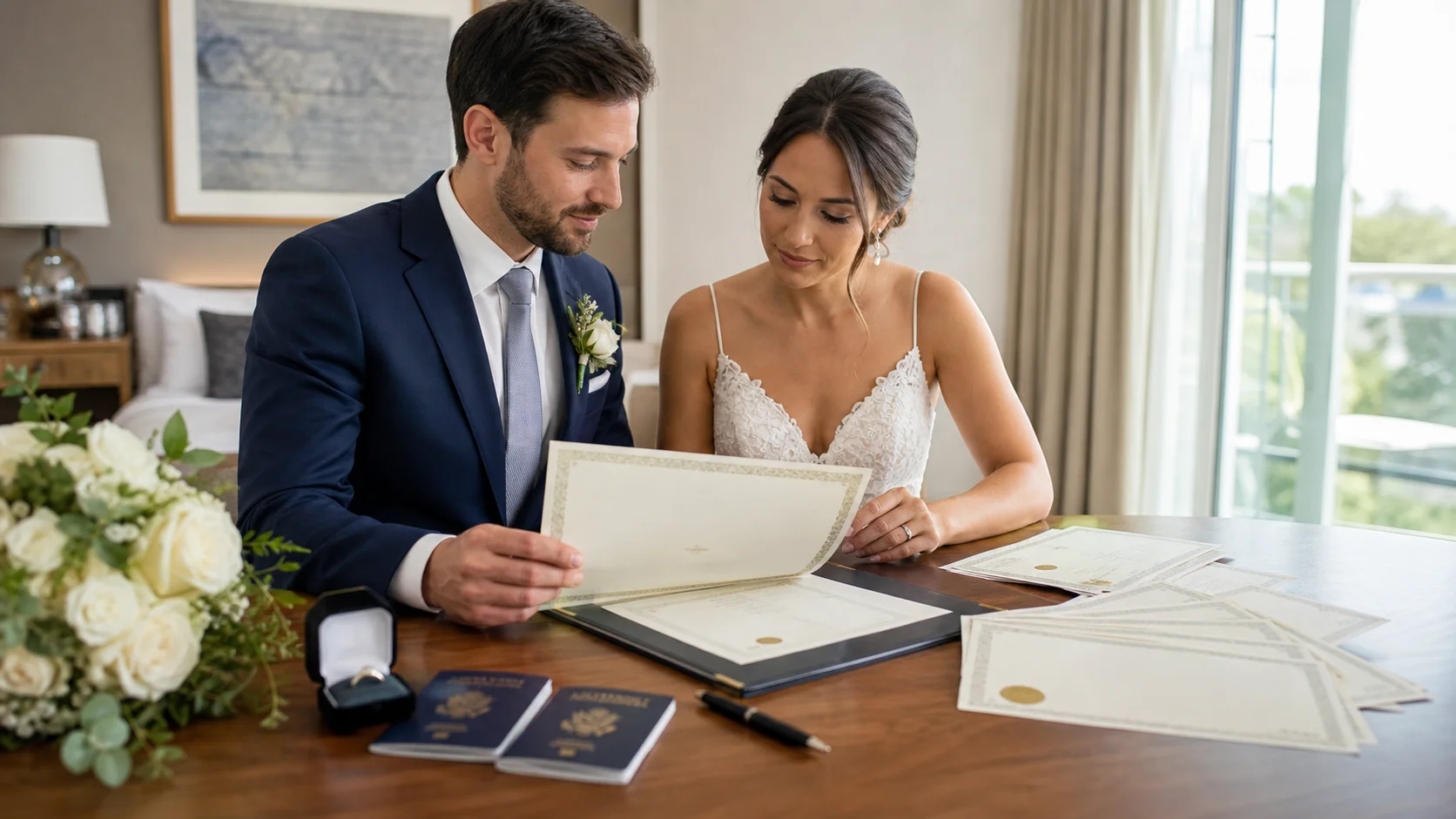
Marriage Certificate Checklist: Why One Document Keeps Returning After the Wedding
A marriage certificate often feels like the final paper of the wedding, but it keeps returning in ordinary life. This article looks at certified copies, scans, translations, apostilles, name changes, travel, banking, insurance, and the quiet imprint one document leaves after the celebration.
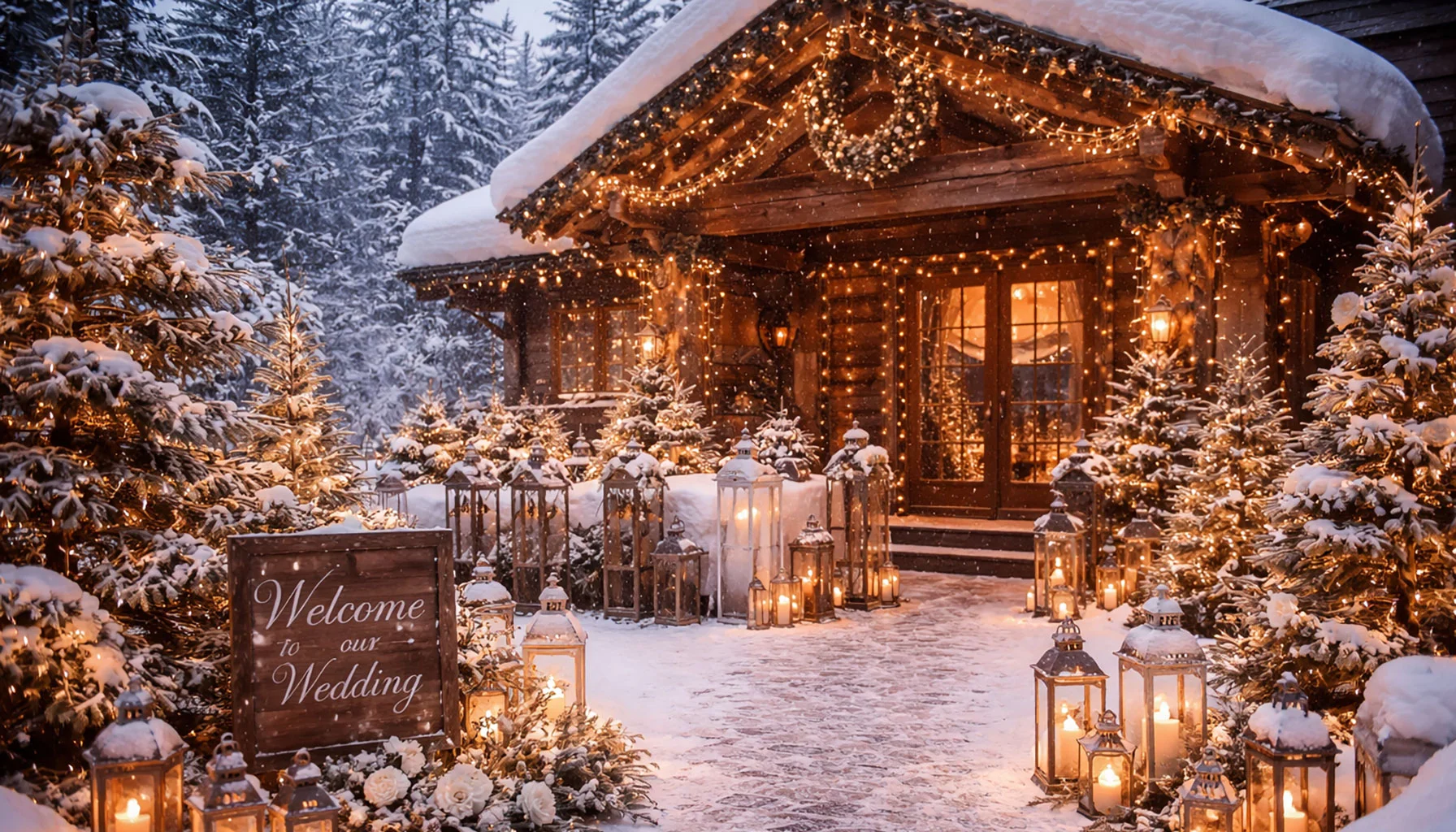
Winter Weddings: Beautiful Locations, Planning Tips and Ideas
Winter weddings move by a different clock. Light shortens, rooms gather people more closely, and warmth becomes part of the structure of the day. This article looks at winter weddings not only as a seasonal style, but as a form of celebration shaped by atmosphere, containment, and the emotional trace a winter setting leaves behind.

Where Nature Meets Love: Unforgettable Outdoor Weddings
Outdoor weddings combine natural beauty with thoughtful planning to create relaxed, unforgettable celebrations where guests feel comfortable, inspired, and truly connected.

Bridal Accessories in Interplay – A Silent Addition
Accessories for the bride mostly remain in the background. They don't impose themselves and are rarely noticed first. In bridal shops, however, it repeatedly becomes apparent that precisely these pieces structure and round off the overall look. Veils, shoes, jewelry or small accessories do not change the dress, but rather the bride's effect. Observations from practice show how subtle decisions are made and why accessories are often chosen only late – and then stay.
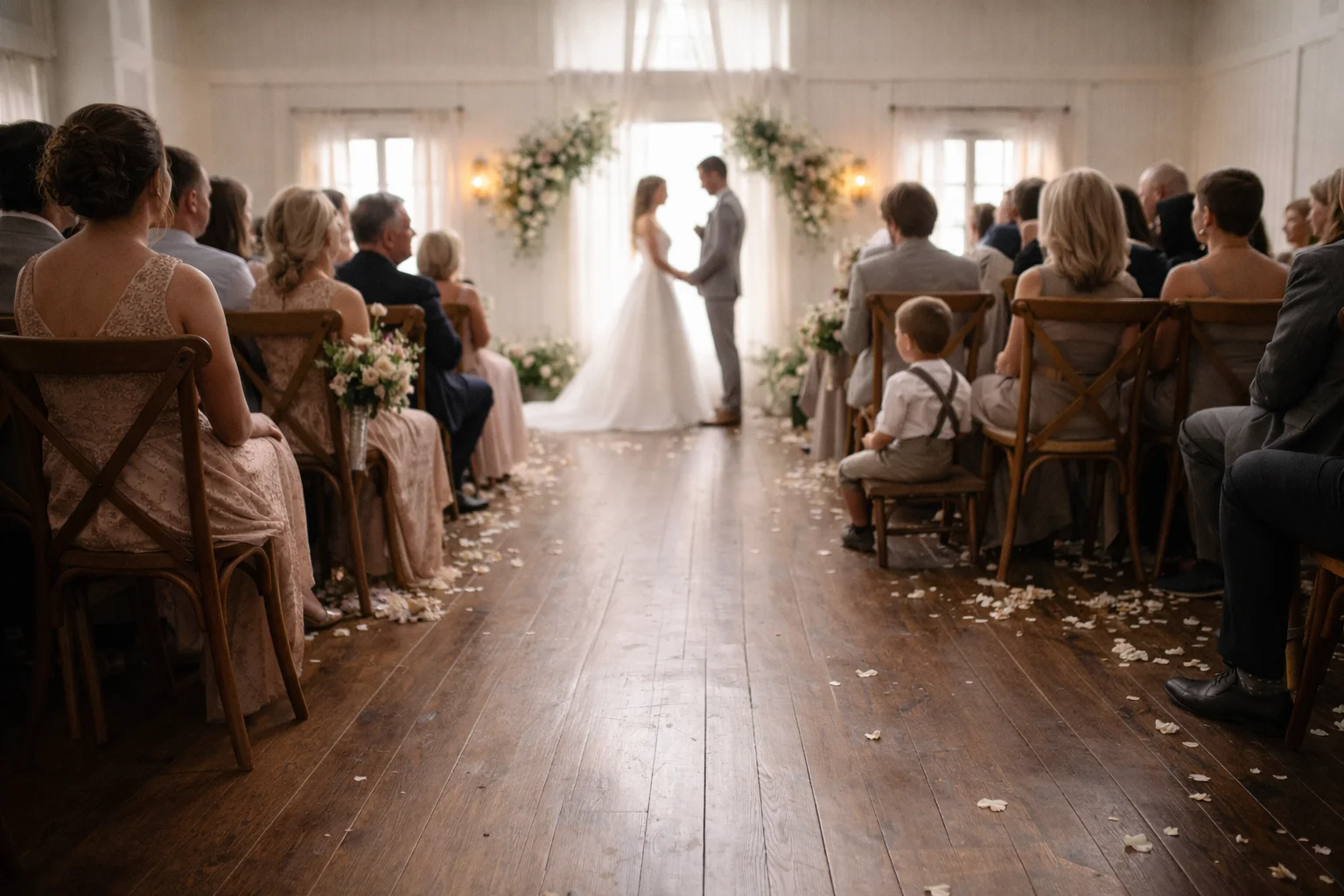
When Attention Shifts: Kids in Formal Wedding Situations
Children rarely stop a formal wedding moment outright, but they often redirect attention for a few seconds in ways adults immediately notice. This article looks at how those shifts happen, why they usually matter less than feared, and how weddings absorb different rhythms without losing their structure.
Venues & Concepts in Weddings
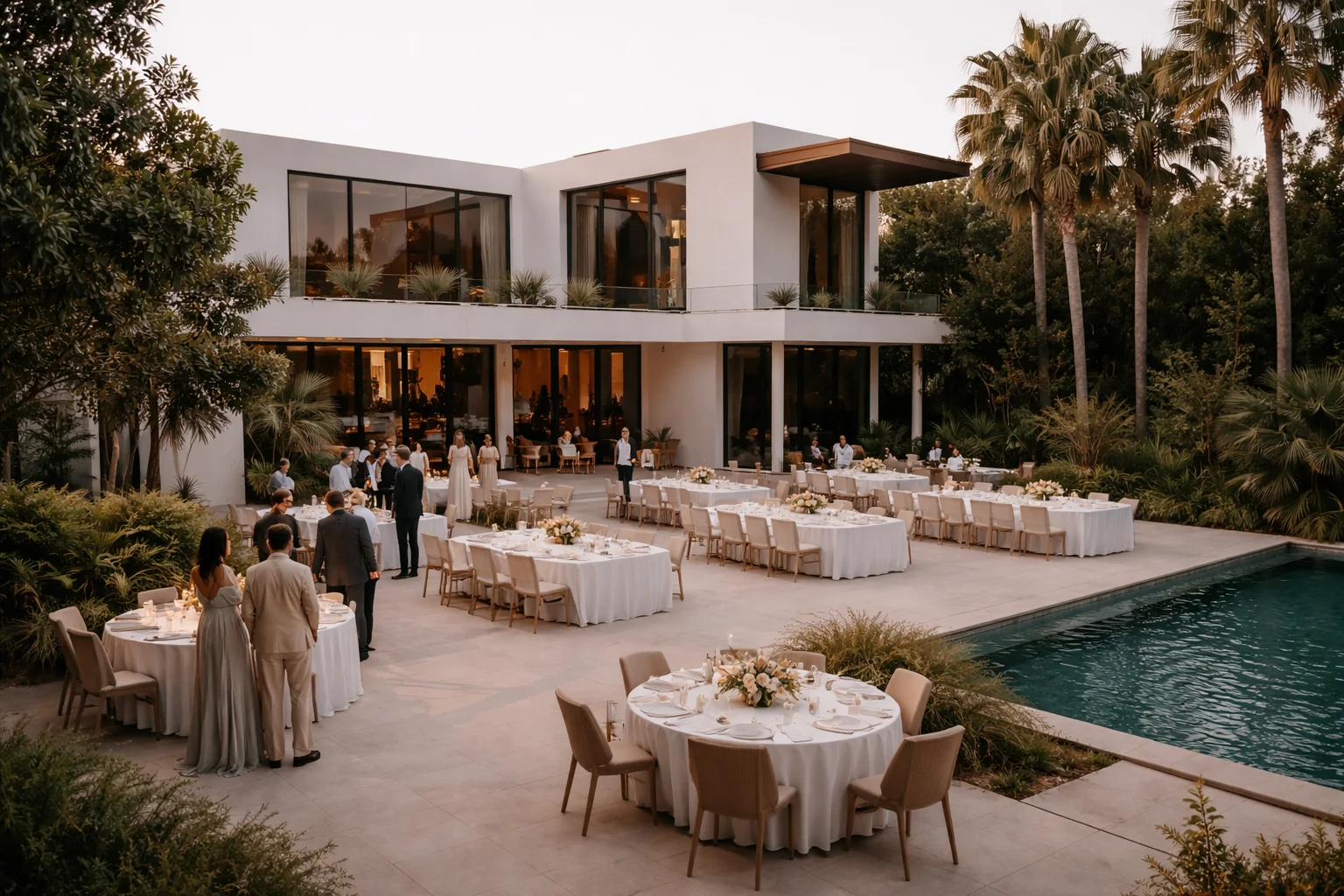
Wedding venues and wedding concepts are often treated as separate decisions. In practice, they rarely stay separate for long. The place changes the idea, the idea changes the place, and somewhere between the two an atmosphere begins to form that guests later remember more clearly than the plan itself.
What Wedding Colors Leave Behind
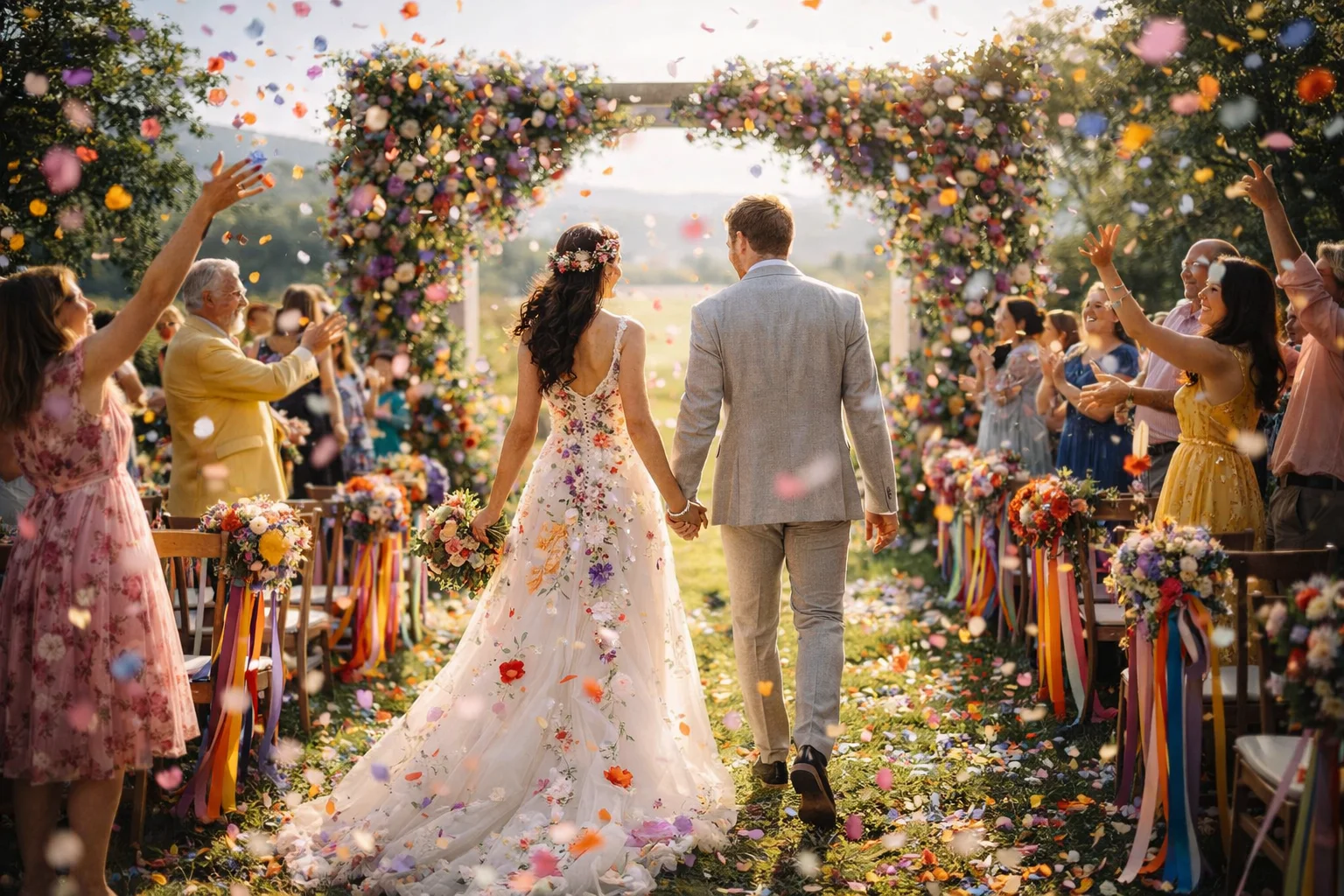
Wedding colors are usually chosen for beauty, balance, or season. But they also leave a trace. Long after flowers fade and fabrics are packed away, certain tones remain attached to a promise, a room, a feeling. This article looks at wedding color not only as styling, but as part of the emotional imprint a ceremony leaves behind.
Candlelight at Wedding Tables: Local Light Zones
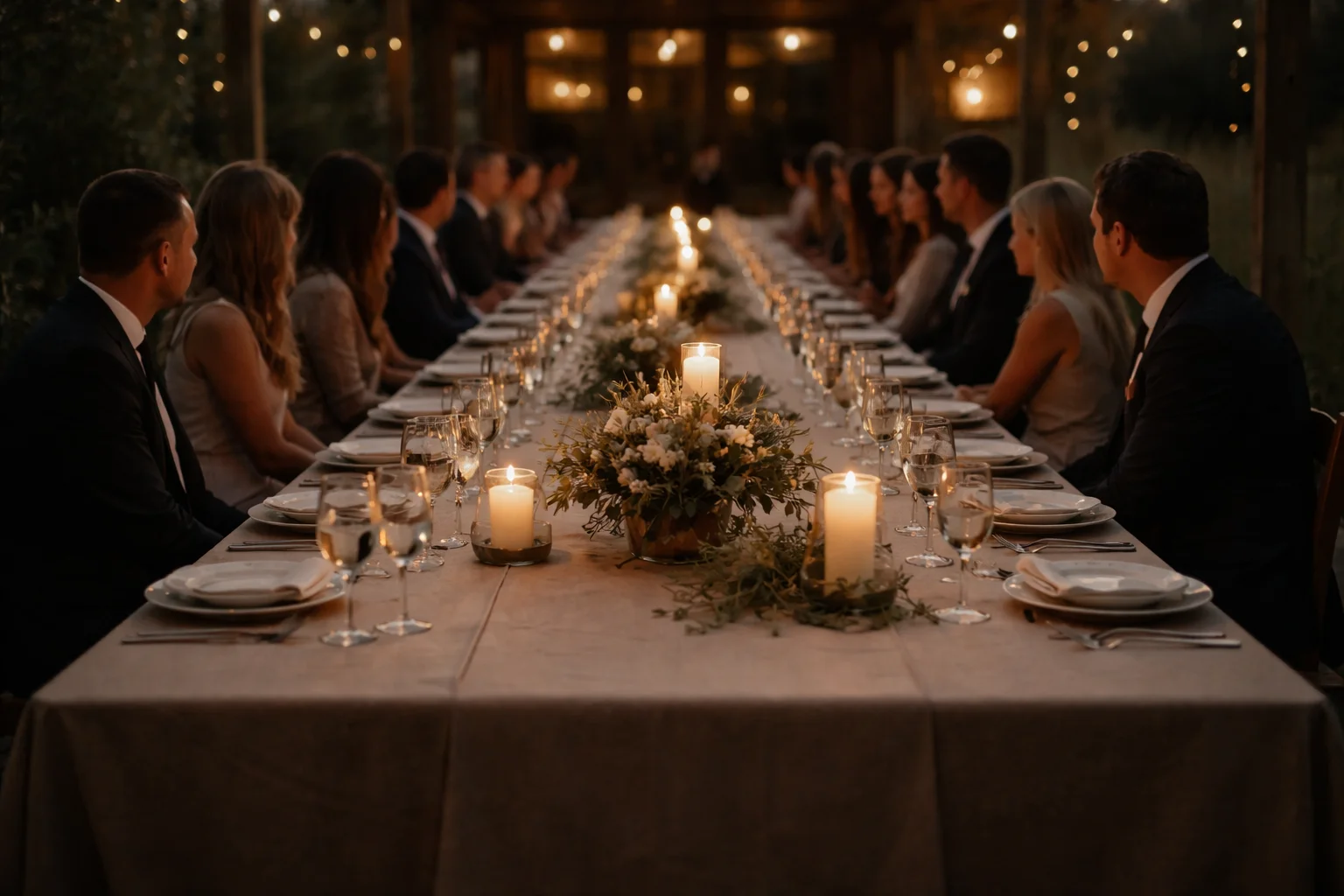
Candlelight at wedding tables rarely behaves as one smooth glow. It gathers in small zones, shifts across faces and objects, and leaves behind a more fragmentary, memorable atmosphere than even lighting ever could.
How Requests Move Through a Wedding Night
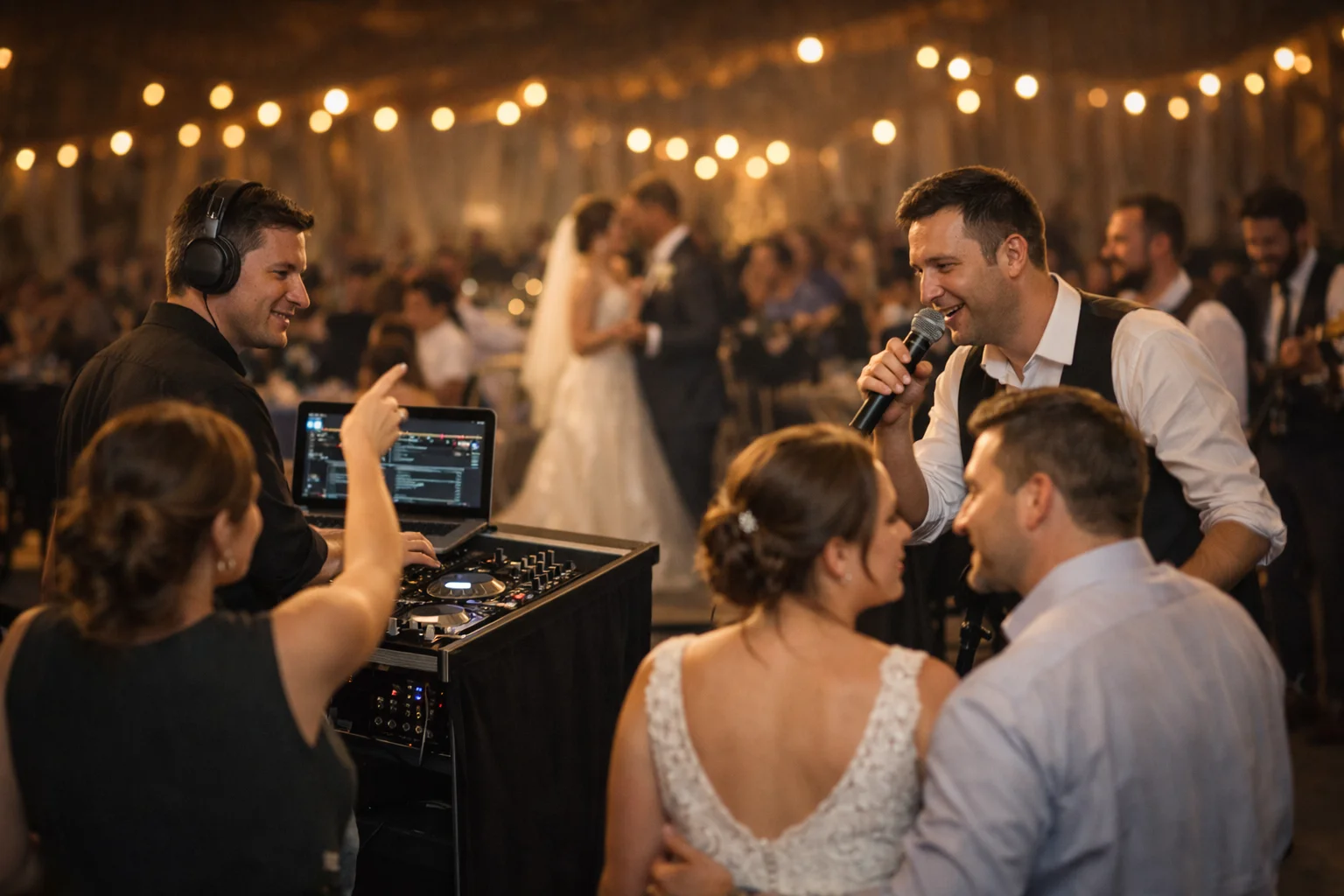
Music requests at weddings are rarely just about songs. They move through timing, confidence, mood, and the different logic of DJs and live bands, shaping the social texture of the night as much as the playlist itself.
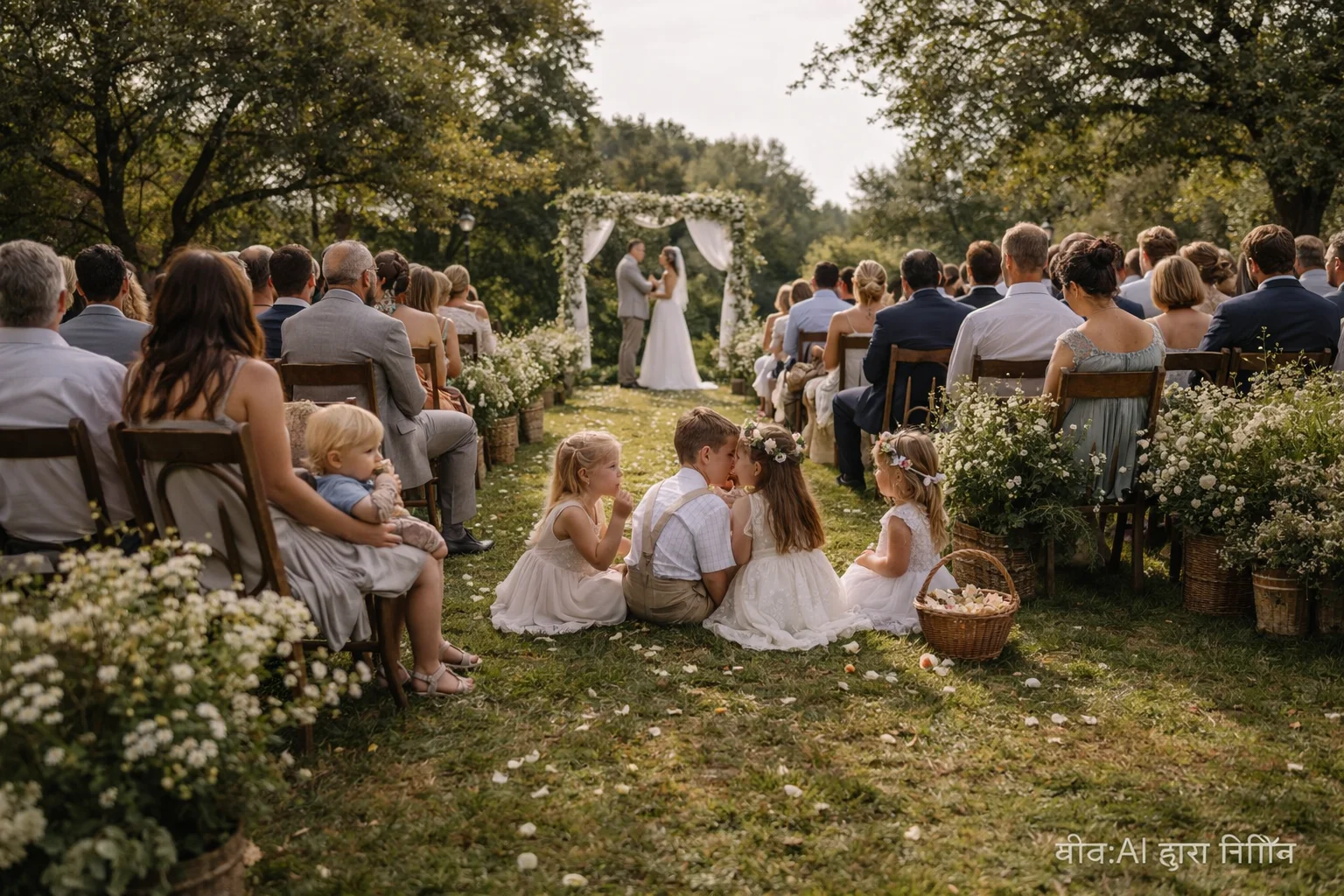
Children During the Ceremony: What Helps in the Exact Moment
Children do not disturb a wedding ceremony by default. They react to pressure, duration, unfamiliar rules, and adult tension. This article looks at what happens in the actual moment, when things begin to tip, how space and sequence can support children better, and how parents can stay part of the celebration without spending the ceremony in crisis control.

Bridal Getting-Ready Room Checklist: Light, Surfaces, Noise, and Movement
A bridal getting-ready room does more than hold hair, makeup, and dresses. This article looks at light, surfaces, noise, movement, privacy, and the quiet traces the room leaves on the morning before the ceremony.
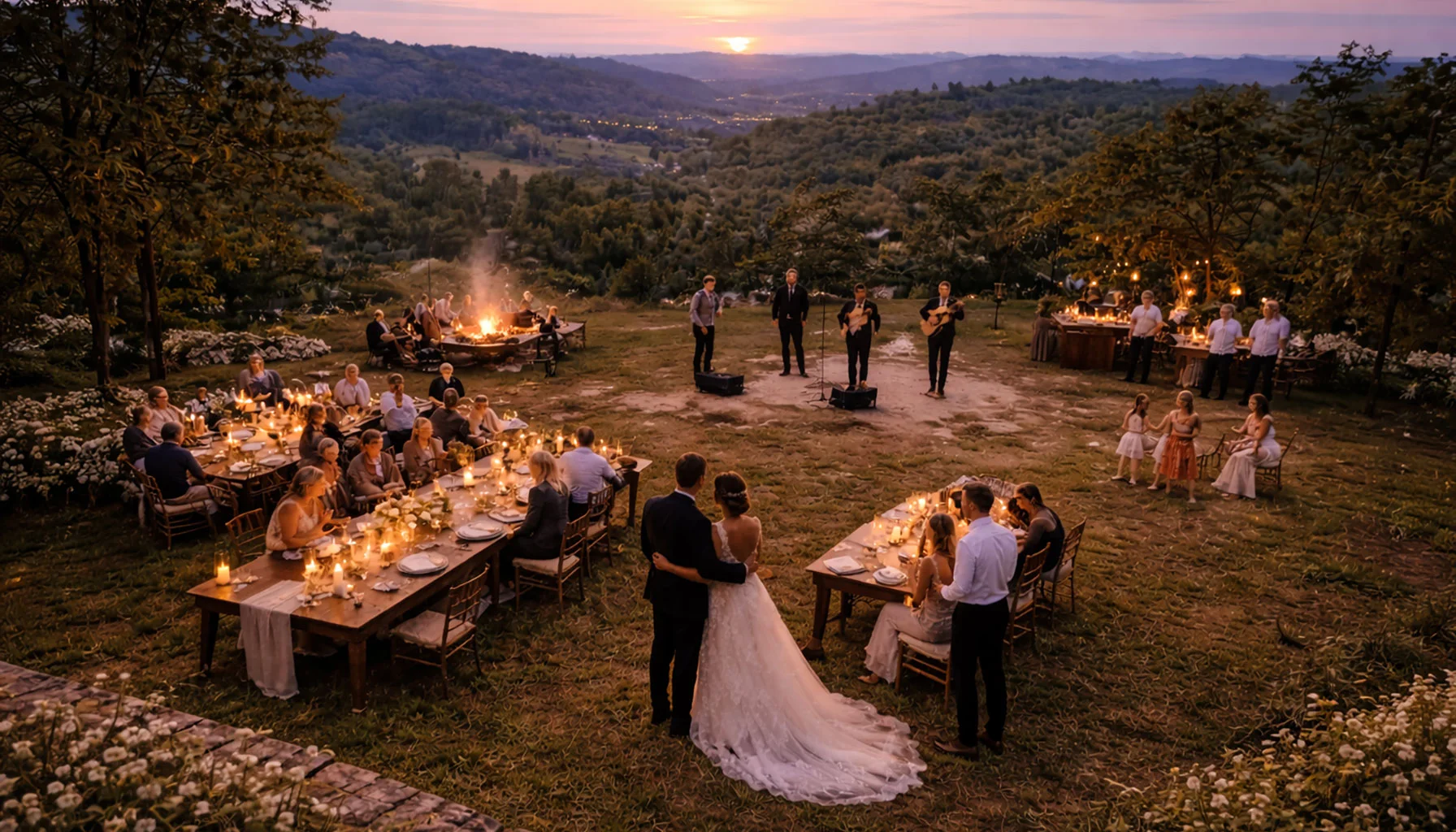
If love belonged to everyone
This wedding was experienced as a shared moment, not as a staged event. From arrival to departure, closeness, openness, and a calm rhythm shaped the day. Guests felt involved, not invited in the formal sense. The celebration thrived on genuine encounters, shared conversations, and an atmosphere that carried throughout the entire day. What remained was the feeling of having been part of something organic – borne of connection and quiet joy.