
Children During the Ceremony: What Helps in the Exact Moment
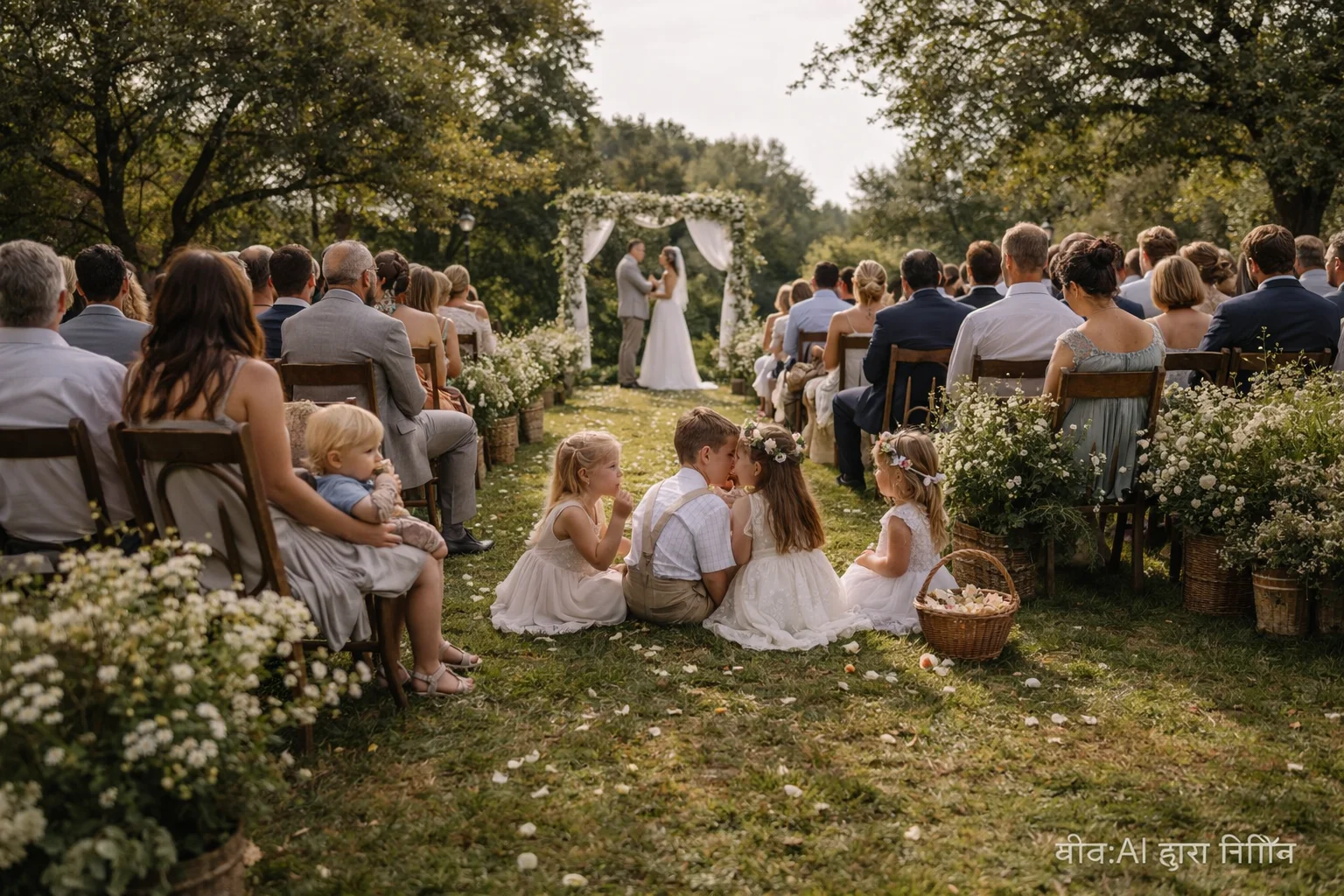
Children do not experience a wedding ceremony the way adults do. Adults understand buildup, symbolism, waiting, and social codes. Children mostly experience temperature, timing, boredom, noise, restrictions, and the emotional state of the adults closest to them. That is why the concrete moment matters so much. A ceremony usually does not tip because one child suddenly behaves badly. It tips because the setting stopped carrying the child a few minutes earlier and no one noticed in time.
This is also where children during the ceremony connect unexpectedly to the question of public versus private rituals. Some weddings ask for a high level of visible composure, almost like a public performance. Others allow more softness, movement, and recovery. That difference matters for children. The more a ceremony feels like a public test, the faster parents tense up and the faster children react to that tension. A wedding that leaves room for privacy inside a public moment is usually easier for everyone.
Guest ActivitiesKeeping guests entertained adds an extra layer of joy to a wedding celebration. From interactive games and creative corners to relaxed lounge moments or group experiences, well-chosen activities help guests connect and feel involved. Thoughtful planning ensures there’s something enjoyable for every age and creates lasting memories beyond the dance floor.
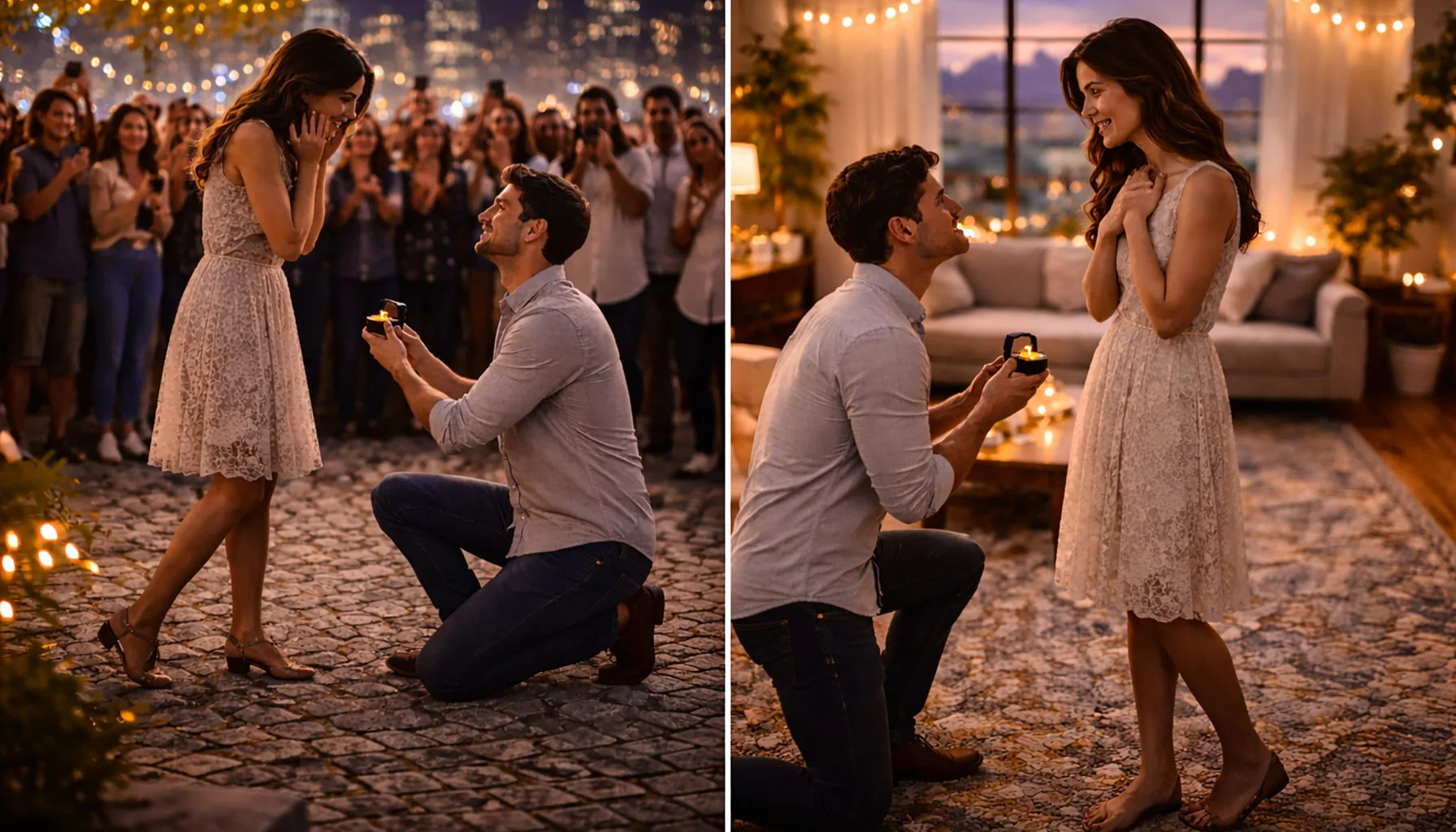
Where a proposal happens can matter as much as the question itself. Public and private proposals create different pressures, memories, and emotional imprints.
Definition
Children during the ceremony are not a side issue to manage after the fact. They are part of the live atmosphere of the wedding and need space, rhythm, and expectations that match their actual capacities. Good planning does not demand adult behavior from children. It builds a ceremony they can move through without immediate overload.
What Tends to Tip, and When
Ceremonies usually start tipping for children at predictable points: after waiting too long before the processional, during long still sections without visual change, when adults around them suddenly become rigid, or when they cannot leave easily once discomfort starts. The breakdown is often cumulative. A child who was fine at the beginning may already be past their limit by the time the vows begin.
How Space Can Carry Children Better
Rooms and layouts matter more than most couples expect. Families with young children should not be placed in seats that feel trapped or highly exposed. Easy side access, visible exits, slightly more physical room, and a nearby soft landing zone change the emotional pressure immediately. When leaving is simple, staying is often easier too.
How Sequence and Activities Help
Children cope better when the ceremony has rhythm they can feel. Shorter transitions, one visible shift after another, and one quiet child-focused activity prepared in advance can prevent escalation. This does not mean turning the ceremony into entertainment. It means having a simple object, drawing card, silent picture booklet, or designated post-processional task ready before attention collapses.
How Parents Can Stay Inside the Celebration
Parents remain part of the festivity when they are not made solely responsible in real time. That means agreeing in advance who can step out with a child, where that person goes, and how reentry works without embarrassment. A ceremony feels much kinder when parents know there is a plan, a place to regroup, and no social penalty attached to using it.
The Exact Moment Needs Gentleness, Not Control
When a child becomes loud, restless, or tearful in the ceremony, the instinct is often to clamp down quickly because the moment feels public. Usually the better response is softer and faster: pick up the child, move without drama, let the ceremony continue, and preserve dignity for everyone involved. The real goal is not perfect silence. It is keeping the atmosphere human.
Conclusion
Children during the ceremony do not need stricter management as much as they need a ceremony that understands scale, pressure, and timing. When rooms, sequences, and backup plans are built with them in mind, parents can stay present and the ritual becomes more generous. That usually creates a stronger wedding, not a looser one.
Related Articles

Some Things Only Work With Certain Guests
Wedding activities rarely work on format alone. They depend on guest chemistry, timing, shared ease, and the unspoken permissions already moving through the room before anyone fully names them.
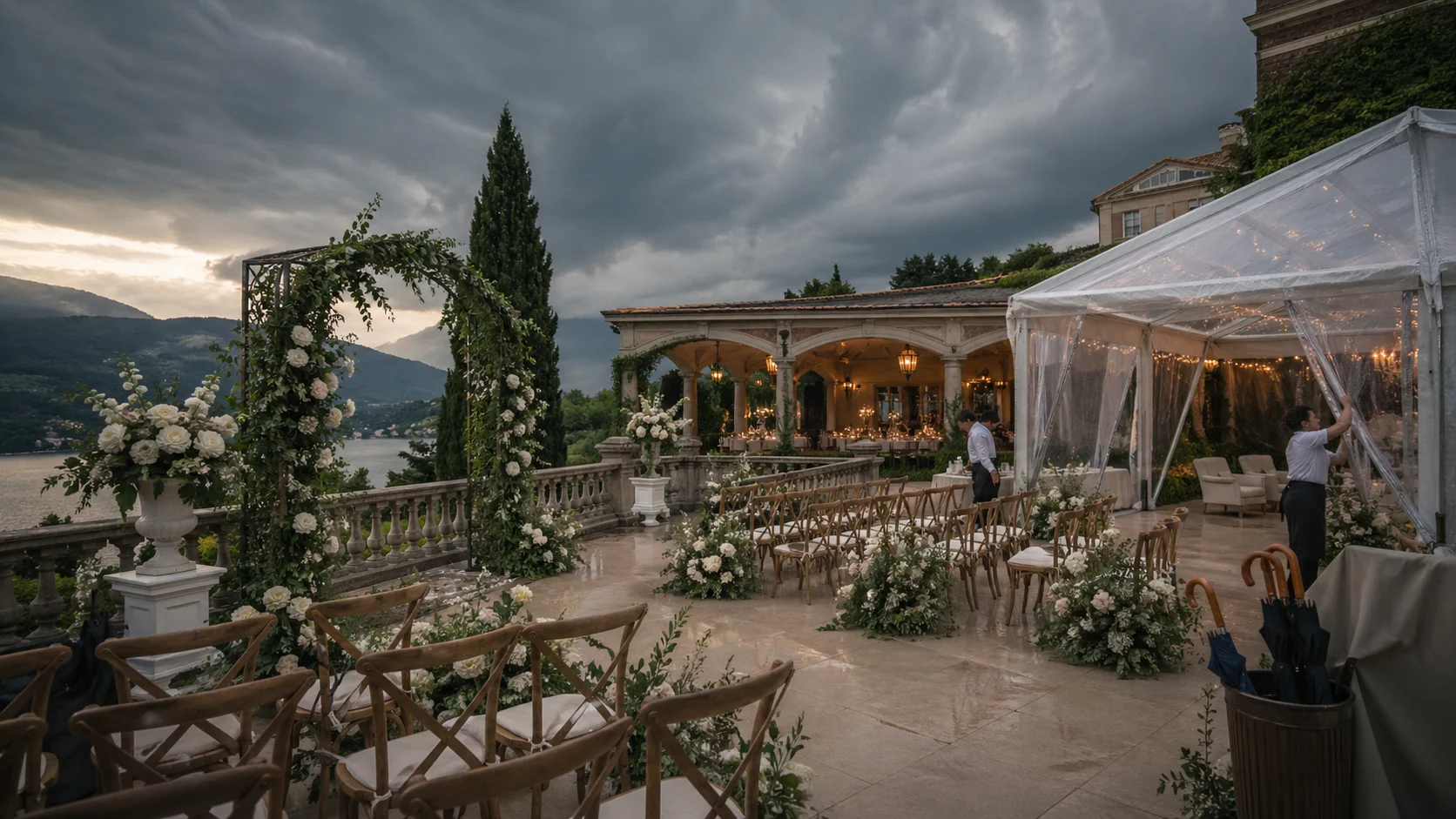
Rain Plan Checklist: What Needs Deciding Before Weather Becomes the Mood
A wedding rain plan is rarely just a backup for logistics. It also shapes whether weather stays manageable or quietly takes over the emotional tone of the day. This article looks at what needs to be decided early, so rain changes the setting without deciding the atmosphere.
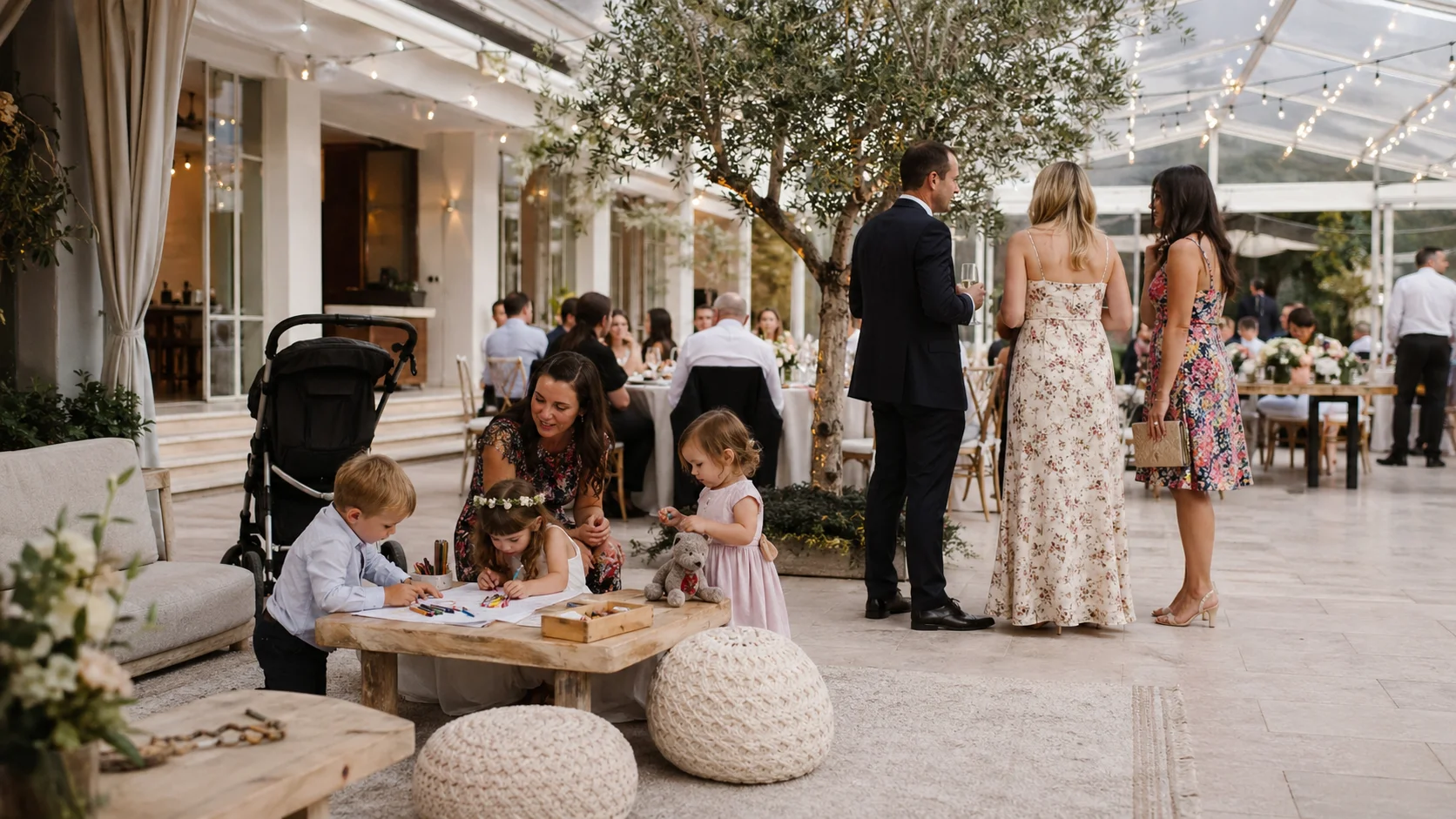
Kids at Weddings Checklist: What Helps Families Stay Longer Without Strain
Families with children usually leave weddings early for a series of small reasons rather than one big one. This article looks at what helps them stay longer with less strain, from food timing and retreat spaces to quieter transitions and the simple need for relief.
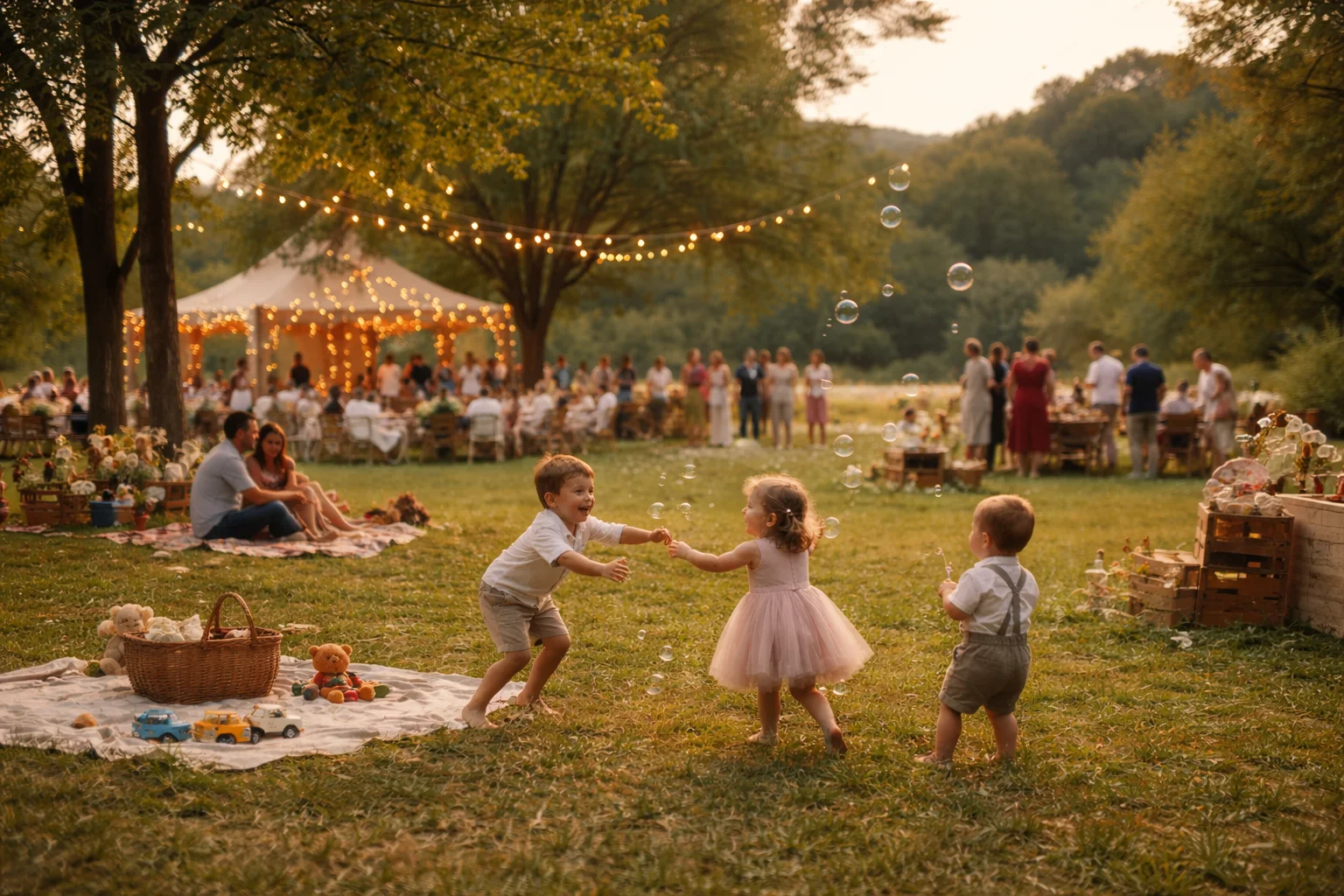
Outdoor Weddings With Children: Freedom, Boundaries, and Attention
Outdoor weddings often feel easier with children because there is more room to move, but that same openness changes how boundaries work and how attention is held. This article looks at how freedom, supervision, fatigue, and small shifting moments shape child-friendly outdoor celebrations.
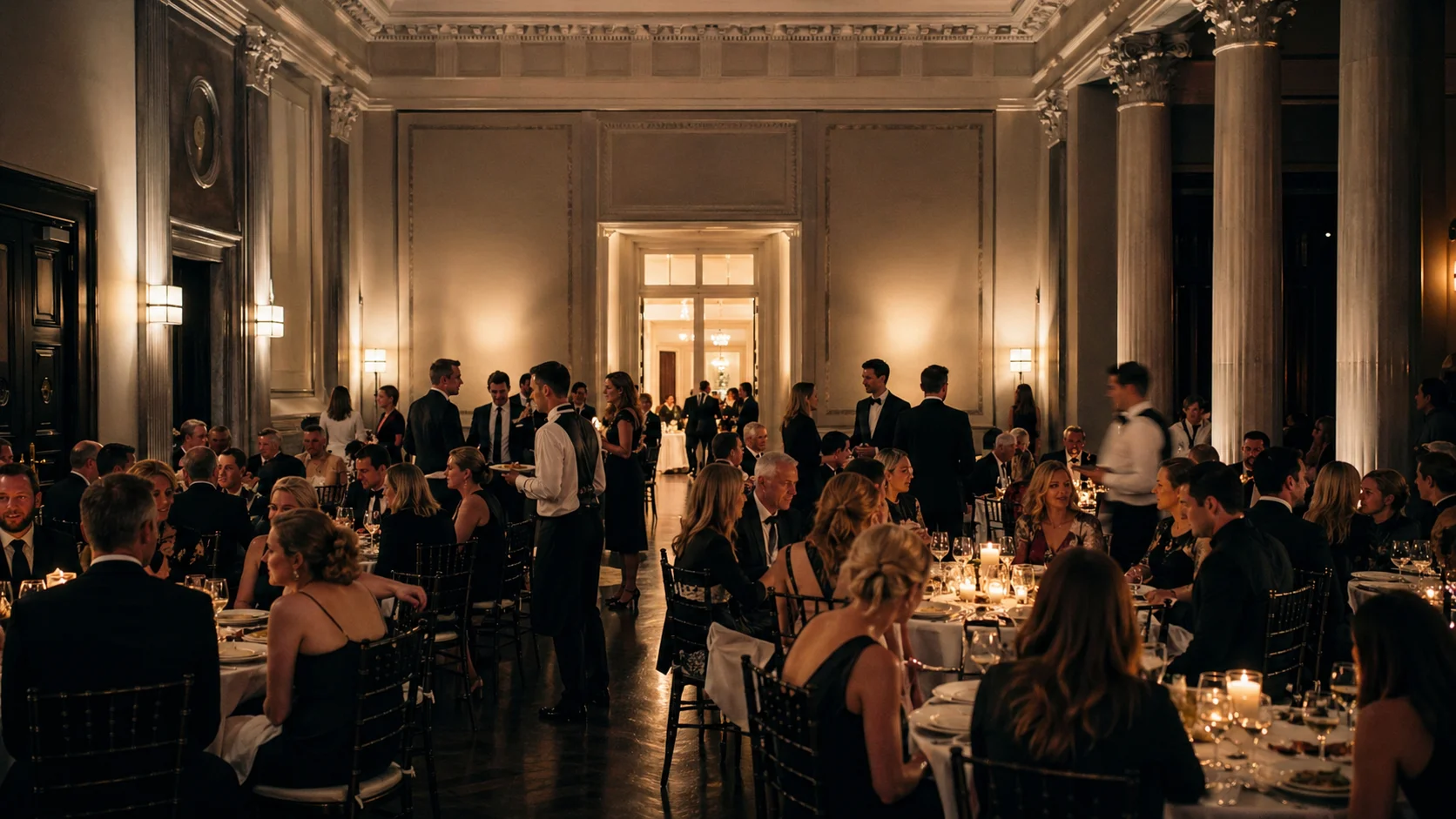
Wedding Dinner Flow Checklist: What Keeps the Room Together Between Courses
Wedding dinners usually drift or hold together in the moments between courses, not during the food itself. This article looks at service rhythm, guest movement, music, speeches, and the small in-between conditions that keep the room socially connected.
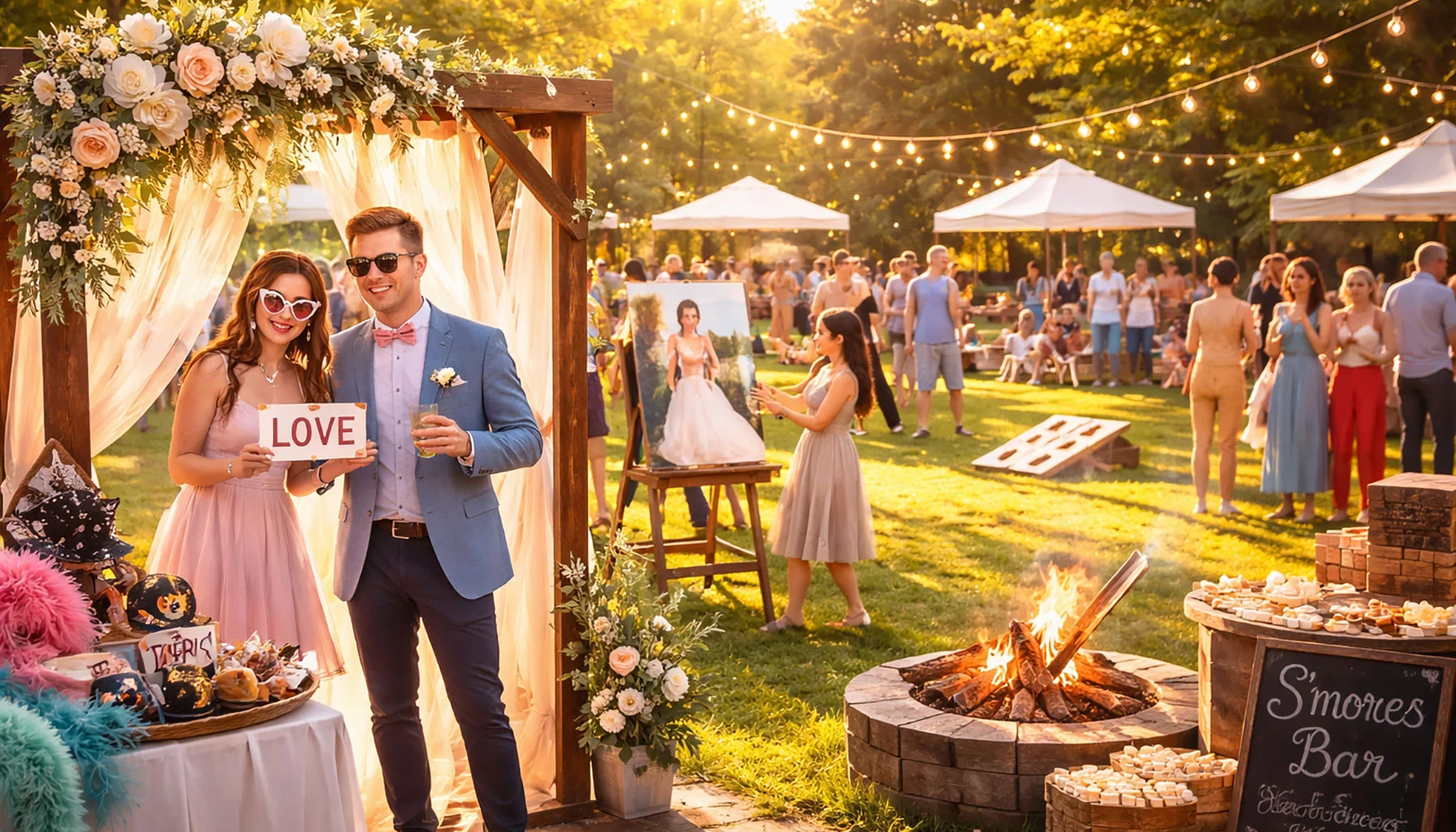
Wedding Guest Activities That Create Lasting Memories
The wedding activities guests remember most are rarely the loudest. They are the ones that give people something gentle to enter, something quiet to touch, and something small to carry away afterward. This article looks at which kinds of wedding guest activities tend to stay with people and why they often leave a deeper imprint than more spectacular entertainment.
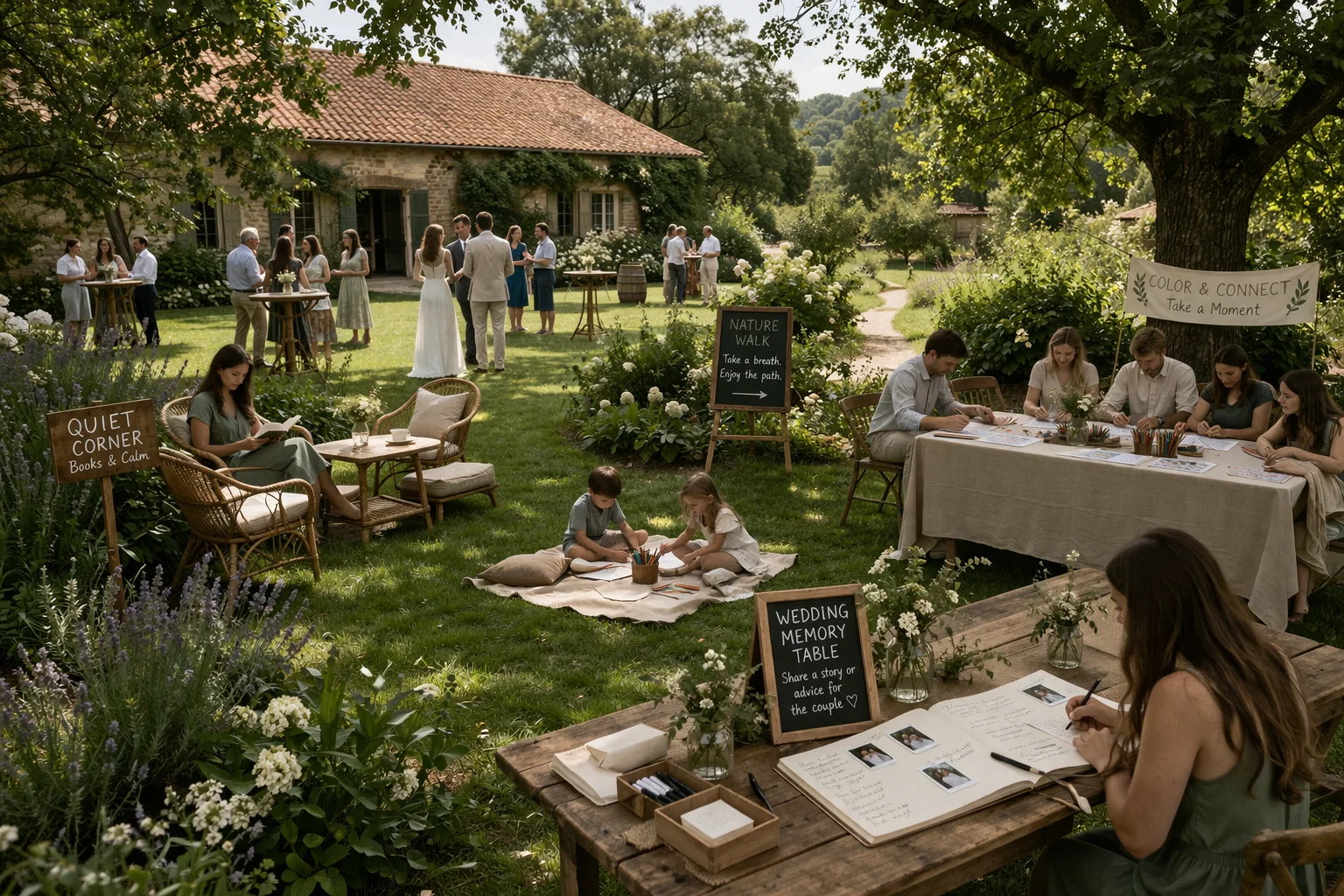
Quiet Wedding Activities for Introverted Guests
Not every wedding guest wants to fill the room with energy. Some feel most present in quieter moments, smaller conversations, and activities that do not demand performance. This article explores thoughtful wedding activities for introverted guests and why those quieter choices often create the most lasting stories.
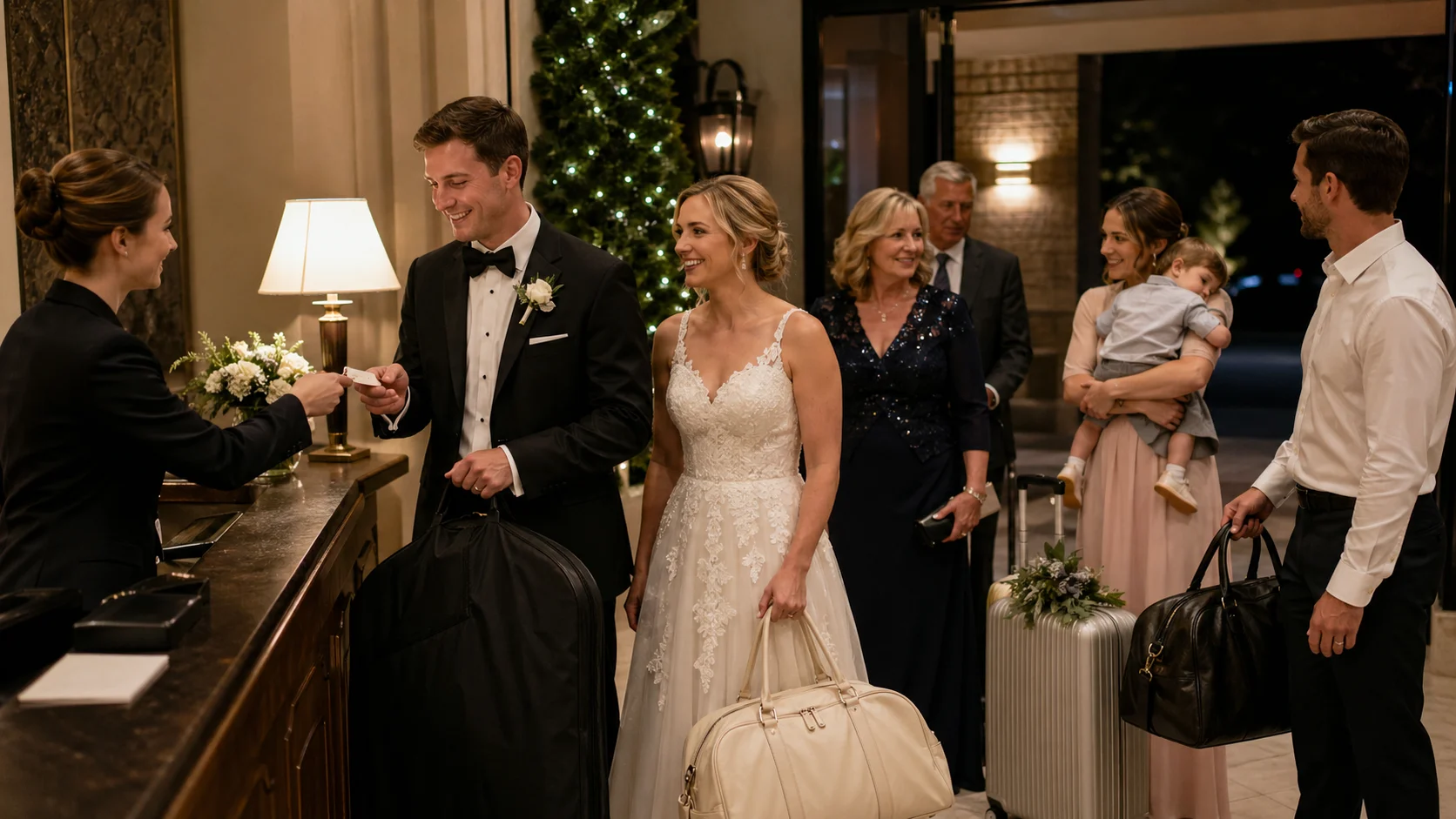
Overnight Stay Checklist: What Couples and Guests Often Realize Too Late
Overnight stays around weddings often seem solved once rooms are booked. This article looks at room access, bags, keys, transport, breakfast, checkout, and the late-night waiting moments couples and guests usually notice too late.
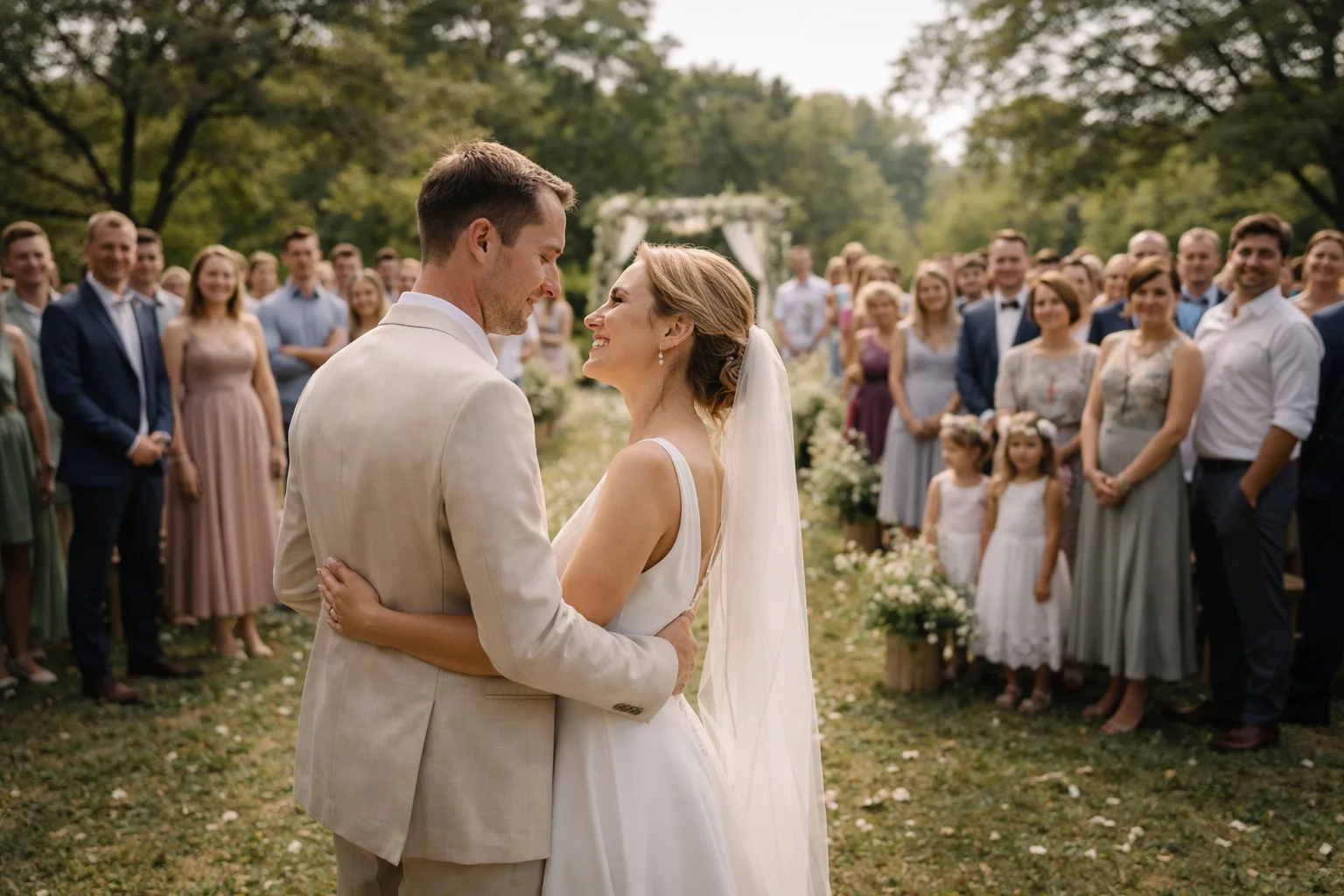
How Kids Change Formal Wedding Moments — and How to Plan for It
hildren change the atmosphere of formal wedding moments faster than most adults expect. They redirect attention, alter pacing, and reveal whether a ceremony, photo setup, or seating plan is flexible enough to hold real life. This article looks at how children affect formal wedding situations and how couples can plan for those shifts without losing the tone of the day.
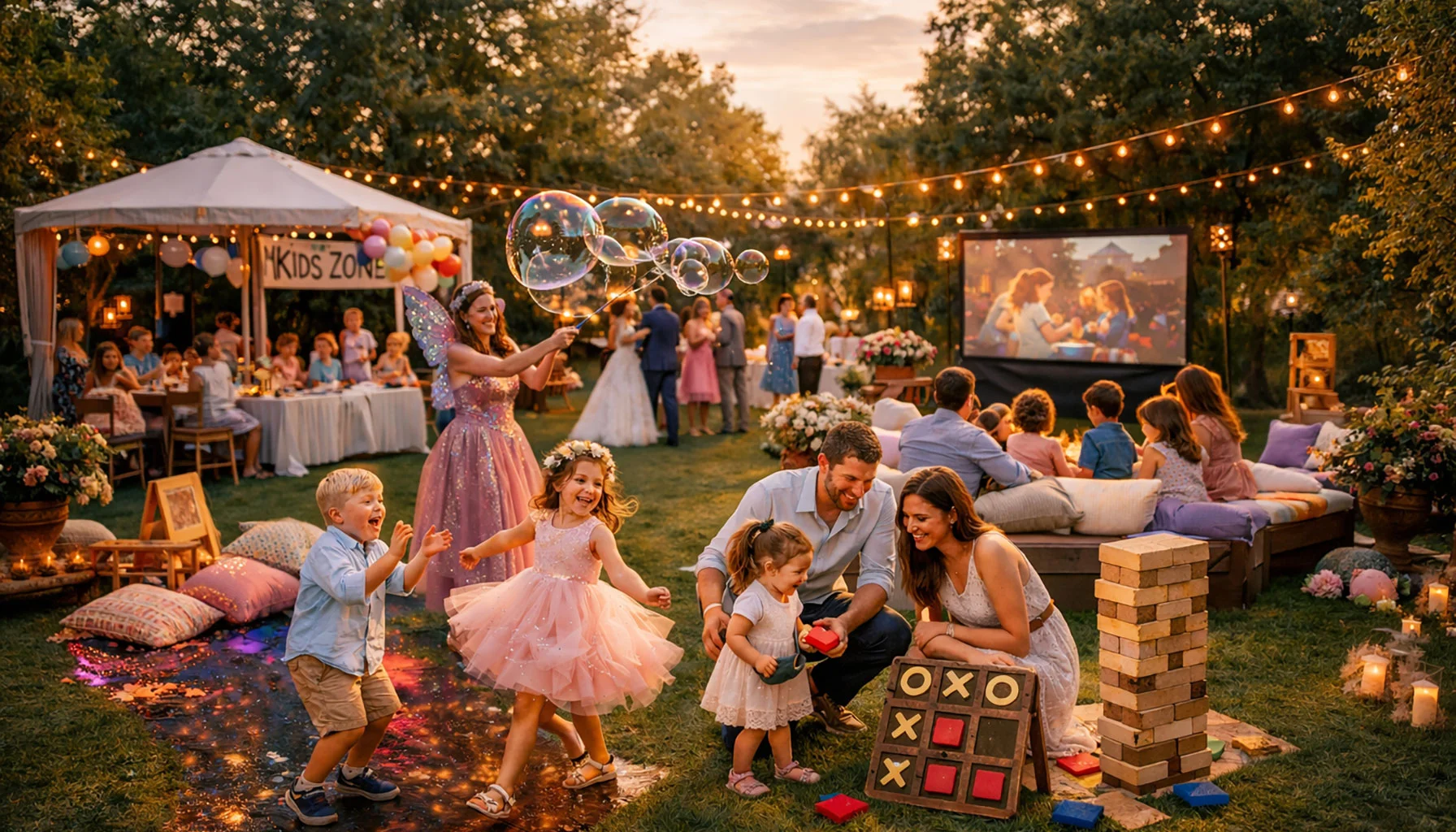
Creating Magical Moments for All Ages: Children and Family Entertainment at Modern Weddings
At weddings with children, the question is rarely whether entertainment exists. It emerges on its own the moment formal structure loosens. This article looks at family entertainment not as a side program, but as a quiet system of options that helps the day remain steady, generous, and memorable for guests of different ages.
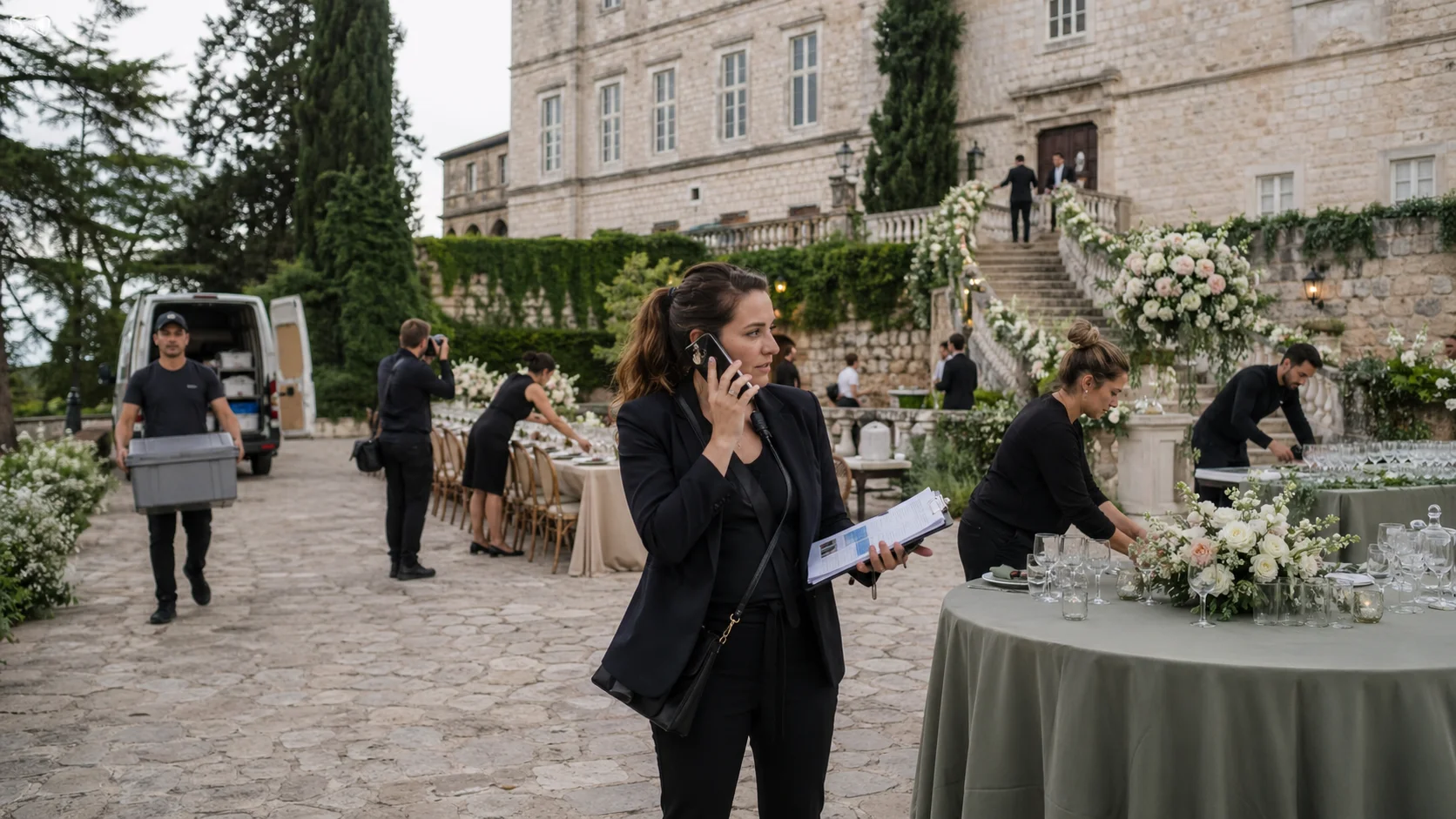
Vendor Contact Checklist: Who Needs to Reach Whom When the Day Starts Moving
A wedding contact list is not the same thing as a wedding communication plan. Once the day starts moving, what matters is not only who is involved, but who should contact whom, for what reason, and at which moment.
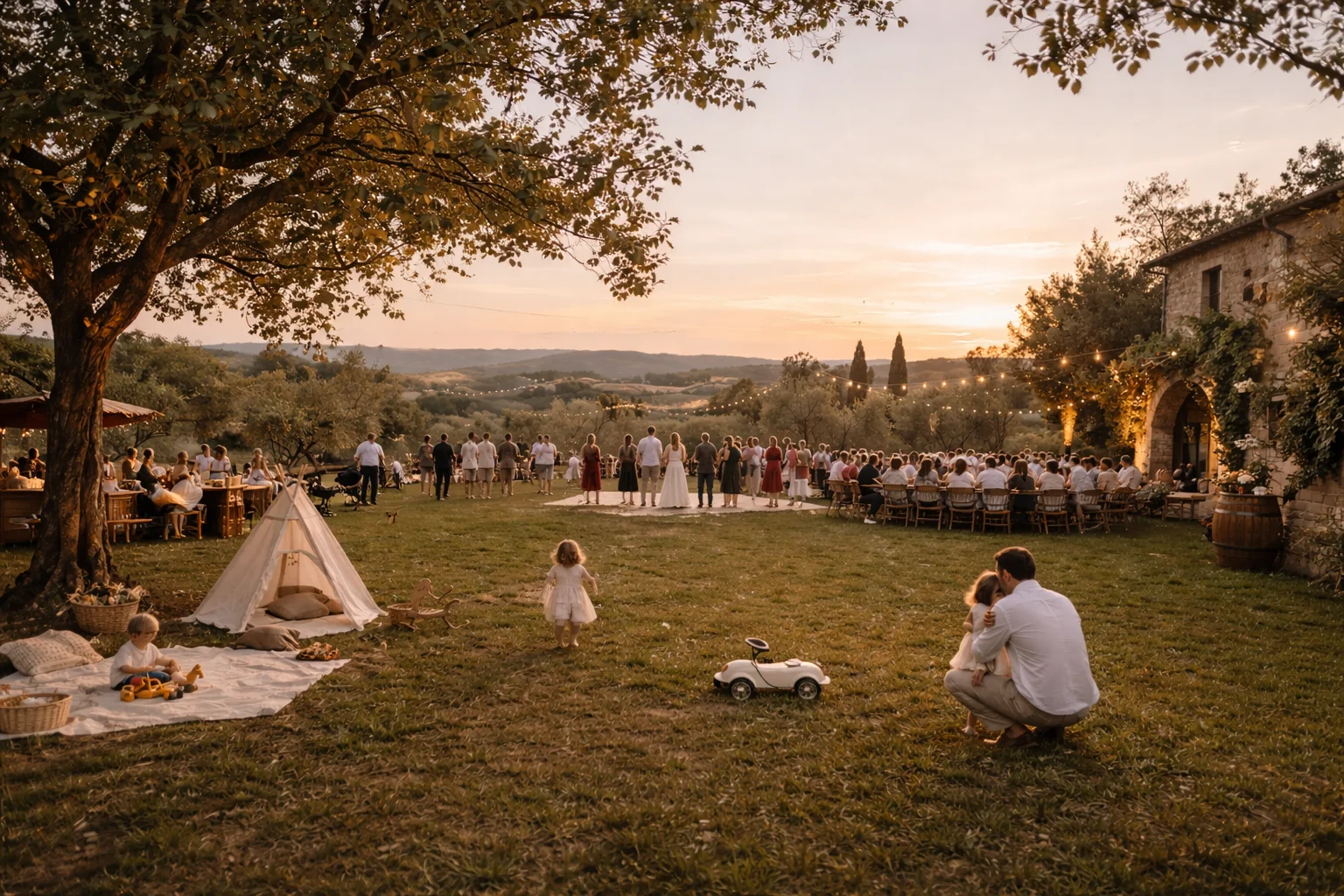
Nap Times, Early Goodbyes, and the Hidden Rhythm of Weddings With Small Children
Weddings with small children often follow two timelines at once: the visible schedule of ceremony, dinner, and dancing, and the quieter rhythm of naps, tiredness, comfort, and early departures. This article looks at how those hidden shifts shape the day in practical and emotional ways.