
Wedding Guest Activities That Create Lasting Memories
At a wedding, there is often a moment when the formal parts loosen their grip. The ceremony has passed, plates are cleared, and conversation begins to drift. What fills that space is rarely what couples spend the most time worrying about, yet it often decides what guests carry away afterward. Activities, when chosen well, do not demand attention. They remain available. They invite people without pressing them.
This is exactly why the topic belongs not only to guest activities, but also to imprints. Loving Rocks describes imprints as the traces left by emotionally charged moments that continue shaping feeling after the event itself is gone. Many wedding activities work in that way. They do not dominate the celebration while it is happening. They leave behind a small object, a slowed moment, a gesture, a photograph, a recorded voice, or simply the memory of having briefly felt at ease inside the day.
Guest Activities – CategoryKeeping guests entertained adds an extra layer of joy to a wedding celebration. From interactive games and creative corners to relaxed lounge moments or group experiences, well-chosen activities help guests connect and feel involved. Thoughtful planning ensures there’s something enjoyable for every age and creates lasting memories beyond the dance floor.

Some moments do not pass. They settle. Imprints are the emotional traces left by rituals, decisions, and answers that continue shaping relationships long after the moment is gone.
Definition
Wedding guest activities that create lasting memories are not simply forms of entertainment. They are moments, stations, or shared gestures that help guests enter the celebration at their own pace and leave behind something emotionally active after the wedding ends. Their value lies less in scale than in the trace they leave.
Simple Social Activities Often Stay Closest
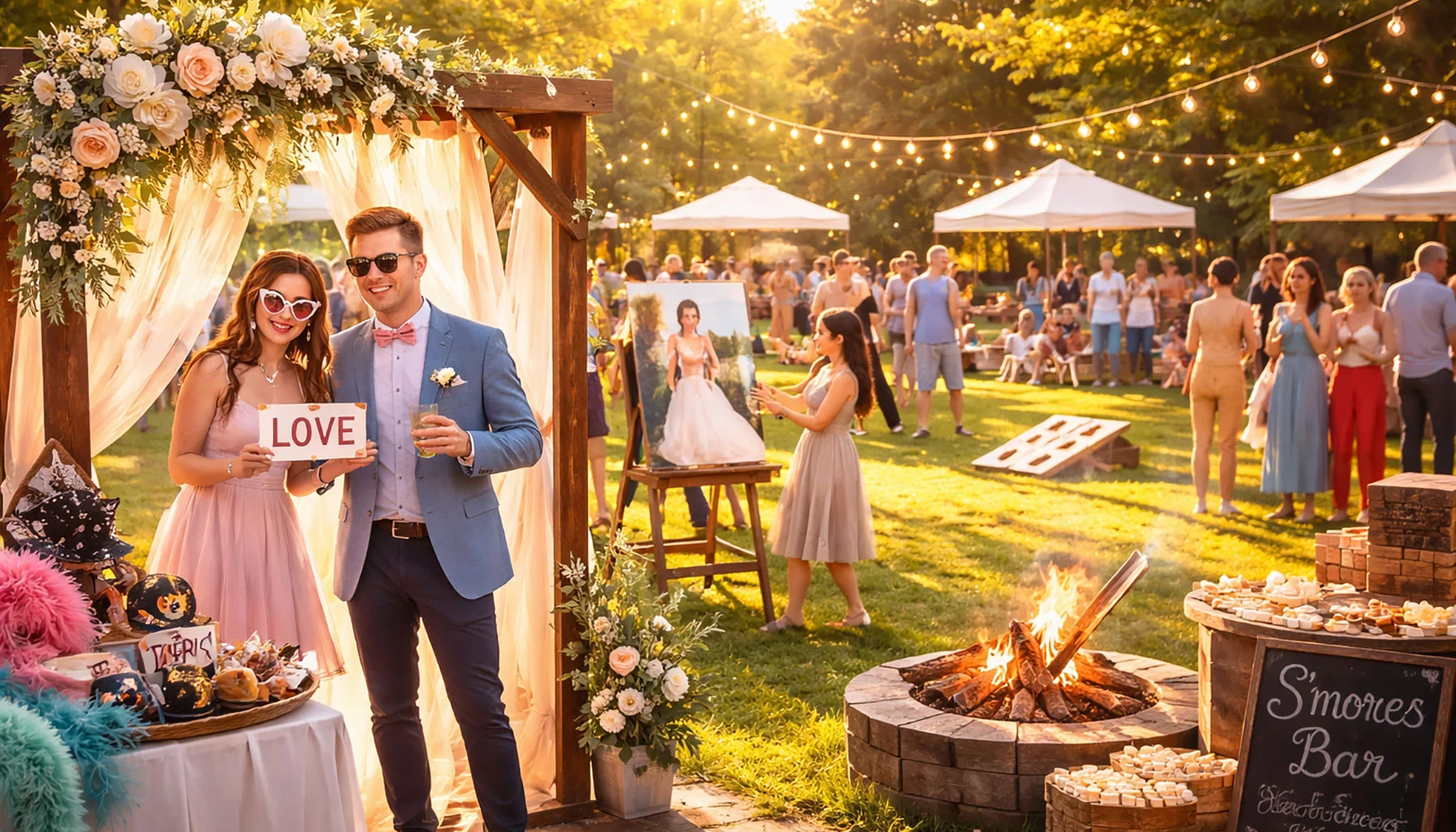
Photo corners, recorded guest messages, instant prints placed by hand, note tables, or small games with almost no rules often work because they are entered lightly. People do not feel summoned toward them. They arrive in passing, in between conversations, or while looking for somewhere to place their attention for a moment. That low pressure matters. Guests tend to remember what allowed them to participate without performance.
Creative Observation Changes the Pace of a Room
Live painting, quiet drawing, handwritten details created on site, or small making stations often gather people in a different way. Instead of asking them to do more, they ask them to watch. That shift can be surprisingly powerful. Guests stand still, look longer, speak more softly, and often remember this as the point where the wedding briefly seemed to settle into itself. What stays with them is not only the finished object, but the changed rhythm around it.
Open Spaces Matter Even When They Are Not Fully Used
Outdoor games, lounge corners, firelight, or child-friendly spaces slightly apart from the center do not need to be constantly occupied in order to matter. Their presence alone changes what kind of evening becomes possible. They create other speeds inside the celebration. Some guests stay there for an hour, others for five minutes, but many remember later that the wedding offered somewhere for conversation to breathe rather than only somewhere to keep up.
Gentle Surprises Leave Stronger Traces Than Loud Ones
Additional musicians appearing quietly, a soft shared movement, a table of late-night notes, a small flame or light moment used sparingly after dark, or another activity that enters the evening without announcement often stays with guests because it does not interrupt the atmosphere. It blends into it. The memory becomes durable precisely because the activity did not insist on being remembered.
What Guests Carry Away Is Often Small
The activities that last are often attached to modest things: a photo kept on a desk, a voice recording replayed weeks later, a quick sketch, a note folded into a pocket, the memory of standing near a painting while the room went quiet. This is where activities and imprints meet most clearly. The wedding leaves something behind not because it tried to create an effect, but because a moment found a form and stayed active afterward.
Conclusion
Wedding guest activities create lasting memories when they give people a gentle way to belong to the day. They do not need to be large, loud, or heavily managed. Their strength lies in leaving a trace that remains emotionally alive after the celebration ends. That is why the most memorable activities are often the quietest ones. They do not force themselves into memory. They settle there.
Related Articles
Venues & Concepts in Weddings
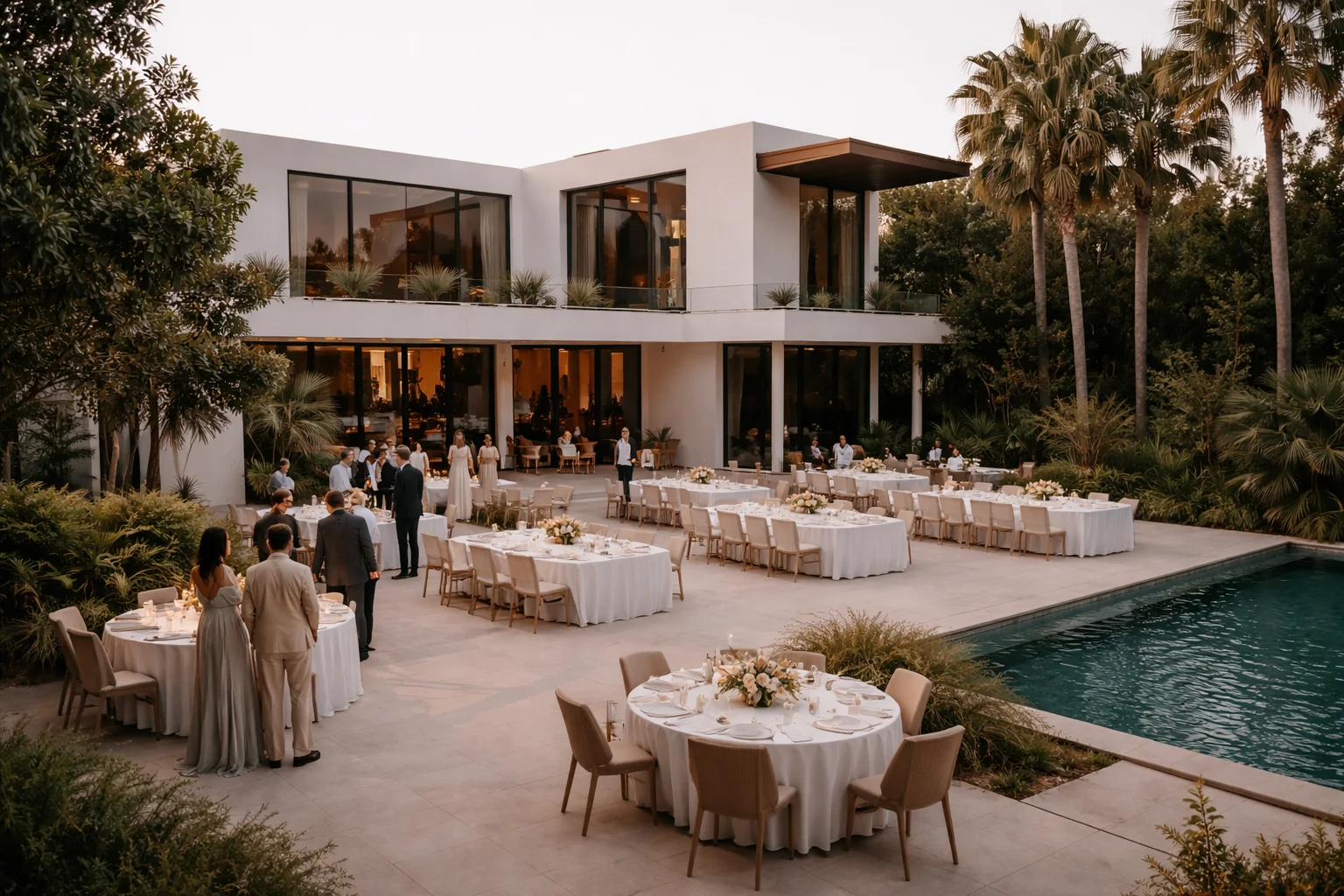
Wedding venues and wedding concepts are often treated as separate decisions. In practice, they rarely stay separate for long. The place changes the idea, the idea changes the place, and somewhere between the two an atmosphere begins to form that guests later remember more clearly than the plan itself.
Rain Plan Checklist: What Needs Deciding Before Weather Becomes the Mood
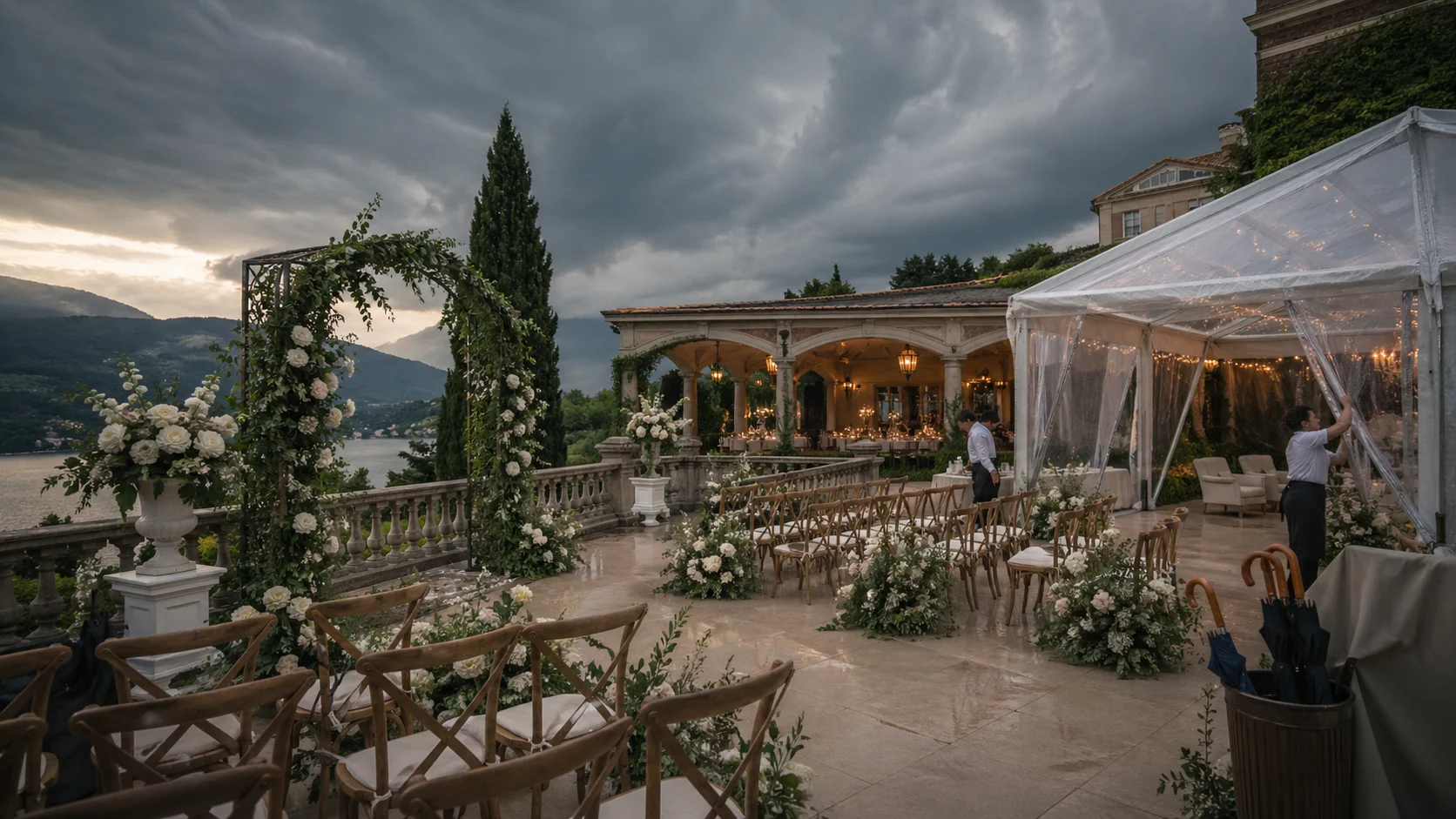
A wedding rain plan is rarely just a backup for logistics. It also shapes whether weather stays manageable or quietly takes over the emotional tone of the day. This article looks at what needs to be decided early, so rain changes the setting without deciding the atmosphere.
Candlelight at Wedding Tables: Local Light Zones
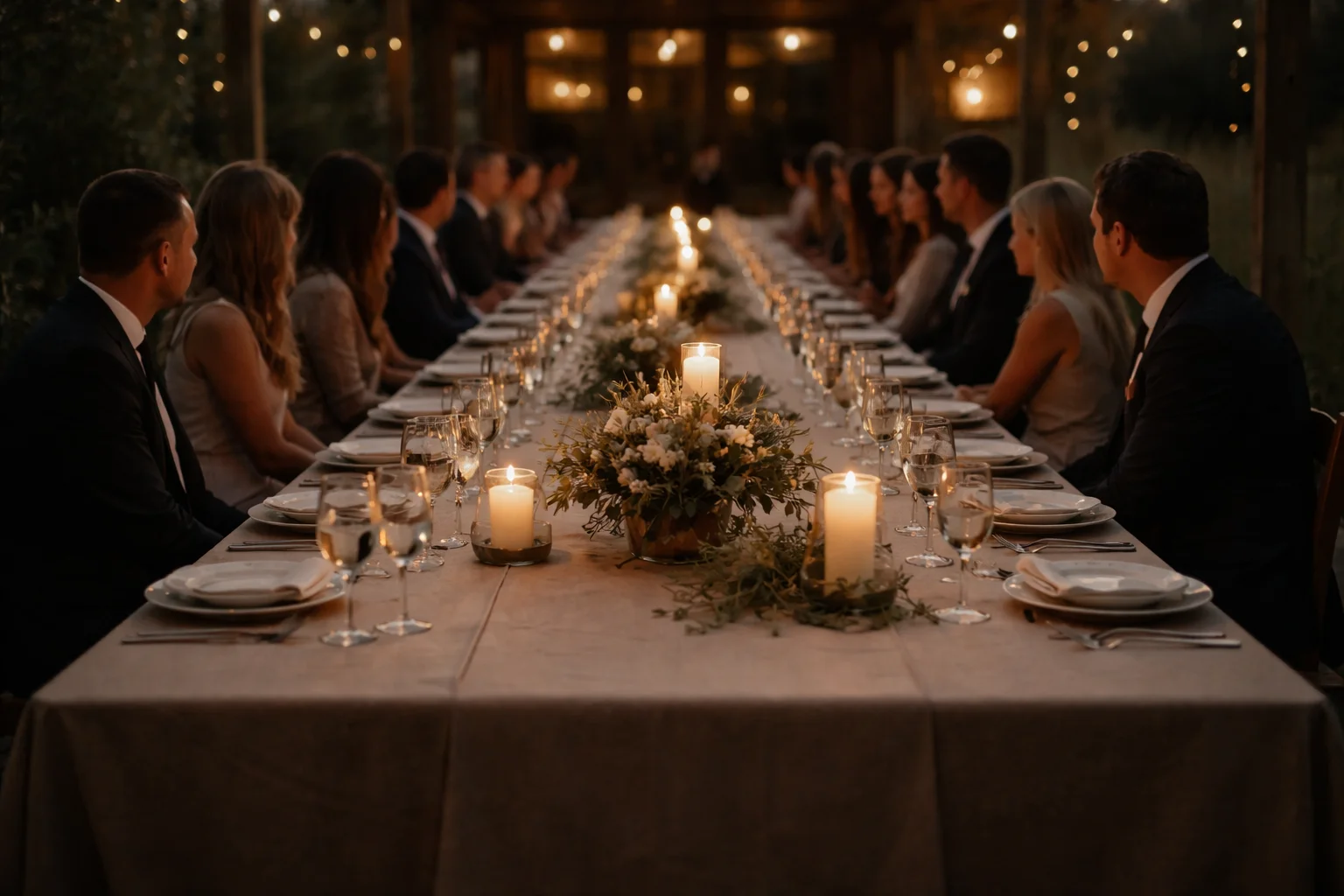
Candlelight at wedding tables rarely behaves as one smooth glow. It gathers in small zones, shifts across faces and objects, and leaves behind a more fragmentary, memorable atmosphere than even lighting ever could.
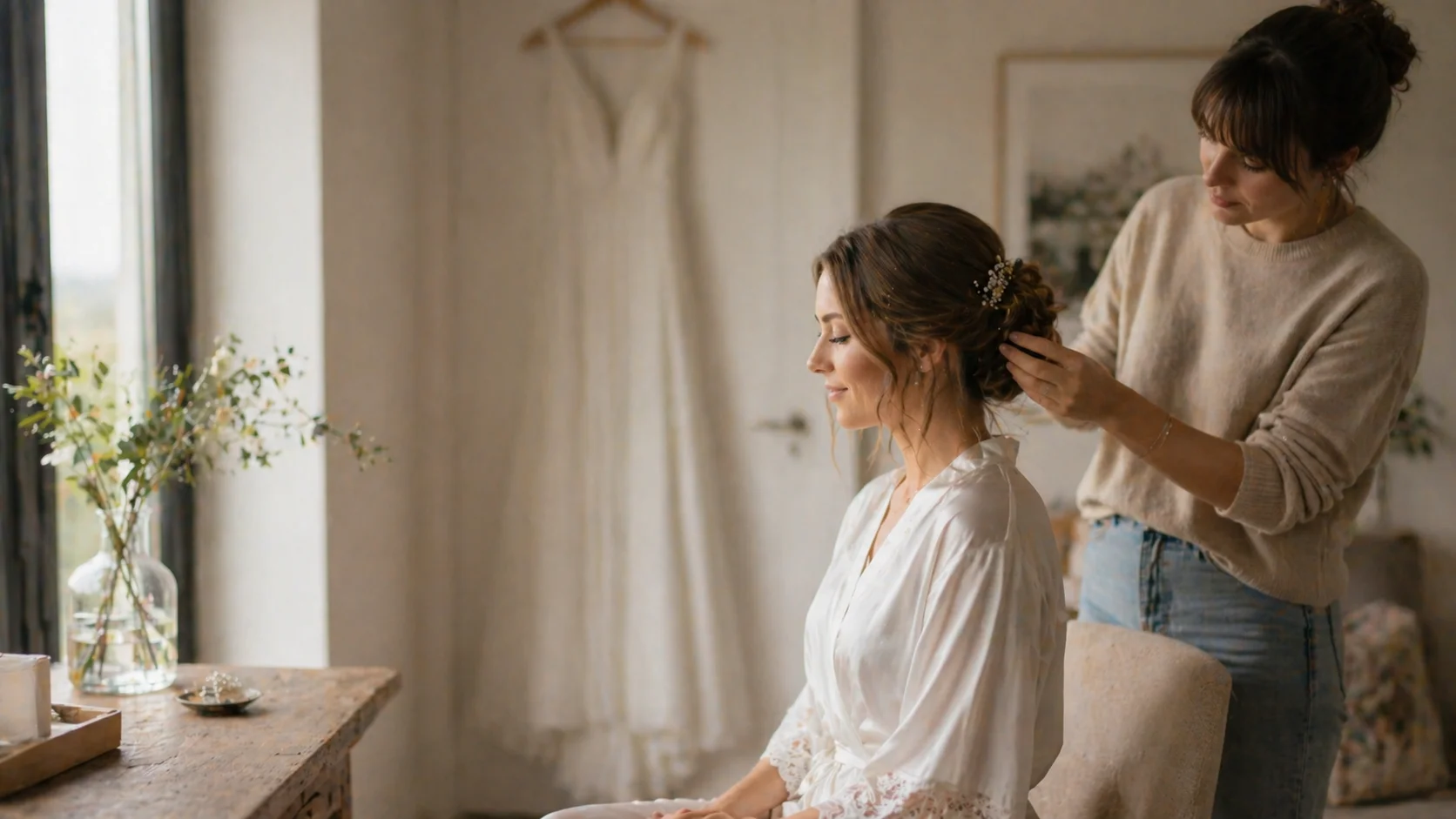
Bridal Getting-Ready Room Checklist: Light, Surfaces, Noise, and Movement
A bridal getting-ready room does more than hold hair, makeup, and dresses. This article looks at light, surfaces, noise, movement, privacy, and the quiet traces the room leaves on the morning before the ceremony.
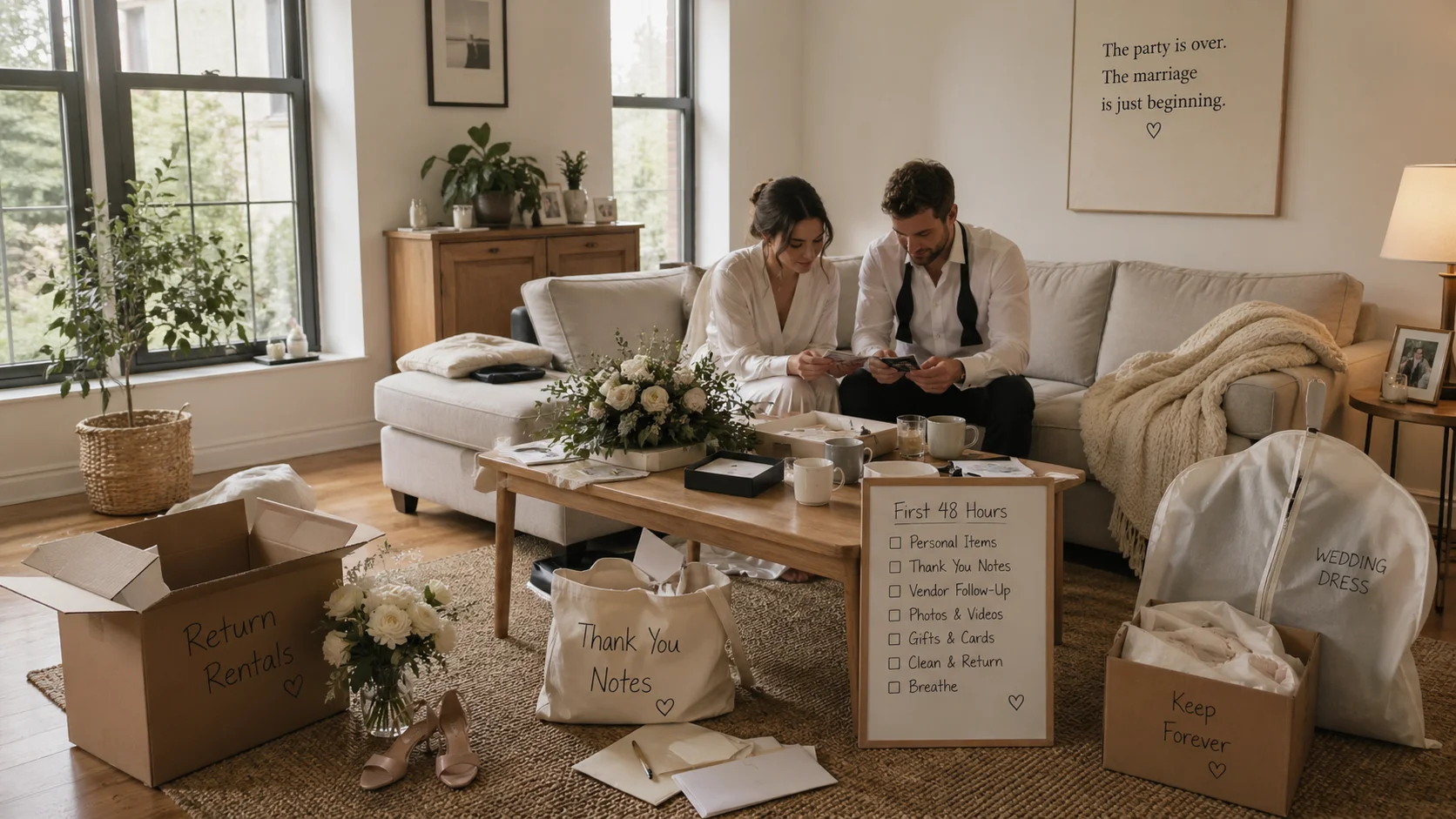
After-the-Wedding Checklist: What Needs Attention in the First 48 Hours
The first 48 hours after a wedding are quiet, practical, and easy to underestimate. This article looks at personal items, gifts, clothing, vendor closure, early photos, and the small tasks that help the after feel lighter instead of turning into scattered errands.
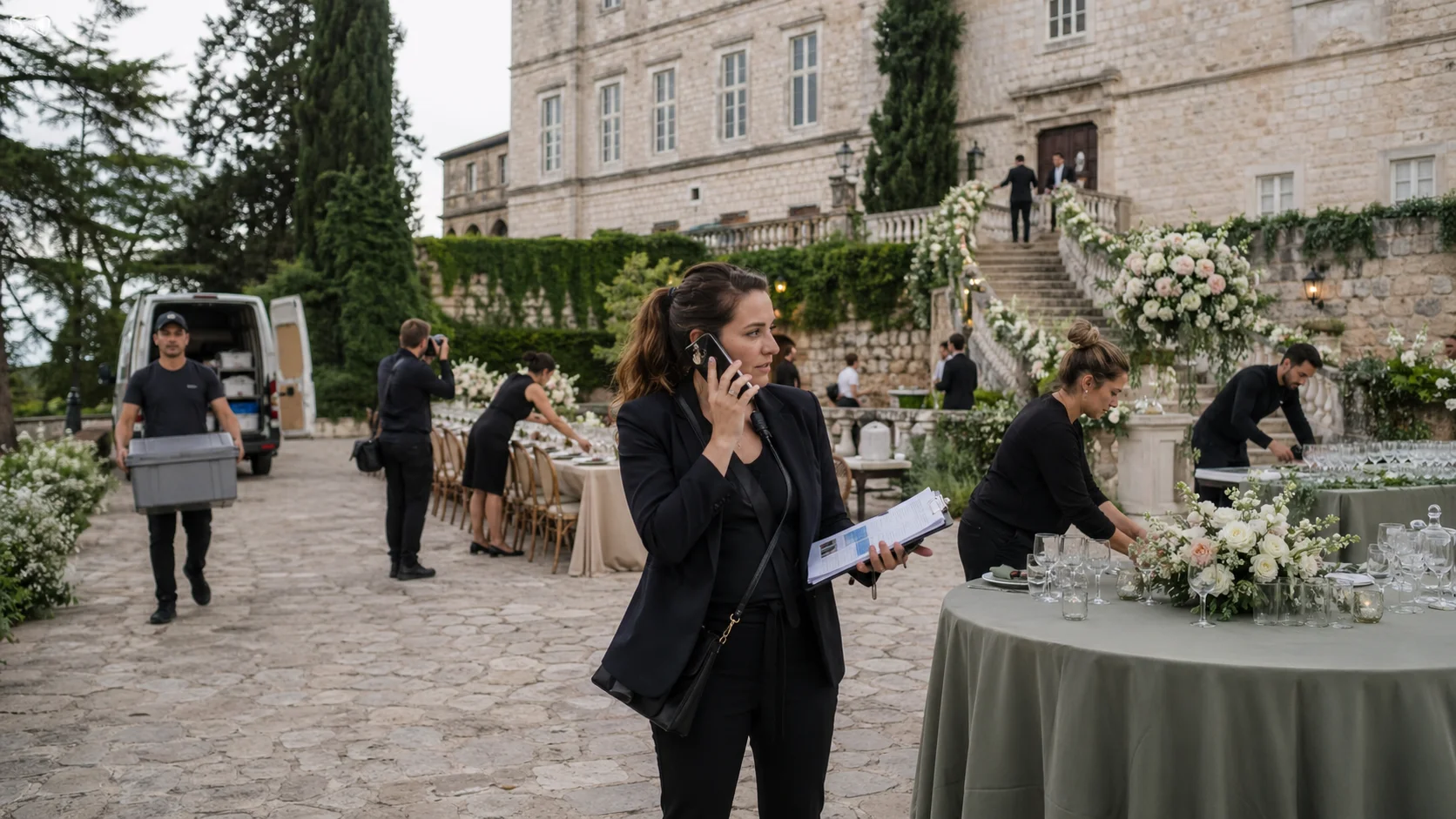
Vendor Contact Checklist: Who Needs to Reach Whom When the Day Starts Moving
A wedding contact list is not the same thing as a wedding communication plan. Once the day starts moving, what matters is not only who is involved, but who should contact whom, for what reason, and at which moment.
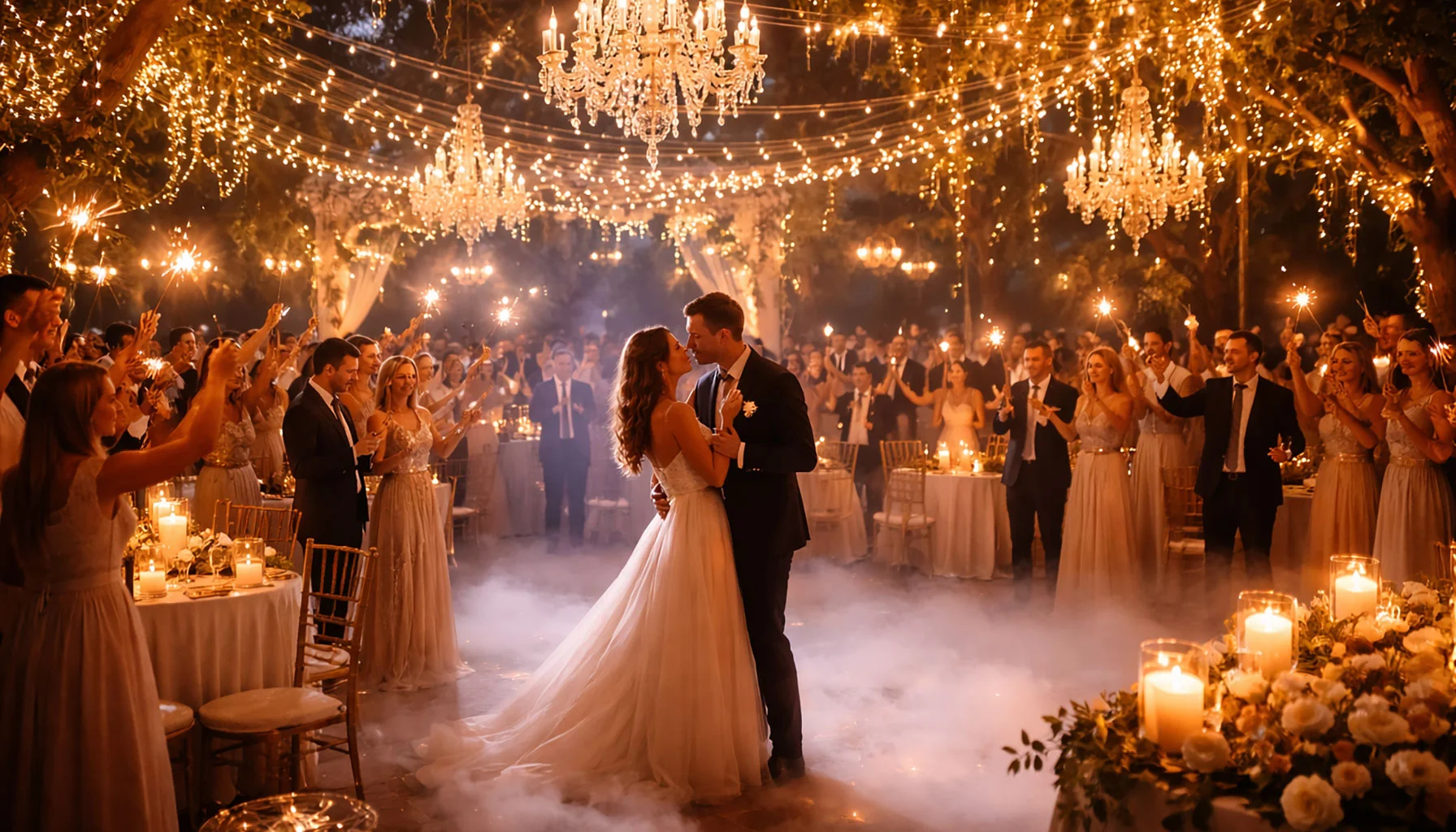
Wedding Lighting: Creating Atmosphere That Lasts
Wedding lighting is rarely remembered as equipment. What remains is how a room felt when people entered it, how the evening softened, and how different parts of the celebration seemed to belong together without visible effort. This article looks at wedding lighting as a quiet structure that shapes atmosphere and leaves a lasting imprint.
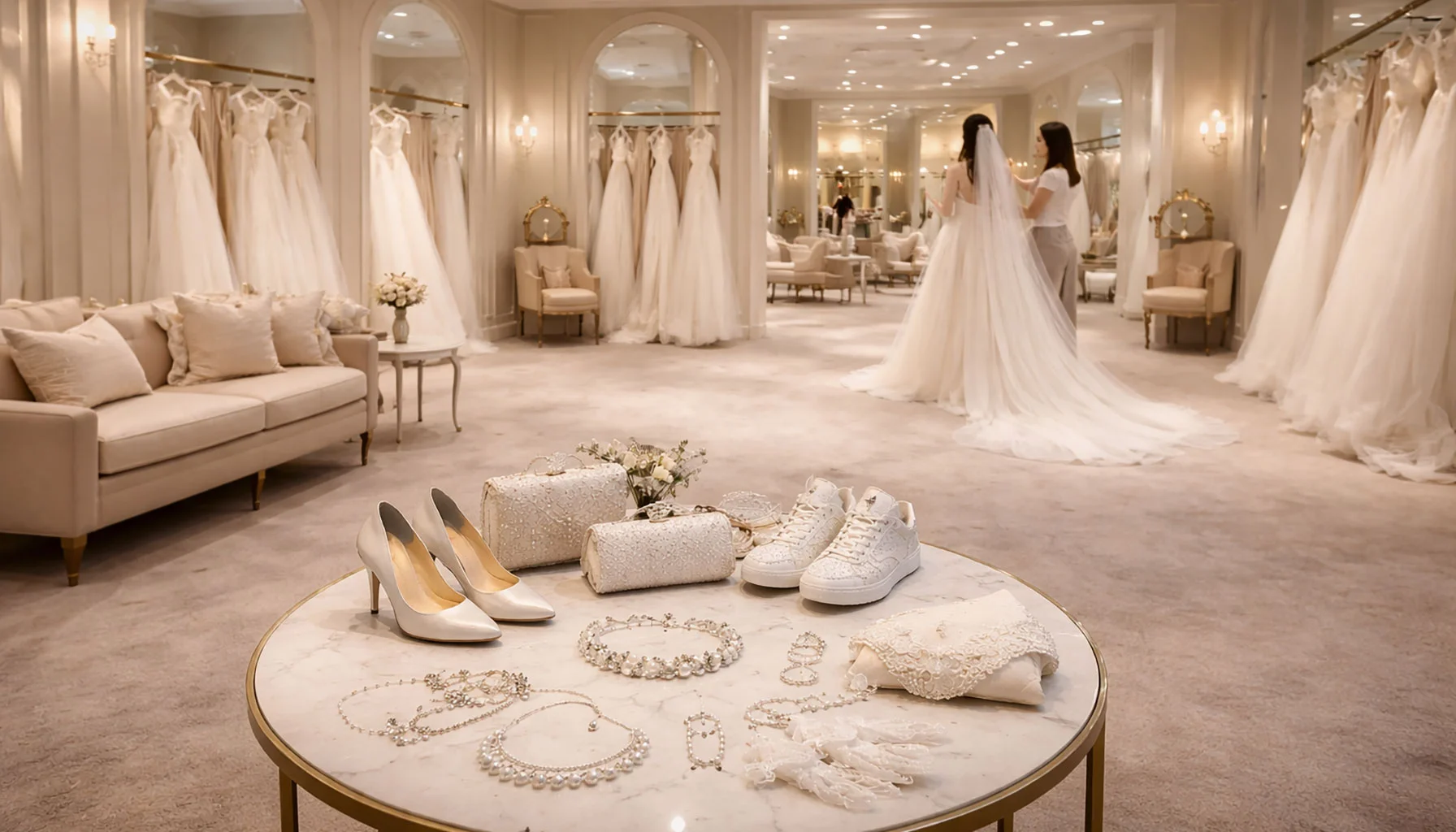
Bridal Accessories in Interplay – A Silent Addition
Accessories for the bride mostly remain in the background. They don't impose themselves and are rarely noticed first. In bridal shops, however, it repeatedly becomes apparent that precisely these pieces structure and round off the overall look. Veils, shoes, jewelry or small accessories do not change the dress, but rather the bride's effect. Observations from practice show how subtle decisions are made and why accessories are often chosen only late – and then stay.
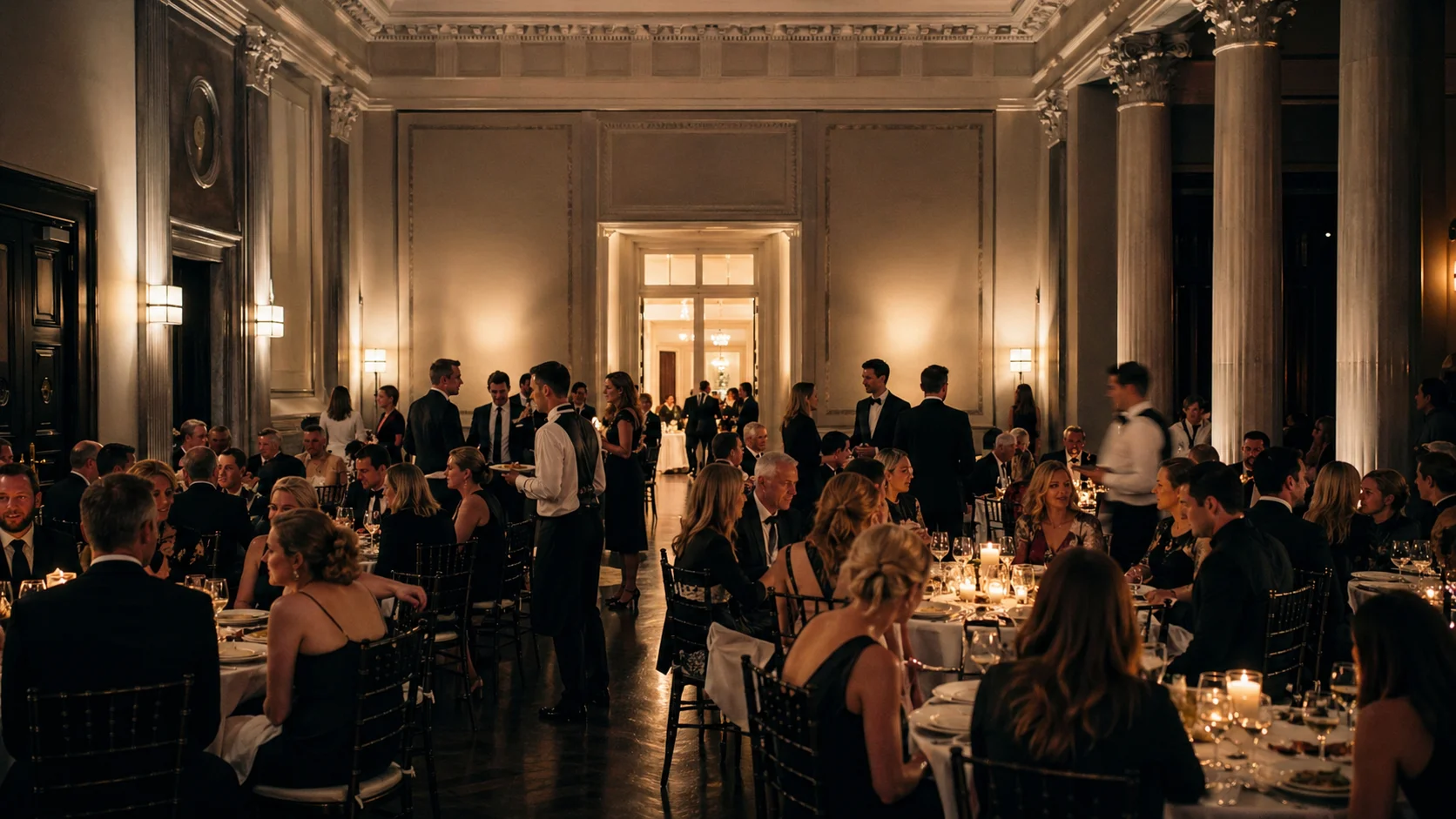
Wedding Dinner Flow Checklist: What Keeps the Room Together Between Courses
Wedding dinners usually drift or hold together in the moments between courses, not during the food itself. This article looks at service rhythm, guest movement, music, speeches, and the small in-between conditions that keep the room socially connected.
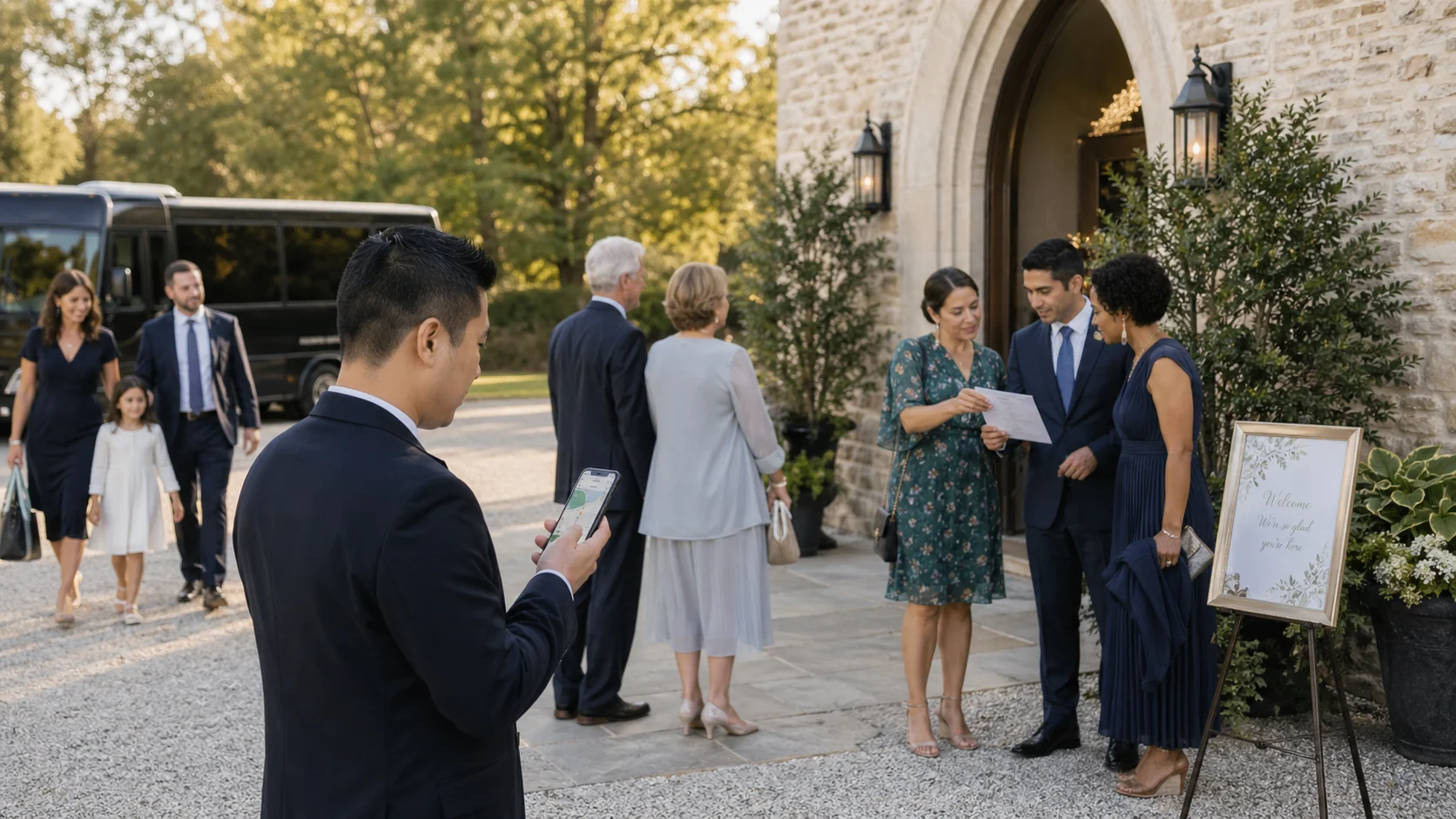
Wedding Website Checklist: What Guests Actually Need, and What They Ignore
Wedding websites work best when they reduce uncertainty instead of filling space. This article looks at what guests actually need to find quickly, what they usually ignore, and which unspoken questions a good website can answer before they become messages to the couple.
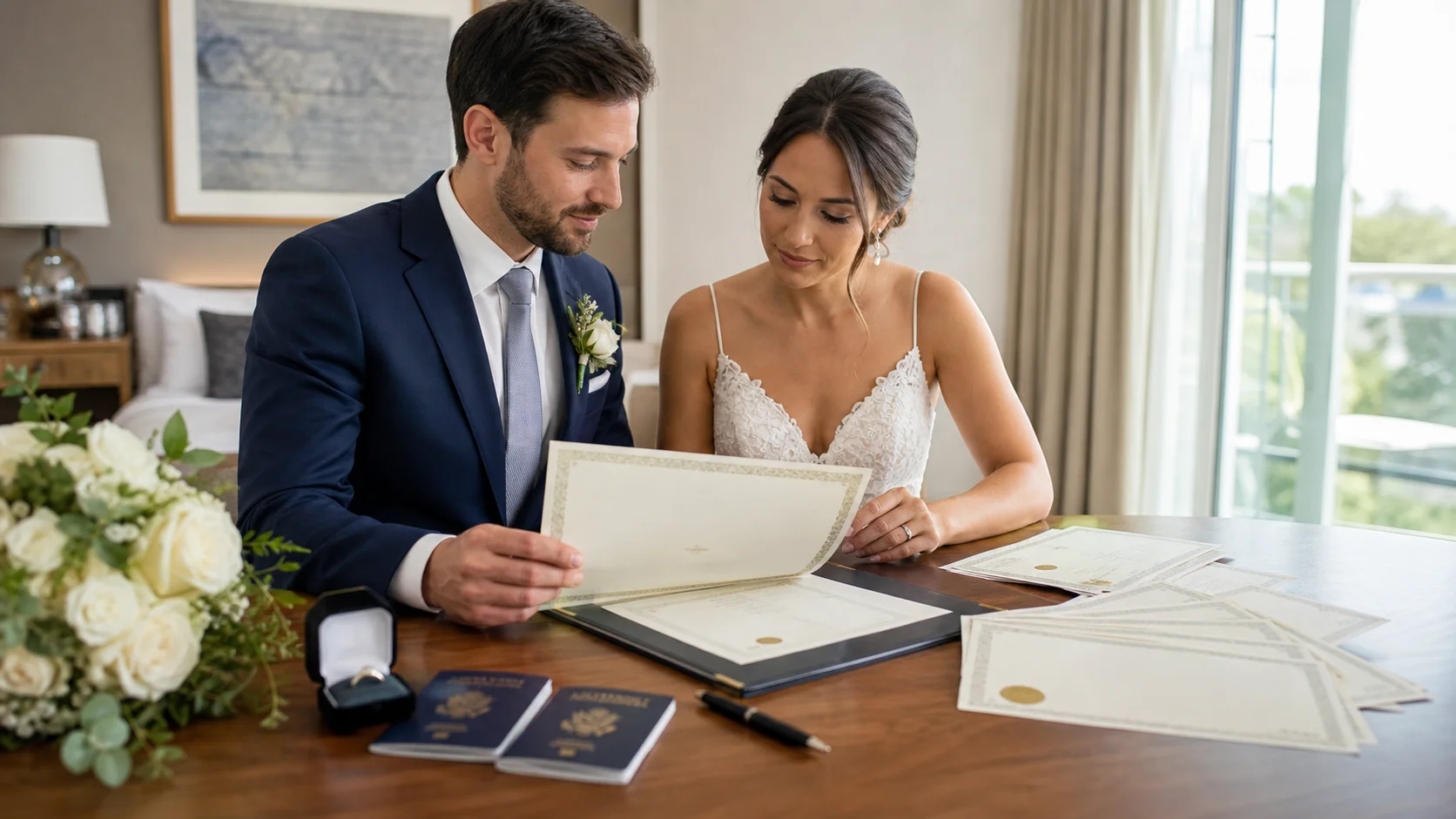
Marriage Certificate Checklist: Why One Document Keeps Returning After the Wedding
A marriage certificate often feels like the final paper of the wedding, but it keeps returning in ordinary life. This article looks at certified copies, scans, translations, apostilles, name changes, travel, banking, insurance, and the quiet imprint one document leaves after the celebration.
The Wedding Checklist That Grounds You: Turning Planning Into Something Meaningful
A wedding checklist isn’t just about tasks—it’s about clarity, intention, and trust. Here’s how to approach it in a way that feels calm, structured, and truly yours.