
Kids at Weddings Checklist: What Helps Families Stay Longer Without Strain
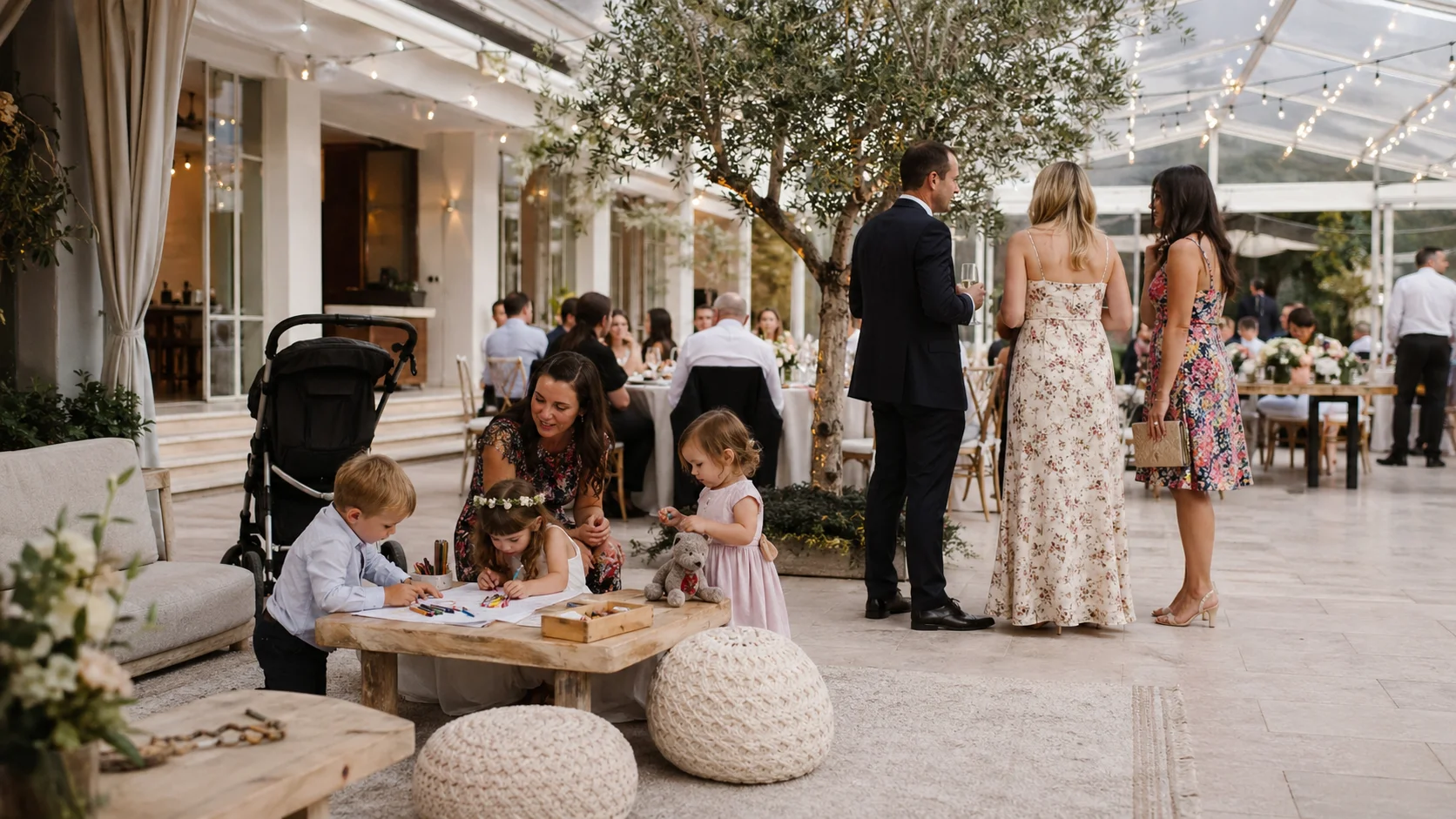
Families with children rarely leave a wedding early for one dramatic reason. More often, they reach a quiet threshold made up of smaller things: hunger, boredom, noise, tiredness, nowhere to retreat, nothing familiar to eat, no easy place to sit, too many transitions without pause. By the time the departure happens, the decision may look sudden from the outside, but it has usually been building for quite a while.
That is why a strong kids-at-weddings checklist is not about turning the celebration into a children’s event. It is about making the day breathable enough that families do not have to keep choosing between participation and care every half hour. The best weddings with children do not remove all strain. They reduce the avoidable kind, and they do it early enough that parents can stay present for longer without feeling they are only managing logistics in formal clothes.
Definition
A kids-at-weddings checklist covers the practical and atmospheric conditions that help children remain regulated and families remain included across the day. It includes timing, food, seating, noise, movement, retreat spaces, and the quieter forms of support that reduce pressure before it becomes visible.
The Day Needs At Least One Place Where Children Do Not Have To Perform Wedding Behavior
One of the simplest ways to help families stay longer is to make sure there is a zone where children can briefly stop being ceremonial participants. It does not have to be elaborate. A quiet side room, shaded corner, low table with drawing materials, soft seating, or an outdoor patch where movement is allowed can do more real work than a highly styled activity station. In weddings that include checklist thinking at its best, this kind of space is never treated as an afterthought. It is part of how the whole day remains usable.
Food Has To Arrive Before Patience Runs Out
Many family exits begin with timing rather than temperament. Children often need to eat earlier, more simply, and with less waiting than the adult structure of the wedding naturally provides. If the meal service is long, highly staged, or dependent on speeches before food, parents begin compensating long before anyone else notices. A planner who works many family-heavy weddings once said that children do not usually disrupt the schedule; hunger does. Snacks, early portions, familiar options, water within reach, and a realistic sense of waiting time matter far more than people like to admit.
Checklist – CategoryA wedding checklist helps you stay organized and ensures that no important detail is overlooked. From early planning steps to last-minute preparations, it provides a clear overview of what needs to be done and when. With a well-structured checklist, you can plan your wedding with confidence, reduce stress, and enjoy the journey toward your big day.
Noise And Transition Points Usually Wear Children Down Faster Than Formal Moments Do
A child may cope surprisingly well with a ceremony, then unravel during the less obvious parts of the day: waiting between spaces, standing while adults greet one another, sitting through repeated room resets, or moving from dinner into louder evening energy with no buffer in between. This is where many weddings underestimate children. The problem is often not one emotional high point. It is accumulation. Fewer abrupt transitions, clearer routes, shorter standing phases, and a little predictability around what happens next can extend a family’s comfort by hours rather than minutes.
Parents Stay Longer When Care Does Not Feel Socially Visible All The Time
One of the quieter pressures on parents at weddings is not the child’s behavior itself, but the feeling of being seen constantly while managing it. A nearby high chair, easy path out, somewhere to rock a tired child, changing access, familiar drinks, and a way to step away without crossing the center of the room can all lower that pressure. Families usually stay longer when care can happen without becoming a public interruption every time it is needed.
Silence Matters More Than Entertainment
The deeper link to silence appears here. Weddings often assume children need constant stimulation in order to last well. In reality, what many children and parents need most is not more activity but more relief. A quieter corner. A dimmer space. A pause between transitions. A stroller nap near the edge of the room. A moment where no one is asking them to join in. Silence, in this context, is not emptiness. It is a form of permission. It gives families a way to remain inside the wedding without having to match its highest energy all the time.
Silence is not absence. It is the space where meaning gathers before words, decisions, and rituals take shape.
Conclusion
A good kids-at-weddings checklist does not promise that children will stay cheerful for every hour of the celebration. It decides what can be softened before strain starts building: food timing, retreat spaces, movement, noise, visibility, and the simple reality that families need more than one mode of being present. When that is understood early, parents usually stay longer, children last better, and the wedding feels more generous to the people who are trying to inhabit it fully with small humans in tow.
Related Articles
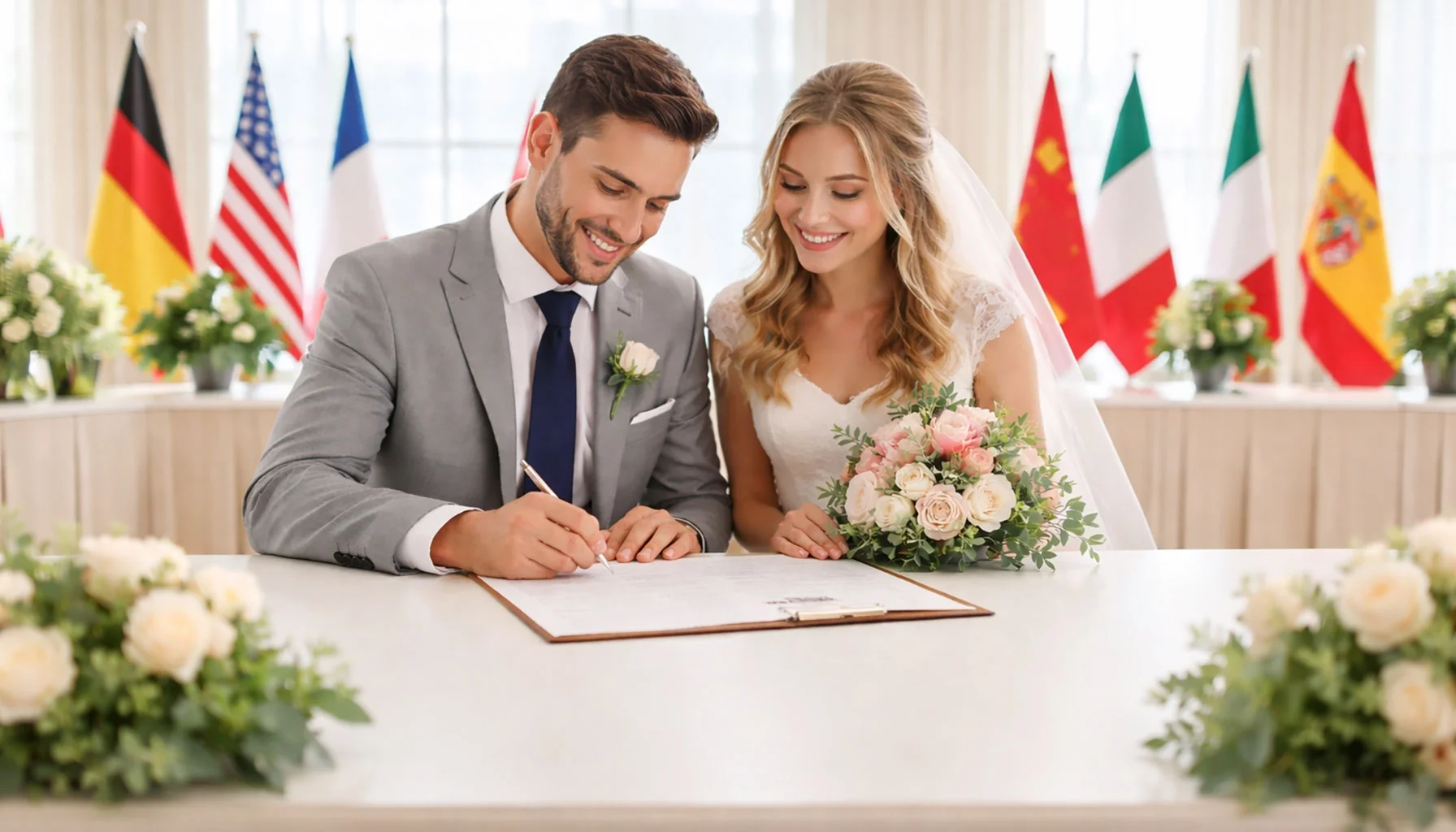
Civil Ceremonies Worldwide: Legal Requirements, Processes, Costs, and Cultural Differences
Civil ceremonies are rarely dramatic, yet they often carry one of the most decisive thresholds in a wedding journey. This article looks at civil marriage across countries through legal requirements, observed processes, cost ranges, and the quieter atmosphere that often surrounds the moment a marriage becomes official.
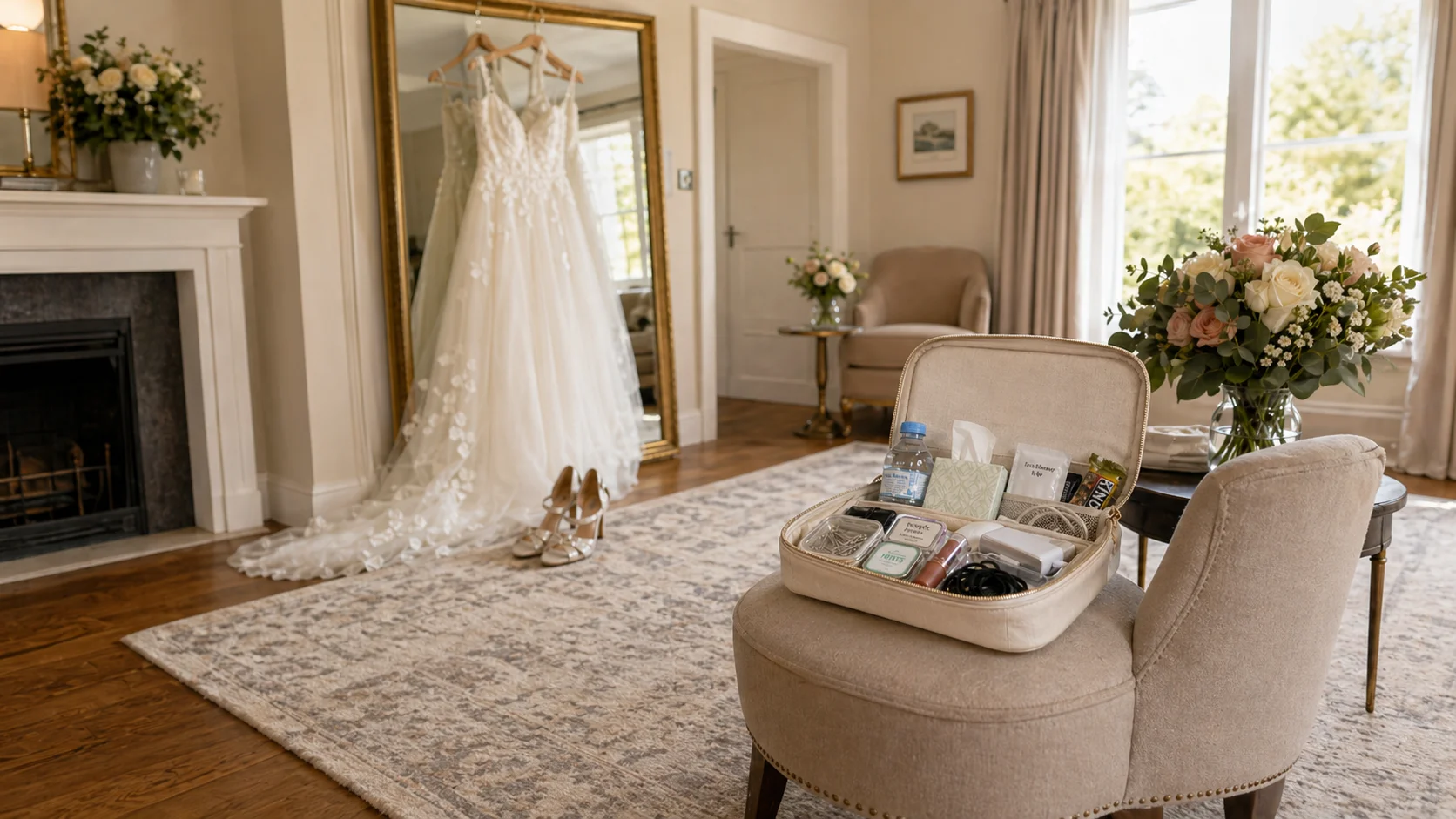
Wedding Bag Checklist: The Small Things That Quietly Save the Day
Wedding bags rarely draw attention, but they often carry the small items that keep the day from tightening around minor problems. This article looks at what to pack, who should hold it, and why the most useful things often matter most only in hindsight.

Wedding Guest Communication Checklist: What Guests Need to Know and When
Good wedding communication is not about sending guests everything at once. It is about giving the right information at the right moment, so the day feels clear without becoming overexplained. This article looks at what guests actually need to know, when they need to know it, and why silence still has a place in wedding planning.
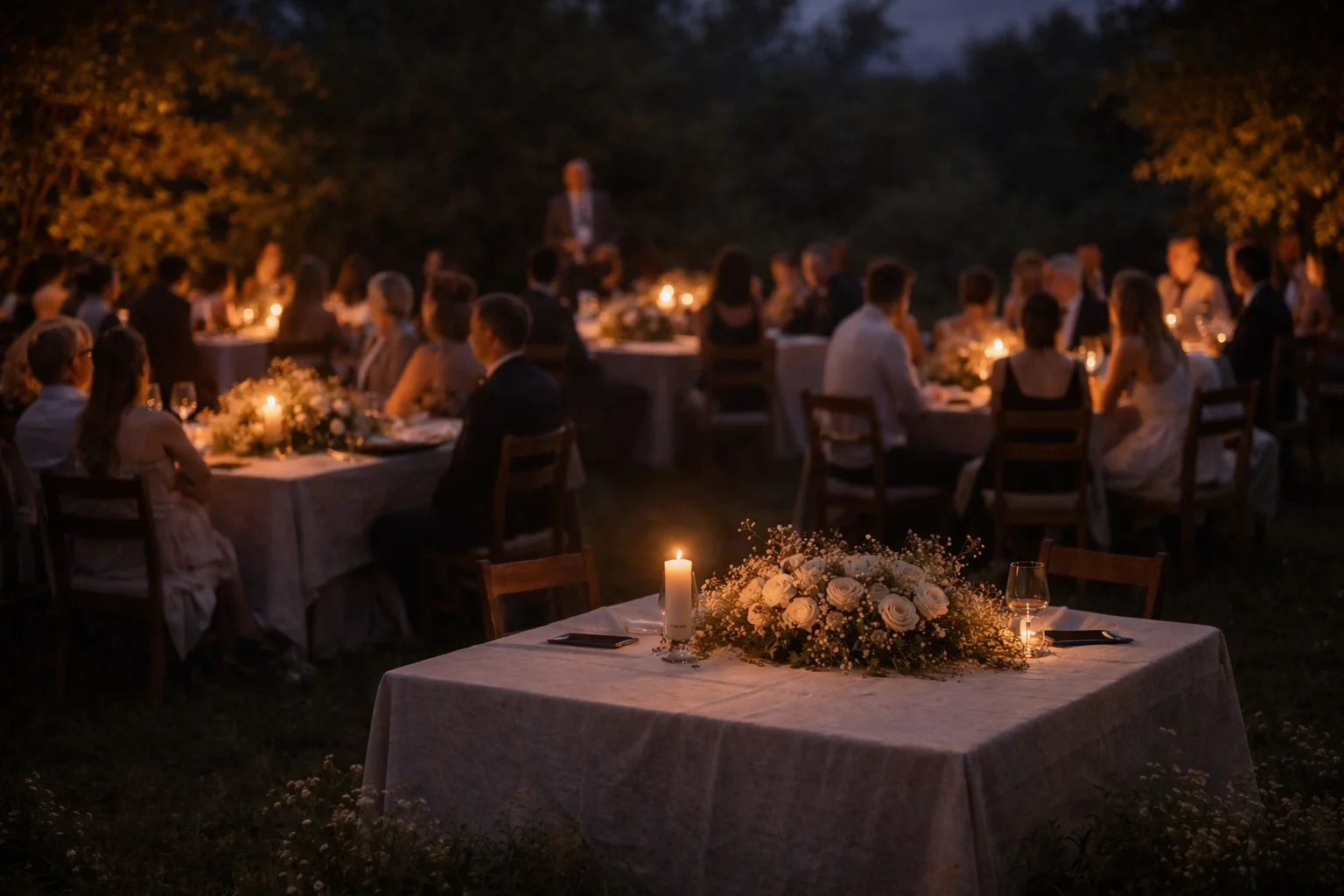
How to Make Wedding Lighting Feel Warmer and More Intentional
Lighting at weddings is often treated as a technical detail, but it defines how a space is felt before anything else is noticed. This article explores how to make light softer, calmer, and more intentional, and why what is not directly seen often matters most.
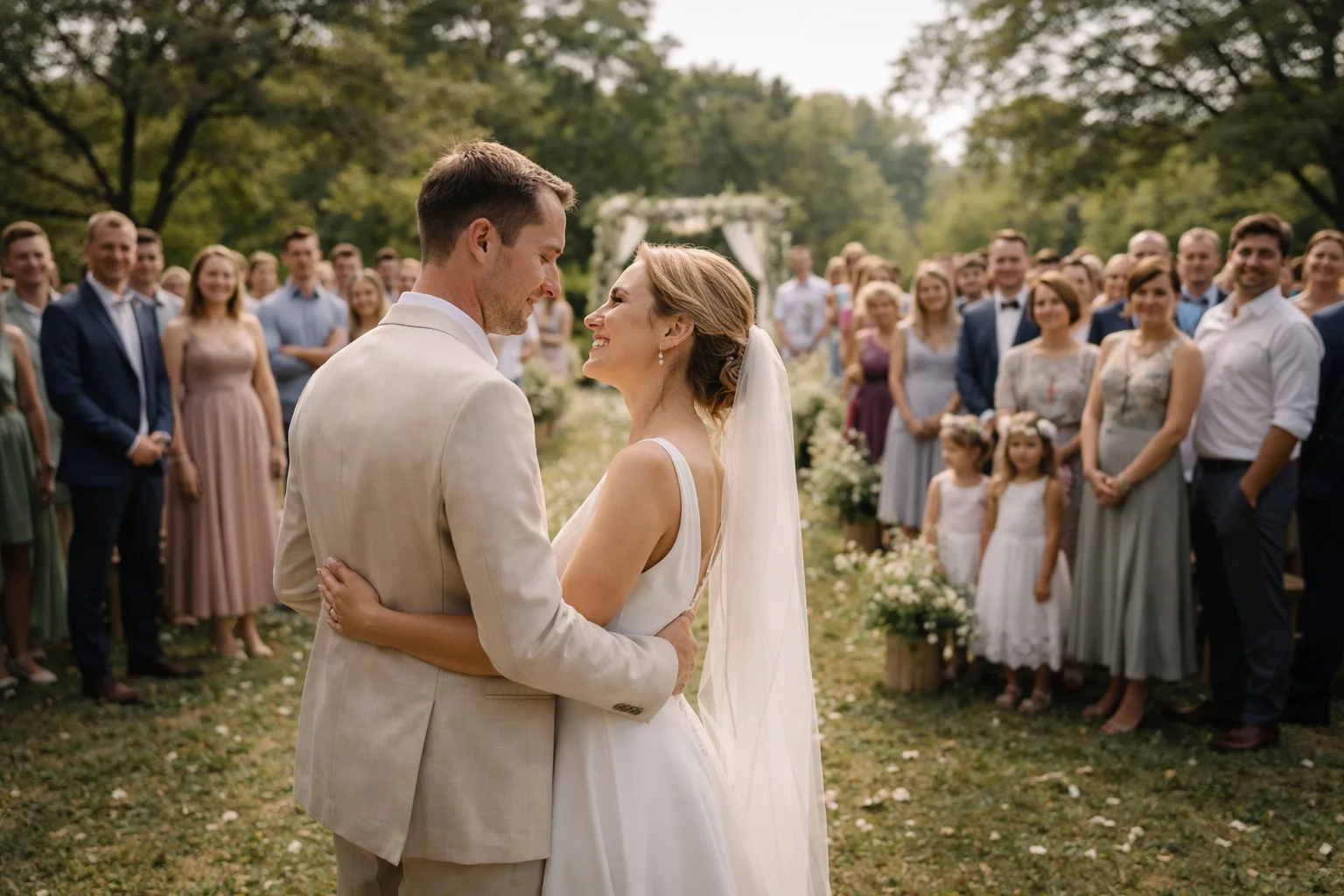
How Kids Change Formal Wedding Moments — and How to Plan for It
hildren change the atmosphere of formal wedding moments faster than most adults expect. They redirect attention, alter pacing, and reveal whether a ceremony, photo setup, or seating plan is flexible enough to hold real life. This article looks at how children affect formal wedding situations and how couples can plan for those shifts without losing the tone of the day.

Why Notebooks Matter More Than You Think at Weddings
Notebooks at weddings are often treated as simple guest books, but their role goes deeper. They capture pauses, unfinished thoughts, and quiet moments that rarely surface in spoken form. This article explores how notebooks connect the visible ritual of a wedding with the invisible space of silence.
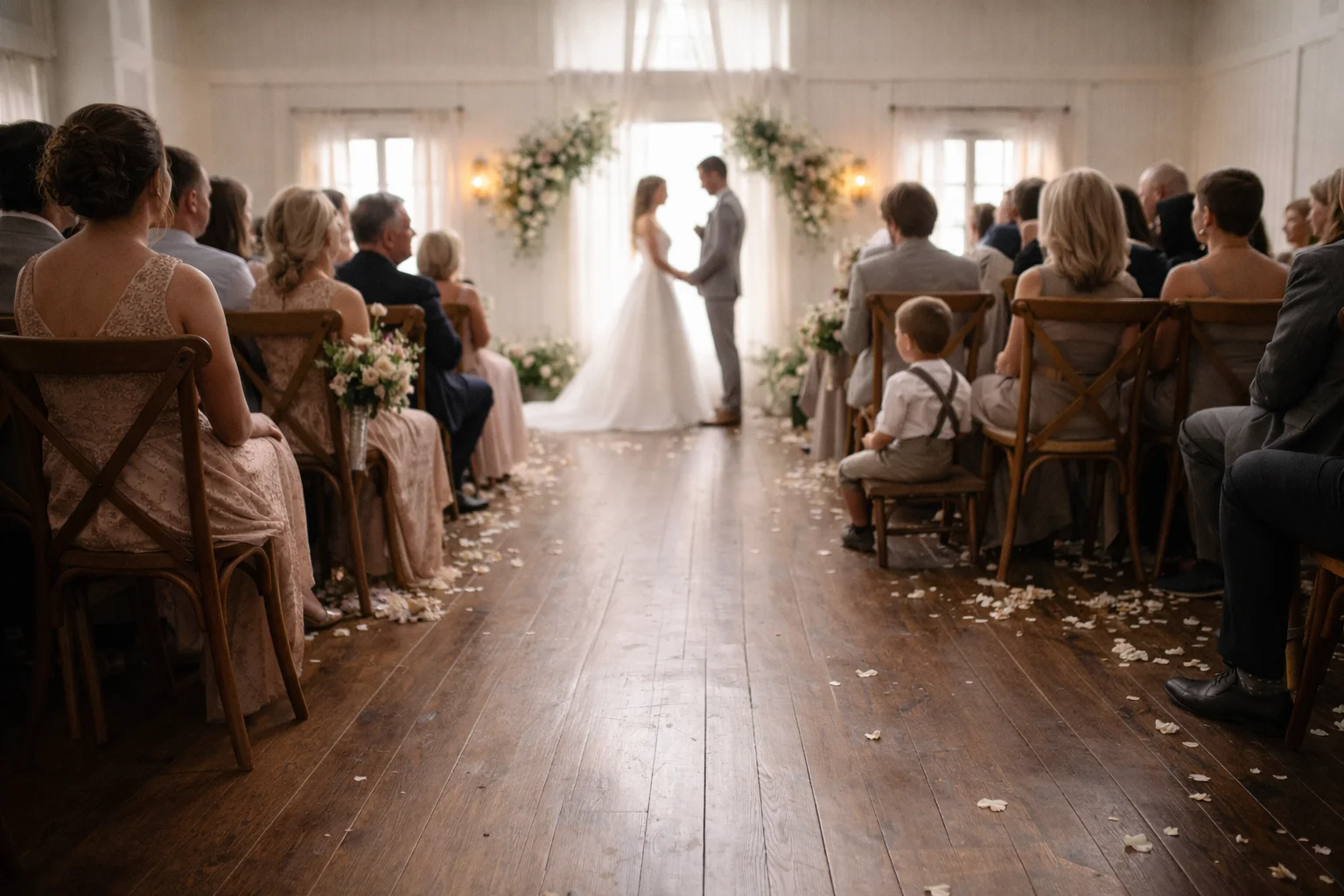
When Attention Shifts: Kids in Formal Wedding Situations
Children rarely stop a formal wedding moment outright, but they often redirect attention for a few seconds in ways adults immediately notice. This article looks at how those shifts happen, why they usually matter less than feared, and how weddings absorb different rhythms without losing their structure.
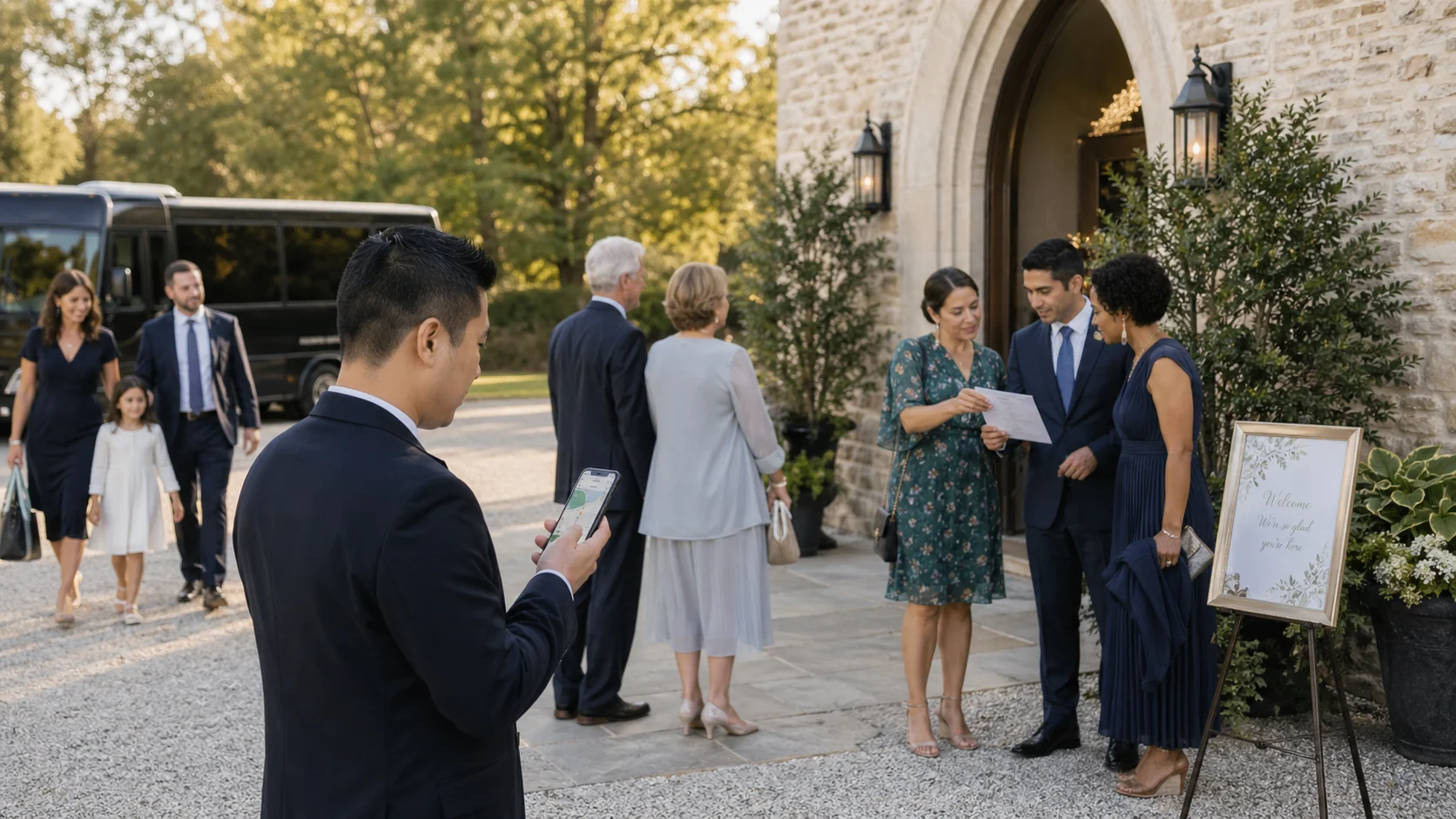
Wedding Website Checklist: What Guests Actually Need, and What They Ignore
Wedding websites work best when they reduce uncertainty instead of filling space. This article looks at what guests actually need to find quickly, what they usually ignore, and which unspoken questions a good website can answer before they become messages to the couple.
Multilingual Wedding Communication: What Guests Need to Understand Without Constant Explanation
A multilingual wedding does not fail because different languages are present. It becomes difficult when guests are left unsure what they need to understand, what they can simply feel, and what requires translation in the moment. This article looks at how to create clarity in multilingual wedding communication without overexplaining every part of the day.
Bloom by Design: Flowers and Florals for a Modern Perfect Wedding
Flowers rarely carry a wedding by themselves. What they do, when chosen well, is quieter and often more lasting. They soften transitions, give rhythm to rooms, and help guests feel oriented without ever being told where to look. This article looks at wedding flowers through atmosphere, restraint, and the silent structure they create across the day.
A Wedding Shaped by Quiet Alignment
This wedding was defined not by individual highlights, but by its steady flow. Planning, design, and service worked together without drawing attention to themselves. For guests, the day unfolded naturally and remained consistent, carried by a sense of calm, closeness, and continuity throughout.

Some Things Only Work With Certain Guests
Wedding activities rarely work on format alone. They depend on guest chemistry, timing, shared ease, and the unspoken permissions already moving through the room before anyone fully names them.