
A day, carried by closeness
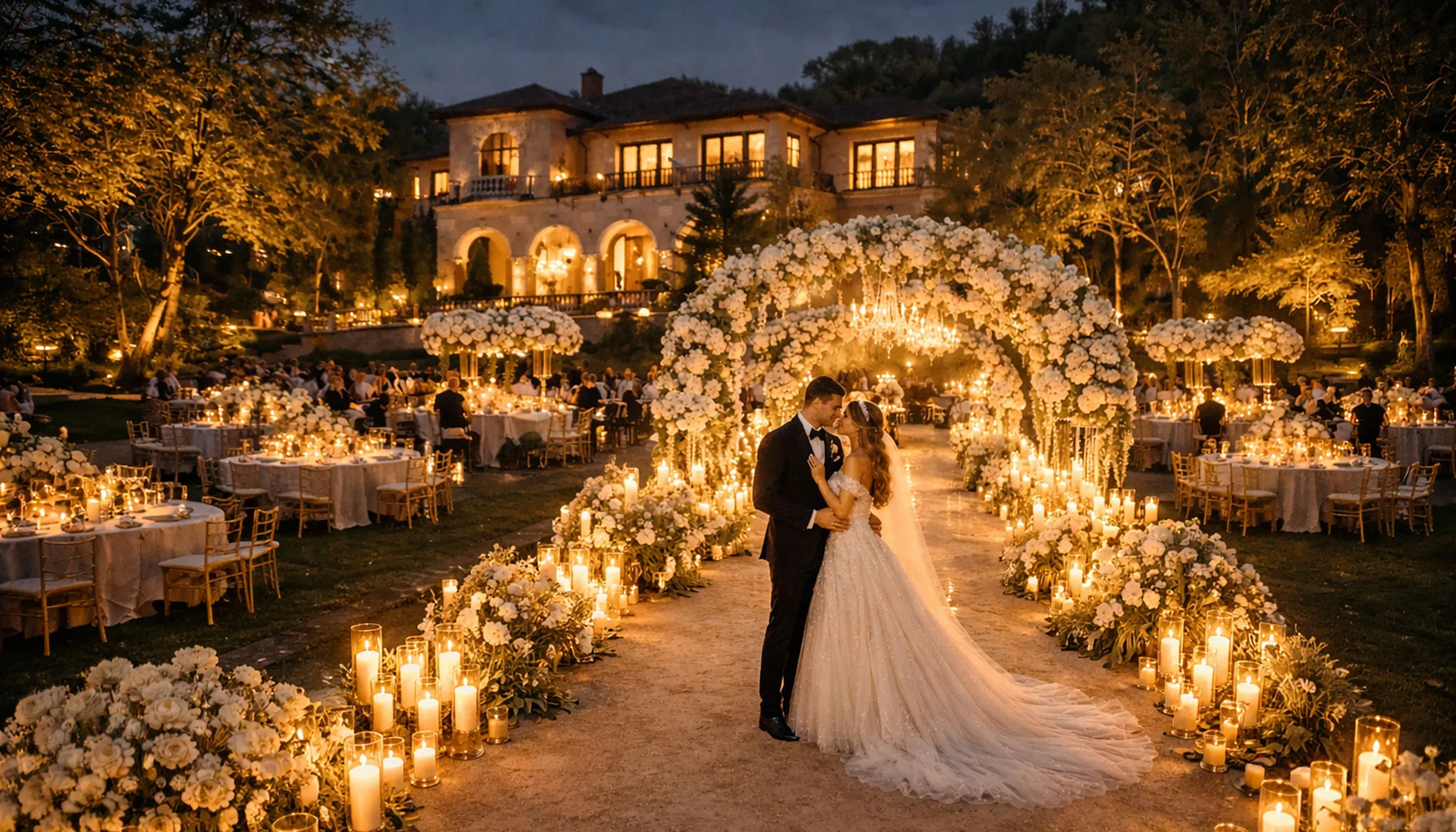
The structure behind a serene celebration
What characterized Dan and Anja's wedding was not a single highlight, but the interplay of many well-coordinated services. Each element had a clear purpose. Nothing stood alone. This created a day that flowed smoothly, without visible effort. Guests first perceived the lightness. Only later did they name what had made it possible.
Planning and Coordination
The planning remained largely invisible throughout the day. Transitions happened without announcement. Schedules held without creating pressure. Questions were answered before they were asked. A clear structure was present, but never came to the forefront. This allowed the couple and guests to stay in the moment rather than in the process.
“Everything felt relaxed, and yet nothing was left to chance.”— Guest
Invitations and Printed Details
The first contact with the wedding took place weeks beforehand. The invitations had weight, both materially and in tone. Design decisions were consistently carried through all printed materials. Guests recognized the same visual language on the day itself. This continuity set expectations early and quietly carried them through to the end.
“It didn't feel like an announcement, but like a personal message.”— Guest
Guest Care and Arrival
The arrival was thoughtfully designed, without ceremony. Names were known. Paths were clear. Support was available without being visible. Guests moved through the day without having to constantly reorient themselves. This created a sense of security that allowed for quick settling in.
“I didn't have to think about anything. I could just be there.”— Guest
Space and Design
The venue was designed for movement. Sightlines were considered. Distances felt natural. Areas for conversation, dining, and celebration were clearly defined without being restrictive. Guests moved between rooms without perceiving the transition. The design allowed for different rhythms simultaneously.
“Every area had a purpose. Nothing seemed accidental.”— Guest
Floral and Atmospheric Elements
Floral and decorative elements were not imposed but integrated into the venue. The arrangements followed the architecture and the temporal flow of the day. Colors shifted subtly with the light. Scents remained understated. The atmosphere felt continuous, not constructed.
“It didn't look arranged. It felt natural.”— Guest
Lighting and Technical Implementation
The lighting was adjusted gradually. Daylight transitioned into warm tones without a clear break. Even in the evening, the room remained calm. Guests rarely mentioned the lighting directly, but often spoke of how pleasant the atmosphere felt for hours.
“It was consistently pleasant for the eyes.”— Guest
Cuisine and Hospitality
The service was guided by the guests' rhythm, not the schedule. Courses arrived when conversations paused. The staff remained attentive without interrupting. The food was described as generous and thoughtful, not staged. The focus was on shared time at the table.
“It felt like hosting, not serving.”— Guest
Music and Sound
The music followed the space. Volumes adjusted. Live elements reacted to movement and mood. Conversation and music were not in competition. The sound didn't demand attention, yet held the evening together.
“You could talk and dance without having to choose.”— Guest
Photography and Film
Cameras were present but unobtrusive. Moments were captured without interruption. Many guests barely noticed the documentation. Later, they were surprised by how completely the memory had been captured.
“I don't remember poses. But everything is there.”— Guest
After the Wedding
Contact with guests continued after the celebration. Messages picked up on shared moments. Photos were carefully handed over. A protected space allowed guests to share their own impressions. The experience faded out, without pressure or expectation.
“It didn't feel finished when it was over.”— Guest
Conclusion
The strength of this wedding lay in its coordination. Each service supported the next. None sought to be seen. Together, they created a day that felt calm, generous, and self-contained. What guests remembered most was not a single detail, but the consistency of the experience from beginning to end.
Related Articles
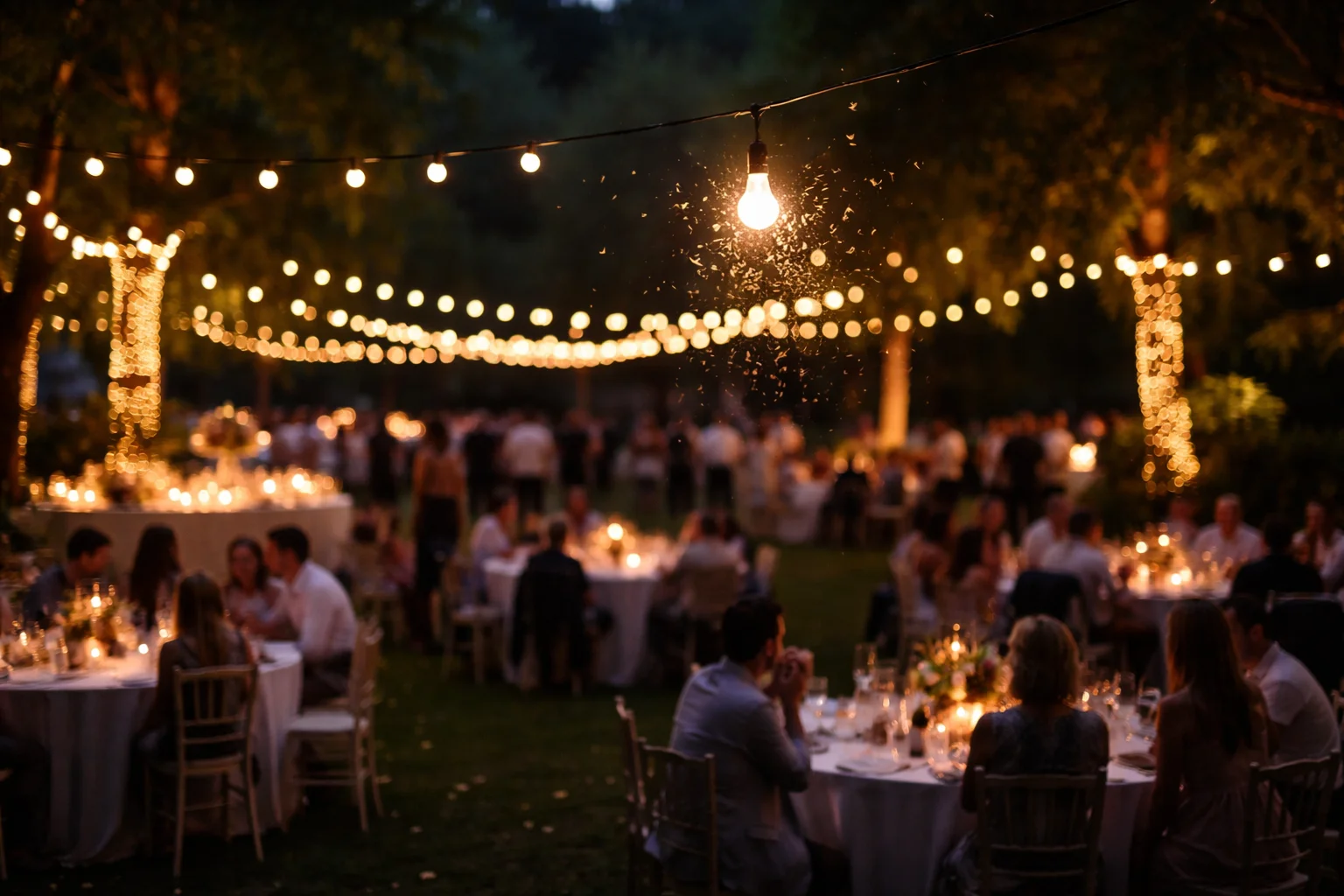
Insects Around Light Sources at Weddings
Outdoor weddings shift once the light fades. What looked calm in late afternoon starts to move differently. Lamps switch on, strings of bulbs hum a bit, faces turn toward brighter spots. And then, slowly, insects begin to show up. Not all at once. Just a few at first, easy to miss.

Where Nature Meets Love: Unforgettable Outdoor Weddings
Outdoor weddings combine natural beauty with thoughtful planning to create relaxed, unforgettable celebrations where guests feel comfortable, inspired, and truly connected.
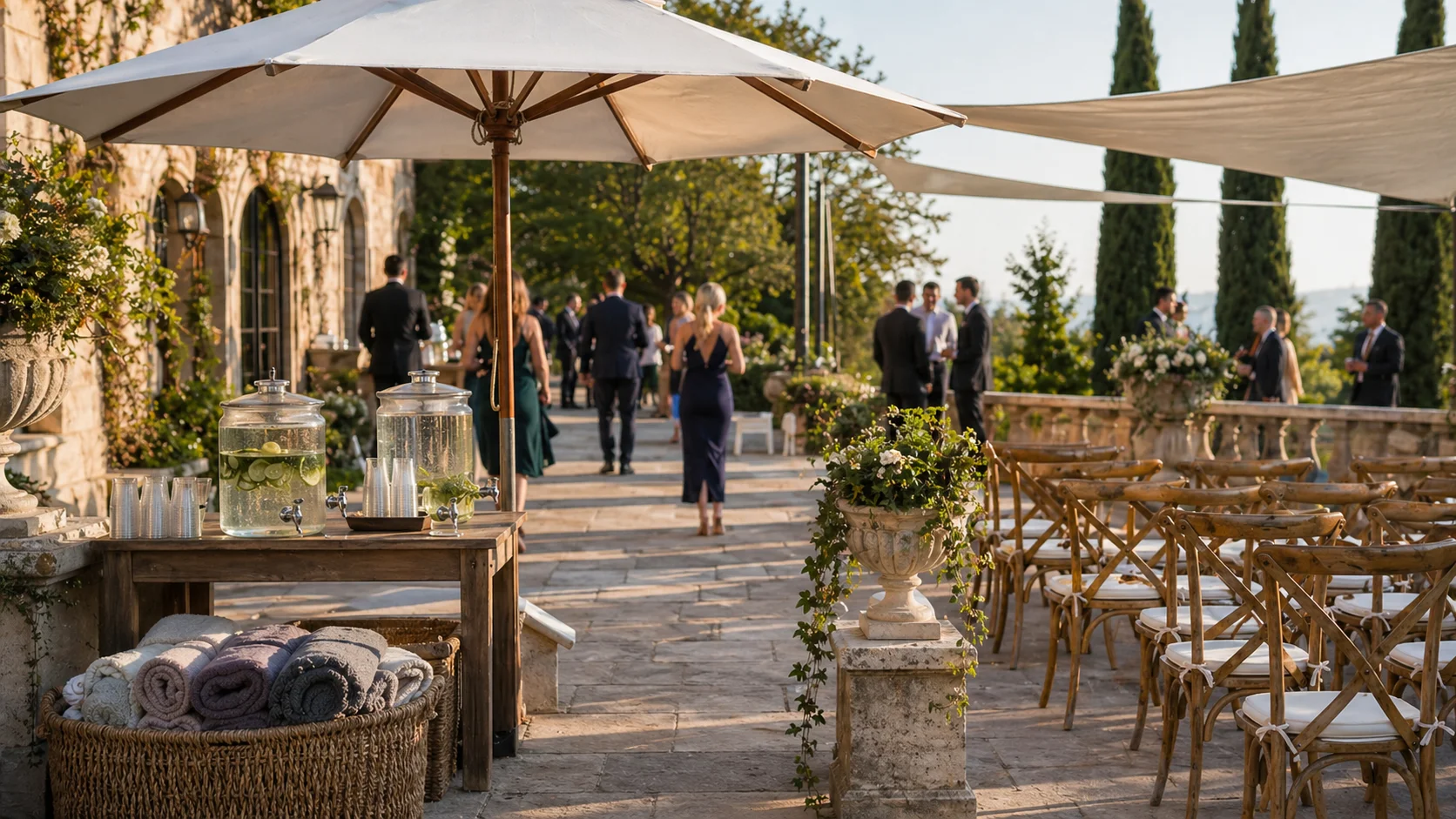
Backup Checklist for Outdoor Weddings: Shade, Wind, Cold, and the Things People Forget
Outdoor wedding backup plans are not only about rain. This article looks at shade, wind, cold, ground conditions, paths, loose details, guest comfort, and the small weather traces that shape how an outdoor celebration is remembered.
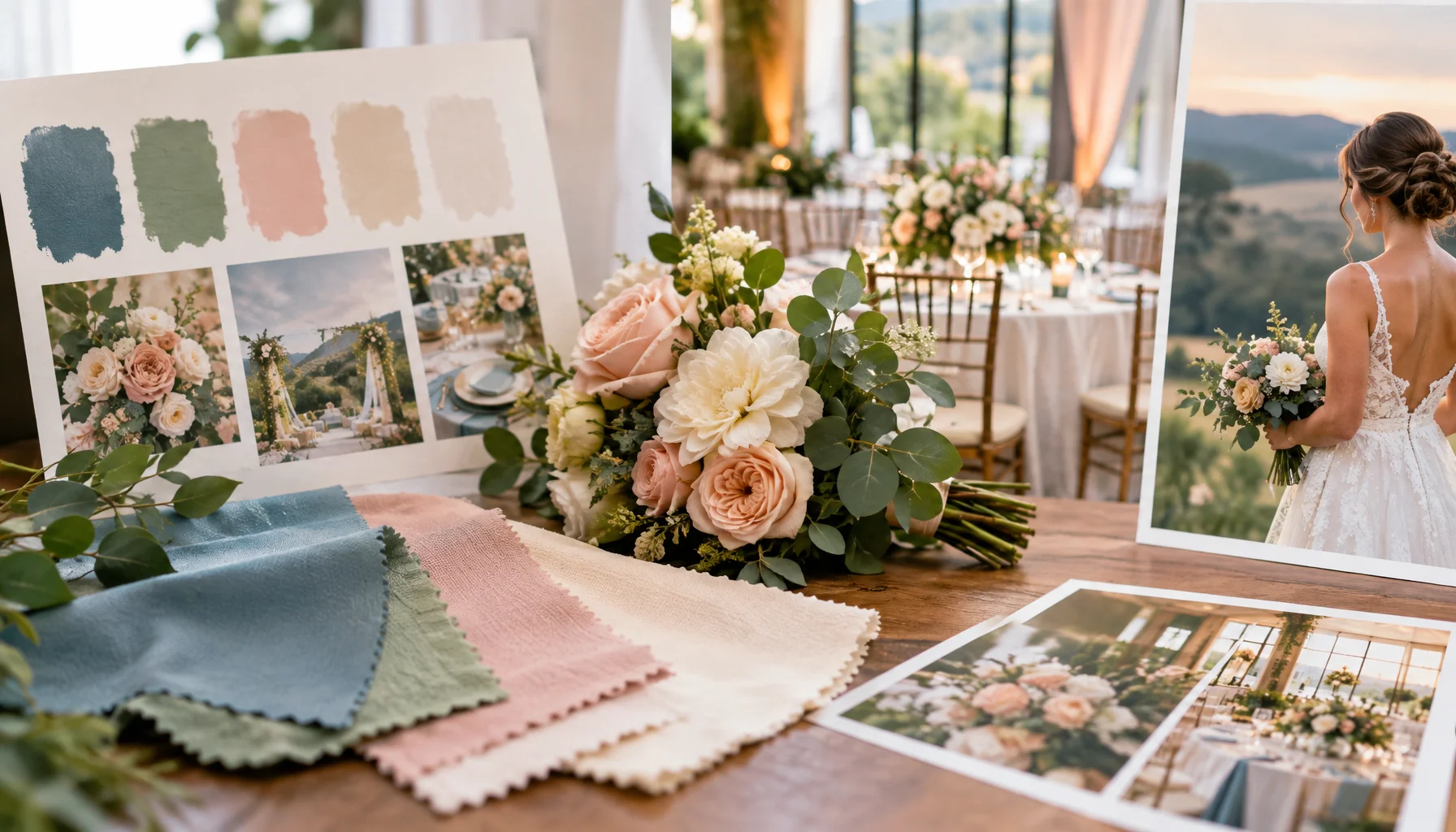
Will Your Wedding Colors Actually Photograph the Way You Imagine?
Wedding colors do not travel unchanged from a mood board to fabric, flowers, venue lighting and finished photographs. This guide explains why colors shift and gives couples a practical way to test whether their palette will remain recognizably itself throughout the day.
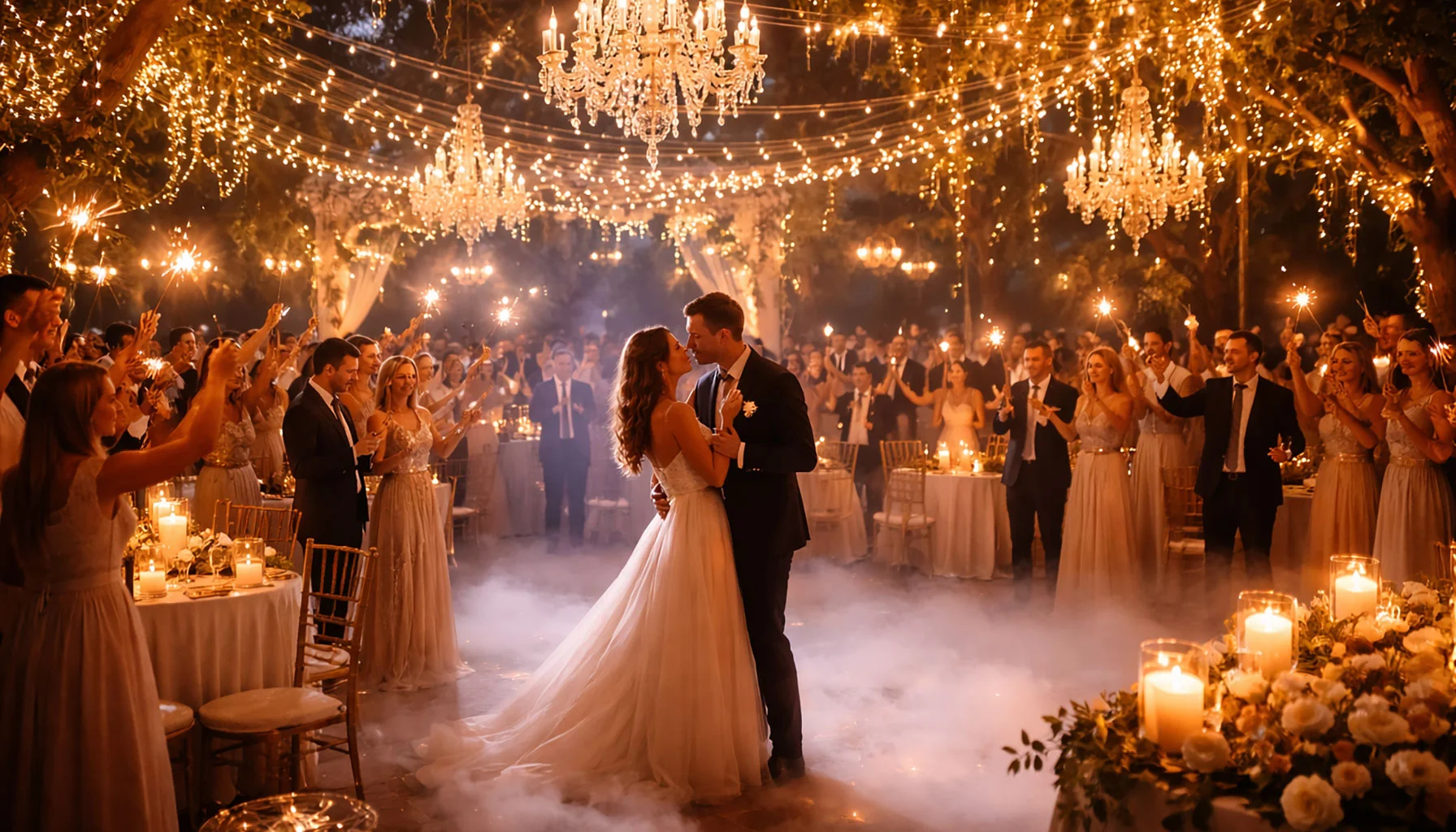
Wedding Lighting: Creating Atmosphere That Lasts
Wedding lighting is rarely remembered as equipment. What remains is how a room felt when people entered it, how the evening softened, and how different parts of the celebration seemed to belong together without visible effort. This article looks at wedding lighting as a quiet structure that shapes atmosphere and leaves a lasting imprint.
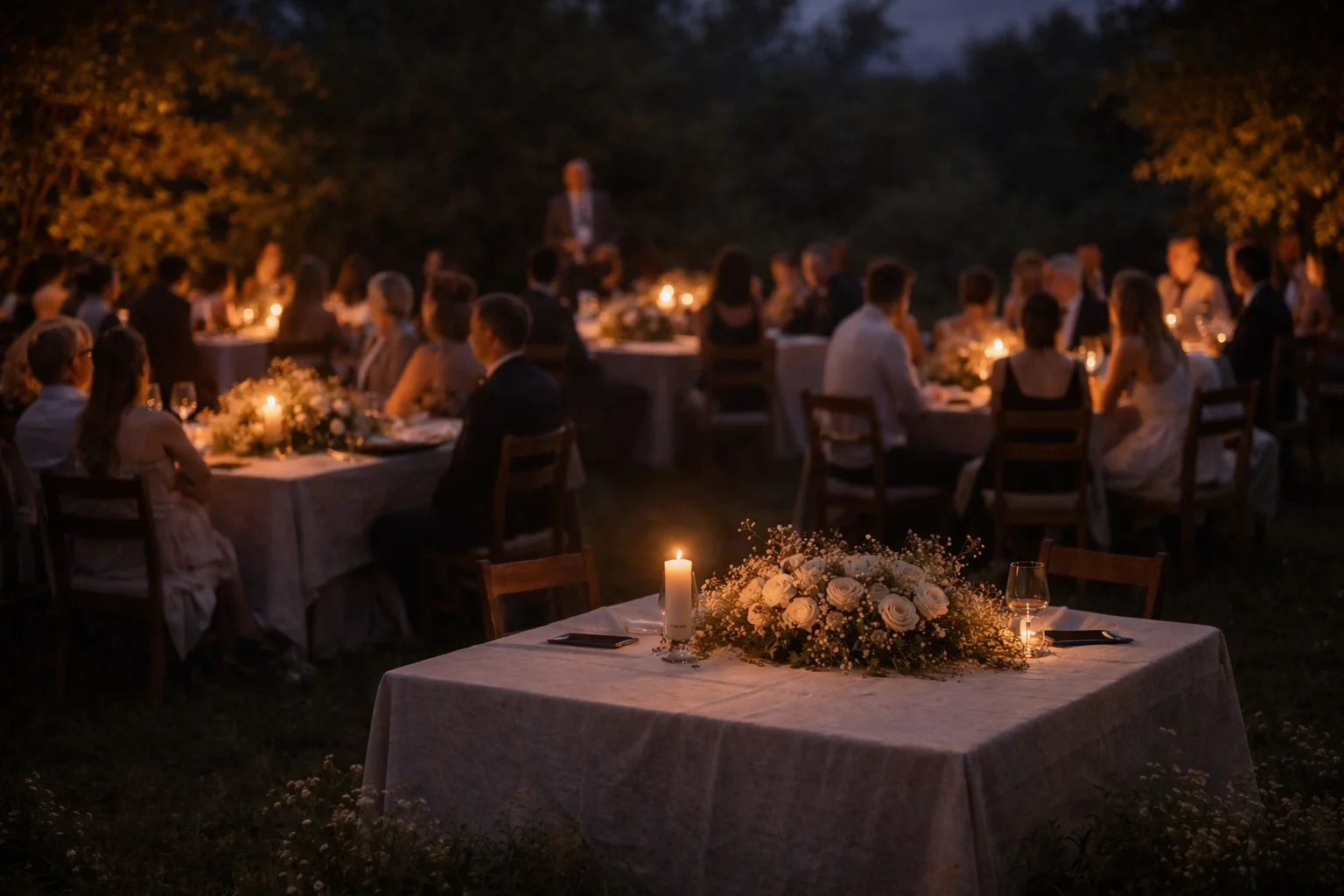
How to Make Wedding Lighting Feel Warmer and More Intentional
Lighting at weddings is often treated as a technical detail, but it defines how a space is felt before anything else is noticed. This article explores how to make light softer, calmer, and more intentional, and why what is not directly seen often matters most.
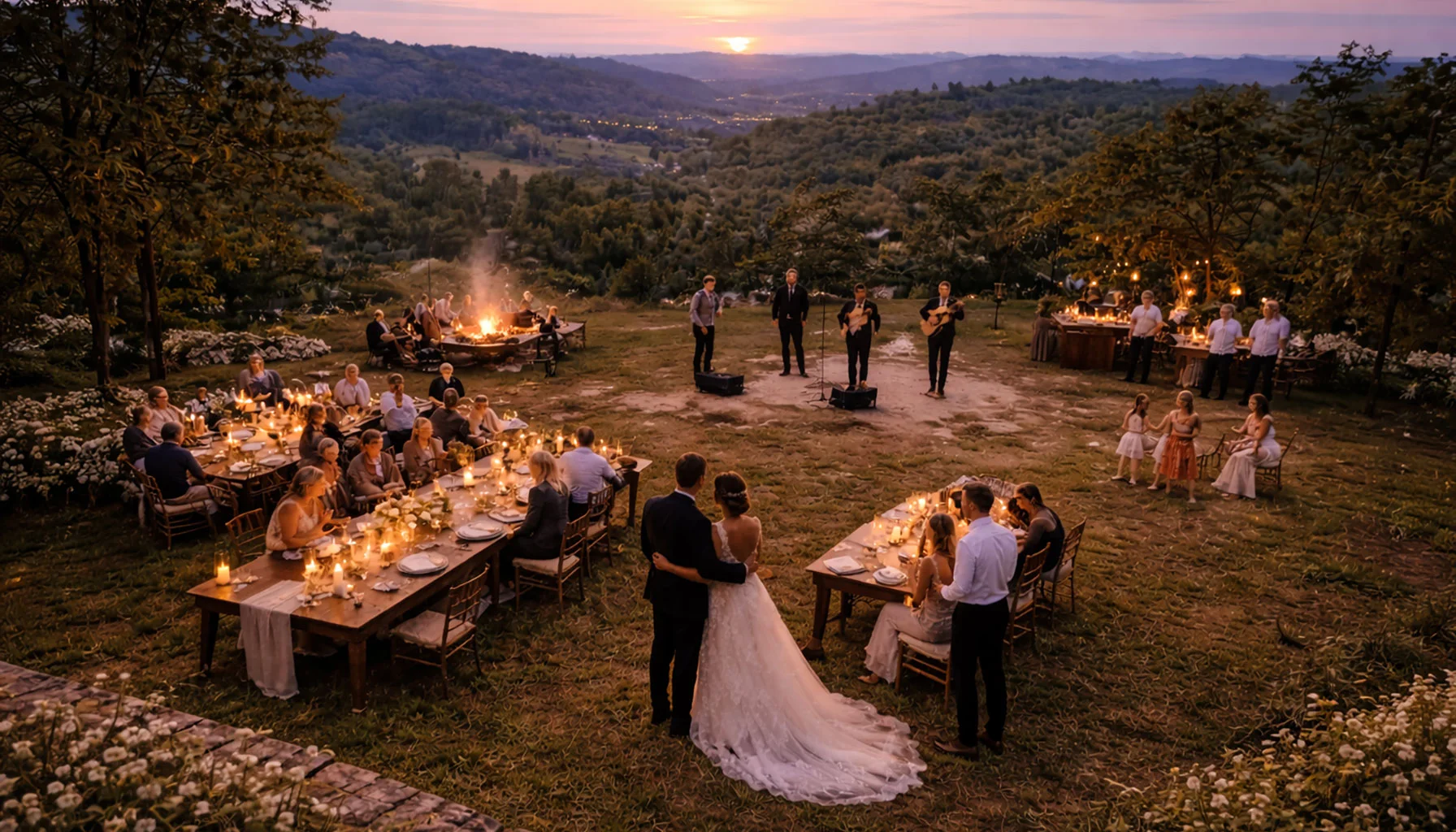
If love belonged to everyone
This wedding was experienced as a shared moment, not as a staged event. From arrival to departure, closeness, openness, and a calm rhythm shaped the day. Guests felt involved, not invited in the formal sense. The celebration thrived on genuine encounters, shared conversations, and an atmosphere that carried throughout the entire day. What remained was the feeling of having been part of something organic – borne of connection and quiet joy.
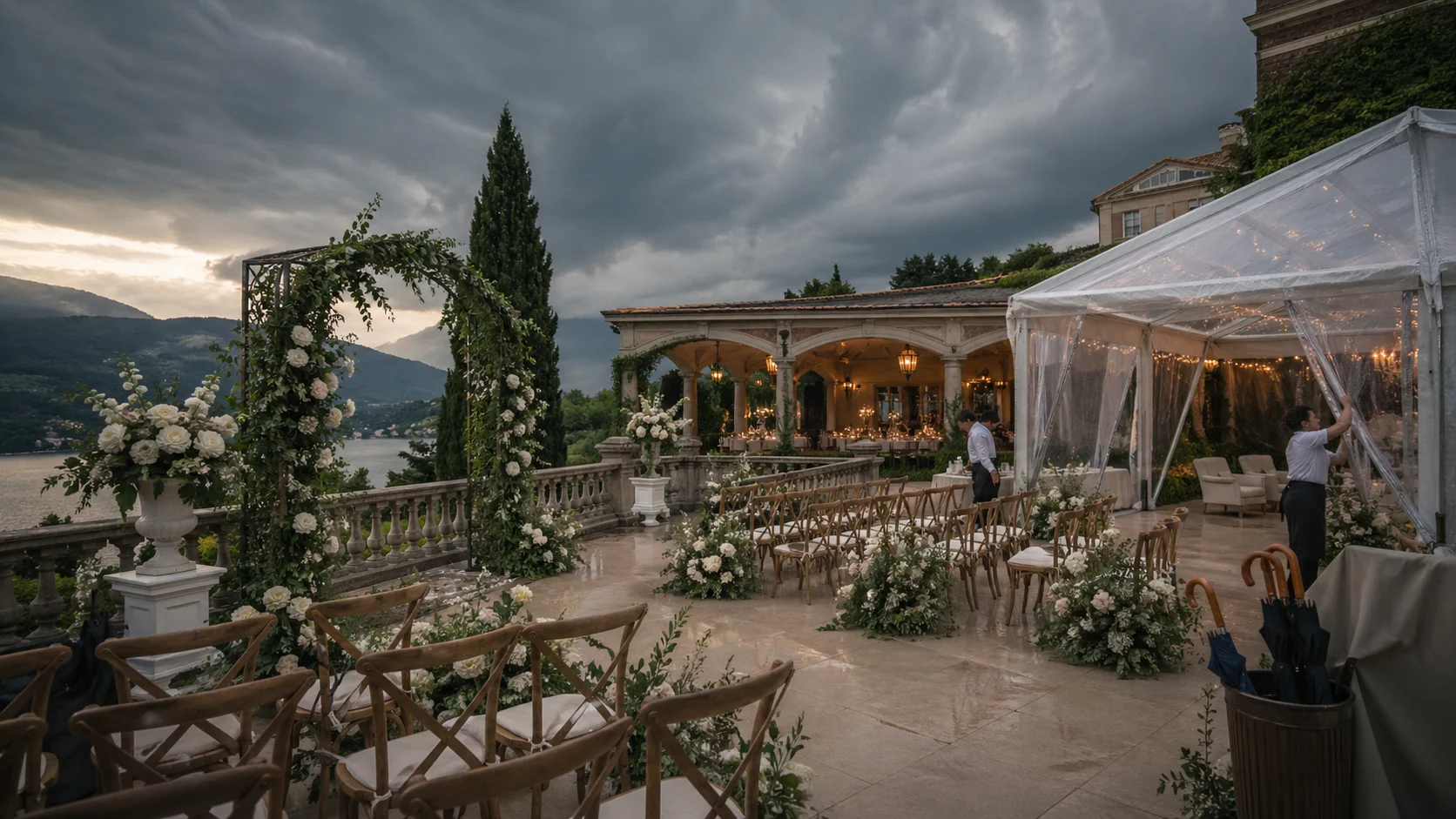
Rain Plan Checklist: What Needs Deciding Before Weather Becomes the Mood
A wedding rain plan is rarely just a backup for logistics. It also shapes whether weather stays manageable or quietly takes over the emotional tone of the day. This article looks at what needs to be decided early, so rain changes the setting without deciding the atmosphere.
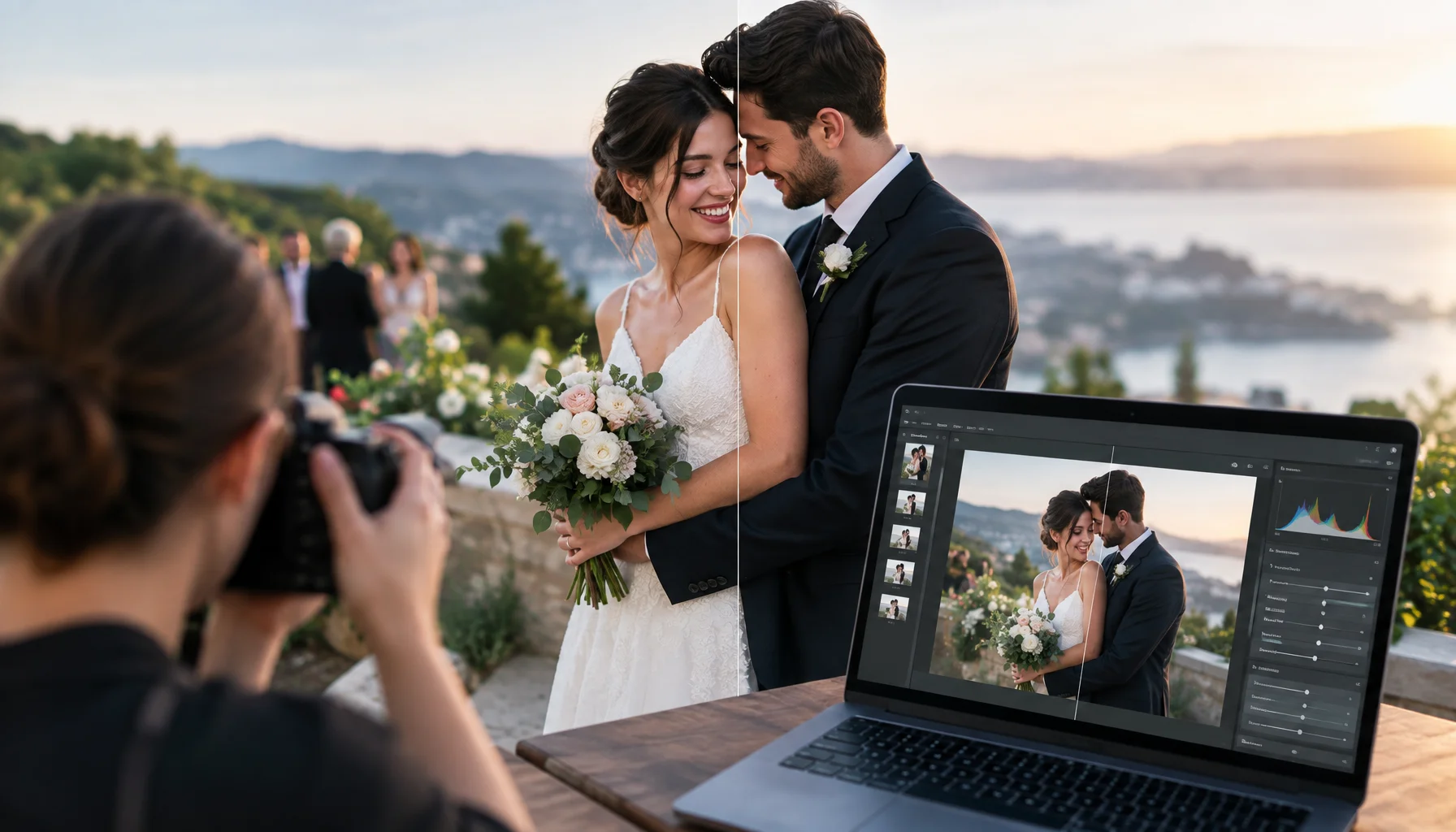
AI-Edited Wedding Photos in 2026: Where Should the Documentary Boundary Be?
Generative AI can now remove people, reconstruct missing details, replace backgrounds and create wedding images that look completely photographic. This guide helps couples decide which edits are normal photography, which cross into factual alteration, and what to agree with the photographer before the wedding.

Thank-You Cards After the Wedding: Tone, Timing, Format
Thank-you cards arrive after the wedding has already shifted into memory, which is exactly why they matter. This article looks at how tone, timing, and format shape the gesture, and why a brief, well-judged card often says more than a longer, more polished one.
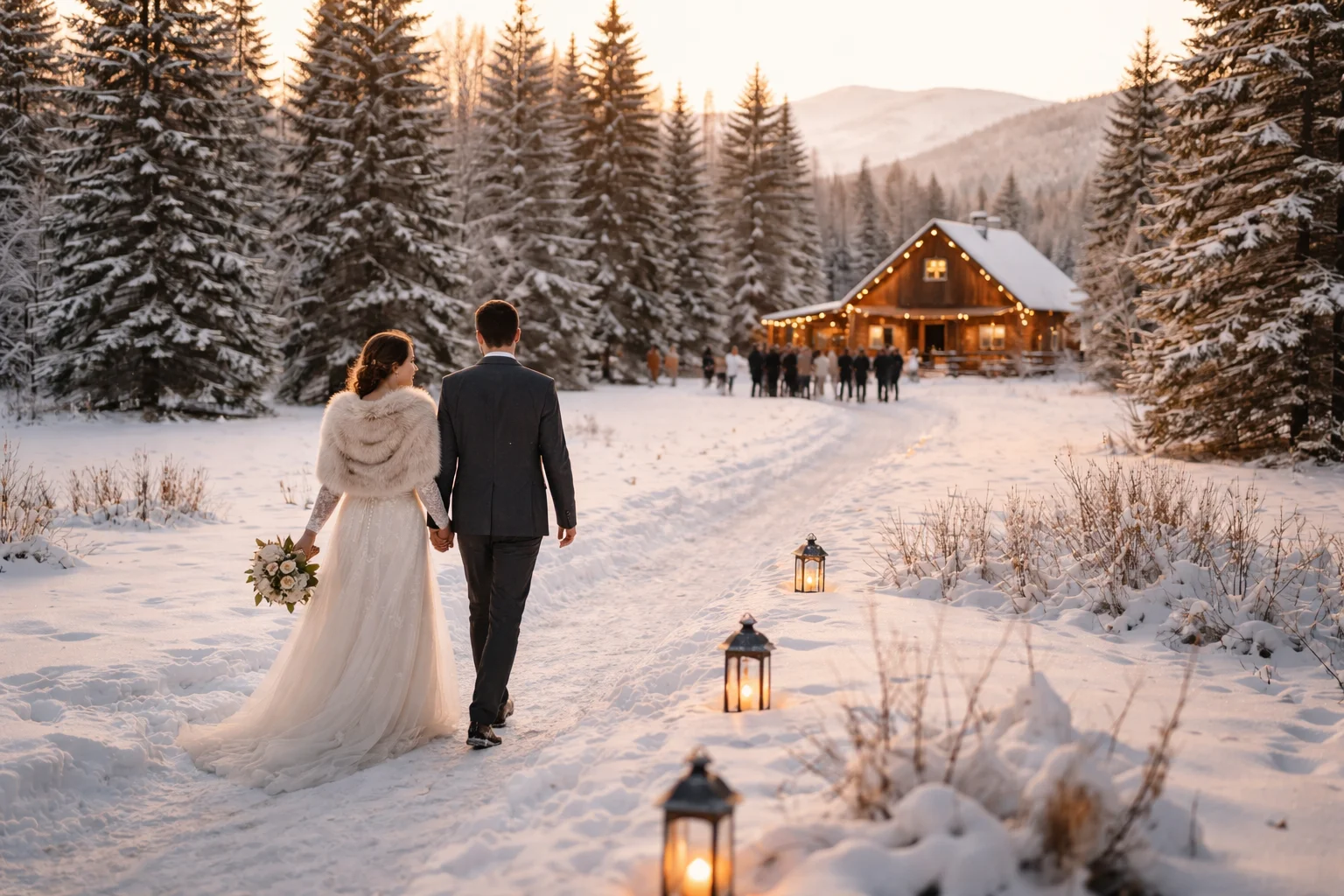
Winter Light and Compressed Timelines in Weddings
Winter weddings are shaped less by one obvious restriction than by a series of quieter adjustments. This article looks at how shorter days, colder air, and earlier shadows compress the timeline, tighten transitions, and give the day a more deliberate rhythm.

Why Notebooks Matter More Than You Think at Weddings
Notebooks at weddings are often treated as simple guest books, but their role goes deeper. They capture pauses, unfinished thoughts, and quiet moments that rarely surface in spoken form. This article explores how notebooks connect the visible ritual of a wedding with the invisible space of silence.