
Visa and Travel Rules for International Wedding Guests
Visa and Travel Rules for International Wedding Guests
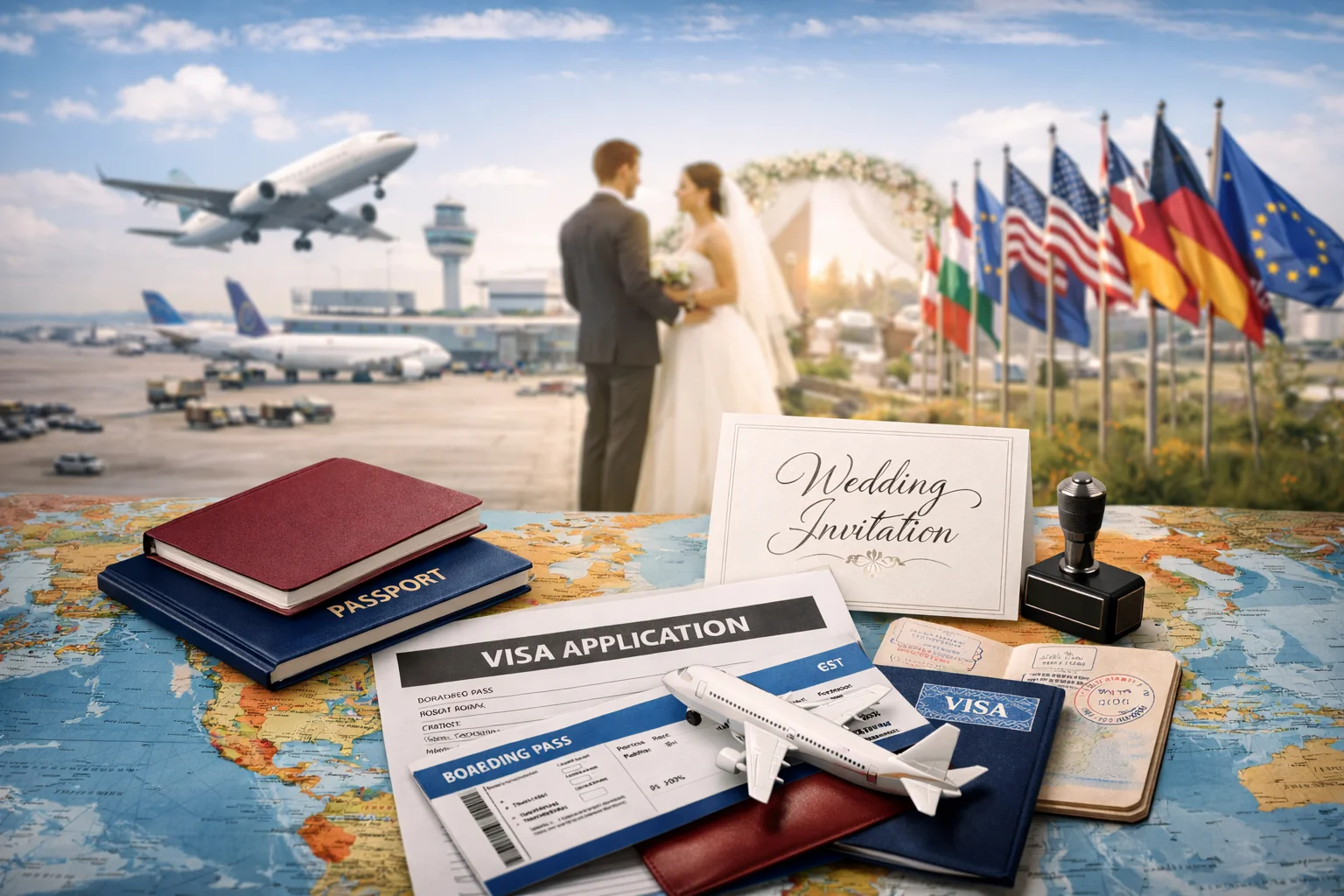
This shows up in many weddings with guests arriving from several countries. One person books a flight in ten minutes. Another needs a visa appointment, supporting papers, and time off for a consulate visit. The event is the same. The road toward it is not.
Definition
Visa and travel rules for international wedding guests are the official conditions that affect whether invited people can travel to the wedding country and return home again. These rules may include passport validity, visa requirements, transit permissions, entry forms, proof of accommodation, return tickets, and other routine border documents.
Not Every Guest Starts From the Same Position
This becomes clear early. Some guests only need a valid passport and a booked flight. Others open a longer list: embassy website, application form, photo rules, fee, supporting letter, waiting time. At the same wedding table later on, those different paths are not visible anymore. Before the trip, they shape a lot.
The Invitation Helps, But It Rarely Works Alone
A wedding invitation often enters the process as a useful supporting paper. It shows the reason for travel in a simple, human way. Still, official systems usually ask for more than that. Hotel details, onward travel, financial documents, work confirmation, sometimes translations. The invitation has value, just not by itself.
Short Visits Can Involve Long Preparation
A guest may stay only three days and still spend weeks getting ready for the trip. That contrast appears often in international weddings. The visit is brief, private, festive. The preparation is administrative. Processing times, public holidays, limited appointment slots, delayed document delivery, all of this can sit behind one simple message saying the guest is still waiting for approval.
Transit Rules Create Their Own Layer
Sometimes the wedding country is not the hardest part. The connecting airport is. Guests may find a flight that looks ordinary and then notice a transit visa rule, a terminal transfer condition, or a restriction linked to nationality. This is one of those details that often appears late, after routes have already been compared and prices have already been discussed.
Border Control Treats a Wedding Trip as a Standard Entry
For the guest, the purpose is personal and clear: attend a marriage, see family, be present for a few days. At the border, the trip is handled in a routine legal frame. Officers may ask where the guest is staying, how long the visit lasts, who paid for the ticket, when the return flight leaves. The tone is standard. The event behind it remains personal.
Attendance Is Often Limited by Procedure, Not Intention
In international weddings, some guests stay uncertain until quite late, not because the relationship is distant, but because the process around the trip is heavy. A missing appointment, a passport renewal, a longer review period, an expensive route with limited options. These are ordinary obstacles. They do not say much about affection. They say more about how uneven international movement can be.
Conclusion
Visa and travel rules for international wedding guests are a practical part of many cross border celebrations. They sit beside the emotional side of the event and quietly shape who can travel easily, who needs more time, and who remains in a waiting phase for longer. In that sense, they are not separate from the wedding. They are part of the real preparation around it.
Visa and Travel Rules for International Wedding Guests
At international weddings, the guest list and the travel list are often two different things. An invitation may be accepted quickly, warmly, without much hesitation. Then the paperwork starts. Passport dates are checked. Entry rules are read again. A short family trip suddenly sits inside a formal border process.
This shows up in many weddings with guests arriving from several countries. One person books a flight in ten minutes. Another needs a visa appointment, supporting papers, and time off for a consulate visit. The event is the same. The road toward it is not.
Definition
Visa and travel rules for international wedding guests are the official conditions that affect whether invited people can travel to the wedding country and return home again. These rules may include passport validity, visa requirements, transit permissions, entry forms, proof of accommodation, return tickets, and other routine border documents.
Not Every Guest Starts From the Same Position
This becomes clear early. Some guests only need a valid passport and a booked flight. Others open a longer list: embassy website, application form, photo rules, fee, supporting letter, waiting time. At the same wedding table later on, those different paths are not visible anymore. Before the trip, they shape a lot.
The Invitation Helps, But It Rarely Works Alone
A wedding invitation often enters the process as a useful supporting paper. It shows the reason for travel in a simple, human way. Still, official systems usually ask for more than that. Hotel details, onward travel, financial documents, work confirmation, sometimes translations. The invitation has value, just not by itself.
Short Visits Can Involve Long Preparation
A guest may stay only three days and still spend weeks getting ready for the trip. That contrast appears often in international weddings. The visit is brief, private, festive. The preparation is administrative. Processing times, public holidays, limited appointment slots, delayed document delivery, all of this can sit behind one simple message saying the guest is still waiting for approval.
Transit Rules Create Their Own Layer
Sometimes the wedding country is not the hardest part. The connecting airport is. Guests may find a flight that looks ordinary and then notice a transit visa rule, a terminal transfer condition, or a restriction linked to nationality. This is one of those details that often appears late, after routes have already been compared and prices have already been discussed.
Border Control Treats a Wedding Trip as a Standard Entry
For the guest, the purpose is personal and clear: attend a marriage, see family, be present for a few days. At the border, the trip is handled in a routine legal frame. Officers may ask where the guest is staying, how long the visit lasts, who paid for the ticket, when the return flight leaves. The tone is standard. The event behind it remains personal.
Attendance Is Often Limited by Procedure, Not Intention
In international weddings, some guests stay uncertain until quite late, not because the relationship is distant, but because the process around the trip is heavy. A missing appointment, a passport renewal, a longer review period, an expensive route with limited options. These are ordinary obstacles. They do not say much about affection. They say more about how uneven international movement can be.
Conclusion
Visa and travel rules for international wedding guests are a practical part of many cross border celebrations. They sit beside the emotional side of the event and quietly shape who can travel easily, who needs more time, and who remains in a waiting phase for longer. In that sense, they are not separate from the wedding. They are part of the real preparation around it.
Related Articles
Multilingual Wedding Communication: What Guests Need to Understand Without Constant Explanation
A multilingual wedding does not fail because different languages are present. It becomes difficult when guests are left unsure what they need to understand, what they can simply feel, and what requires translation in the moment. This article looks at how to create clarity in multilingual wedding communication without overexplaining every part of the day.
Destination Wedding Checklist: What Changes When Travel Becomes Part of the Plan
A destination wedding is never only a wedding in another place. The moment travel becomes part of the plan, the guest list, the schedule, the budget, the emotional pressure, and even the meaning of attendance begin to change. This article looks at what a destination wedding checklist really needs to cover and why travel turns a wedding into a lived story long before the ceremony begins.
Mixed-Culture Weddings Without Performative Symbolism
A mixed-culture wedding does not become meaningful by displaying as many symbols as possible. It becomes meaningful when the symbols that appear are actually lived, understood, and emotionally carried by the couple and their families. This article looks at how international weddings can honor difference without turning culture into performance.
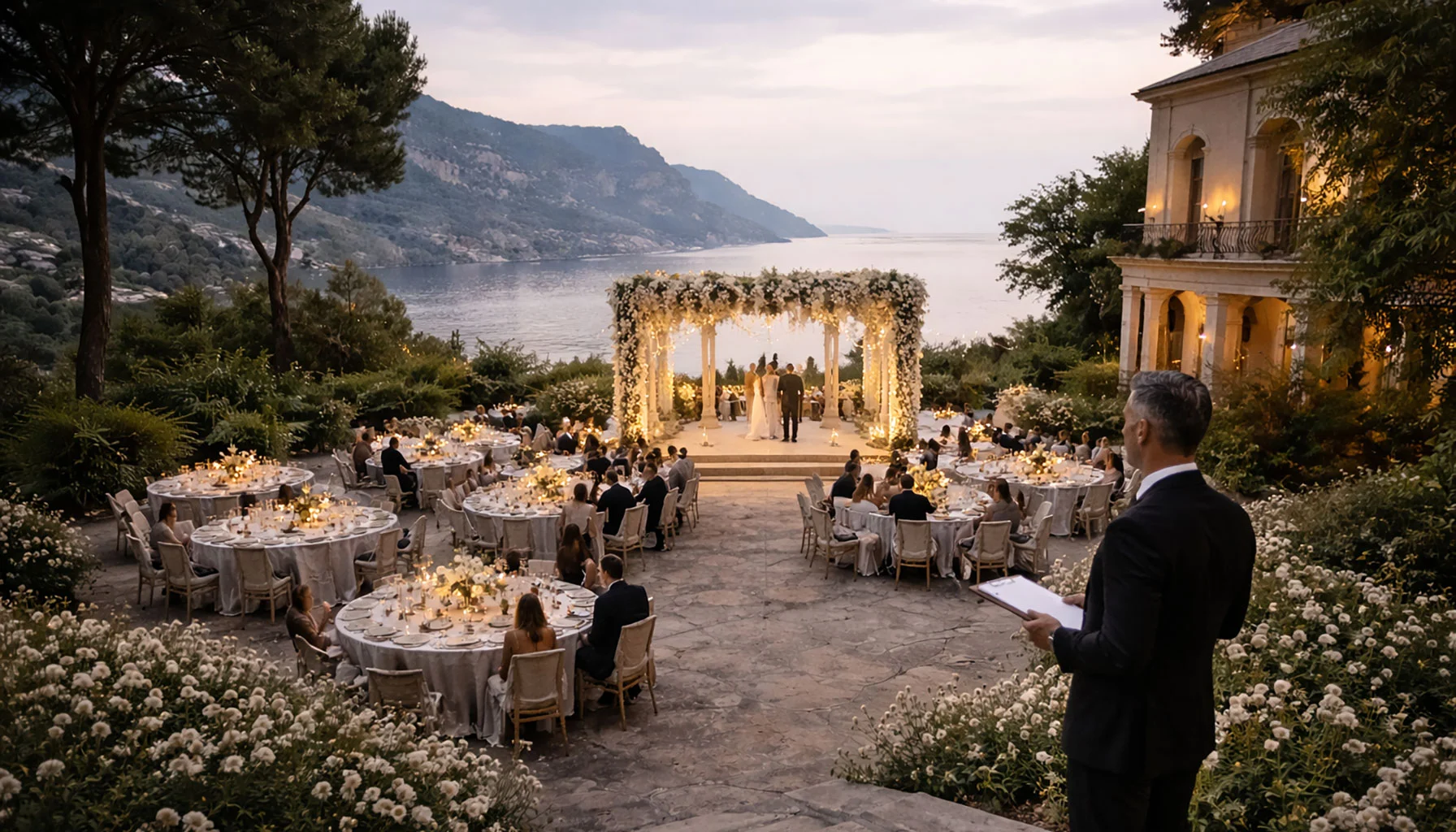
A Wedding Shaped by Quiet Alignment
This wedding was defined not by individual highlights, but by its steady flow. Planning, design, and service worked together without drawing attention to themselves. For guests, the day unfolded naturally and remained consistent, carried by a sense of calm, closeness, and continuity throughout.
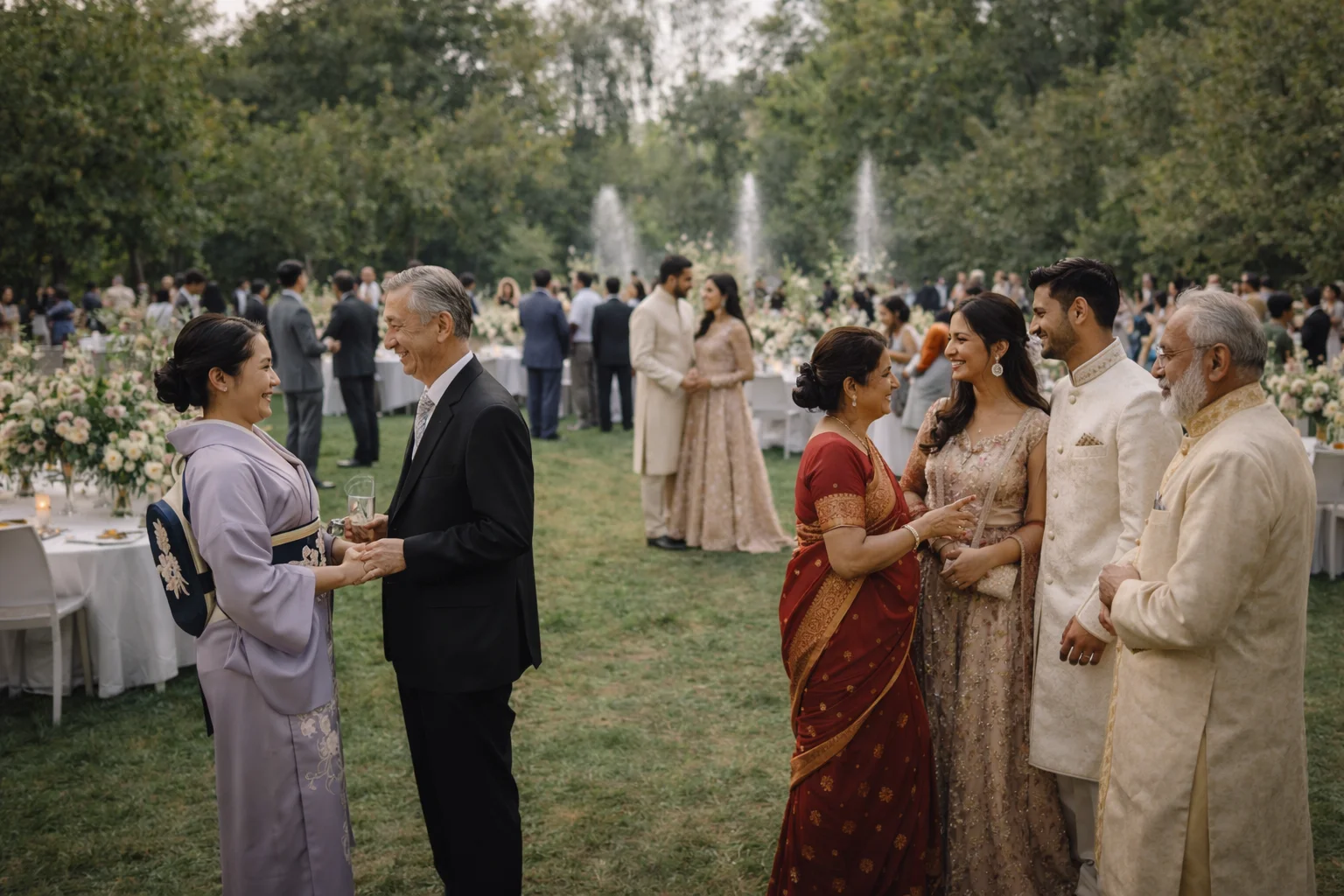
Two Families, Two Cultural Rhythms: How International Weddings Balance Different Social Expectations
International weddings do not only bring together two languages or two traditions. They often bring together two different social rhythms: different ideas of hospitality, family presence, punctuality, emotional expression, ritual weight, and what a wedding is supposed to feel like. This article looks at how couples balance those differences without flattening either side.
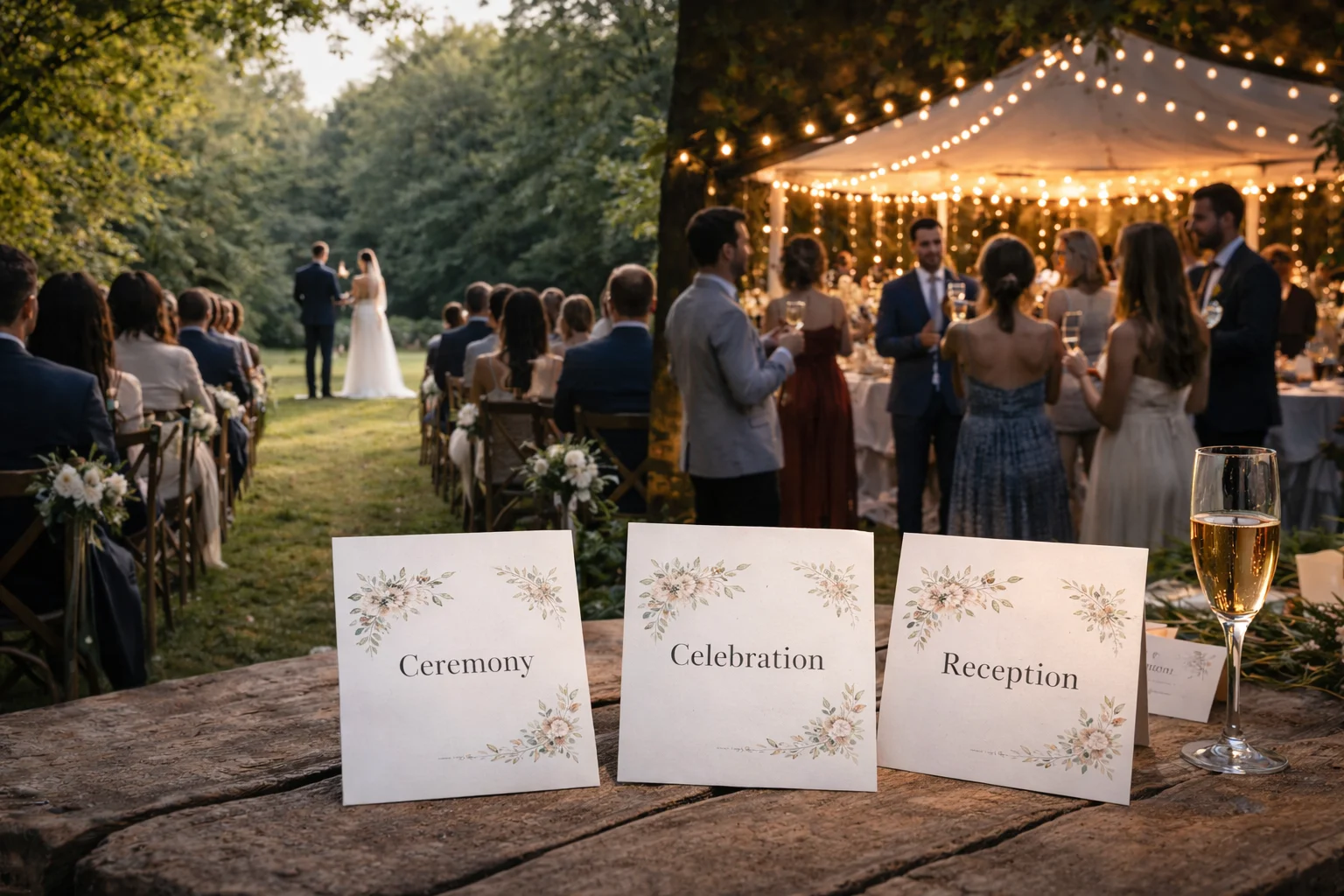
Who Is Invited to the Ceremony and Who Only to the Celebration
Not every wedding invitation has to include every part of the day. But the difference between being invited to the ceremony and being invited only to the celebration carries more meaning than many couples first assume. This article looks at how to make that distinction clearly, gracefully, and in a way that fits both the ritual weight of the ceremony and the social reality of the celebration.
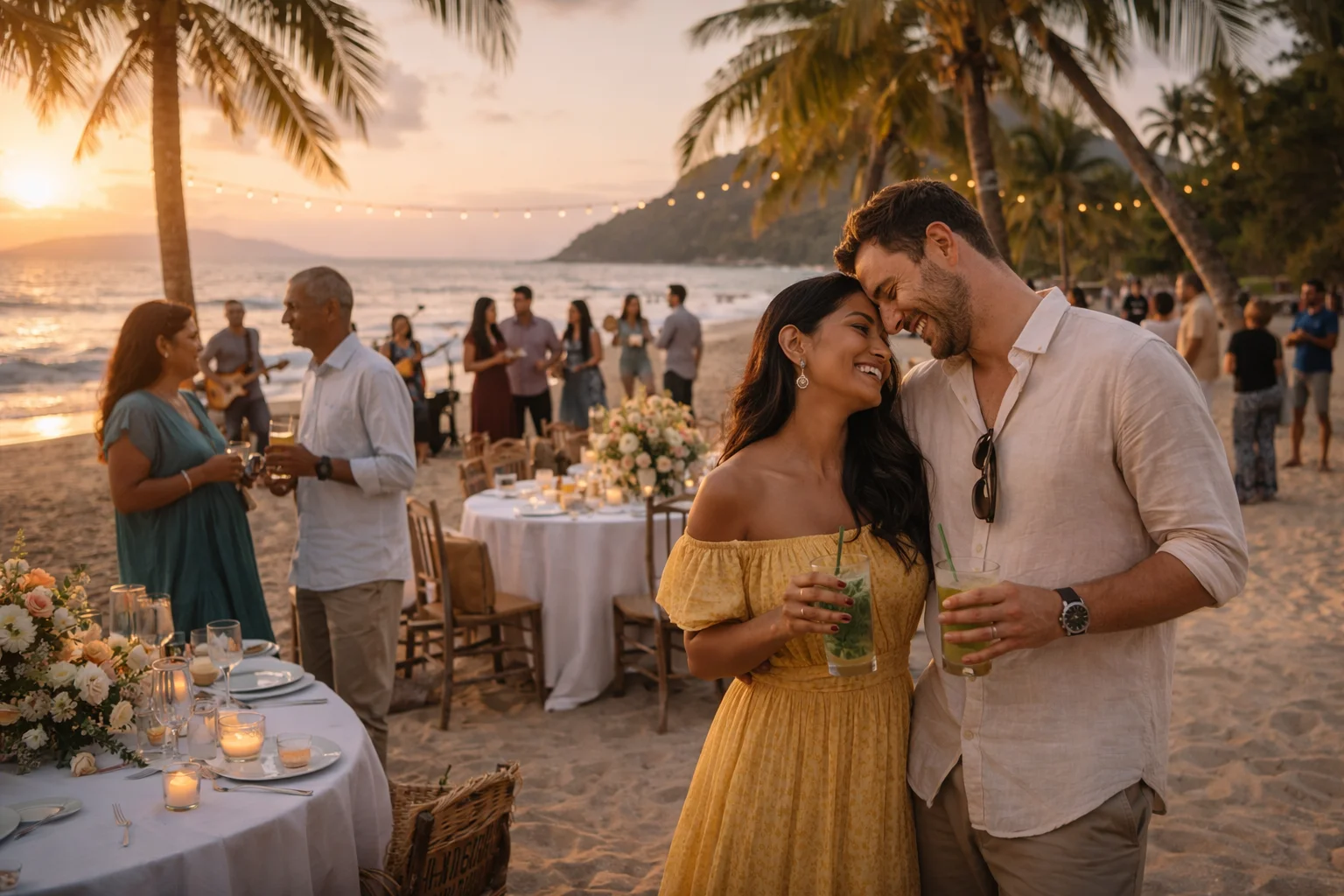
Post-Wedding Gatherings Across Countries: When the Celebration Continues Elsewhere
Some weddings do not end when the official day is over. They continue in another city, another country, another family home, or another social circle that could not be present the first time. This article looks at what post-wedding gatherings across countries actually mean and why they are often less like an encore than a second form of the wedding itself.
Dress Expectations at International Weddings: What Guests May Read Differently
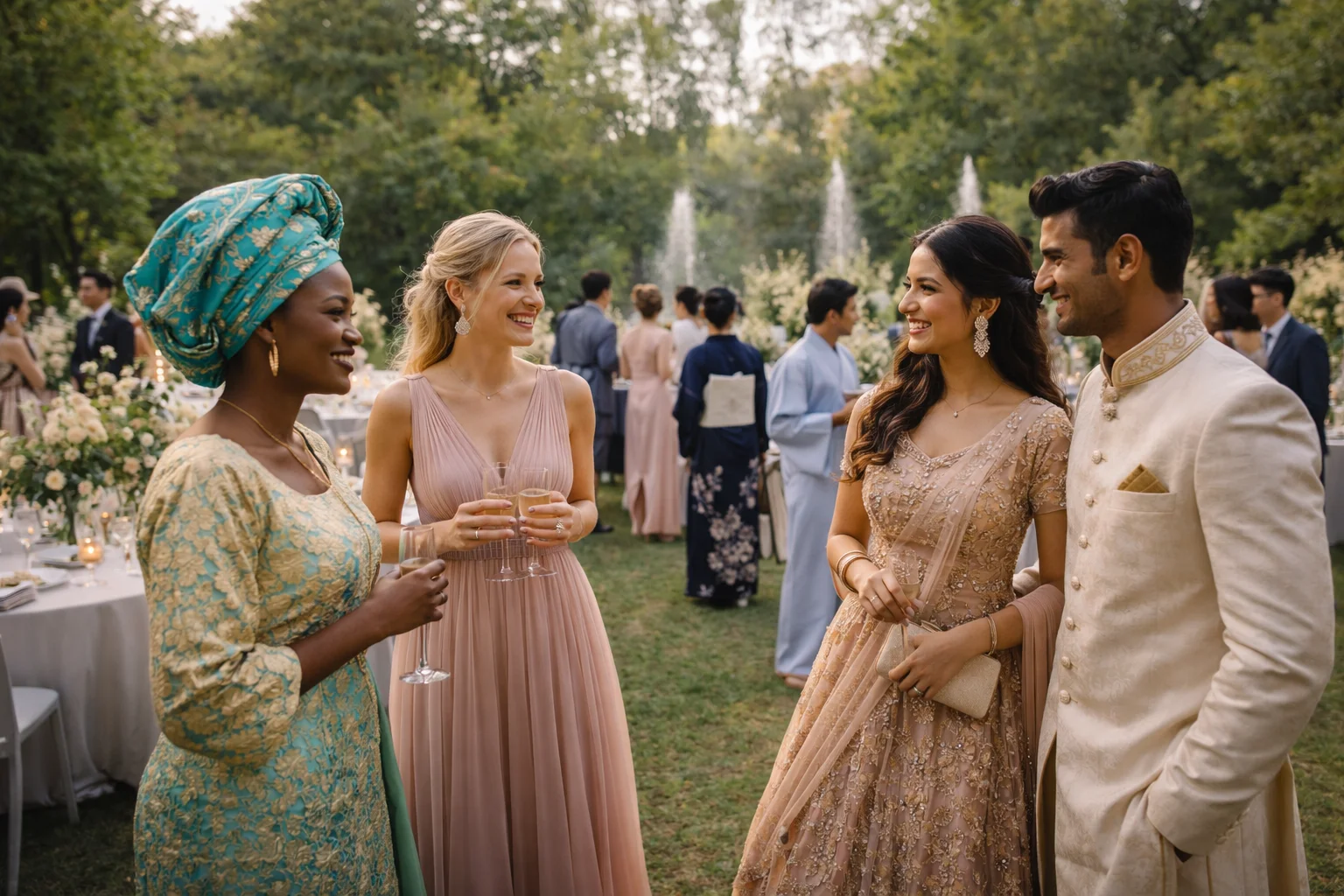
Dress codes at international weddings are rarely just about clothing. Guests interpret formality, respect, family signals, and cultural meaning differently. This article looks at how attire is understood across contexts and why what seems obvious to one guest can feel unclear to another.
International Weddings and the Meaning of What Is Not Said
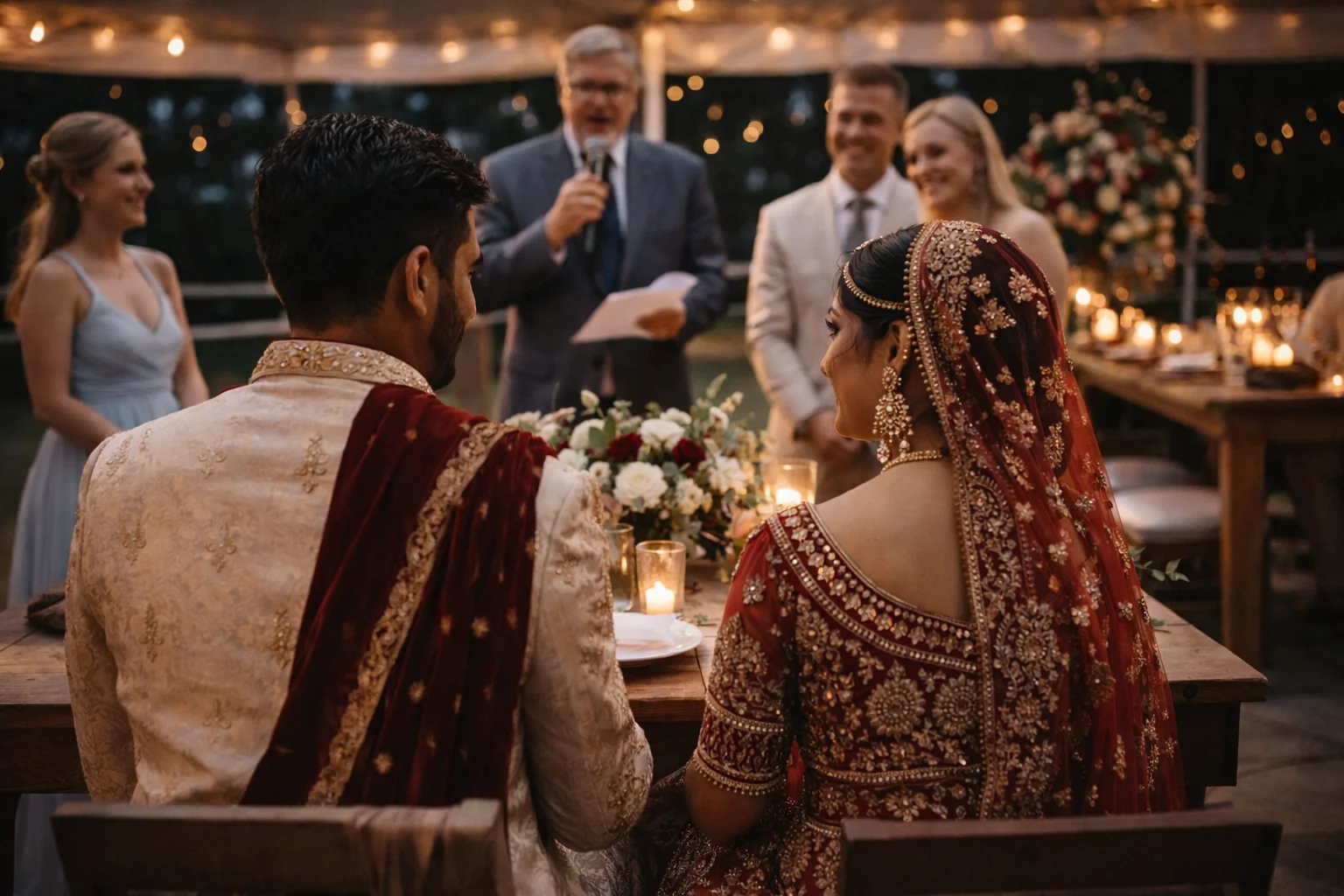
An international wedding brings visible complexity, but its deeper challenge often lives in the quiet layer beneath logistics. Between cultures, traditions, and expectations, what remains unspoken can shape the ceremony as much as anything that is formally planned.

Weddings in Comparison
This text brings together impressions from weddings in different countries and social settings. It describes how rituals, timing, and atmosphere appear in practice, without explanation or judgment. The focus is on closeness, structure, and the way community becomes visible during a public moment.

Europe Destination Weddings in 2026: What EES and ETIAS Mean for Your Guests
European destination weddings now have a new travel-planning layer. EES is already operational, while ETIAS is expected later in 2026. This guide explains what couples actually need to communicate to international guests without turning the wedding website into an immigration authority.