
Mixed-Culture Weddings Without Performative Symbolism
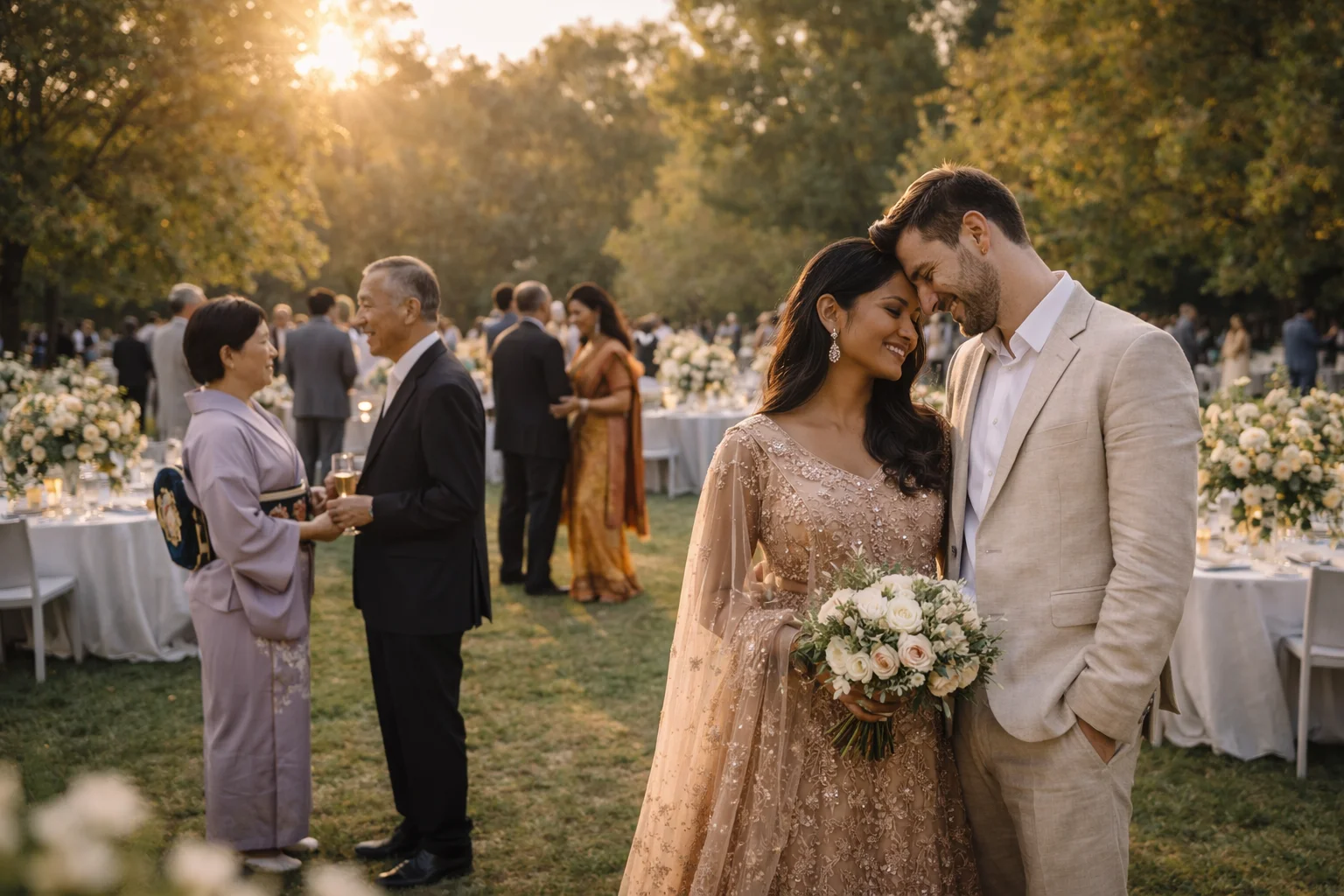
Mixed-culture weddings are often asked to prove themselves visually. Guests expect visible signs of both sides, some recognizable gesture, some symbolic object, some ceremonial moment that can be pointed to and read as balance. This pressure can make couples feel that every cultural thread must be displayed in order to be legitimate. But a wedding does not become more truthful by accumulating symbols. It becomes more truthful when the symbols that appear actually belong to the people using them.
This is why the topic belongs naturally to both international weddings and traditional wedding symbols. Loving Rocks describes symbols as forms that make commitment visible, repeatable, and socially legible. That remains true in mixed-culture weddings as well. The problem is not symbolism itself. The problem begins when symbols are inserted mainly to signal inclusion from the outside, even when they are only thinly understood or emotionally uninhabited by the couple and their families.
International WeddingsWhat to Know When Love Crosses Borders bring together different cultures, traditions, and legal systems. Planning an international wedding often involves additional considerations such as legal requirements, documentation, cultural customs, language differences, and travel logistics for you and your guests. With the right preparation and understanding, international weddings can become a deeply meaningful celebration that reflects both your backgrounds and creates a truly unforgettable experience.
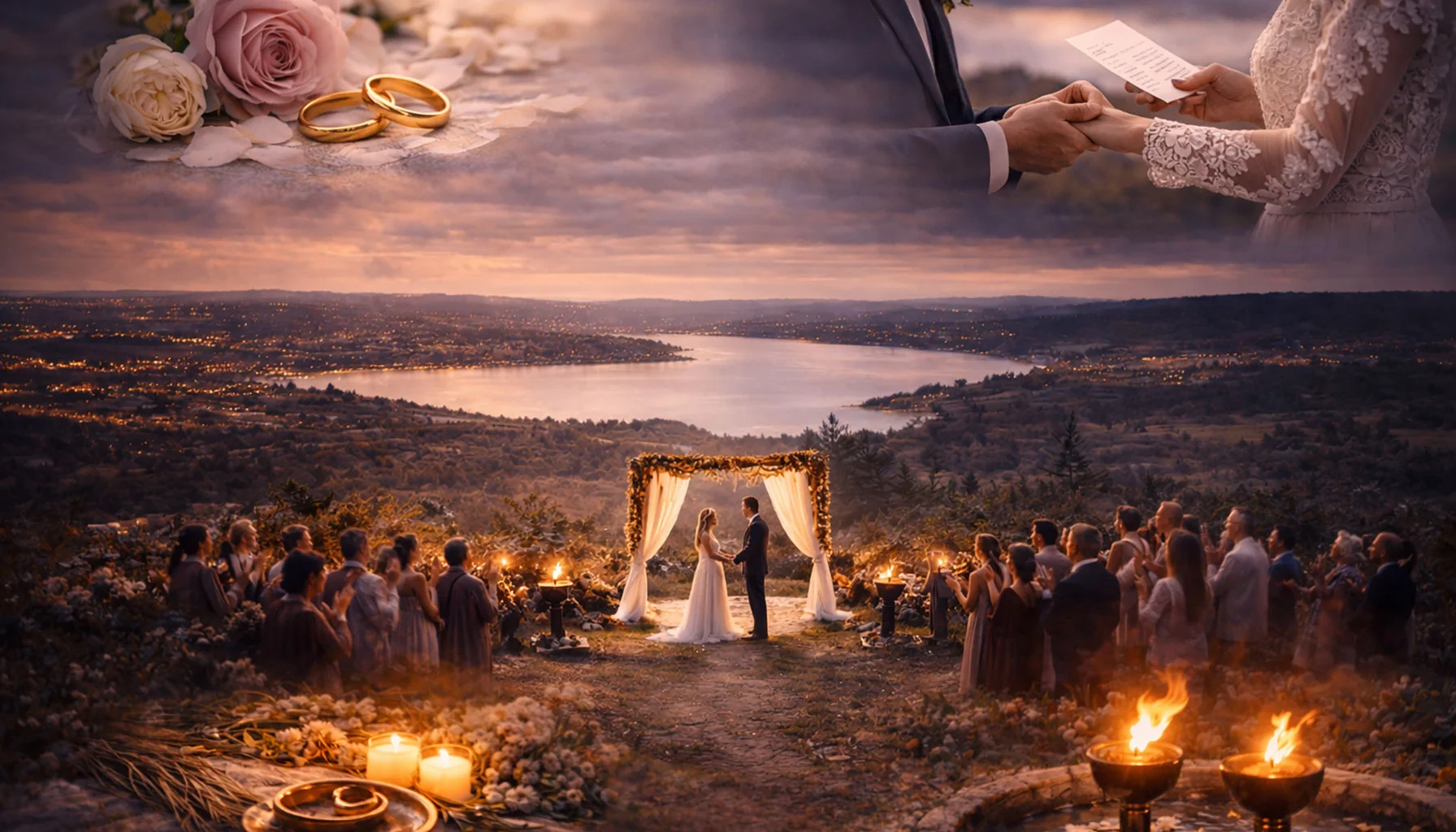
Traditional wedding symbols carry meanings that existed long before any couple arrived. Rings, vows, clothing, and gestures attempt to stabilize love by giving it a recognizable form.
Definition
A mixed-culture wedding without performative symbolism is not a wedding without symbols. It is a wedding in which cultural gestures, rituals, clothing, language, and objects are used because they carry real meaning, memory, or emotional truth for the couple and their families, not merely because they look representative from the outside.
Not Every Symbol Needs to Be Displayed to Be Respected
Couples often confuse omission with disrespect. In reality, a symbol can be deeply respected without being staged in the ceremony itself. Some traditions live more truthfully in family memory, private preparation, clothing choices, language, food, or the way elders are included than in one highlighted ritual moment. A mixed-culture wedding becomes steadier when couples stop asking what must be visibly represented and start asking what is genuinely carried in their lives.
Symbolism Works Best When It Is Understood From Within
Traditional wedding symbols endure because they stabilize emotion through repetition and recognizable form. But they only do that work when the people involved understand, or at least feel, what is being repeated. A symbolic gesture used only because it looks culturally correct can remain strangely hollow in the room. Guests sense this quickly. They may not name it, but they feel the difference between a ritual that is being performed outwardly and one that is being inhabited inwardly.
Mixed-Culture Weddings Need Coherence More Than Coverage
The strongest international weddings rarely try to cover every symbolic expectation equally. They create a coherent emotional structure instead. That may mean one family tradition is visible in the ceremony while the other appears more strongly in clothing, hospitality, music, or speech. What matters is not equal symbolic surface, but whether the day feels shaped by a real center rather than by anxiety about underrepresenting one side.
Guests Usually Read Honesty Better Than Representation
Most guests do not need a wedding to function like a cultural exhibition. They respond more strongly to clarity, sincerity, and emotional consistency than to symbolic quantity. A simple gesture that clearly belongs to the couple often carries more weight than three carefully added rituals that never fully settle into the atmosphere. This is especially true when different families are already reading the day through different assumptions. Honest selectivity is usually kinder than decorative overcompensation.
The Real Question Is What Kind of Marriage the Symbols Are Serving
In mixed-culture weddings, symbolism matters most when it supports the marriage rather than the appearance of fairness. A wedding does not need to prove that both cultures were shown. It needs to begin the marriage in a form the couple can continue living inside. That is why restraint can be more respectful than display. It leaves room for symbols to remain connected to life rather than becoming visual evidence that cultural difference was publicly managed.
Conclusion
Mixed-culture weddings do not become more meaningful by becoming more representative at all costs. They become more meaningful when their symbols are chosen with honesty, used with understanding, and held by people who recognize themselves in them. The point is not to eliminate tradition, but to keep it from becoming performance once it enters a shared wedding space.
Related Articles
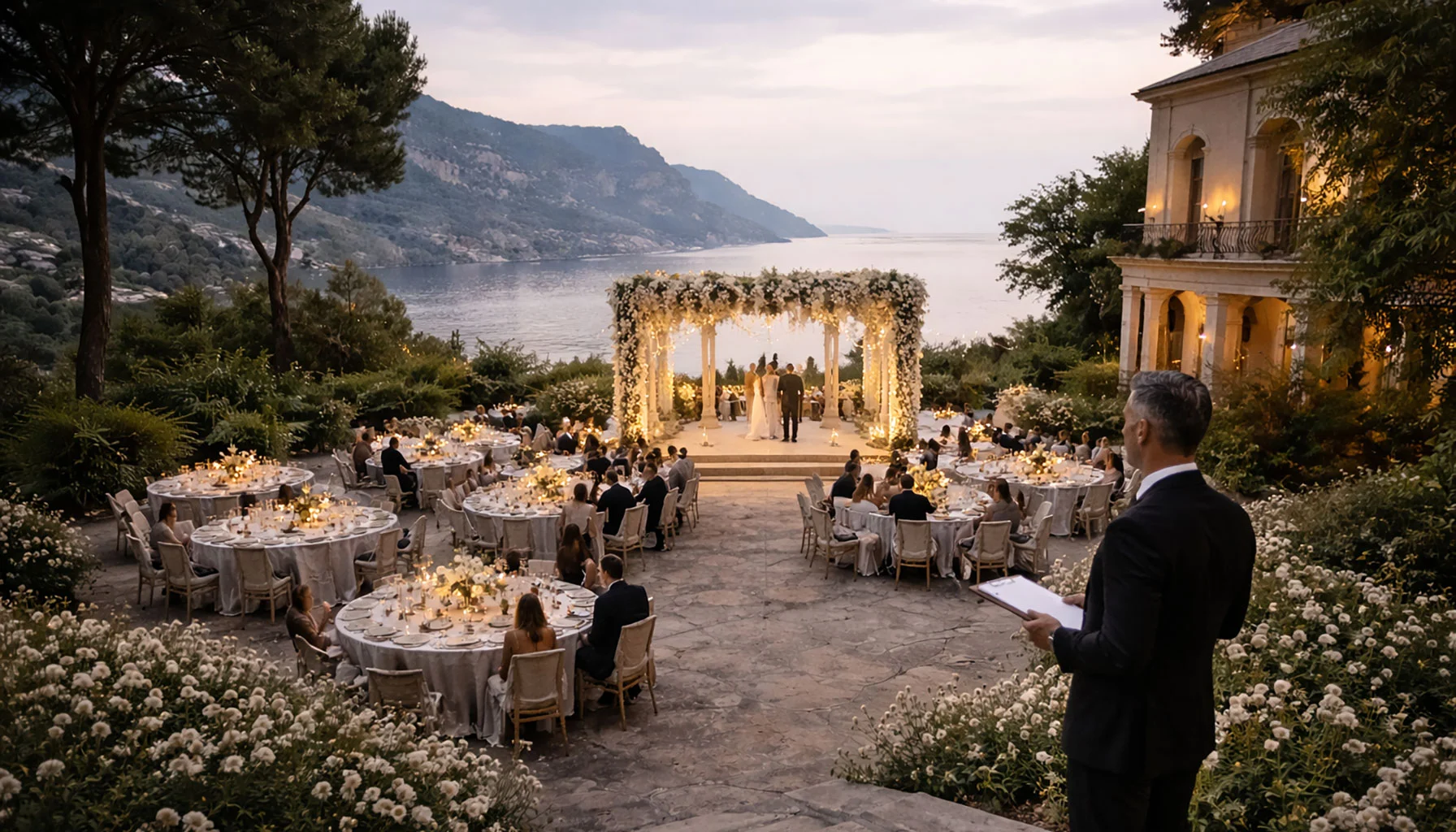
A Wedding Shaped by Quiet Alignment
This wedding was defined not by individual highlights, but by its steady flow. Planning, design, and service worked together without drawing attention to themselves. For guests, the day unfolded naturally and remained consistent, carried by a sense of calm, closeness, and continuity throughout.
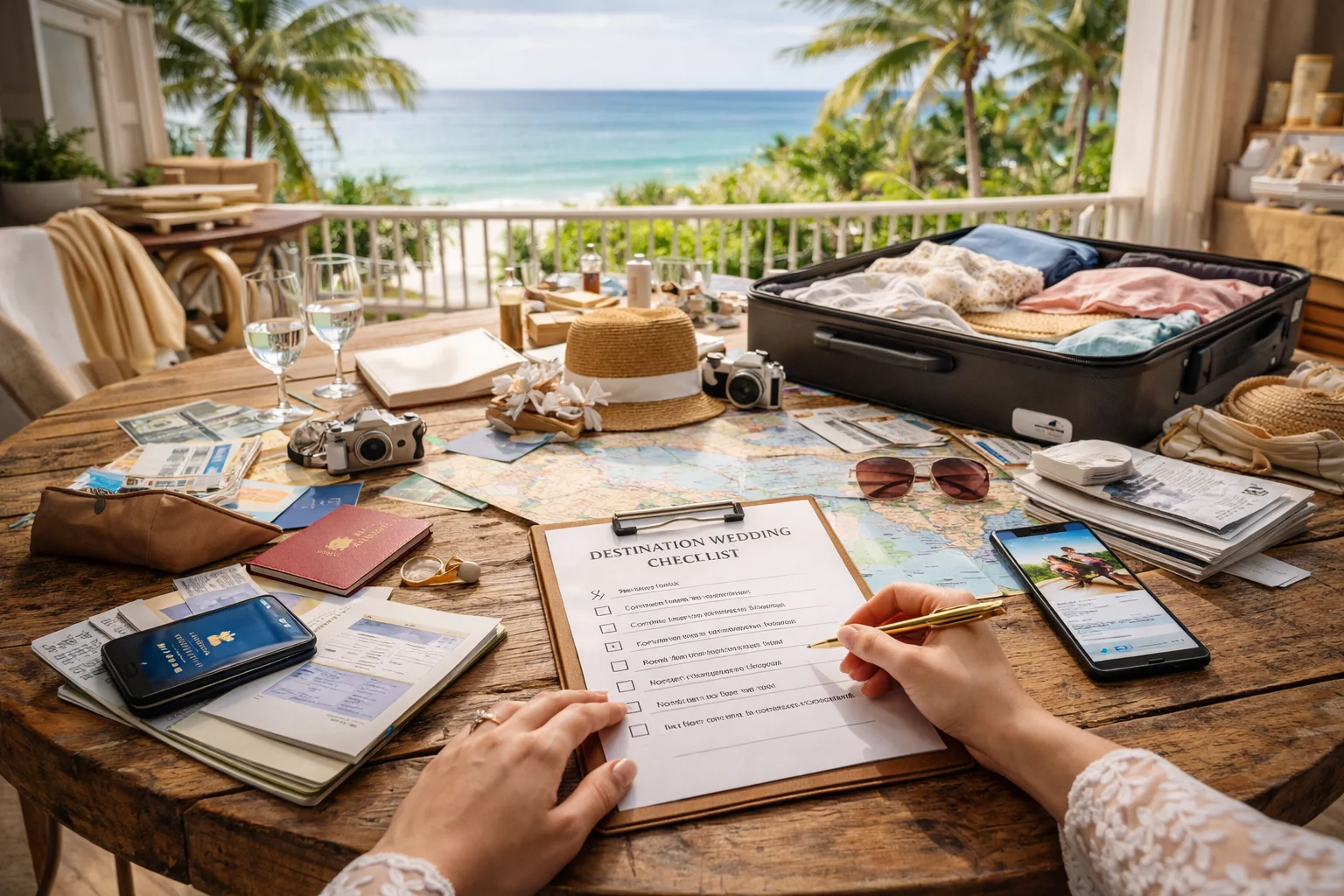
Destination Wedding Checklist: What Changes When Travel Becomes Part of the Plan
A destination wedding is never only a wedding in another place. The moment travel becomes part of the plan, the guest list, the schedule, the budget, the emotional pressure, and even the meaning of attendance begin to change. This article looks at what a destination wedding checklist really needs to cover and why travel turns a wedding into a lived story long before the ceremony begins.
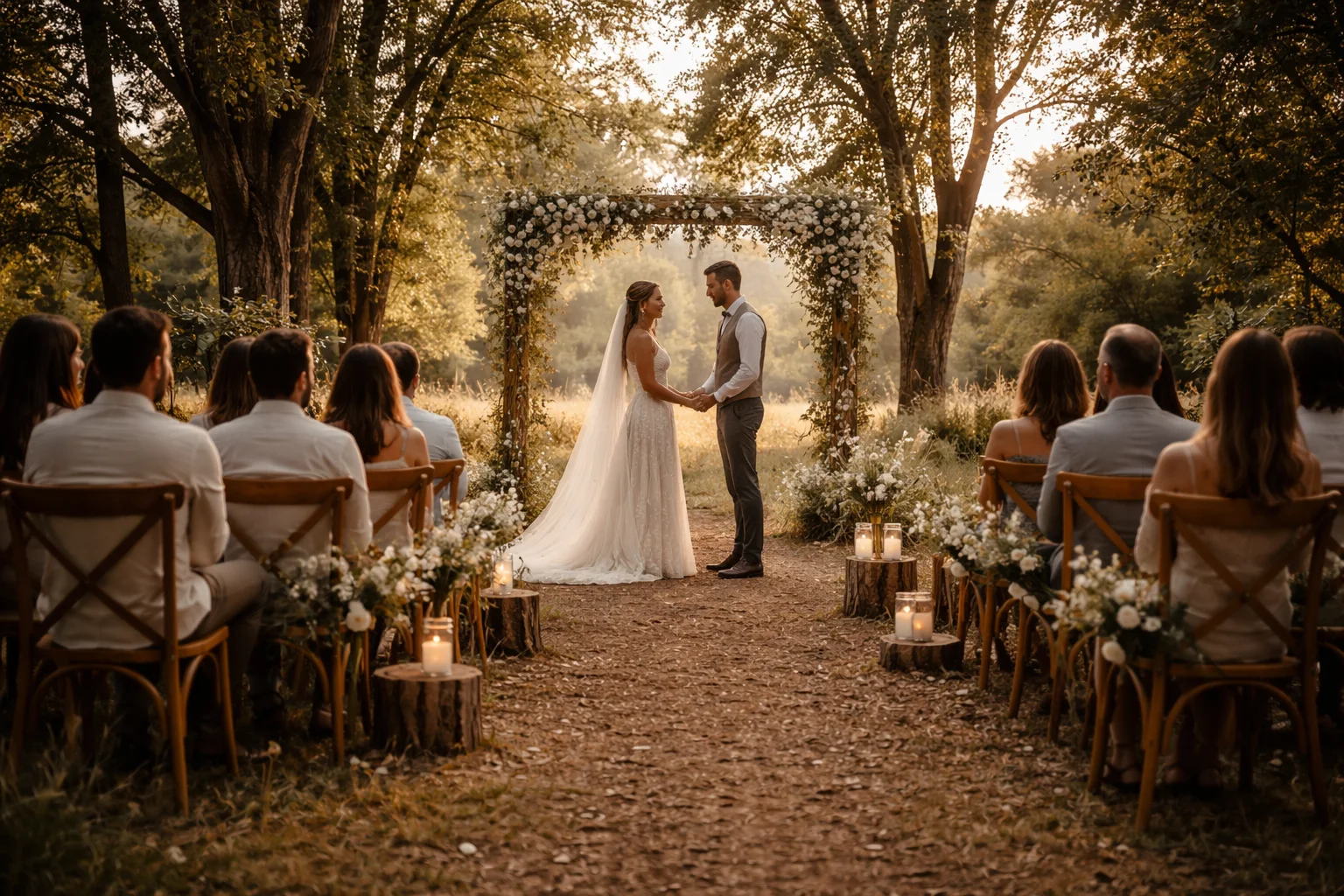
Where Rustic Weddings Meet Lasting Symbols
Rustic weddings are often chosen for their sense of ease. Wood, fabric, open air, uneven surfaces, nothing too polished. They suggest a step away from formality, a return to something that feels more direct. But that simplicity is rarely empty. It carries layers that are not always immediately visible.
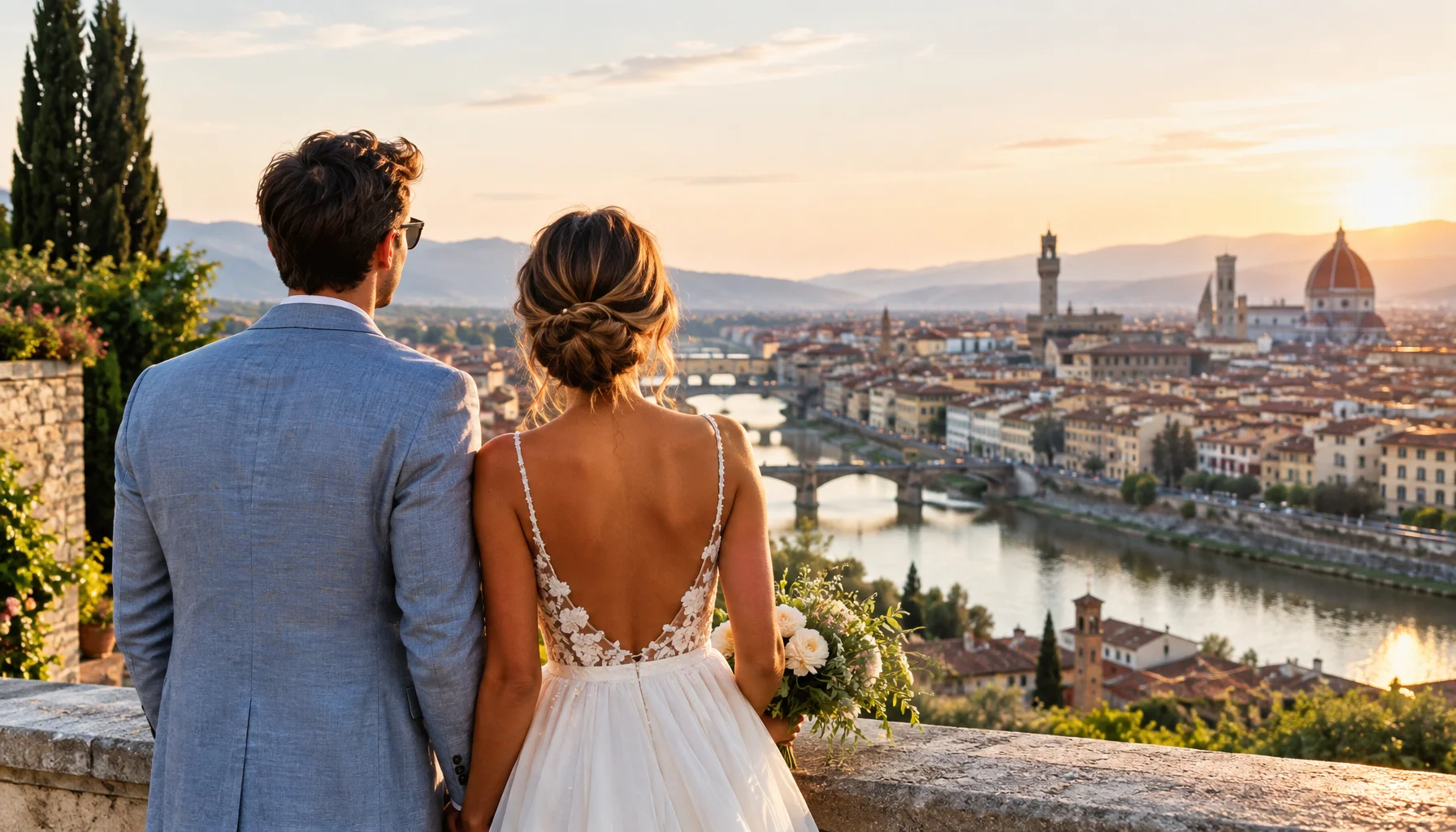
Europe Destination Weddings in 2026: What EES and ETIAS Mean for Your Guests
European destination weddings now have a new travel-planning layer. EES is already operational, while ETIAS is expected later in 2026. This guide explains what couples actually need to communicate to international guests without turning the wedding website into an immigration authority.
Weddings in Comparison
This text brings together impressions from weddings in different countries and social settings. It describes how rituals, timing, and atmosphere appear in practice, without explanation or judgment. The focus is on closeness, structure, and the way community becomes visible during a public moment.
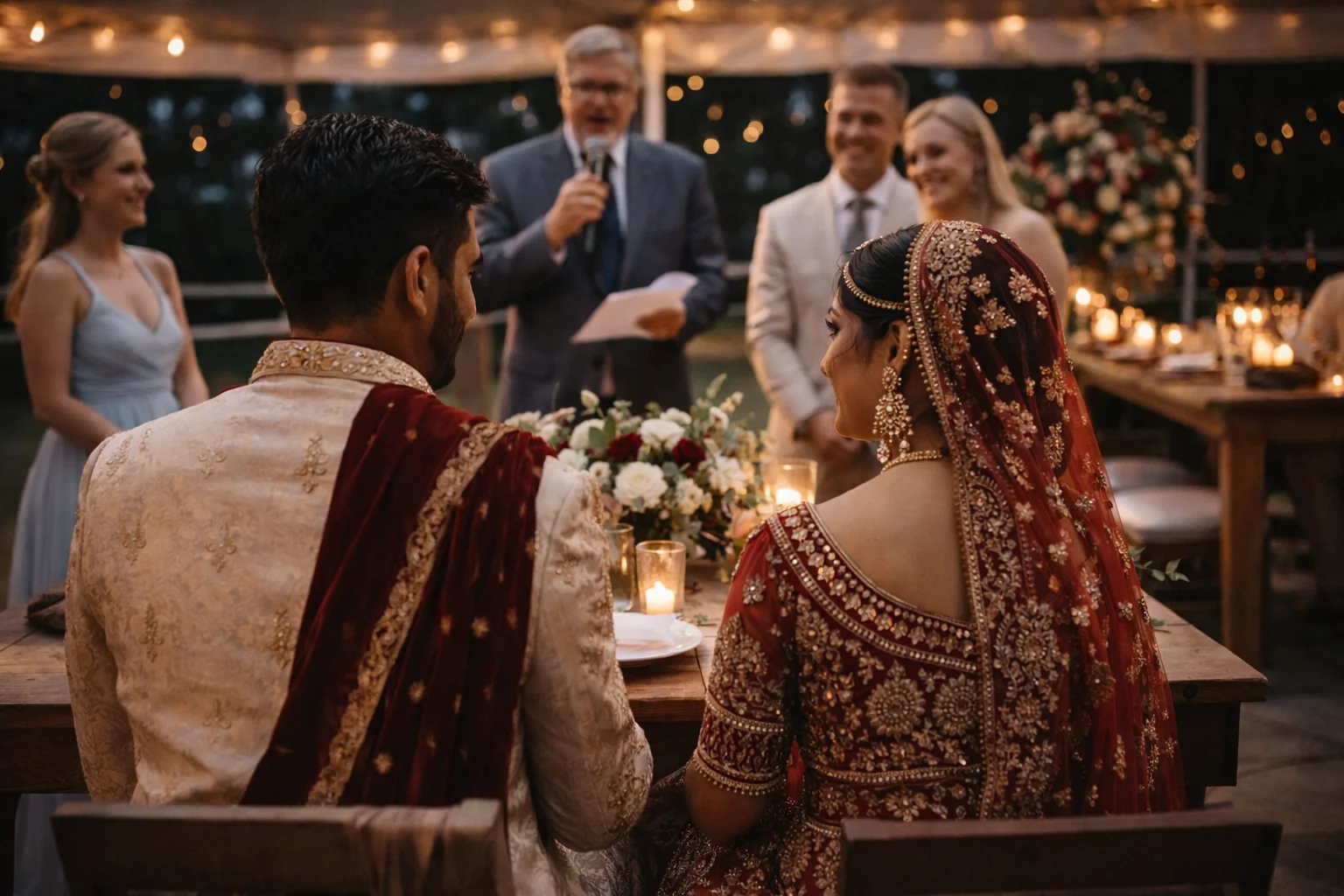
International Weddings and the Meaning of What Is Not Said
An international wedding brings visible complexity, but its deeper challenge often lives in the quiet layer beneath logistics. Between cultures, traditions, and expectations, what remains unspoken can shape the ceremony as much as anything that is formally planned.
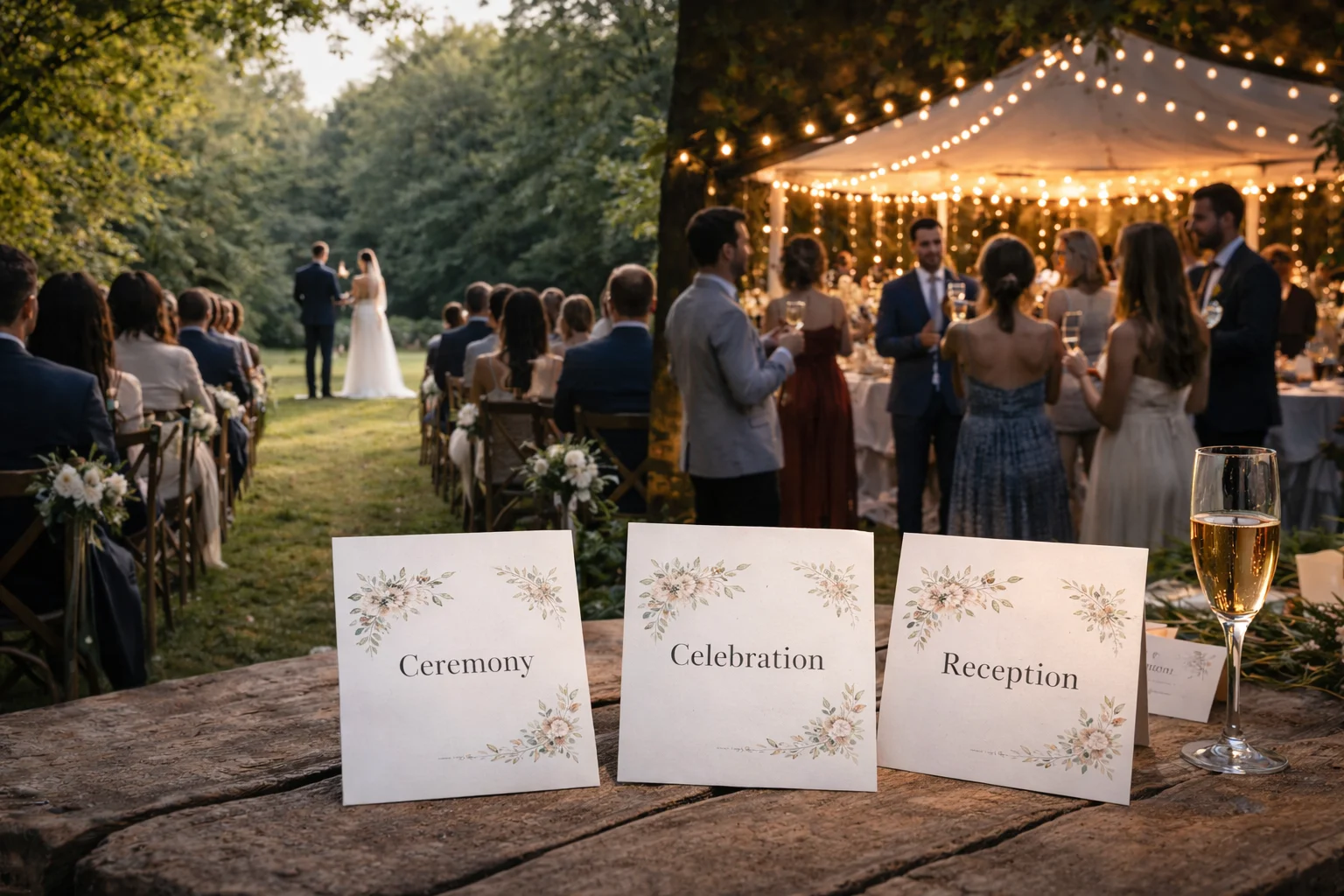
Who Is Invited to the Ceremony and Who Only to the Celebration
Not every wedding invitation has to include every part of the day. But the difference between being invited to the ceremony and being invited only to the celebration carries more meaning than many couples first assume. This article looks at how to make that distinction clearly, gracefully, and in a way that fits both the ritual weight of the ceremony and the social reality of the celebration.
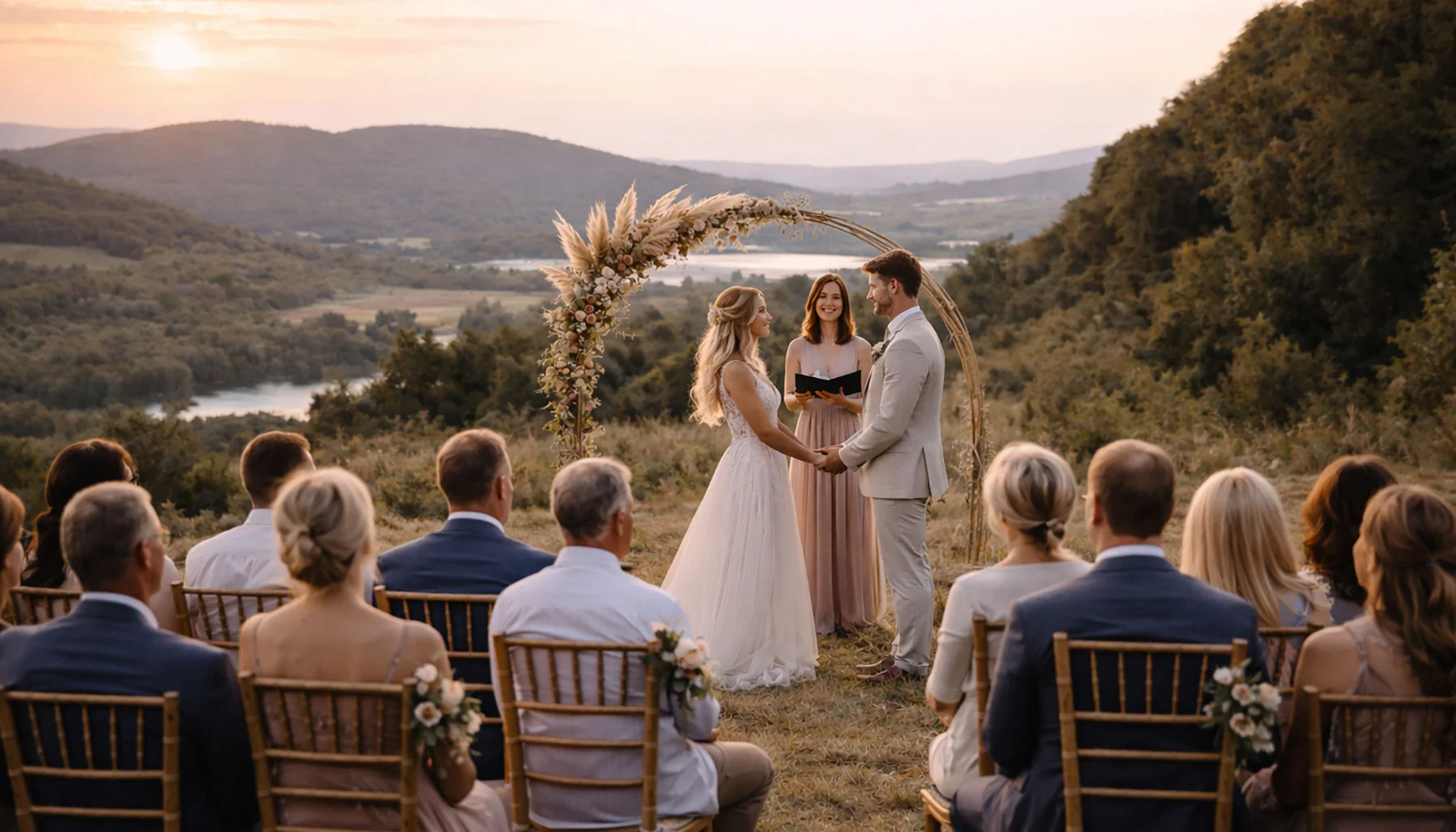
Free Wedding Ceremonies Explained: Meaning, Planning, Legal Context and Global Perspectives
Free wedding ceremonies are symbolic, non-religious ceremonies that do not create a legal marriage and do not depend on religious authority. Yet for many couples, they become the central moment of the day. This article explains how free ceremonies work in practice, where their meaning comes from, and how they relate to legal marriage and traditional wedding symbols.
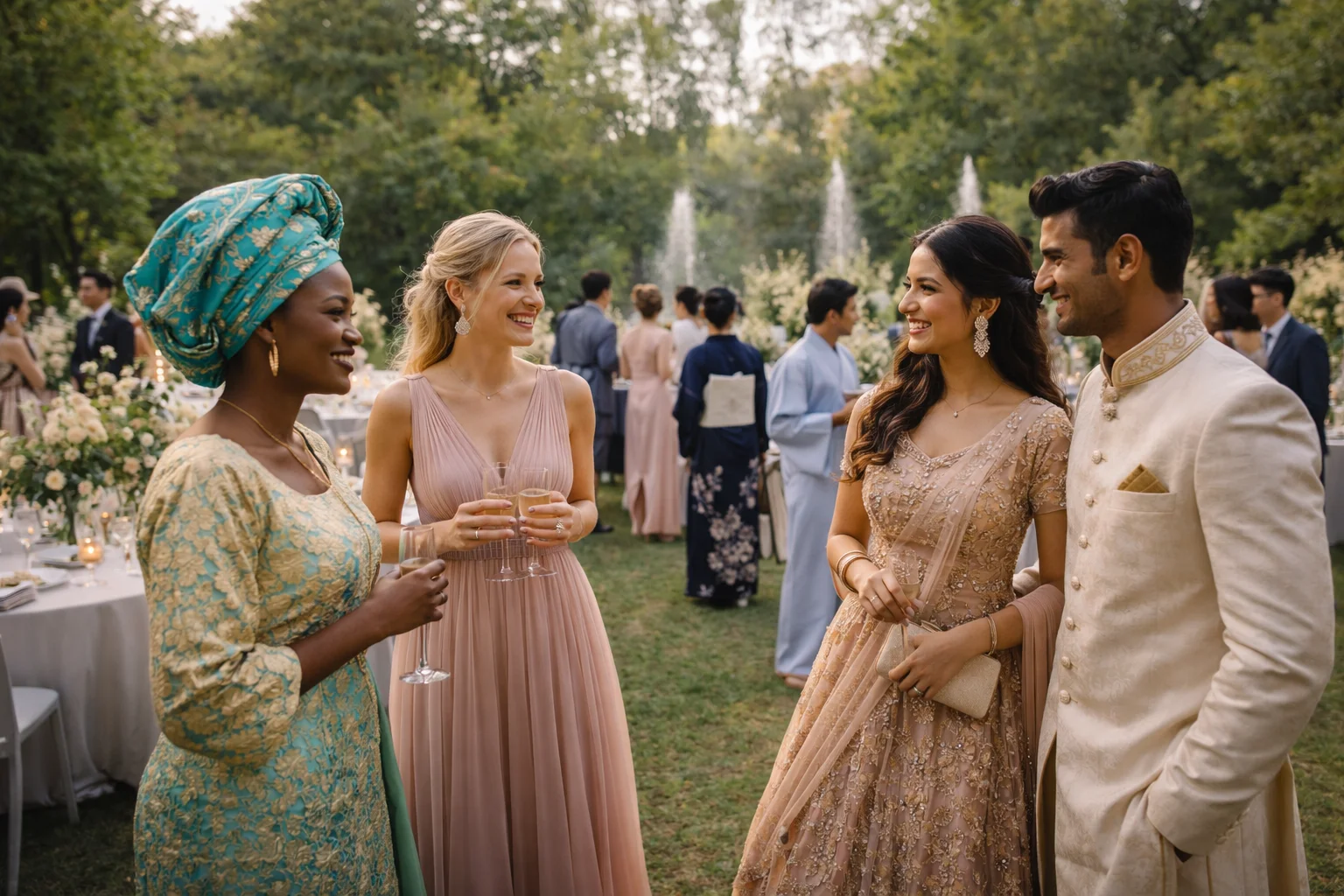
Dress Expectations at International Weddings: What Guests May Read Differently
Dress codes at international weddings are rarely just about clothing. Guests interpret formality, respect, family signals, and cultural meaning differently. This article looks at how attire is understood across contexts and why what seems obvious to one guest can feel unclear to another.
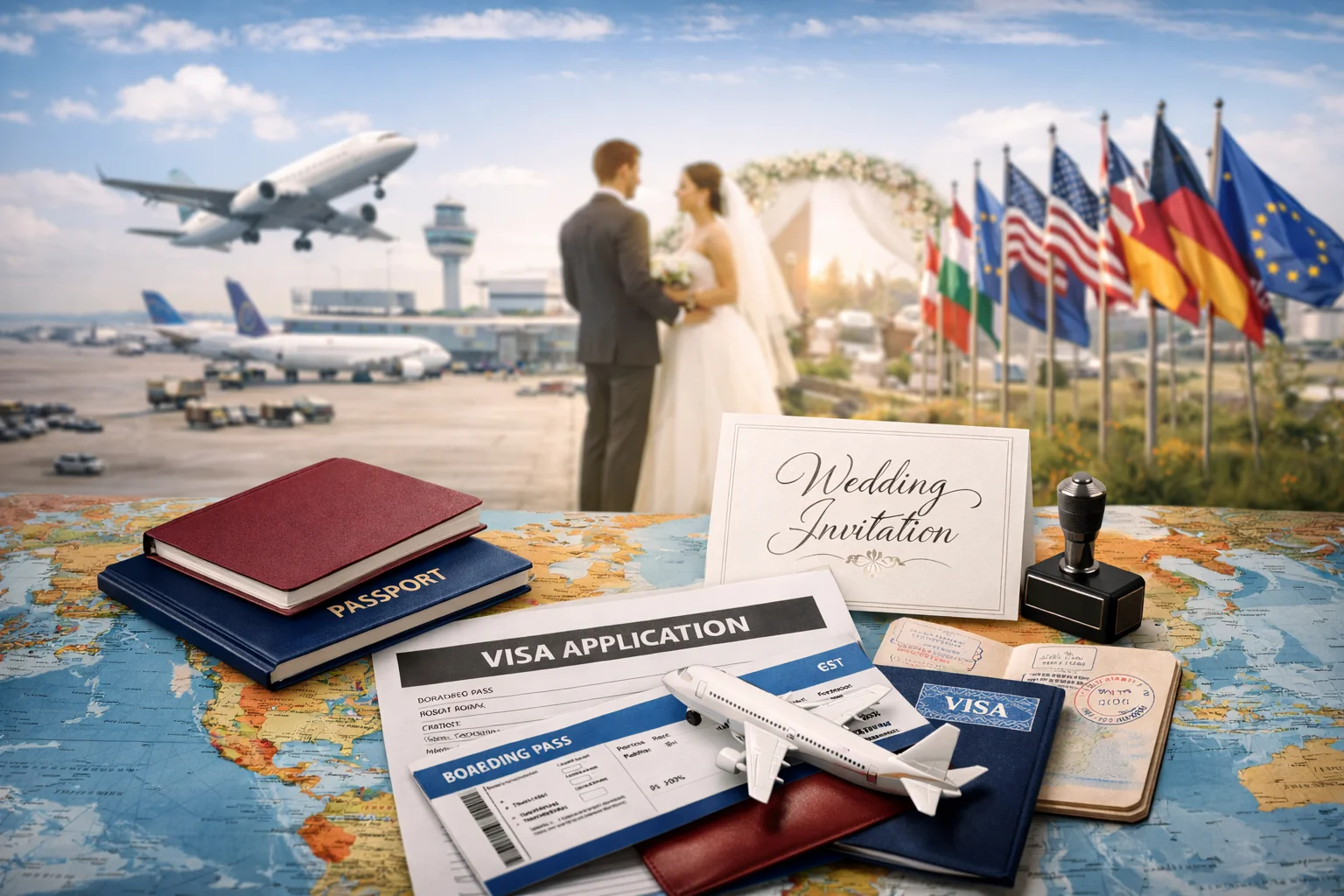
Visa and Travel Rules for International Wedding Guests
At international weddings, the guest list and the travel list are often two different things. An invitation may be accepted quickly, warmly, without much hesitation. Then the paperwork starts. Passport dates are checked. Entry rules are read again. A short family trip suddenly sits inside a formal border process.
Post-Wedding Gatherings Across Countries: When the Celebration Continues Elsewhere
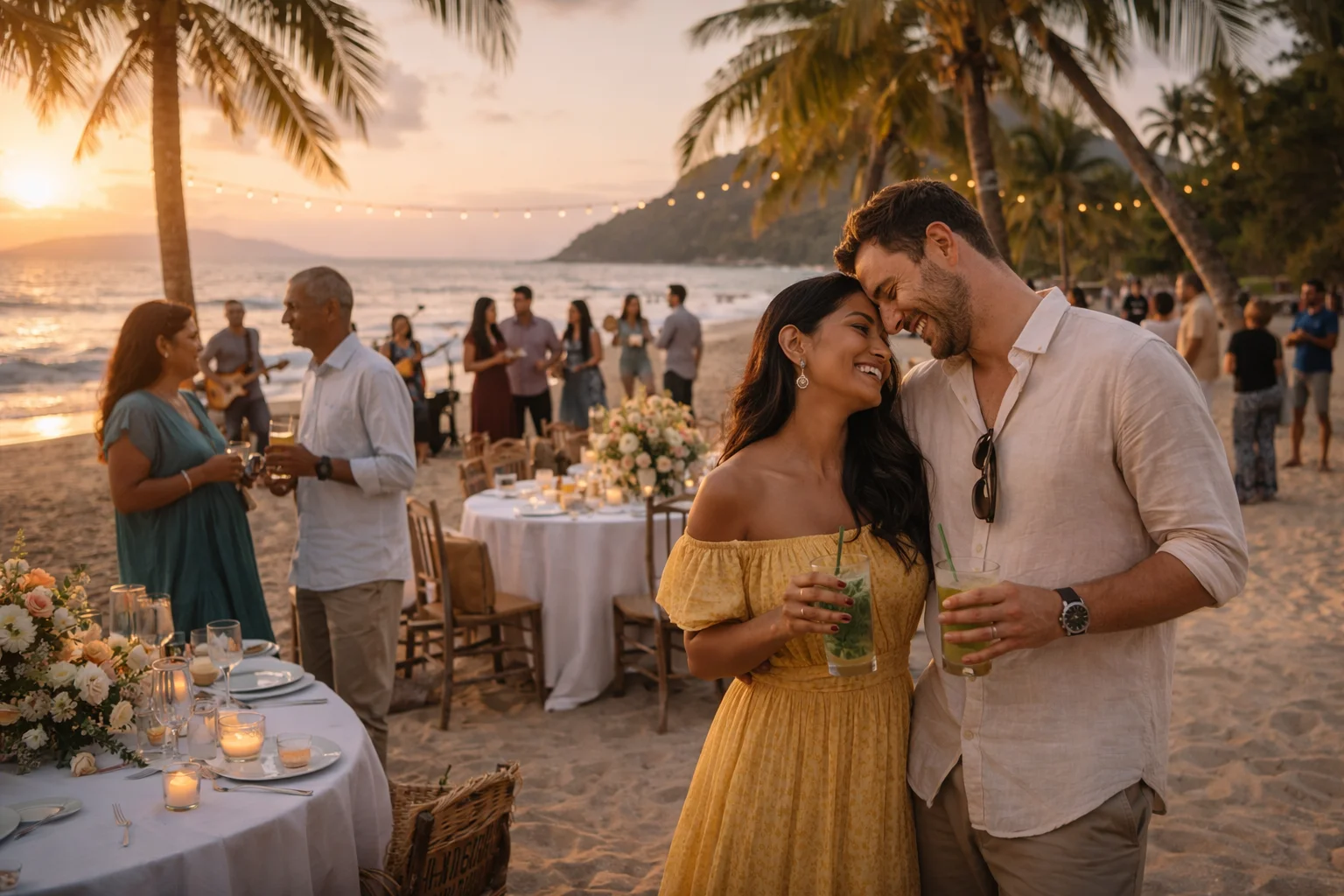
Some weddings do not end when the official day is over. They continue in another city, another country, another family home, or another social circle that could not be present the first time. This article looks at what post-wedding gatherings across countries actually mean and why they are often less like an encore than a second form of the wedding itself.
Two Families, Two Cultural Rhythms: How International Weddings Balance Different Social Expectations
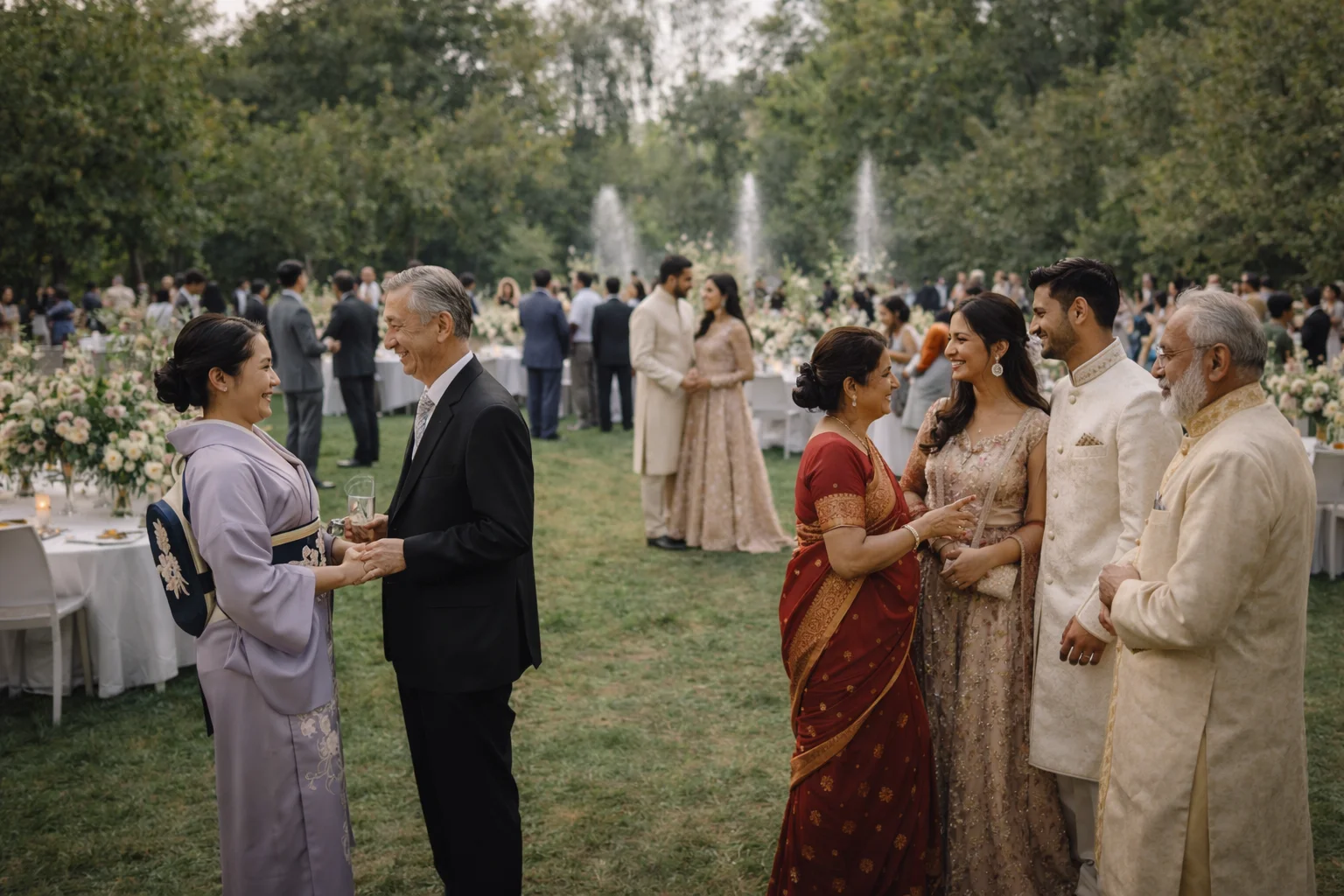
International weddings do not only bring together two languages or two traditions. They often bring together two different social rhythms: different ideas of hospitality, family presence, punctuality, emotional expression, ritual weight, and what a wedding is supposed to feel like. This article looks at how couples balance those differences without flattening either side.