
Free Wedding Ceremonies Explained: Meaning, Planning, Legal Context and Global Perspectives
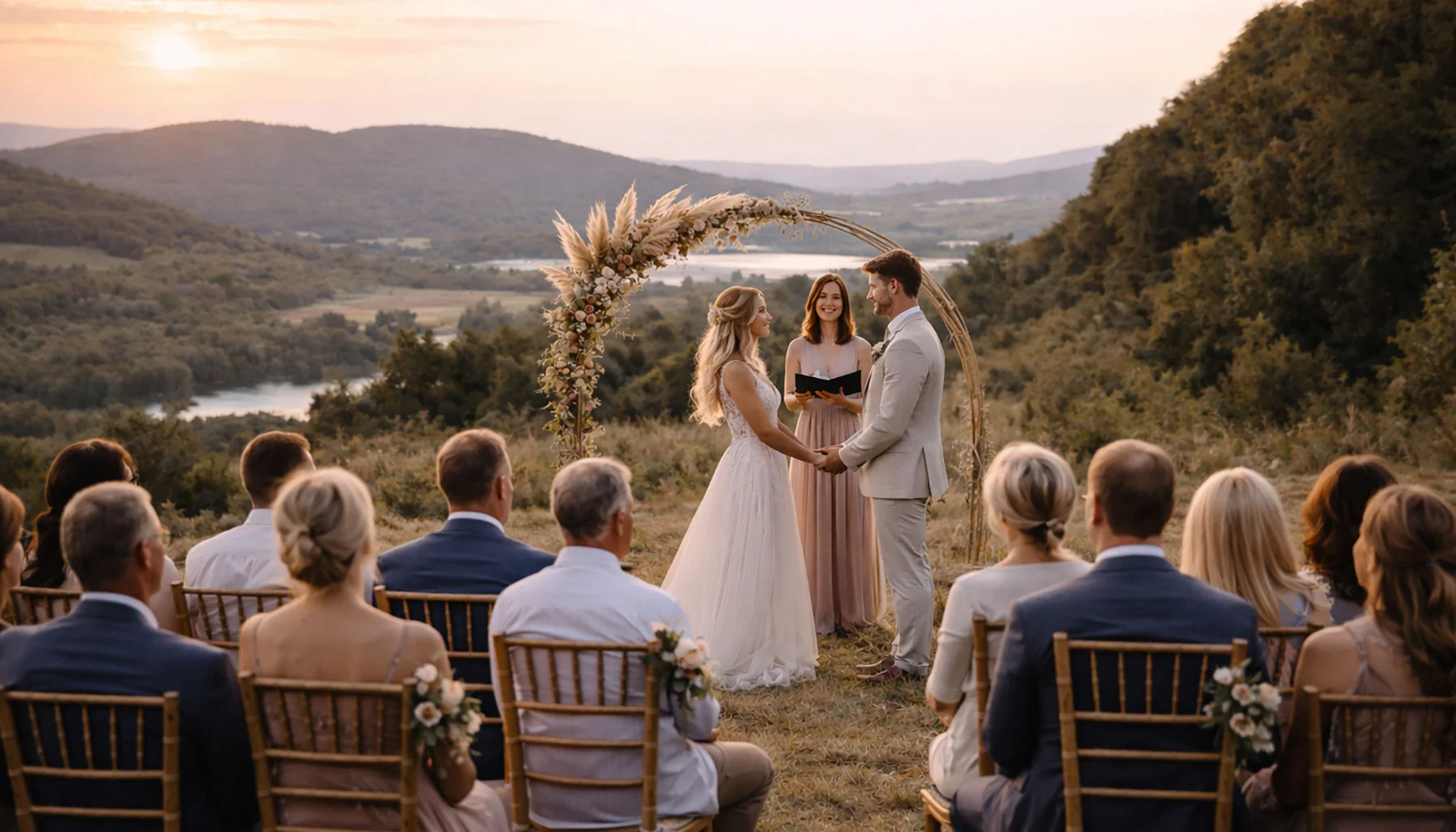
A free wedding ceremony does not belong to the state and does not belong to a church. There is no file created, no register updated. Everyone involved usually knows this. That clarity changes the tone from the start.
What happens instead is slower. Words are chosen because they fit, not because they are required. The setting is selected because someone wanted it there. In many weddings observed, this is the moment people later refer to, even when the legal marriage happened elsewhere. This is why the subject belongs naturally to both Free Ceremony and Traditional Wedding Symbols. Loving Rocks describes free ceremonies as intentionally shaped and open, while traditional wedding symbols are forms that make commitment recognizable, repeatable, and socially legible. Free ceremonies do not reject symbols. They choose them more consciously.
Free CeremonyLove takes center stage in a ceremony shaped entirely by emotion and intention. Free from formal rules, couples can create a moment that reflects their journey, their promises, and their connection. Personal vows, symbolic rituals, and heartfelt words turn the ceremony into an intimate expression of love that feels deeply authentic and unforgettable.
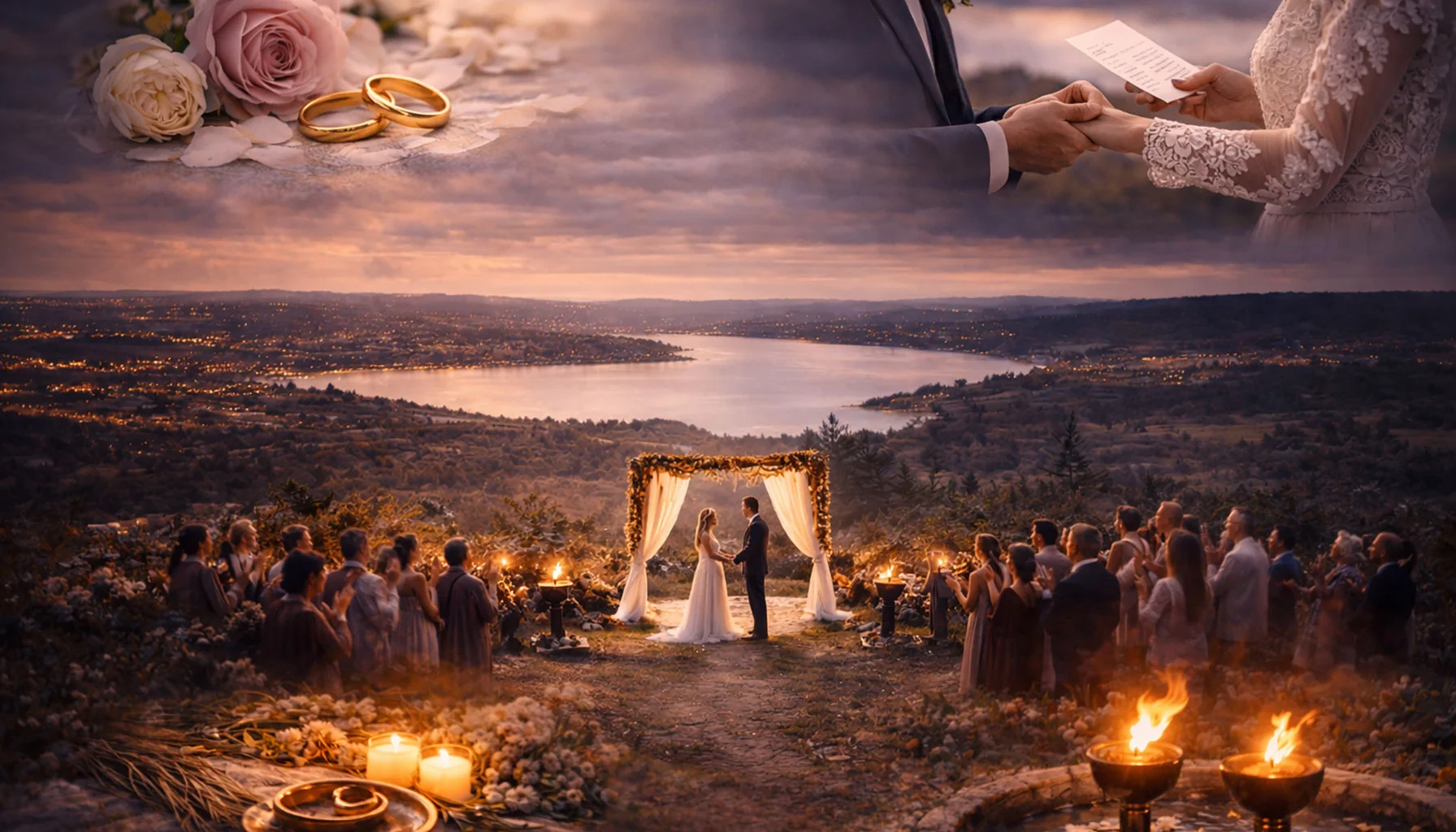
Traditional wedding symbols carry meanings that existed long before any couple arrived. Rings, vows, clothing, and gestures attempt to stabilize love by giving it a recognizable form.
Definition
A free wedding ceremony is a symbolic, non-religious ceremony created for one couple and independent of both civil and religious authority. It does not produce legal status, but it often becomes the emotional center of the wedding because meaning is shaped deliberately rather than inherited automatically.
What a Free Ceremony Is
In practice, a free ceremony is symbolic. That word is often misunderstood. It does not mean optional or decorative. It means chosen. It is a ceremony written for one couple, not reused, independent of civil and religious authority, and flexible in language, structure, and place. At the same time, it is not a legal act, not a replacement for civil marriage, and not bound to doctrine.
Legal Status
There is no ambiguity here. A free ceremony does not create a marriage in the eyes of the state. Where legal recognition matters, a civil marriage happens separately. Often quietly. Sometimes on another day.
| Question | Free Ceremony |
|---|---|
| Creates a legally valid marriage | No |
| Involves state authorities | No |
| Requires registration or filing | No |
| Civil marriage needed for legal status | Yes |
The Celebrant
Most free ceremonies are led by a celebrant. Not an official in the legal sense. More a holder of the structure. Someone who keeps time, listens carefully, and knows when not to speak.
| Aspect | Observed Reality |
|---|---|
| Legal authority | None |
| Religious authority | None |
| Formal certification required | No |
| Personal speech | Central |
| Custom vows | Fully open |
Typical Flow
The sequence is familiar, even when the words are not. Most ceremonies stay under an hour. Long enough to settle. Short enough to hold attention.
- Guests arrive and take their places
- Opening words
- Personal story
- Optional symbolic action
- Vows
- Rings or another gesture
- Closing words
Planning in Practice
Planning focuses less on documents and more on conditions. Can everyone hear. Can everyone see. What happens if it rains. These questions come up early, and for good reason.
| Planning Area | Observed Importance |
|---|---|
| Text and tone | High |
| Sound and visibility | High |
| Location access | Medium |
| Weather alternatives | High |
| Documents | Not relevant |
Observed Use by Country
| Country | How Free Ceremonies Are Commonly Used |
|---|---|
| Germany | Often held after civil marriage; high level of personalization |
| United States | Common for destination weddings and outdoor settings |
| France | Usually complements mandatory civil ceremony |
| Italy | Frequently used for destination weddings |
| Spain | Popular among international couples |
| China | Symbolic ceremonies integrated into event formats |
| Serbia | Often combined with cultural traditions |
| Russia | Expressive counterpart to formal registration |
Comparison of Ceremony Types
| Aspect | Civil | Religious | Free |
|---|---|---|---|
| Legal effect | Yes | Sometimes | No |
| State involvement | Yes | Sometimes | No |
| Structure | Fixed | Tradition-based | Open |
| Personal language | Limited | Moderate | Central |
| Location choice | Restricted | Restricted | Open |
Conclusion
Free wedding ceremonies do not replace anything. They sit next to other forms. Their role is specific. They allow meaning to be spoken without formality pressing in. For many couples, that is enough. And this is exactly where they meet traditional wedding symbols: not by inheriting a fixed form, but by choosing rings, vows, gestures, and sequences carefully enough that commitment still becomes recognizable, memorable, and socially real.
Related Articles
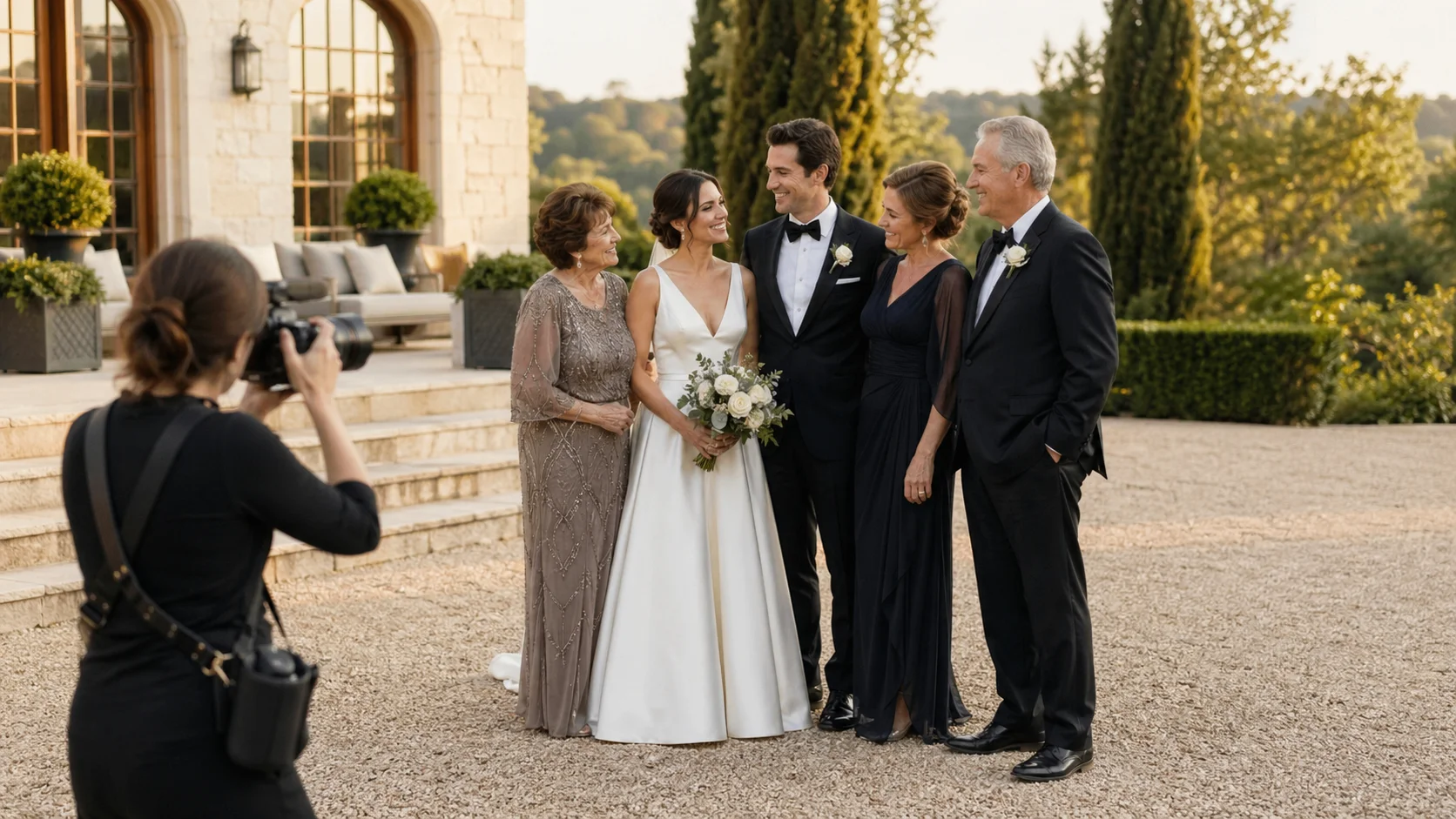
Photographer Coordination Checklist: What Helps Without Overdirecting the Day
Wedding photography needs enough coordination to protect the important images, but not so much direction that the day starts feeling staged. This article looks at shot priorities, family helpers, light windows, access, ceremony limits, and the space photographers need to notice real stories.
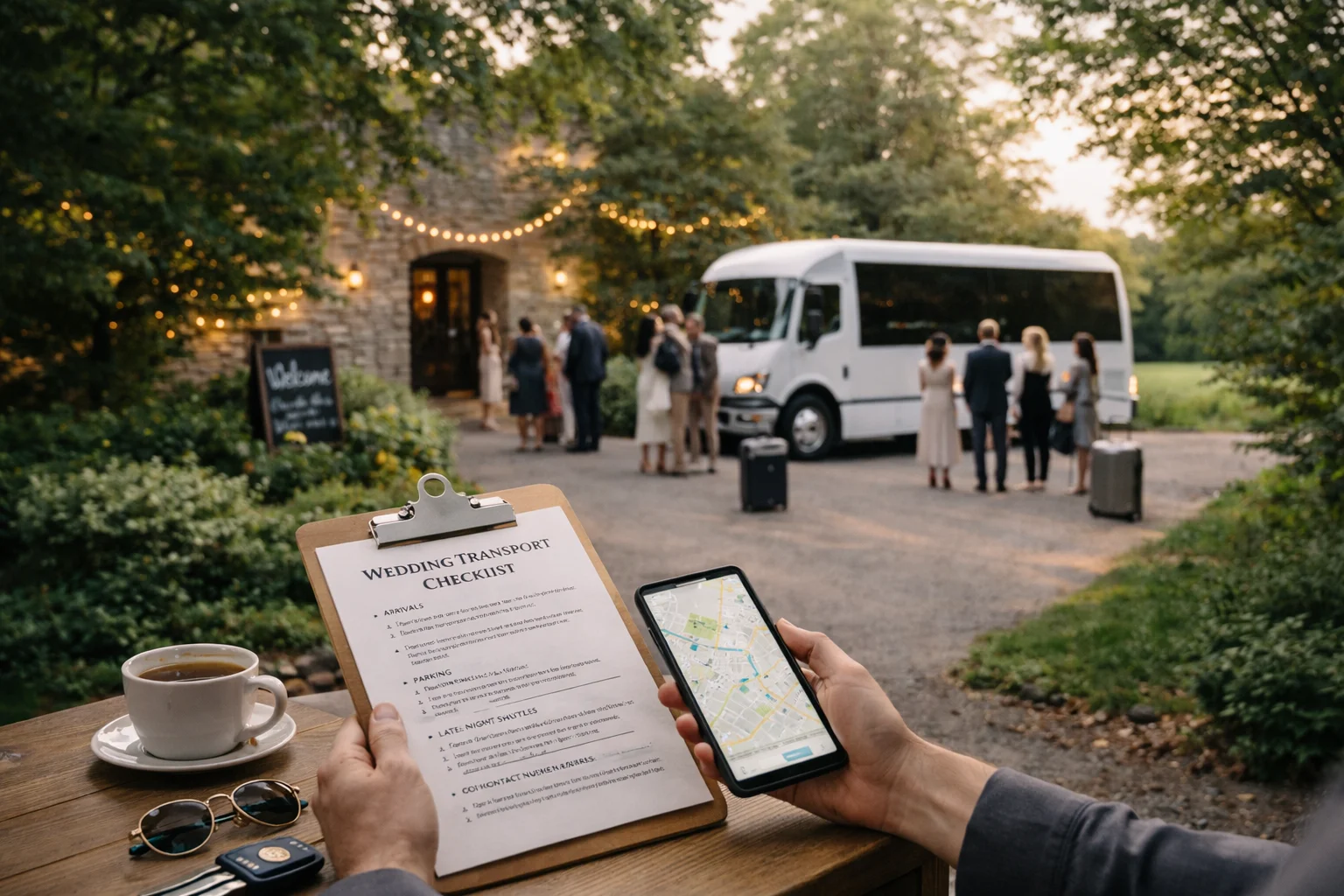
Wedding Transport Checklist: Arrivals, Transfers, Parking, and Late-Night Returns
Wedding transport is rarely remembered when it works, but it shapes the day long before the ceremony begins and long after the central moment has passed. This article looks at what still needs to be planned around arrivals, transfers, parking, and late-night returns, and why movement and waiting belong more closely together than many couples expect.
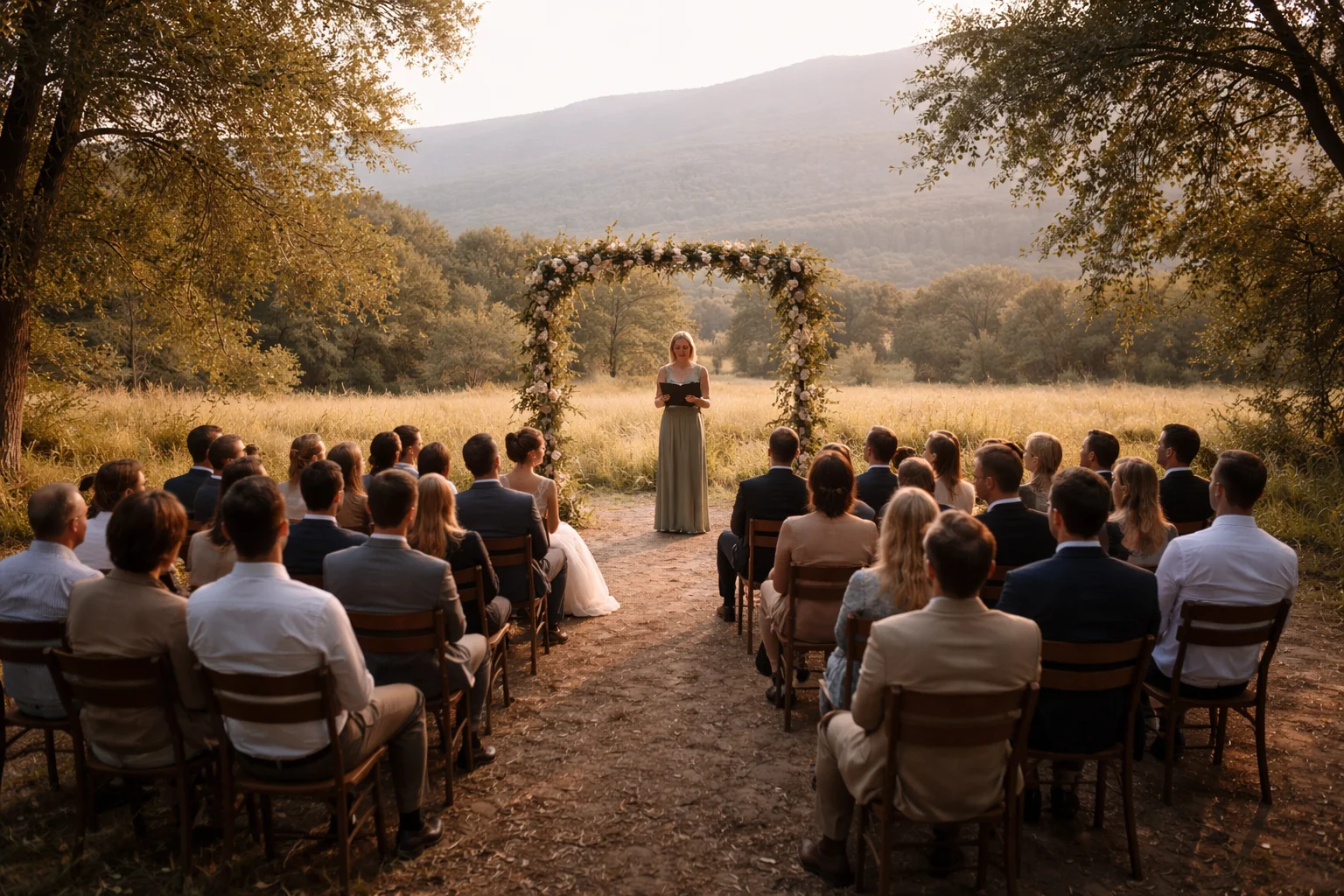
Free Ceremony Officiants: Presence, Voice, and the Shape of Attention
In a free ceremony, the officiant cannot lean on inherited authority or a structure everyone already recognizes. What carries the moment instead is subtler: presence, voice, timing, and the ability to hold attention without gripping it too tightly. This article looks at how officiants shape free ceremonies through the smallest visible forms of guidance.
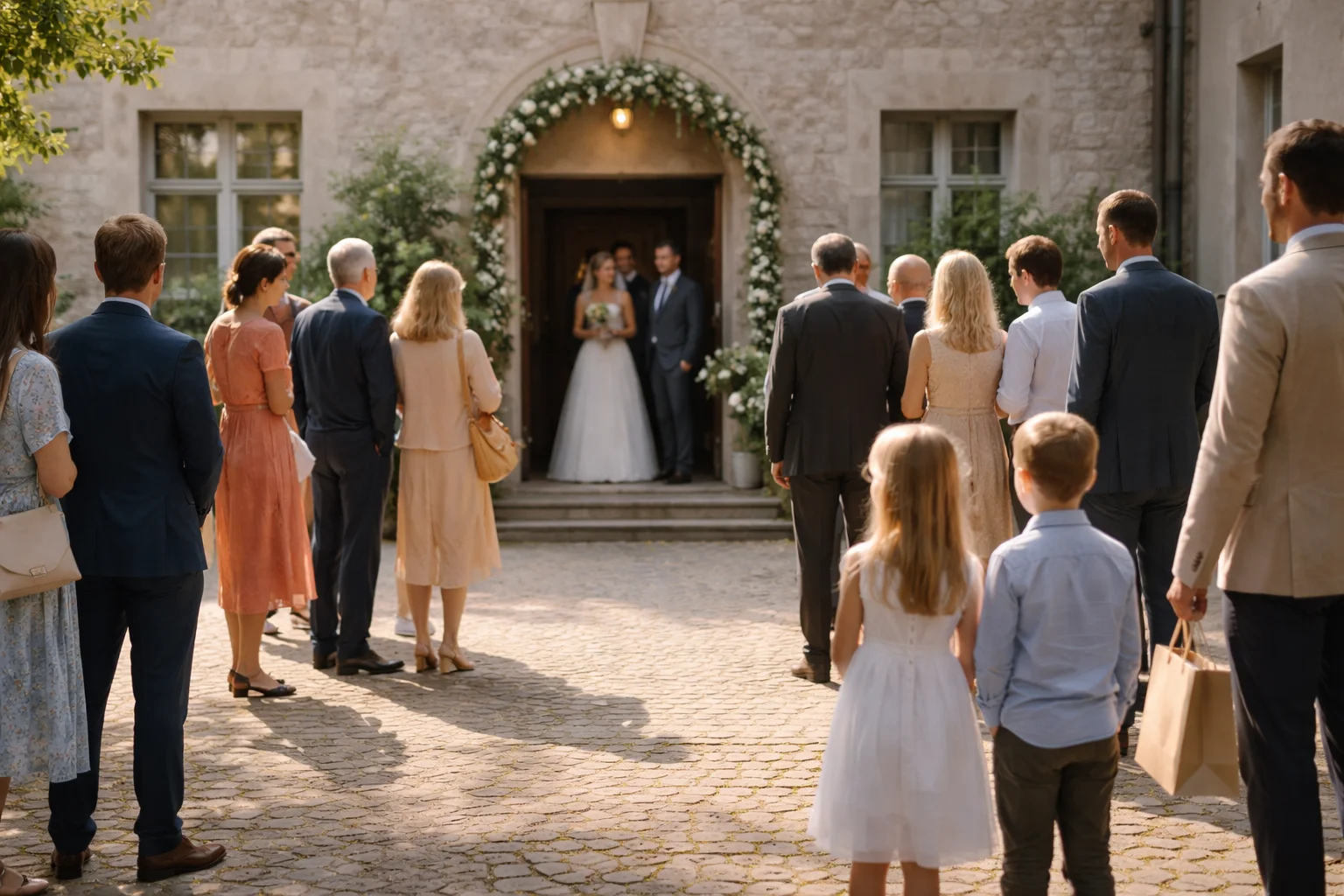
Arrival Before the Ceremony: How Guests Find Their Place Without Being Told
Arrival does not really start at one point. It leaks into the day. Some people are early without meaning to be. Others arrive exactly on time but still end up waiting. The space fills in patches. A few stand close to the entrance, others keep distance. No one explains it. It still settles somehow.
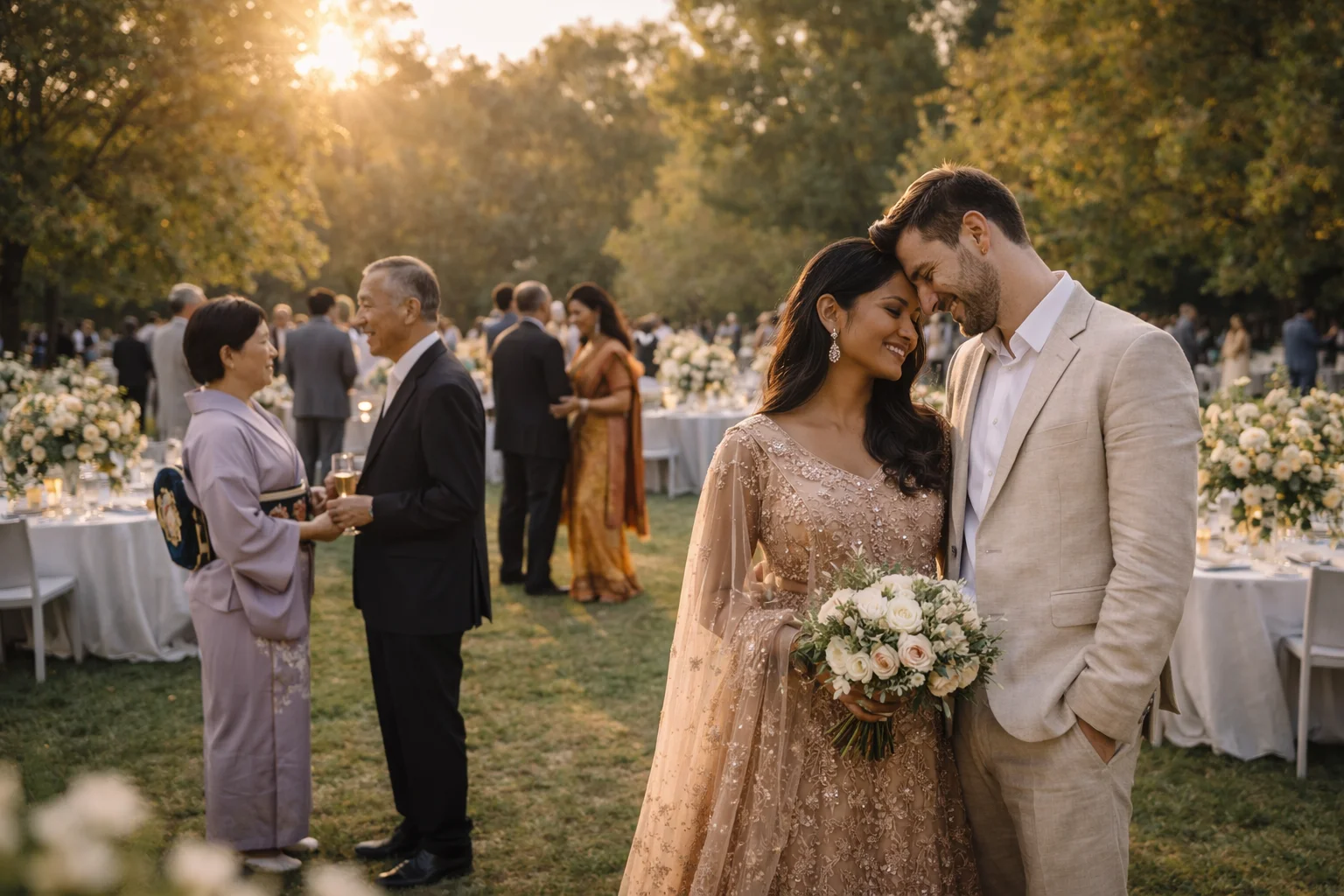
Mixed-Culture Weddings Without Performative Symbolism
A mixed-culture wedding does not become meaningful by displaying as many symbols as possible. It becomes meaningful when the symbols that appear are actually lived, understood, and emotionally carried by the couple and their families. This article looks at how international weddings can honor difference without turning culture into performance.
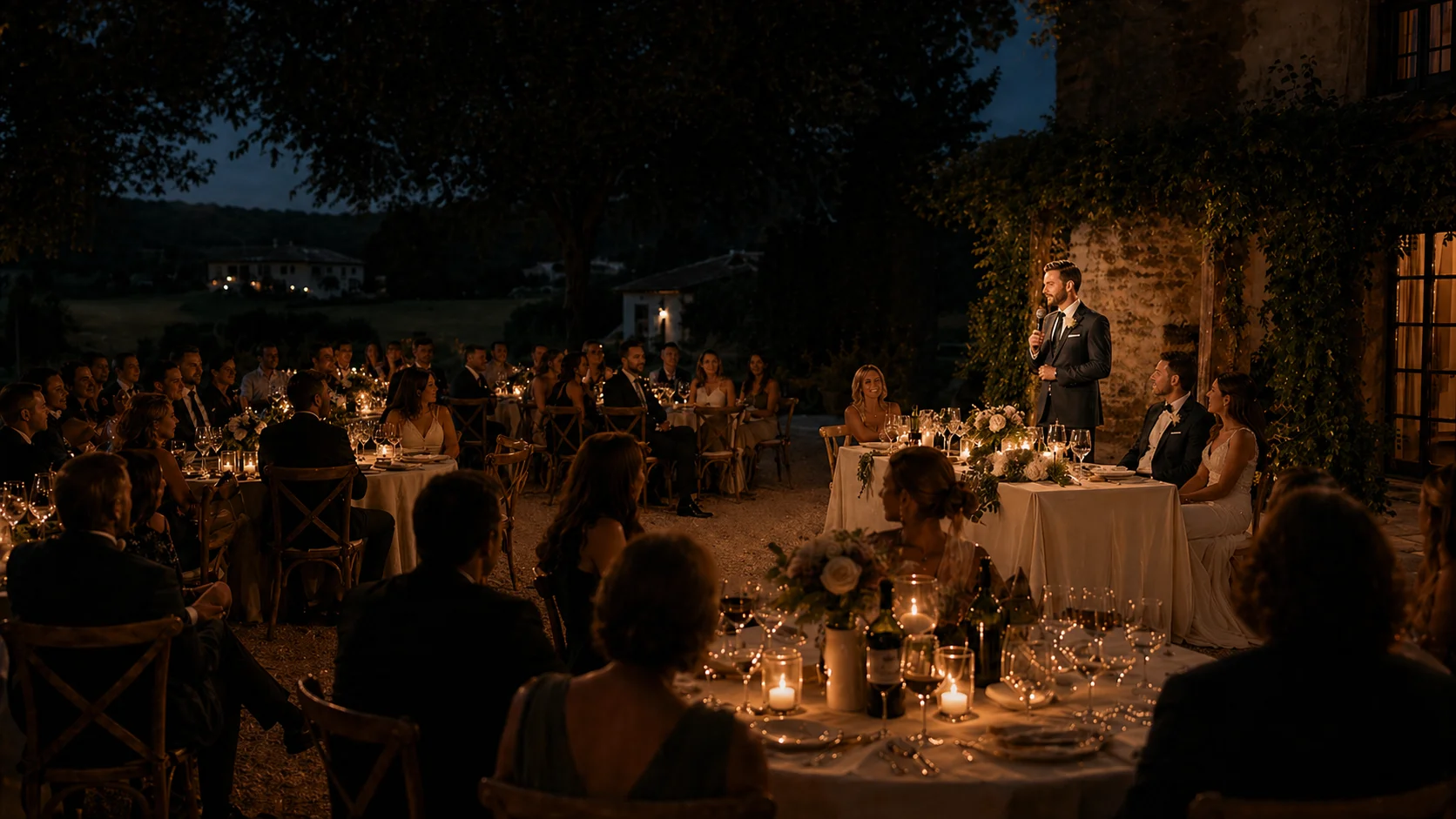
Speech Moment Checklist: What Makes a Toast Feel Held, Not Exposed
A wedding toast depends on more than good writing. It lands differently depending on attention, sound, timing, room tone, and the unspoken signals that tell a speaker whether the moment is carrying them or leaving them alone.
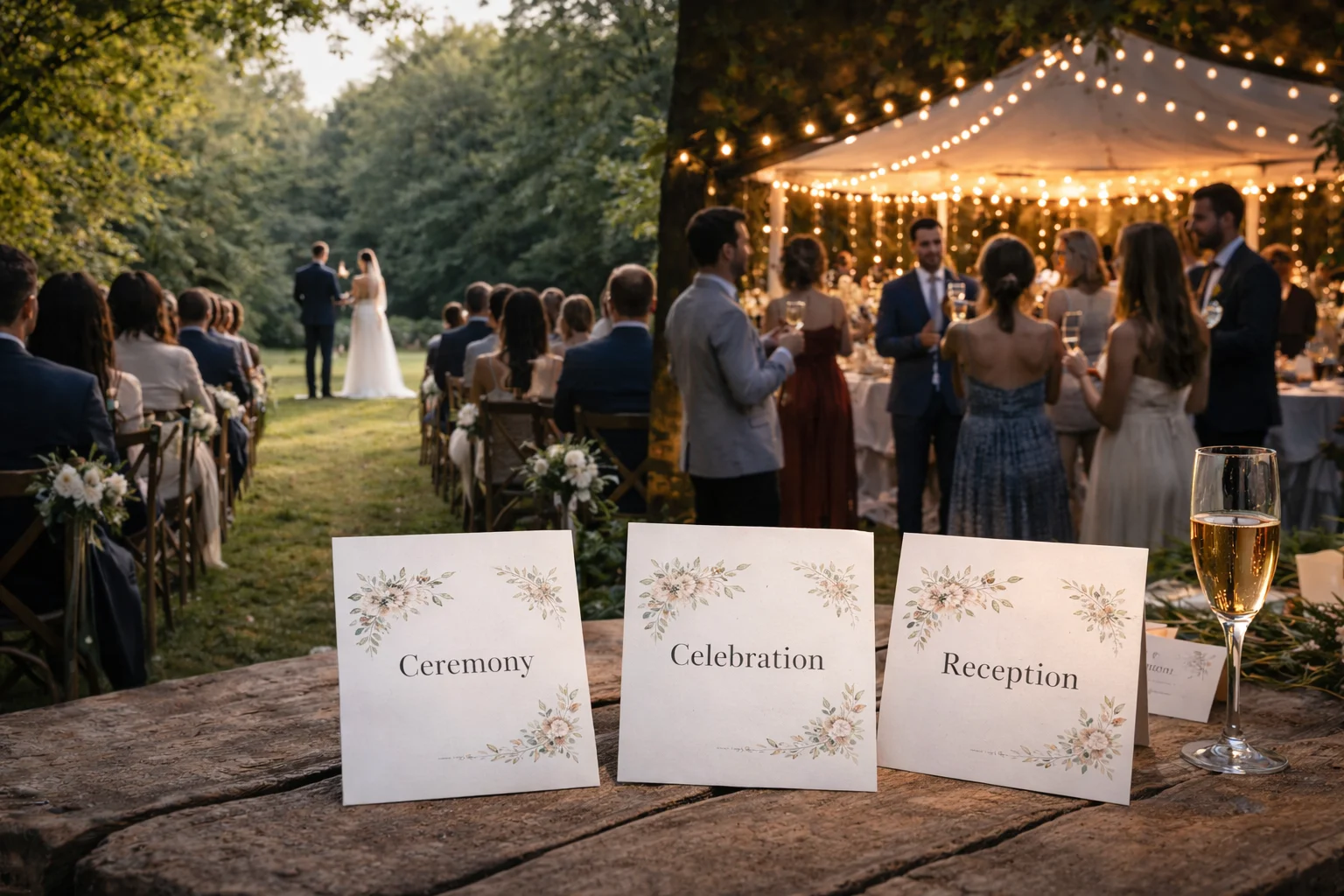
Who Is Invited to the Ceremony and Who Only to the Celebration
Not every wedding invitation has to include every part of the day. But the difference between being invited to the ceremony and being invited only to the celebration carries more meaning than many couples first assume. This article looks at how to make that distinction clearly, gracefully, and in a way that fits both the ritual weight of the ceremony and the social reality of the celebration.
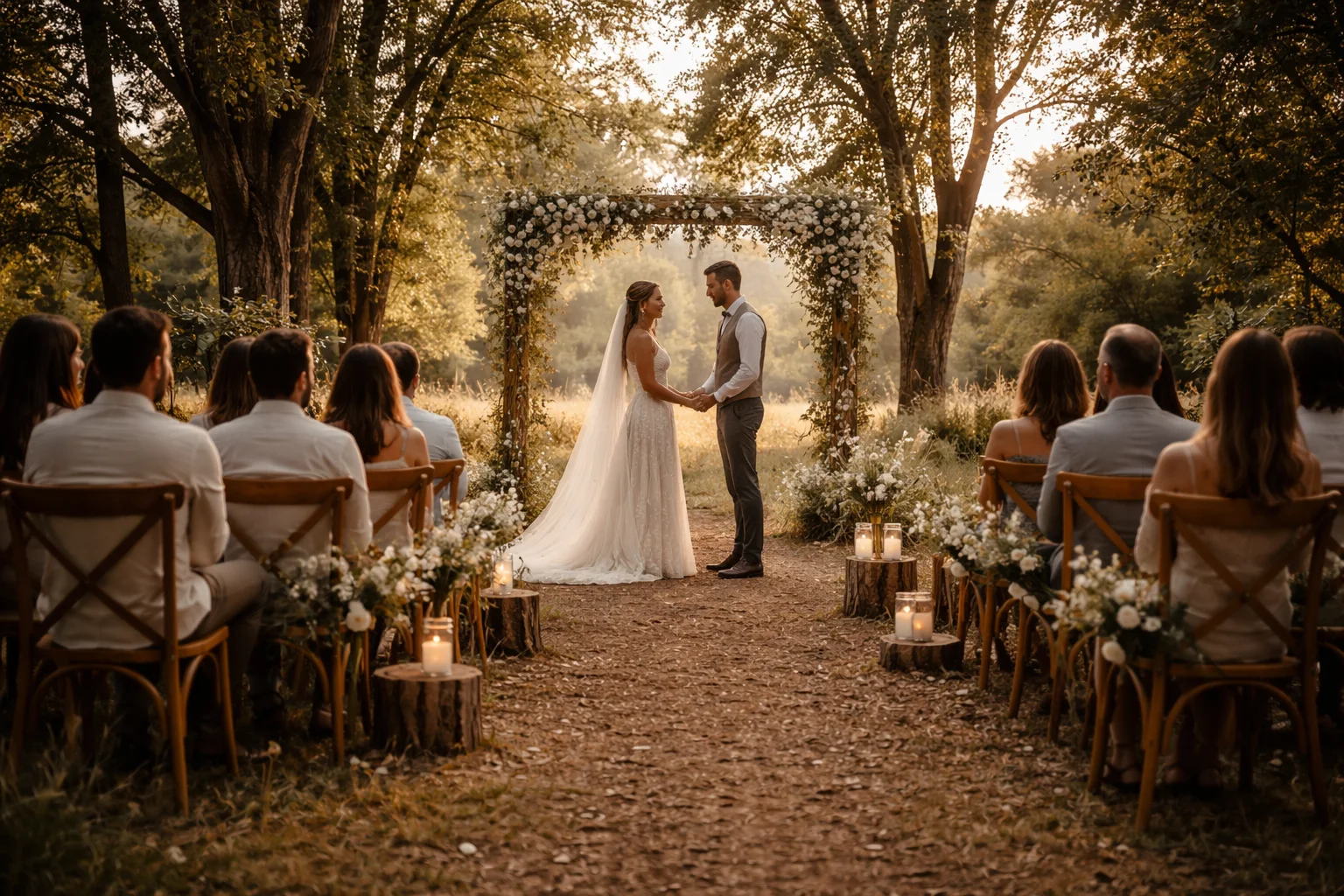
Where Rustic Weddings Meet Lasting Symbols
Rustic weddings are often chosen for their sense of ease. Wood, fabric, open air, uneven surfaces, nothing too polished. They suggest a step away from formality, a return to something that feels more direct. But that simplicity is rarely empty. It carries layers that are not always immediately visible.
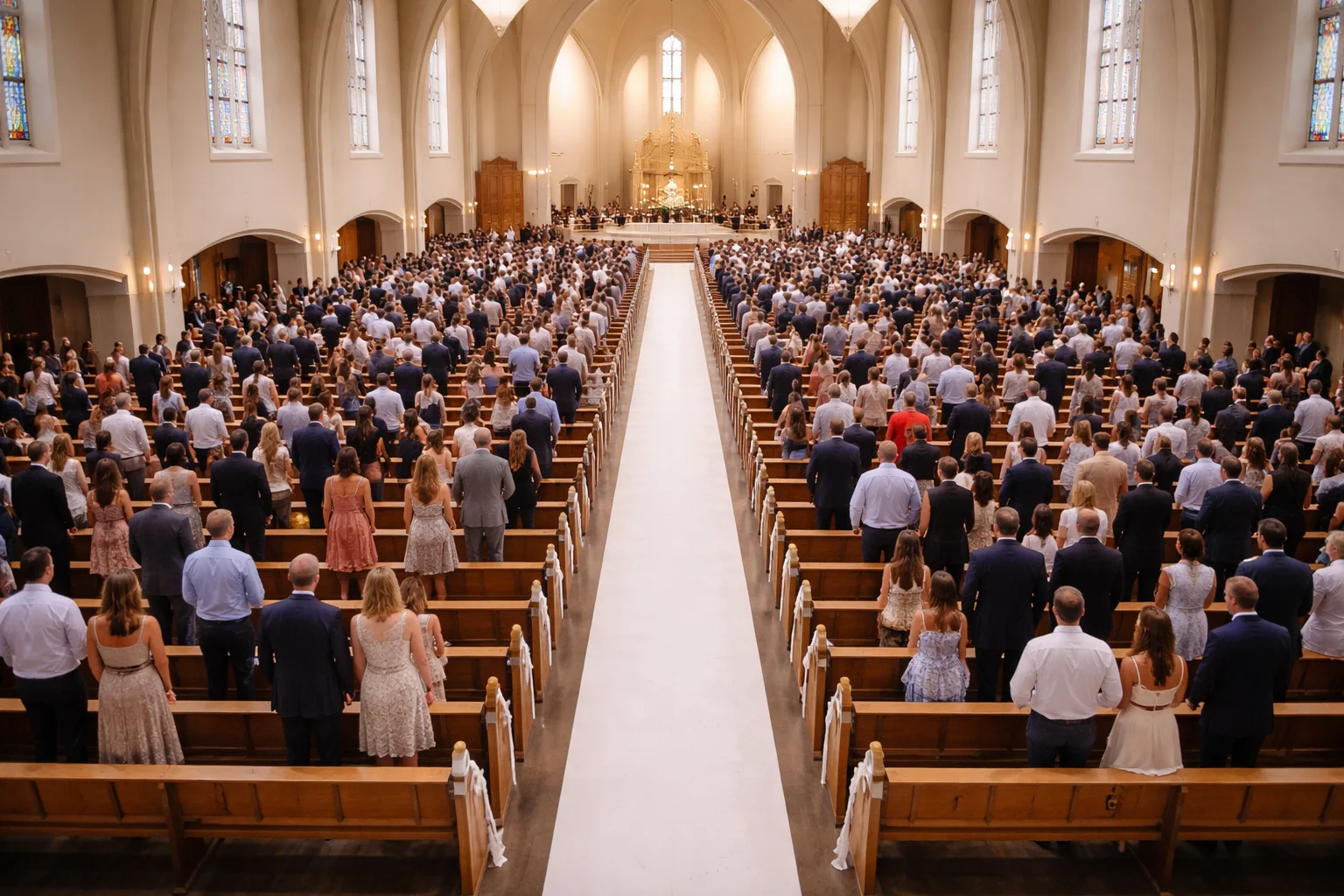
How Space Shapes Guest Behavior at Ceremonies
Large religious rooms tend to slow people down a bit. Not dramatically, just enough to notice. Guests enter, stop for a second too long, look around, then move again. It rarely looks planned. More like small corrections happening one after another.
Ceremony Transition Checklist: What Should Be Ready Before Attention Has to Gather
Ceremony transitions often seem brief on paper, but they carry the difficult shift from movement into shared attention. This article looks at what needs to be ready before that moment arrives, from seating and sound to cues, stillness, and the quieter emotional readiness of the room.
How a Free Ceremony Creates Meaning From the First Minute
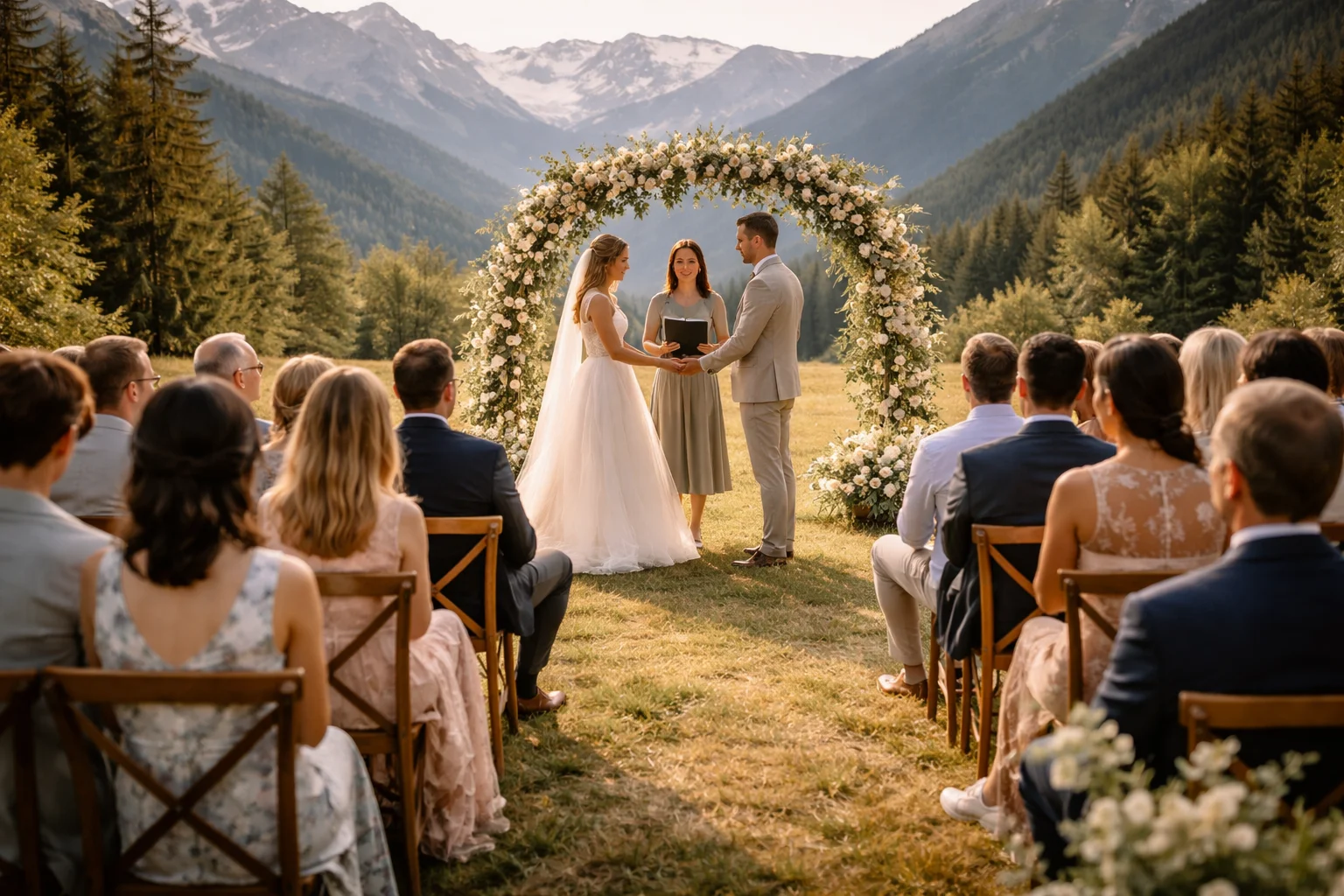
A free ceremony is often described as flexible, personal, and less bound by formal rules. But that freedom only works when the ceremony has real structure, emotional direction, and a clear sense of what belongs in the moment. This article looks at how a free ceremony begins, why it carries weight, how guests understand it, and what makes it feel meaningful rather than vague.