
Arrival Before the Ceremony: How Guests Find Their Place Without Being Told
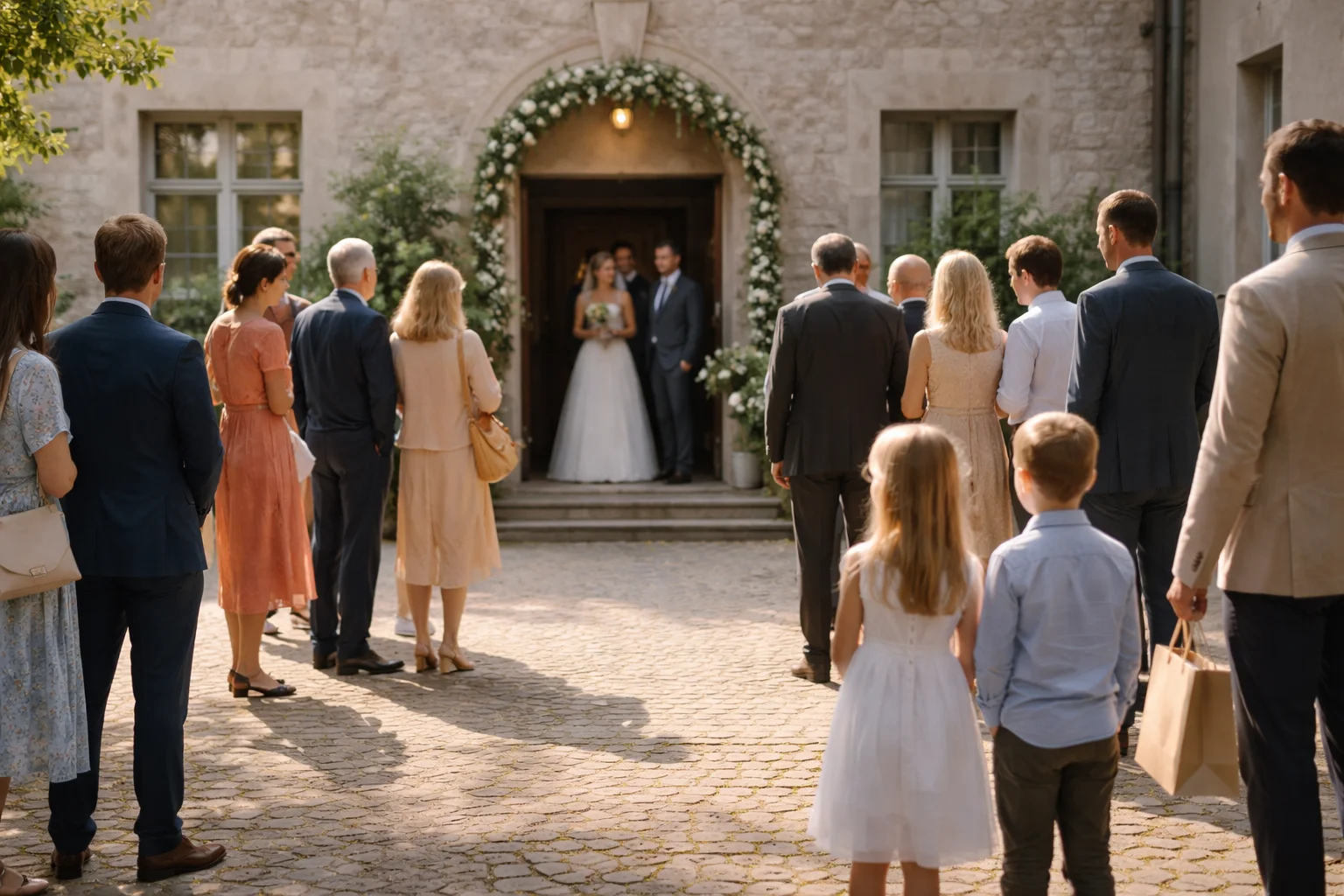
Arrival and First Contact at Weddings
Before anything official, there is already interaction. Small looks, short greetings, pauses that are slightly too long. People adjust their position more than once. Children move differently. They start moving, then stop again, then drift somewhere else. Energy is there, just not directed yet.
Definition
Arrival and first contact refer to the time before a ceremony formally begins, when guests reach the location, orient themselves, and begin interacting with the space and with each other without clear structure or instruction.
When Guests Arrive Too Early and Wait Without Structure
Early guests rarely know where to place themselves. They stay near what looks like an entrance, even if it is not confirmed. Some check their phones, then put them away, then take them out again. Conversations start, stop, restart. If children are there, they become restless first. Not loud, just moving. A small sign, or a person who seems to know something, changes the whole situation. Without that, waiting stretches in uneven pieces.
Standing Outside Civil Offices in Small Groups
Groups form without planning. Two people, then a third joins, then someone steps away again. They stand slightly to the side, leaving a middle area open that no one uses. People arriving later pause before choosing a group. Sometimes they switch after a minute. Children move between these small clusters, not staying long. The space stays loose. It does not fully come together, but it does not fall apart either.
The Moment the Couple First Appears
The shift is visible but not organized. Someone notices first, then another. Heads turn at different times. Conversations do not stop all at once, they fade. A few people step forward too early, then hesitate. Others stay back and watch. Children react more directly, sometimes pointing, sometimes just walking closer. The moment holds even without clear framing. It is brief, then it passes into something else.
When People Are Not Sure Where to Go
Uncertainty shows in small movements. A step forward, then a pause. Looking at a door that might be the right one. Someone tries it, then steps back out again. Others follow without checking. There is a short phase where no one is fully sure, but no one asks either. A single clear gesture, even a subtle one, settles it quickly. Without it, people spread, then regroup, then spread again.
Entering the Room Without Clear Signal
Entry happens in pieces. One person goes in, then waits just inside. Another follows but stops again, creating a small blockage that no one addresses. People behind adjust their pace. Some stay outside a bit longer than needed. Inside, there is another pause. Choosing seats takes time. Children often move ahead, then turn back, unsure if that was correct. The room fills, but not evenly. It still works, just slightly delayed.
Conclusion
Arrival and first contact are quiet and a bit uneven. They do not need much, but they respond to small cues. A visible point of orientation, a soft signal, something that suggests where to stand or when to move. People adapt quickly once that exists. Until then, they find their own way, in small steps, not always straight.
Related Articles

Ceremony Transition Checklist: What Should Be Ready Before Attention Has to Gather
Ceremony transitions often seem brief on paper, but they carry the difficult shift from movement into shared attention. This article looks at what needs to be ready before that moment arrives, from seating and sound to cues, stillness, and the quieter emotional readiness of the room.
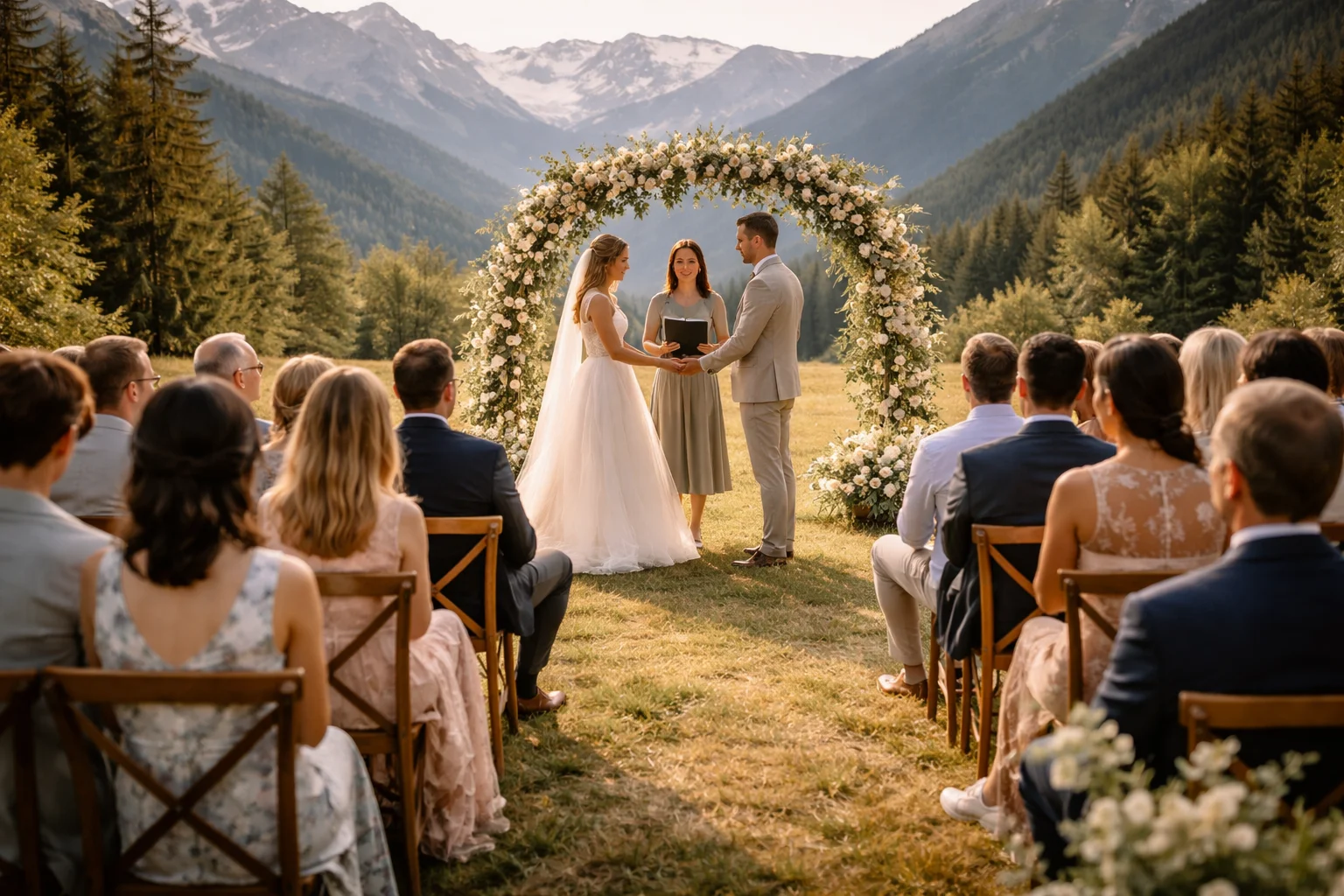
How a Free Ceremony Creates Meaning From the First Minute
A free ceremony is often described as flexible, personal, and less bound by formal rules. But that freedom only works when the ceremony has real structure, emotional direction, and a clear sense of what belongs in the moment. This article looks at how a free ceremony begins, why it carries weight, how guests understand it, and what makes it feel meaningful rather than vague.
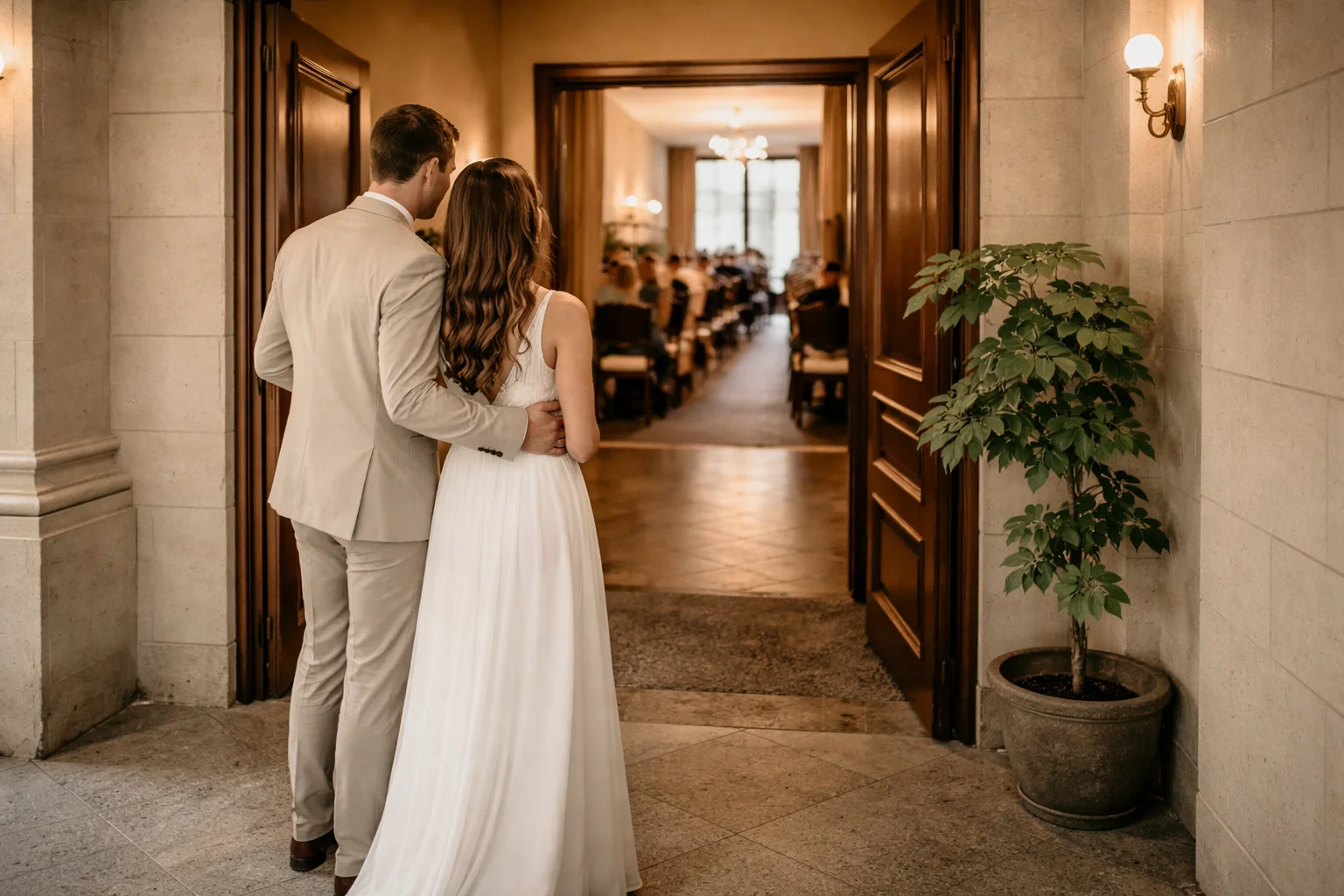
Waiting Before the Civil Ceremony: What the Minutes Outside the Room Actually Feel Like
Civil ceremonies are often described as brief, simple, and administrative. But anyone who has stood outside the room knows that the minutes before they begin can feel strangely dense. This article looks at what those minutes actually do to time, attention, behavior, and emotion, and how the legal ceremony becomes a real threshold between engagement and wedding.

Free Wedding Ceremonies Explained: Meaning, Planning, Legal Context and Global Perspectives
Free wedding ceremonies are symbolic, non-religious ceremonies that do not create a legal marriage and do not depend on religious authority. Yet for many couples, they become the central moment of the day. This article explains how free ceremonies work in practice, where their meaning comes from, and how they relate to legal marriage and traditional wedding symbols.
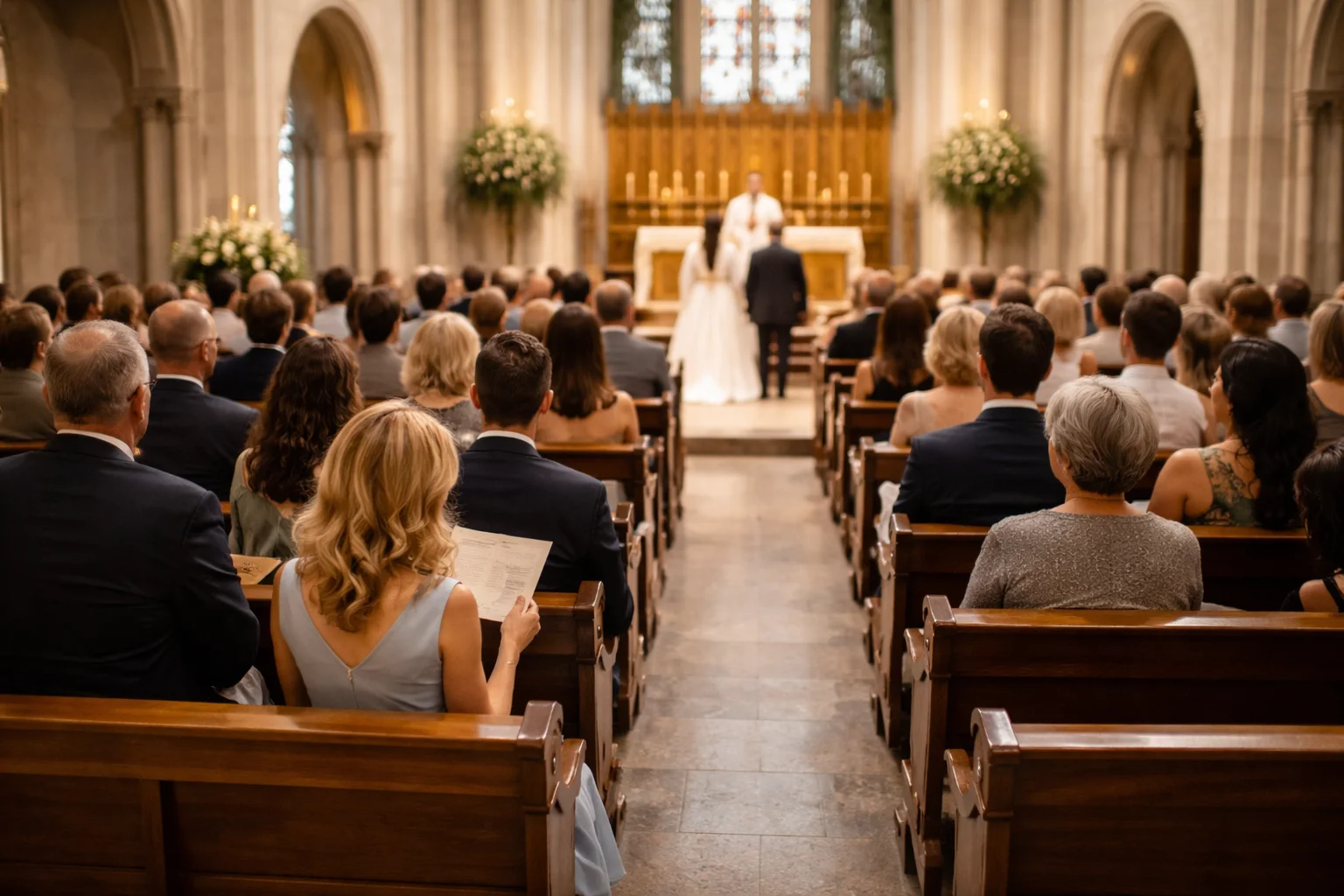
What Guests Do When They Do Not Know the Religious Tradition
Religious wedding ceremonies can feel deeply moving even to guests who do not fully understand the tradition. But they can also create uncertainty about posture, participation, and what is expected in the room. This article looks at what guests actually do when the ritual is unfamiliar, and how couples can make that uncertainty feel respectful rather than awkward.
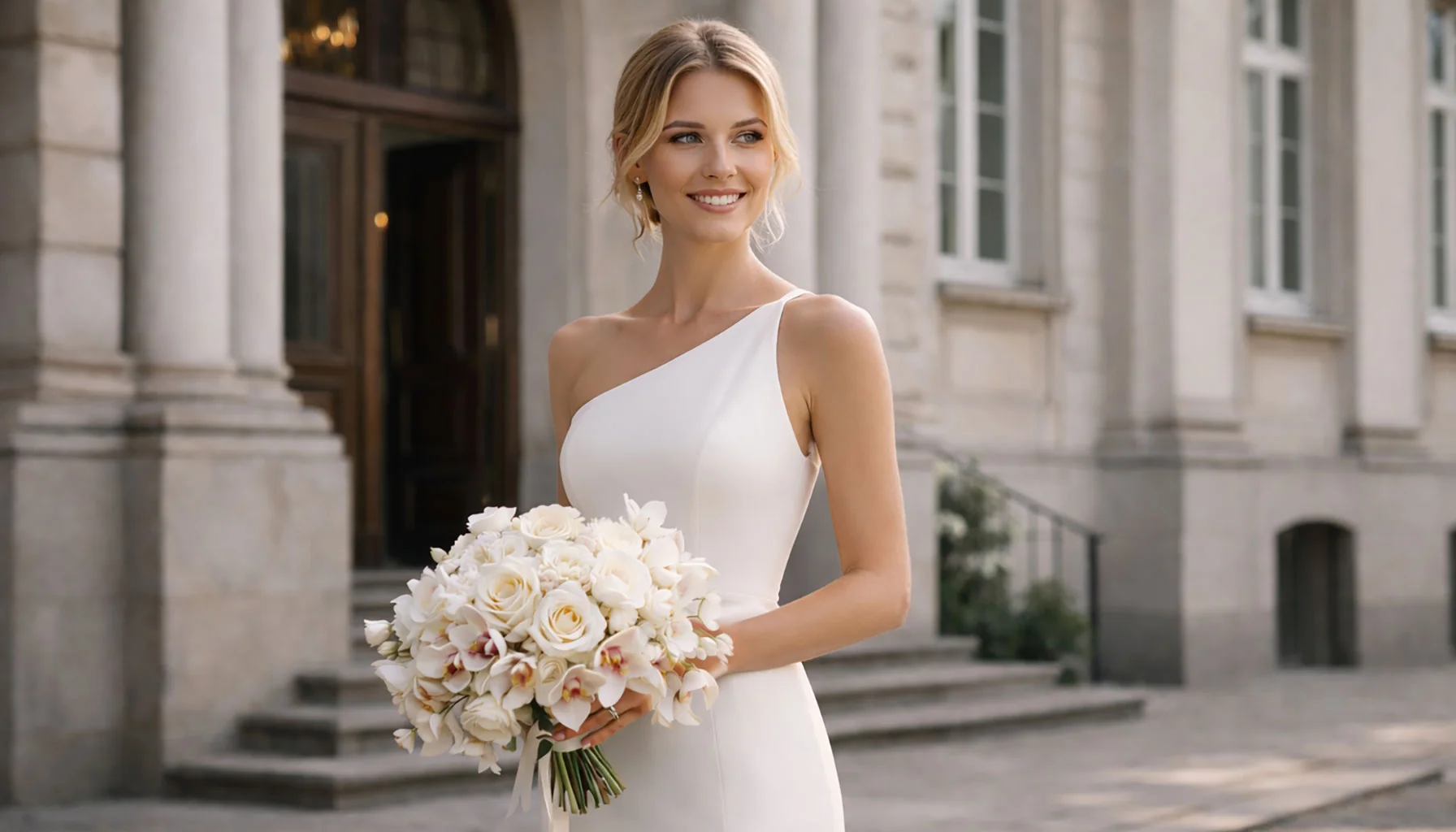
A Love Made Official: A Bridal Look for the Civil Ceremony
Civil ceremonies tend to be focused and quiet. The setting is smaller, the attention sharper. In this context, the bridal look does not perform. It supports. Fabric, cut, and proportion matter more than embellishment. What remains is a look that fits the moment, allows presence, and feels appropriate long after the ceremony ends.
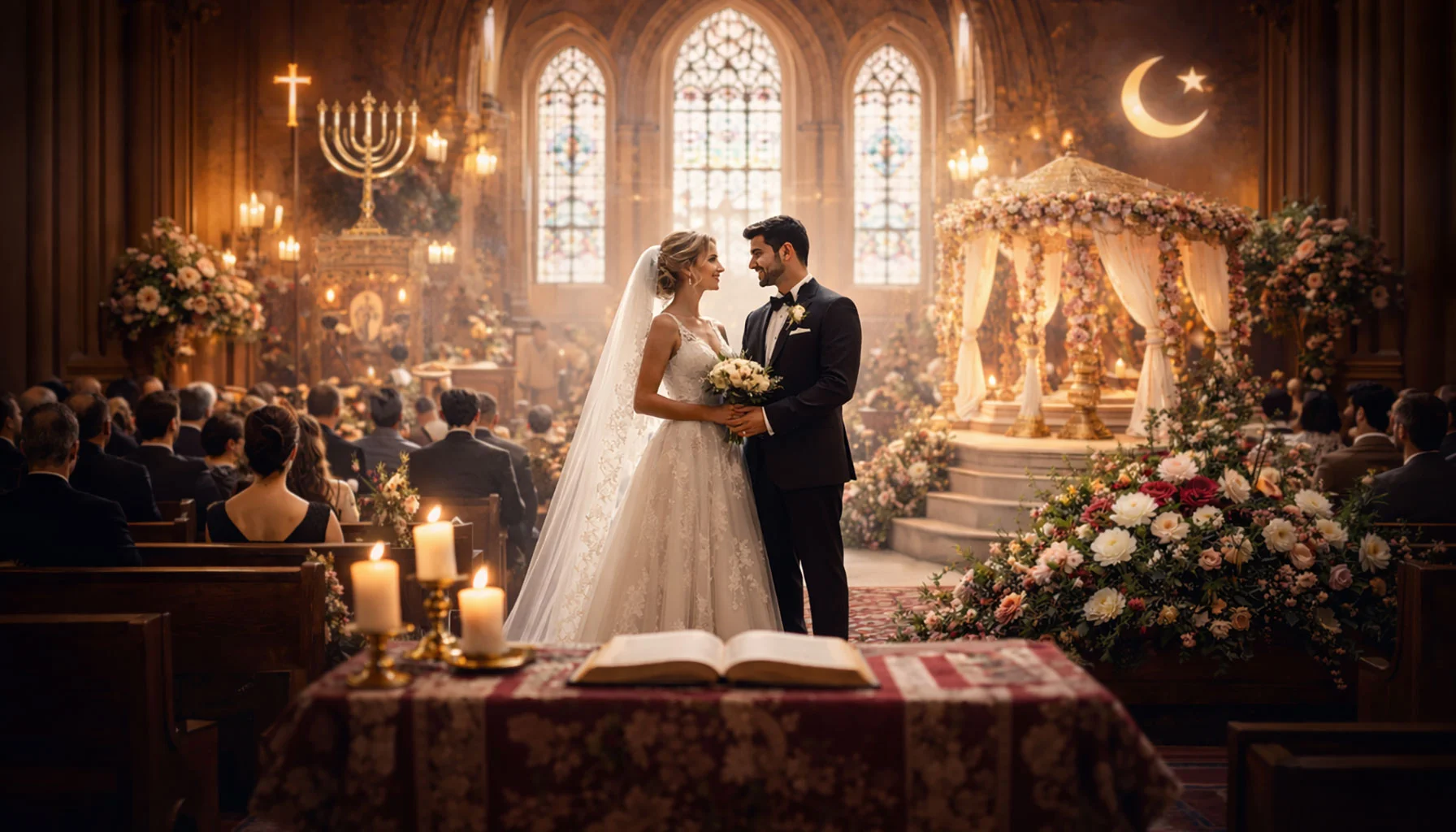
Religious Wedding Ceremonies: A Practical Overview
Religious wedding ceremonies are rarely designed around individual expression. They are shaped by inherited forms, religious authority, and symbolic acts that carry meaning through repetition. This article offers a practical overview of religious wedding ceremonies across countries and traditions while placing them within the wider logic of wedding rituals.
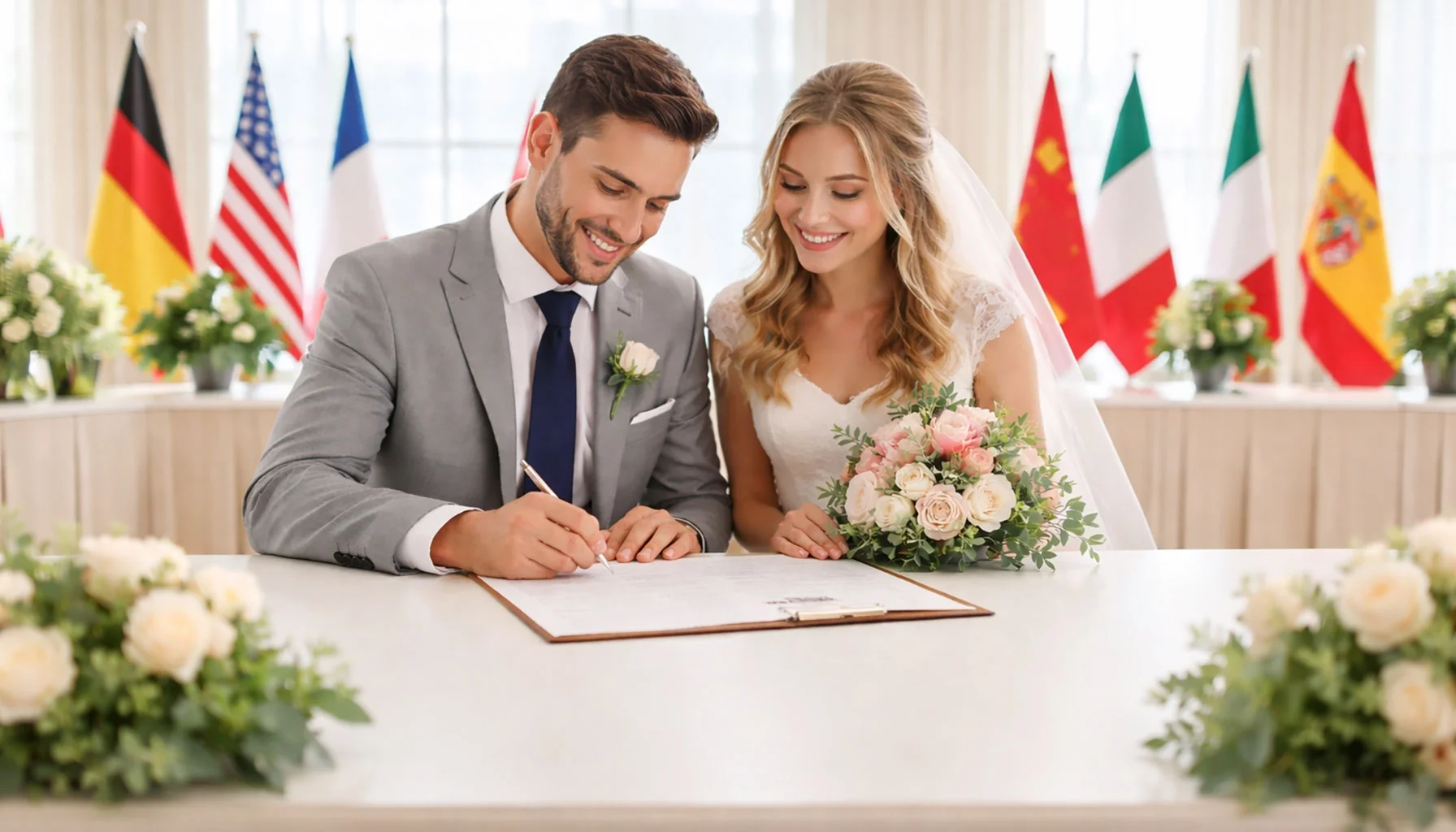
Civil Ceremonies Worldwide: Legal Requirements, Processes, Costs, and Cultural Differences
Civil ceremonies are rarely dramatic, yet they often carry one of the most decisive thresholds in a wedding journey. This article looks at civil marriage across countries through legal requirements, observed processes, cost ranges, and the quieter atmosphere that often surrounds the moment a marriage becomes official.
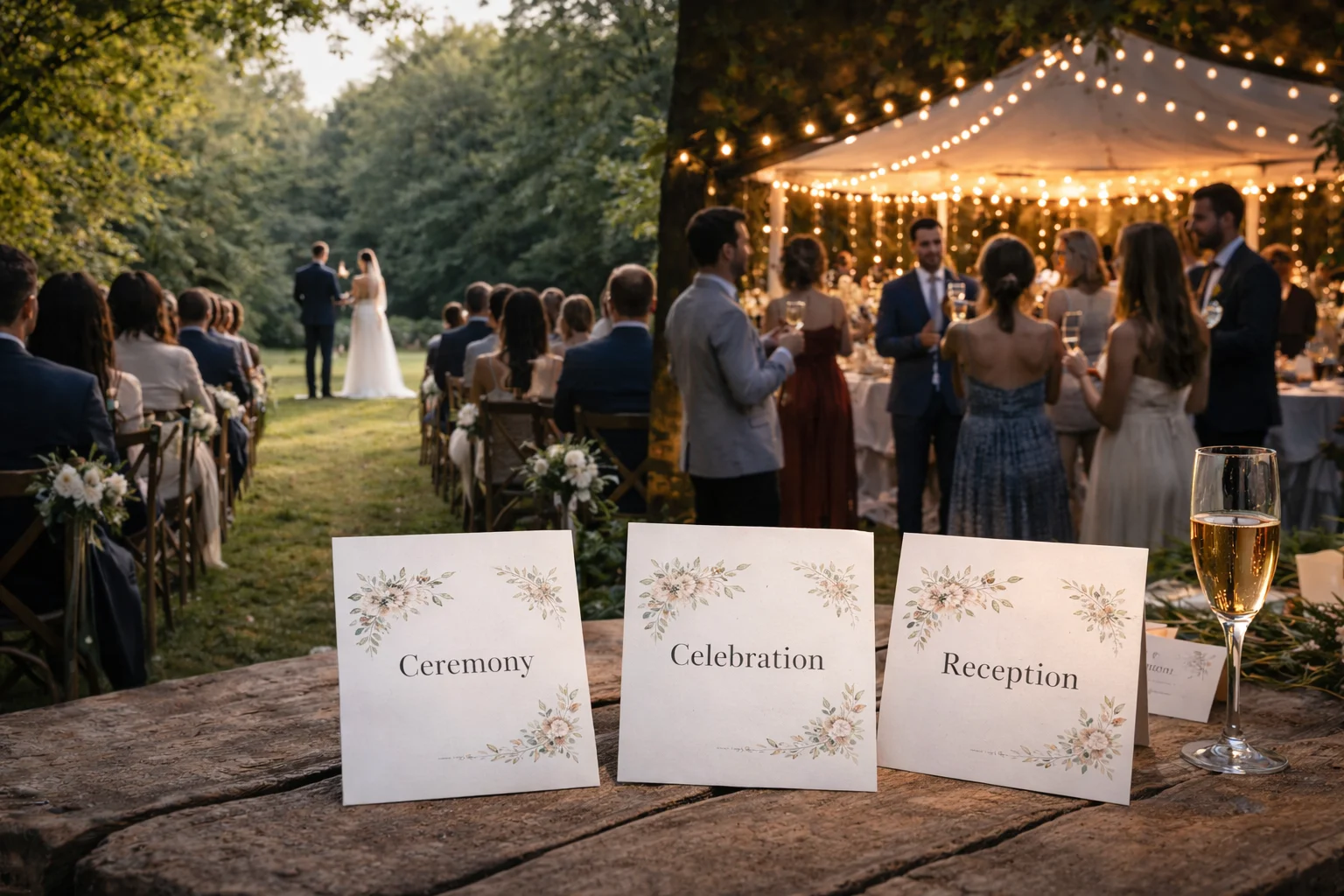
Who Is Invited to the Ceremony and Who Only to the Celebration
Not every wedding invitation has to include every part of the day. But the difference between being invited to the ceremony and being invited only to the celebration carries more meaning than many couples first assume. This article looks at how to make that distinction clearly, gracefully, and in a way that fits both the ritual weight of the ceremony and the social reality of the celebration.
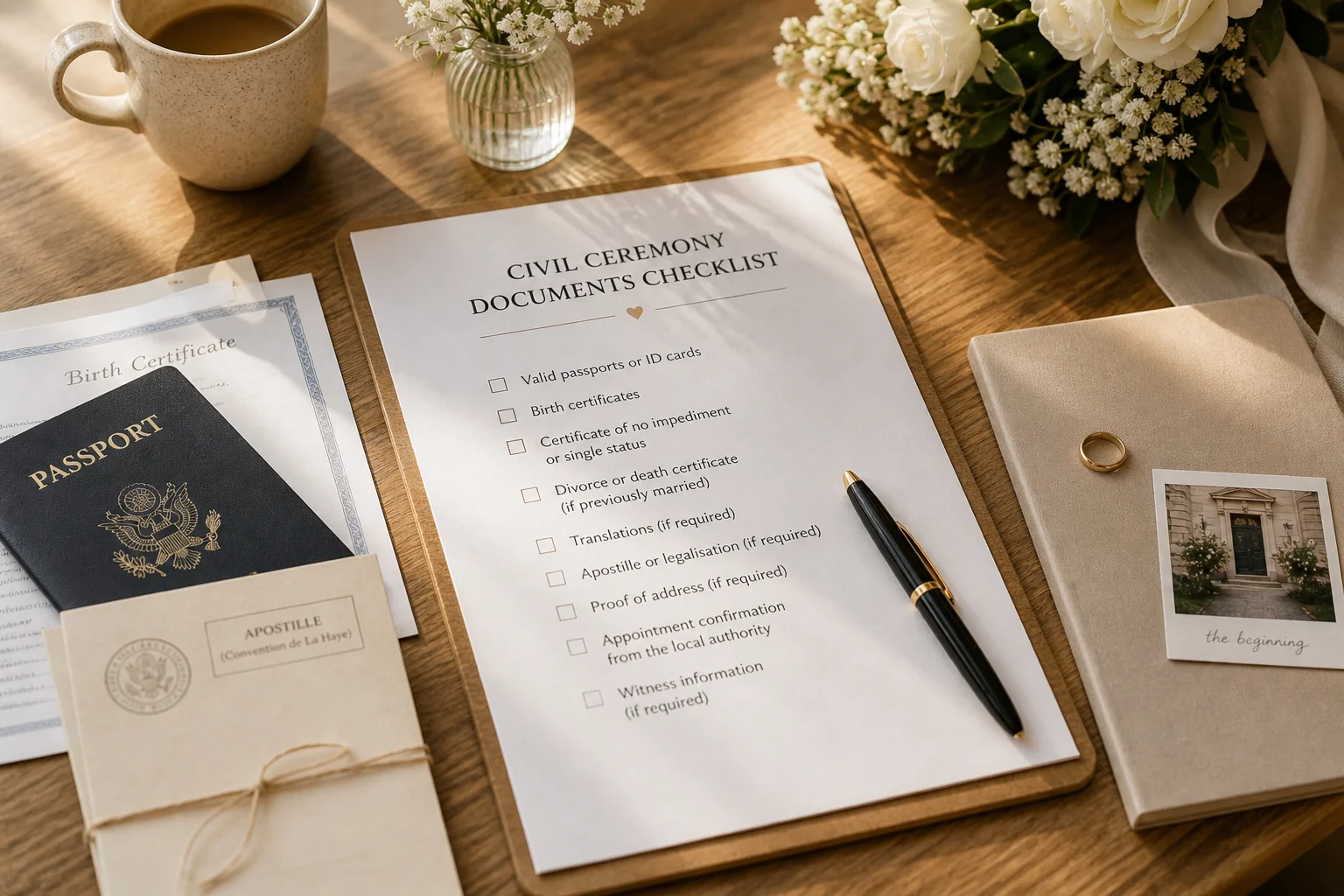
Civil Ceremony Documents Checklist: What Couples Usually Need Before the Wedding Can Happen
A civil ceremony may look simple, but it depends on documents being accepted before the public moment can begin. This article looks at identity records, marital status proof, translations, apostilles, witnesses, appointment rules, and the quiet legal threshold before the ceremony.

Wedding Transport Checklist: Arrivals, Transfers, Parking, and Late-Night Returns
Wedding transport is rarely remembered when it works, but it shapes the day long before the ceremony begins and long after the central moment has passed. This article looks at what still needs to be planned around arrivals, transfers, parking, and late-night returns, and why movement and waiting belong more closely together than many couples expect.
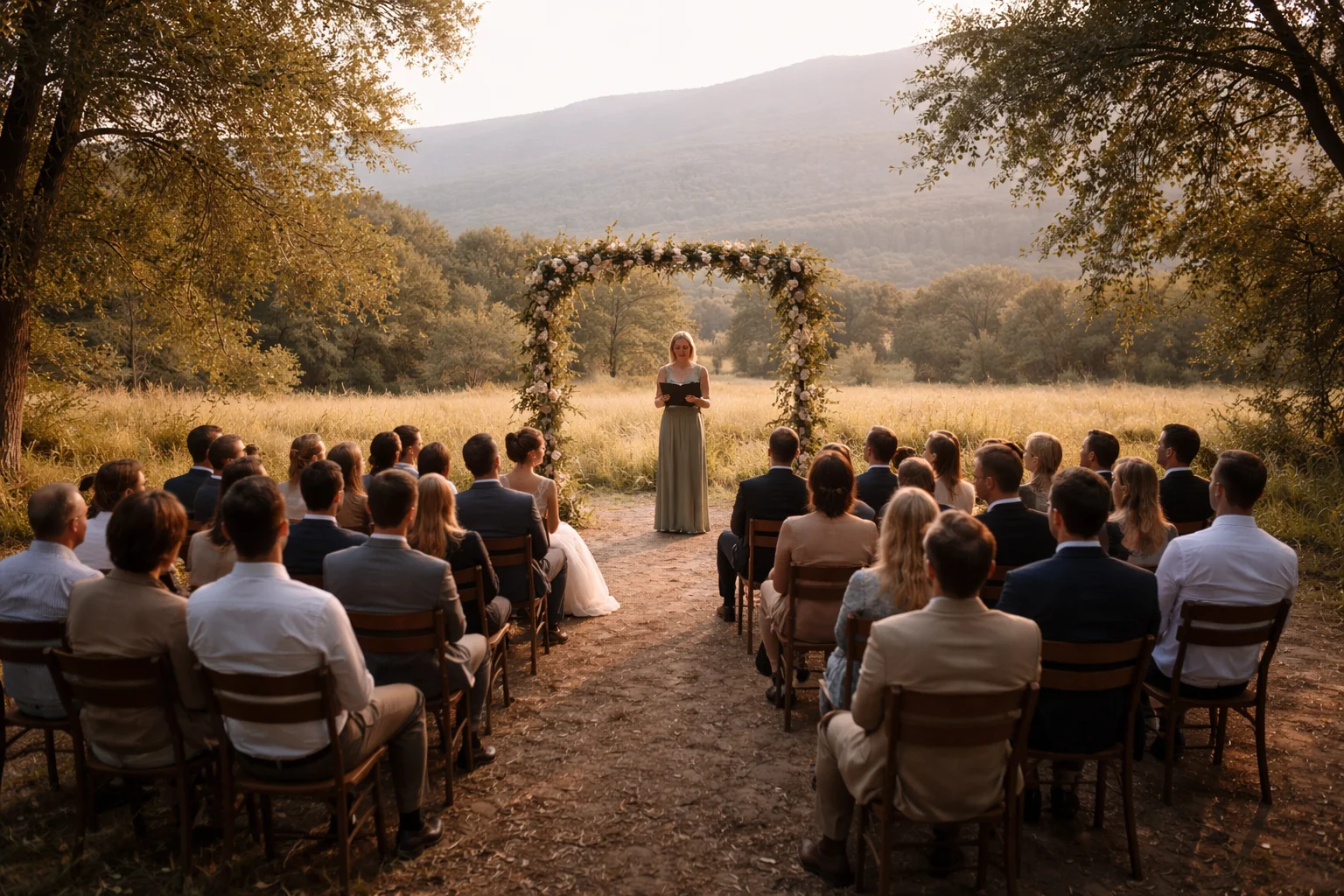
Free Ceremony Officiants: Presence, Voice, and the Shape of Attention
In a free ceremony, the officiant cannot lean on inherited authority or a structure everyone already recognizes. What carries the moment instead is subtler: presence, voice, timing, and the ability to hold attention without gripping it too tightly. This article looks at how officiants shape free ceremonies through the smallest visible forms of guidance.