
Raw Materials in Minimal Weddings (Stone, Linen, Wood)
Raw Materials in Minimal Weddings (Stone, Linen, Wood)
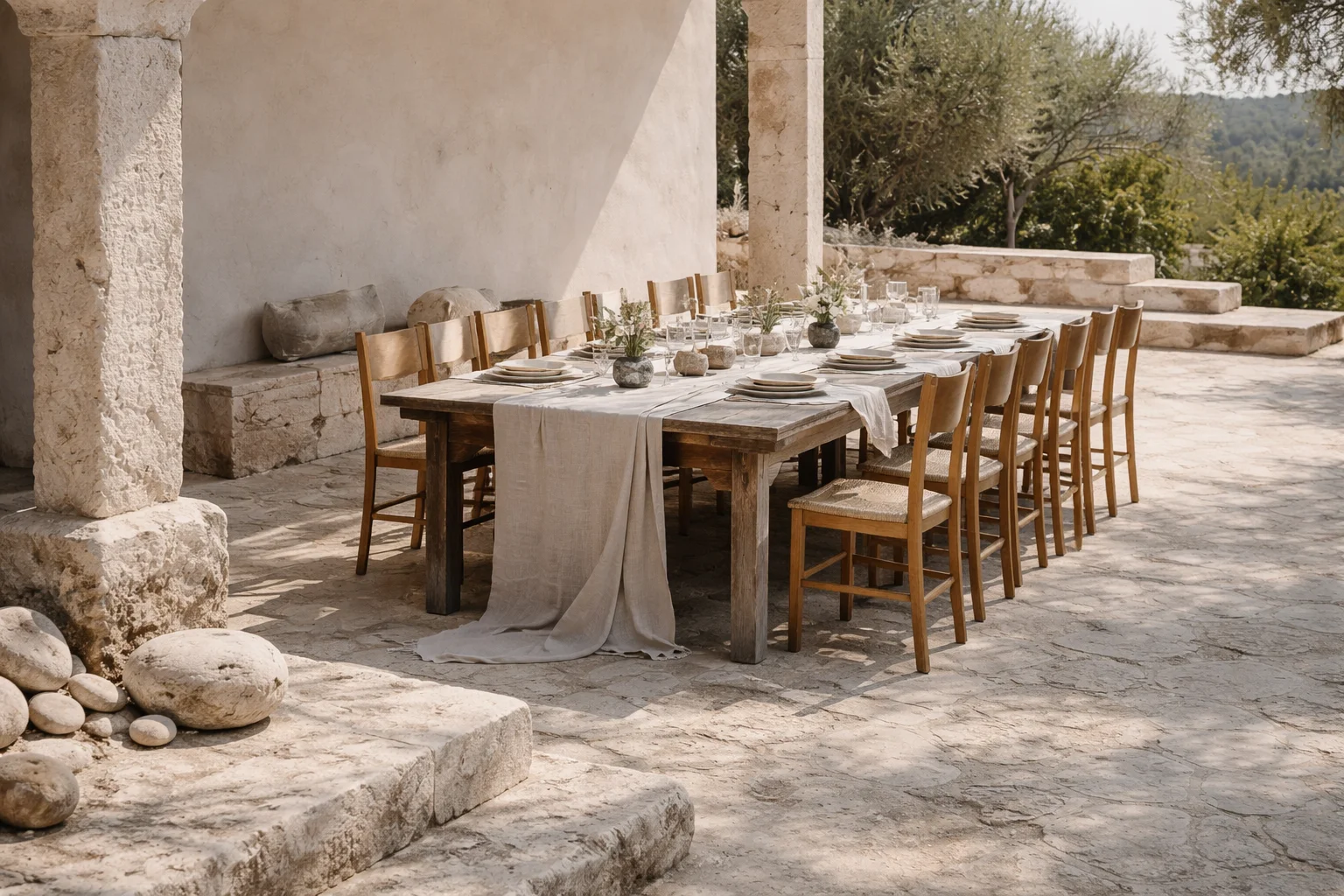
In different settings, these materials sit there without needing much attention. Guests touch them, lean on them, pass by. Nothing asks for focus directly. Still, there is a certain calm in how surfaces meet each other. Not designed to impress, more like they were always part of the place.
Definition
Raw materials in minimal weddings describe the use of natural elements such as stone, linen, and wood in a state that stays close to their original form, with texture, irregularities, and natural tones left visible rather than refined or concealed.
Stone Surfaces
Stone shows up in quiet ways. Floors, table tops, sometimes just blocks or smaller pieces. It holds weight, that is noticeable. Edges are not always clean, tones shift slightly. Light does not bounce much, it kind of settles. People do not talk about it, but it stays present the whole time.
Linen Textiles
Linen is rarely flat. It folds, it creases, sometimes uneven across the table. Napkins look used even when they are not. The fabric moves a bit, especially outside. It softens things, but not in a polished way. More like it just adapts to whatever is around it.
Wood Elements
Wood carries warmth, but quietly. Tables, benches, small structures. The grain stays visible, sometimes darker, sometimes lighter in the same surface. There are marks here and there. They are usually not corrected. It feels stable, but not overly finished.
Surfaces and Imperfections
Small irregularities stay in place. Scratches, slight chips, color differences. They are not highlighted, but also not hidden. It creates a kind of unevenness that does not disturb the setting. If anything, it keeps things from feeling too controlled.
Spatial Use
Objects are placed without much layering. A table, linen on top, space around it. Not much added. Distances between elements remain open, sometimes even a bit wider than expected. Each material stays readable on its own, without needing support from others.
Conclusion
Raw materials in minimal weddings stay in the background but do not disappear. They hold the space in a steady way. Texture, weight, and small variations remain visible, creating an environment that feels settled, not overly adjusted, and quietly complete.
Related Articles
When Less Makes the Ceremony Clearer
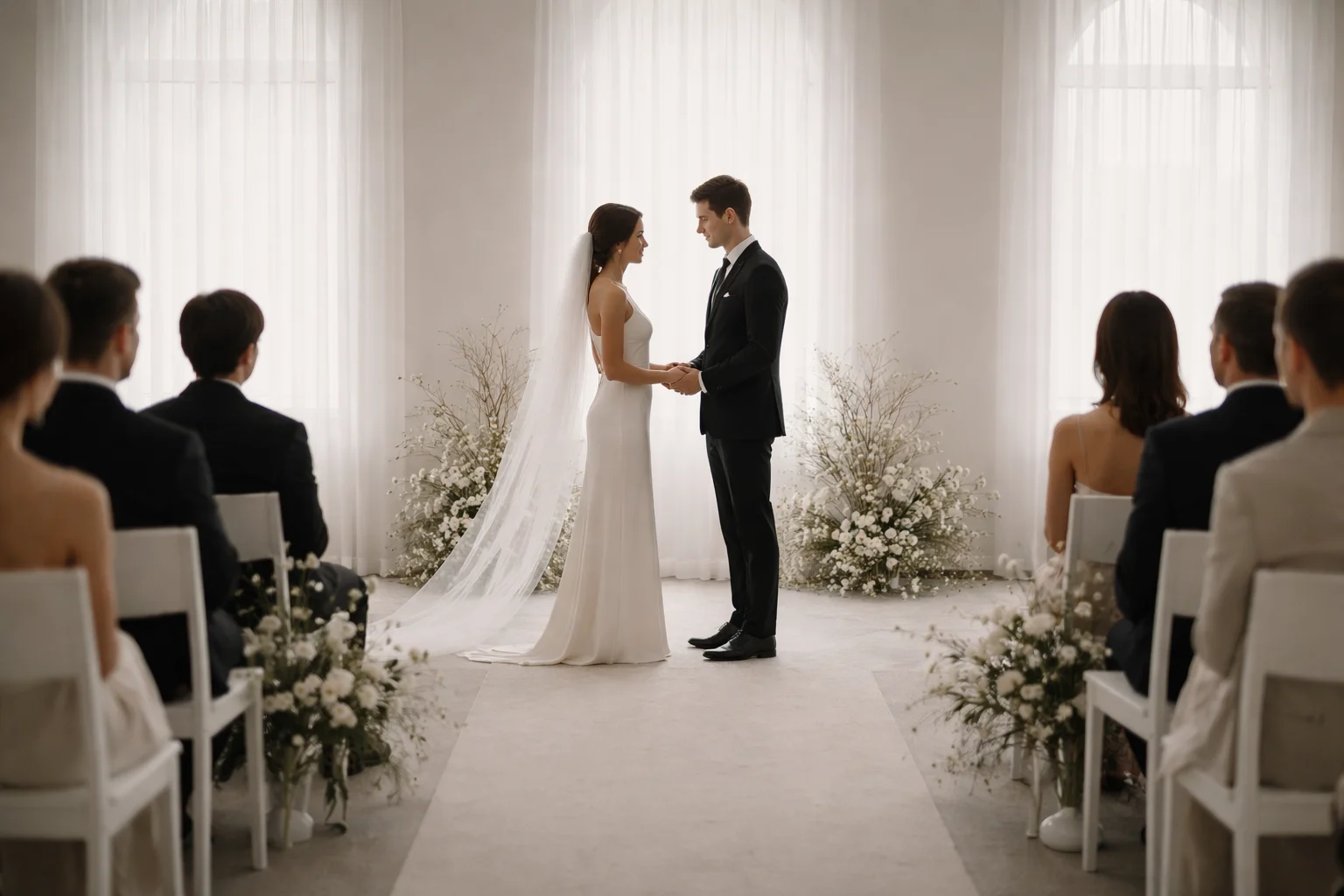
Minimal weddings are often described as a reduction. Fewer elements, fewer decisions, fewer visible layers. Tables are cleared, colors are restrained, schedules are simplified. What remains can feel almost quiet in comparison to more elaborate celebrations.
The Art of Modern Minimal Weddings
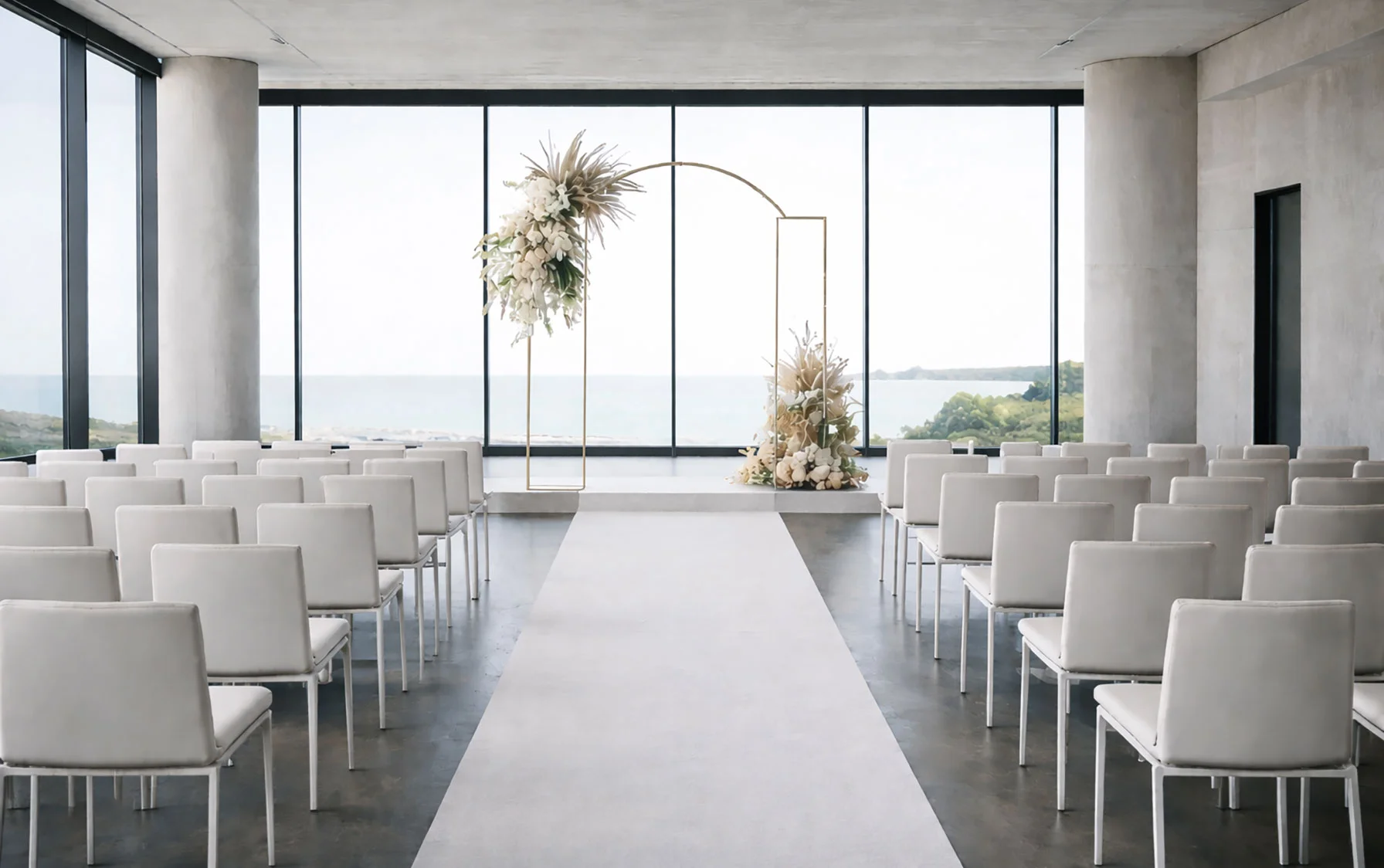
Modern and minimalist weddings tend to feel calm and deliberate. Spaces are clear. Timelines are structured without pressure. Choices are visible, but never loud. Instead of many details, attention shifts to light, proportion, and material. Guests move through the day with ease, conversations unfold naturally. This style of celebration relies on reduction, not restraint. It creates closeness through clarity and leaves room for what matters.
Minimal Wedding Timeline Checklist: How to Leave Space Without Losing Structure
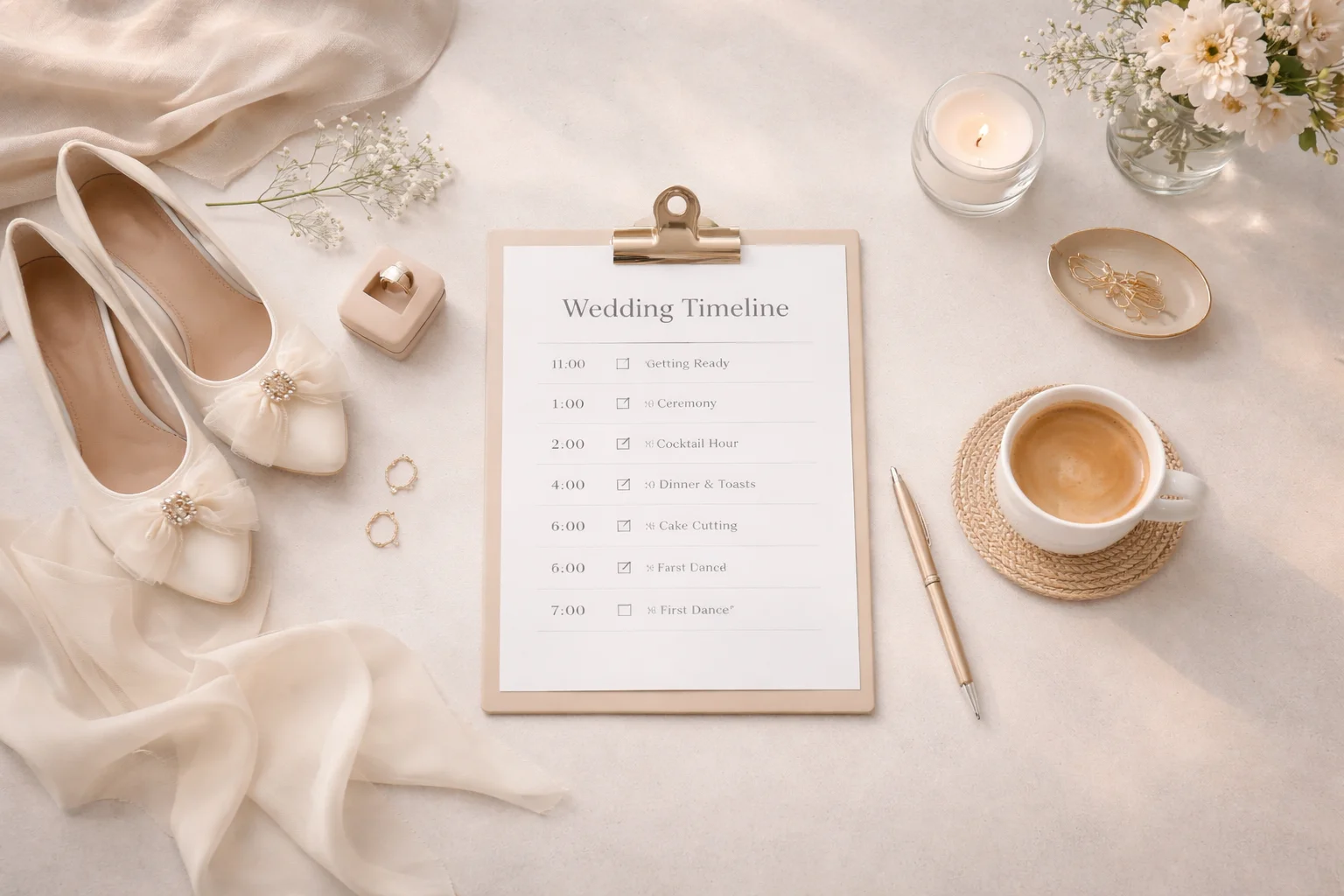
A minimal wedding does not need to fill every moment too early. This checklist helps couples create a calm celebration with space, timing, and intentional restraint, while recognizing that waiting itself can shape the emotional atmosphere of the day.