
When Less Makes the Ceremony Clearer
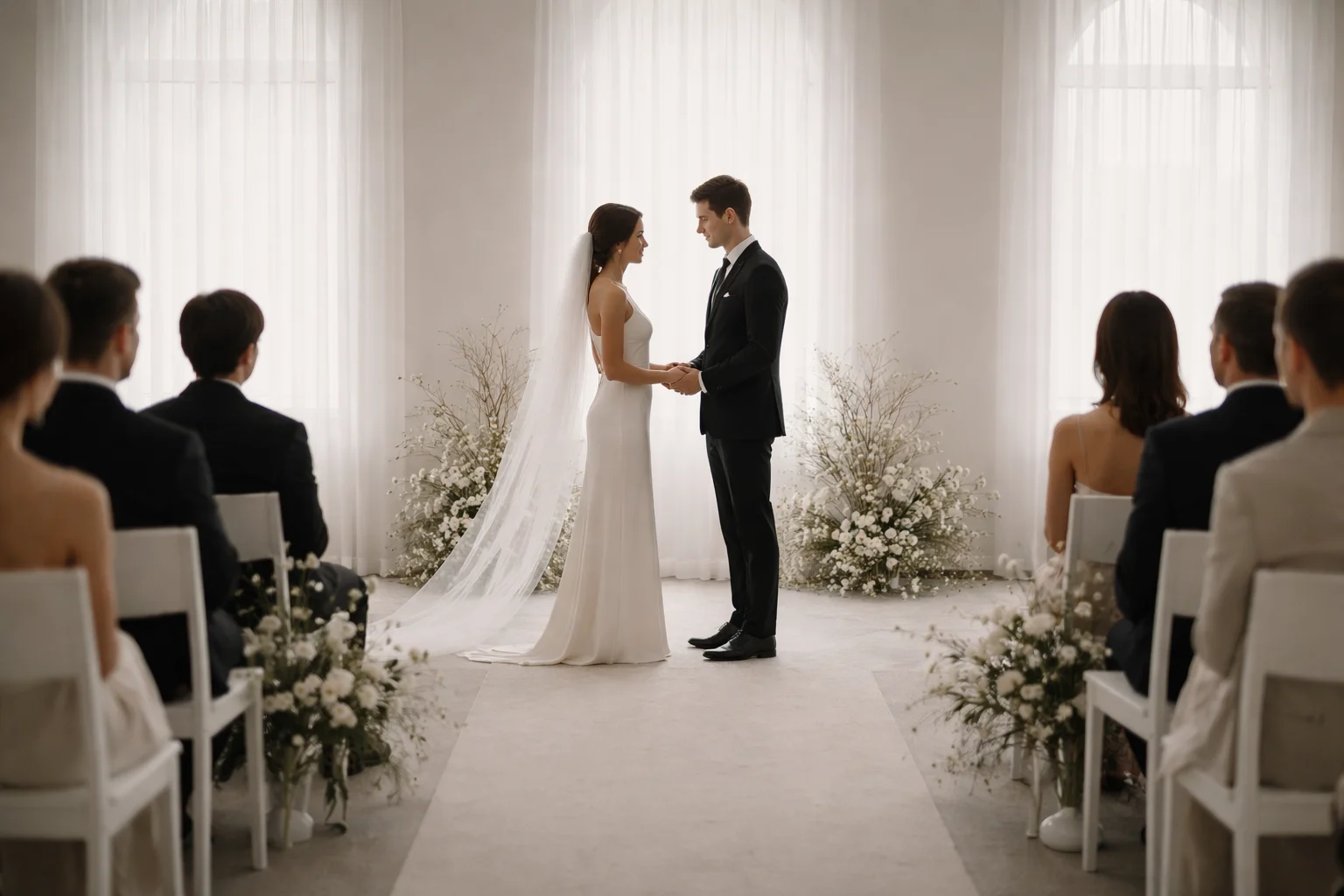
When Less Reveals What a Ritual Actually Is
But what becomes apparent in that reduction is not emptiness. It is structure. Without decoration to carry the experience, the ceremony itself comes into focus. Gestures, timing, and small movements begin to matter more, because there is nothing else to distract from them.
Minimal WeddingsIdeas and approaches for weddings defined by clarity, simplicity, and intention.
Wedding RitualsAn overview of rituals that shape the structure and meaning of a wedding ceremony.
Definition
A minimal wedding focuses on essential elements, reducing visual and logistical complexity while emphasizing clarity, intention, and the core structure of the ceremony.
What Remains When Decoration Is Removed
When visual layers are reduced, the ceremony itself becomes more visible. The way two people stand, the timing of a vow, the brief pause before a response. These details are always present, but in a minimal setting they are no longer background.
Ritual Without Emphasis
Many wedding rituals are designed to be noticeable, but they do not require emphasis to hold meaning. A ring exchange or a shared gesture can remain simple and still carry weight. In a minimal context, these actions are allowed to exist without being framed as highlights.
Silence Becomes Part of the Structure
Without constant activity or decoration, moments of silence become more noticeable. They are not interruptions, but part of the rhythm. A pause between words, a stillness before movement. These moments shape how the ceremony is experienced.
Planning With Fewer Elements
Minimal weddings still require careful planning, but the focus shifts. Instead of coordinating many elements, attention moves toward proportion, timing, and flow. Each decision becomes more visible because there are fewer to balance it.
Meaning Is Harder to Avoid
In a more elaborate setting, meaning can be distributed across many details. In a minimal one, it concentrates. The ceremony does not rely on atmosphere to carry it. What is done, and how it is done, becomes more direct.
Conclusion
A minimal wedding does not remove meaning. It makes it harder to overlook. By reducing what surrounds the ceremony, it brings attention back to what has always been there. The ritual itself, steady and unchanged, becomes the center again.
Related Articles
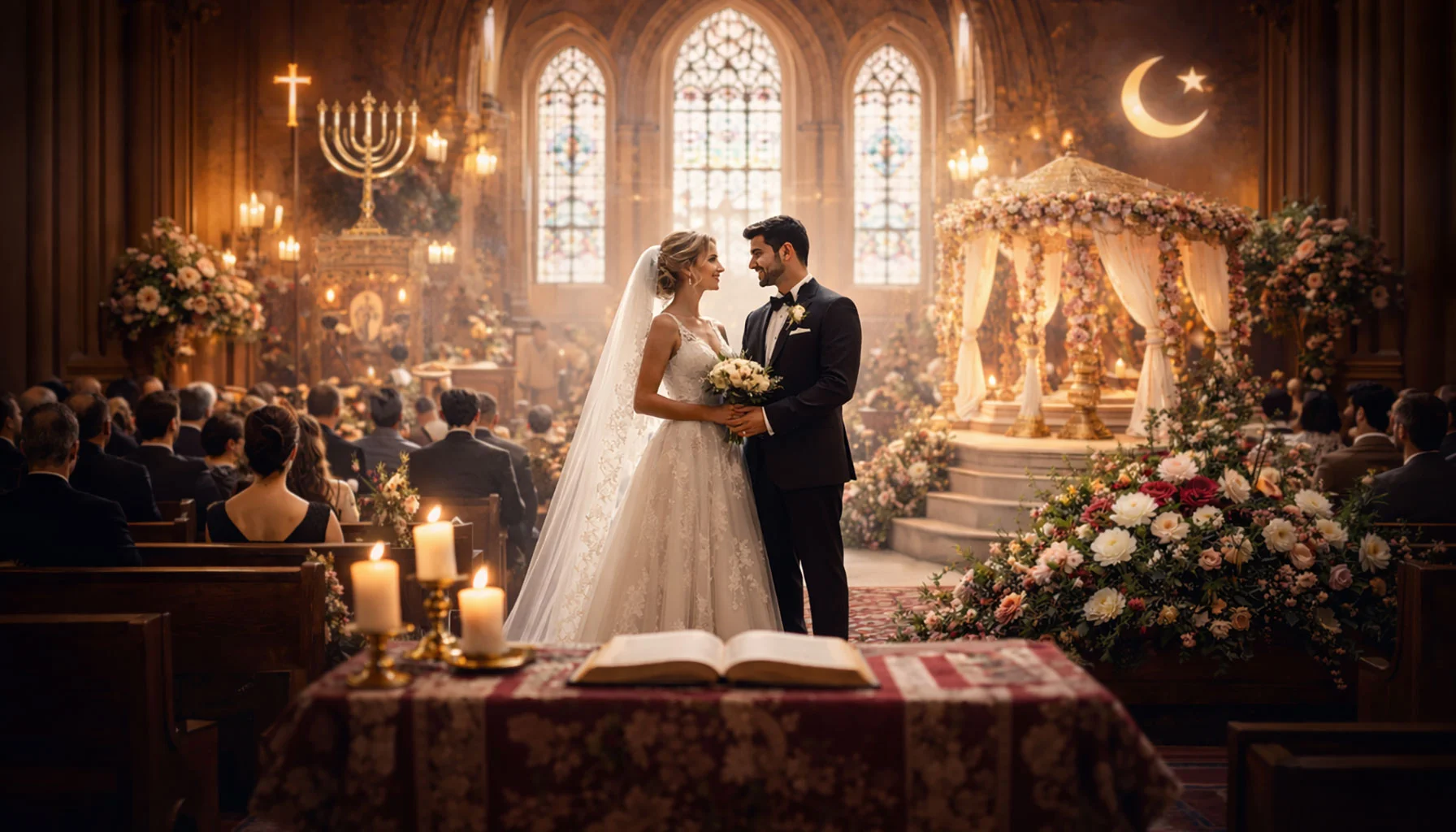
Religious Wedding Ceremonies: A Practical Overview
Religious wedding ceremonies are rarely designed around individual expression. They are shaped by inherited forms, religious authority, and symbolic acts that carry meaning through repetition. This article offers a practical overview of religious wedding ceremonies across countries and traditions while placing them within the wider logic of wedding rituals.
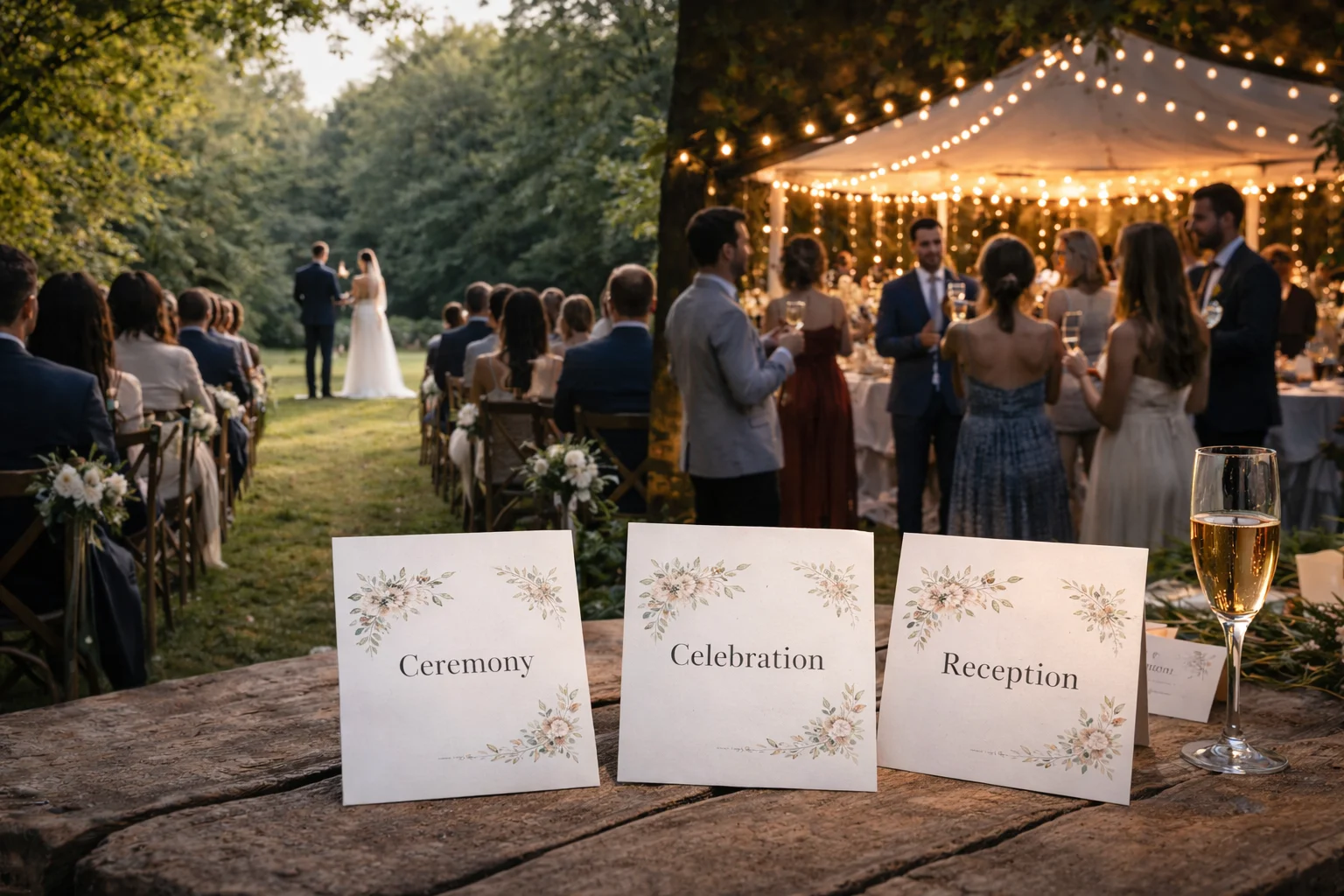
Who Is Invited to the Ceremony and Who Only to the Celebration
Not every wedding invitation has to include every part of the day. But the difference between being invited to the ceremony and being invited only to the celebration carries more meaning than many couples first assume. This article looks at how to make that distinction clearly, gracefully, and in a way that fits both the ritual weight of the ceremony and the social reality of the celebration.
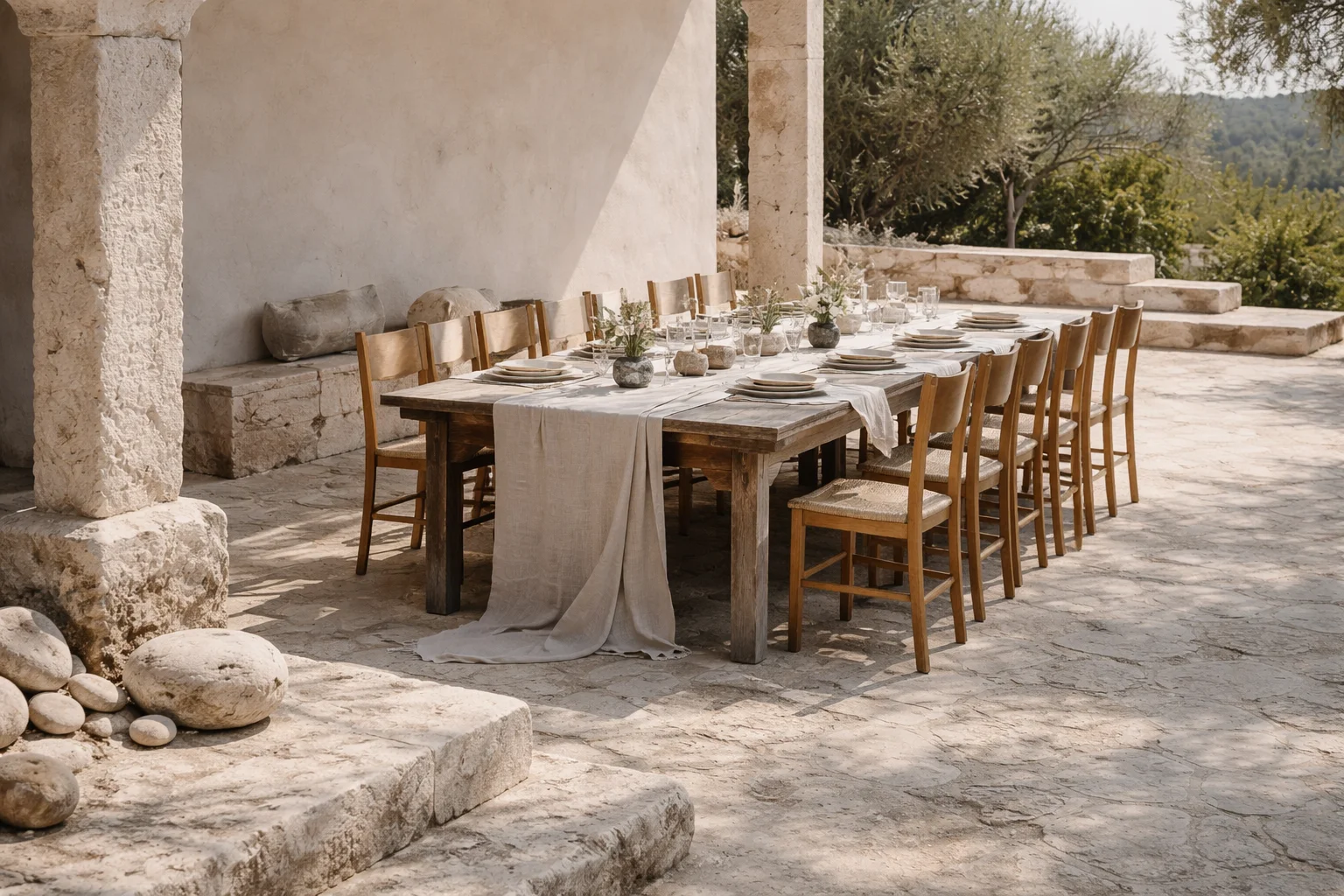
Raw Materials in Minimal Weddings (Stone, Linen, Wood)
Minimal weddings sometimes move closer to what is already present. Materials are not covered or heavily adjusted. Stone, linen, wood stay visible, sometimes almost too plain at first glance. The setup can feel a bit reduced, but not empty, just less arranged.
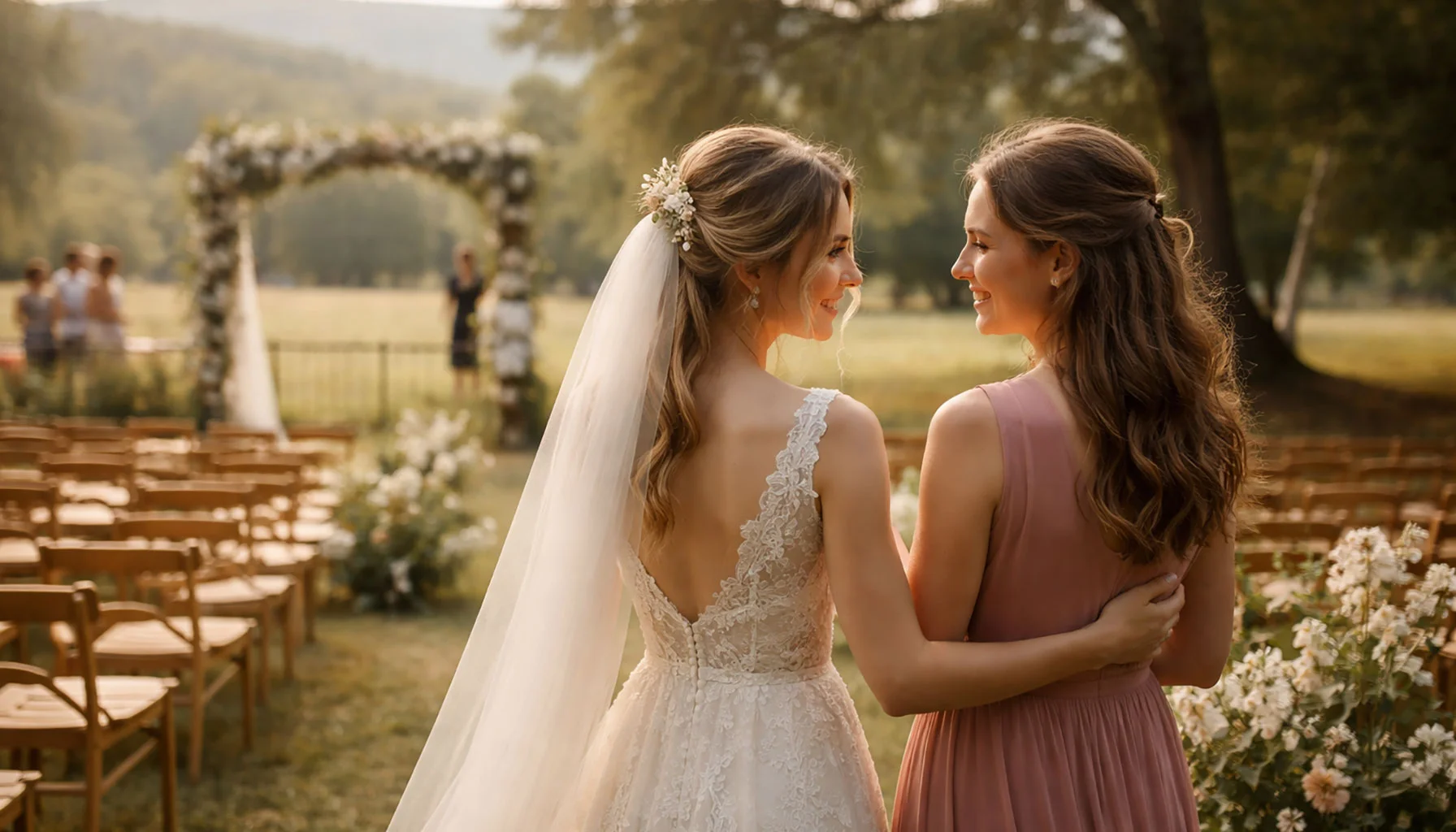
The Maid of Honor at the Wedding
How bridesmaids are chosen, what tasks they perform, and why their presence often remains quiet. A text from observations of weddings, conversations, and moments away from the center.
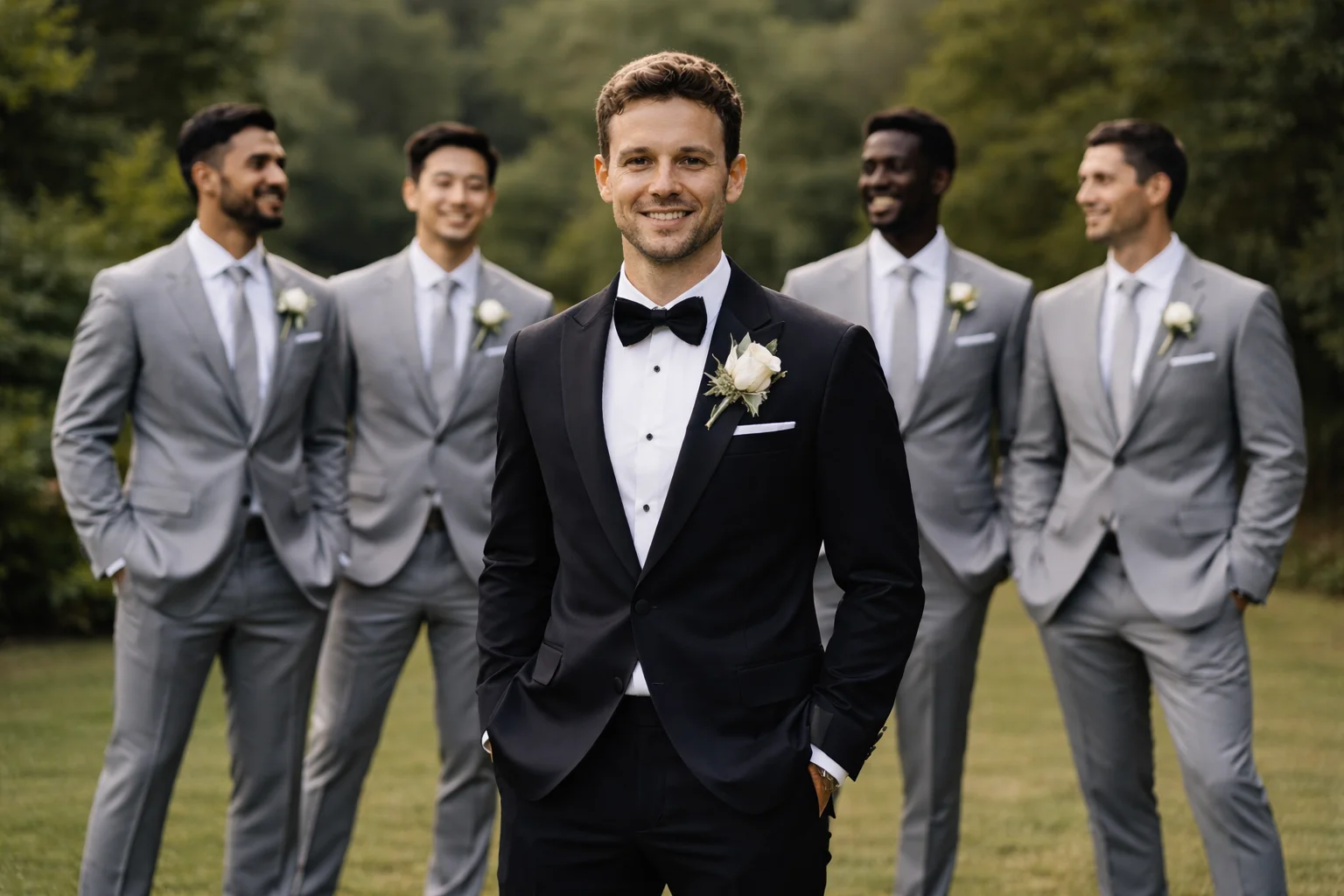
How the Groom Stands Out Among the Groomsmen
When several men stand together at a wedding the clothing often looks almost identical at first. Same color range, similar jackets, same shoes in many cases. The group reads as one block. This is not accidental. Wedding styling usually leans toward visual unity for the wedding party.
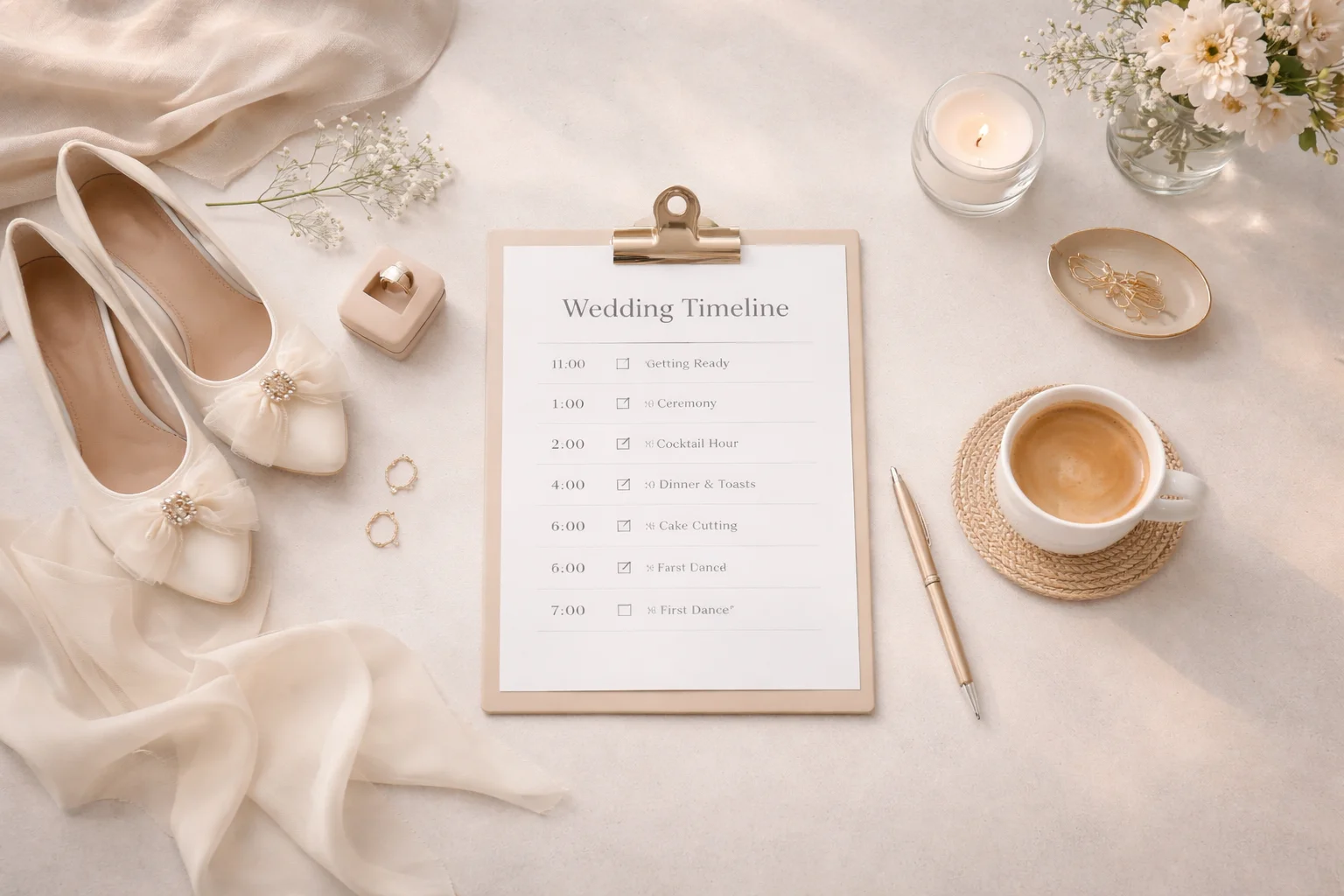
Minimal Wedding Timeline Checklist: How to Leave Space Without Losing Structure
A minimal wedding does not need to fill every moment too early. This checklist helps couples create a calm celebration with space, timing, and intentional restraint, while recognizing that waiting itself can shape the emotional atmosphere of the day.
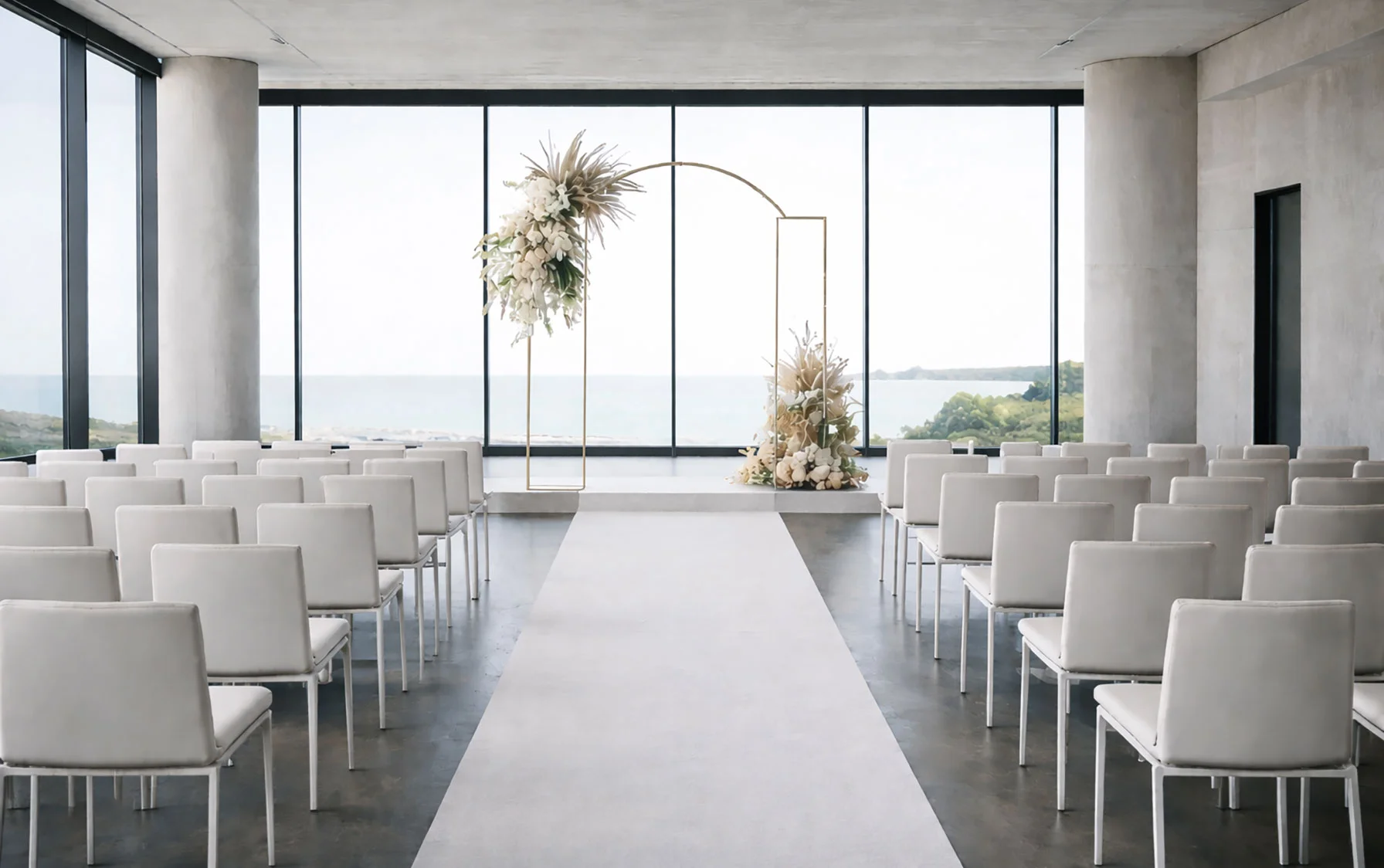
The Art of Modern Minimal Weddings
Modern and minimalist weddings tend to feel calm and deliberate. Spaces are clear. Timelines are structured without pressure. Choices are visible, but never loud. Instead of many details, attention shifts to light, proportion, and material. Guests move through the day with ease, conversations unfold naturally. This style of celebration relies on reduction, not restraint. It creates closeness through clarity and leaves room for what matters.
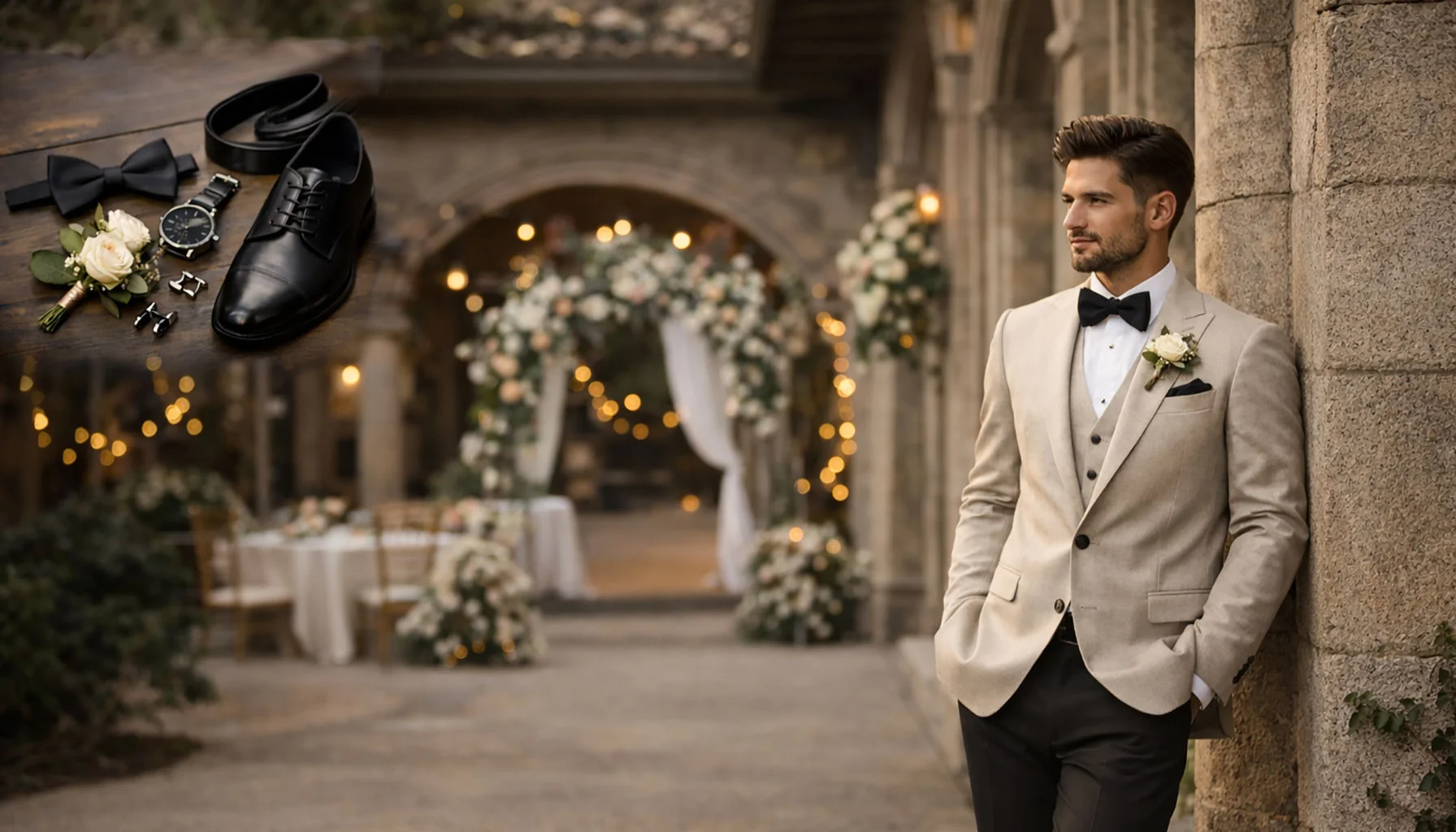
The Art of Groom’s Style – Timeless Elegance, Modern Trends & Personal Expression for an Unforgettable Wedding Day
Groom’s style has become a stable part of modern wedding design. It no longer follows a fixed formula, yet it also avoids constant reinvention. This article looks at groom style as a form of visual presence shaped by fit, material, context, and the ritual structure of the wedding day.