
Who Pays for What? A Wedding Budget Checklist for Couples and Families

Wedding budgets often become more complicated the moment money comes from more than one place. What first feels like support can also carry expectation, influence, uncertainty, or hesitation that no one wants to name too early. A family contribution may be generous and welcome, but if the terms remain vague, the budget can slowly become unclear in ways that affect much more than spending.
That is why this topic belongs inside Budget. But it also belongs near What Is Not Said, because wedding money is rarely only financial. It often carries tone, loyalty, pressure, restraint, and the quiet assumption that everyone understands the same thing without needing to say it aloud.
A practical wedding budget checklist should therefore include one difficult but necessary question early on: who is paying for what, and what does that support quietly mean? The answer does not need to create conflict. In many cases, it prevents it.
Budget | Loving RocksWedding budget guidance for realistic planning, shared priorities, and calmer financial decisions.
Wedding Budget Checklist for Couples and Families
This checklist is for couples who are funding the wedding alone, partly with family support, or mainly through family contributions. The purpose is not to formalize every relationship. The purpose is to reduce the confusion that appears when money shapes decisions without clear language around it.
1. Name Every Financial Contributor Clearly
- Has every person or group contributing money been named clearly?
- Does the couple know the exact amount, estimate, or limit of each contribution?
- Is support already confirmed, or only loosely mentioned?
- Has anyone assumed a contribution without hearing it directly?
A budget becomes unstable the moment an assumed contribution is treated as real money. Polite hints are not the same as confirmed support.
2. Clarify Whether Contributions Are Gifts or Influence
- Is the contribution being given freely, or does it carry expectations?
- Has anyone linked financial help to guest count, venue style, traditions, or specific decisions?
- Do both partners understand what influence, if any, comes with the money?
- Has this been spoken openly, or only felt indirectly?
This is one of the most important areas where budget meets silence. Support can become difficult not because it exists, but because its conditions remain unspoken. A contribution may sound generous on the surface while quietly narrowing what the couple feels allowed to choose.
3. Decide What the Couple Will Cover Independently
- Have the couple identified which costs they want to keep under their own control?
- Are there expenses they prefer to fund themselves even if help is offered?
- Has independence been discussed as a value, not only as a financial issue?
- Do both partners feel the same about where outside support is welcome and where it is not?
Not all financial help is equally easy to receive. Some couples feel relieved by shared costs. Others feel that certain parts of the wedding should remain entirely their own. Both positions are valid, but they need language.
4. Connect Guest Count to Financial Reality
- Has guest count been treated as a cost driver, not only a social question?
- Do contributors understand how additional guests affect the total budget?
- Has anyone added names informally without discussing cost impact?
- Are family invitation expectations clearly matched to the available budget?
Guest count is where many quiet assumptions become expensive. A few additional names can feel harmless in conversation and very different once the real numbers appear.
5. Set Priorities Before Agreeing to Extras
- Have the top wedding priorities been named by the couple first?
- Do contributing family members understand those priorities?
- Are extra requests being evaluated against the actual budget plan?
- Has anyone started committing money to low-priority items too early?
A wedding budget becomes easier to protect when the center is clear. Without priorities, every request starts sounding equally important.
6. Notice the Pressure That No One Wants to Name
- Is anyone agreeing too quickly to avoid disappointing a parent or relative?
- Is anyone staying quiet because the money conversation feels uncomfortable?
- Has gratitude made it harder to name a real concern?
- Are there signs that people are complying outwardly while becoming inwardly frustrated?
This is where the budget moves closest to What Is Not Said. Silence often looks harmless while plans are still forming. Later it becomes visible in resentment, last-minute conflict, or spending that no longer reflects what the couple actually wanted.
7. Agree on a Boundary for New Costs
- Is there a point above which new spending must be discussed first?
- Do both partners know who can approve additional costs?
- Can family contributors propose changes without making them feel mandatory?
- Has a buffer been reserved for surprises and last-minute adjustments?
A budget needs a clear pause point. Without one, decisions keep moving forward simply because no one wants to interrupt the momentum.
What often remains unspoken when families help pay
Family support can make a wedding more possible, less stressful, and more generous in spirit. But it can also introduce a second layer of planning that no spreadsheet fully captures. A parent may feel entitled to shape decisions without saying so directly. A couple may feel grateful and constrained at the same time. A sibling may notice uneven expectations but decide it is better not to say anything. The budget may look balanced on paper while emotionally becoming harder to carry.
That does not mean shared funding is a problem. It means shared funding works best when people speak before silence starts organizing the situation on its own. The unspoken rarely stays still. It usually enters through tone, delay, avoidance, or soft pressure that nobody wants to classify as conflict.
What Is Not Said | Loving RocksSilence does not remove pressure. It often stores it until it returns with more weight.
A strong wedding budget conversation is therefore not only about fairness. It is about steadiness. It allows support to remain support, instead of turning into confusion later. It protects generosity from becoming control, and gratitude from becoming silence.
Who pays for what is not the most romantic wedding question. But it is often one of the most stabilizing. When the financial structure is clear, people can return their attention to the day itself rather than to the unspoken negotiations moving underneath it.
Related Articles

Prenup Conversations Before the Wedding: What Should Be Said Early, Calmly, and Clearly
Prenup conversations are rarely only about money. This article looks at timing, fairness, family history, debt, business ownership, inheritance, legal advice, and the quiet concerns couples should name before paperwork begins.

When Wedding Decoration Says More by Saying Less
In wedding planning, decoration is often discussed in visible terms: florals, candles, tables, color, scale. But the rooms people remember are rarely memorable because they were crowded with ideas. They stay with us because the space knew when to pause. A ceremony arch with air around it, a table that holds only what matters, a doorway left almost bare so that the people moving through it become the focus: these choices do more than decorate. They create emotional direction through wedding decoration that feels considered rather than performed.

Some Things Only Work With Certain Guests
Wedding activities rarely work on format alone. They depend on guest chemistry, timing, shared ease, and the unspoken permissions already moving through the room before anyone fully names them.

Where Summer Weddings Leave Space for What Is Not Said
Summer weddings are often described through what is visible. Long evenings, warm air, open spaces, movement that feels almost continuous. Guests arrive without coats, conversations stretch, the day seems to expand beyond its schedule. It is a season that suggests ease.

DJ, Live Band or Hybrid Concept: Choosing What Truly Fits
Music is one of the earliest wedding decisions and one of the least understood until the day begins to take real shape. The choice between a DJ, a live band, or a hybrid concept is rarely only about taste. It changes timing, movement, conversation, and how the evening is allowed to breathe.

Wedding Budget Conversations Checklist: What Should Be Said Before Money Turns Quiet
A wedding budget is rarely only about numbers. This checklist helps couples and families name financial expectations, priorities, and unspoken pressure before silence turns into confusion, tension, or unnecessary cost.

The Complete Wedding Budget Guide: Realistic Costs, Smart Planning & What to Expect
A wedding budget is more than a total amount. It shapes how smoothly a day runs, how supported guests feel, and how much flexibility exists behind the scenes. Observations from real weddings show that clarity around costs brings calm into the process. When hosts understand what a budget realistically provides, decisions become steadier. The celebration may not grow bigger, but it often feels more coherent.
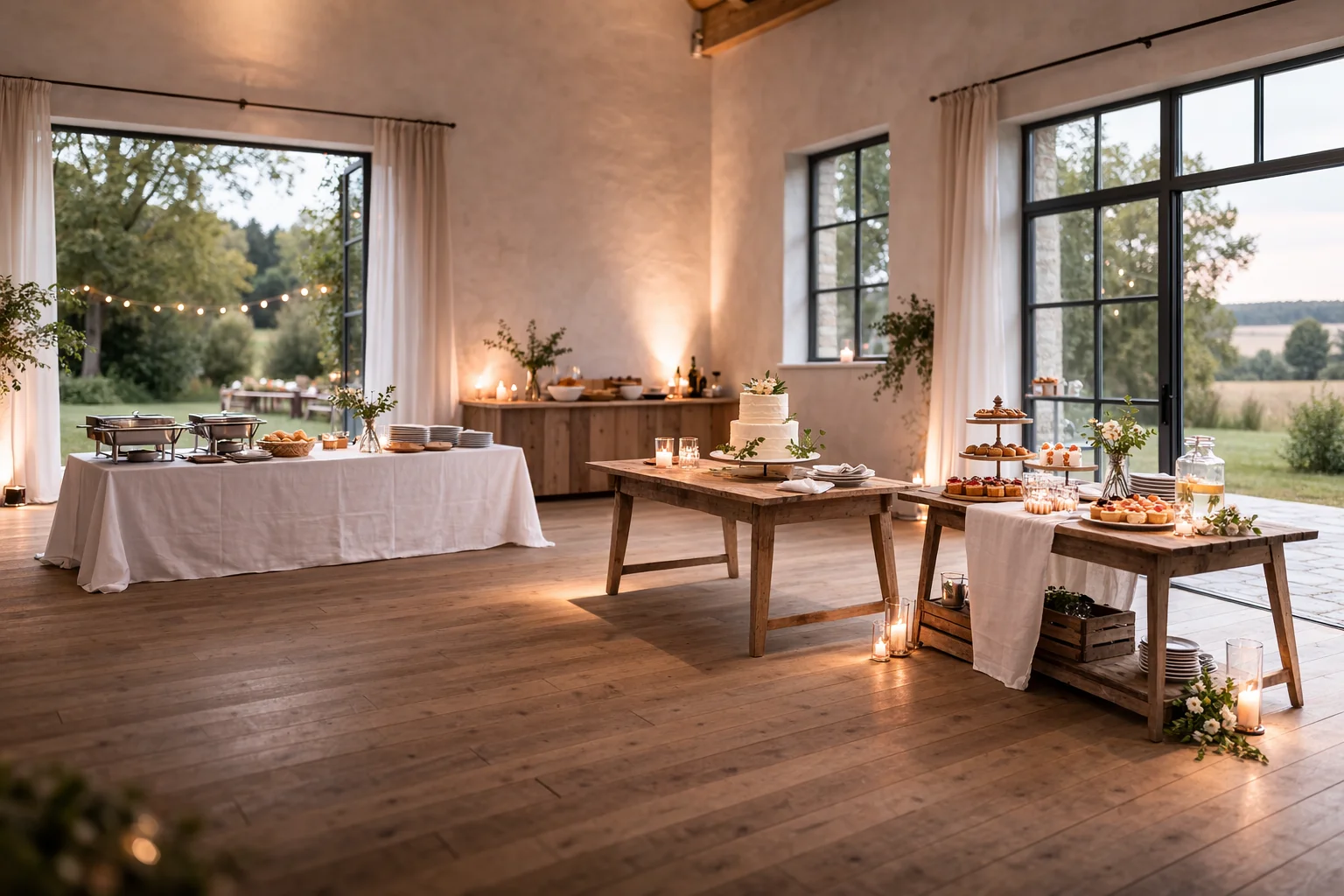
Flowers Near Food at Weddings: Buffet and Dessert Table Placement
Flowers sometimes end up close to food. Not always by clear decision. More because the rest of the room is already filled, and these zones remain. Then something gets added there too. It does not look unusual once it is in place.

Wedding Website Checklist: What Guests Actually Need, and What They Ignore
Wedding websites work best when they reduce uncertainty instead of filling space. This article looks at what guests actually need to find quickly, what they usually ignore, and which unspoken questions a good website can answer before they become messages to the couple.

A Timeline Holds the Day, Silence Holds the Meaning
A wedding timeline organizes what happens. But what shapes the experience often lives in the pauses, the unspoken moments, and the space between events.

Last-Week Wedding Checklist: What Still Needs Attention Shortly Before the Day
The last week before a wedding is rarely about major decisions. It is about clarifying what still has weight, what can no longer be improved by adding more, and what needs to be named before it starts shaping the day in silence. This article looks at what still deserves attention shortly before the wedding and why the unspoken layer often matters most at that stage.
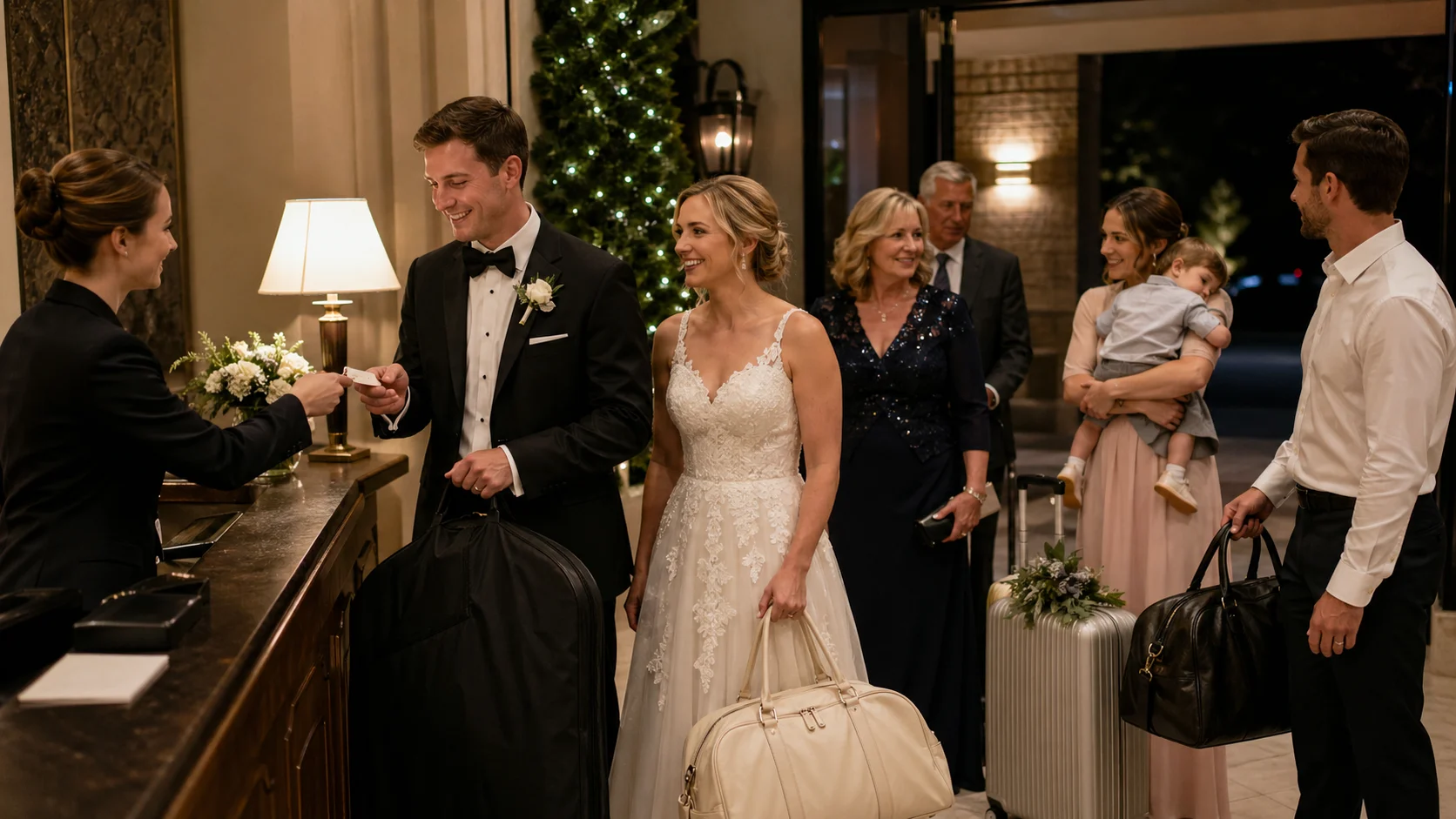
Overnight Stay Checklist: What Couples and Guests Often Realize Too Late
Overnight stays around weddings often seem solved once rooms are booked. This article looks at room access, bags, keys, transport, breakfast, checkout, and the late-night waiting moments couples and guests usually notice too late.