
Wedding Budget Conversations Checklist: What Should Be Said Before Money Turns Quiet

A wedding budget is rarely only about numbers. It is also about expectations, limits, generosity, pressure, pride, and the parts of family dynamics that do not always arrive in clear language. Many budget problems do not begin when a price is too high. They begin earlier, when important things are left vague, postponed, softened, or avoided.
That is why this topic belongs naturally to Budget. But it also belongs near What Is Not Said, because wedding money often carries more silence than couples expect. Someone assumes help without asking directly. Someone offers support without naming a limit. Someone agrees too quickly to avoid tension. What stays unspoken does not disappear. It usually returns later, with more force.
A useful wedding budget checklist should therefore include more than cost categories. It should also include the conversations that protect the budget from becoming emotionally unclear. Not every issue needs a dramatic discussion. But some things need language early enough that they do not turn into confusion later.
Budget | Loving RocksWedding budget guidance for realistic planning, clear priorities, and calmer decisions.
Wedding Budget Conversation Checklist
This checklist is not only about tracking spending. It is about naming the financial questions that couples and families often leave too open for too long. Clarity here can protect both the budget and the atmosphere around it.
1. Total Budget Expectations
- Has a realistic total budget range been named clearly?
- Do both partners understand the same number in the same way?
- Is that number fixed, flexible, or still uncertain?
- Has anyone silently assumed that the budget will expand later?
A budget becomes unstable when one person treats it as a boundary and another treats it as a soft estimate. That difference may remain invisible at first. Later it shapes every decision.
2. Who Is Contributing, and Under What Conditions
- Is financial support coming from the couple, family, or both?
- Have all contributors named their amount clearly?
- Are there expectations attached to that contribution?
- Has anyone offered help in a way that sounds open, but remains undefined?
Money offered without clear language can create tension later. Support may be sincere, but vague generosity often leaves room for later disappointment, influence, or misunderstanding.
3. Priorities Before Purchases
- Have the top three priorities been named together?
- Does each partner know what matters most to the other?
- Is the budget built around those priorities, or around general assumptions?
- Have low-priority areas been identified early enough?
Many couples do not overspend because they are careless. They overspend because they start choosing before they have ranked what matters most. Without clear priorities, money spreads outward too easily.
4. Hidden Emotional Costs
- Is anyone trying to keep peace by agreeing too quickly?
- Is anyone afraid to say that a certain expense feels excessive?
- Has guilt influenced any financial decision already?
- Are some spending choices being used to avoid a more difficult conversation?
This is where budget planning moves closest to What Is Not Said. Not every expensive choice is really about the object itself. Sometimes the spending carries unspoken pressure, fear of disappointing someone, or an attempt to compensate for another tension that has not been addressed directly.
5. Guest Count and Financial Consequences
- Has guest count been discussed as a financial decision, not only a social one?
- Does everyone understand how quickly extra guests affect the total?
- Are there family expectations around invitations that have not been spoken plainly?
- Has anyone promised additional guests without discussing the cost impact?
Guest count is often one of the clearest examples of how budget and silence interact. Numbers rise politely, one small addition at a time. The financial consequence usually arrives later, when it is harder to reverse.
6. Buffer, Surprises, and Last-Minute Pressure
- Has a buffer been set aside for unexpected costs?
- Do both partners agree on what counts as an emergency expense?
- Has anyone assumed that last-minute extras will somehow be absorbed?
- Is there a point at which a new cost automatically requires discussion first?
A budget without buffer often creates a more anxious planning atmosphere. Not because surprises are unusual, but because unplanned spending becomes emotionally heavier when no space was reserved for it.
What often remains unspoken in wedding budgeting
Some budget problems are not technical at all. They are relational. A partner may feel outpaced by the other but avoid saying it. A parent may contribute financially and then expect quiet authority. A couple may keep using the phrase “we’ll figure it out” when what they really mean is that they do not want conflict today. The silence feels useful in the short term, but expensive over time.
That is why a strong budget article for wedding planning should not speak only about spreadsheets, vendor categories, or totals. It should also acknowledge tone, hesitation, and the pressure carried by things that have not yet been clearly said. A wedding budget is more stable when the language around it is also stable.
What Is Not Said | Loving RocksSilence shapes tone, intimacy, distance, and the force of what returns later.
This does not mean every financial conversation must become heavy. Quite the opposite. Clear language early often keeps the process lighter. Couples do not need to dramatize their budget. They simply need enough honesty that silence does not start carrying decisions by itself.
A good wedding budget protects more than money. It protects steadiness between people. And sometimes the most useful budget checklist is not the one with the most categories, but the one that helps everyone say the necessary things before stress starts speaking in their place.
Related Articles
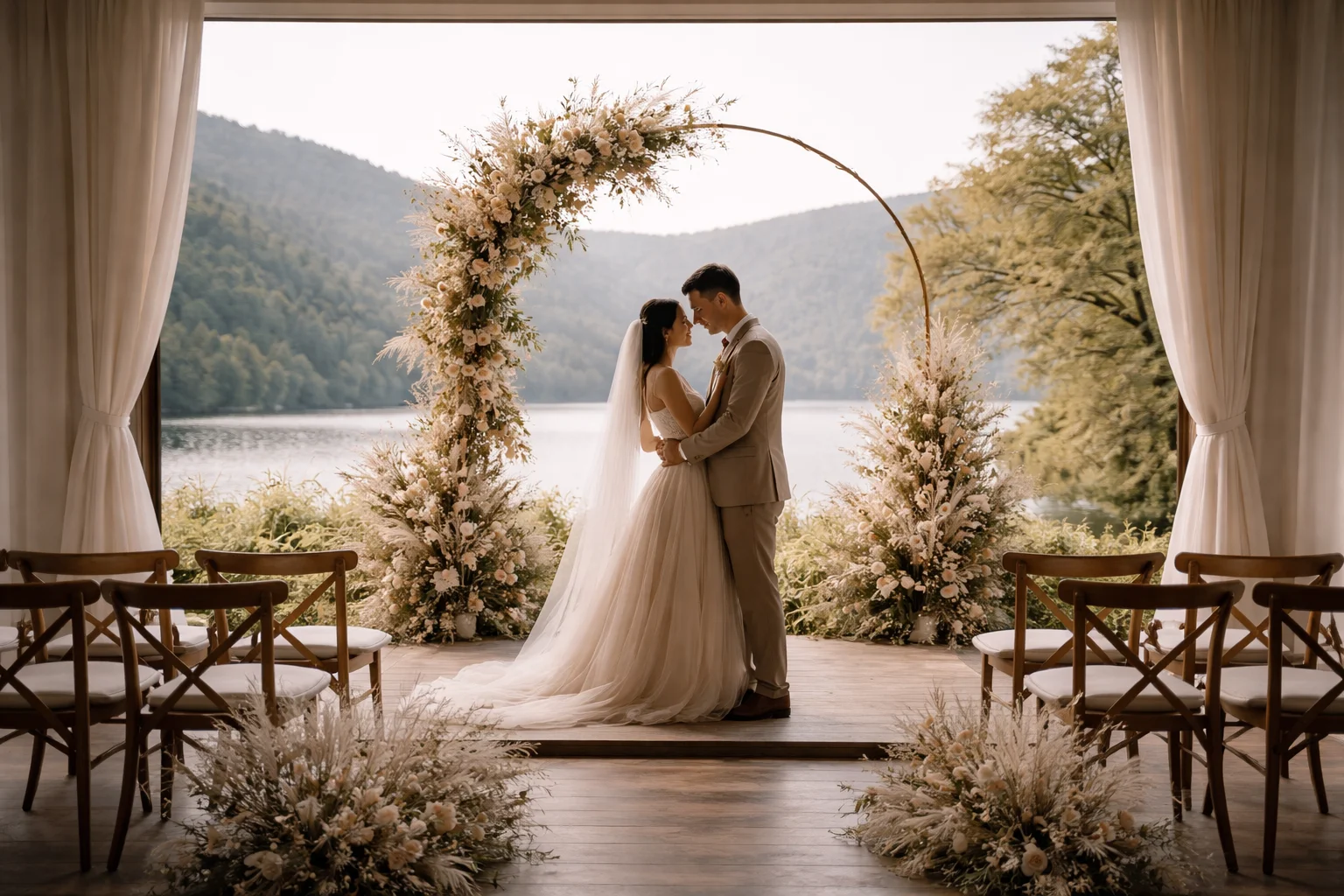
When Wedding Decoration Says More by Saying Less
In wedding planning, decoration is often discussed in visible terms: florals, candles, tables, color, scale. But the rooms people remember are rarely memorable because they were crowded with ideas. They stay with us because the space knew when to pause. A ceremony arch with air around it, a table that holds only what matters, a doorway left almost bare so that the people moving through it become the focus: these choices do more than decorate. They create emotional direction through wedding decoration that feels considered rather than performed.
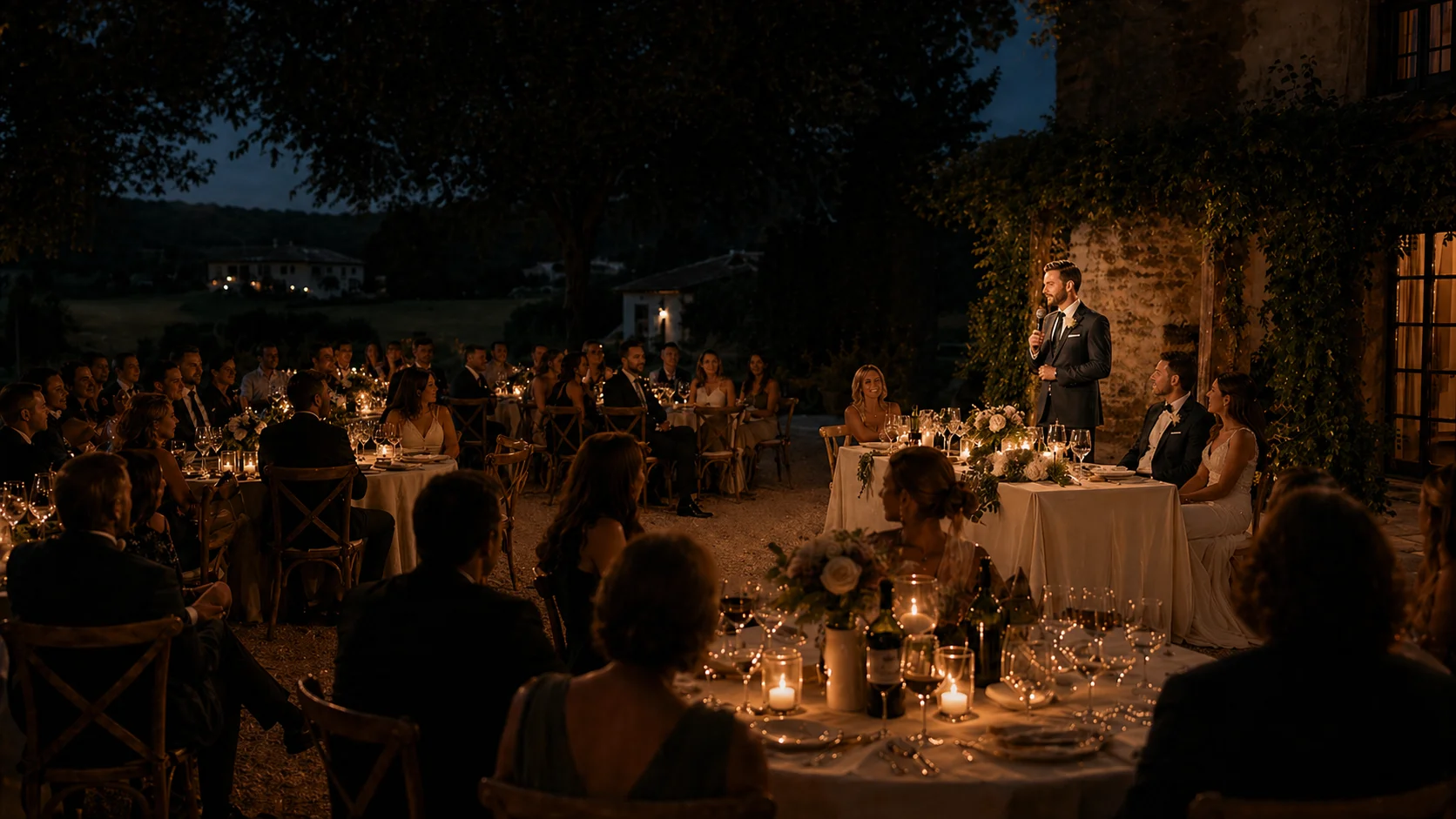
Speech Moment Checklist: What Makes a Toast Feel Held, Not Exposed
A wedding toast depends on more than good writing. It lands differently depending on attention, sound, timing, room tone, and the unspoken signals that tell a speaker whether the moment is carrying them or leaving them alone.

Wedding invitation online – Clearly organized, personally connected
Digital wedding invitations have established themselves in practice as a reliable organizational tool. They consolidate information, facilitate feedback, and connect guests regardless of their location. A wedding website provides clarity, reduces coordination effort, and allows for flexible adjustments to the schedule. Key are clear content, an uncluttered design, and a personal approach. This turns a technical solution into a fitting start for a shared day.
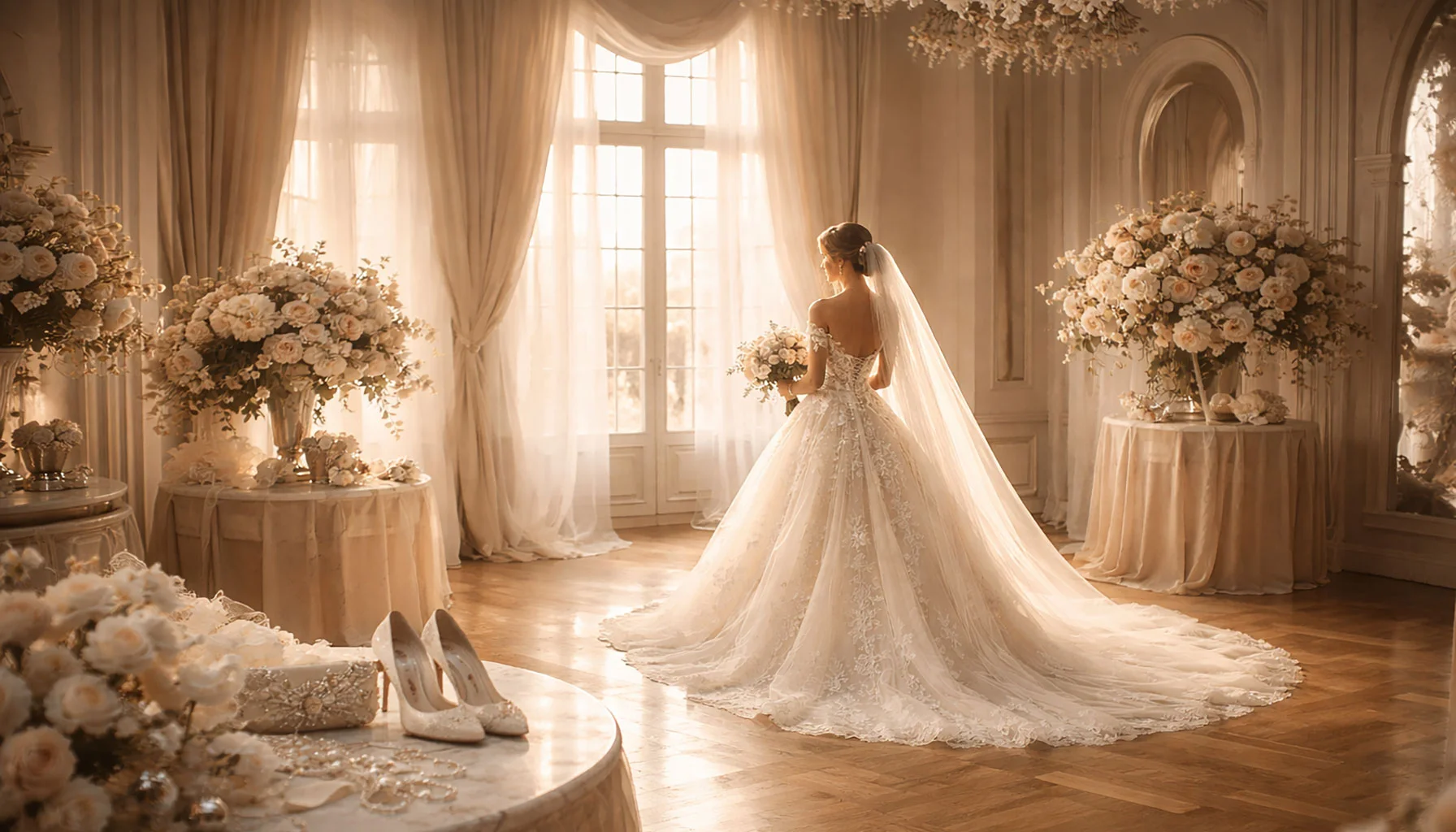
Bridal Fashion and Attire: Timeless Elegance, Modern Trends and the Art of an Unforgettable Bridal Look
Bridal fashion is rarely a single decision. It develops through fittings, conversations, and gradual adjustments until the visible result feels settled rather than assembled. This article looks at bridal fashion as a composed form of presence shaped by dress, styling, material, and the quieter language of what a bridal look communicates without needing to say it aloud.

Wedding Website Checklist: What Guests Actually Need, and What They Ignore
Wedding websites work best when they reduce uncertainty instead of filling space. This article looks at what guests actually need to find quickly, what they usually ignore, and which unspoken questions a good website can answer before they become messages to the couple.

Who Pays for What? A Wedding Budget Checklist for Couples and Families
When families help pay for a wedding, money can bring generosity, relief, pressure, or quiet control. This checklist helps couples discuss contributions, boundaries, priorities, and expectations before financial support begins shaping the day in unspoken ways.
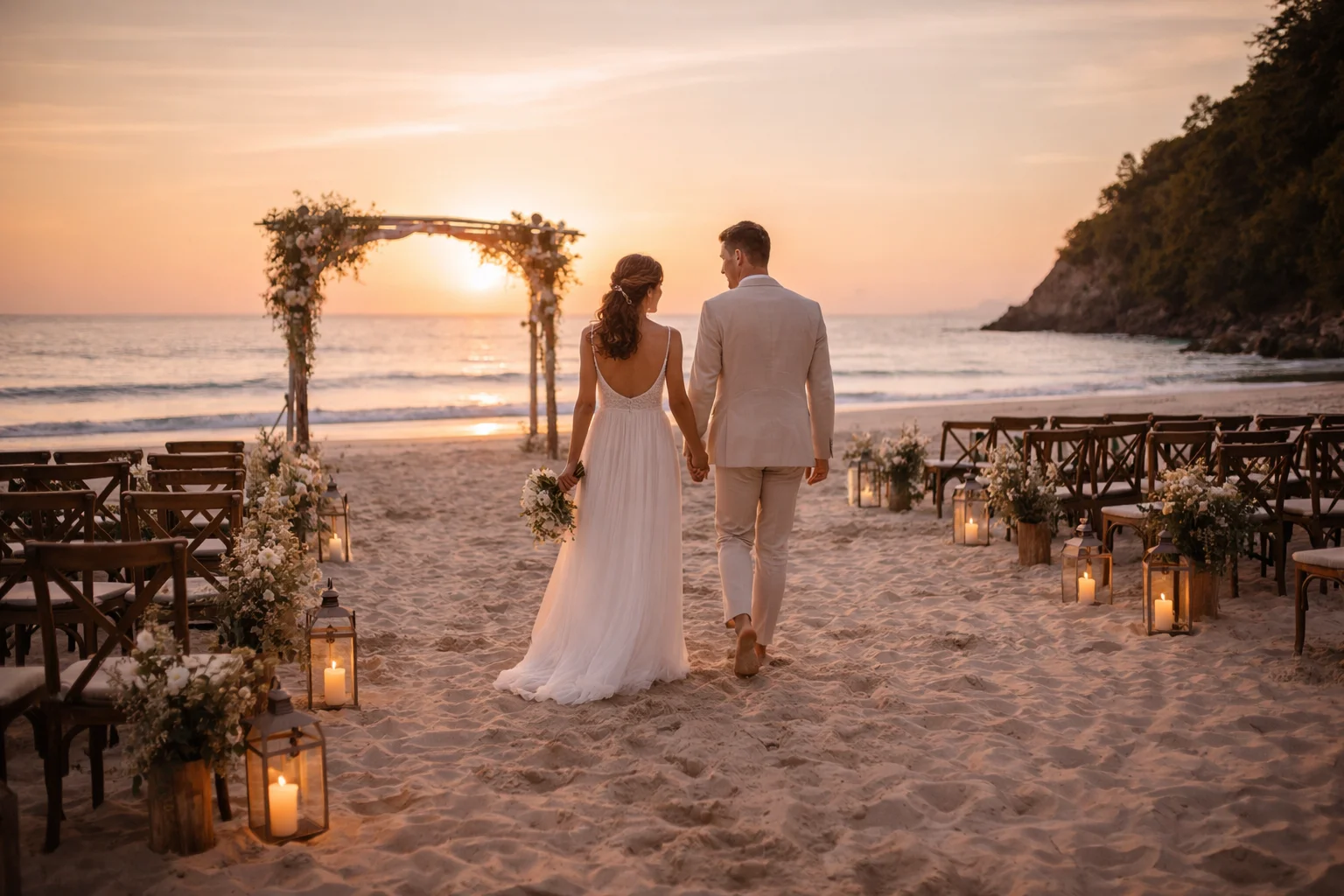
Where Summer Weddings Leave Space for What Is Not Said
Summer weddings are often described through what is visible. Long evenings, warm air, open spaces, movement that feels almost continuous. Guests arrive without coats, conversations stretch, the day seems to expand beyond its schedule. It is a season that suggests ease.

What a Budget Decides, What a Ring Still Means
A wedding budget is built on numbers, but its direction is often set much earlier. The engagement ring carries a meaning that quietly shapes how couples think about value, cost, and what is truly worth keeping as they begin planning.

Some Things Only Work With Certain Guests
Wedding activities rarely work on format alone. They depend on guest chemistry, timing, shared ease, and the unspoken permissions already moving through the room before anyone fully names them.

A Timeline Holds the Day, Silence Holds the Meaning
A wedding timeline organizes what happens. But what shapes the experience often lives in the pauses, the unspoken moments, and the space between events.
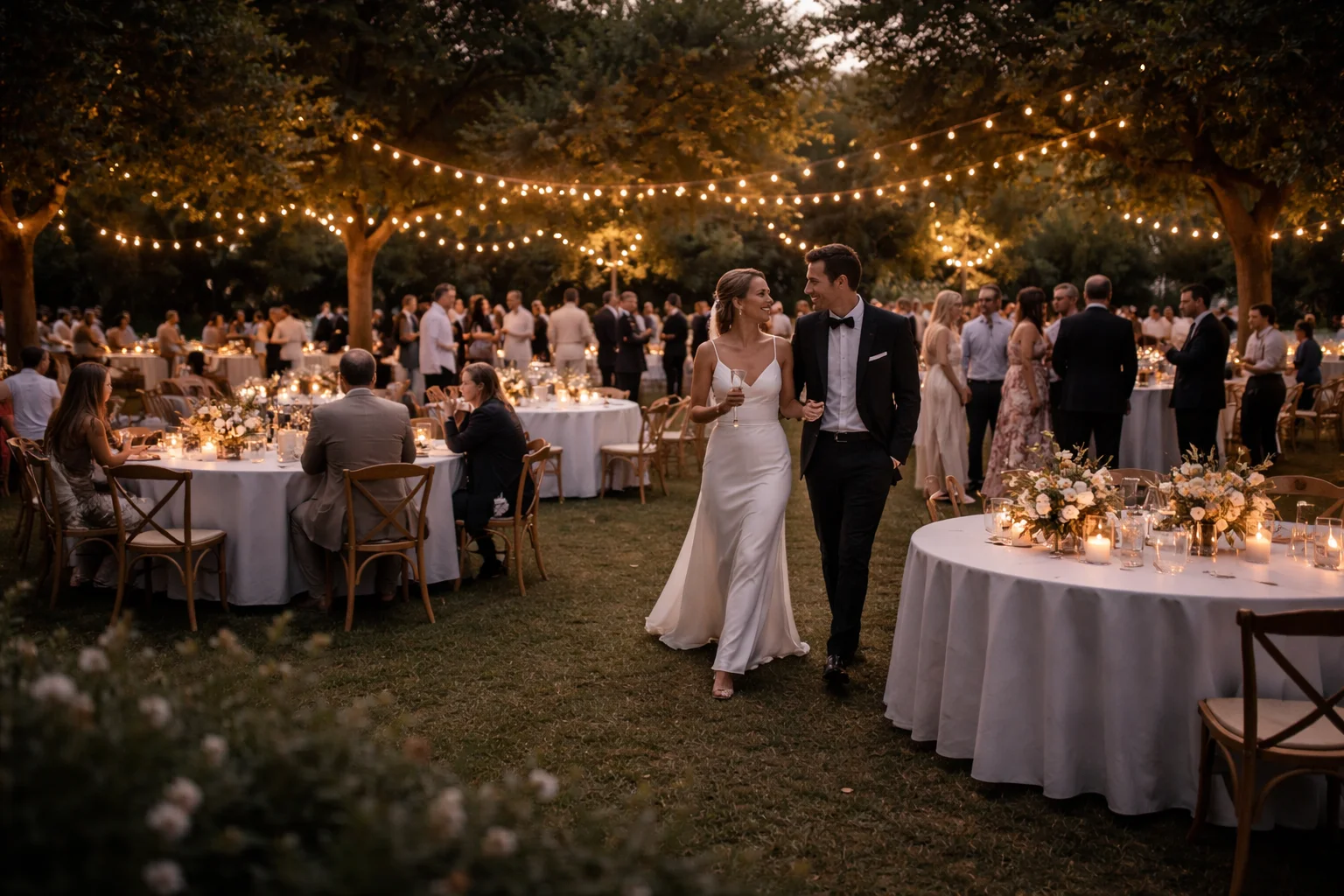
Second Dress for the Wedding Reception
At many weddings the clothing does not stay the same from start to finish. After the ceremony and formal photographs, a quiet shift sometimes happens. The bride disappears for a short time and later returns wearing something different. Guests notice it in small ways. A lighter fabric. Shorter hem. Movement that feels easier during the evening.
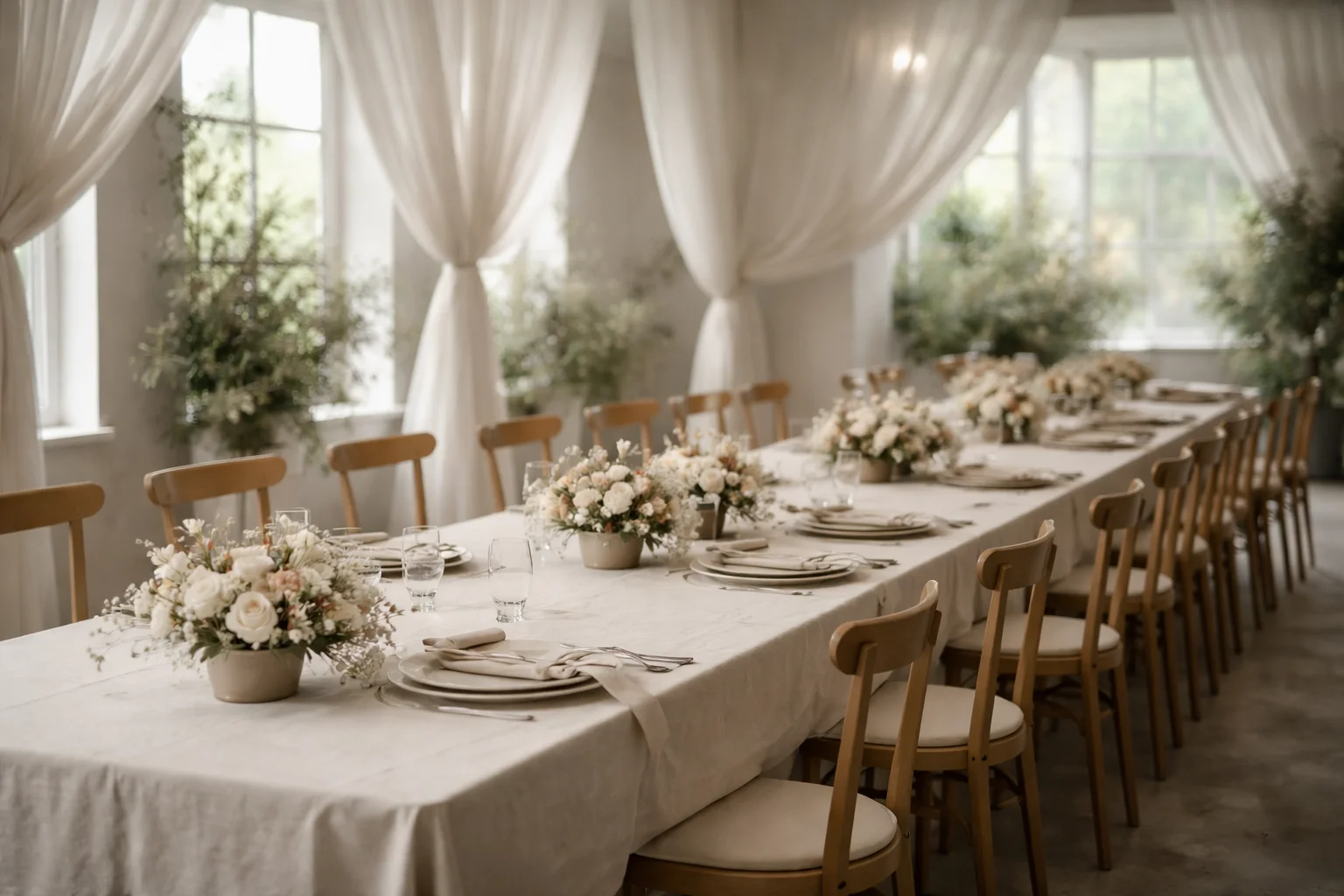
When Wedding Decoration Says What People Leave Unspoken
Wedding decoration is often discussed through color palettes, florals, table settings, and style references. Those things matter, but they are rarely the whole story. The room also carries what has not been fully explained: family tensions handled with grace, private histories that shape a couple's choices, or a shared wish for the day to feel calm rather than spectacular. In that sense, decoration is not only visual. It becomes part of the emotional architecture of the ceremony.