
The Wedding Beyond the Photograph: What Film, Sound and Spatial Media Let Us Keep
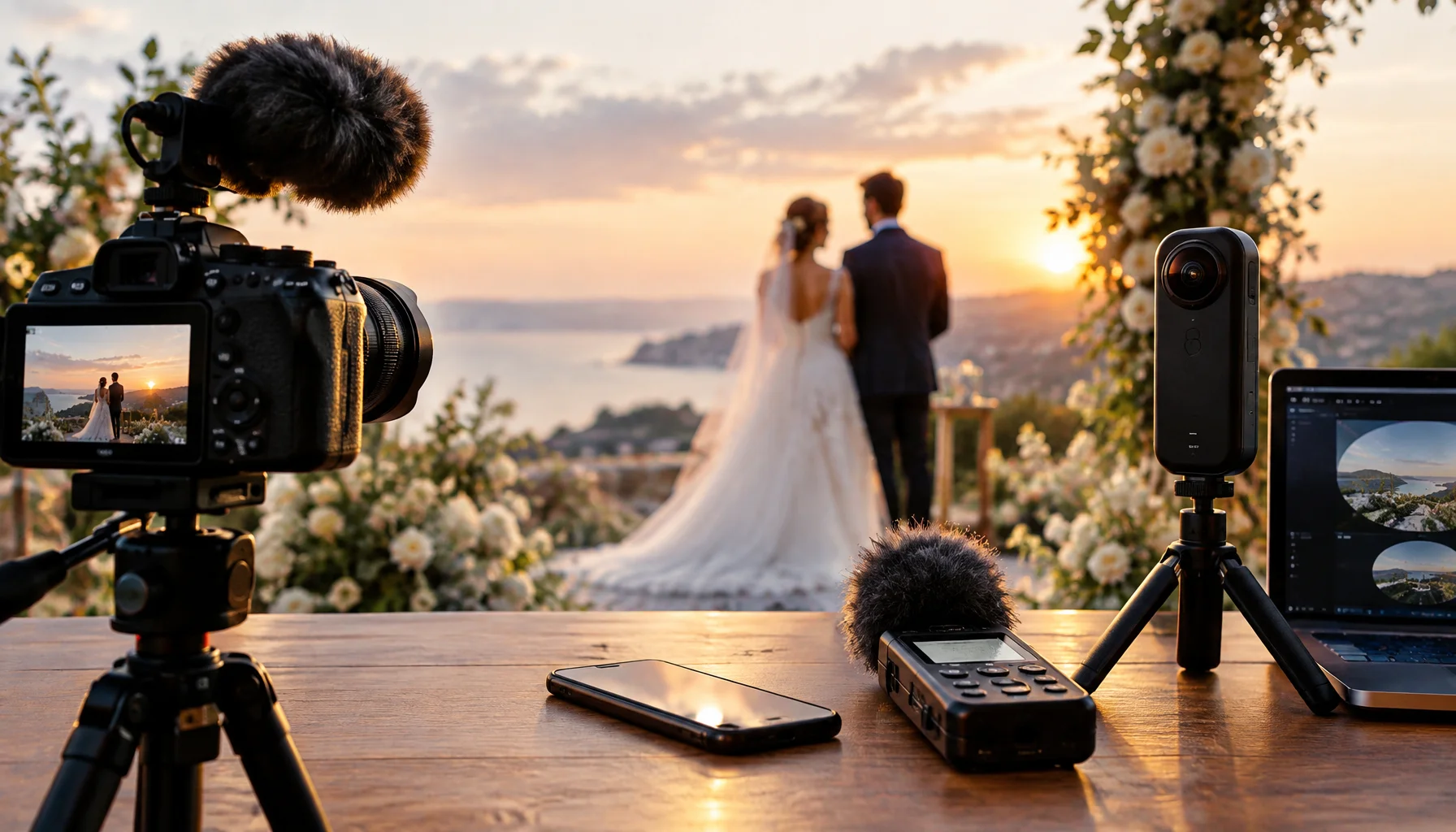
For more than a century, the photograph has been the default object through which a wedding survives. It freezes a face, a gesture, a room, a dress, a hand on a shoulder. It is extraordinarily good at turning one fraction of a second into something that can be returned to for decades.
But a wedding is not made only of fractions of seconds. It has rhythm. It has voices. It has rooms that sound different before and after the guests arrive. It has movement, interruptions, silence, distance, light and small transitions that may never become a photograph at all.
That is where wedding media becomes more interesting than the question of photography alone. The relevant question is no longer simply How should this wedding be documented? It is: Which parts of this experience do we actually want to preserve?
Different media remember different things
A photograph can preserve expression with a precision that moving images sometimes pass too quickly to notice. Film can preserve timing: the hesitation before an answer, the way someone enters a room, the speed of an embrace, the reaction that happens just outside the formal frame.
Audio can preserve something still more fragile. A voice changes with age. Laughter disappears into a room as soon as it happens. A speech can be transcribed, but a transcript does not retain the pause before a difficult sentence or the way a familiar person pronounces a name.
And emerging spatial formats introduce another possibility: not only preserving what was seen from one position, but retaining something about the relationship between people, objects and the place around them.
None of these formats replaces the others. Their value comes precisely from the fact that they fail differently.
Photography is still the medium of the chosen instant
Wedding photography is powerful partly because it removes time. The photographer chooses one instant from a sequence and allows us to study it without the event moving on.
That can produce very different kinds of memory. Documentary photography may preserve an accidental gesture that no one noticed. A more cinematic image may deliberately use light, framing and distance to make the scene feel larger than the instant itself. Analog or experimental approaches may introduce texture, delay or imperfection as part of the final object.
The interesting distinction is therefore not simply traditional versus modern photography. It is between different ideas of what a photograph should do: prove that something happened, describe how it looked, interpret how it felt, or create an image that has its own life after the event.
Film preserves the distance between moments
Wedding film adds something photography cannot: duration. The seconds before the kiss are different from the kiss itself. Walking toward someone is different from standing beside them. A room filling with people tells a different story from the same room when it is already full.
Film can therefore document a wedding, interpret it or transform it into a narrative. Those are not identical intentions. A documentary record tries to remain accountable to what actually occurred. A cinematic edit may reorganize time and perspective to create emotional continuity. More experimental work may deliberately move further away from chronological representation.
This distinction becomes increasingly important as editing tools make it possible to alter images and sequences more extensively. The creative possibilities are expanding, but so is the need to distinguish a recorded memory from a reconstructed or generated one.
Sound remembers what the camera can overlook
Wedding images naturally attract attention because they are visible. Audio is easier to underestimate.
Yet some memories are fundamentally sonic: a parent's voice, the acoustic character of a church or hall, a group singing badly but enthusiastically, the noise outside a venue, a message recorded by a guest late in the evening.
An audio archive does not need to be a substitute for film. It can be a different kind of object entirely. A series of short voice recordings, ambient sound from different parts of the day or carefully recorded music can preserve details that would otherwise remain only in the memories of the people who were there.
What if the place itself becomes part of the recording?
Immersive media pushes the question further. Instead of asking only what the camera saw, it asks whether parts of the physical environment can also become part of the preserved record.
Three-dimensional capture, spatial imagery and interactive reconstructions suggest a future in which a wedding memory may sometimes be explored rather than simply watched. That does not mean recreating an event perfectly. A digital reconstruction is still a representation, with omissions, technical limitations and choices about what is captured.
Its value may instead lie in something more modest: preserving relationships in space. Where the table stood. How high the ceiling felt. What was visible from the doorway. How the ceremony area related to the garden outside.
The most advanced format is not automatically the most meaningful
New media easily creates a technological hierarchy: video seems more complete than photography, spatial capture more advanced than video, and whatever comes next appears destined to replace what came before.
Memory does not work that neatly.
A slightly imperfect photograph may matter more than an elaborate reconstruction. Ten seconds of someone's real voice may become more valuable than hours of beautifully edited footage. A deliberately simple wedding film may preserve the atmosphere of the day better than a technically spectacular production.
The useful question is therefore not What is the most advanced medium? It is What would be painful to lose?
Recording, interpretation and reconstruction should remain distinguishable
As wedding media becomes more sophisticated, one boundary deserves particular attention: the difference between recording what happened, interpreting what happened and creating material that never happened.
All three can have artistic value. A filmmaker is already interpreting reality through framing and editing. A photographer changes perception through timing, lens choice and color. A reconstructed sequence can deliberately express a memory rather than claim to be documentary evidence.
The problem begins when those modes become indistinguishable. If generated material is presented as documentary reality, the object no longer tells the viewer what kind of memory it contains.
For Loving Rocks, that distinction matters. New tools are interesting precisely because they allow new forms of expression. They do not need to pretend to be old forms in order to have value.
A wedding archive can be designed before the wedding
Thinking about media before the event changes the planning question. Instead of hiring separate services simply because weddings traditionally have a photographer and perhaps a videographer, a couple can think about the archive they want to inherit.
Do voices matter? Is the venue itself important enough to preserve? Is the priority documentary accuracy, visual interpretation or a more experimental piece of work? Are there people whose presence should be recorded in a form that carries more than their appearance?
Once those questions are answered, the choice between photography, film, audio and immersive media becomes less about buying more coverage and more about choosing the right medium for the thing that matters.
What remains
Loving Rocks treats Media as more than a production category. It connects directly to Imprints: the wider question of what remains after an event has ended.
Photography preserves selected instants. Film preserves movement and duration. Audio carries voices and atmosphere. Immersive media begins to preserve aspects of space. Each format loses something and keeps something else.
That limitation is not a weakness to solve. It is the reason choosing a medium can become meaningful.
Related Articles
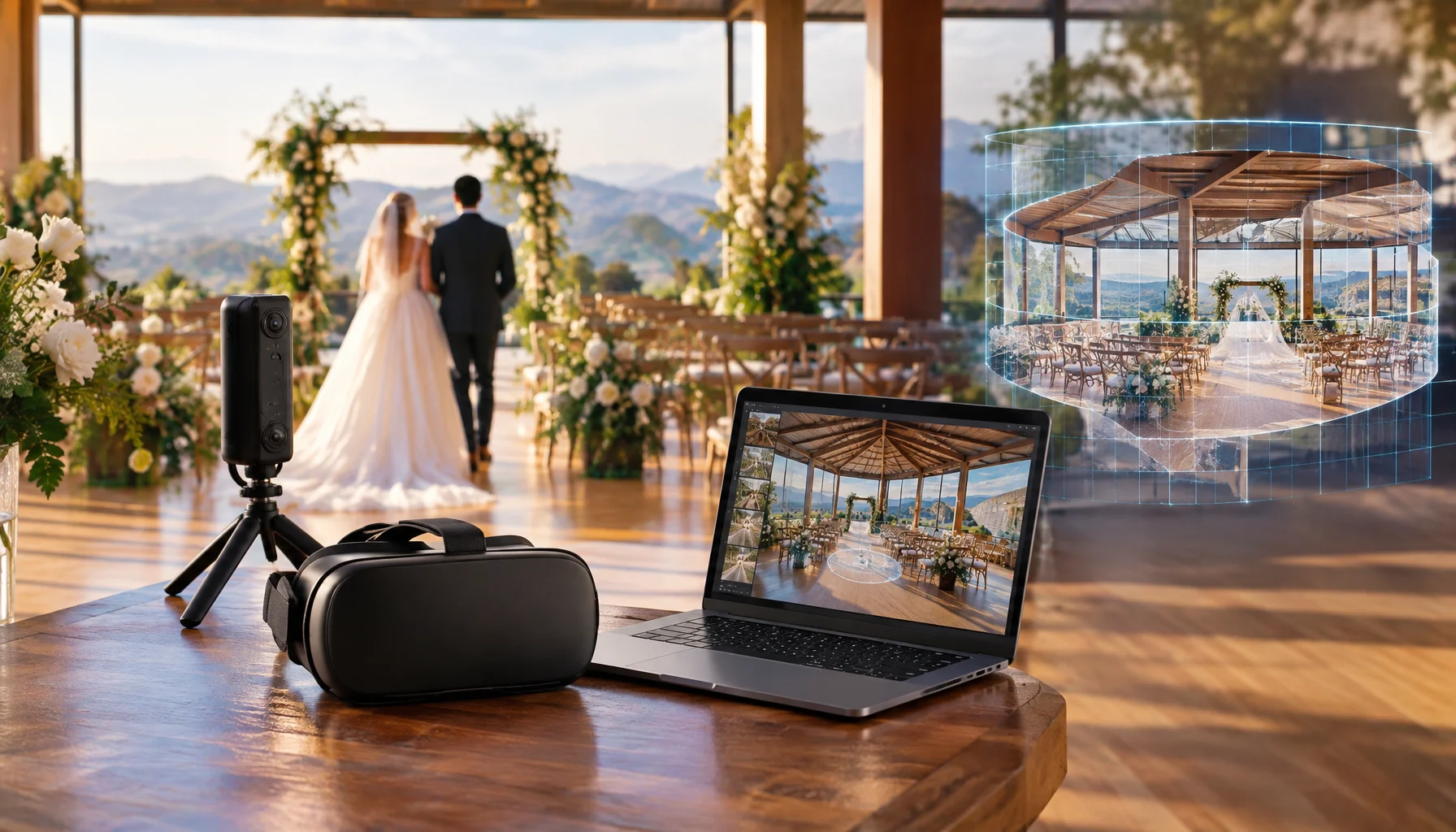
Can You Return to a Wedding? Spatial Video, 3D Venues and the New Memory Layer
Wedding media has traditionally preserved a view of the day. Spatial video, 3D capture, photogrammetry, 180° VR and volumetric video begin asking a different question: can part of the wedding be preserved as a space you can later revisit? This guide separates what is already practical from what remains complex, expensive or experimental.
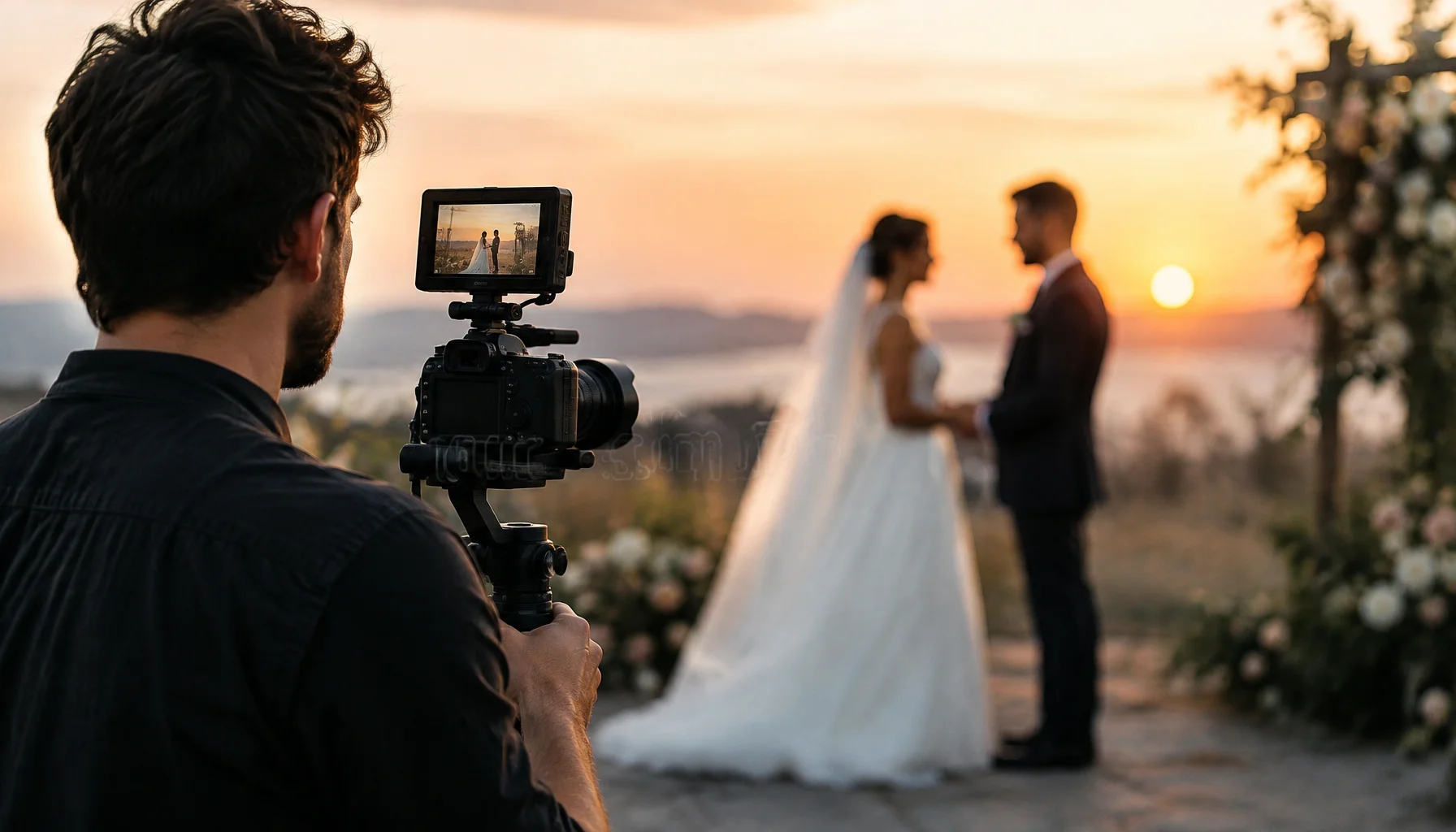
When a Wedding Becomes a Film: What Motion, Sound and Sequence Add to Memory
Wedding film preserves more than moving images. It can hold voice, pauses, movement, chronology and atmosphere — while editing also shapes how the day will later be remembered. This guide explores documentary, narrative, same-day and experimental wedding-film formats, how they are produced, and what couples should decide before cameras roll.
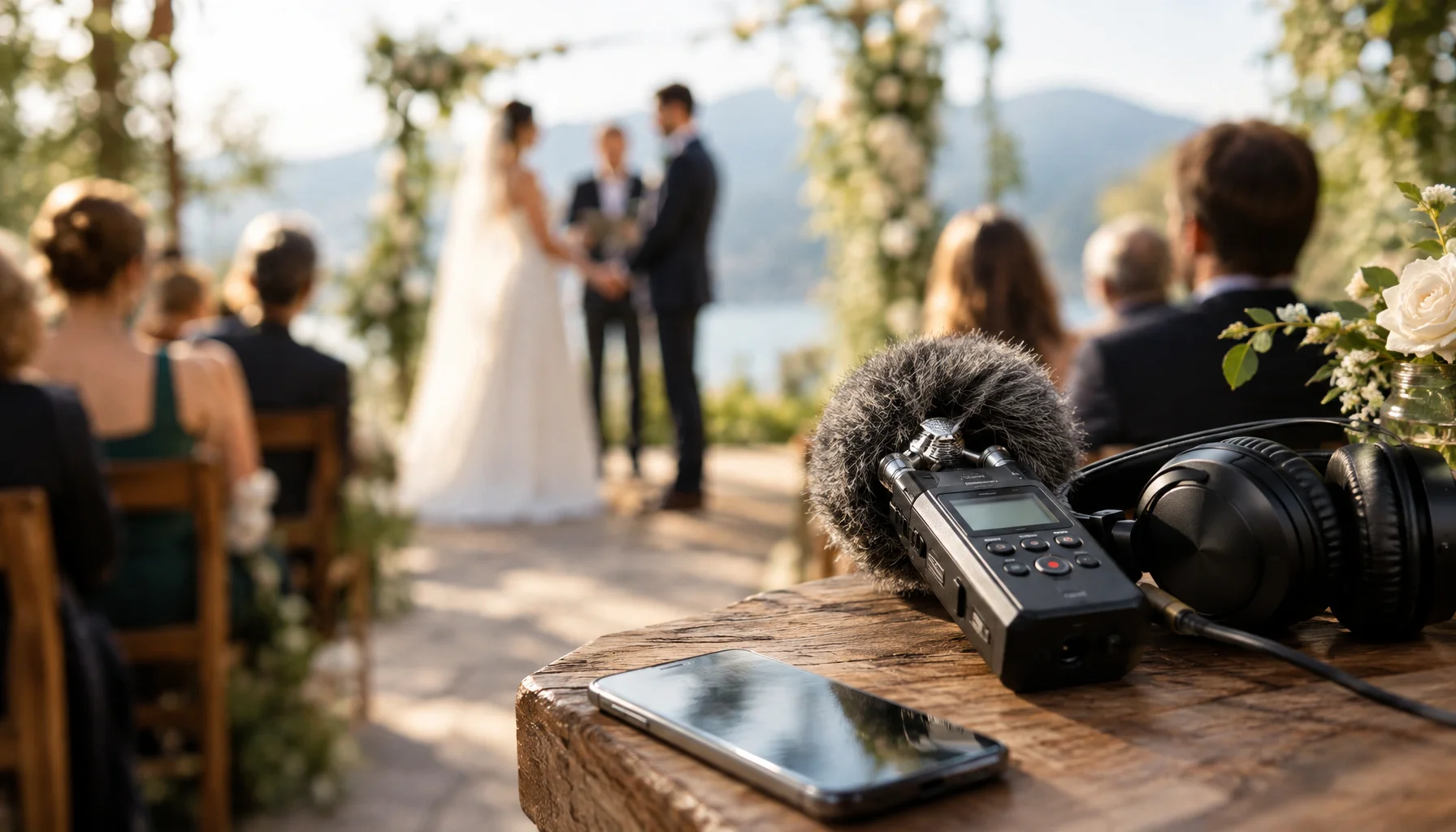
The Wedding You Can Hear Again: Voice, Room Tone and the Audio Memory of a Day
A wedding is remembered through images, but voices disappear differently. Vows, laughter, pauses, speeches, room tone and messages from guests can become an audio archive of people as they actually sounded on one particular day. This guide explores what is worth recording, how wedding audio is captured, and how to preserve it as more than an accessory to film.