
Waiting Before the Civil Ceremony: What the Minutes Outside the Room Actually Feel Like
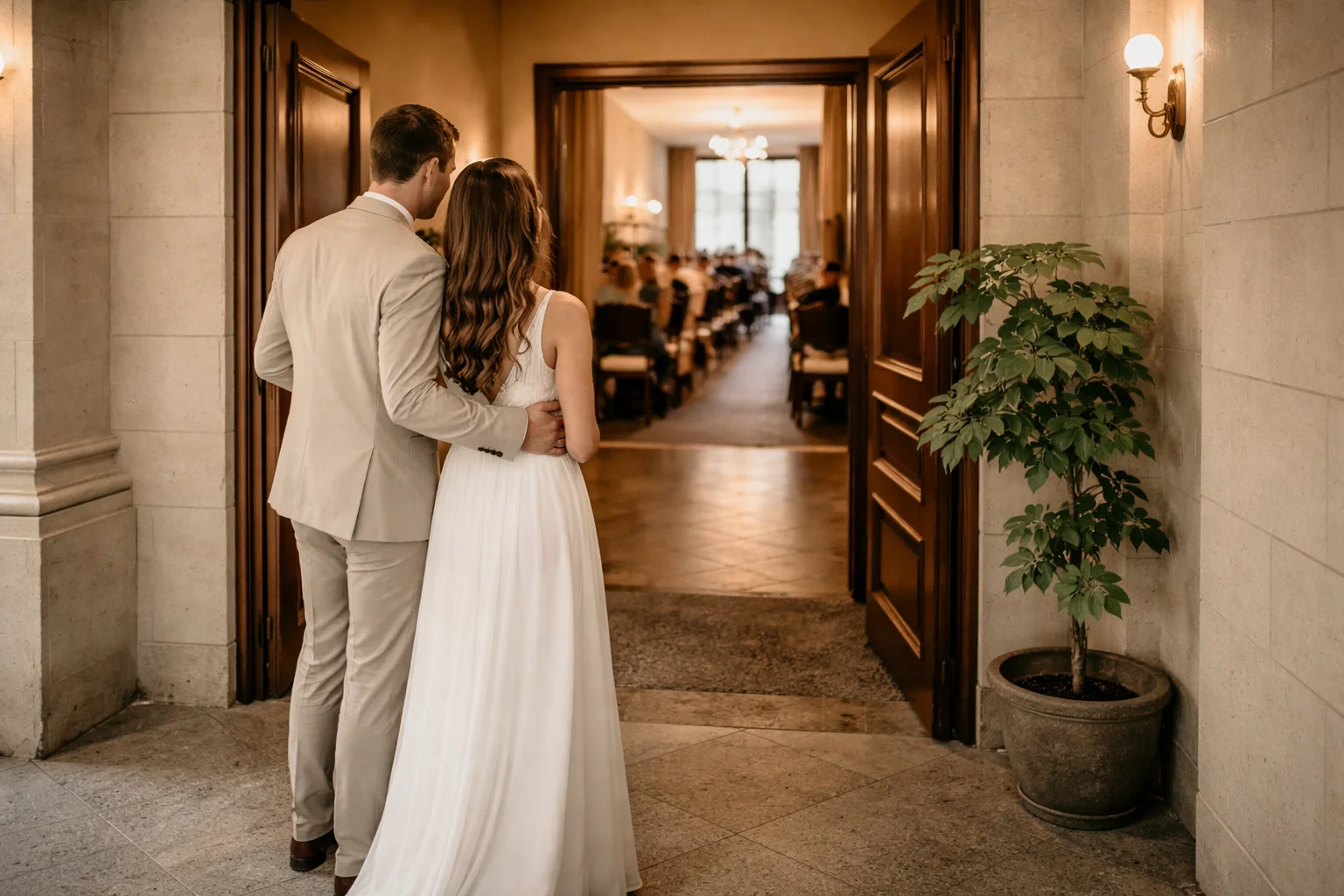
People often speak about civil ceremonies as if they begin when the couple enters the room. In reality, they begin earlier, in the corridor, outside the registry office door, on the bench nearby, in the awkward quiet before someone says it is time. That waiting does something specific. It sharpens attention, slows ordinary conversation, and makes very small details feel strangely large. A watch check, a folder of documents, one late guest, a hand held a little tighter than usual, all of it starts to matter because the legal moment is close and there is nowhere else for the mind to go.
This is also why the civil ceremony belongs so naturally to the movement from engagement to wedding. Engagement can hold intention for months, sometimes years. The civil ceremony compresses that long period into one official threshold. It is the point where private promise becomes public structure. The minutes before the room opens are therefore not empty time. They are the last stretch in which the relationship still feels like it belongs mostly to the two people about to enter. After that, it becomes something witnessed, signed, and socially fixed.
Civil CeremonyA legally binding wedding often marks the official beginning of married life. Civil ceremonies focus on the formal aspects of marriage while still allowing room for personal touches and meaningful moments. Whether simple or thoughtfully styled, this type of ceremony creates a clear, intimate framework for saying “yes” in a legally recognized way.

Between engagement and wedding, commitment shifts from a private promise to a public act. This transition reshapes expectations, identities, and the meaning of the relationship itself.
Definition
A civil ceremony is not only the legal core of a wedding day. It is a condensed formal ritual with its own timing, spatial logic, and emotional pressure. Because it is short and structured, small details around waiting, seating, witnesses, guest behavior, documents, and transitions often carry more weight than couples expect.
The Waiting Outside the Room Changes Time
The time before a civil ceremony rarely matches the clock. Five minutes can feel stretched and oddly formal, especially when everyone is dressed, assembled, and already aware that the next movement matters. Then the ceremony itself can feel faster than expected, almost abrupt, because concentrated moments pass differently from open ones. Many couples only notice afterward how quickly the legal part moved. The signature often creates the first true release, and what follows is not just relief but a subtle reset. The transition into photographs, congratulations, or a later celebration works best when there is a little space after the signing instead of an immediate rush into the next obligation.
Rooms, Seating, and Social Behavior Matter More Than Expected
Civil ceremony rooms are often smaller, stricter, and more legible than couples imagine. Who sits where becomes visible immediately. Witnesses, parents, and closest guests tend to carry more visual weight because there is less space to diffuse hierarchy. In very small rooms, even a few extra people change the atmosphere from intimate to compressed. Photography also behaves differently in formal spaces. Cameras feel more present, movement is more noticeable, and guests often become self-conscious about when to smile, look forward, stand, or stay still. The calmer the seating plan and the clearer the expectations, the less awkward everyone behaves. Guests do not need elaborate rules, but they do need a room that tells them how to act without making them guess.
Witnesses, Dress, and Personal Touches Need the Right Scale
Witnesses at a civil wedding often matter more in practice than in larger ceremonial formats, because the structure is tighter and the legal function is visible. Their presence feels structural, not decorative. The same is true for how couples address guests and what guests wear. Civil ceremonies usually hold formality differently from larger celebrations. Overdressing can feel performative, but underdressing can flatten the meaning of the room. What works best is precision rather than spectacle. Personal touches follow the same rule. A short welcome, one chosen reading where permitted, a modest bouquet, a specific piece of music outside the room, or a deliberate way of thanking guests fits better than trying to force a full wedding aesthetic into a highly regulated legal setting.
After the Signature, the Day Needs a Clear Direction
One of the stranger features of civil weddings is that the emotional center can arrive in a room that ends very quickly. After the signature, couples often feel a brief disorientation. It is done, but the day has not fully caught up yet. That is why the next step matters. Weekday civil ceremonies, especially, can feel suspended between bureaucracy and celebration unless the transition is thought through. The same applies when couples separate the legal ceremony from a later gathering. That choice can work beautifully, but only when both moments are given their own logic instead of treating one as real and the other as secondary. The legal room closes fast. The celebration afterward has to absorb that speed and turn it into continuation.
Practical Depth Becomes Emotional Depth Very Quickly
Civil ceremonies are also where paperwork becomes inseparable from feeling. International couples often discover that documents, translations, appointments, nationality requirements, and lead times shape the emotional experience long before the wedding day itself. Name change decisions belong to the same category. They sound administrative, yet they often carry identity, family history, and timing questions that do not feel neutral at all once the signature is near. This is why practical preparation matters so much in civil weddings. The more settled those questions are before the day, the more space the couple has to experience the ceremony as a threshold rather than as a legal task still half unresolved.
Conclusion
Waiting before the civil ceremony feels significant because it is significant. Those minutes outside the room hold the final stretch between intention and form, between engagement and marriage as something officially witnessed. The ceremony may be brief, but it is rarely small in effect. Couples usually experience it more fully when they understand not only what happens inside the room, but what the room, the waiting, and the transition after it are actually doing to time, attention, and meaning.
Related Articles
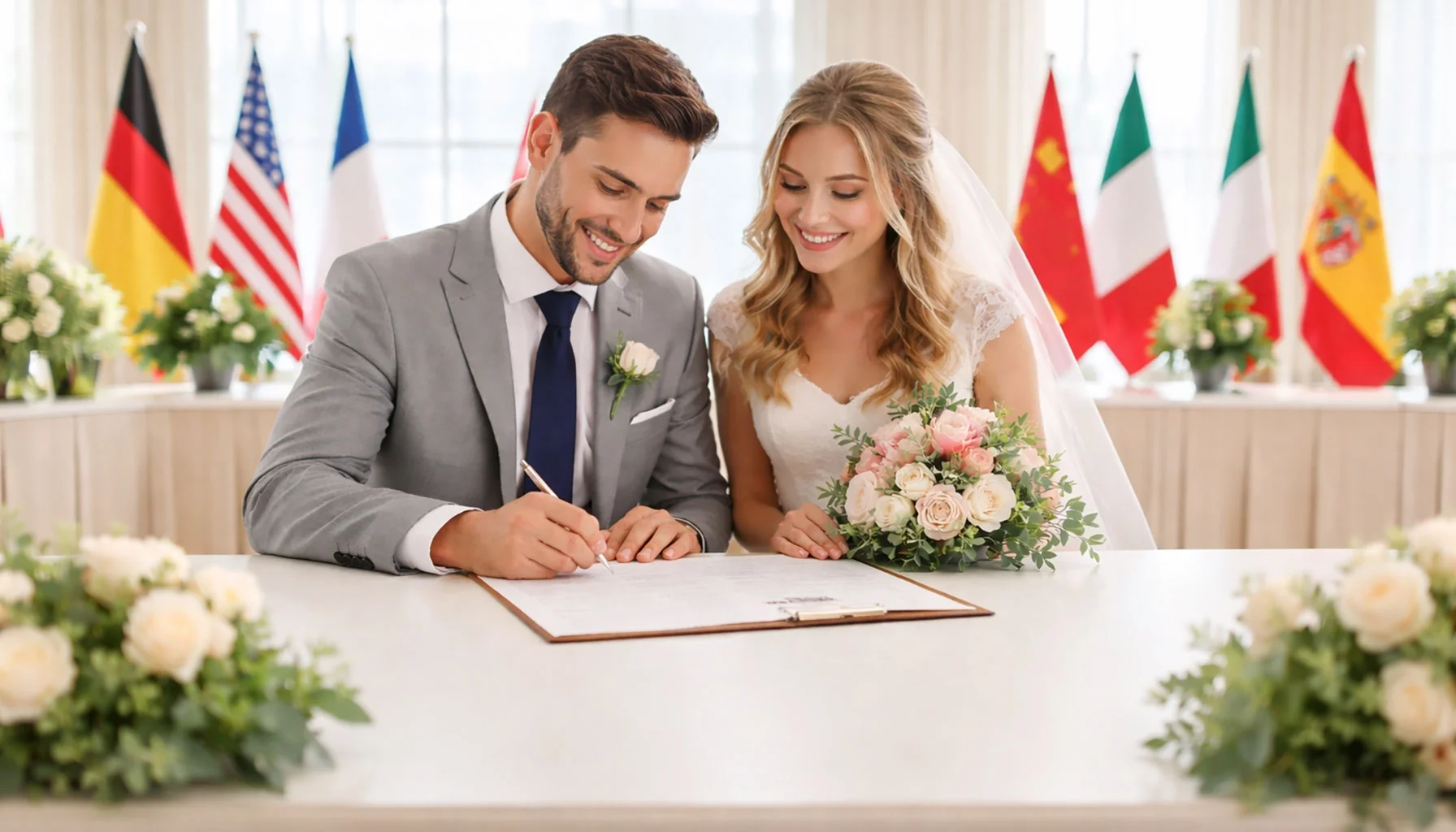
Civil Ceremonies Worldwide: Legal Requirements, Processes, Costs, and Cultural Differences
Civil ceremonies are rarely dramatic, yet they often carry one of the most decisive thresholds in a wedding journey. This article looks at civil marriage across countries through legal requirements, observed processes, cost ranges, and the quieter atmosphere that often surrounds the moment a marriage becomes official.
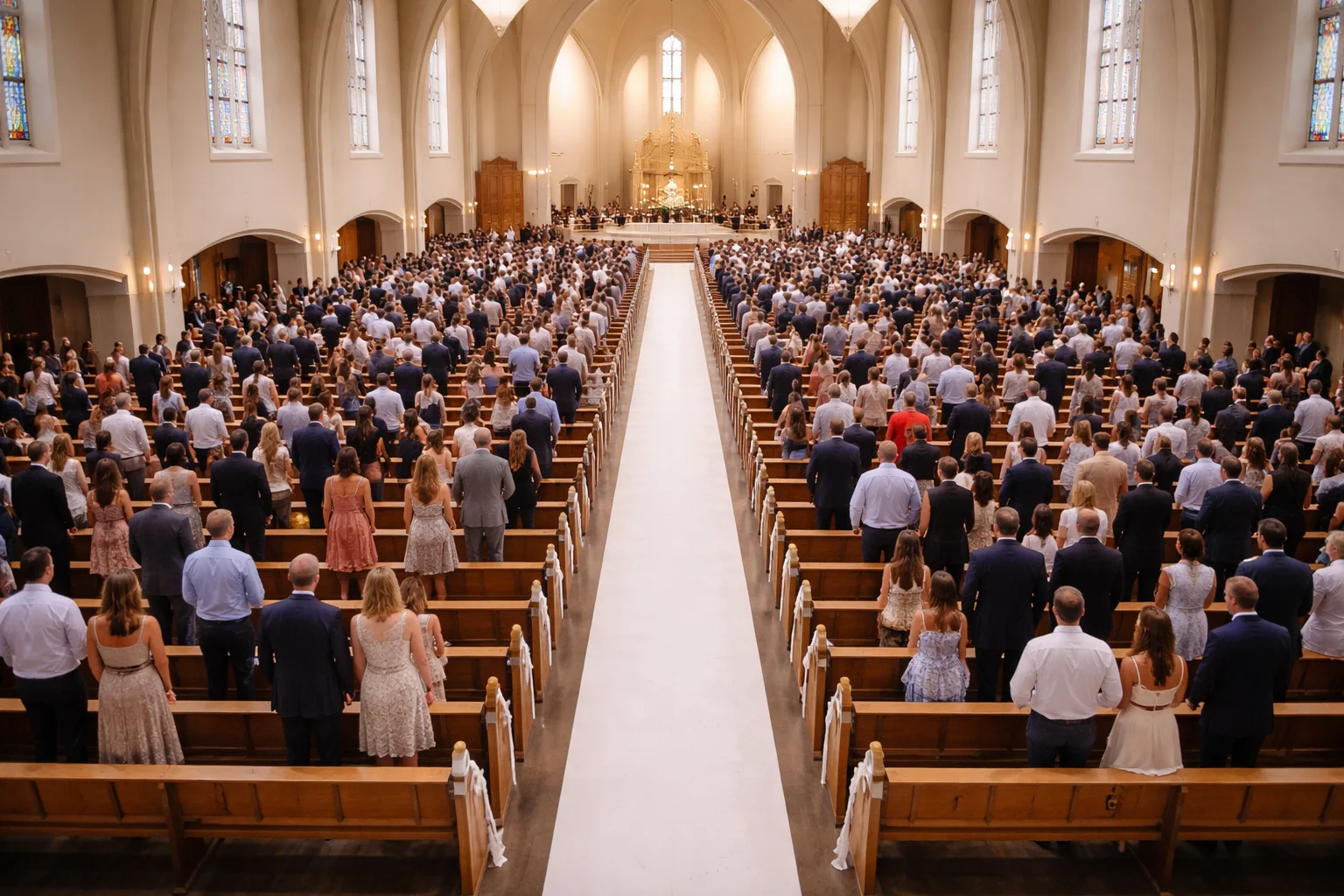
How Space Shapes Guest Behavior at Ceremonies
Large religious rooms tend to slow people down a bit. Not dramatically, just enough to notice. Guests enter, stop for a second too long, look around, then move again. It rarely looks planned. More like small corrections happening one after another.
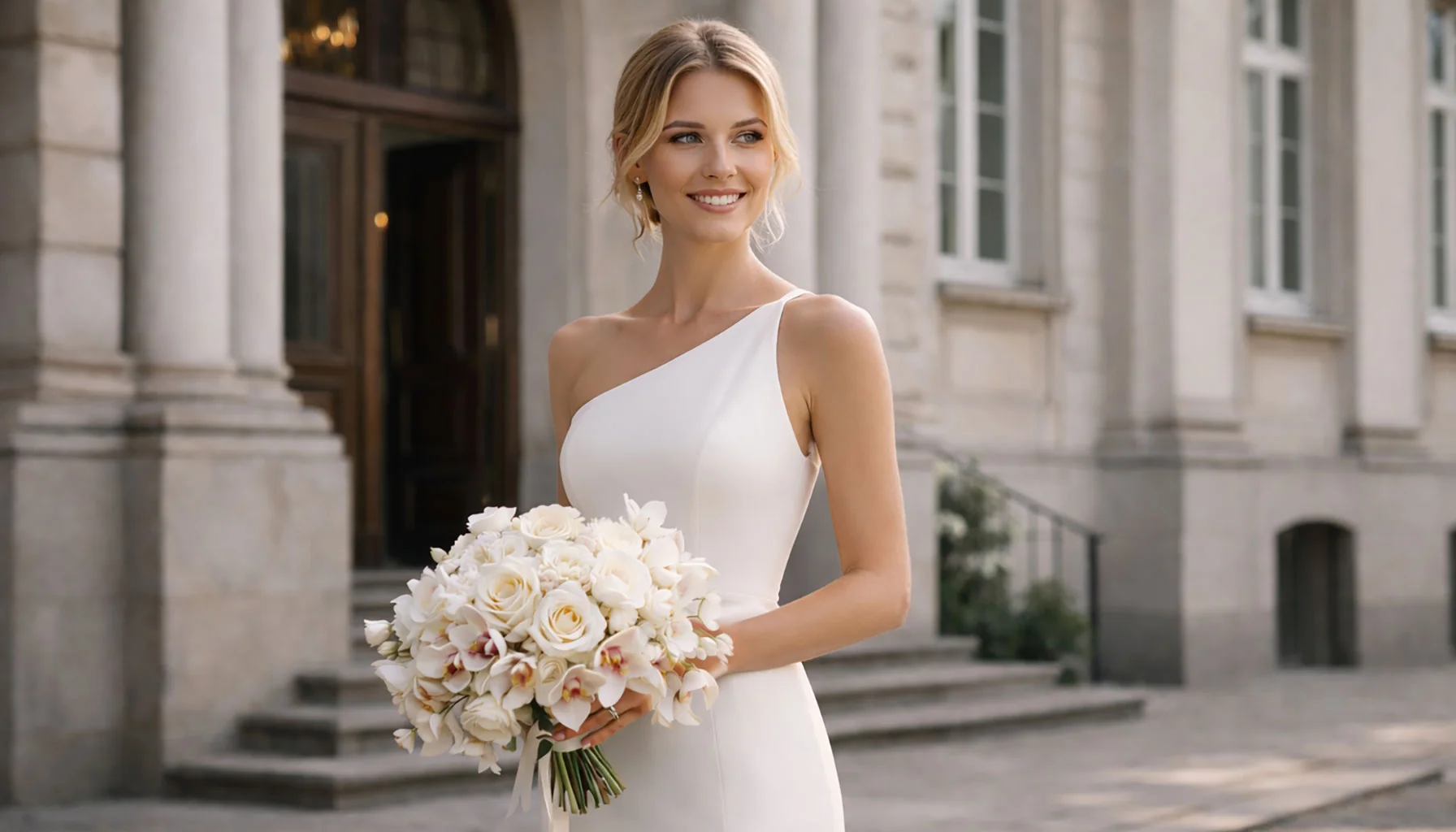
A Love Made Official: A Bridal Look for the Civil Ceremony
Civil ceremonies tend to be focused and quiet. The setting is smaller, the attention sharper. In this context, the bridal look does not perform. It supports. Fabric, cut, and proportion matter more than embellishment. What remains is a look that fits the moment, allows presence, and feels appropriate long after the ceremony ends.
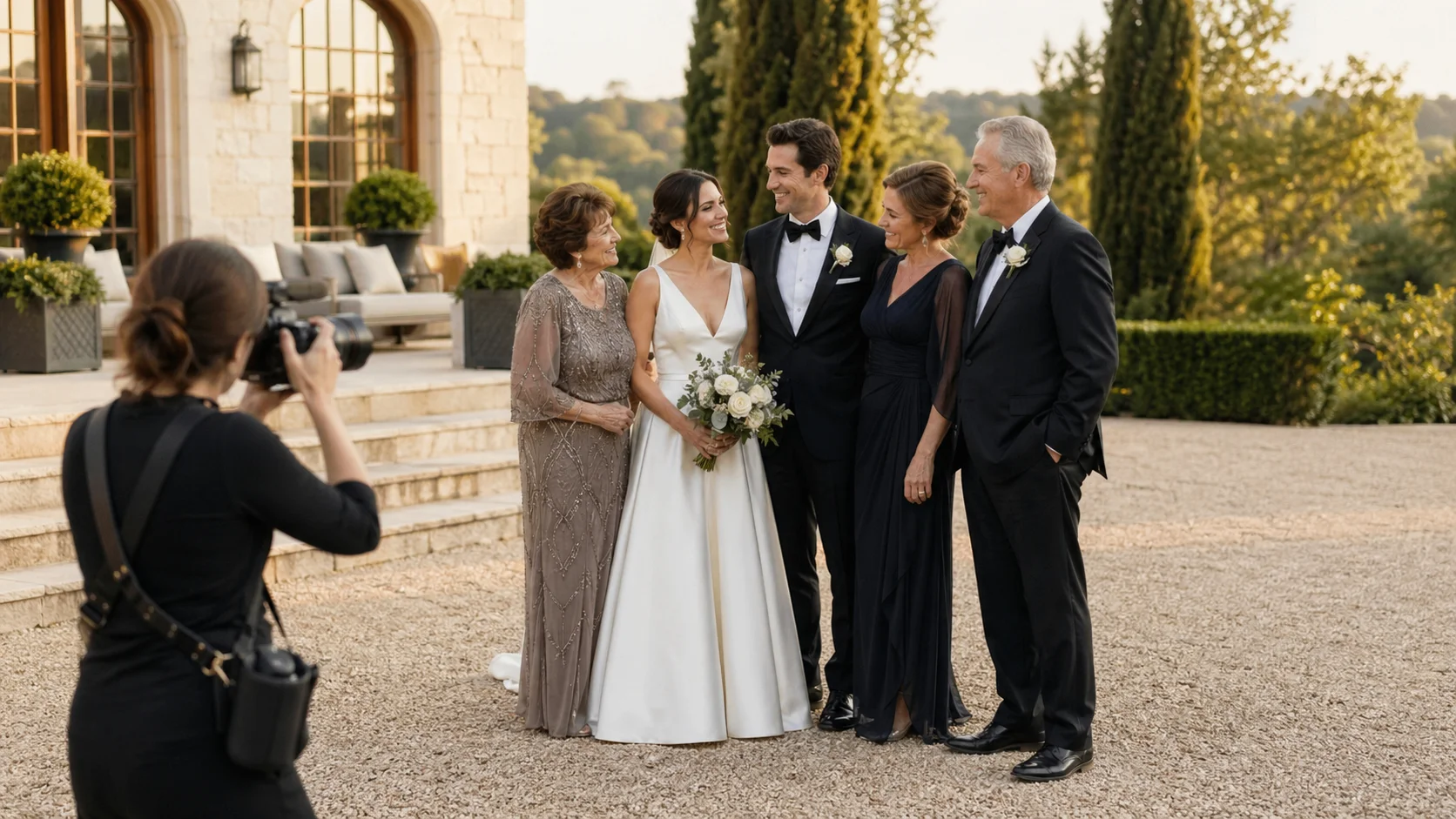
Photographer Coordination Checklist: What Helps Without Overdirecting the Day
Wedding photography needs enough coordination to protect the important images, but not so much direction that the day starts feeling staged. This article looks at shot priorities, family helpers, light windows, access, ceremony limits, and the space photographers need to notice real stories.
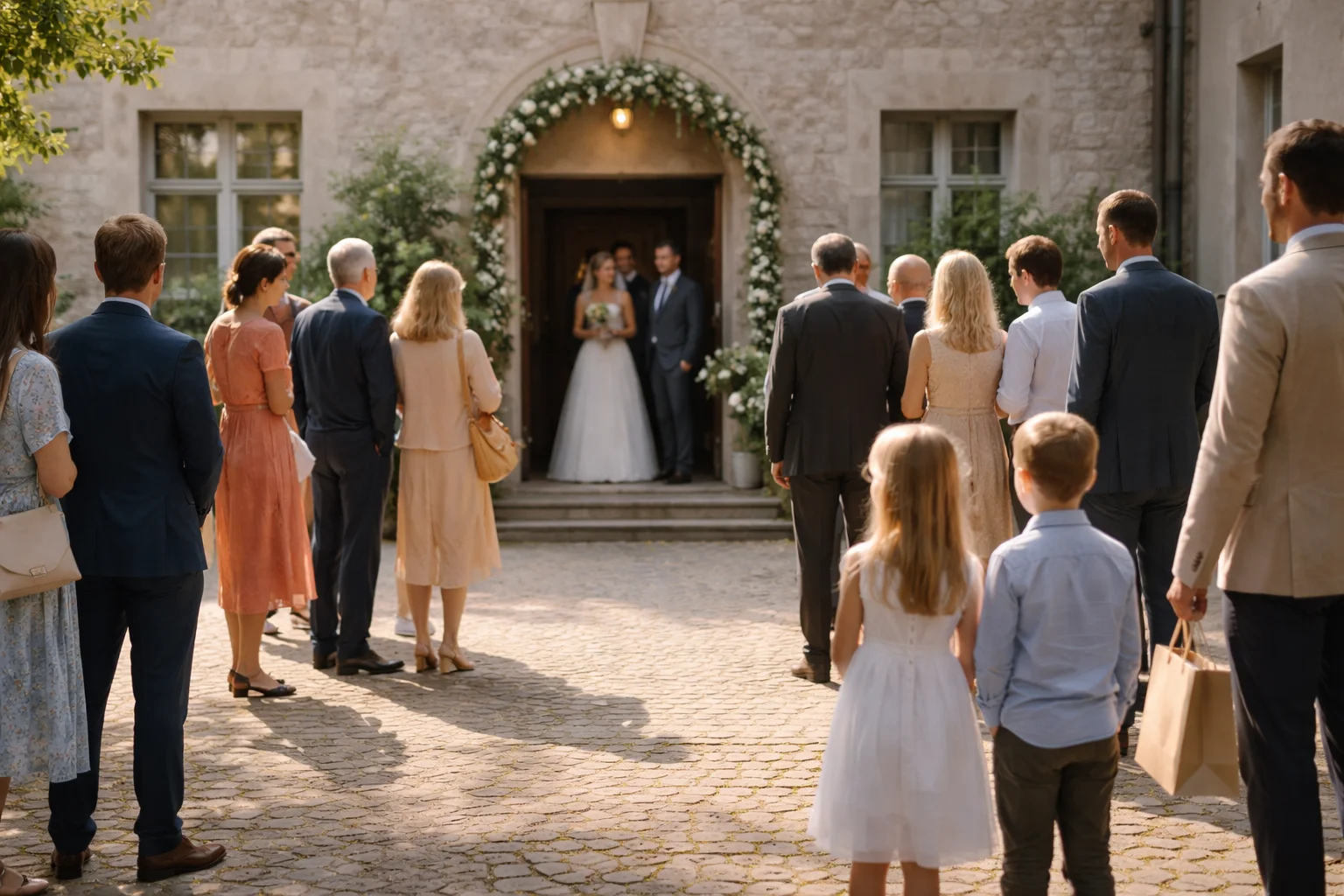
Arrival Before the Ceremony: How Guests Find Their Place Without Being Told
Arrival does not really start at one point. It leaks into the day. Some people are early without meaning to be. Others arrive exactly on time but still end up waiting. The space fills in patches. A few stand close to the entrance, others keep distance. No one explains it. It still settles somehow.
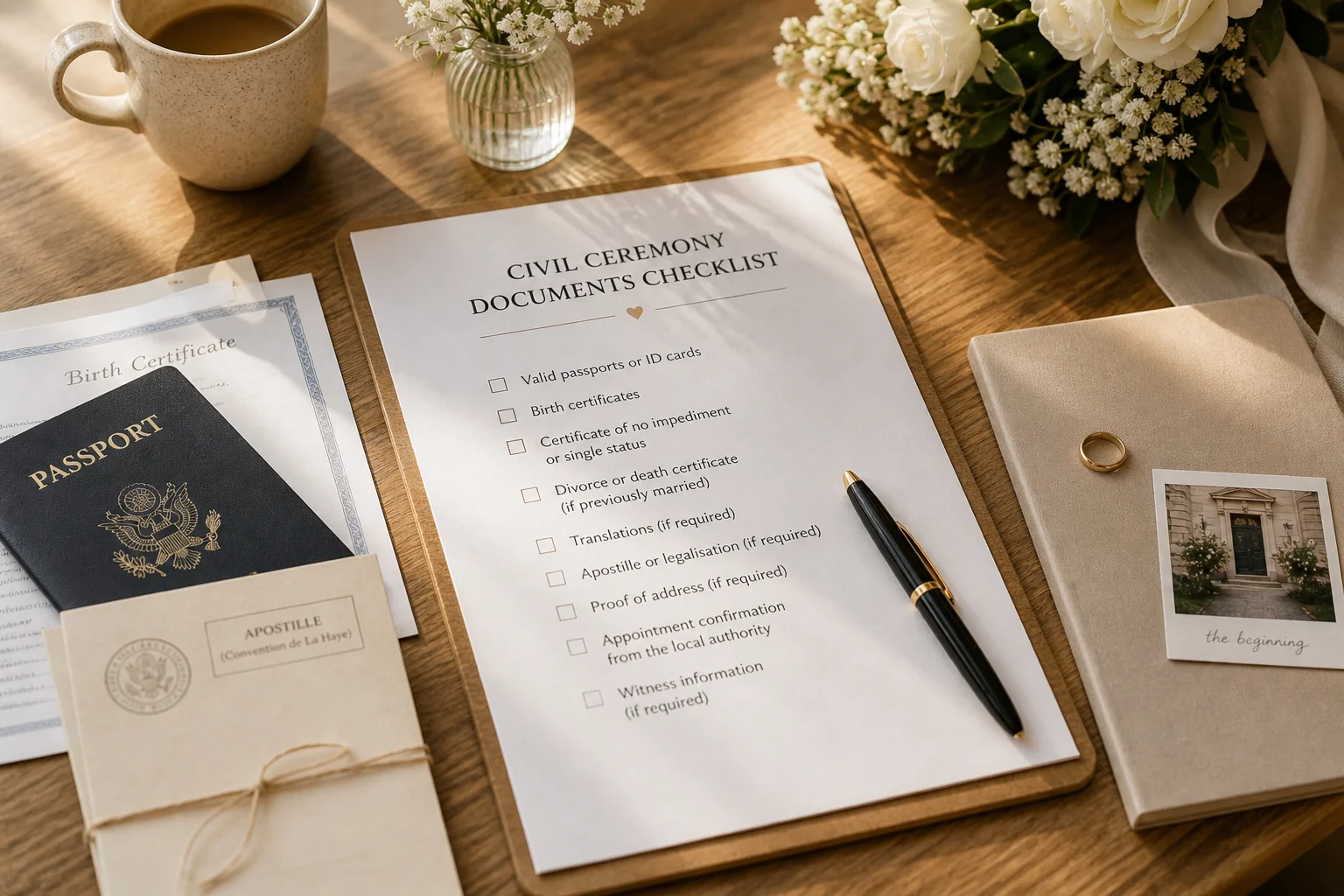
Civil Ceremony Documents Checklist: What Couples Usually Need Before the Wedding Can Happen
A civil ceremony may look simple, but it depends on documents being accepted before the public moment can begin. This article looks at identity records, marital status proof, translations, apostilles, witnesses, appointment rules, and the quiet legal threshold before the ceremony.
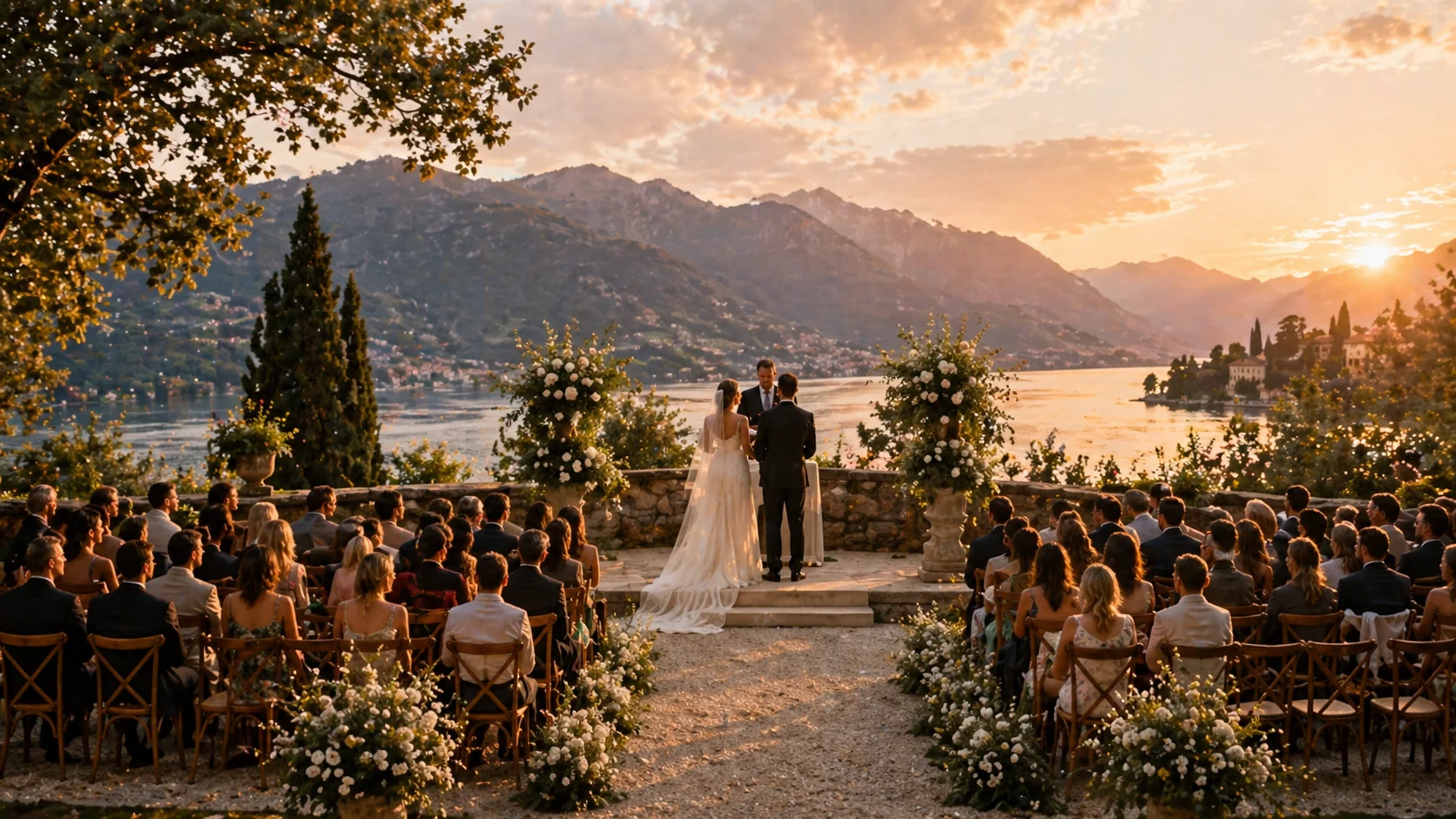
Ceremony Transition Checklist: What Should Be Ready Before Attention Has to Gather
Ceremony transitions often seem brief on paper, but they carry the difficult shift from movement into shared attention. This article looks at what needs to be ready before that moment arrives, from seating and sound to cues, stillness, and the quieter emotional readiness of the room.
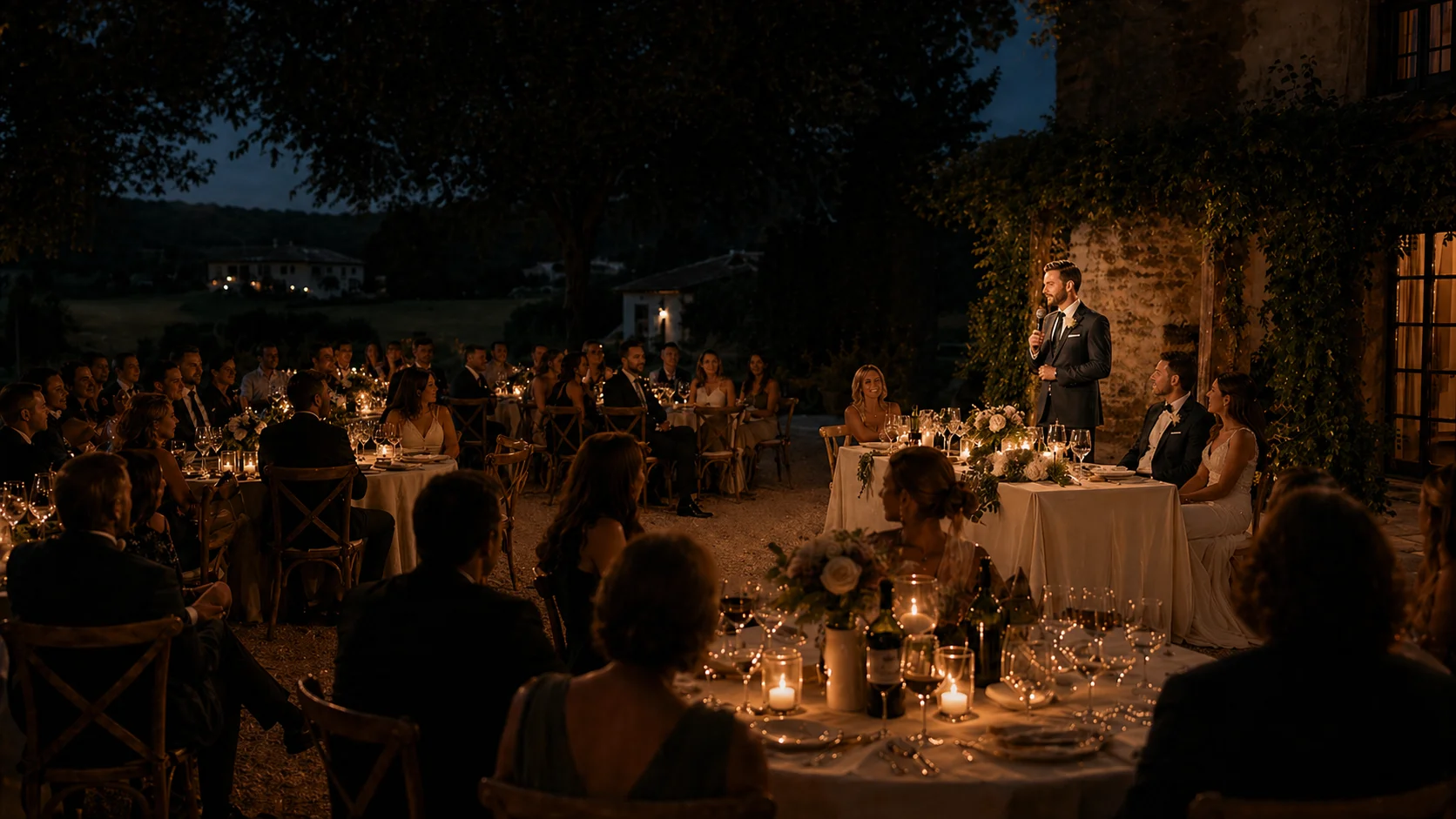
Speech Moment Checklist: What Makes a Toast Feel Held, Not Exposed
A wedding toast depends on more than good writing. It lands differently depending on attention, sound, timing, room tone, and the unspoken signals that tell a speaker whether the moment is carrying them or leaving them alone.
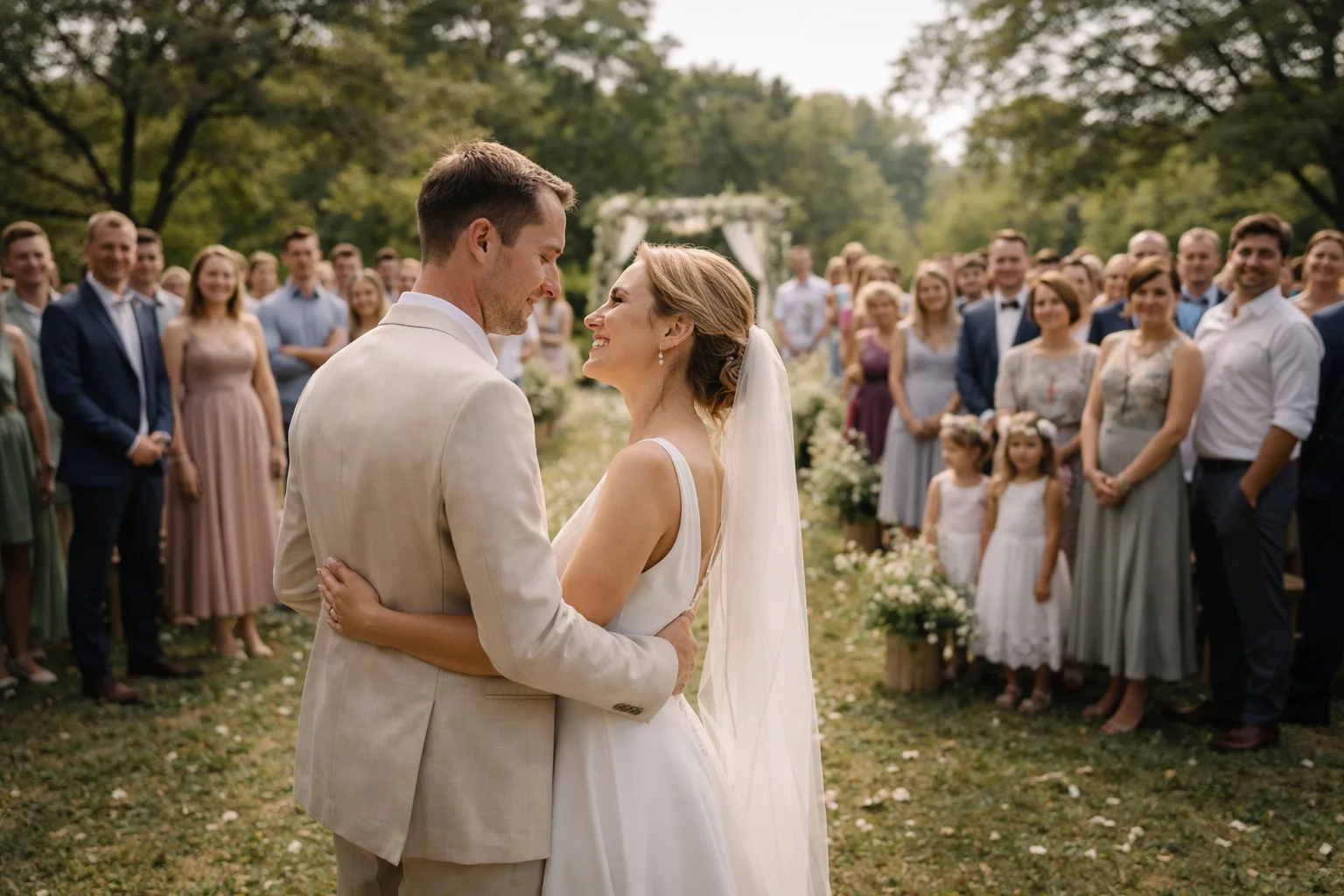
How Kids Change Formal Wedding Moments — and How to Plan for It
hildren change the atmosphere of formal wedding moments faster than most adults expect. They redirect attention, alter pacing, and reveal whether a ceremony, photo setup, or seating plan is flexible enough to hold real life. This article looks at how children affect formal wedding situations and how couples can plan for those shifts without losing the tone of the day.
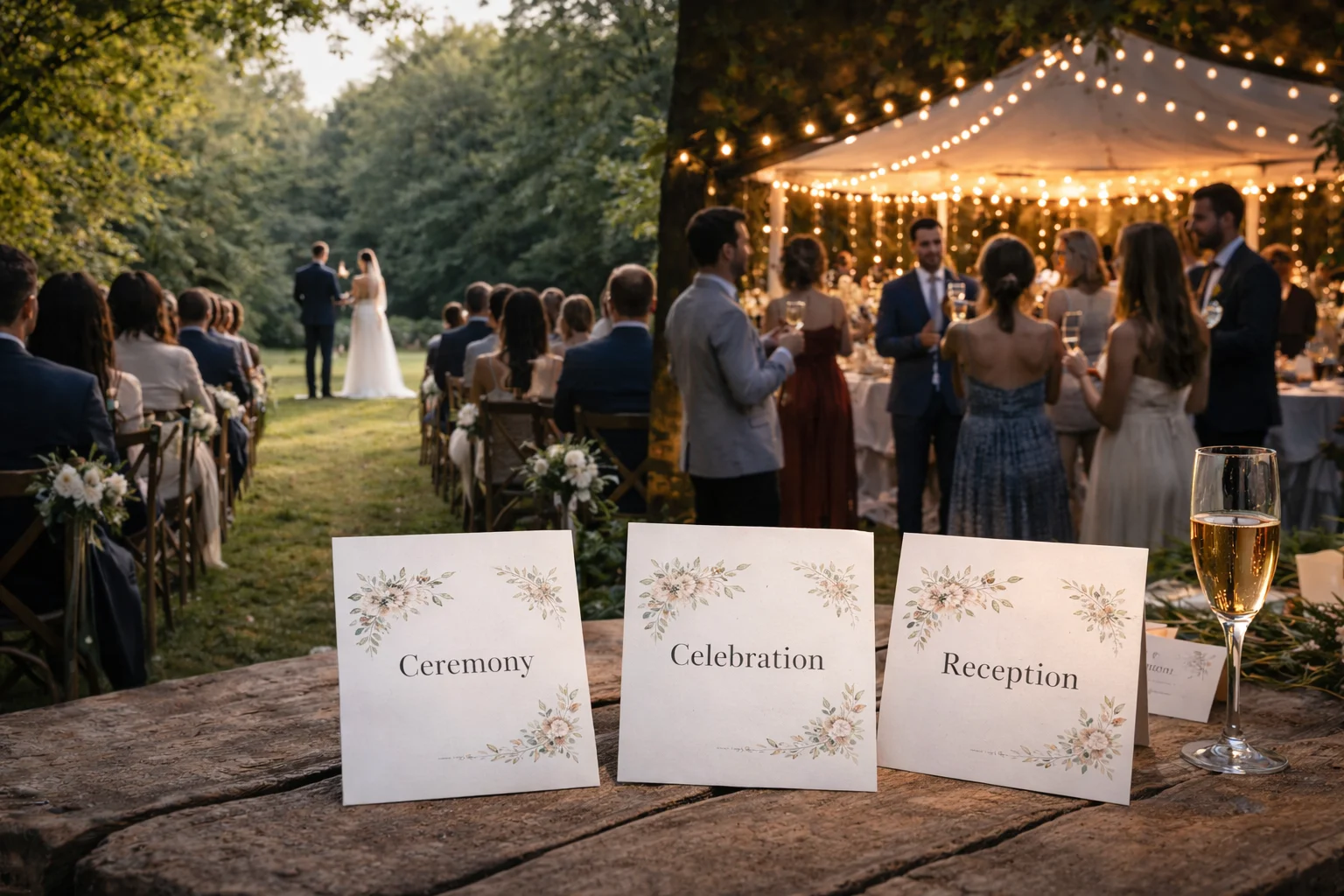
Who Is Invited to the Ceremony and Who Only to the Celebration
Not every wedding invitation has to include every part of the day. But the difference between being invited to the ceremony and being invited only to the celebration carries more meaning than many couples first assume. This article looks at how to make that distinction clearly, gracefully, and in a way that fits both the ritual weight of the ceremony and the social reality of the celebration.