
What Guests Notice First in Wedding Decoration — and Why
What Guests Notice First in Wedding Decoration - and Why
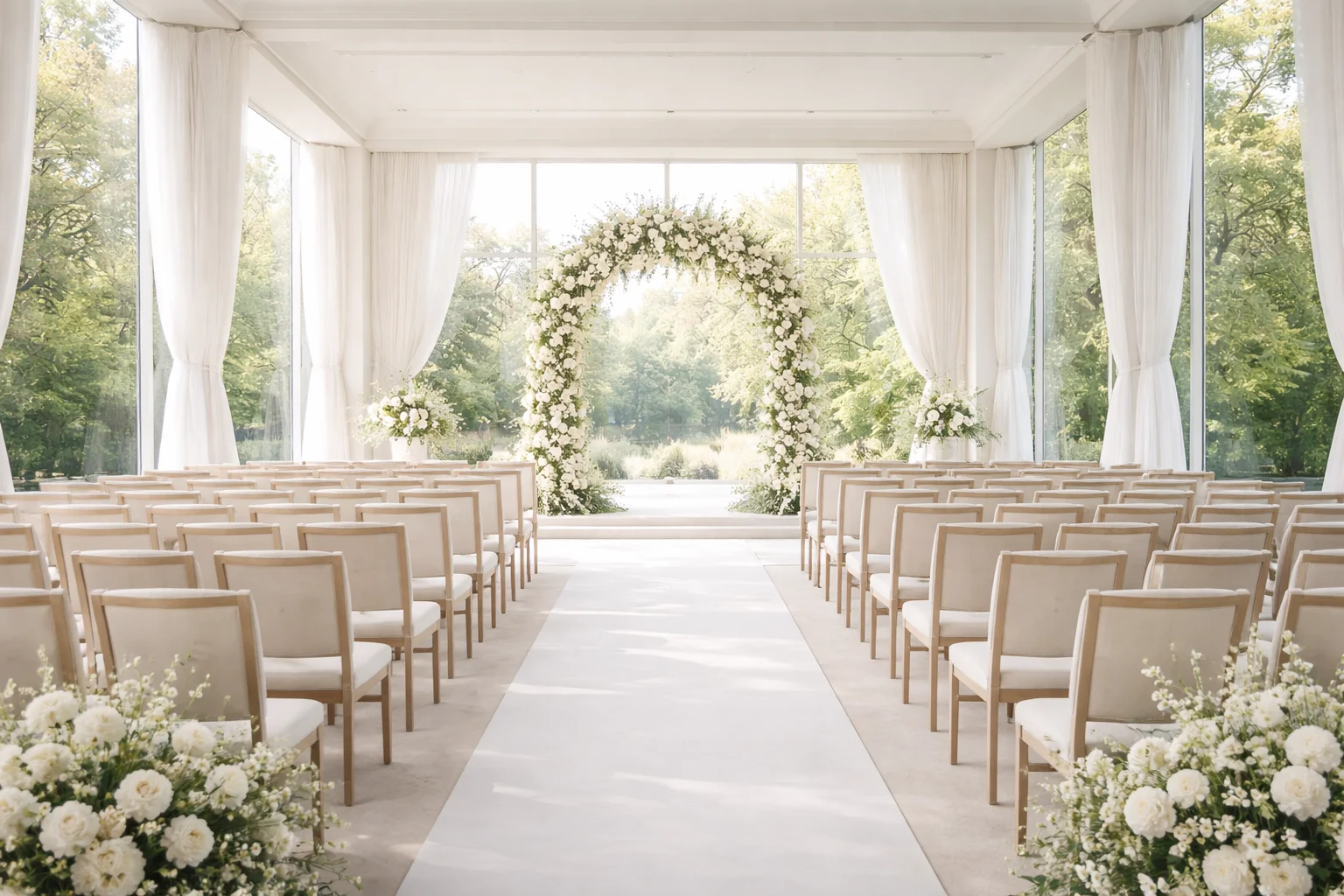
People often assume guests notice flowers first. Or color. Or the statement piece at the end of the aisle. In reality, most people register something less literal before any of that: the balance of the room, the discipline of the lines, the amount of air between objects, the way light lands on surfaces. It is not so different from the first impression of a luxury car. Before anyone names the leather, the finish, or the engineering, they sense proportion and control. That same visual intelligence matters in wedding decoration, especially when a ceremony wants to feel composed rather than merely styled.
This is where decoration meets something quieter. A strong wedding setting does not rush to explain itself. It creates a second of suspension before guests fully understand what they are seeing. That second matters. It is the visual equivalent of breath held just long enough to sharpen feeling. The room lands before the details do. And when that first impression is steady, everything that follows feels more meaningful.
Wedding Decoration The PauseDefinition
What guests notice first in wedding decoration is rarely a single object. It is the immediate visual order of the space: scale, spacing, silhouette, material contrast, and the emotional speed of the room. Good decoration works because these elements are resolved before anyone consciously reads them.
Line Comes Before Detail
Luxury cars understand this instinctively. Their first job is not ornament but line: the sweep of the roof, the confidence of the stance, the relationship between mass and movement. Wedding design works the same way. Guests notice the arch before the flowers inside it, the table shape before the place card, the aisle width before the petals. When the overall geometry is calm, even simple decoration feels expensive. When the lines are unresolved, no amount of added detail can fully recover the impression.
Material Quality Is Read Emotionally
People do not need technical vocabulary to sense quality. They feel it in the density of linen, the finish of wood, the softness or sharpness of reflected light, the difference between natural texture and something overly polished. True refinement is usually tactile before it is verbal. At a wedding, guests read this as atmosphere. A matte ceramic vessel can feel more grounded than a glossy showpiece. A heavy fabric can quiet a room more effectively than additional decor ever will.
The First Impression Is Usually Negative Space
What people register first is often what has been deliberately left open. The clear edge around a ceremony installation. The distance between the front chairs and the couple. The uncluttered surface that allows one object to matter. In design terms, negative space creates legibility. In wedding terms, it creates emotional readiness. It slows the eye, and that slowing is part of the experience.
Why the Pause Changes Everything
The most memorable wedding rooms often have a fraction of a second in which nothing fully announces itself. Guests enter, stop almost imperceptibly, and then begin to notice. That pause is not accidental. It comes from restraint, from rhythm, from not resolving every surface too quickly. In that moment, decoration becomes emotional architecture.
Practical Styling Starts With the Entrance View
If the goal is to influence what guests notice first, start where they actually arrive. Stand at the entrance and remove the planner perspective. From that angle, ask: what is the dominant line, where does the eye rest first, and what feels unnecessary? A ceremony space becomes more elegant by becoming more exact, not fuller.
Conclusion
Guests notice wedding decoration through proportion, material confidence, and the tempo of the experience before detail. The eye trusts what feels resolved. And in weddings, that trust often begins in a pause so brief nobody names it, though everyone feels it.
Related Articles
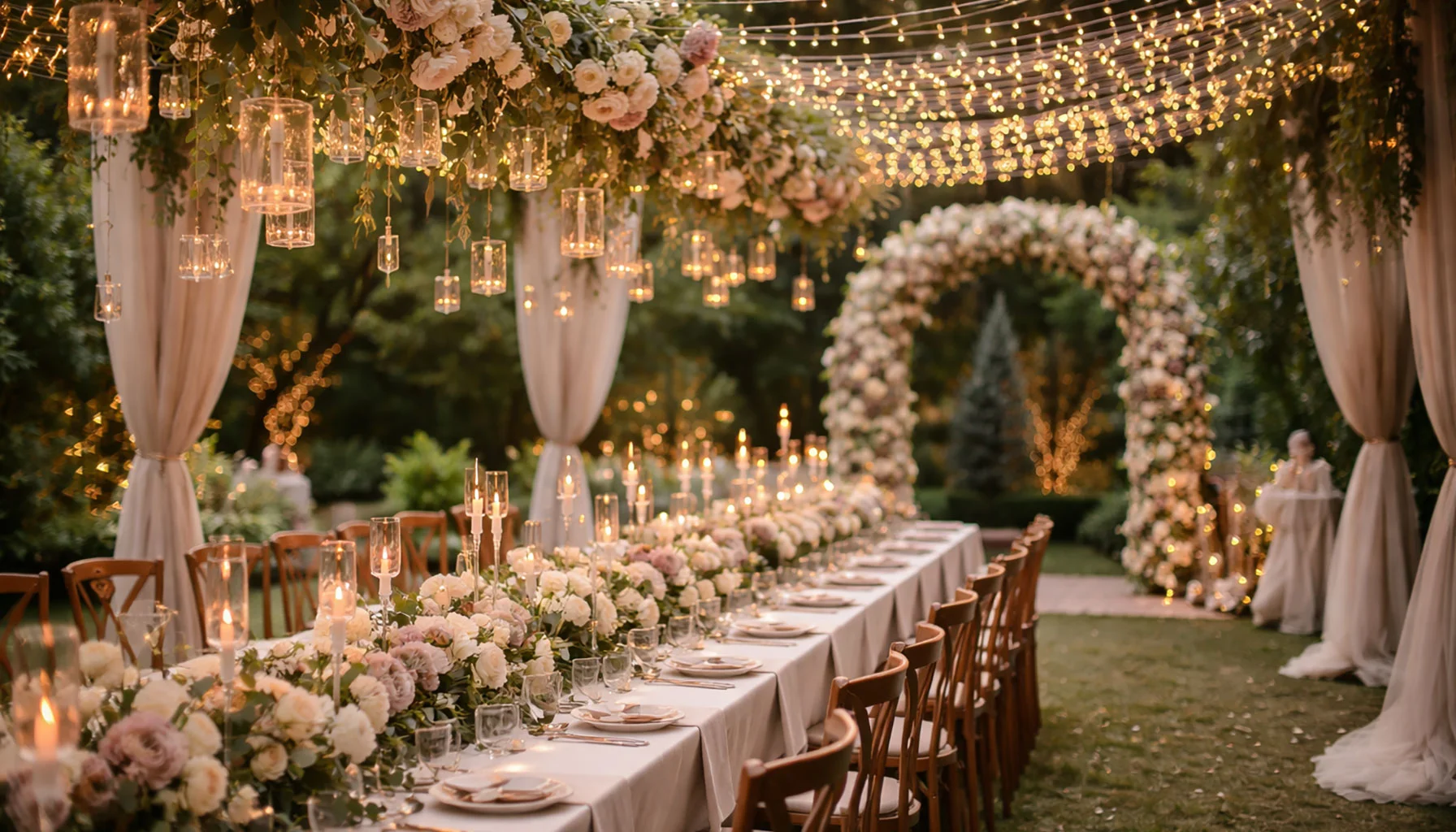
A Day Made of Love: Thoughtful Decoration Ideas for an Unforgettable Wedding
Wedding decoration is often discussed as a visual layer. In practice, it does something more structural. It directs attention, marks thresholds, repeats meaning through materials, and helps a room feel held rather than merely styled. This article looks at thoughtful decoration ideas through the quieter logic of ritual.
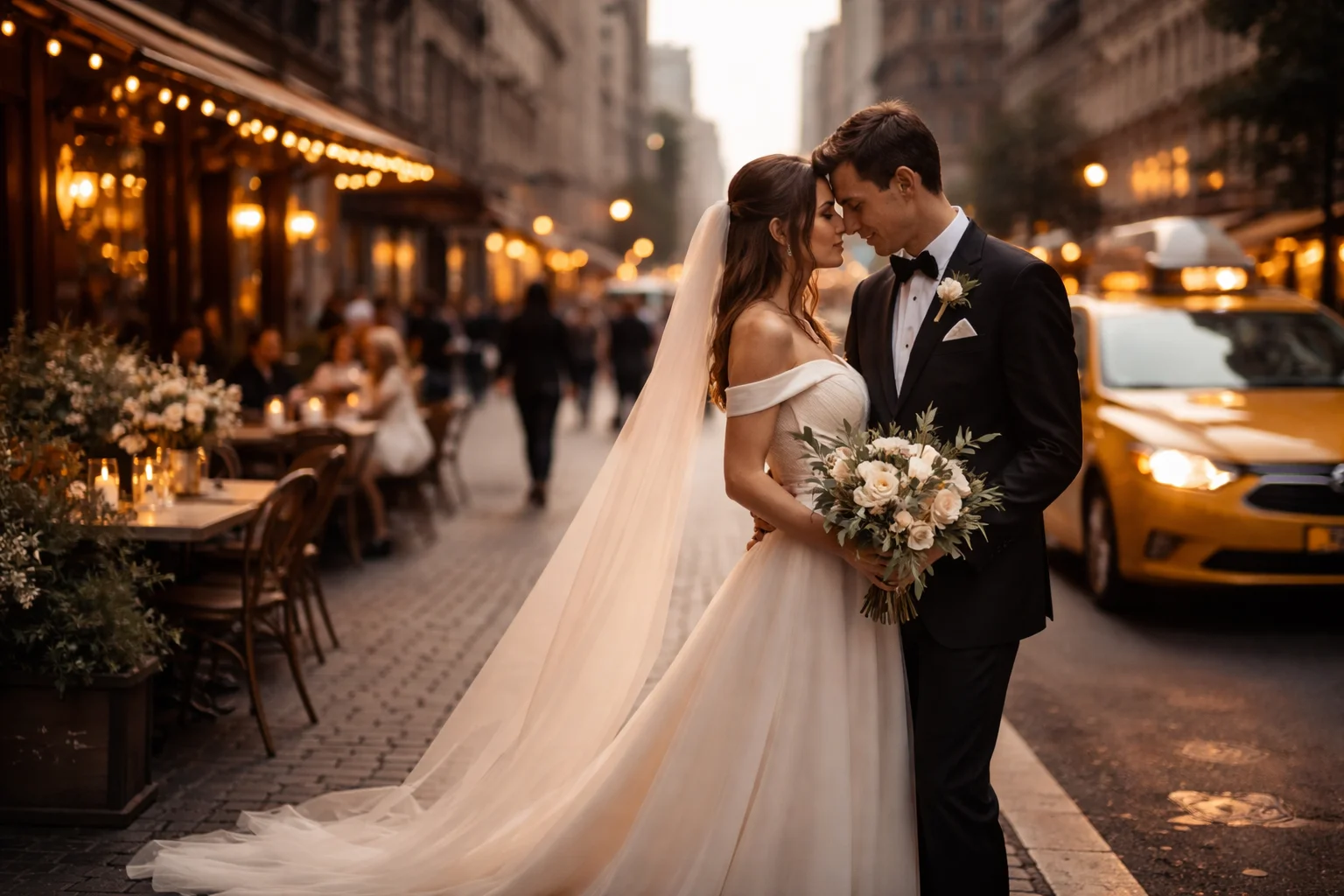
A City Wedding Moves Fast Until It Pauses
City weddings are shaped by movement. Traffic, schedules, tight timelines, elevators, crowded sidewalks, the constant awareness that everything is happening in the middle of something else. Planning one often means working with constraints rather than against them.
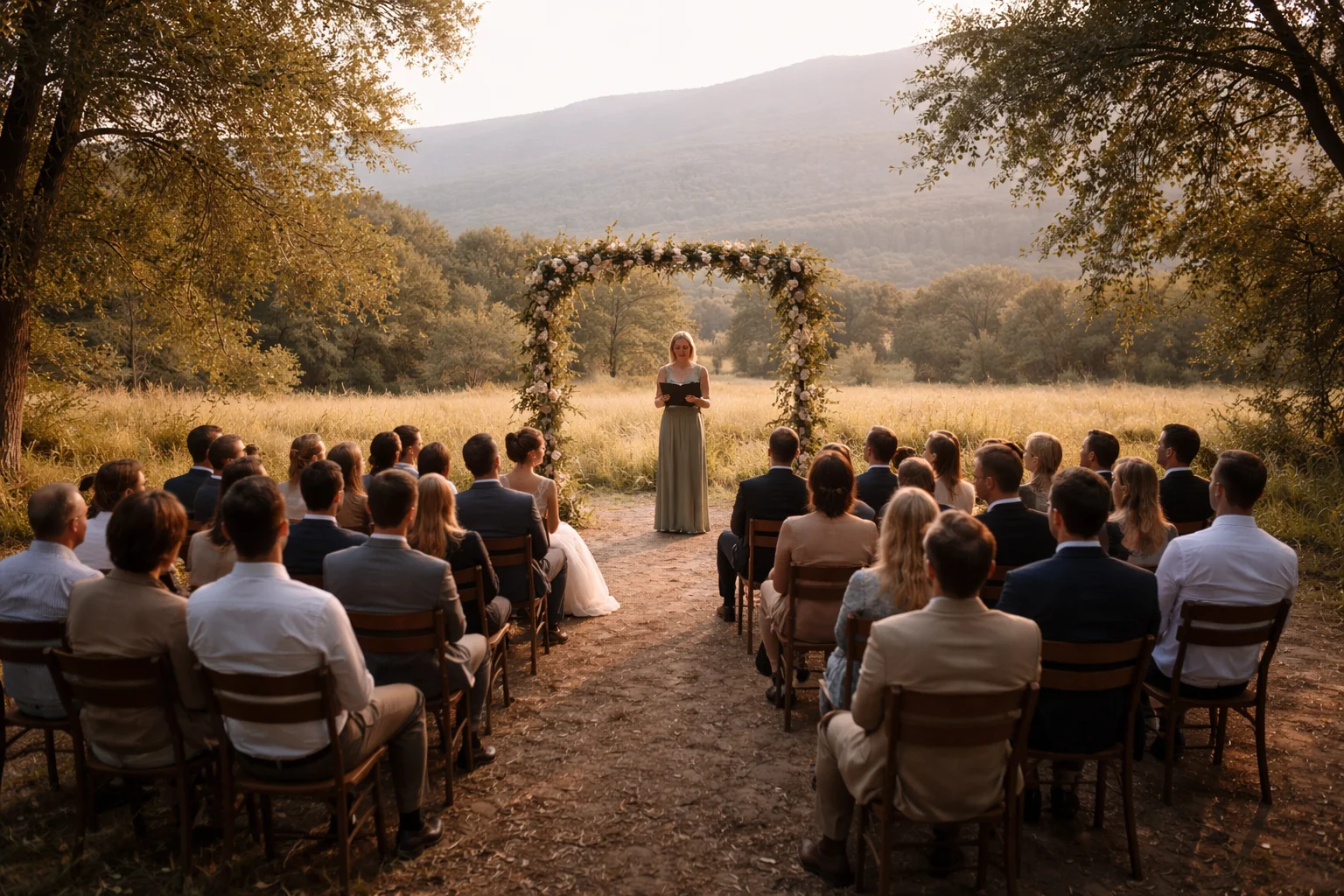
Free Ceremony Officiants: Presence, Voice, and the Shape of Attention
In a free ceremony, the officiant cannot lean on inherited authority or a structure everyone already recognizes. What carries the moment instead is subtler: presence, voice, timing, and the ability to hold attention without gripping it too tightly. This article looks at how officiants shape free ceremonies through the smallest visible forms of guidance.
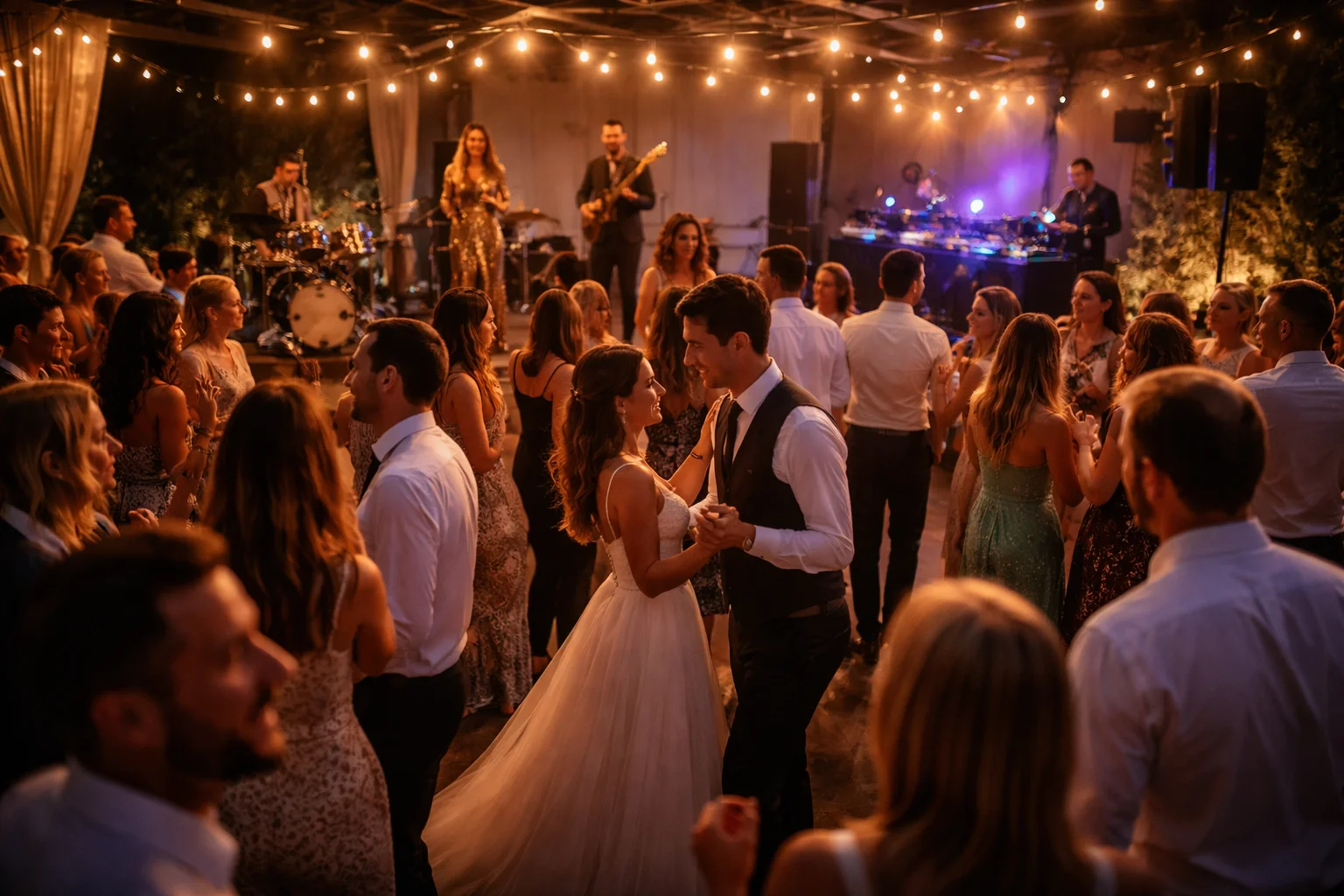
DJ or Live Band: What Actually Fills a Wedding Dance Floor
The choice between DJ and live band is often framed as a style decision, but at weddings it changes timing, energy, and how guests move through the night. This article looks at what really fills a dance floor, what guests actually want, and why the most important musical choice often happens before the first song begins.
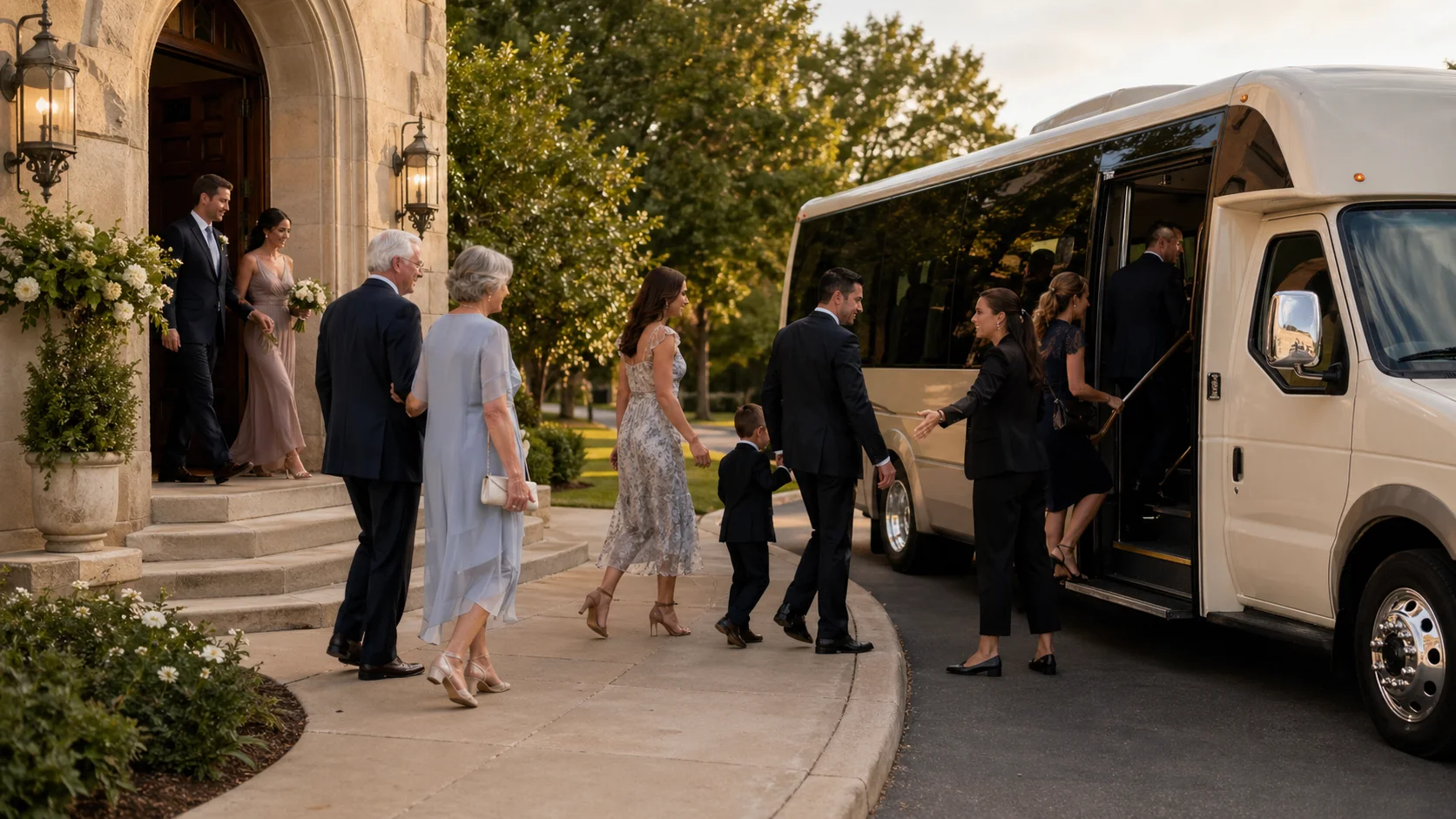
Transportation Checklist: How Not to Lose Time Between Wedding Locations
Wedding transportation is rarely only about the drive. This article looks at pickup points, buffers, driver contacts, guest movement, accessibility, and the pause between locations that either keeps the day together or quietly costs time.
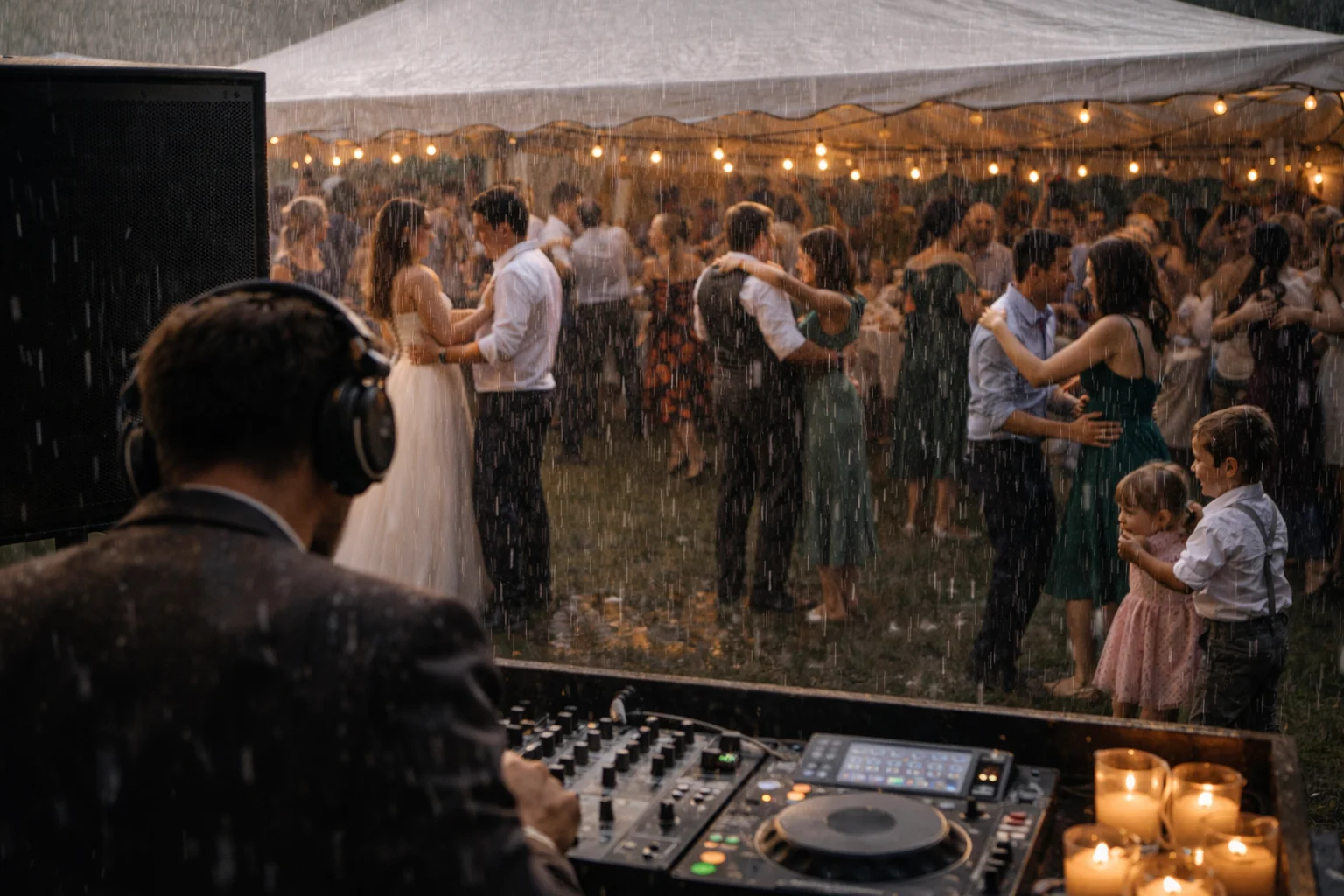
Rainy Wedding Playlist: Music That Works When the Weather Changes Everything
Rain changes a wedding faster than almost anything else. It alters timing, mood, movement, and expectation. This article explores how a rainy wedding playlist can steady the atmosphere, guide guests through uncertainty, and support practical decisions when the day suddenly shifts.
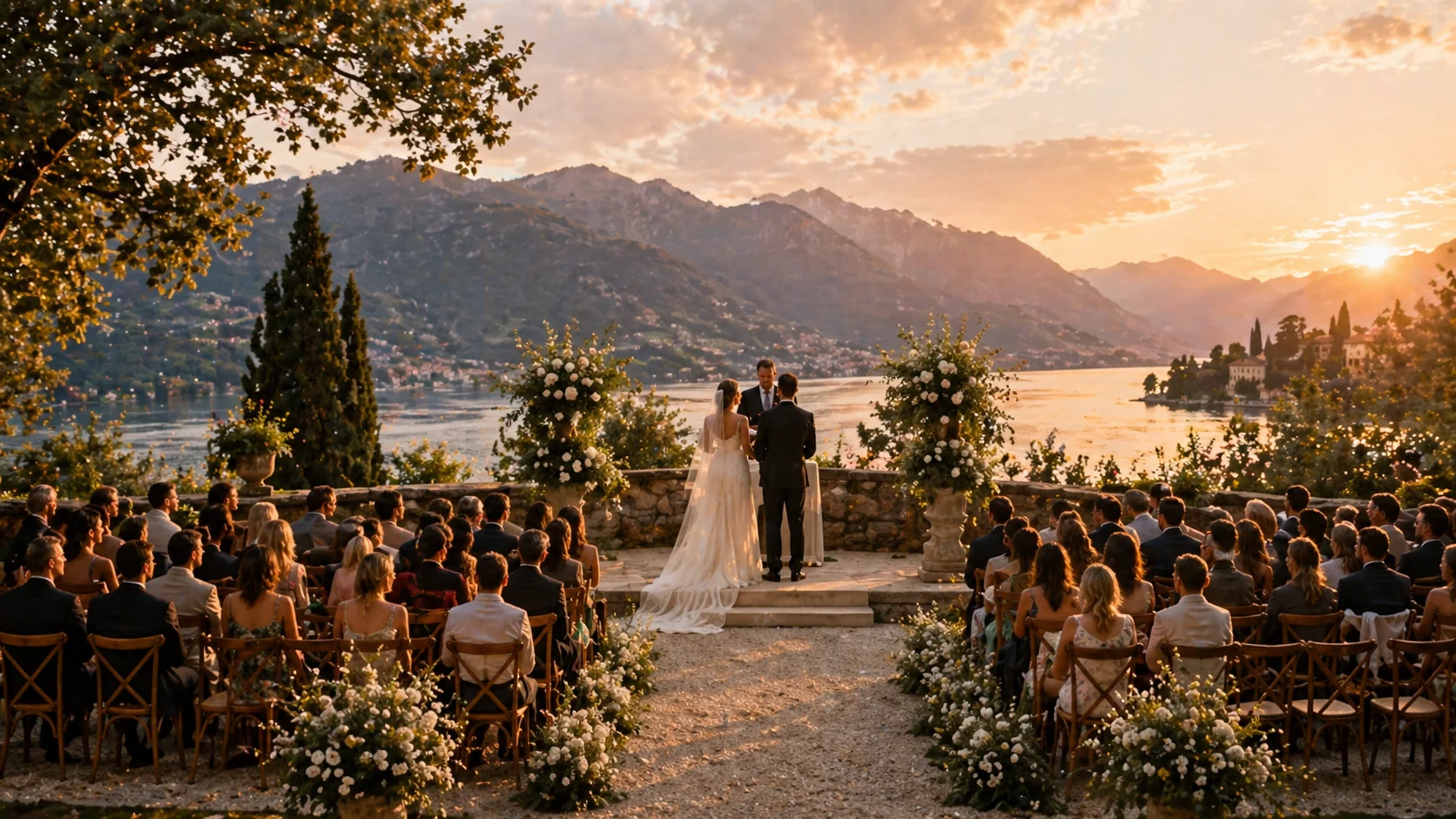
Ceremony Transition Checklist: What Should Be Ready Before Attention Has to Gather
Ceremony transitions often seem brief on paper, but they carry the difficult shift from movement into shared attention. This article looks at what needs to be ready before that moment arrives, from seating and sound to cues, stillness, and the quieter emotional readiness of the room.
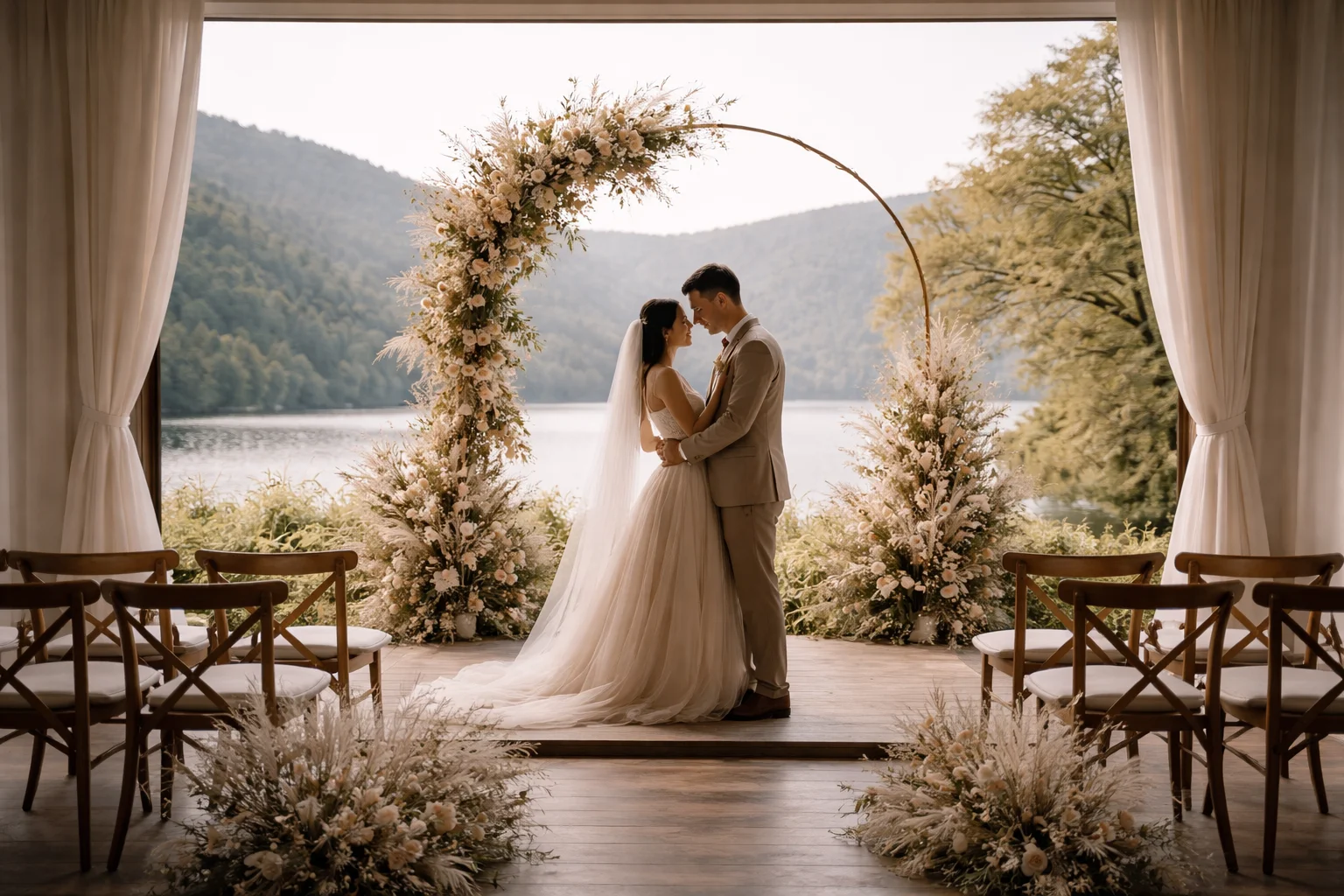
When Wedding Decoration Says More by Saying Less
In wedding planning, decoration is often discussed in visible terms: florals, candles, tables, color, scale. But the rooms people remember are rarely memorable because they were crowded with ideas. They stay with us because the space knew when to pause. A ceremony arch with air around it, a table that holds only what matters, a doorway left almost bare so that the people moving through it become the focus: these choices do more than decorate. They create emotional direction through wedding decoration that feels considered rather than performed.
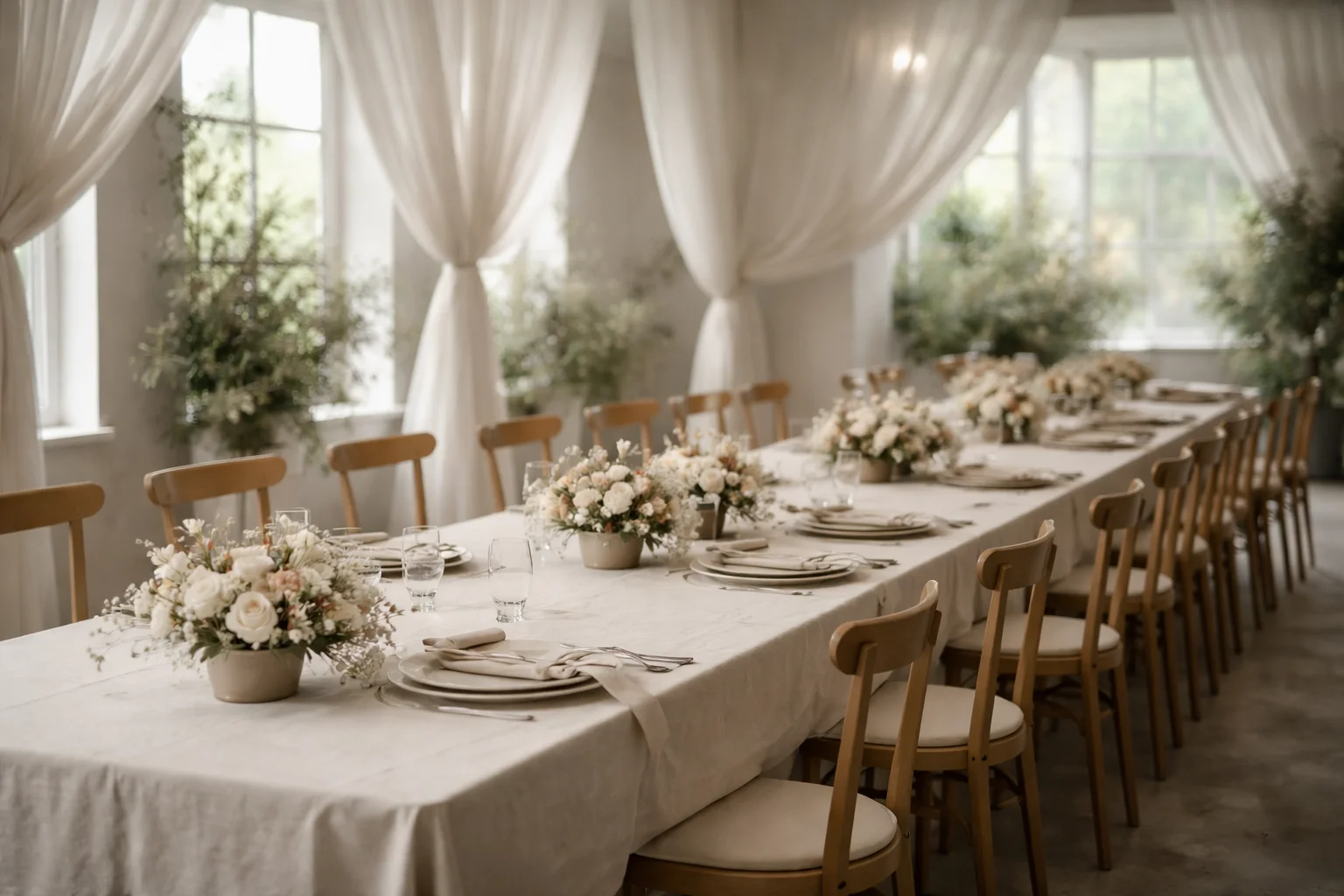
When Wedding Decoration Says What People Leave Unspoken
Wedding decoration is often discussed through color palettes, florals, table settings, and style references. Those things matter, but they are rarely the whole story. The room also carries what has not been fully explained: family tensions handled with grace, private histories that shape a couple's choices, or a shared wish for the day to feel calm rather than spectacular. In that sense, decoration is not only visual. It becomes part of the emotional architecture of the ceremony.
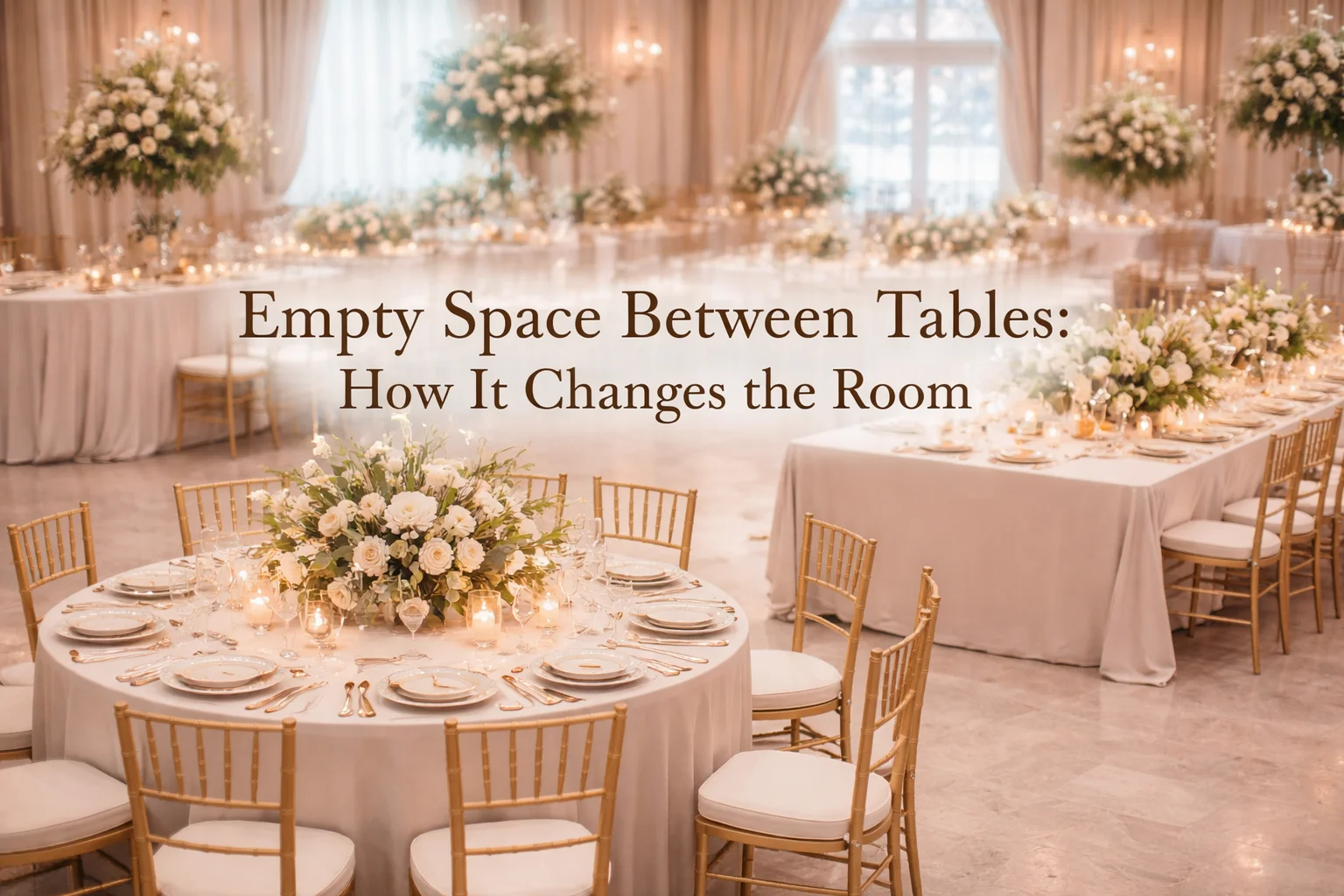
Empty Space Between Tables and How It Shapes the Room
Most layouts start with the tables themselves. Size, shape, how many fit. The areas in between are often adjusted at the end, sometimes just to make things work on paper. In the actual room, though, those leftover spaces do something. Not in a designed way. More like they shift how people move without anyone really pointing at it.