
Religious Ceremony
Spiritual meaning and tradition come together in a wedding celebrated through faith. Sacred rituals, blessings, and symbolic moments give the ceremony depth and emotional resonance. Guided by religious customs, this form of celebration honors shared beliefs while creating a meaningful and heartfelt start to married life.
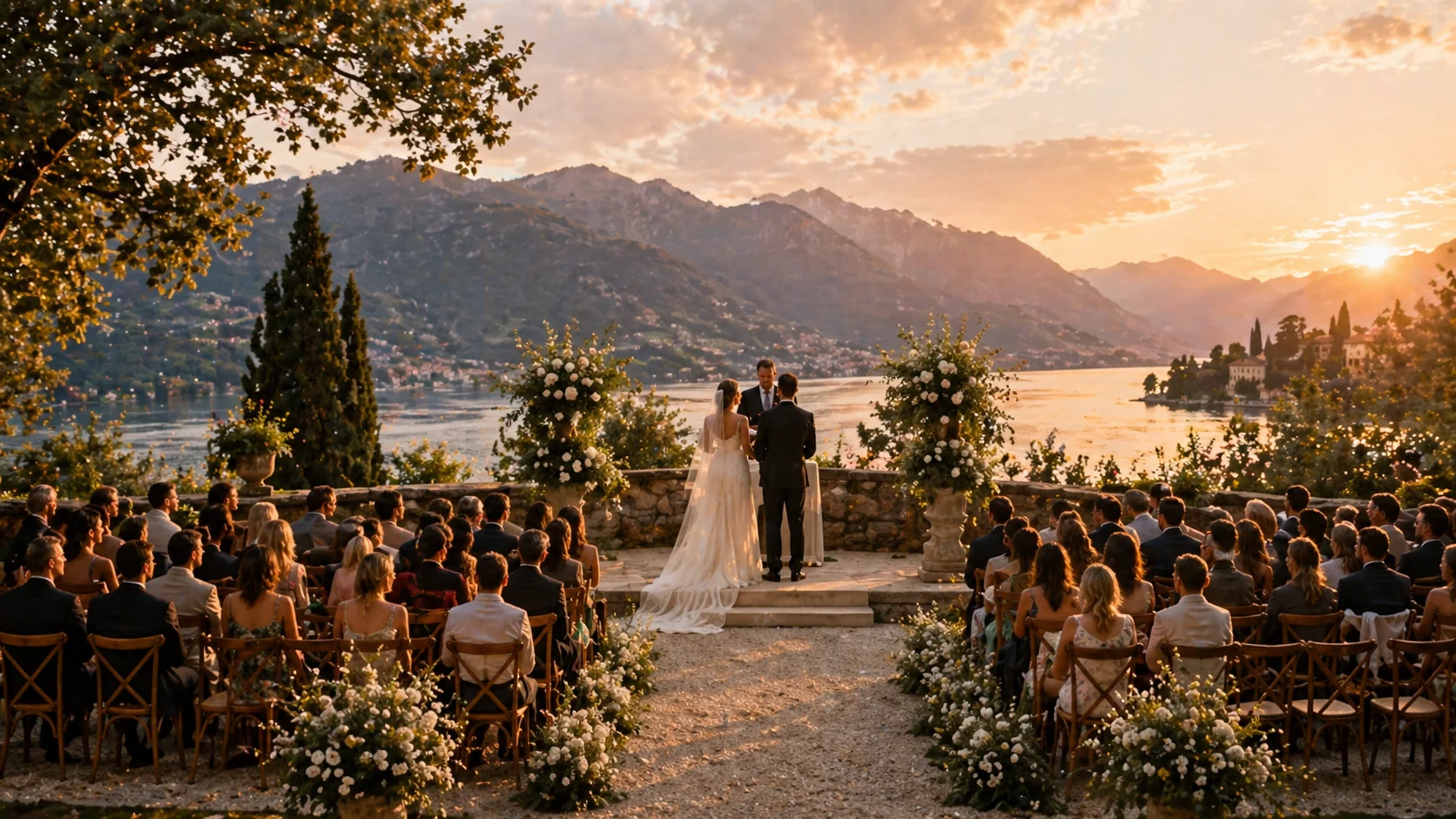
Ceremony Transition Checklist: What Should Be Ready Before Attention Has to Gather
Ceremony transitions often seem brief on paper, but they carry the difficult shift from movement into shared attention. This article looks at what needs to be ready before that moment arrives, from seating and sound to cues, stillness, and the quieter emotional readiness of the room.
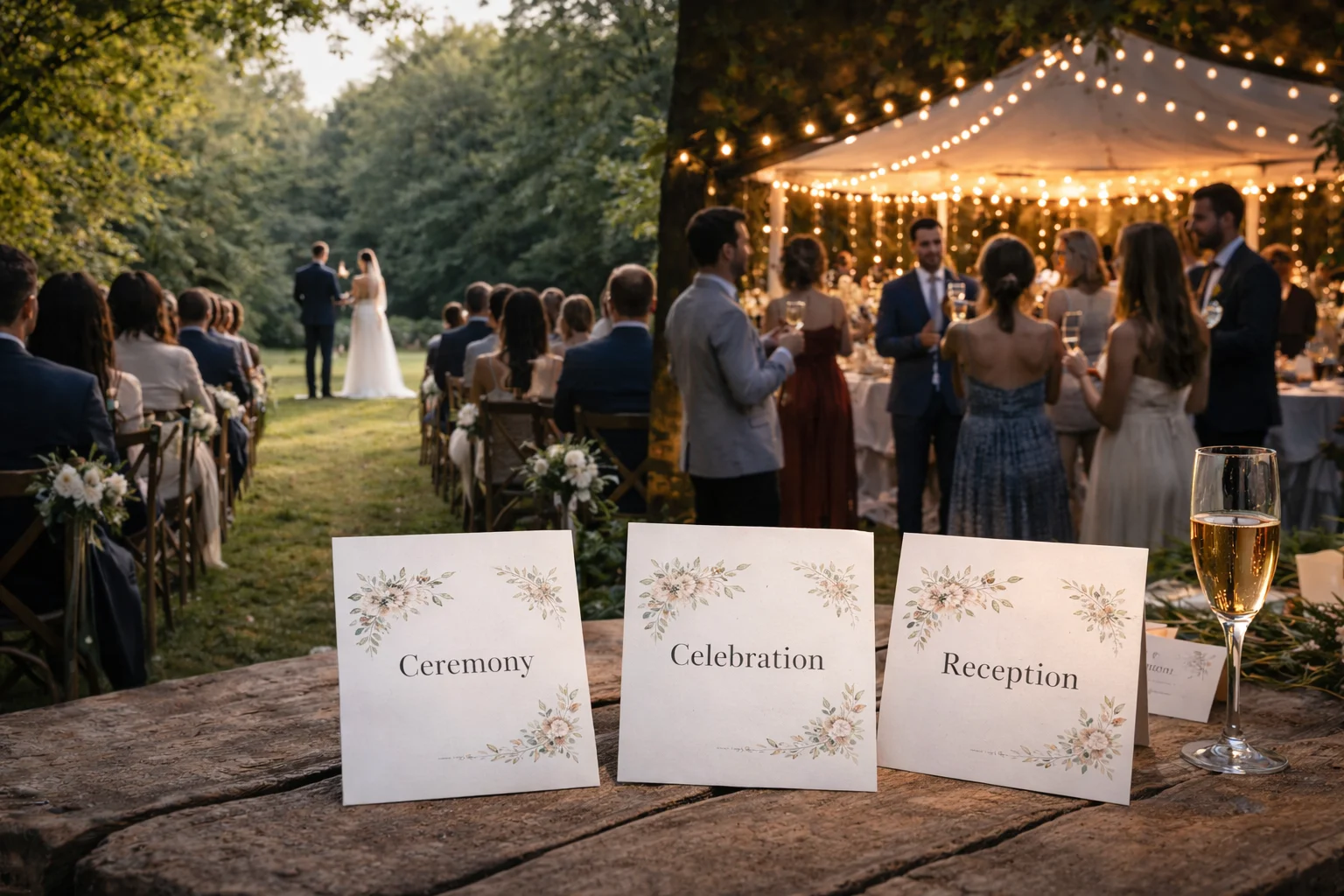
Who Is Invited to the Ceremony and Who Only to the Celebration
Not every wedding invitation has to include every part of the day. But the difference between being invited to the ceremony and being invited only to the celebration carries more meaning than many couples first assume. This article looks at how to make that distinction clearly, gracefully, and in a way that fits both the ritual weight of the ceremony and the social reality of the celebration.
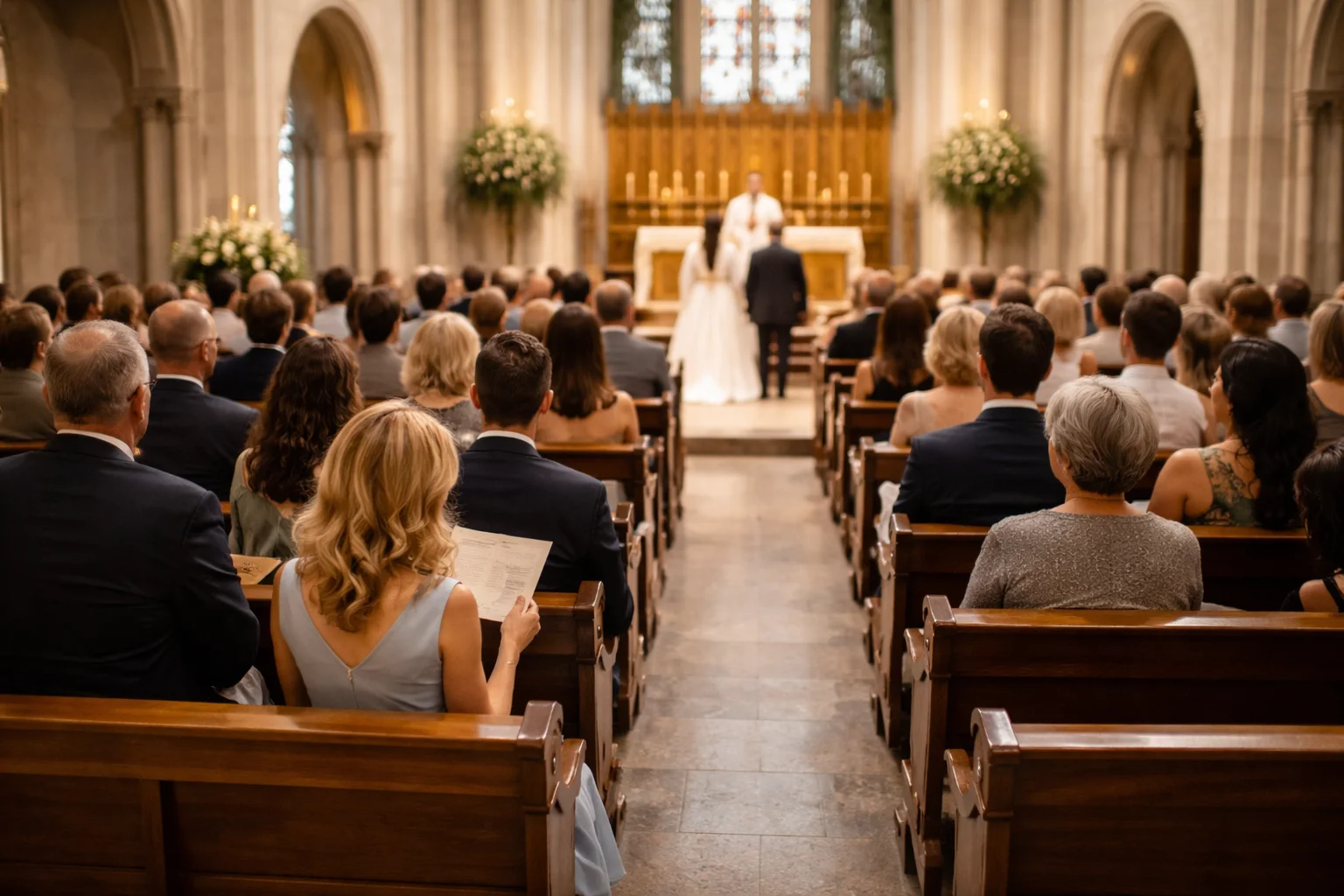
What Guests Do When They Do Not Know the Religious Tradition
Religious wedding ceremonies can feel deeply moving even to guests who do not fully understand the tradition. But they can also create uncertainty about posture, participation, and what is expected in the room. This article looks at what guests actually do when the ritual is unfamiliar, and how couples can make that uncertainty feel respectful rather than awkward.
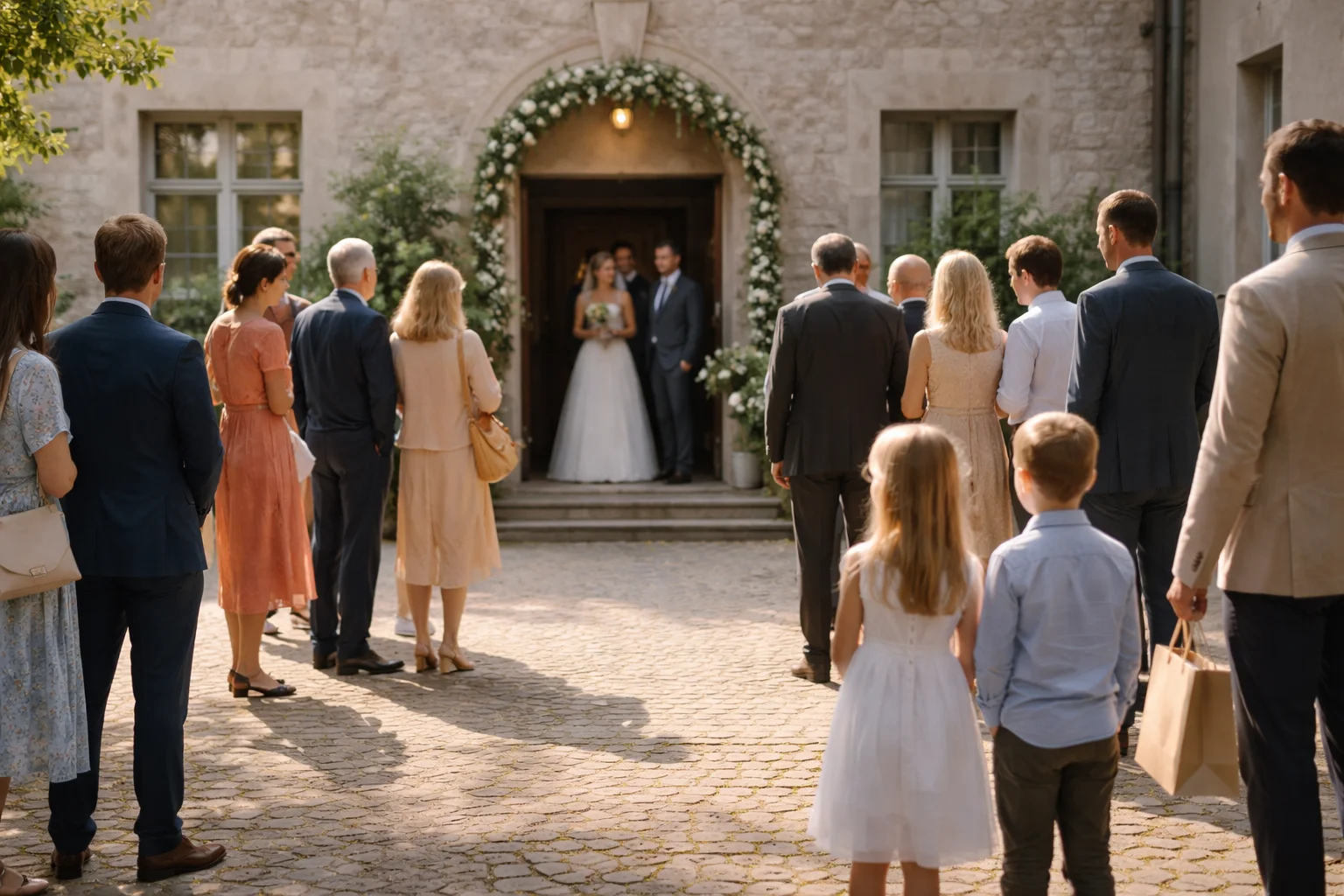
Arrival Before the Ceremony: How Guests Find Their Place Without Being Told
Arrival does not really start at one point. It leaks into the day. Some people are early without meaning to be. Others arrive exactly on time but still end up waiting. The space fills in patches. A few stand close to the entrance, others keep distance. No one explains it. It still settles somehow.
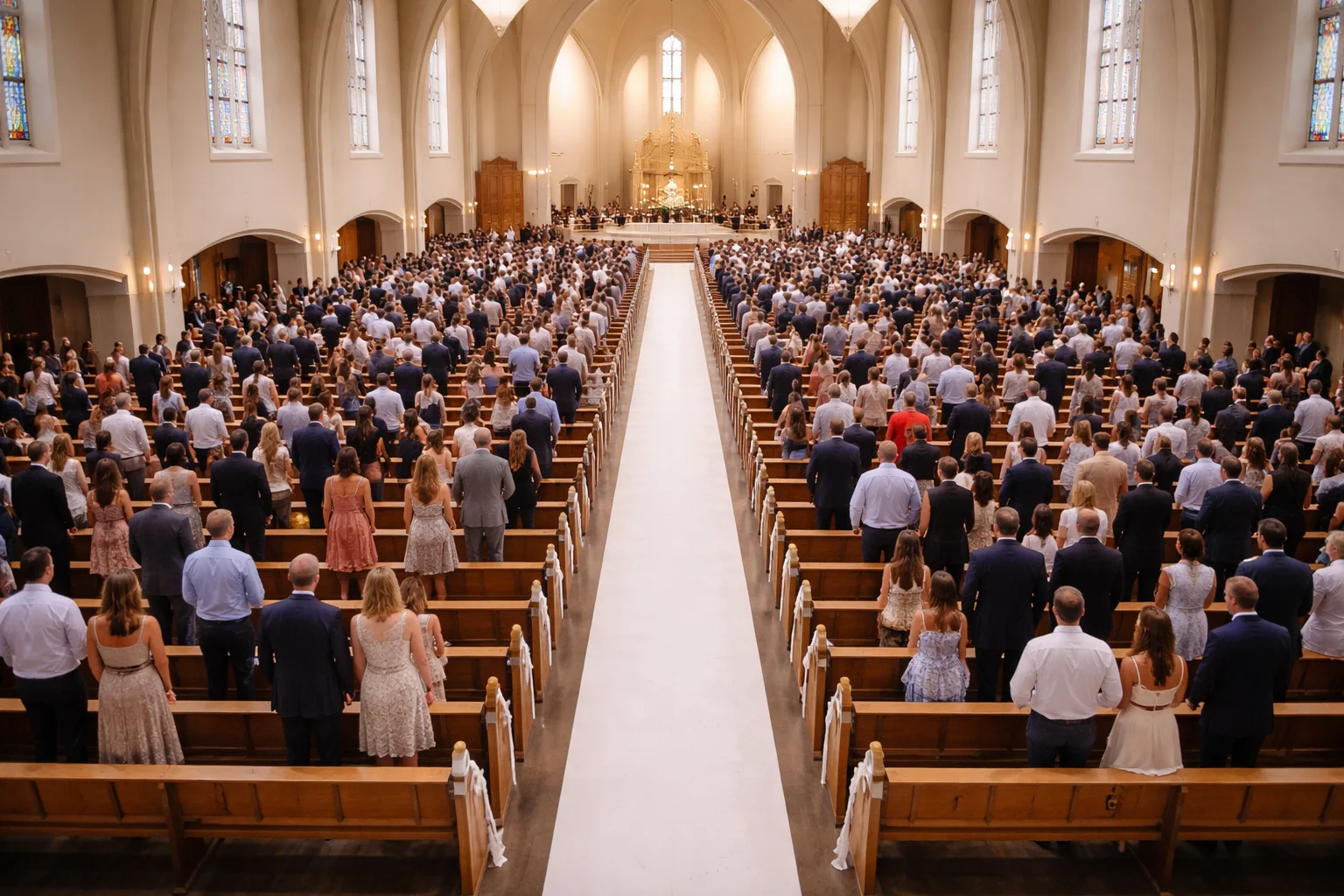
How Space Shapes Guest Behavior at Ceremonies
Large religious rooms tend to slow people down a bit. Not dramatically, just enough to notice. Guests enter, stop for a second too long, look around, then move again. It rarely looks planned. More like small corrections happening one after another.
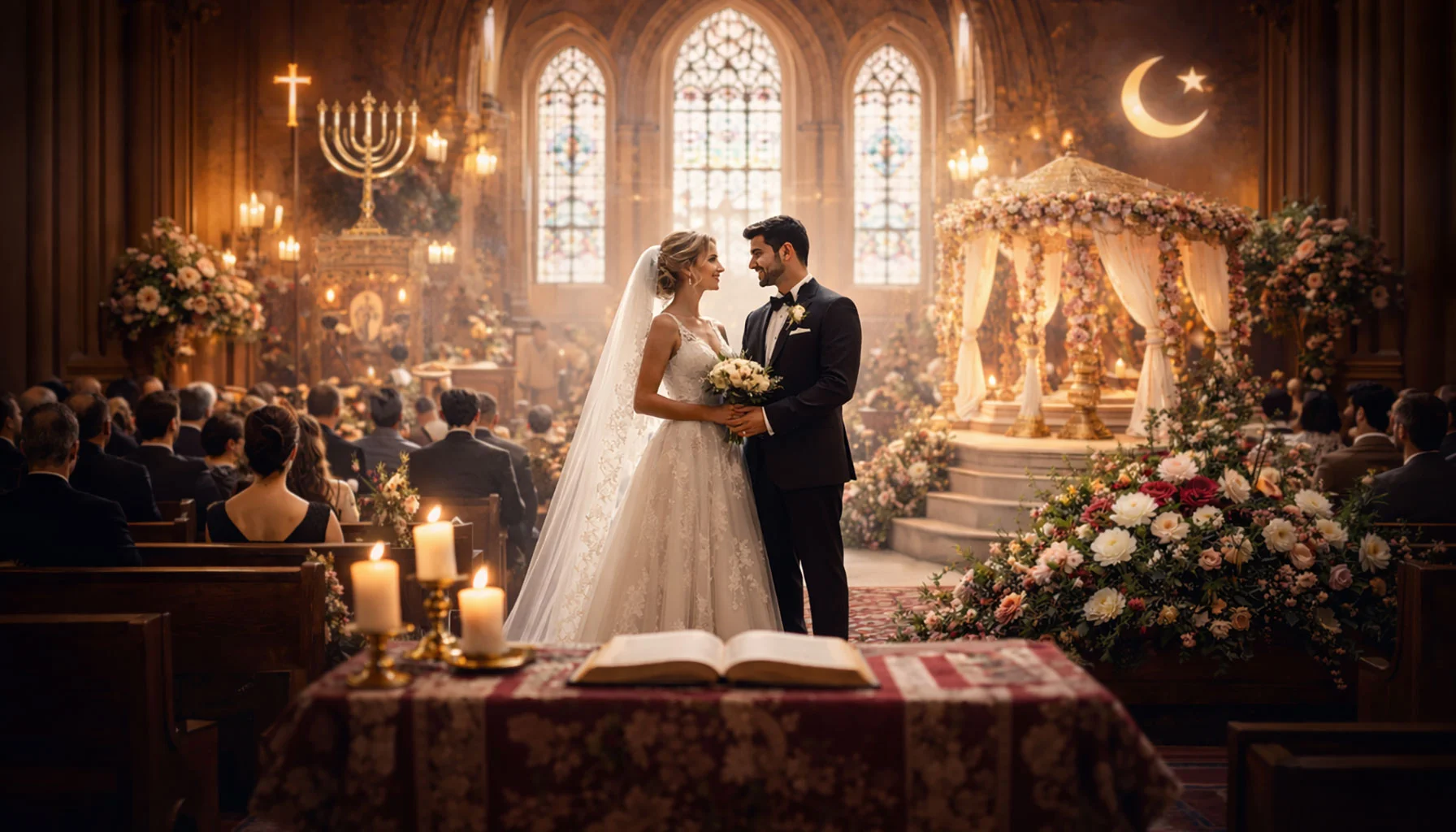
Religious Wedding Ceremonies: A Practical Overview
Religious wedding ceremonies are rarely designed around individual expression. They are shaped by inherited forms, religious authority, and symbolic acts that carry meaning through repetition. This article offers a practical overview of religious wedding ceremonies across countries and traditions while placing them within the wider logic of wedding rituals.