
What Guests Do When They Do Not Know the Religious Tradition
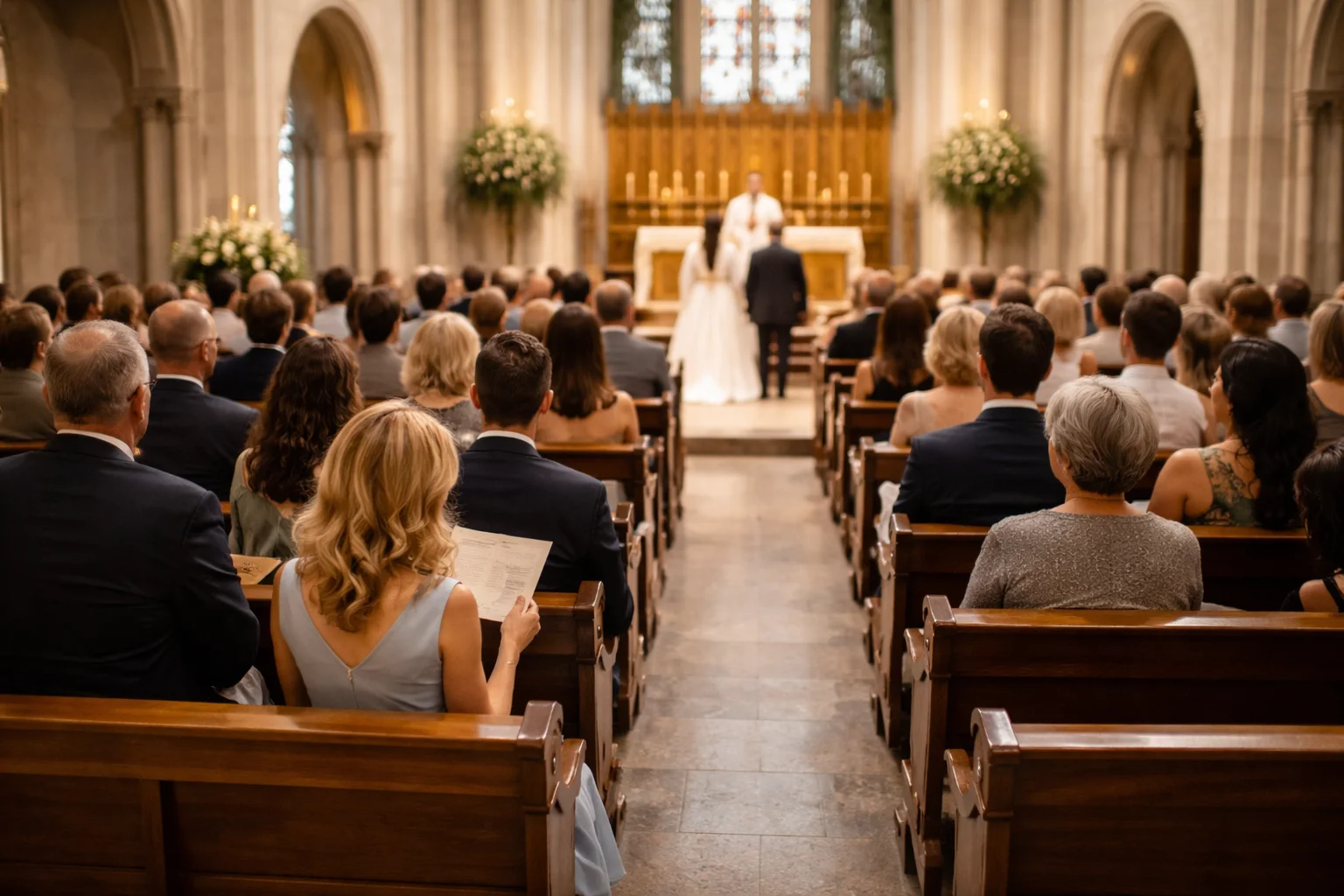
When guests enter a religious wedding ceremony they do not understand, they usually become more careful, not less. They watch the people who seem to belong, copy posture a second too late, lower their voice, and try not to disrupt a structure whose meaning they cannot fully read. That quiet uncertainty is common in weddings where the ritual framework is older, deeper, or more specific than the guest list itself. It does not mean the ceremony is failing. It means people are trying to find the correct distance between respect and participation.
This is also where the subject connects naturally to the emotional shift of being engaged. Engagement changes how a couple experiences ritual long before the wedding begins. What once looked symbolic from the outside starts to feel personal, inherited, and charged. Guests may still experience the ceremony as unfamiliar form, but the couple is often standing inside it very differently. That tension matters. It is why clear guidance and emotional generosity matter so much in religious weddings: the day has to hold both deep belonging and partial unfamiliarity at the same time.
Religious CeremonySpiritual meaning and tradition come together in a wedding celebrated through faith. Sacred rituals, blessings, and symbolic moments give the ceremony depth and emotional resonance. Guided by religious customs, this form of celebration honors shared beliefs while creating a meaningful and heartfelt start to married life.

Being engaged changes more than plans. It reshapes how time, intimacy, and expectation are felt inside a relationship, often before either person realizes it.
Definition
An unfamiliar religious wedding tradition places guests in a position of partial participation. They are present, often emotionally moved, but not fully fluent in the ritual codes of the room. Good wedding planning does not erase that difference. It gives guests enough orientation to behave respectfully without forcing false familiarity.
Personal Wishes and Religious Structure Need Different Kinds of Space
Couples often want the ceremony to feel personal while also remaining faithful to the religious tradition that gives it meaning. Those two aims do not always use the same language. Personal wishes usually seek recognition, intimacy, and visible individuality. Religious structure seeks continuity, order, and submission to something larger than the couple. Guests feel the difference immediately. The ceremony works best when couples do not force those elements to compete, but let each one appear in the place where it belongs.
Readings, Blessings, and Participation Need Quiet Guidance
Guests who do not know the tradition are usually less worried about belief than about behavior. Do they stand, sit, answer, cross themselves, repeat words, or stay silent. Readings and blessings can become moments of tension if people feel they are expected to join without context. A short printed explanation, one calm verbal note before the ceremony, or visible cues from a few informed guests can make participation feel possible without pressure. The goal is not to turn everyone into insiders. It is to remove unnecessary fear of getting it wrong.
Guests Usually Mirror the Room Before They Understand It
In unfamiliar religious settings, guests read atmosphere before meaning. They follow the room's tempo, the volume of voices, the pace of movement, and the seriousness of the people nearest to them. This means the social behavior of even a few confident participants can steady everyone else. It also means that awkwardness spreads quickly if the room gives mixed signals. Formal sacred spaces do not need more explanation than they can hold, but they do need coherence. Guests behave best when the ritual environment is clear enough to be copied gracefully.
Leaving the Sacred Space Is Part of the Ritual Experience
One of the least noticed transitions in religious weddings is the moment of leaving. Guests often relax too abruptly, as if the sacred part has ended and ordinary behavior can return at full speed. But the exit from a religious room is still part of the emotional choreography of the day. People need a beat to re-enter conversation, photography, congratulations, and movement. A ceremony that ends with a thoughtful transition outside the sacred space often feels more coherent than one that breaks its own atmosphere in a single step.
Respect Works Better Than Performance
Guests do not need to perform belonging in order to honor a religious wedding. In fact, exaggerated imitation often feels more uncomfortable than quiet respect. What helps most is simple permission: permission to observe, permission to remain silent at certain points, permission to follow rather than initiate. Couples who make that permission visible give their guests a more generous role in the ceremony, and the whole room usually becomes calmer because of it.
Conclusion
When guests do not know the religious tradition, they are usually trying harder than anyone realizes. They are reading the room, protecting the moment, and searching for the right way to be present. A strong religious wedding does not demand perfect fluency from them. It offers enough clarity that respect can take shape naturally. That is often what allows unfamiliar ritual to become not less meaningful, but more human.
Related Articles
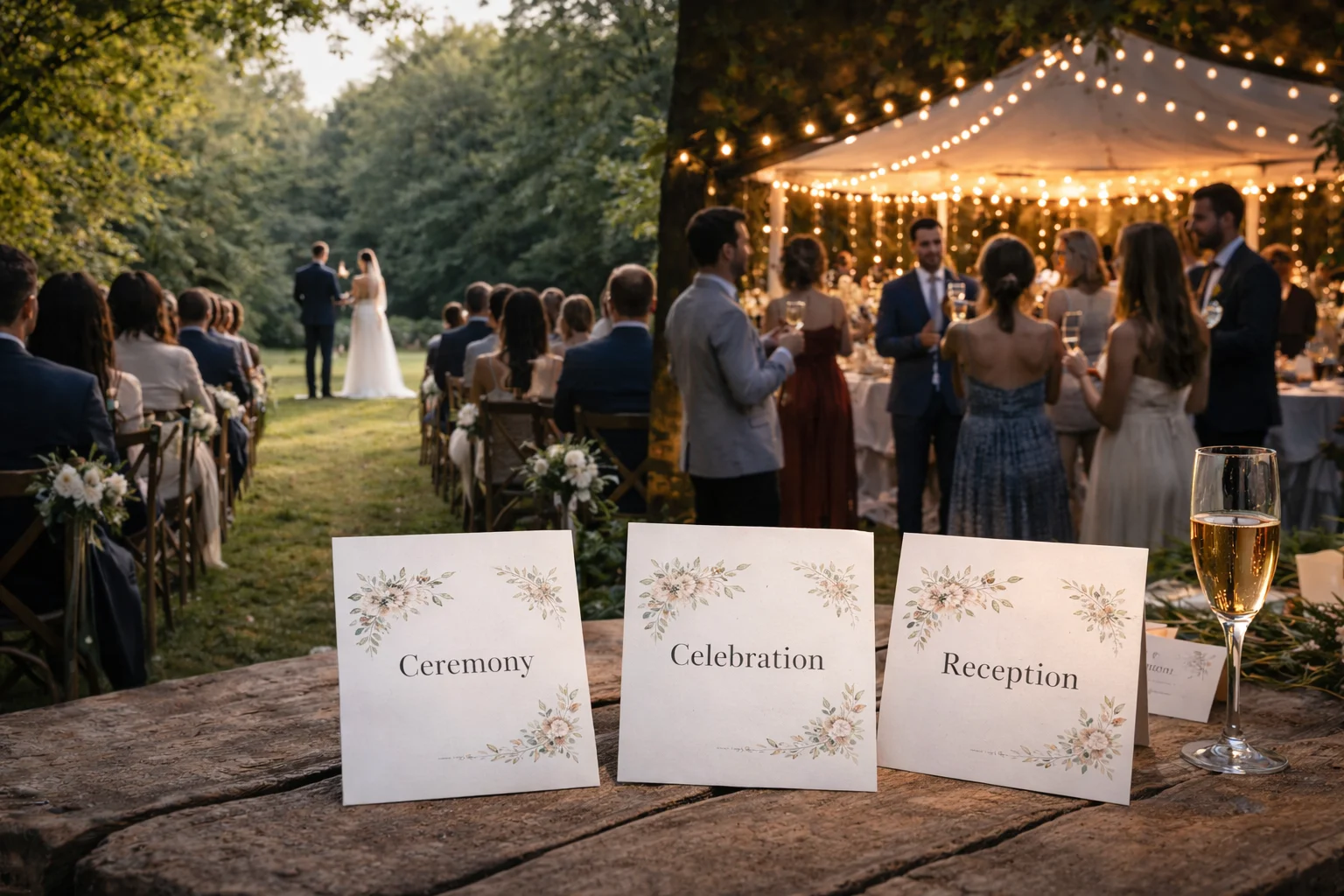
Who Is Invited to the Ceremony and Who Only to the Celebration
Not every wedding invitation has to include every part of the day. But the difference between being invited to the ceremony and being invited only to the celebration carries more meaning than many couples first assume. This article looks at how to make that distinction clearly, gracefully, and in a way that fits both the ritual weight of the ceremony and the social reality of the celebration.
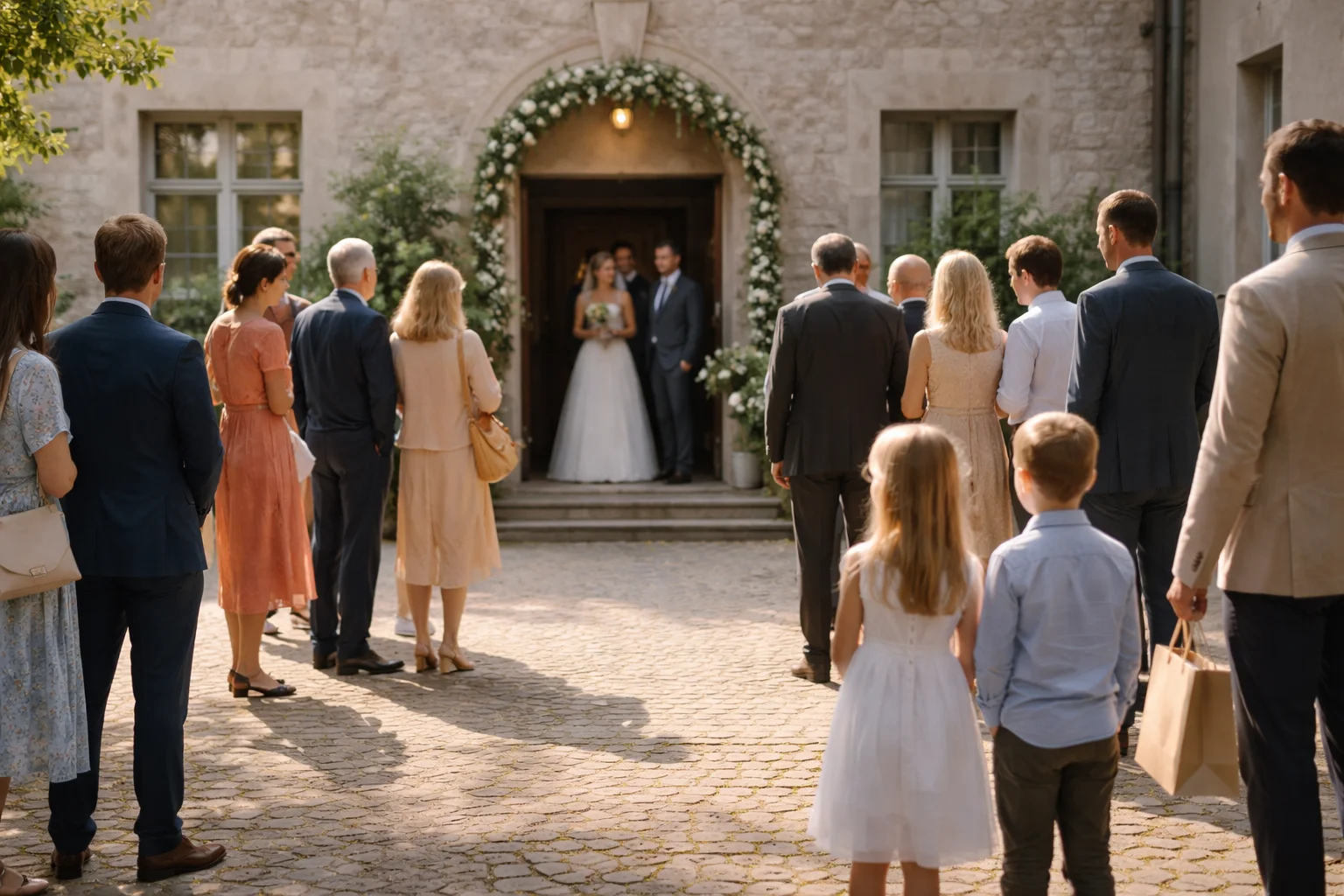
Arrival Before the Ceremony: How Guests Find Their Place Without Being Told
Arrival does not really start at one point. It leaks into the day. Some people are early without meaning to be. Others arrive exactly on time but still end up waiting. The space fills in patches. A few stand close to the entrance, others keep distance. No one explains it. It still settles somehow.
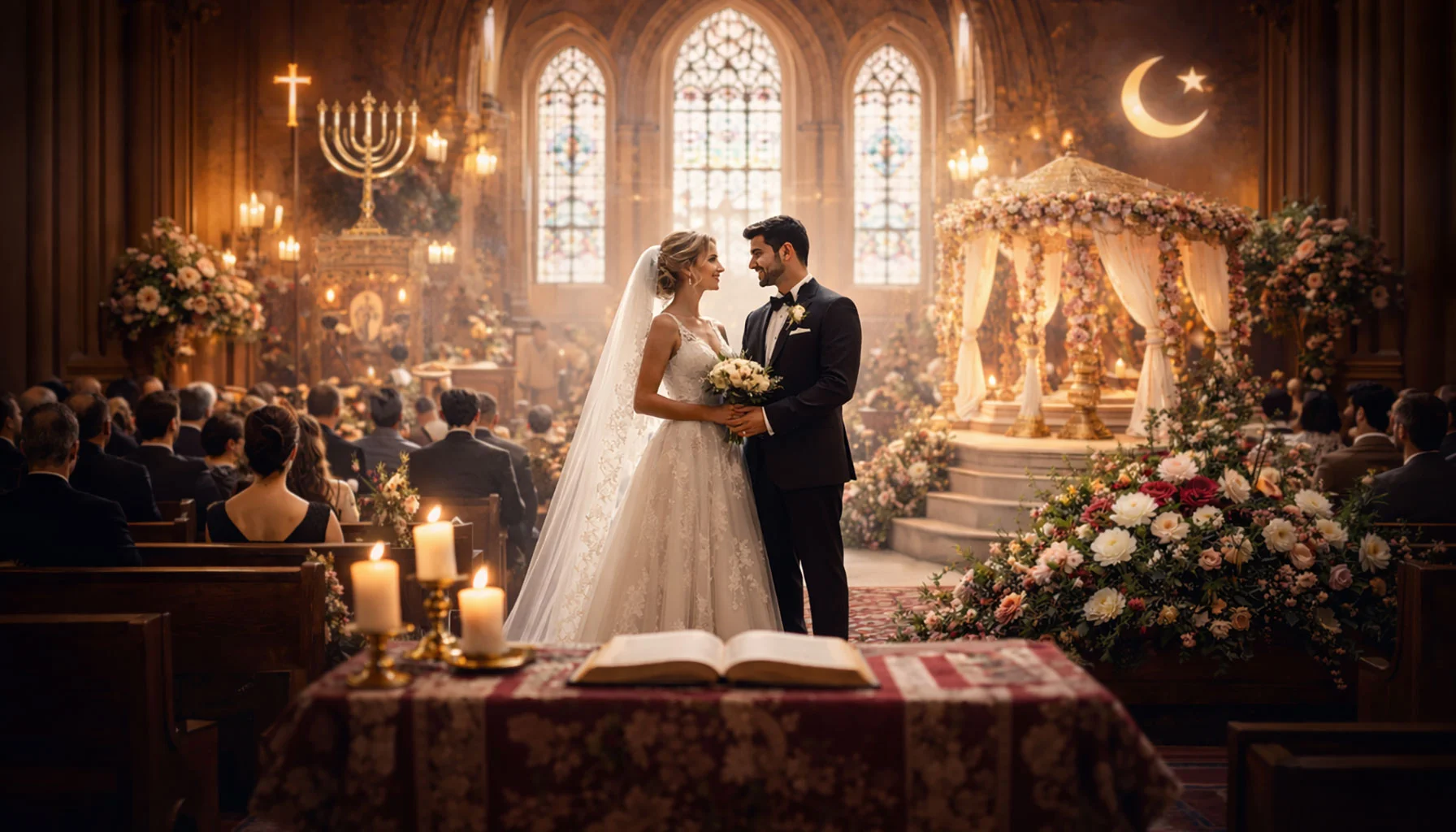
Religious Wedding Ceremonies: A Practical Overview
Religious wedding ceremonies are rarely designed around individual expression. They are shaped by inherited forms, religious authority, and symbolic acts that carry meaning through repetition. This article offers a practical overview of religious wedding ceremonies across countries and traditions while placing them within the wider logic of wedding rituals.
Ceremony Transition Checklist: What Should Be Ready Before Attention Has to Gather
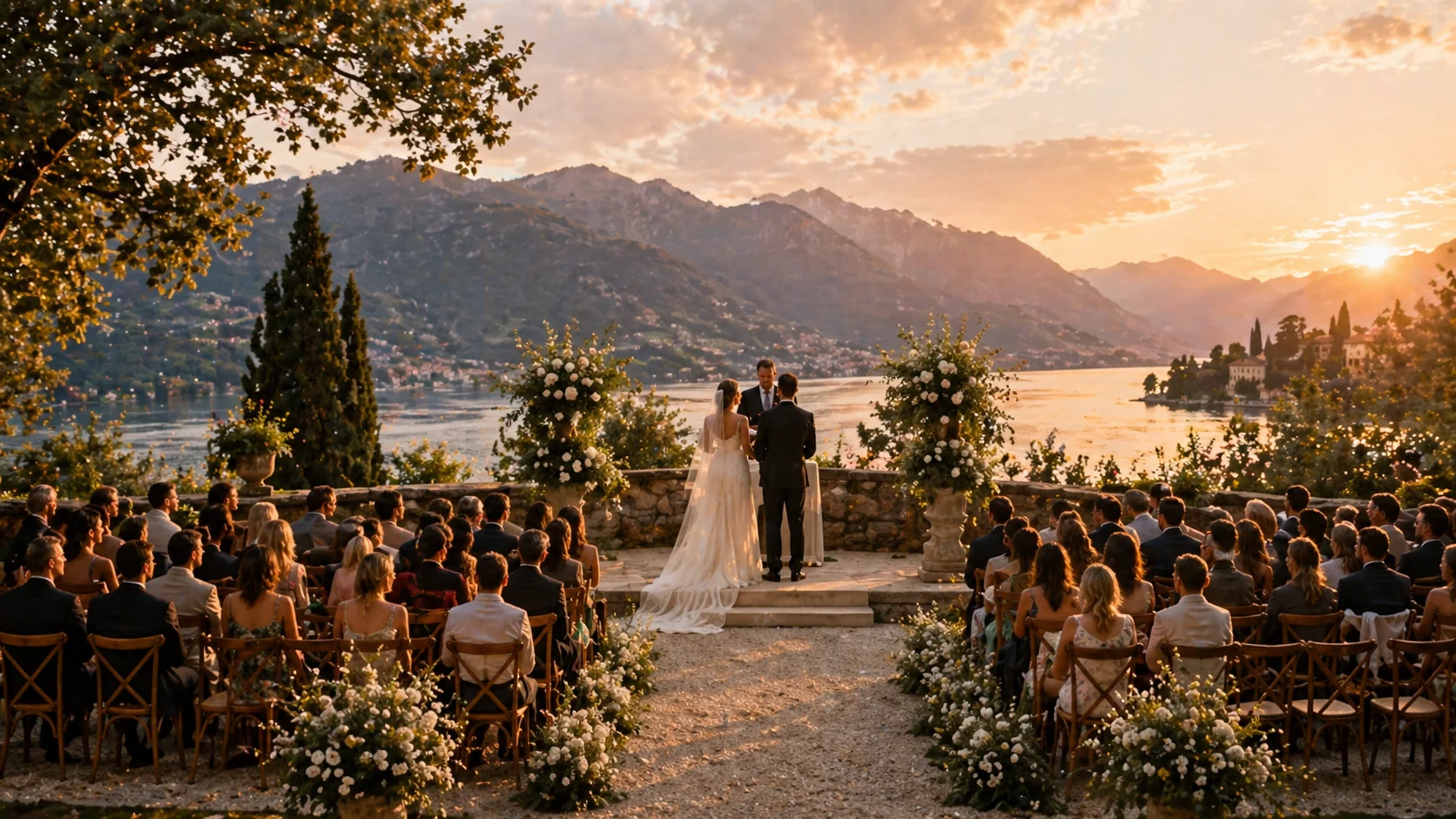
Ceremony transitions often seem brief on paper, but they carry the difficult shift from movement into shared attention. This article looks at what needs to be ready before that moment arrives, from seating and sound to cues, stillness, and the quieter emotional readiness of the room.
How Space Shapes Guest Behavior at Ceremonies
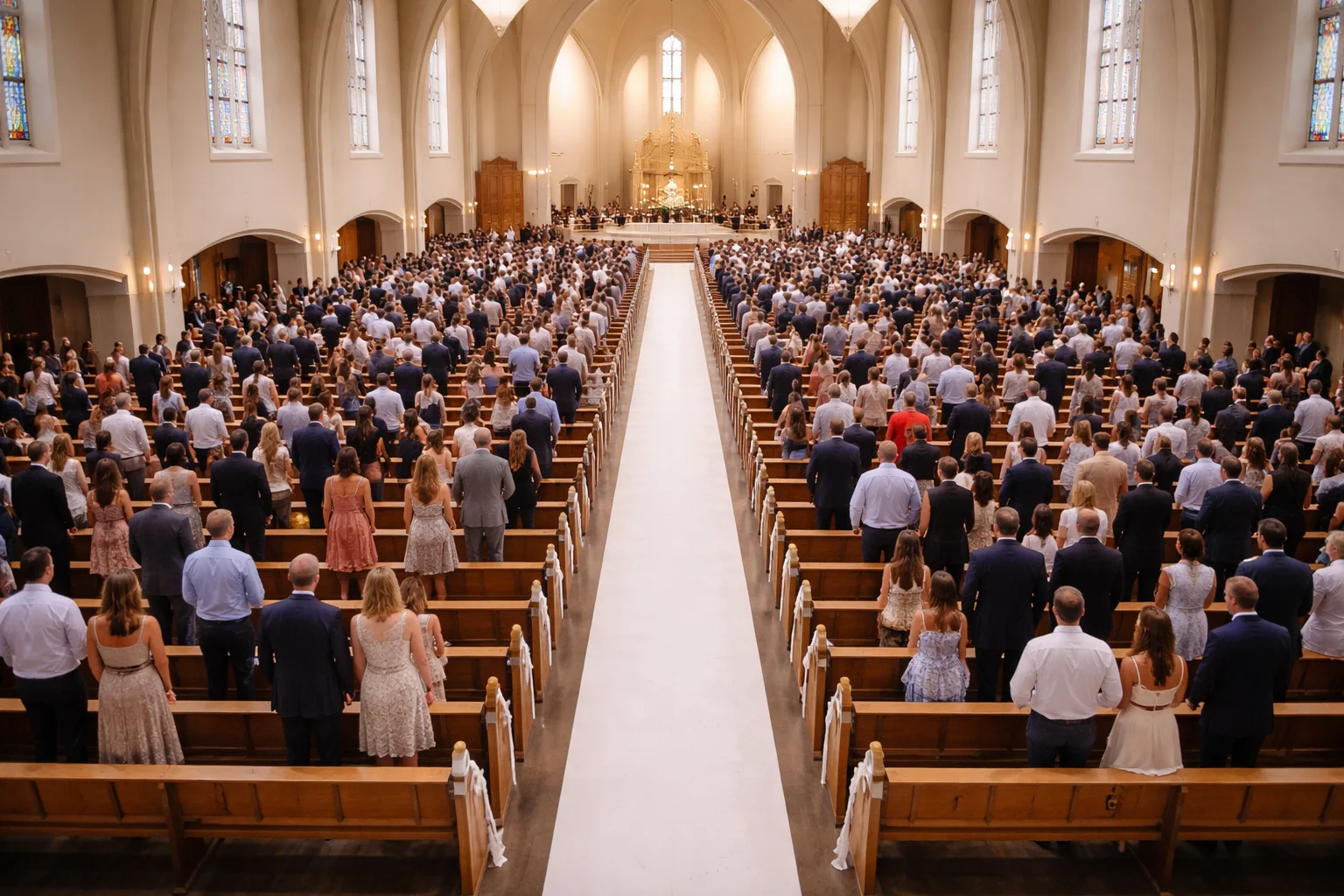
Large religious rooms tend to slow people down a bit. Not dramatically, just enough to notice. Guests enter, stop for a second too long, look around, then move again. It rarely looks planned. More like small corrections happening one after another.