Vows & Scripts

In the quiet moments of a ceremony, words become promises of the heart. Carefully chosen vows and scripts allow couples to express love, gratitude, and lifelong commitment in their own voice. Whether poetic, deeply personal, or gently guided, these words transform the ceremony into an intimate exchange that stays with everyone long after the day has passed.

Articles

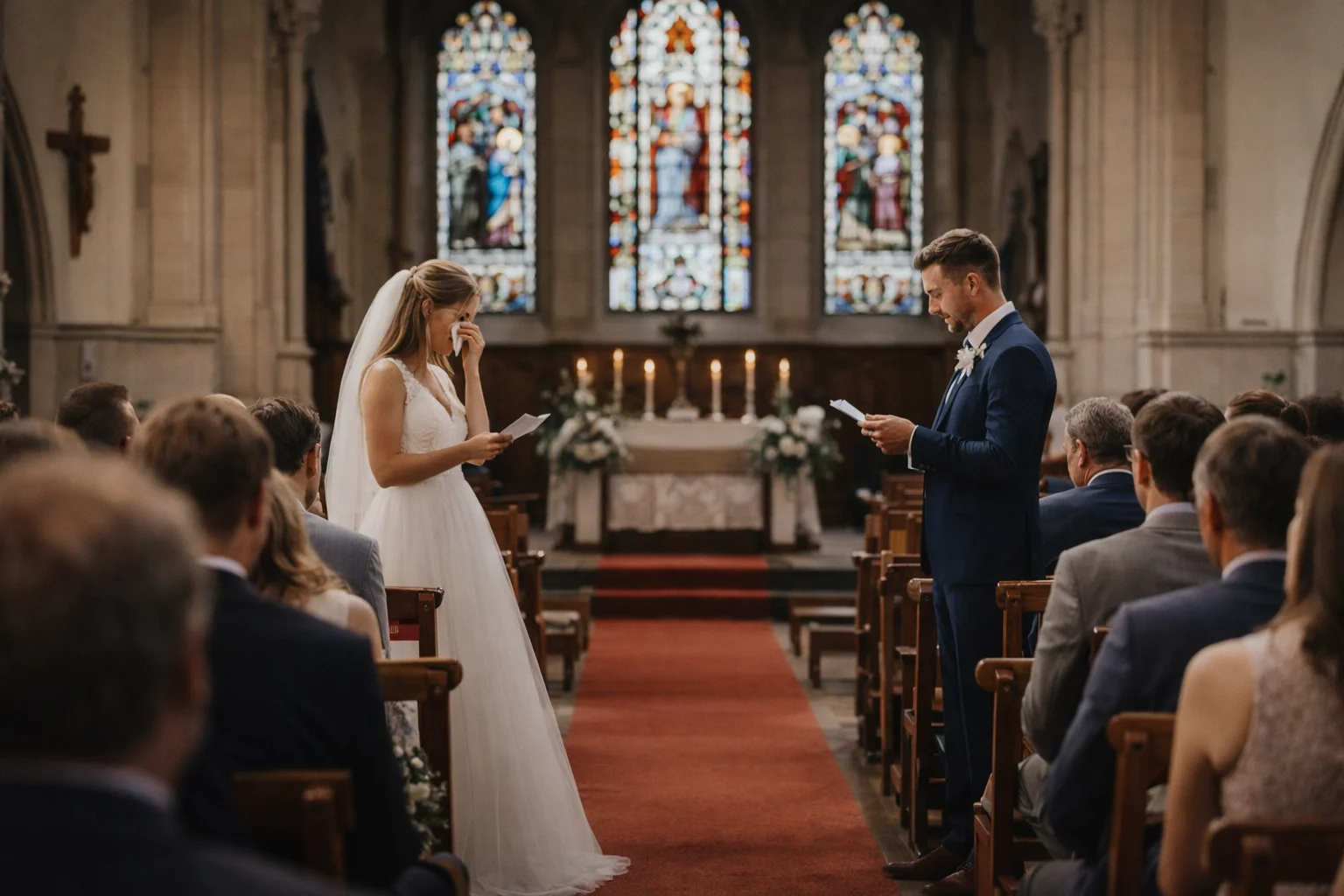
What Wedding Guests Actually Hear When Vows Are Spoken

What Wedding Guests Actually Hear When Vows Are Spoken

Wedding vows are rarely received exactly as they are written. Guests hear emotion, rhythm, hesitation, clarity, imbalance, and the symbolic weight of what is being said aloud. This article looks at how vows sound in the room, what happens when the voice breaks, why shorter vows often feel stronger, and how spoken vows become more than text.
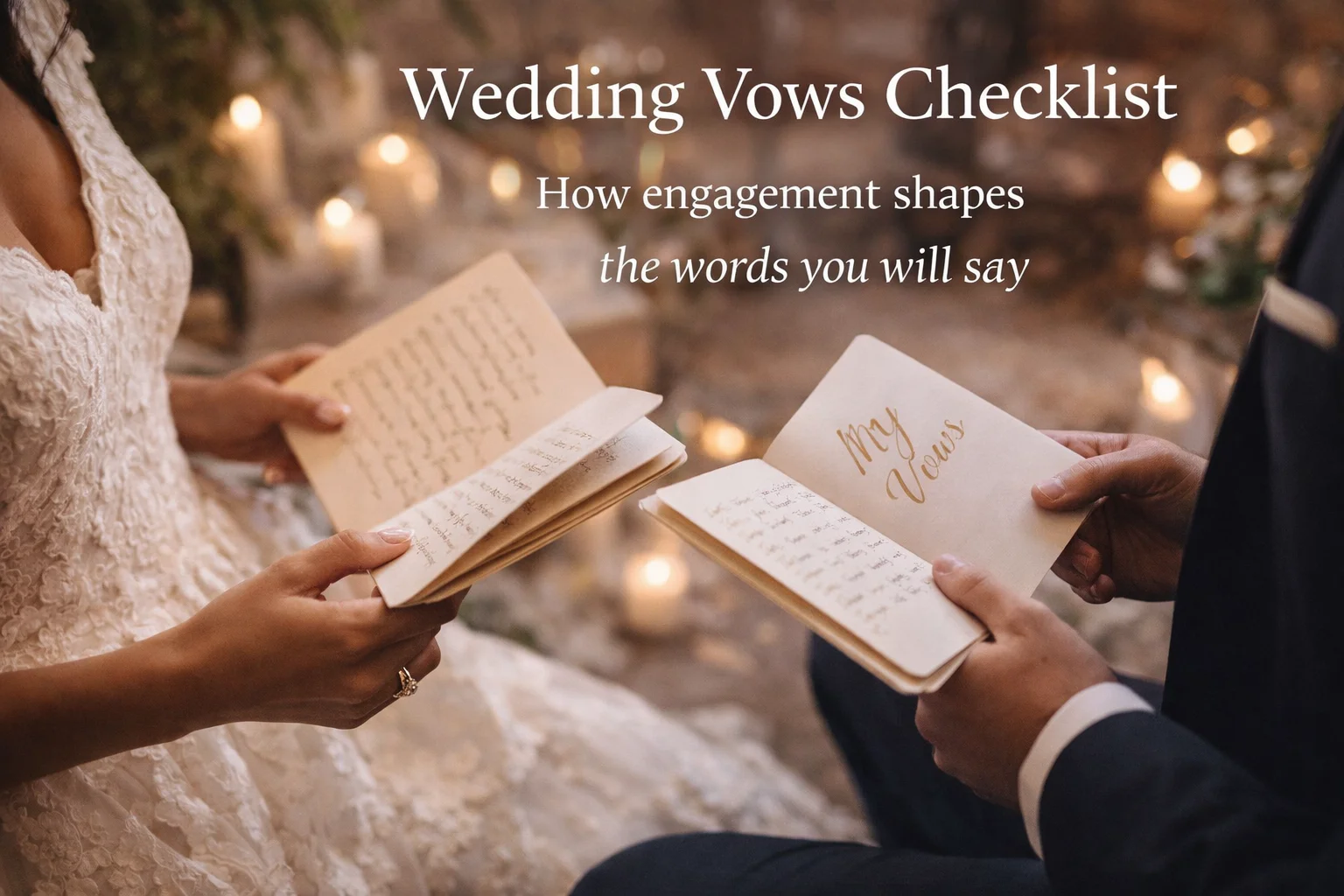
How Long Wedding Vows Should Really Be and What to Leave Out

How Long Wedding Vows Should Really Be and What to Leave Out

Most wedding vows become weak for the same reason they become long: they try to carry everything at once. This article looks at how long vows should really be, what belongs inside them, what does not, and how to cut them without losing the feeling that made them matter in the first place.
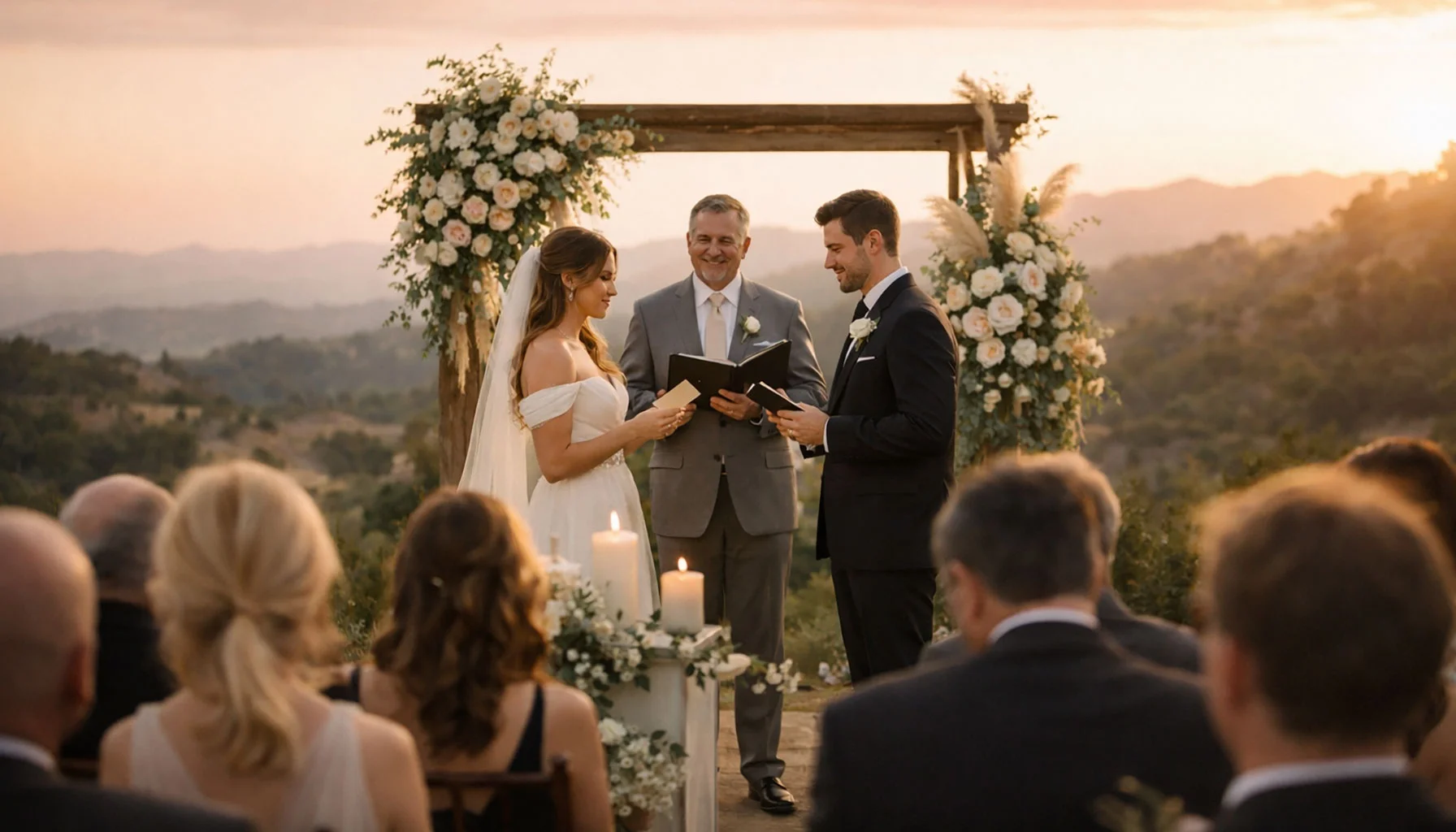
How Vows Shape the Ceremony Around Them

How Vows Shape the Ceremony Around Them

Wedding vows do not sit inside a ceremony like one beautiful paragraph among many. They change the weight of everything around them: readings, ritual language, rings, pauses, silence, and the release into celebration. This article looks at where vows belong in a free ceremony, how they interact with structure, and why engagement already changes the way couples relate to what will later be spoken aloud.
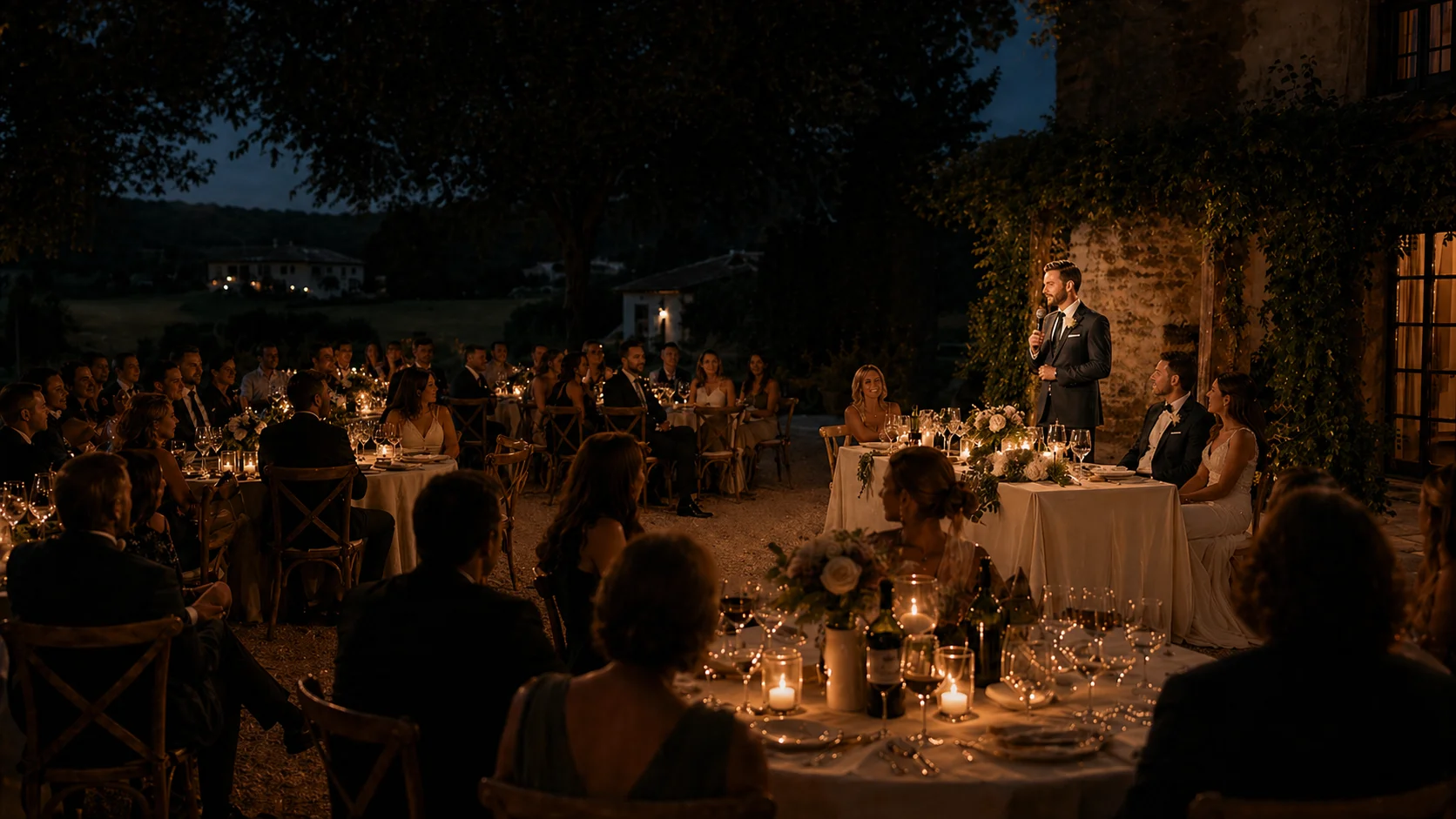
When One Person Moves Slightly Off Script

When One Person Moves Slightly Off Script

Free ceremonies are usually built with a loose structure. There is a plan somewhere, often shared in advance, but the actual delivery moves a bit. People speak, pause, adjust. It does not stay identical to what was written. That is expected, even if no one says it out loud.