
Wedding Vows Checklist: How Engagement Shapes the Words You Will Say
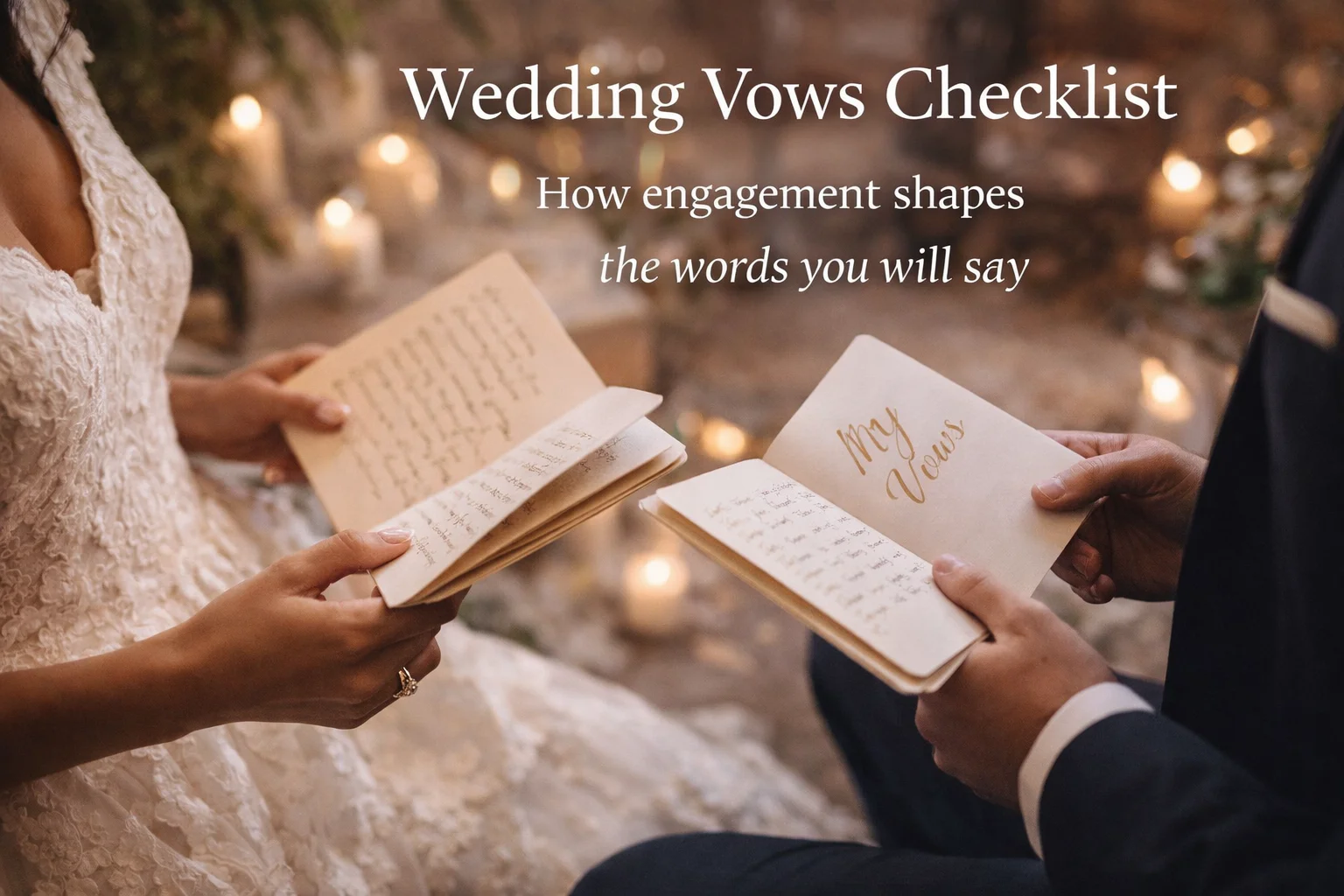
Wedding Vows Checklist: How Engagement Shapes the Words You Will Say
Many couples begin thinking about wedding vows only when the ceremony starts to feel near. But vows usually begin much earlier than that. They begin during engagement, when the relationship shifts from present love toward shared future. The language may not exist yet in finished sentences, but the movement has already started.
That is why this topic belongs naturally near Engagement Rituals. Engagement is not only a plan. It changes emotional climate, expectation, and the meaning carried by simple gestures and conversations. It creates the space in which wedding vows later become possible. The words spoken in the ceremony are often only the visible surface of something that has been forming quietly for months.
At the same time, the article clearly belongs inside Vows & Scripts, because vows need structure as well as feeling. They do not need to sound theatrical. They do need to sound true. A useful vows checklist helps couples find language that is personal enough to matter and clear enough to carry meaning when spoken aloud.
Engagement Rituals | Loving RocksThe space between yes and the wedding: new symbols, new emotional pressure, and the quiet shifts that reshape a relationship.
Wedding Vows Checklist
This checklist is for couples who do not want their vows to feel generic, borrowed, or disconnected from the actual movement of their relationship. The goal is not to produce perfect writing. The goal is to notice what engagement has already changed and to let that reality shape the words that will later be spoken in public.
1. Start with What Changed After the Engagement
- What felt different in the relationship after the engagement became real?
- Did the future begin to feel closer, heavier, calmer, or more visible?
- Did ordinary conversations start carrying new meaning?
- Was there a shift in how both of you understood commitment?
The strongest vows often do not begin with abstract declarations. They begin with a real shift that both people have already lived through. Engagement changes how time feels, and vows sound stronger when they grow from that change instead of floating above it.
2. Notice Which Promises Already Exist in Practice
- What do you already do for each other consistently?
- Which forms of care are already part of everyday life?
- What support has become visible during the engagement period?
- Which promise is already being lived before it is spoken?
A vow becomes more credible when it names something that is already beginning to exist. Spoken promises feel more grounded when they are connected to real habits, real care, and real attention rather than only beautiful phrasing.
3. Decide What Tone Actually Fits the Relationship
- Should the vows sound intimate, simple, poetic, direct, or lightly humorous?
- Does the chosen tone reflect how you actually speak to each other?
- Would a more dramatic style feel true or borrowed?
- Can the words remain sincere without trying to sound larger than the relationship itself?
Many people struggle with vows because they confuse sincerity with performance. But wedding vows do not need to sound elevated in order to matter. They need to sound inhabited.
4. Include the Future Without Becoming Generic
- Have you named a future-facing promise in clear language?
- Does that promise feel specific enough to belong to your relationship?
- Are you speaking about a shared life rather than a vague ideal?
- Have you avoided empty phrases that could belong to anyone?
Engagement already moves the relationship toward the future. Wedding vows make that movement audible. The future matters here, but it should be named with enough precision that it still feels personal.
5. Let Symbol and Reality Stay Connected
- Do the vows connect emotional meaning with real shared life?
- Are symbolic words supported by lived reality?
- Have you avoided language that sounds impressive but says little?
- Does the promise remain understandable when stripped of ceremony?
Engagement rituals often rely on symbols because symbols carry what ordinary speech cannot easily hold. But vows still need contact with real life. Without that, they may sound beautiful in the room and empty afterward.
6. Read the Words Out Loud Before the Ceremony
- Have the vows been spoken out loud at least once?
- Do they sound natural in your own voice?
- Are there sentences that are too long, too formal, or emotionally unclear?
- Can the words still be carried under real ceremony pressure?
A vow is not only text. It is speech under emotion. Something that looks beautiful on a screen may feel distant when spoken aloud. The voice reveals quickly whether the wording is real enough.
7. Keep the Promise Larger Than the Performance
- Are you writing for your partner more than for the audience?
- Have you kept the focus on commitment rather than effect?
- Does the vow still matter even without applause or visible reaction?
- Have you resisted turning the moment into a speech instead of a promise?
This matters especially in modern ceremonies, where wording can easily drift toward self-expression alone. But vows are not only personal statements. They are spoken commitments, and that difference should remain visible.
Why engagement belongs inside the writing of vows
Engagement rituals do two things at once: they make a private decision visible, and they alter the emotional field around the relationship. That is why they matter so much for vows. The vows do not appear from nowhere on the wedding day. They emerge from the months in which the relationship has already been changed by promise, symbol, planning, and expectation.
This is also why Vows & Scripts should not be treated as a purely technical category. Yes, vows have structure and wording. But they also carry ritual memory. A sentence spoken at the ceremony becomes stronger when it is connected to the earlier turning point that made the ceremony necessary in the first place.
Vows & Scripts | Loving RocksThe spoken core of a wedding: vows, scripts, structure, and words that remain after the ceremony ends.
A good wedding vow does not need to sound literary. It needs to sound earned. It should carry the engagement period inside it, even if that period is never named directly. That is often what makes the words feel settled rather than borrowed.
When vows are shaped this way, they do more than complete a ceremony script. They reveal that the promise has already been forming in the life between the engagement and the wedding, and that the words spoken now are simply giving lasting shape to what was already becoming true.
Related Articles
Vows and Scripts for Weddings: Meaning, Structure, Cultural Context and a Complete Ceremony Script
Vows and ceremony scripts are the spoken core of a wedding. They carry meaning for the couple, but they also give the room structure and help guests understand what is happening in real time. This article offers a practical international overview of vows and scripts while connecting them to the emotional space before and after the ritual itself.
How Long Wedding Vows Should Really Be and What to Leave Out
Most wedding vows become weak for the same reason they become long: they try to carry everything at once. This article looks at how long vows should really be, what belongs inside them, what does not, and how to cut them without losing the feeling that made them matter in the first place.
When One Person Moves Slightly Off Script
Free ceremonies are usually built with a loose structure. There is a plan somewhere, often shared in advance, but the actual delivery moves a bit. People speak, pause, adjust. It does not stay identical to what was written. That is expected, even if no one says it out loud.
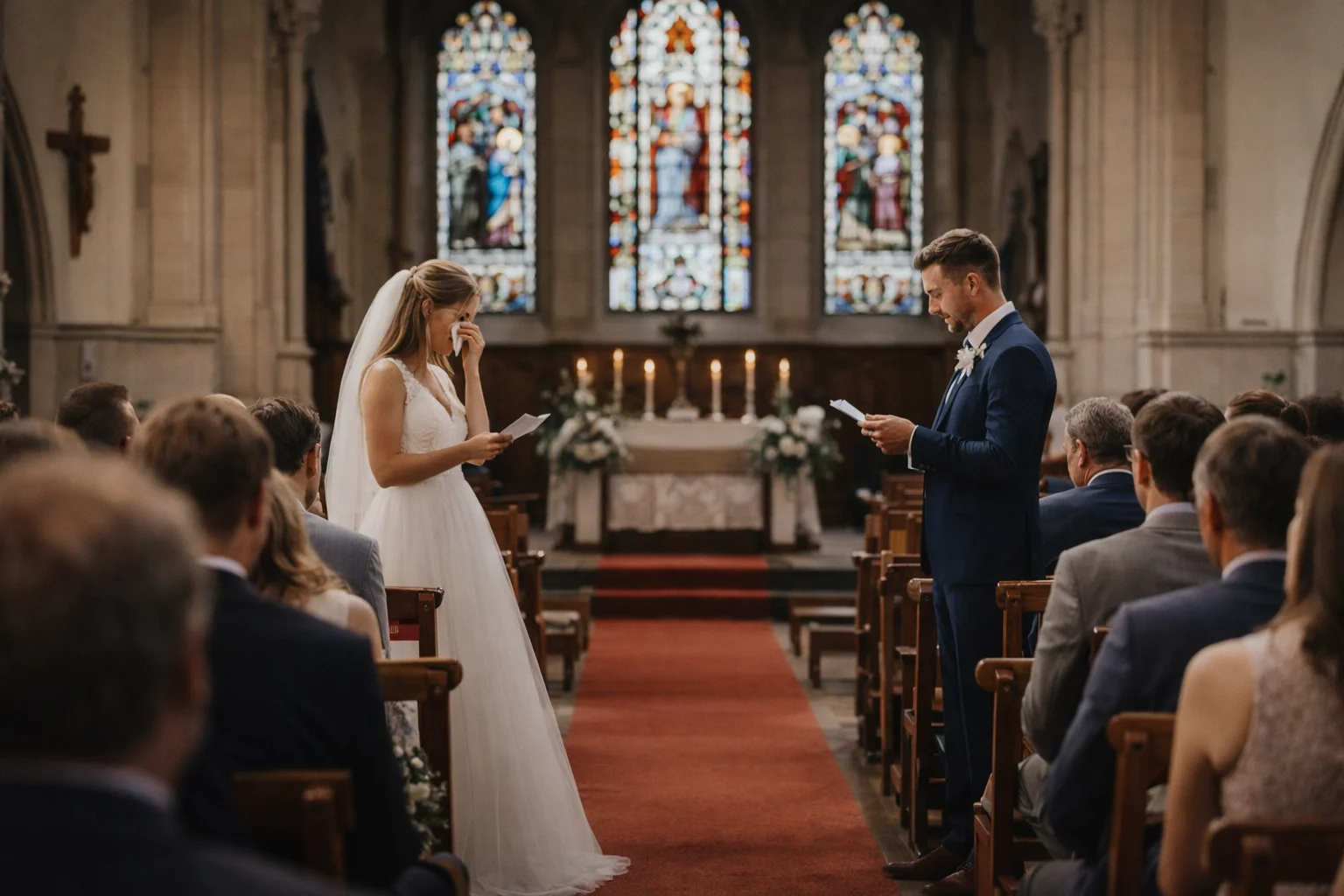
What Wedding Guests Actually Hear When Vows Are Spoken
Wedding vows are rarely received exactly as they are written. Guests hear emotion, rhythm, hesitation, clarity, imbalance, and the symbolic weight of what is being said aloud. This article looks at how vows sound in the room, what happens when the voice breaks, why shorter vows often feel stronger, and how spoken vows become more than text.
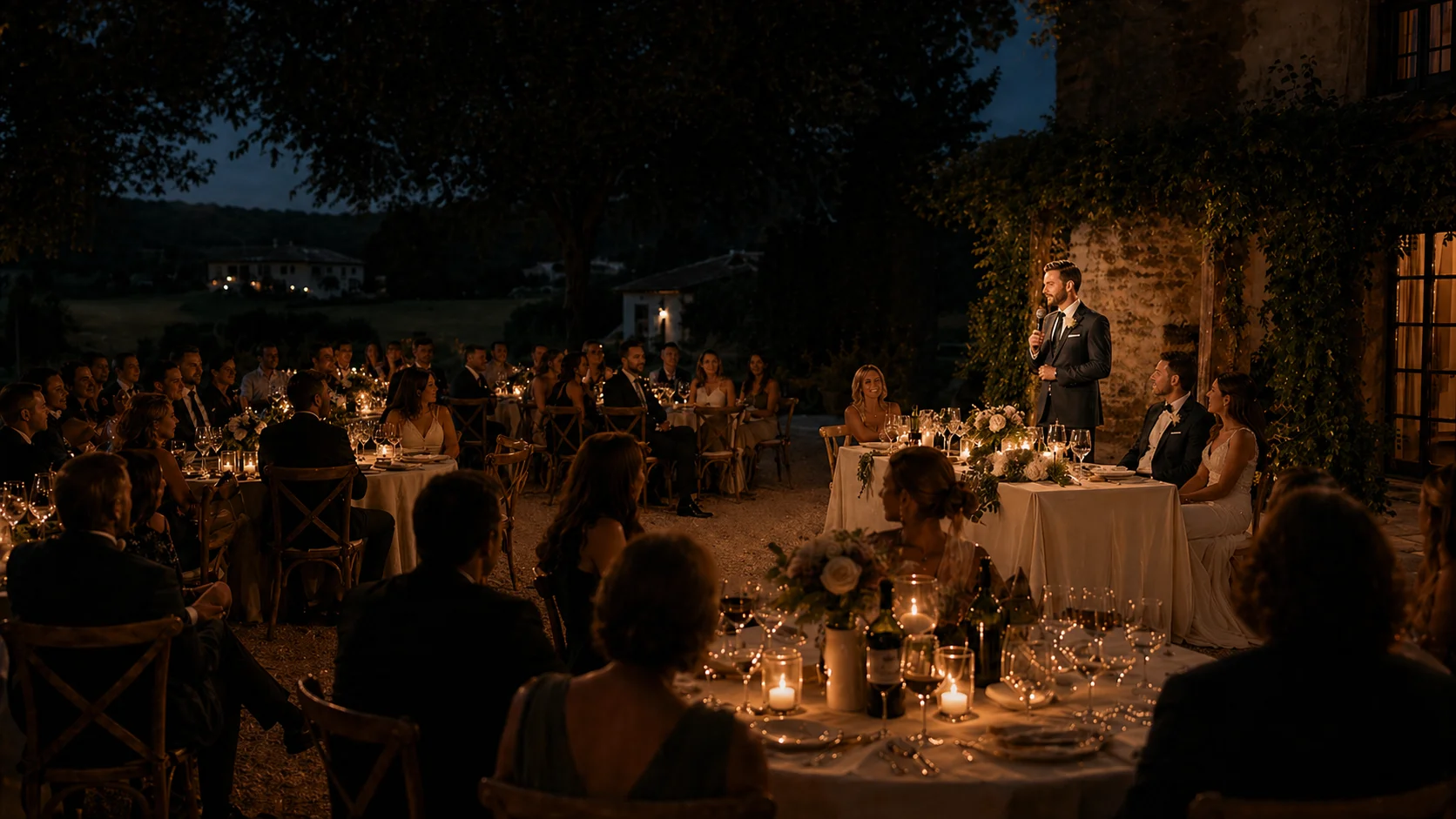
Speech Moment Checklist: What Makes a Toast Feel Held, Not Exposed
A wedding toast depends on more than good writing. It lands differently depending on attention, sound, timing, room tone, and the unspoken signals that tell a speaker whether the moment is carrying them or leaving them alone.
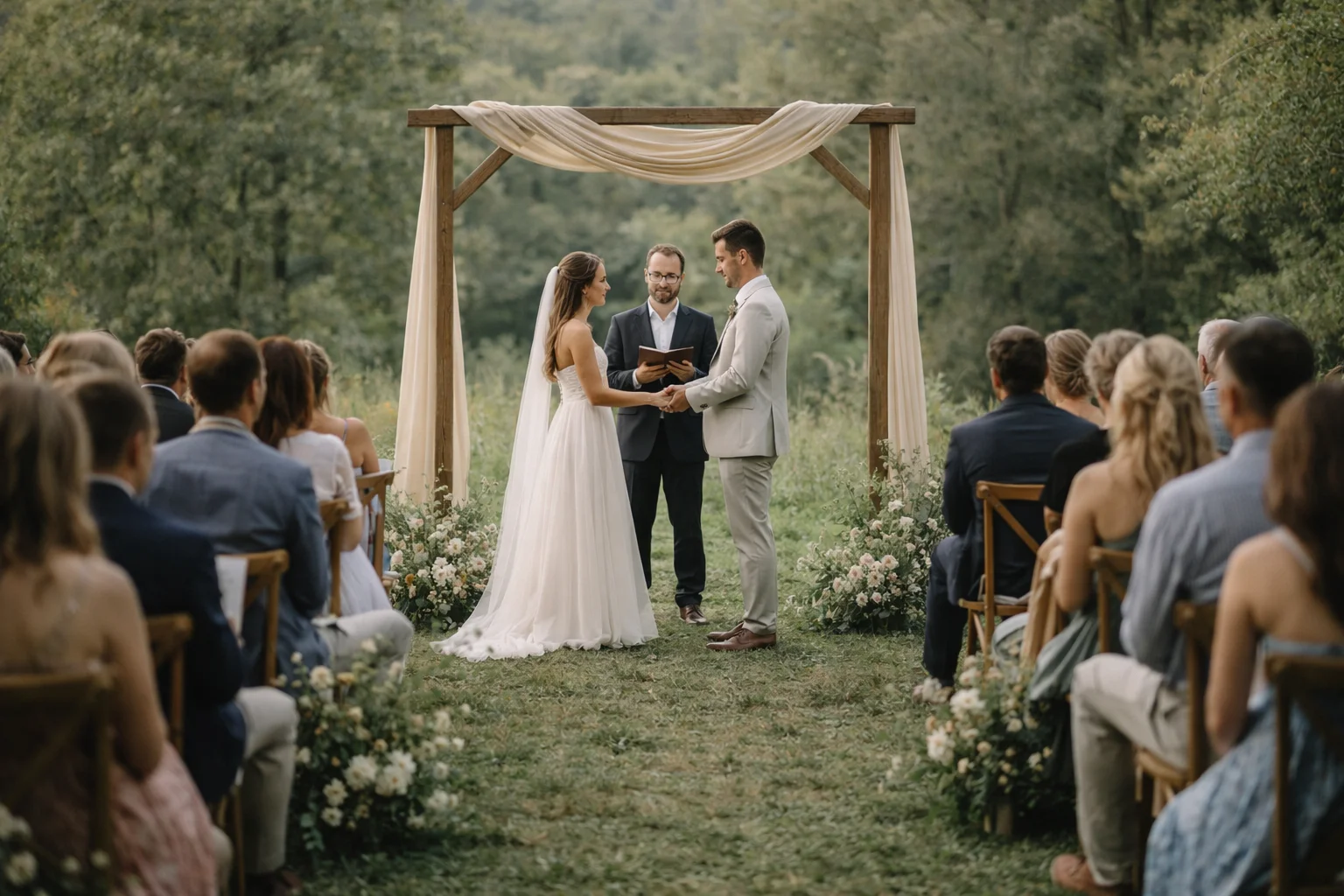
How Vows Shape the Ceremony Around Them
Wedding vows do not sit inside a ceremony like one beautiful paragraph among many. They change the weight of everything around them: readings, ritual language, rings, pauses, silence, and the release into celebration. This article looks at where vows belong in a free ceremony, how they interact with structure, and why engagement already changes the way couples relate to what will later be spoken aloud.

Before Wedding Planning Takes Over: An Engagement Checklist for the Things That Actually Change
An engagement can turn into a wedding project surprisingly fast. Before venues, guest counts and timelines take over, there are quieter things worth checking together: expectations, family pressure, money, symbols, privacy and what the promise has actually changed between you.
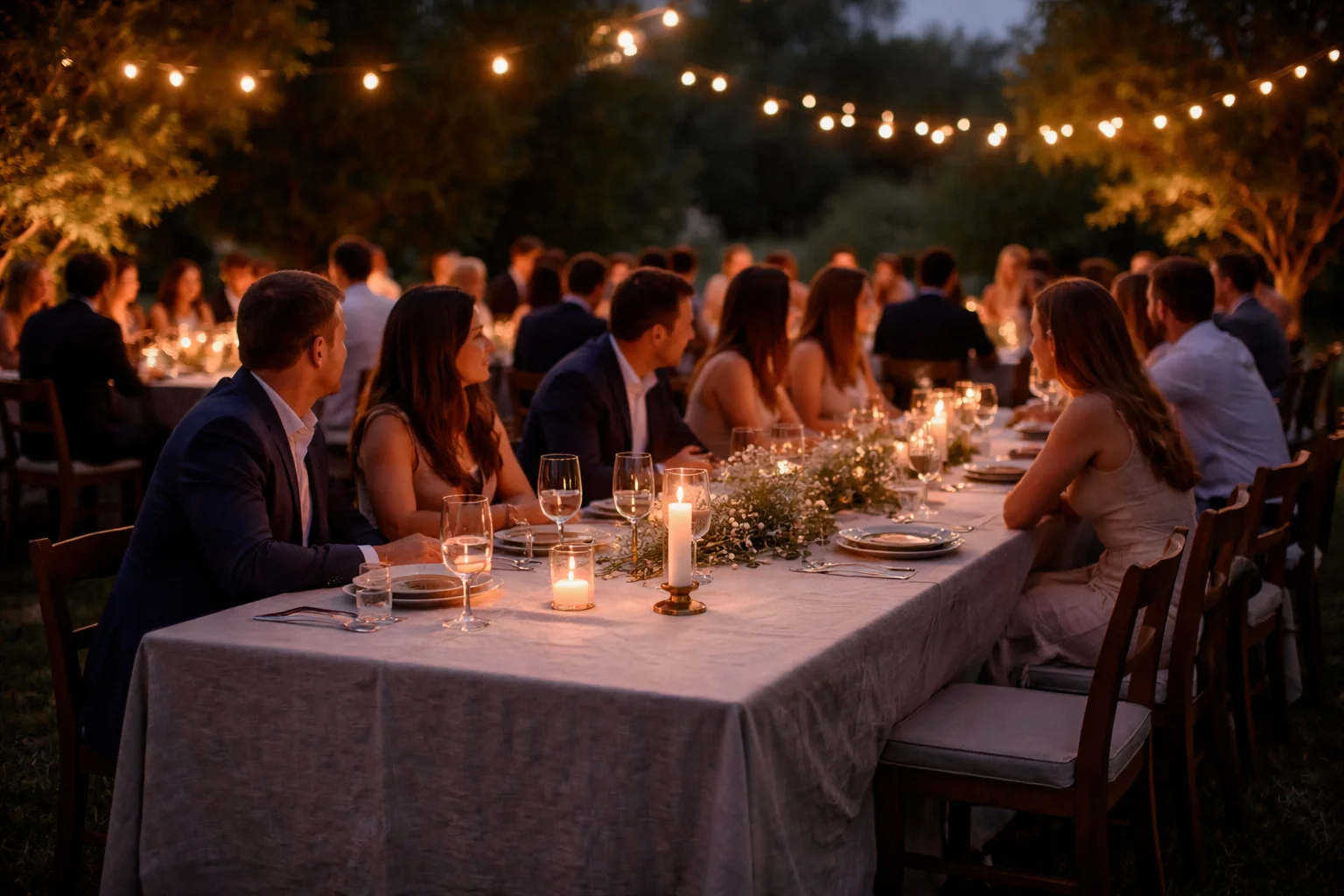
Why Wedding Tables Decide More Than You Think
Wedding tables are often treated as decoration, but they quietly shape how guests experience the entire event. This article explores how tables influence rhythm, perception, and the emotional space before and after key moments.