
Vows and Scripts for Weddings: Meaning, Structure, Cultural Context and a Complete Ceremony Script
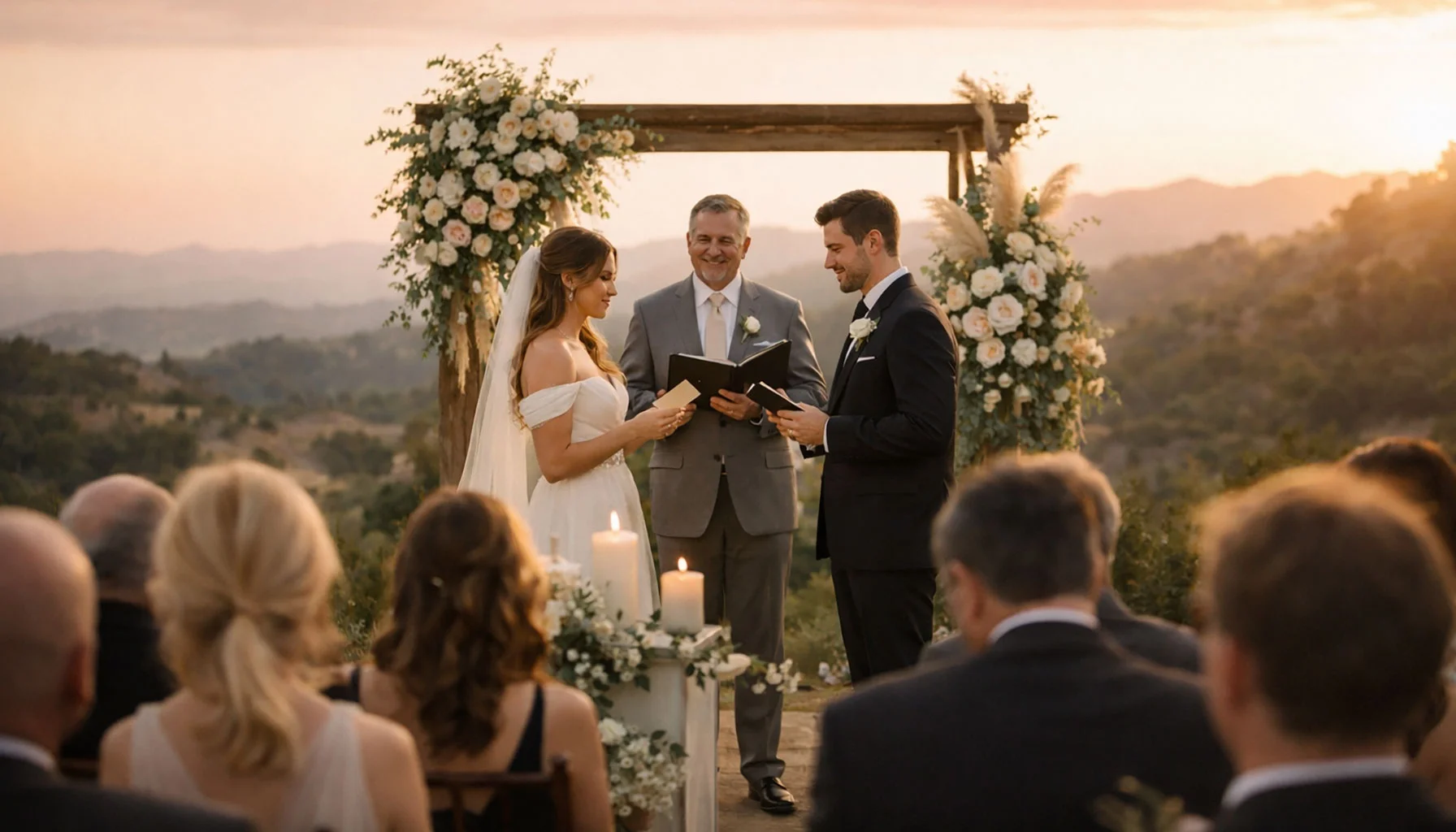
A practical international guide. Meaning, planning, cultural differences, legal positioning, cost ranges, tables, and one ready-to-use script.
Introduction
Vows and scripts are the spoken core of a wedding ceremony. They are the part people can repeat later without looking at photos. The rest matters too, but it behaves differently. In real ceremonies, the spoken sections do two jobs at once. They carry meaning for the couple. And they hold the room. Guests understand what is happening because the language makes it legible.
Across countries and traditions, the amount of freedom varies. Some settings require fixed wording. Others allow personal text almost everywhere. Many couples move between systems: a civil marriage for legal status, and a separate ceremony where personal vows have room.
Testimonial: We kept the vows short. That helped. People listened all the way through.
Testimonial: The script gave structure. It let everything else relax.
This is why the subject belongs naturally to both Vows and Scripts and Before the Ceremony, After the Ritual. Vows hold the center of the ceremony, but they are shaped by what comes before and what remains afterward.
Vows & ScriptsIn the quiet moments of a ceremony, words become promises of the heart. Carefully chosen vows and scripts allow couples to express love, gratitude, and lifelong commitment in their own voice. Whether poetic, deeply personal, or gently guided, these words transform the ceremony into an intimate exchange that stays with everyone long after the day has passed.
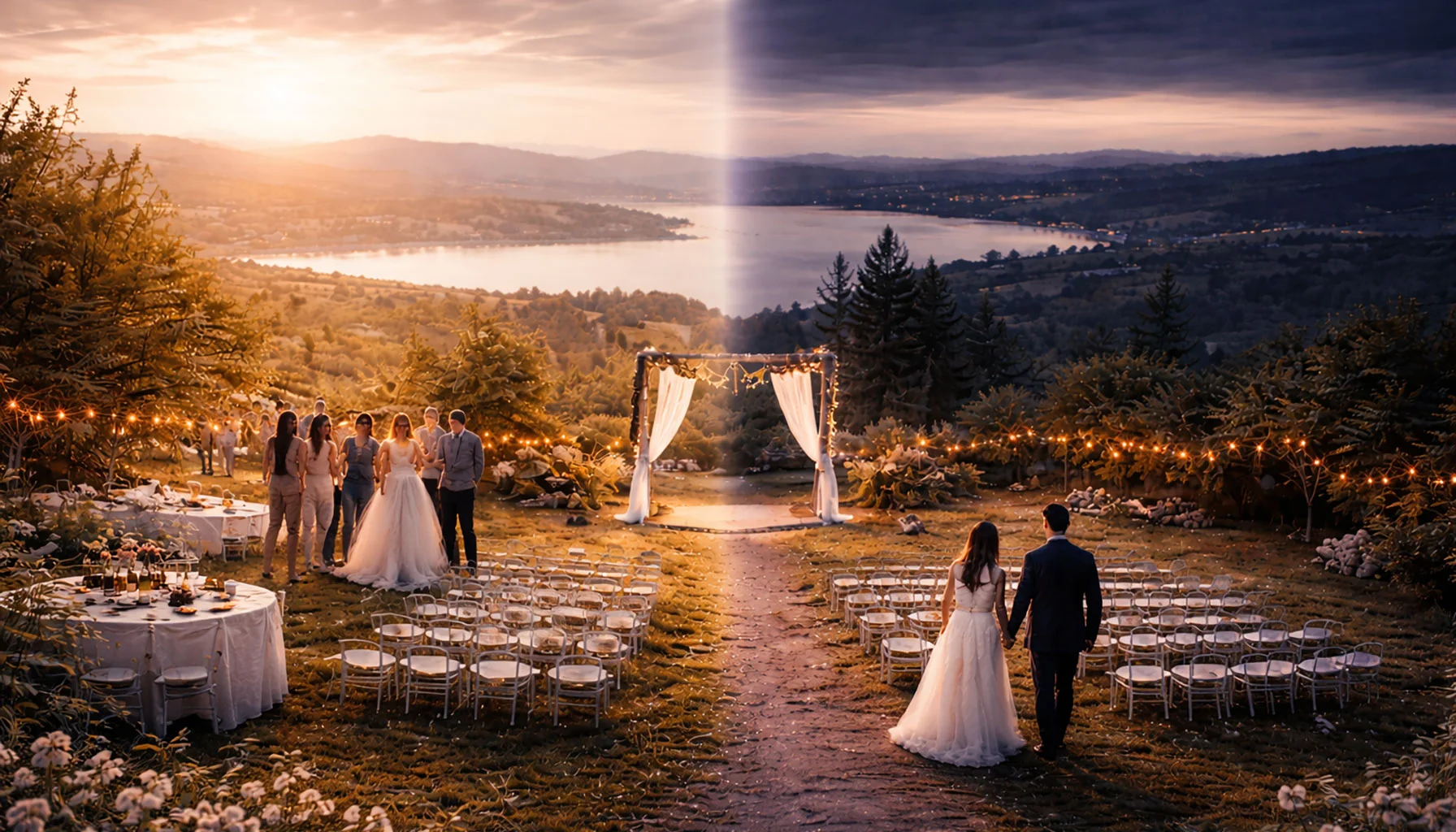
A wedding concentrates meaning into a single day, but its emotional impact begins earlier and lasts longer. What happens before and after often matters more than the ritual itself.
What Are Vows and What Is a Script?
Vows are the promises spoken by the couple. A ceremony script is the full running text and order of the ceremony, from the first welcome to the closing line. The script is what the officiant and key participants follow.
| Element | What It Does | Who Uses It Most |
|---|---|---|
| Vows | States commitment in personal language | Couple |
| Script | Defines sequence, cues, and transitions | Officiant + couple + readers |
| Legal wording if required | Meets civil requirements | Registrar / authorized officiant |
| Religious core texts if required | Meets doctrinal requirements | Clergy / tradition |
| Readings / reflections | Adds voice and context | Readers / family / friends |
What a Typical Vows and Script Package Contains
In practice, a usable script is more than pretty sentences. It includes timing, cues, and plain instructions. People need to know what happens next. Especially when emotion shows up.
- Welcome and acknowledgement of guests
- Short framing of what the ceremony is civil / religious / symbolic
- Reading(s) or reflection(s) optional
- Declaration of intent when relevant
- Vows spoken, read, or repeated
- Ring wording
- Optional ritual wording candle, sand, handfasting, letters, etc.
- Pronouncement legal and/or symbolic
- Closing words and presentation
Multilingual passages are common in international weddings. So are small explanations for guests. Not long speeches. Just enough so everyone follows.
Personal Vows
Personal vows work best when they sound like the person speaking. That is the main rule, even when it is not stated. In real ceremonies, vows that are simple often land well. They are easier to say out loud. Easier to hear. Easier to remember.
A Practical Vow Shape
- Say the partner name
- One short line about what this relationship means
- Three to five specific promises
- One forward-looking commitment
- A brief closing line
Short Sample Vows
Short: I choose you. I will show up with honesty. I will stay close in the ordinary days.
Modern: I promise presence. I promise patience. I promise to keep learning you.
Balanced: I will build with you. I will listen when it matters. I will choose you again, even when the week is noisy.
Testimonial: The best part was that the vows sounded like us. Not like something borrowed.
Planning and Practical Requirements
A good script is written to be spoken. That changes the drafting process. It also changes logistics. Timing, audio, and cues decide whether the words reach the guests.
| Planning Area | What Gets Decided | Why It Shows Up on the Day |
|---|---|---|
| Ceremony type | Civil / religious / symbolic / mixed | Determines restrictions and required wording |
| Length | Total time and vow length | Impacts attention and pacing |
| Who speaks | Officiant, couple, readers, family | Prevents awkward handovers |
| Audio | Mic(s), wind cover outdoors, test | Words become audible, not just visible |
| Printouts | Officiant copy + backup | Reduces small chaos |
| Language | One language or bilingual | Guests can follow without guessing |
| Rehearsal | Short walkthrough | Transitions become smooth without effort |
Where Couples Usually Go
Civil ceremonies usually involve a registry office or an authorized officiant, depending on the country. Religious ceremonies involve clergy and a place of worship. Symbolic ceremonies can happen almost anywhere, but venues still have rules. Outdoor spaces often need permission. That is handled like normal event planning.
Country and Cultural Differences
The largest difference between countries is how much of the ceremony wording is fixed by civil or religious requirements. In many places, the legally binding part is short and formal. The personal part moves to a symbolic ceremony or to a separate segment.
| Country | Personal Vows Typical | Typical Focus | Common Practical Note |
|---|---|---|---|
| Germany | Often symbolic | Structure, clarity, restrained tone | Civil wording tends to be fixed; personal vows fit well in a separate ceremony |
| United States | Very common | Personal expression, storytelling | Rules vary by state; personalization is widely used |
| Serbia | Often limited in Orthodox context | Tradition and ritual | Personal vows may be replaced by formal liturgical language in church settings |
| China | Common in symbolic ceremonies | Family presence, respectful tone | Civil registration is often brief; vows are commonly spoken in a separate celebration |
| Spain | Often allowed with limits | Either faith-tradition or modern romance | Church context may restrict vow form; symbolic ceremonies allow full customization |
| France | Civil wording fixed | Civil formality plus symbolic personalization | Couples often add a symbolic ceremony for personal vows |
| Italy | Often limited in Catholic contexts | Family and tradition | Personal text often appears as readings rather than replacing core rite |
| Russia | Often limited in Orthodox contexts | Ritual symbolism and tradition | Personal vows typically live outside the formal Orthodox rite |
Cost Ranges for Vows and Scripts
Costs depend on how much is written by the couple versus written and edited professionally, and on complexity length, languages, rehearsals, cultural adaptation.
| Tier | Typical What You Get | Approx. Cost USD | Approx. Cost EUR |
|---|---|---|---|
| Self-written | Templates + self-writing; light review | $0-$100 | EUR 0-EUR 90 |
| Guided | Celebrant guidance + editing + structured flow | $200-$600 | EUR 180-EUR 550 |
| Bespoke | Professional writing + full custom script + coaching; multilingual options | $1,000-$3,000+ | EUR 900-EUR 2,700+ |
What Tends to Work Well
- Language written for speaking, not for reading silently
- Vows that stay specific and realistic
- Balanced length between partners
- A script with clear cues for music and movement
- Context-aware text civil / religious boundaries respected
- A short printed backup even when phones exist
Common Pitfalls Seen
- Text written like an essay, then hard to speak
- Vows that rely on private jokes without any bridge for guests
- Very uneven vow length between partners
- No clear cues for readers or musicians
- Bilingual parts added too late, without flow
- No microphone plan outdoors
Ready-to-Use Ceremony Script
Notes: This is a non-denominational script designed for word-for-word reading by an officiant. It can sit inside a symbolic ceremony. It can also be used as a personal segment alongside a civil or religious framework. Replace [Partner A] and [Partner B].
1) Processional Optional
Guests are seated. Music begins. Wedding party enters. The couple enters. Music fades.
2) Welcome Officiant
Welcome, everyone. Thank you for being here. Today is a public moment for [Partner A] and [Partner B]. A simple one. Two people choosing one another, in front of the people who know them.
3) A Short Framing
A wedding ceremony is made of words, and also of witnesses. Words shape the promise. Witnesses give it weight. Not official weight. Human weight. The kind that stays.
4) Declaration of Intent
Officiant to [Partner A]: [Partner A], do you choose [Partner B] as your partner in marriage, freely and with care, to share your life with honesty and respect? [Partner A]: I do.
Officiant to [Partner B]: [Partner B], do you choose [Partner A] as your partner in marriage, freely and with care, to share your life with honesty and respect? [Partner B]: I do.
5) Personal Vows
Option A: Each partner reads their own vows. Option B repeat-after-me:
[Partner A]: [Partner B], I choose you with a clear mind and a full heart. I promise steadiness. I promise attention. I promise to be honest, even when it is not convenient. I promise to build with you, day by day. And I promise to keep choosing you, not once, but repeatedly.
[Partner B]: [Partner A], I choose you with intention. I promise patience. I promise respect. I promise to listen before I answer. I promise to protect what we build together. I promise to stand with you in the bright days and the ordinary ones. And I promise to keep returning to us.
6) Rings
Officiant: Rings are small. They do not explain anything. They simply stay.
[Partner A] places ring: [Partner B], I give you this ring as a sign of my commitment and my care.
[Partner B] places ring: [Partner A], I give you this ring as a sign of my commitment and my care.
7) Pronouncement
Officiant: By the promises you have made here, and by the intention you have spoken clearly, you are now married.
8) Closing and Presentation
Officiant: May you keep your language kind. May you keep your agreements clear. May you keep making room for one another.
Officiant: It is an honor to introduce [Partner A] and [Partner B], married.
9) Recessional Optional
Music begins. Couple exits first. Guests follow.
Conclusion
Vows and scripts are not extras. They are the working center of the ceremony. When the words are clear, the room understands. When the structure is steady, the couple can simply be there. The most durable scripts tend to be simple. Not empty. Just clear enough to carry what matters.
Testimonial: We printed the script twice. One copy got wet. The backup saved the whole flow, without anyone noticing.
Related Articles
Wedding Vows Checklist: How Engagement Shapes the Words You Will Say
Engagement changes how couples speak long before the wedding ceremony begins. This checklist helps shape wedding vows from the emotional shift of being engaged, so the words spoken later feel grounded, personal, and true to the promise already taking form.
How Vows Shape the Ceremony Around Them
Wedding vows do not sit inside a ceremony like one beautiful paragraph among many. They change the weight of everything around them: readings, ritual language, rings, pauses, silence, and the release into celebration. This article looks at where vows belong in a free ceremony, how they interact with structure, and why engagement already changes the way couples relate to what will later be spoken aloud.
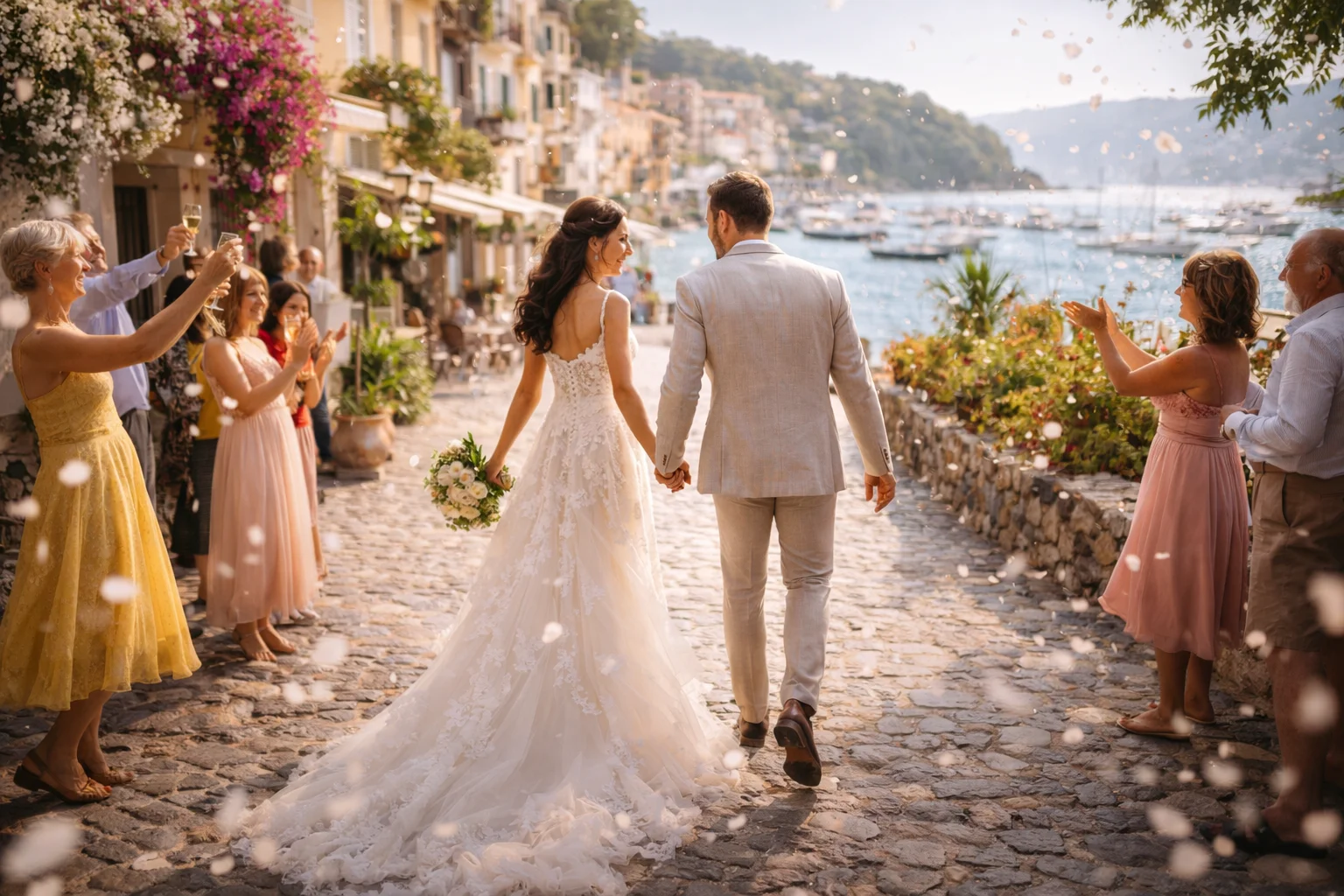
After the Wedding Abroad: A Legal Checklist for What Happens Once the Ceremony Is Over
A wedding may feel complete when the ceremony ends, but legal reality often continues afterward. This checklist helps couples understand what documents, registrations, translations, and confirmations may still matter after a wedding abroad, when the ritual is over but the administrative part has not yet disappeared.
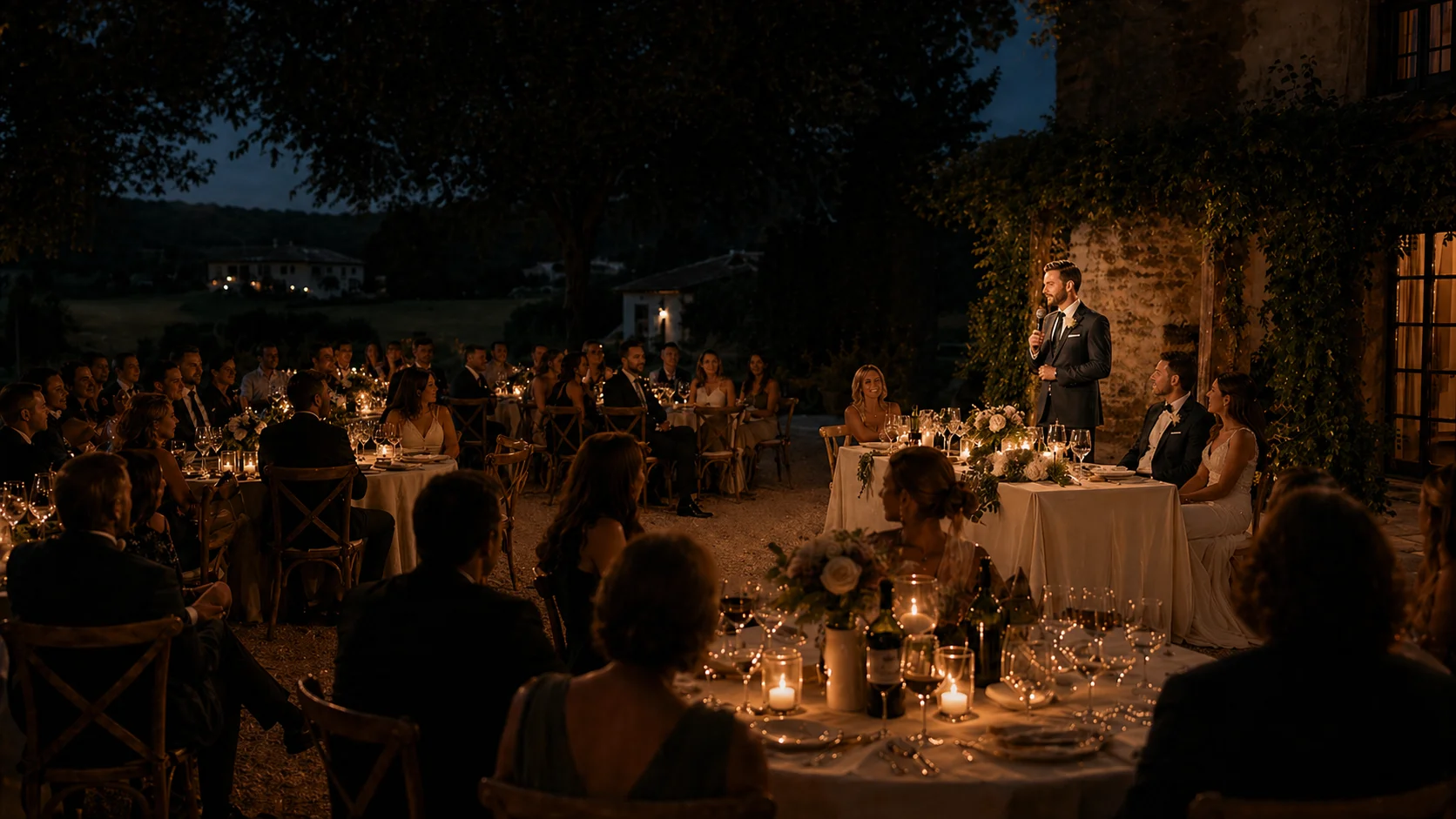
Speech Moment Checklist: What Makes a Toast Feel Held, Not Exposed
A wedding toast depends on more than good writing. It lands differently depending on attention, sound, timing, room tone, and the unspoken signals that tell a speaker whether the moment is carrying them or leaving them alone.
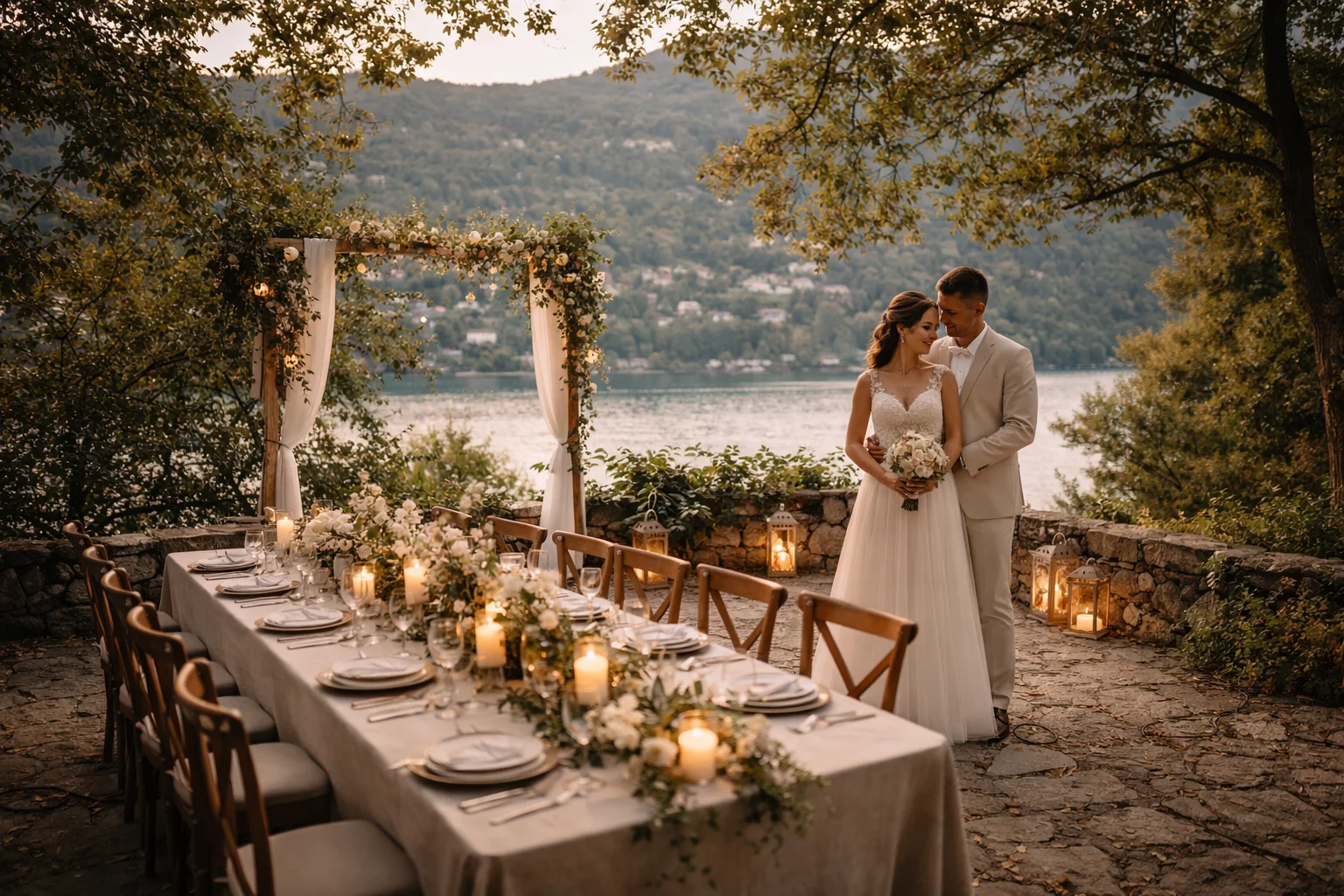
Where Small Weddings Expand Beyond the Ceremony
Small weddings are often described through numbers. Fewer guests, fewer tables, fewer logistical layers. The focus shifts naturally toward what is essential. People arrive, take their places, and the ceremony begins without much distance between those involved and those witnessing it.
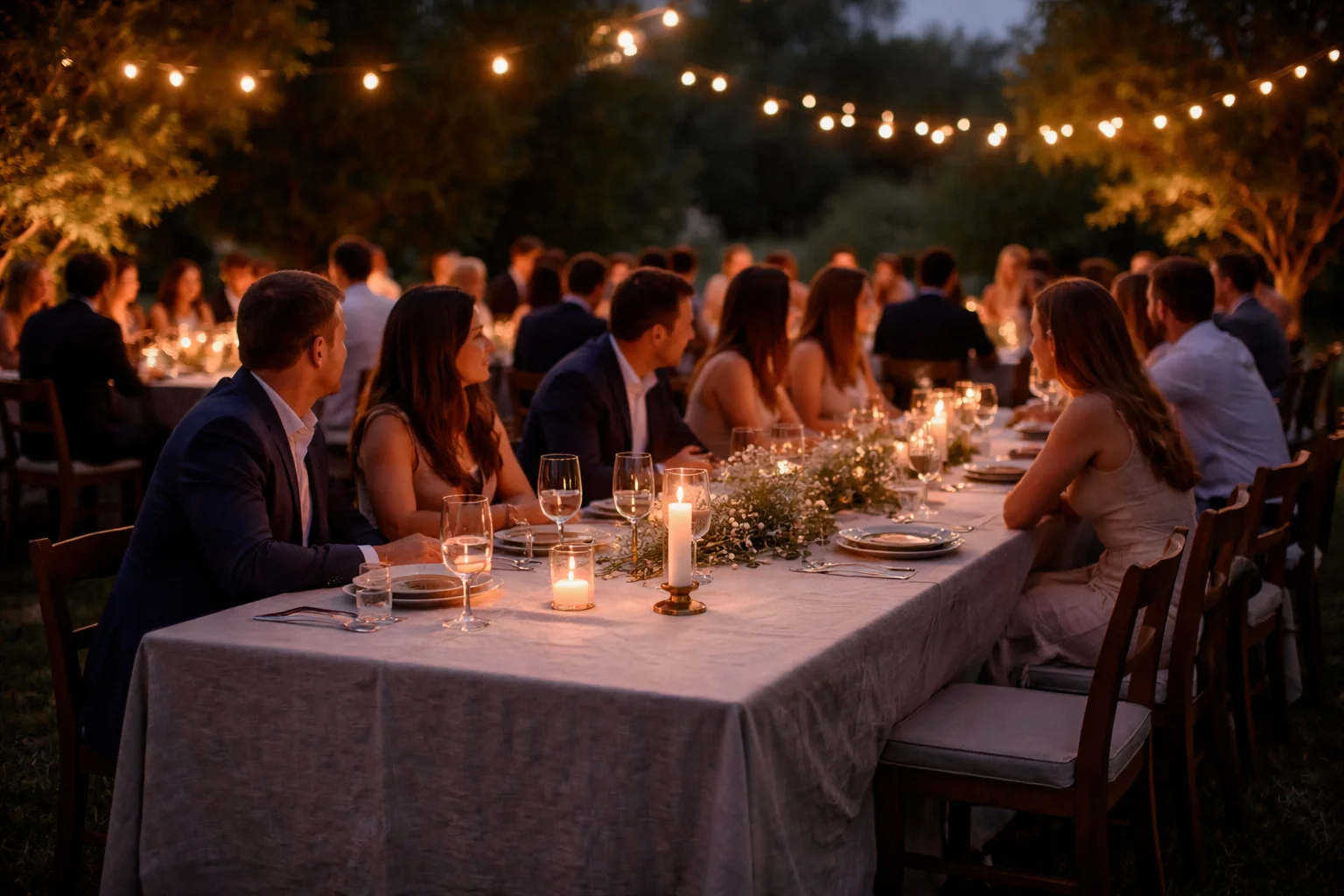
Why Wedding Tables Decide More Than You Think
Wedding tables are often treated as decoration, but they quietly shape how guests experience the entire event. This article explores how tables influence rhythm, perception, and the emotional space before and after key moments.
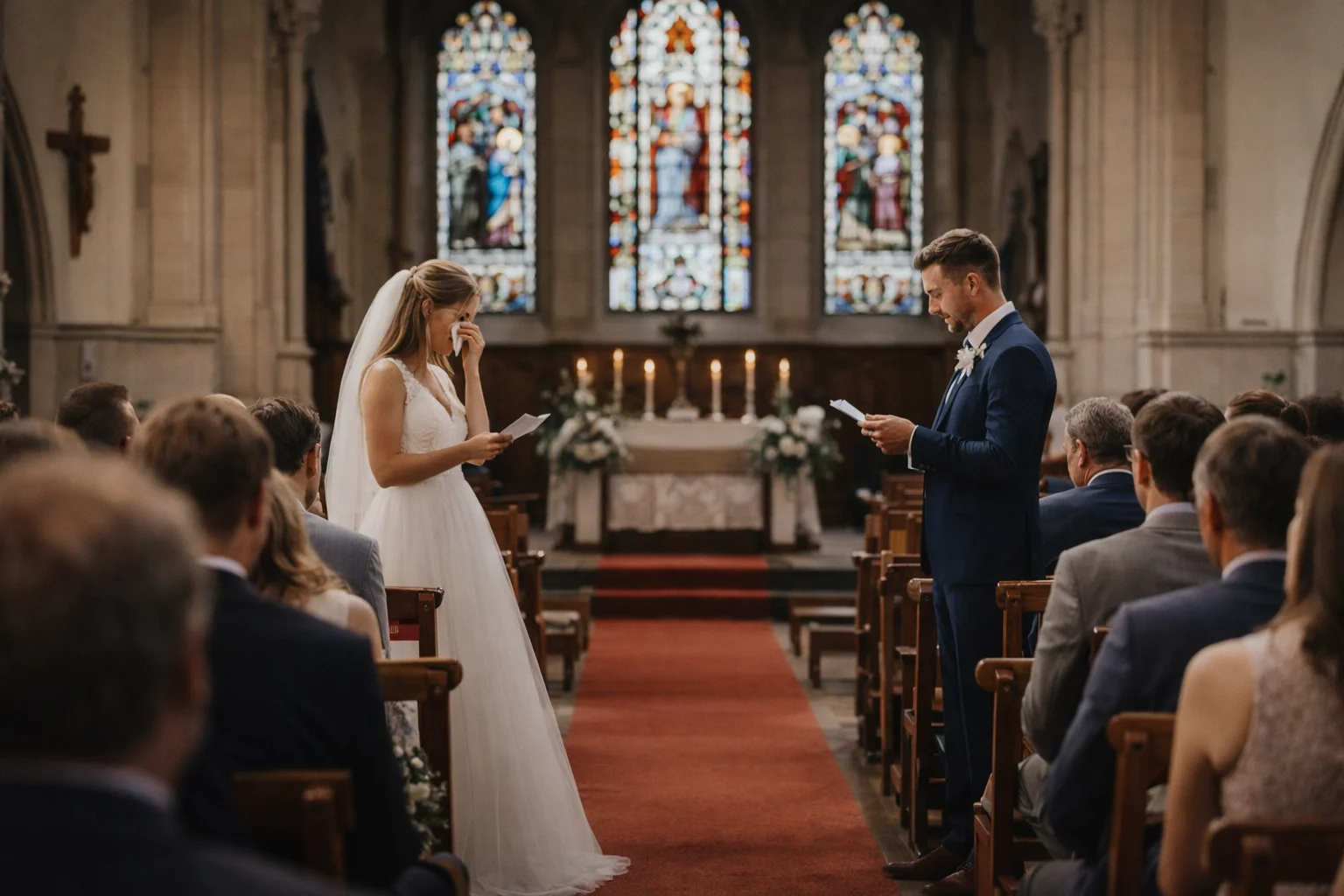
What Wedding Guests Actually Hear When Vows Are Spoken
Wedding vows are rarely received exactly as they are written. Guests hear emotion, rhythm, hesitation, clarity, imbalance, and the symbolic weight of what is being said aloud. This article looks at how vows sound in the room, what happens when the voice breaks, why shorter vows often feel stronger, and how spoken vows become more than text.
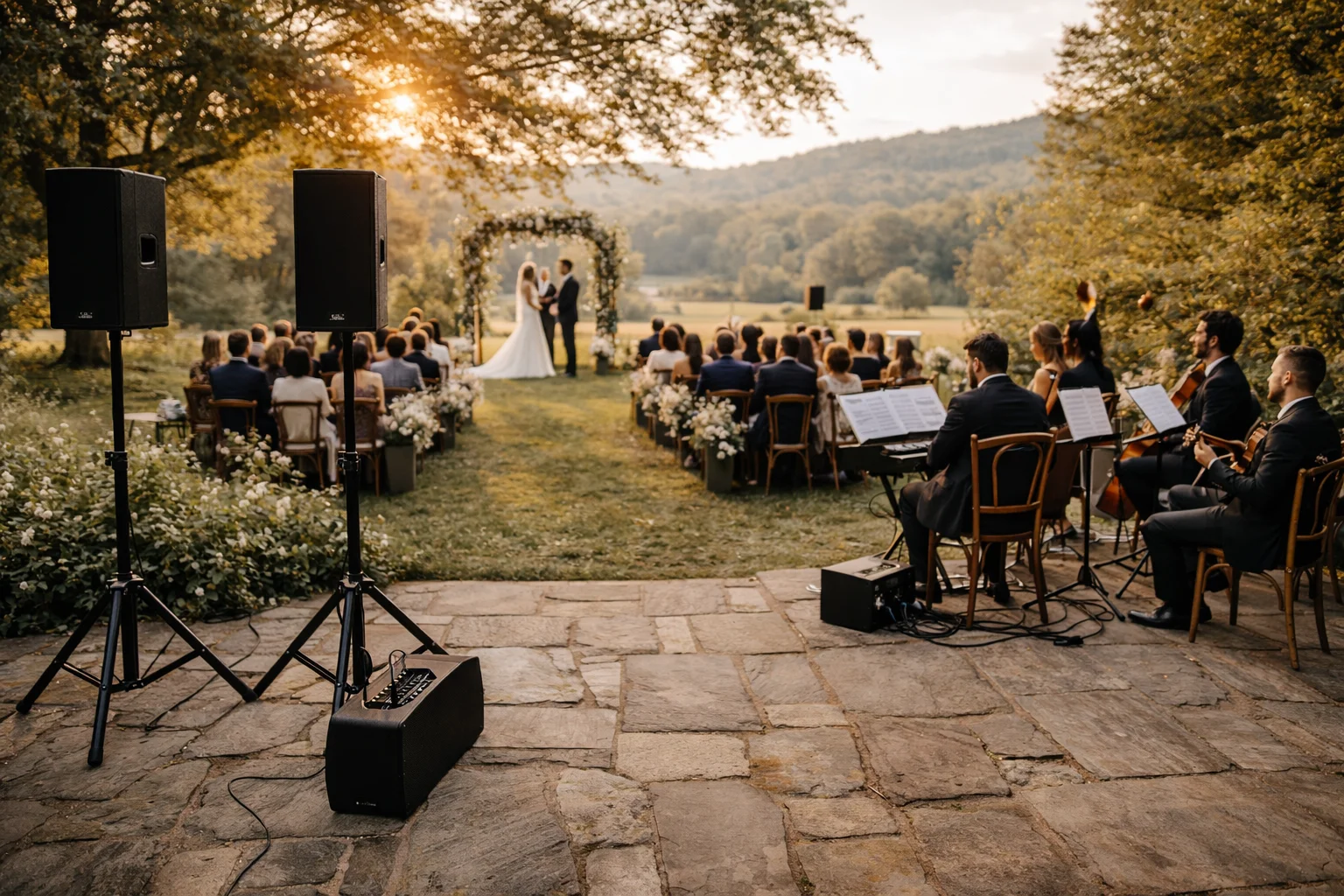
Why Ceremony Music Feels Different Live and Recorded
Ceremony music is often chosen as if the main question were preference. Live or recorded, strings or piano, solo or ensemble. In reality, guests experience something more subtle: scale, breath, distance, timing, and the way music changes the room before the ceremony and after the ritual has already happened. This article looks at what really changes when wedding music is live, recorded, too performed, too thin, or exactly right.
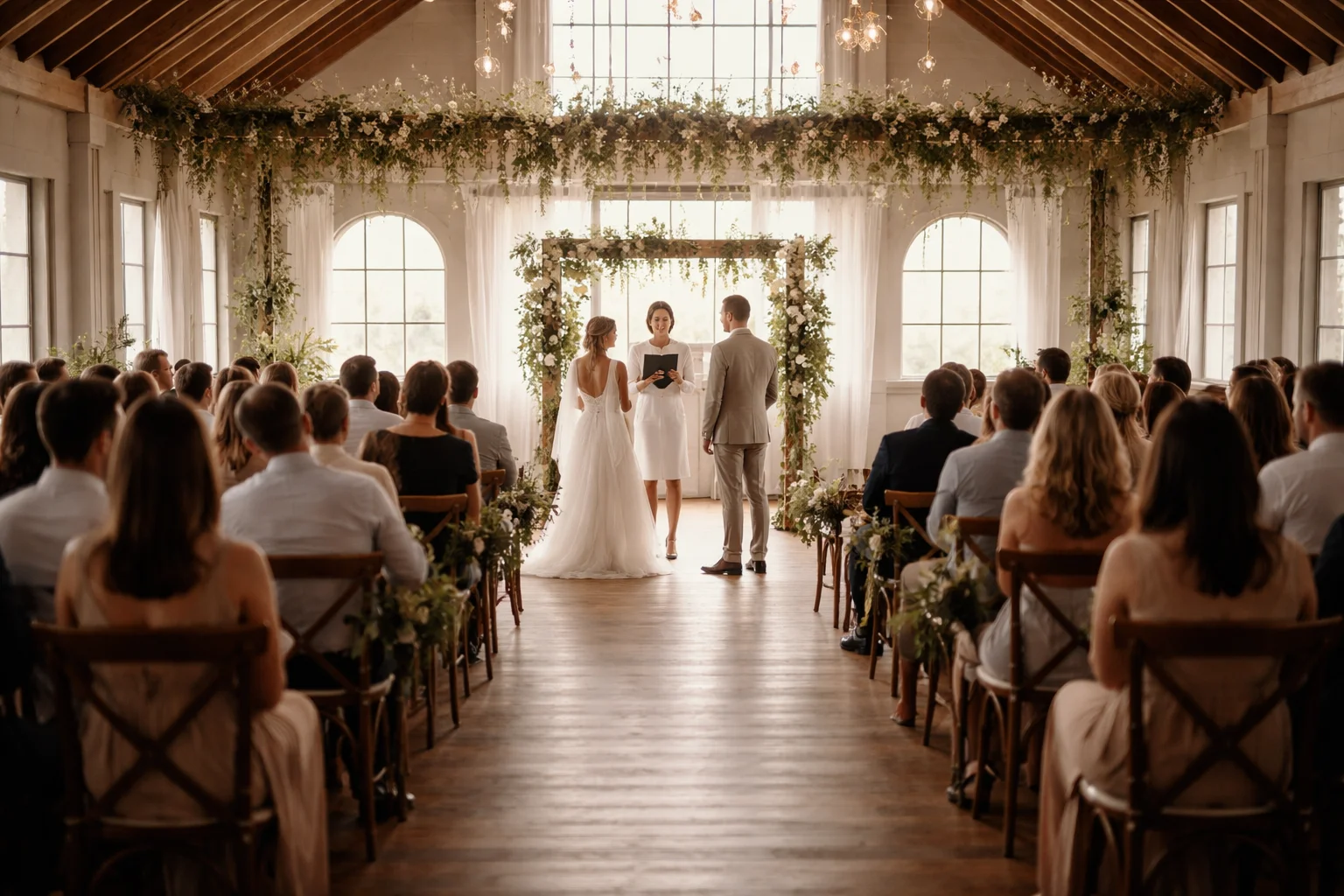
When One Person Moves Slightly Off Script
Free ceremonies are usually built with a loose structure. There is a plan somewhere, often shared in advance, but the actual delivery moves a bit. People speak, pause, adjust. It does not stay identical to what was written. That is expected, even if no one says it out loud.
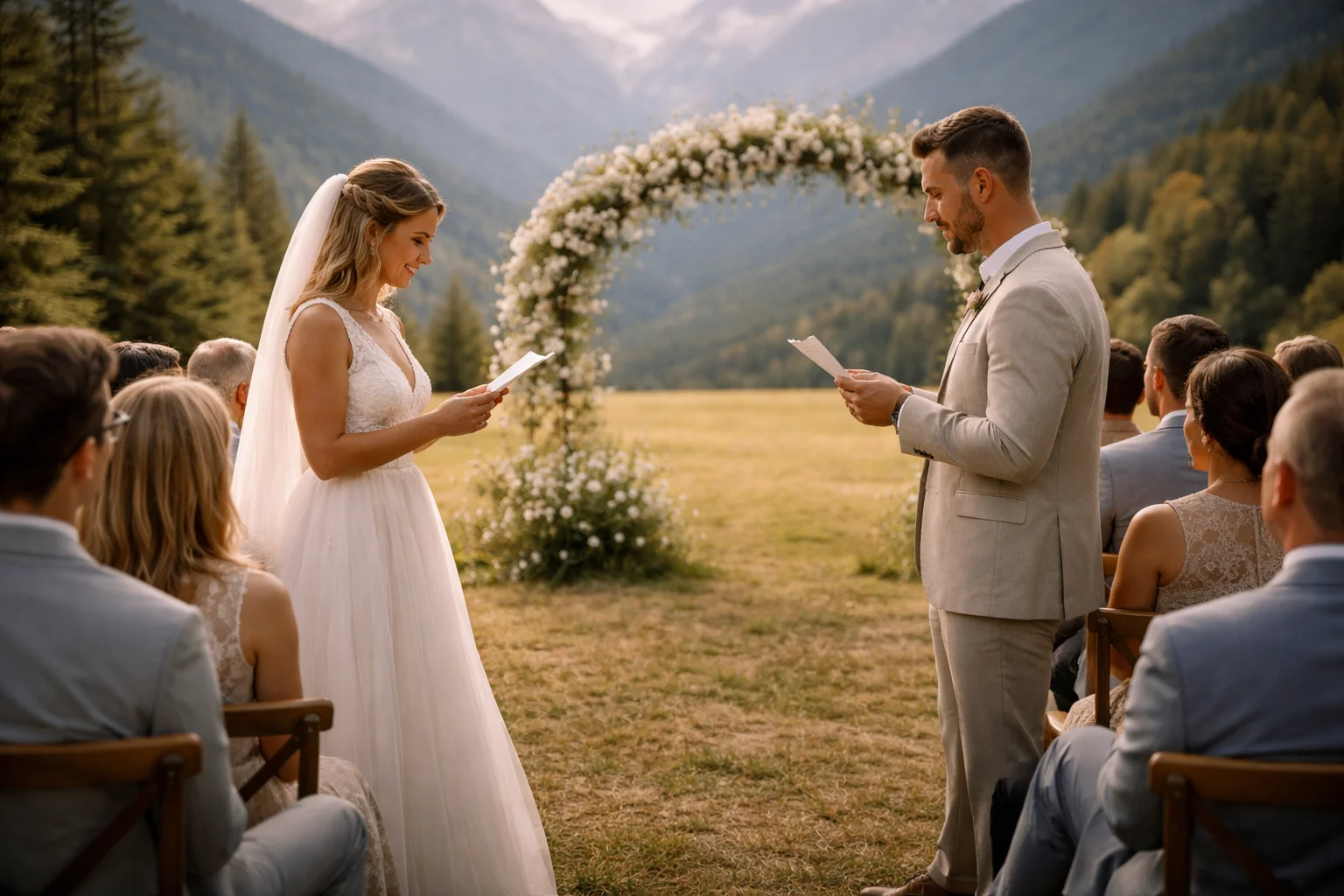
How Long Wedding Vows Should Really Be and What to Leave Out
Most wedding vows become weak for the same reason they become long: they try to carry everything at once. This article looks at how long vows should really be, what belongs inside them, what does not, and how to cut them without losing the feeling that made them matter in the first place.