
After the Wedding Abroad: A Legal Checklist for What Happens Once the Ceremony Is Over
A wedding often feels complete once the ceremony ends. Guests leave, photos are stored, the visible part is over. But legal reality does not always follow the same rhythm. This is exactly why the topic belongs inside Legal & Documents (Info): many marriages still require paperwork, confirmation, registration, or translation after the day itself has already passed. On Loving Rocks, the legal documents category already frames this clearly as an early-preparation topic that helps couples avoid delays and keep the marriage legally valid.
At the same time, the article also fits naturally beside Before the Ceremony, After the Ritual. That pillar emphasizes that the emotional and practical reality of marriage stretches beyond the ceremony itself, and that what happens after often reveals more than the visible moment in which the ritual takes place. A legal checklist for the period after a wedding abroad turns that insight into something practical.
Legal & Documents (Info) | Loving RocksLegal matters and required documents are an important part of wedding planning, especially when different legal requirements and registrations may apply.
Legal Checklist After a Wedding Abroad
This checklist is for couples who married abroad and want to understand what may still need attention once they return home. The celebration may be finished, but as Loving Rocks already notes in its legal documents section, the paperwork is not always finished at the same time.
1. Confirm Which Official Marriage Documents You Actually Received
- Did you receive an official marriage certificate, not only a ceremonial document?
- Is the document issued by the competent civil authority?
- Do the names, dates, and locations match exactly?
- Did you receive one original or several certified copies?
This matters because couples often leave with documents in hand without immediately checking whether those papers will be sufficient once they return home. The legal documents section on Loving Rocks already stresses that details matter and that local rules differ.
2. Check Whether Registration in the Home Country Is Required
- Does your home country automatically recognize the marriage, or is registration required?
- Do you need to submit the certificate to a registry office or consulate?
- Is there a deadline or recommended timing after your return?
- Have you checked the exact local authority responsible for recognition?
This point sits directly inside the logic of the existing article “After the Wedding Abroad – Registering a Marriage in the Home Country,” which says that many weddings take place abroad and that the administrative part often appears again after returning home.
3. Clarify Whether Translation or Apostille Is Needed
- Does the certificate need an official translation?
- Do local authorities require a sworn translator?
- Is an apostille or legalization needed for recognition?
- Have you verified the requirement with the actual authority that will process the document?
This is one of the most common areas where couples lose time. Rules differ by country and sometimes by authority, which is why the legal category on Loving Rocks emphasizes preparation and local confirmation rather than assumption.
4. Review Name Change and Identity Document Implications
- Will either partner change their name officially?
- If so, when can new identity documents be requested?
- Do passport, ID card, tax, insurance, or residency records need updating?
- Have you checked whether legal recognition must happen first before any name change can be processed?
The ceremony may mark the passage symbolically, but civil systems usually require each step to be processed in sequence. This is a practical example of what the pillar page means when it says rituals mark a threshold but cannot contain everything that follows.
5. Keep Copies, Backups, and Proof of Submission
- Have you scanned all original documents clearly?
- Do you have secure digital backups?
- Did you keep postal receipts, submission confirmations, or appointment records?
- Can you prove when and where documents were submitted if something is delayed?
Administrative issues often become harder not because the marriage is invalid, but because the paper trail is incomplete. A legal checklist should therefore treat documentation as part of the process, not as an afterthought.
6. Check Whether Other Legal or Administrative Updates Follow
- Do health insurance records need updating?
- Are there tax or residency implications in your country?
- Do banks, employers, or local authorities require updated civil status records?
- Have you checked whether any follow-up depends on the marriage being formally registered first?
Marriage is lived after the ceremony, and official systems also begin treating it as part of ordinary life only after the necessary records exist. That connects directly with the pillar’s claim that marriage truly begins after the ritual, when life continues without ceremonial structure.
7. Do Not Assume the Ceremony Finished the Legal Process
- Have you separated the emotional completion of the day from the legal completion of the process?
- Did you verify actual requirements instead of relying only on planner summaries or venue information?
- Have both partners agreed on who is following the paperwork after returning home?
- Did you set a clear date for checking what remains open?
This is often the most important shift. The wedding may feel over, but legal clarity may still depend on follow-up steps that begin only afterward. That is the exact meeting point between a legal-documents article and a ritual pillar about what remains after visibility fades.
Why this article belongs to both worlds
On Loving Rocks, the legal documents category is clearly practical: different countries may require different paperwork, registrations, and official steps, and early preparation helps couples avoid delays. The pillar “Before the Ceremony, After the Ritual” adds the deeper frame: a ritual marks passage, but reality continues before and after it. This article sits exactly between those two layers. It is legal in function, but it also reflects the portal’s larger idea that what follows the ritual often matters more than people expect.
Before the Ceremony, After the Ritual | Loving RocksA wedding concentrates meaning into a single day, but its emotional impact begins earlier and lasts longer. What happens before and after often matters more than the ritual itself.
A marriage certificate, translation, registration, or apostille may not feel like part of the wedding memory. But they are part of what allows the marriage to exist clearly beyond the day itself. The ceremony may mark the threshold. The paperwork often decides how smoothly life continues after crossing it.
Related Articles

Prenup Conversations Before the Wedding: What Should Be Said Early, Calmly, and Clearly
Prenup conversations are rarely only about money. This article looks at timing, fairness, family history, debt, business ownership, inheritance, legal advice, and the quiet concerns couples should name before paperwork begins.

After the Wedding Abroad – Registering a Marriage in the Home Country
Many weddings take place outside the couple's home country. Civil ceremonies in small town halls. Beach weddings organized by local planners. Quiet registry offices during travel. After returning home the administrative part appears again. The celebration is finished, the paperwork is not.
What Legal Documents Know, and What Marriage Learns Later
A wedding can be filed, certified, and recorded, but that is only one version of what has happened. The legal documents matter because they give the marriage standing in the world, while the story begins in the quieter space that no form can fully describe.
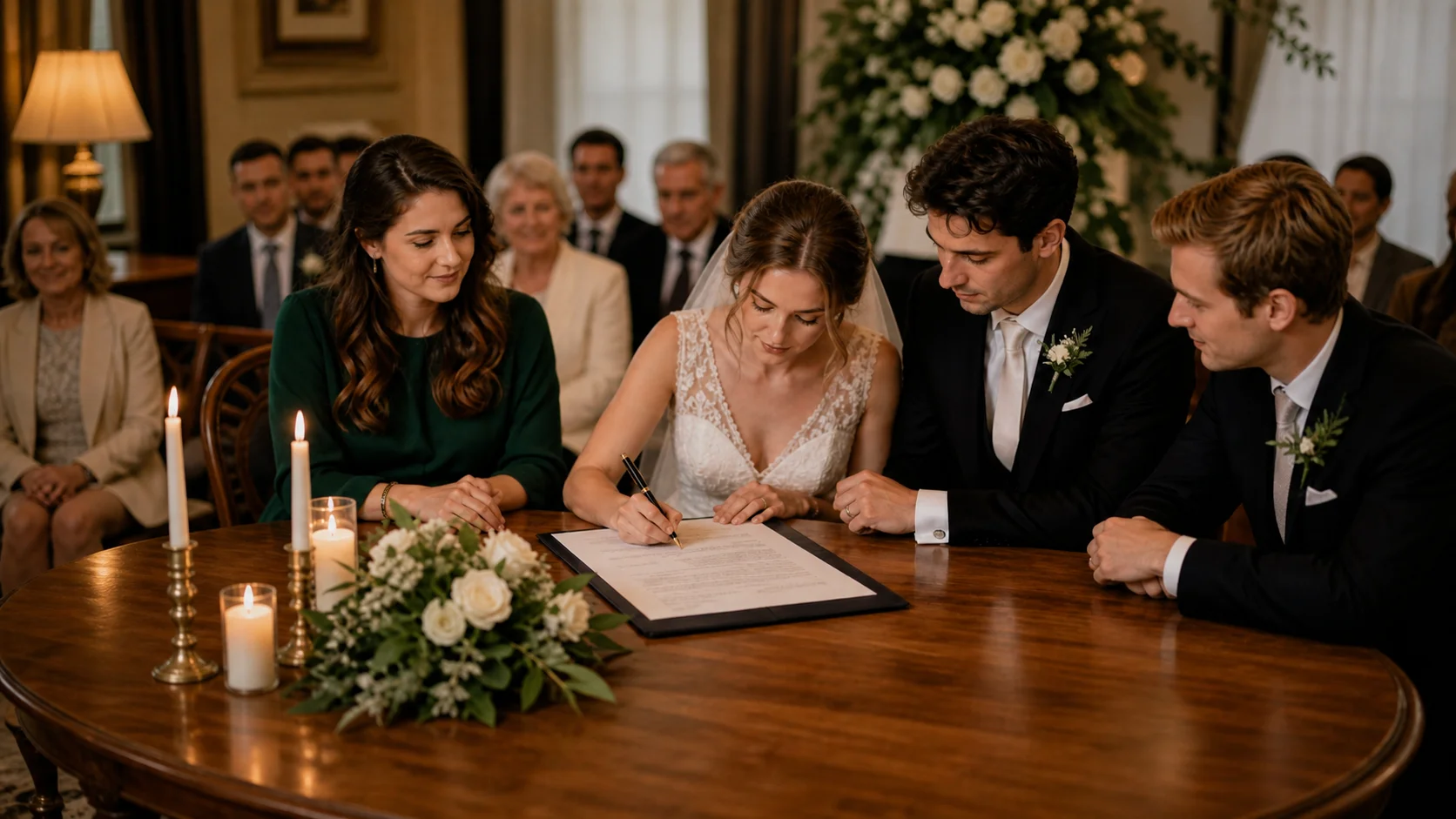
Witnesses and Signatures: The Small Legal Moment Guests Often Misunderstand
The signing moment at a wedding can look like a brief pause, but it carries both legal and symbolic weight. This article looks at witnesses, document requirements, signing tables, visibility, ceremony flow, and how a small official act can quietly become a ritual.

Europe Destination Weddings in 2026: What EES and ETIAS Mean for Your Guests
European destination weddings now have a new travel-planning layer. EES is already operational, while ETIAS is expected later in 2026. This guide explains what couples actually need to communicate to international guests without turning the wedding website into an immigration authority.

Why Wedding Tables Decide More Than You Think
Wedding tables are often treated as decoration, but they quietly shape how guests experience the entire event. This article explores how tables influence rhythm, perception, and the emotional space before and after key moments.
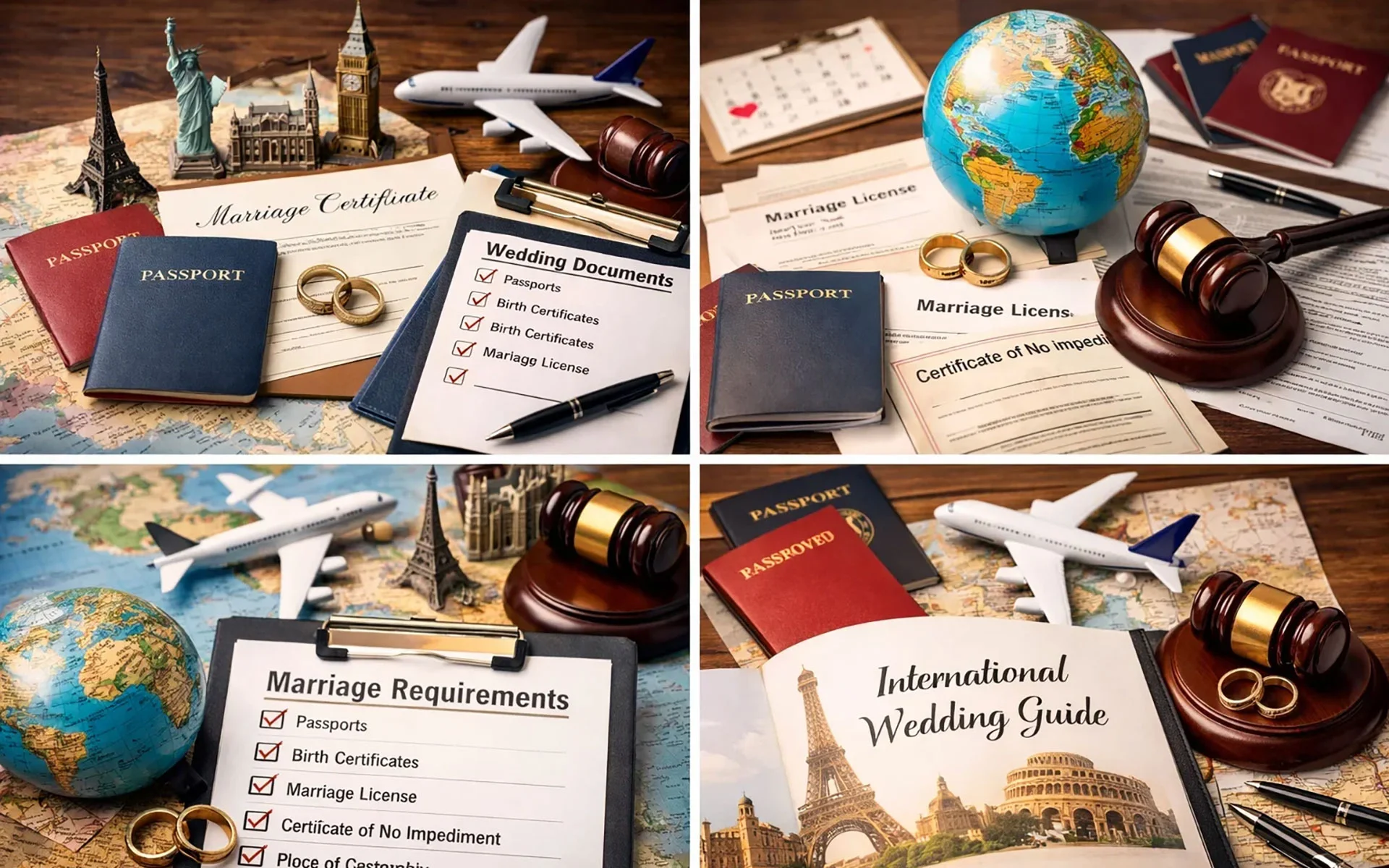
Legal Basics for Weddings Abroad
Getting married in another country involves more paperwork than many expect. Rules differ by location, and details matter. Couples who check requirements early and confirm them locally usually avoid delays and last-minute problems.
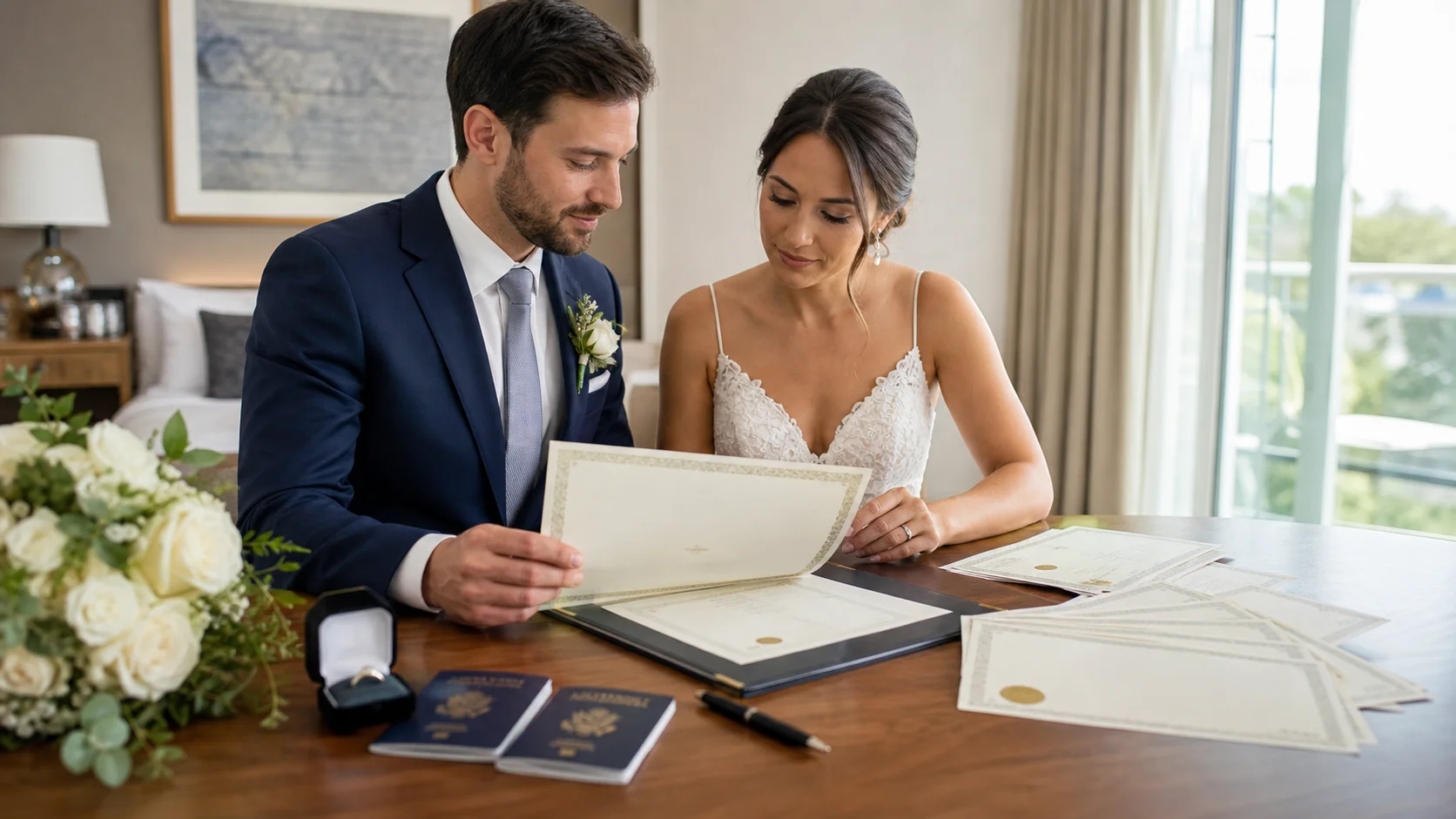
Marriage Certificate Checklist: Why One Document Keeps Returning After the Wedding
A marriage certificate often feels like the final paper of the wedding, but it keeps returning in ordinary life. This article looks at certified copies, scans, translations, apostilles, name changes, travel, banking, insurance, and the quiet imprint one document leaves after the celebration.
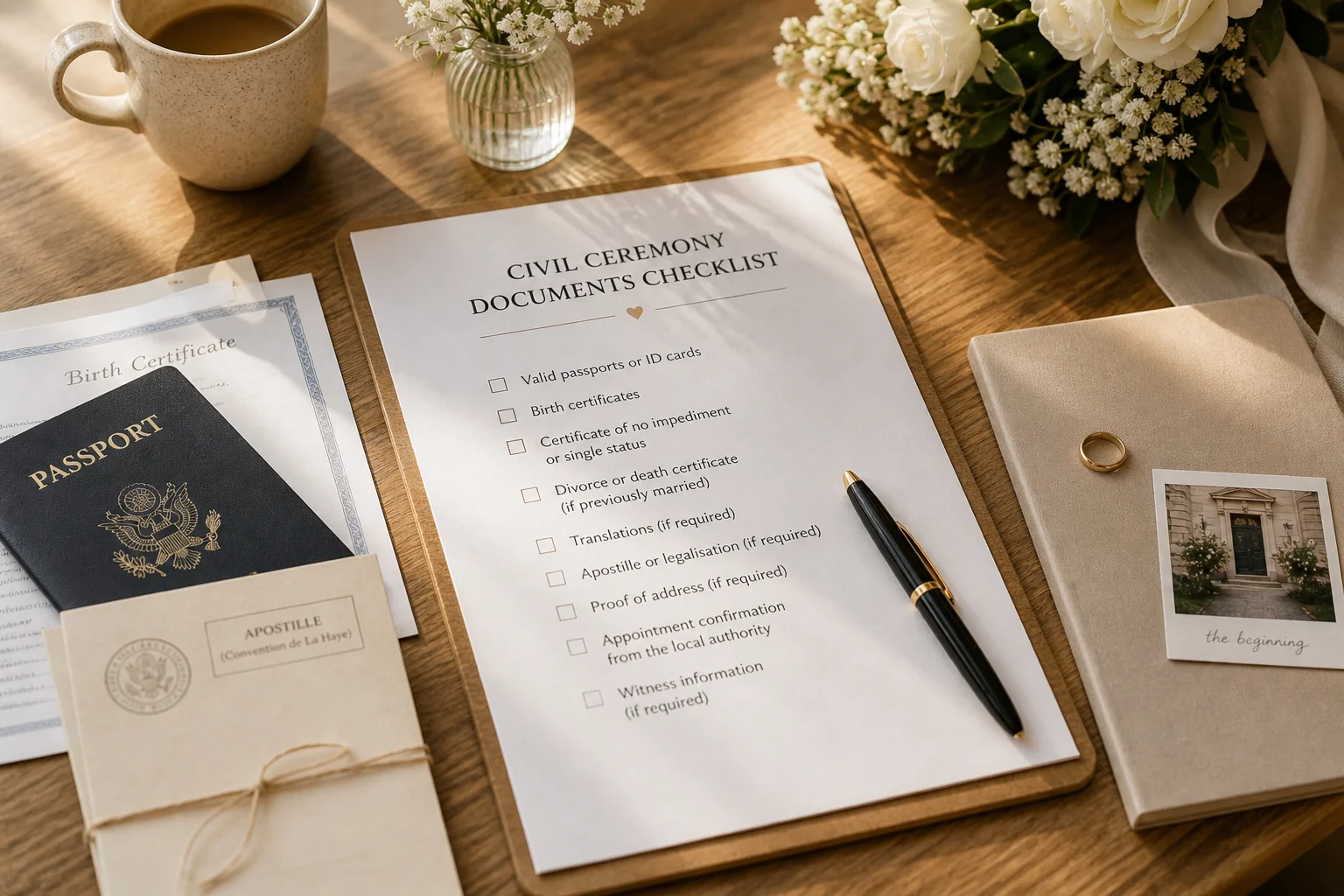
Civil Ceremony Documents Checklist: What Couples Usually Need Before the Wedding Can Happen
A civil ceremony may look simple, but it depends on documents being accepted before the public moment can begin. This article looks at identity records, marital status proof, translations, apostilles, witnesses, appointment rules, and the quiet legal threshold before the ceremony.

Where Small Weddings Expand Beyond the Ceremony
Small weddings are often described through numbers. Fewer guests, fewer tables, fewer logistical layers. The focus shifts naturally toward what is essential. People arrive, take their places, and the ceremony begins without much distance between those involved and those witnessing it.
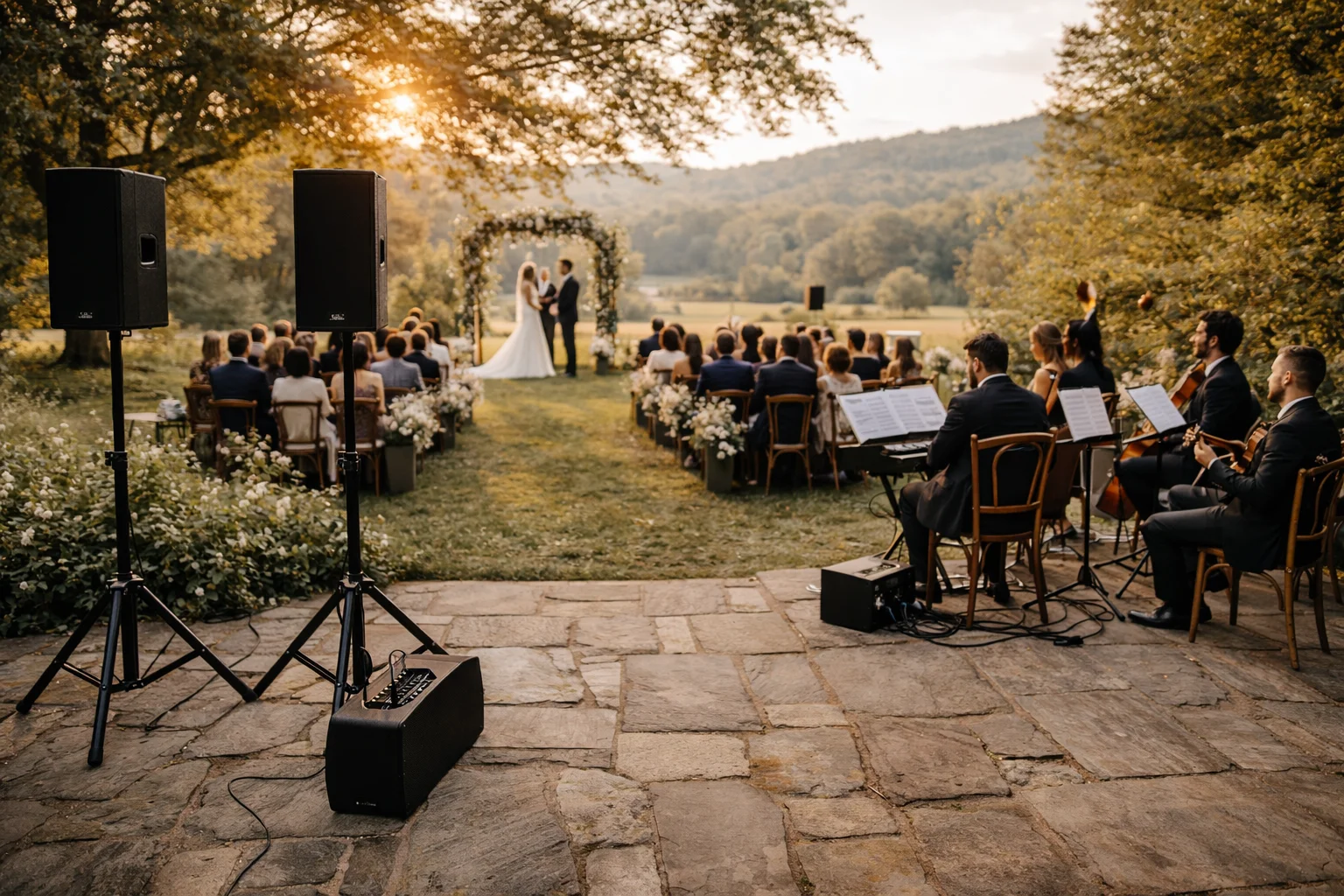
Why Ceremony Music Feels Different Live and Recorded
Ceremony music is often chosen as if the main question were preference. Live or recorded, strings or piano, solo or ensemble. In reality, guests experience something more subtle: scale, breath, distance, timing, and the way music changes the room before the ceremony and after the ritual has already happened. This article looks at what really changes when wedding music is live, recorded, too performed, too thin, or exactly right.

Name Change Checklist: What Couples Should Decide Before the Forms Decide It for Them
A name change after marriage is not only paperwork. This article looks at identity, travel, work, family communication, digital names, and the small everyday places where a new or unchanged name starts to matter after the wedding.