
After the Wedding Abroad – Registering a Marriage in the Home Country

How to Register a Foreign Marriage at Home
This moment often feels slightly bureaucratic but routine. Couples bring documents from another country to the local registry office. Certificates, translations, stamps. The process rarely looks dramatic. It is mostly a matter of placing the foreign marriage into the domestic record system.
Definition
Registering a foreign marriage means that a marriage legally performed abroad is recorded by the civil authorities of the home country. The registry office checks the documents and confirms the event in national records. The marriage itself already exists. Registration simply places it into the local administrative system.
Situation 1: The Foreign Marriage Certificate
The starting point is usually the certificate issued abroad. These documents vary a lot. Some look very official with stamps and seals. Others appear surprisingly simple. Registry clerks read them carefully, often line by line. Names, dates, issuing authority. Sometimes a small pause while checking unfamiliar formats.
Situation 2: Translation of the Documents
If the certificate is written in another language a certified translation normally follows. Translators reproduce the text quite precisely. Even small notes, stamps, margins. The translated version sometimes looks longer than the original document. At the registry desk both papers lie next to each other for comparison.
Situation 3: Apostille or Legalization
Certain countries require an authentication step. The document receives an apostille or legalization stamp confirming the issuing authority. Couples often collect this during the trip already. Others arrange it later through embassies or administrative offices. The certificate slowly gathers additional markings.
Situation 4: Appointment at the Local Registry
The registration visit itself tends to be brief. Documents are reviewed. Copies appear. A few questions about names or dates. Clerks type the information into the civil register system. The atmosphere remains practical. Sometimes a small pause while a detail is checked again.
Situation 5: Entry into the Domestic Register
After verification the marriage becomes part of the national civil record. Some countries issue a local certificate based on the registered information. Others simply confirm the entry. From that moment the marriage appears in domestic documents used for taxation, name registration, or family records.
Conclusion
Registering a marriage that took place abroad is usually a calm administrative step after the wedding itself. A few offices, several documents, short conversations across a counter. Gradually the international ceremony settles into the paperwork of everyday civil life.
Related Articles

Europe Destination Weddings in 2026: What EES and ETIAS Mean for Your Guests
European destination weddings now have a new travel-planning layer. EES is already operational, while ETIAS is expected later in 2026. This guide explains what couples actually need to communicate to international guests without turning the wedding website into an immigration authority.
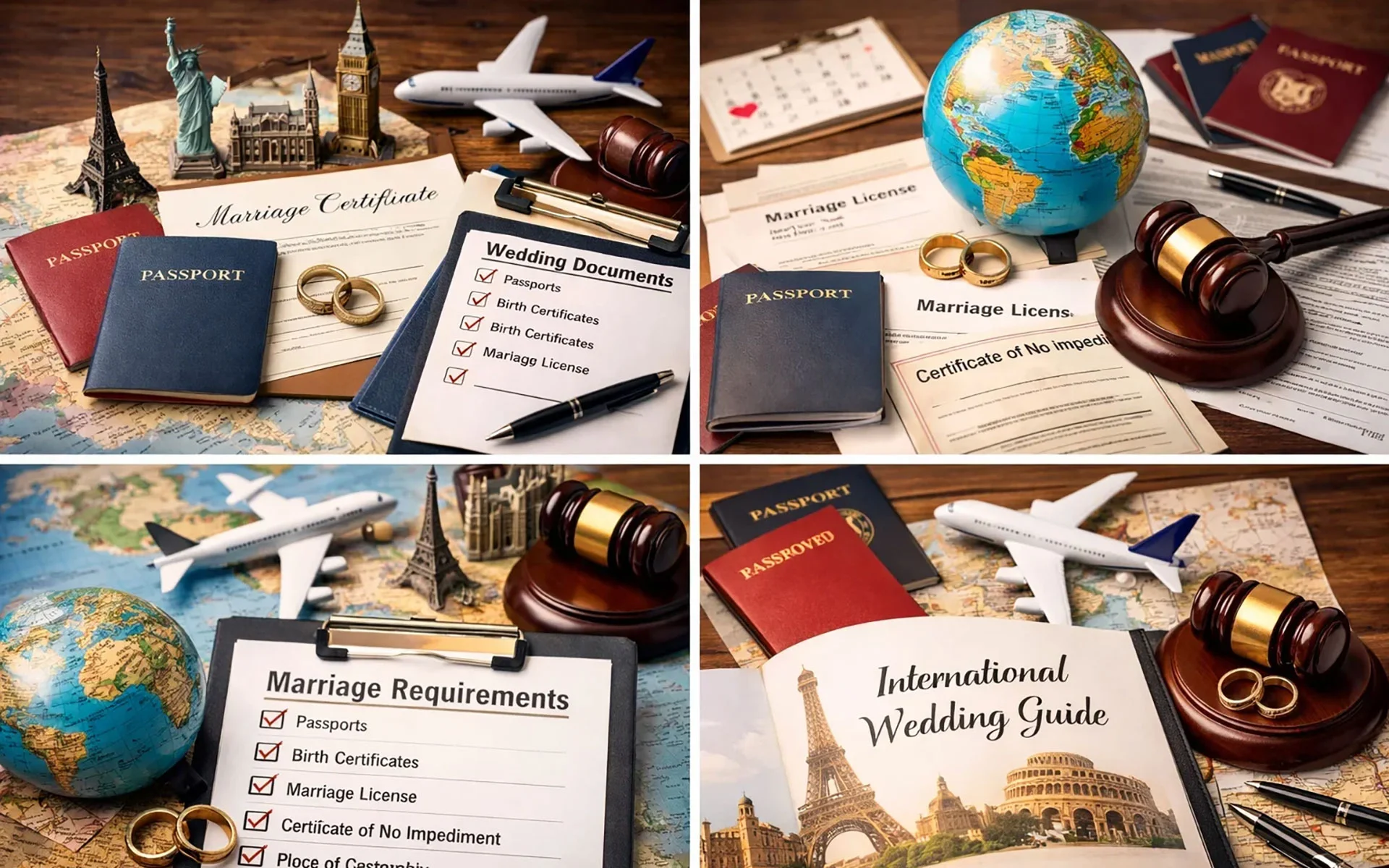
Legal Basics for Weddings Abroad
Getting married in another country involves more paperwork than many expect. Rules differ by location, and details matter. Couples who check requirements early and confirm them locally usually avoid delays and last-minute problems.

Prenup Conversations Before the Wedding: What Should Be Said Early, Calmly, and Clearly
Prenup conversations are rarely only about money. This article looks at timing, fairness, family history, debt, business ownership, inheritance, legal advice, and the quiet concerns couples should name before paperwork begins.
After the Wedding Abroad: A Legal Checklist for What Happens Once the Ceremony Is Over
A wedding may feel complete when the ceremony ends, but legal reality often continues afterward. This checklist helps couples understand what documents, registrations, translations, and confirmations may still matter after a wedding abroad, when the ritual is over but the administrative part has not yet disappeared.
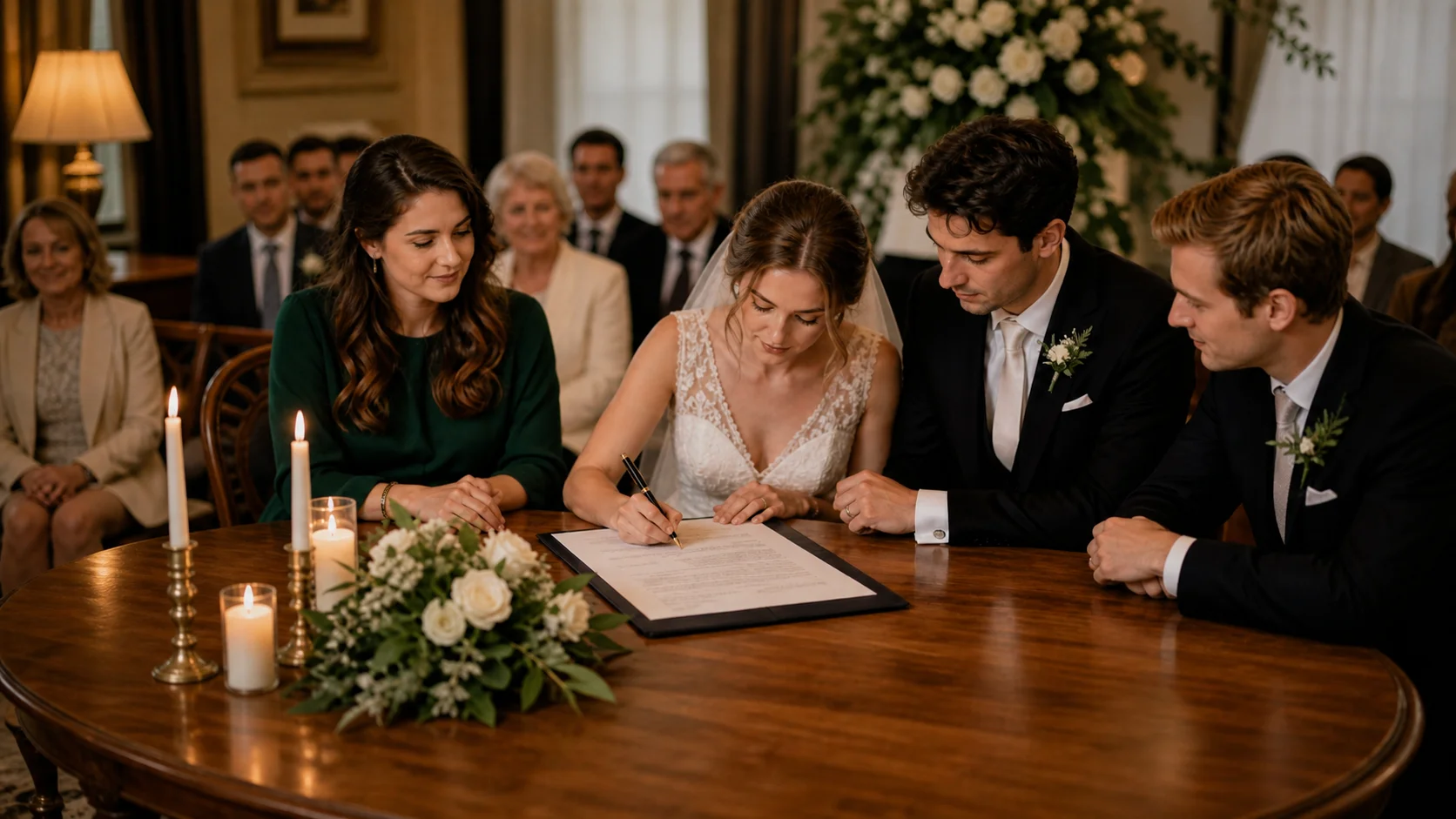
Witnesses and Signatures: The Small Legal Moment Guests Often Misunderstand
The signing moment at a wedding can look like a brief pause, but it carries both legal and symbolic weight. This article looks at witnesses, document requirements, signing tables, visibility, ceremony flow, and how a small official act can quietly become a ritual.
What Legal Documents Know, and What Marriage Learns Later
A wedding can be filed, certified, and recorded, but that is only one version of what has happened. The legal documents matter because they give the marriage standing in the world, while the story begins in the quieter space that no form can fully describe.
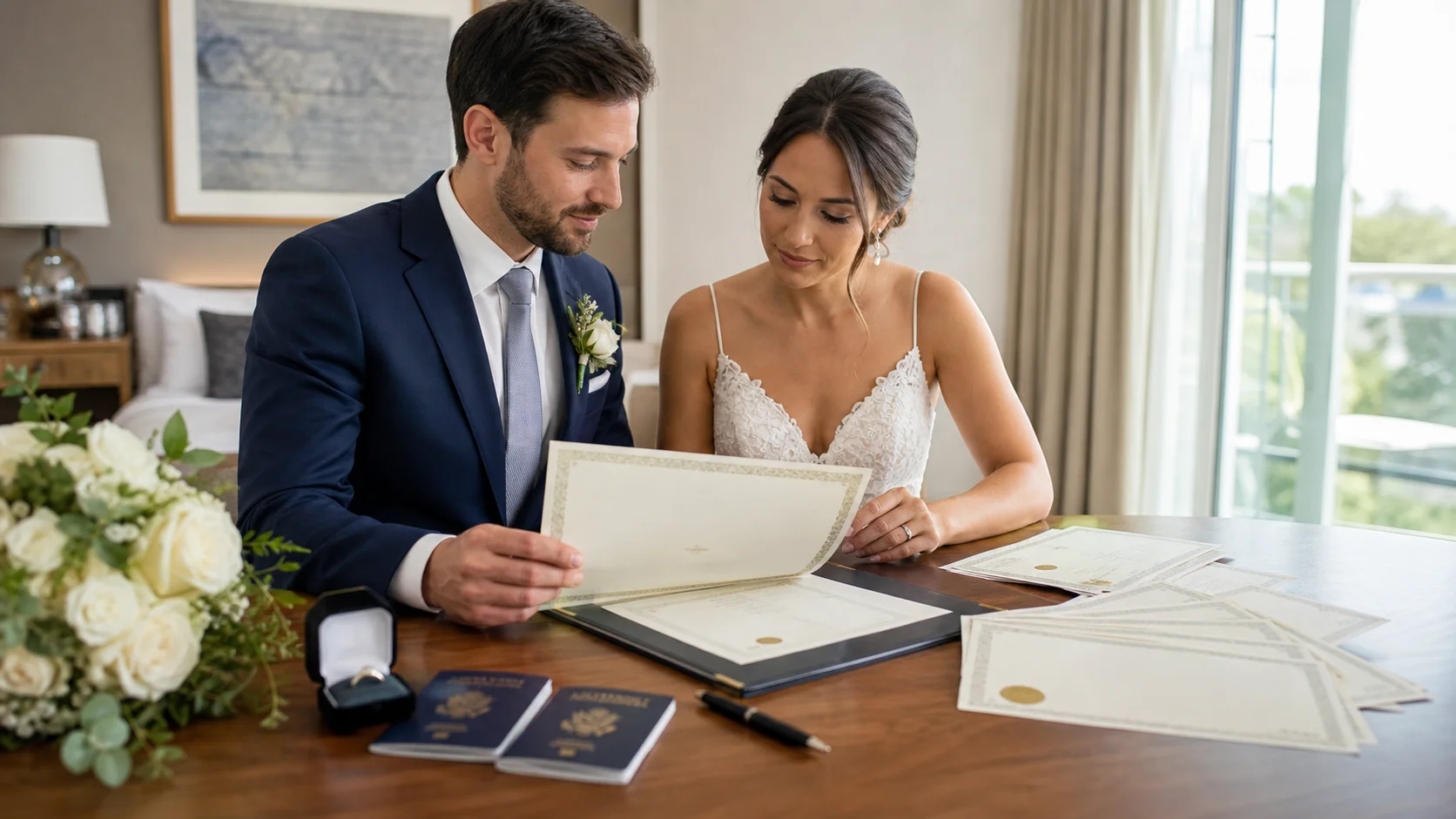
Marriage Certificate Checklist: Why One Document Keeps Returning After the Wedding
A marriage certificate often feels like the final paper of the wedding, but it keeps returning in ordinary life. This article looks at certified copies, scans, translations, apostilles, name changes, travel, banking, insurance, and the quiet imprint one document leaves after the celebration.
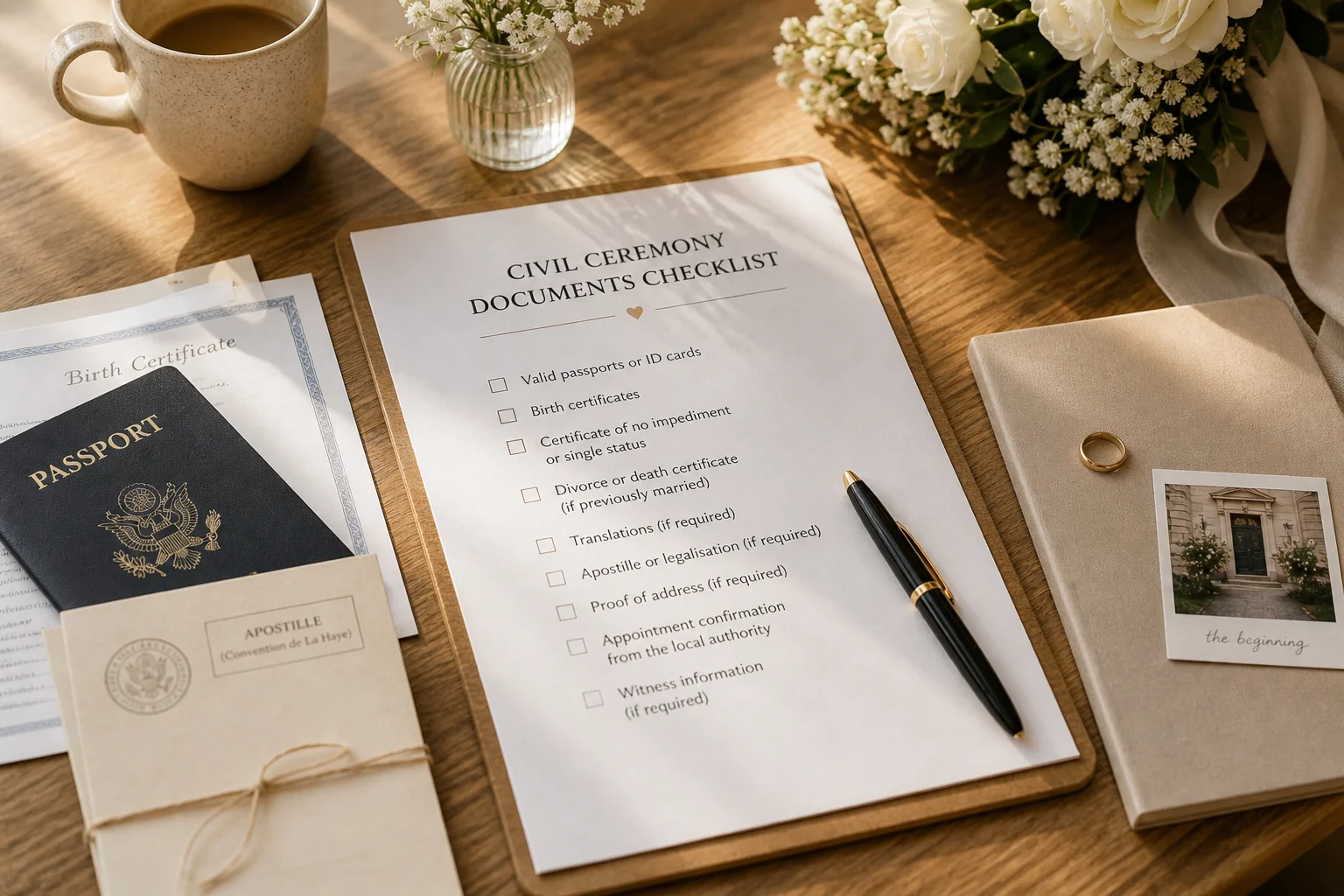
Civil Ceremony Documents Checklist: What Couples Usually Need Before the Wedding Can Happen
A civil ceremony may look simple, but it depends on documents being accepted before the public moment can begin. This article looks at identity records, marital status proof, translations, apostilles, witnesses, appointment rules, and the quiet legal threshold before the ceremony.

Name Change Checklist: What Couples Should Decide Before the Forms Decide It for Them
A name change after marriage is not only paperwork. This article looks at identity, travel, work, family communication, digital names, and the small everyday places where a new or unchanged name starts to matter after the wedding.