
Legal Basics for Weddings Abroad
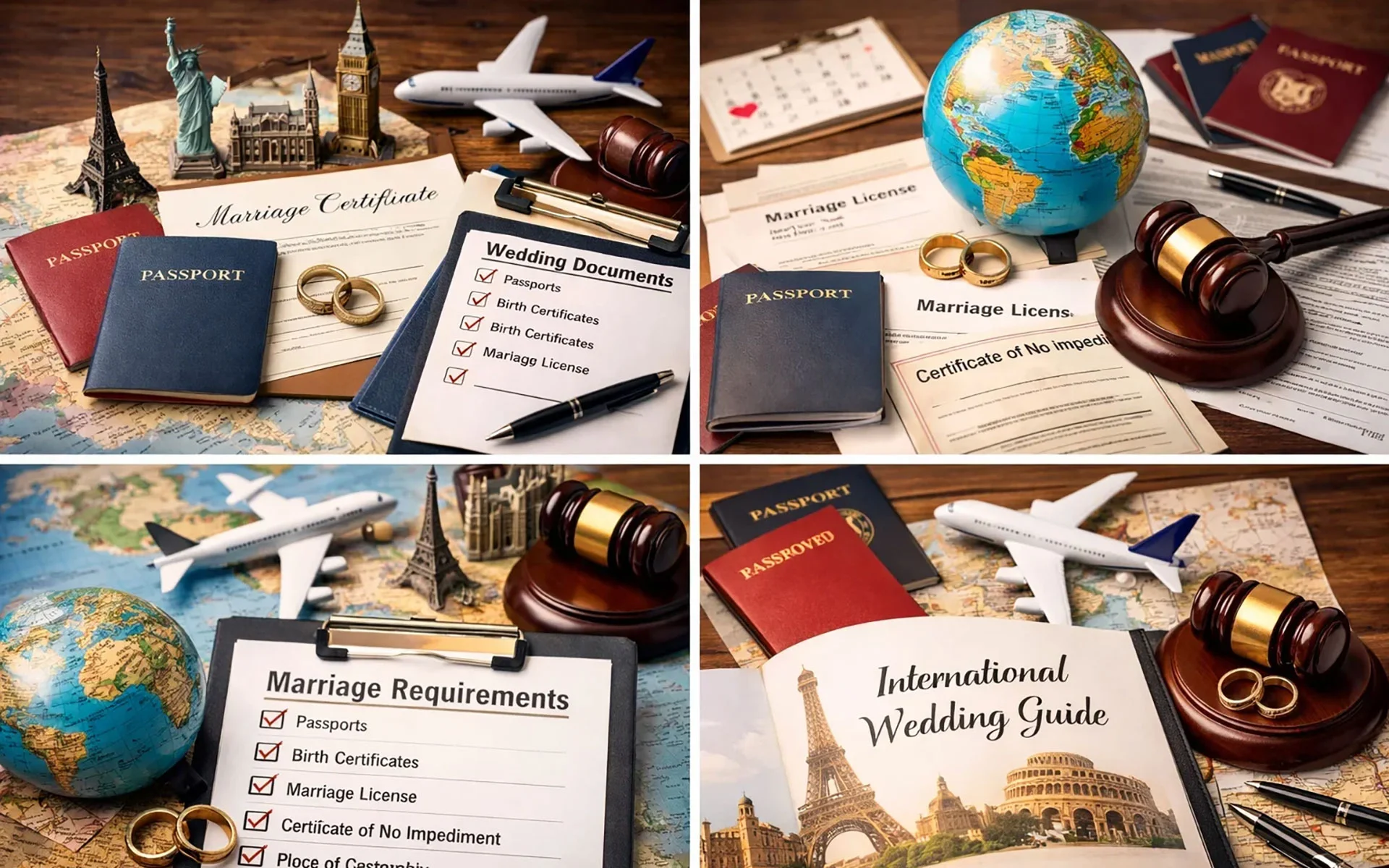
Legal Requirements for Getting Married Abroad
Getting married abroad often begins with a feeling rather than a checklist. The idea of another place. A different setting. What usually comes later is the legal layer. Less visible, but steady. Laws differ by country, sometimes by region. Documents that felt routine at home suddenly carry weight. Couples who start early tend to move through this part calmly. One couple said afterward, “Once the paperwork was clear, everything else felt lighter.”
Germany
In Germany, a marriage becomes legally valid through a civil ceremony. Other ceremonies often follow and are meaningful in their own way, but they stand alongside the legal act rather than replacing it. Couples planning from abroad often appreciate the clarity of this structure once they are familiar with it.
Documents that are commonly requested
- Valid passport or national ID
- Birth certificate, often in long form
- Certificate of no impediment to marriage
- Proof of residence or registration
- Divorce decree or death certificate, if relevant
What usually takes time
- Registering the marriage with the local Standesamt
- Review of documents for international couples
- Providing certified translations when needed
United States
In the United States, marriage law is organized locally. States set the framework, counties handle the details. The process feels familiar once understood. Couples often note that a short conversation with the local office answers most questions early on.
Common requirements
- Government-issued photo ID
- Marriage license application
- Payment of local fees
Details couples often check early
- Waiting periods after license issuance
- Who may legally officiate
- Deadlines for returning signed documents
Serbia
Serbia recognizes marriages through a civil ceremony. Religious ceremonies are widely practiced and valued, but the legal act stands on its own. International couples often plan a little more lead time and find the process becomes quite straightforward.
Documents frequently requested
- Passports or national IDs
- Recent birth certificates
- Certificate of no impediment to marriage
- Proof of citizenship, where relevant
- Divorce or death certificates, if applicable
Practical considerations
- Apostille or legalization for foreign documents
- Certified translations into Serbian
- Interpreter support when languages differ
China
China follows a clear legal framework for marriage registration. Civil registration is the legal basis. Symbolic ceremonies often accompany it. Mixed-nationality couples usually spend time clarifying details in advance, which helps the process feel grounded.
Documents often required for foreign nationals
- Valid passport
- Proof of marital status from the home country
- Notarized and legalized documents
- Passport photos, depending on local bureau
What tends to vary locally
- Local bureau interpretation of national rules
- Translation and legalization standards
- Eligibility linked to nationality and residency
Spain
Spain allows both civil and religious marriages. The administrative process often unfolds at a measured pace. Couples who begin the paperwork early often describe the later stages as surprisingly calm.
Typical documentation
- Passports or IDs
- Birth certificates
- Certificate of no impediment
- Proof of residence, depending on region
- Divorce or death certificates, if applicable
Timing considerations
- Opening the expediente matrimonial
- Approval before setting a ceremony date
- Managing regional procedural differences
France
France requires a civil ceremony at the local mairie. A link to the municipality is part of the process. Couples who plan ahead often find that this requirement creates a sense of local connection rather than limitation.
Frequently requested documents
- Passports or IDs
- Recent birth certificates
- Proof of address or residency link
- Certificate of no impediment
- Divorce or death certificates, if applicable
Administrative steps
- Filing the marriage dossier
- Publication of banns
- Civil ceremony at the mairie
Italy
Italy offers different ceremony formats, all anchored in municipal registration. Local offices shape the rhythm of the process. Couples often describe it as detailed, but clear once underway.
Common paperwork
- Passports
- Birth certificates
- Nulla Osta or equivalent
- Divorce or death certificates, if applicable
What requires coordination
- Translations and apostille requirements
- Comune schedules
- Registration of religious ceremonies for legal effect
Russia
Russia registers marriages through civil registry offices. For international couples, preparation is central. Once documents are in order, the process tends to move predictably.
Typically requested
- Passports
- Birth certificates in some cases
- Proof of marital status
- Divorce or death certificates
- Visa or migration documents
What couples usually plan for
- Standard waiting periods
- Strict document formatting
- Fixed procedural timelines
China – Note for International Couples
Two foreign nationals usually complete their legal marriage outside China and celebrate symbolically within the country. Many couples choose this path consciously and describe it as a balanced solution once expectations are clear.
Closing Notes
Marriage law follows structure. Forms, timelines, confirmations. Couples who approach it early and with attention often find it becomes a stable base rather than an obstacle. As one couple put it, “Once the legal part was settled, we could focus on being present.”
Related Articles

After the Wedding Abroad – Registering a Marriage in the Home Country
Many weddings take place outside the couple's home country. Civil ceremonies in small town halls. Beach weddings organized by local planners. Quiet registry offices during travel. After returning home the administrative part appears again. The celebration is finished, the paperwork is not.
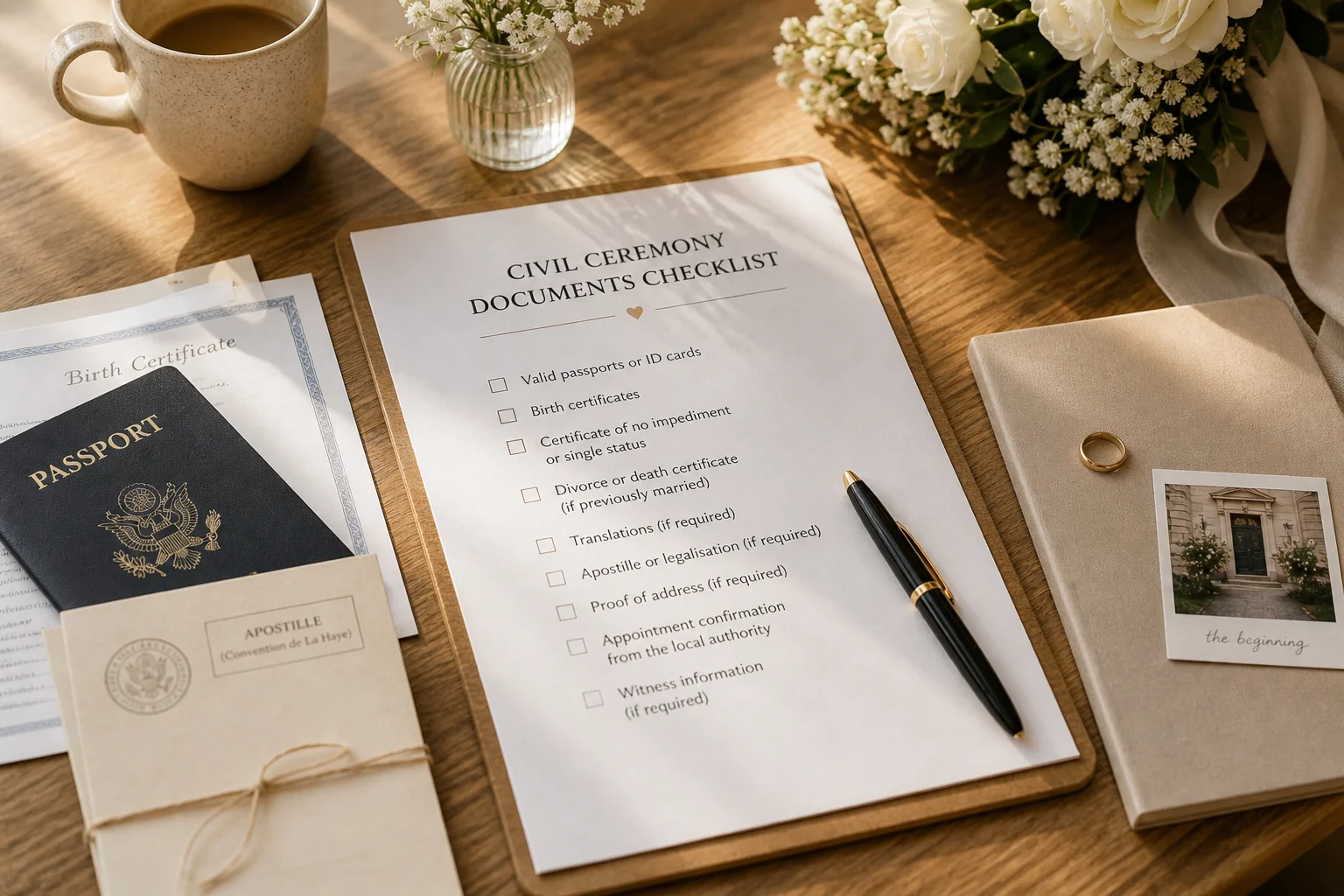
Civil Ceremony Documents Checklist: What Couples Usually Need Before the Wedding Can Happen
A civil ceremony may look simple, but it depends on documents being accepted before the public moment can begin. This article looks at identity records, marital status proof, translations, apostilles, witnesses, appointment rules, and the quiet legal threshold before the ceremony.

Europe Destination Weddings in 2026: What EES and ETIAS Mean for Your Guests
European destination weddings now have a new travel-planning layer. EES is already operational, while ETIAS is expected later in 2026. This guide explains what couples actually need to communicate to international guests without turning the wedding website into an immigration authority.
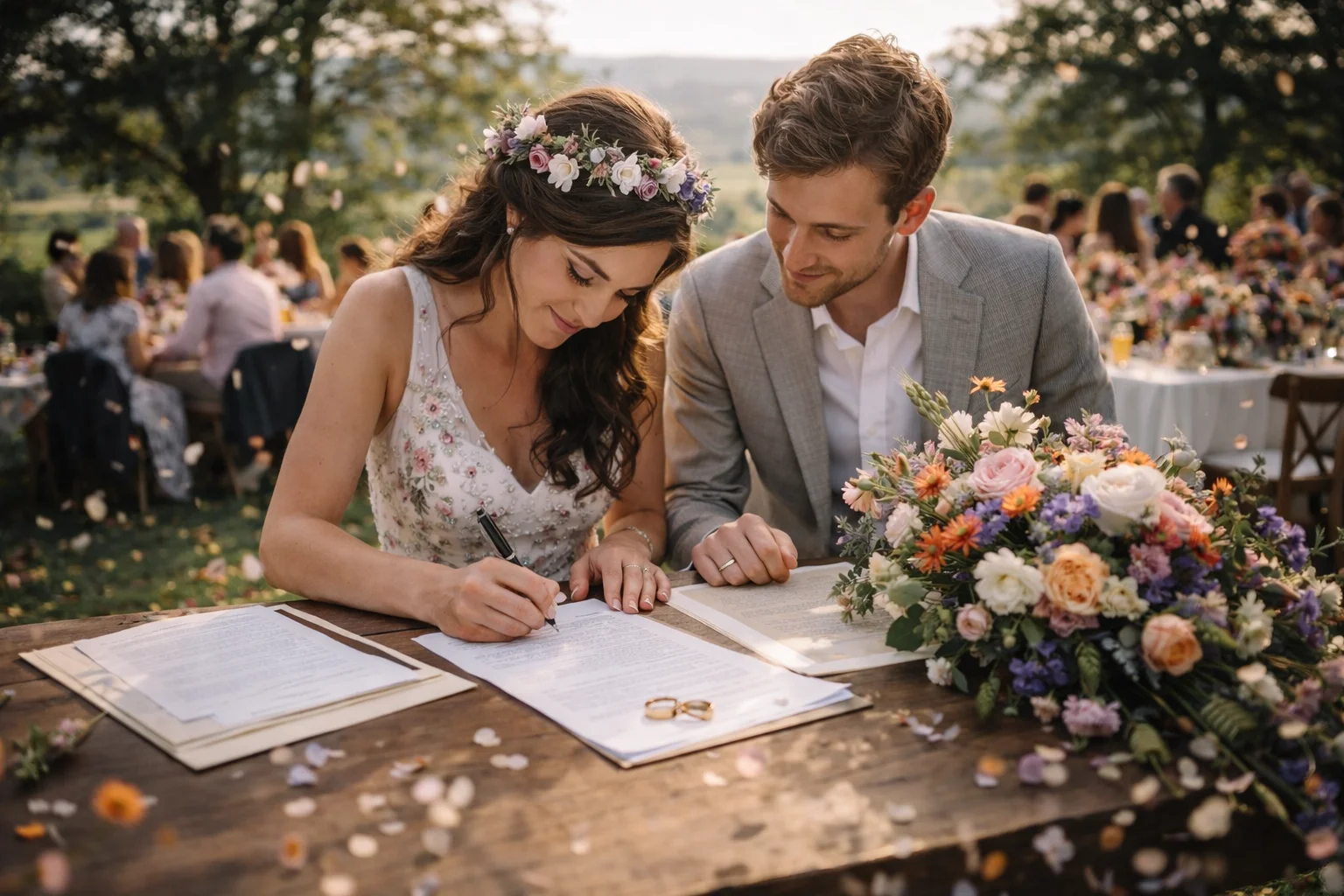
What Legal Documents Know, and What Marriage Learns Later
A wedding can be filed, certified, and recorded, but that is only one version of what has happened. The legal documents matter because they give the marriage standing in the world, while the story begins in the quieter space that no form can fully describe.

Name Change Checklist: What Couples Should Decide Before the Forms Decide It for Them
A name change after marriage is not only paperwork. This article looks at identity, travel, work, family communication, digital names, and the small everyday places where a new or unchanged name starts to matter after the wedding.
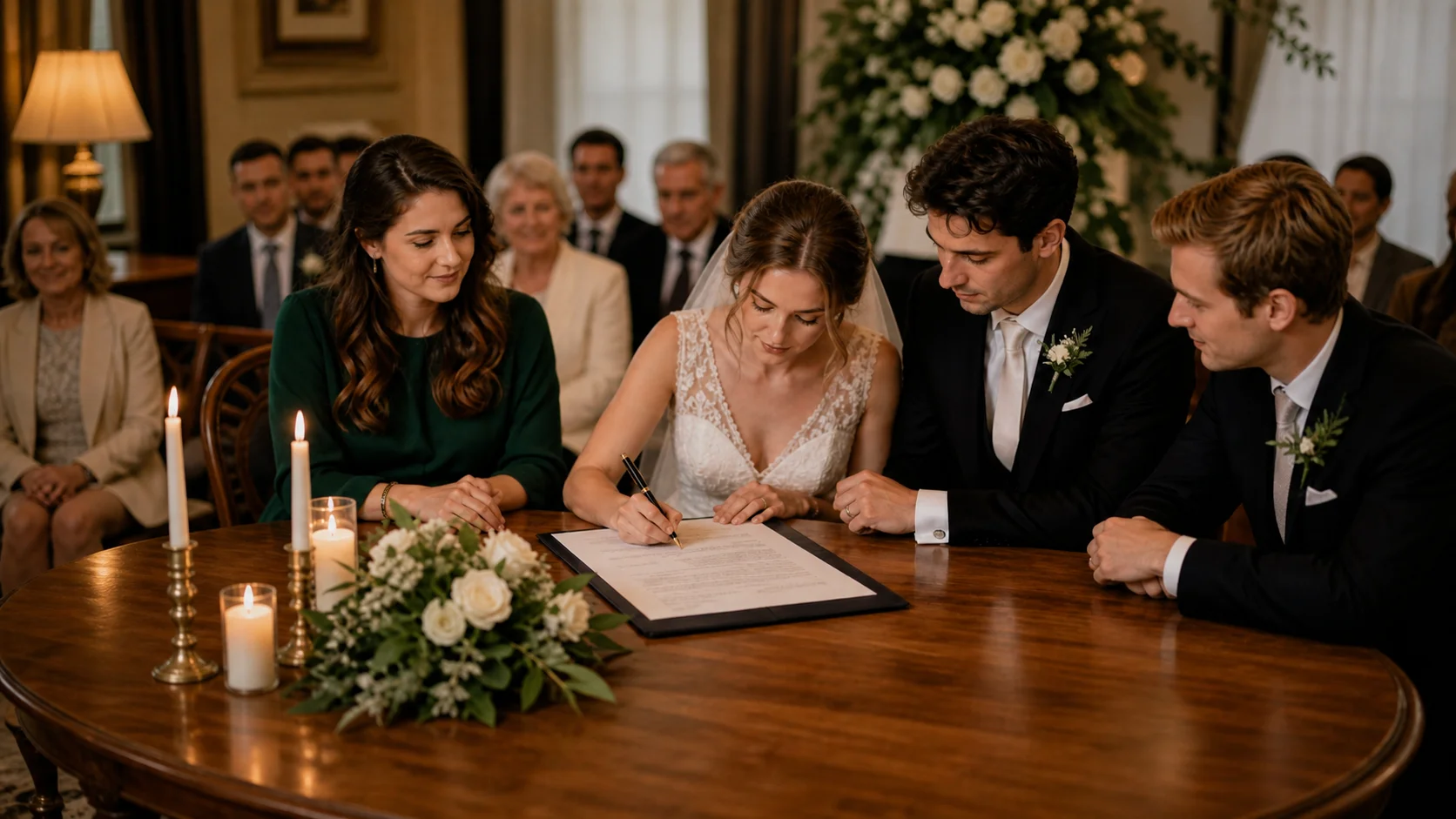
Witnesses and Signatures: The Small Legal Moment Guests Often Misunderstand
The signing moment at a wedding can look like a brief pause, but it carries both legal and symbolic weight. This article looks at witnesses, document requirements, signing tables, visibility, ceremony flow, and how a small official act can quietly become a ritual.
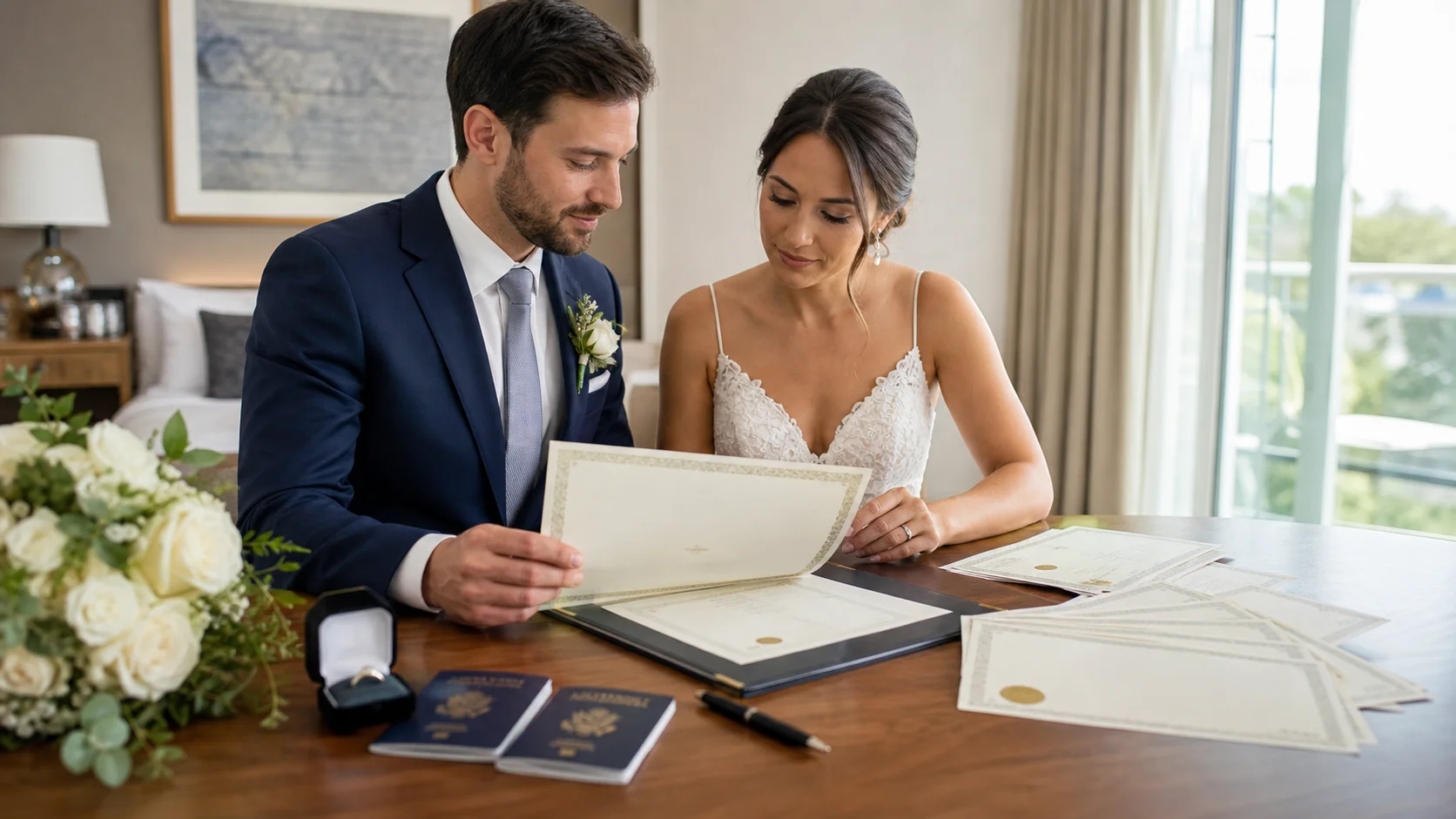
Marriage Certificate Checklist: Why One Document Keeps Returning After the Wedding
A marriage certificate often feels like the final paper of the wedding, but it keeps returning in ordinary life. This article looks at certified copies, scans, translations, apostilles, name changes, travel, banking, insurance, and the quiet imprint one document leaves after the celebration.
After the Wedding Abroad: A Legal Checklist for What Happens Once the Ceremony Is Over
A wedding may feel complete when the ceremony ends, but legal reality often continues afterward. This checklist helps couples understand what documents, registrations, translations, and confirmations may still matter after a wedding abroad, when the ritual is over but the administrative part has not yet disappeared.

Prenup Conversations Before the Wedding: What Should Be Said Early, Calmly, and Clearly
Prenup conversations are rarely only about money. This article looks at timing, fairness, family history, debt, business ownership, inheritance, legal advice, and the quiet concerns couples should name before paperwork begins.