
Prenup Conversations Before the Wedding: What Should Be Said Early, Calmly, and Clearly

Prenup conversations often arrive late because couples hope the subject will stay unnecessary. The wedding is moving closer, families are talking about flowers and travel, deposits have been paid, and then one sentence changes the air: should we talk about a prenuptial agreement? The question can sound colder than it has to. It can also sound more dramatic than it is. Most of the difficulty comes from timing, tone, and everything the couple has not yet said about money, risk, family history, and protection.
A prenup conversation before the wedding should not be treated as a test of love. It is a structured conversation about practical realities that may already exist: property, savings, debt, business ownership, inheritance, children from earlier relationships, unequal income, family support, or different attitudes toward financial responsibility. The healthiest version of this conversation begins early enough that no one feels cornered by the calendar. Calm matters. So does clarity. Silence rarely protects anyone here.
Definition
A prenup conversation is a pre-wedding discussion about whether a couple should create a prenuptial agreement and what financial, family, business, or inheritance matters need to be understood before marriage. It is not legal advice by itself. It is the conversation that helps couples decide what to clarify, what to document, and where professional legal guidance is needed.
The First Conversation Should Happen Before Pressure Enters The Room
The worst time to introduce a prenup is when invitations are sent, relatives are arriving, and one partner feels there is no real space left to think. A useful legal documents checklist places this topic early, before the wedding machine becomes loud. The first conversation does not need to solve the agreement. It only needs to open the subject without accusation: what do we each bring into the marriage, what responsibilities already exist, what would feel fair, and what do we need help understanding? Early does not make the topic easy. It makes it less defensive.
Money History Matters As Much As Money Itself
Prenup conversations are rarely only about numbers. They are also about the stories behind the numbers. One person may have grown up with financial insecurity. Another may come from a family where money was never discussed openly. Someone may feel protective of a business built before the relationship. Someone else may worry that protection sounds like mistrust. A family lawyer once described prenup tension as often being less about assets and more about what assets mean to each person. That is worth remembering. The emotional meaning of money should be spoken before the legal wording begins.
Legal & Documents (Info) – CategoryLegal matters and required documents are an important part of wedding planning. Depending on where you get married, different legal requirements, paperwork, and official registrations may apply. Taking care of these aspects early helps avoid delays, ensures your marriage is legally valid, and allows you to focus on the joyful parts of your celebration. With the right preparation and information, handling legal and administrative tasks can be a smooth part of the planning process.
Fairness Needs To Be Defined By Both People
A prenup becomes more difficult when one person arrives with a finished idea of fairness and the other is expected to accept it. Fairness may involve protecting premarital property, recognizing unpaid care work, clarifying business ownership, respecting family inheritance, addressing debt, or making sure both partners have independent advice. It may also involve saying what should not happen: pressure, secrecy, rushed signatures, or language one person does not understand. The document may be legal, but the sense of fairness is relational. It has to be built, not handed over.
Professional Advice Should Not Replace The Couple’s Conversation
Prenuptial agreements are legal documents, and couples should rely on qualified local professionals for legal requirements, enforceability, disclosure, timing, and independent advice. But legal advice cannot do the whole emotional work for them. Lawyers can draft, explain, and protect process. They cannot decide what a couple is afraid to name. Before appointments become technical, the couple should know the real questions: what are we protecting, what are we afraid of, what do we owe each other, and what would make this feel respectful rather than imposed?
What Is Not Said Often Shapes The Agreement Most
The connection to what is not said is especially strong with prenups. Couples may speak about property but avoid family pressure. They may discuss accounts but not shame around debt. They may mention inheritance but not grief. They may say practical when they mean scared. The unspoken parts do not disappear because the document is formal. They sit underneath it. A calm prenup conversation gives those quiet concerns enough language so they do not become resentment later.

Not everything meaningful is spoken. Silence often carries what language cannot hold.
Conclusion
A prenup conversation before the wedding should be early, calm, and clear because the subject becomes harder when it is delayed. The goal is not to make marriage feel contractual. It is to make sure money, property, debt, business, inheritance, care, and fear are not left to guesswork. Some couples will decide they need a prenup. Others will decide they do not. Either way, the conversation matters. It tells the couple whether they can speak plainly about difficult things before silence starts doing the talking for them.
Related Articles

Some Things Only Work With Certain Guests
Wedding activities rarely work on format alone. They depend on guest chemistry, timing, shared ease, and the unspoken permissions already moving through the room before anyone fully names them.
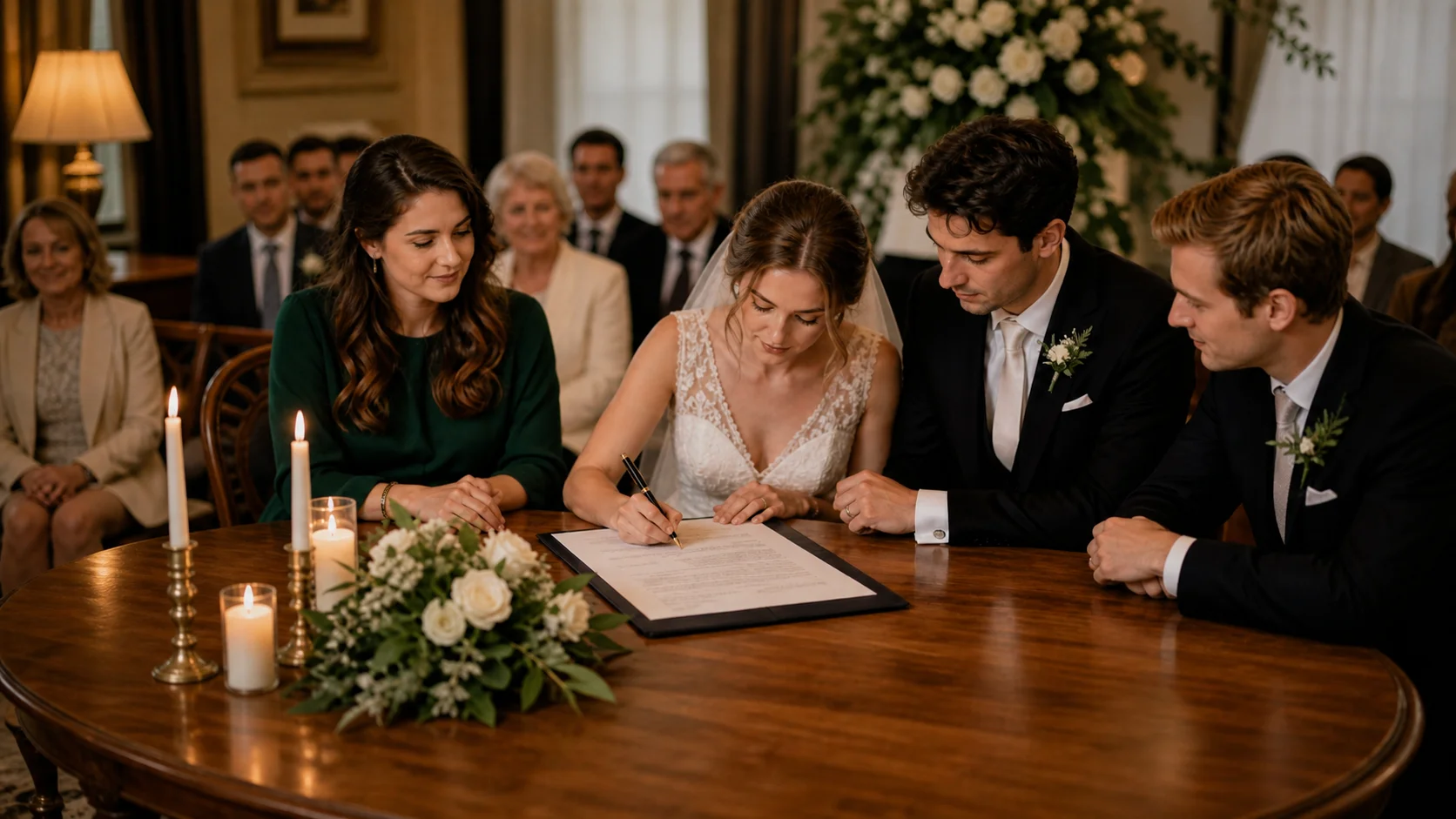
Witnesses and Signatures: The Small Legal Moment Guests Often Misunderstand
The signing moment at a wedding can look like a brief pause, but it carries both legal and symbolic weight. This article looks at witnesses, document requirements, signing tables, visibility, ceremony flow, and how a small official act can quietly become a ritual.

After the Wedding Abroad: A Legal Checklist for What Happens Once the Ceremony Is Over
A wedding may feel complete when the ceremony ends, but legal reality often continues afterward. This checklist helps couples understand what documents, registrations, translations, and confirmations may still matter after a wedding abroad, when the ritual is over but the administrative part has not yet disappeared.
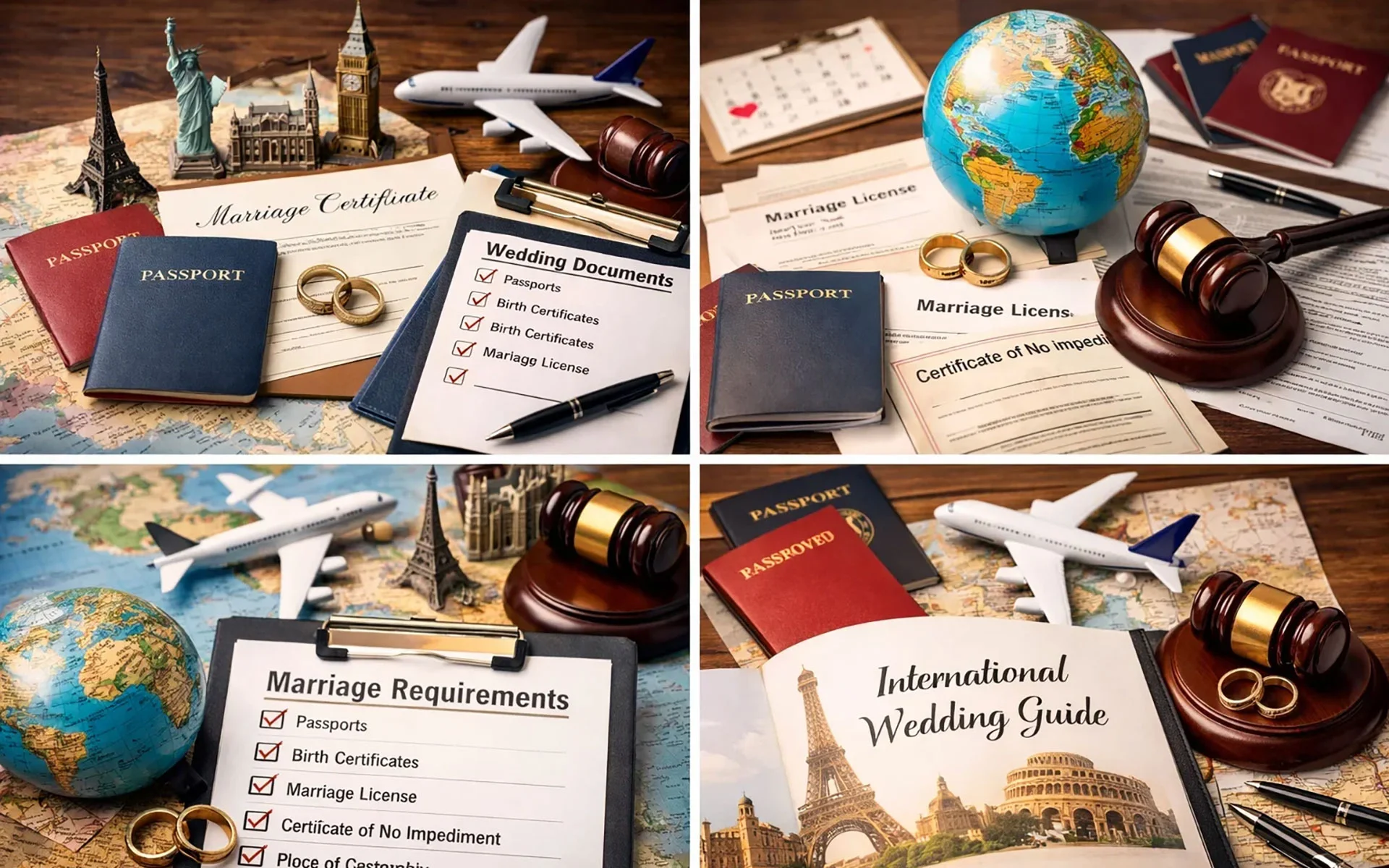
Legal Basics for Weddings Abroad
Getting married in another country involves more paperwork than many expect. Rules differ by location, and details matter. Couples who check requirements early and confirm them locally usually avoid delays and last-minute problems.
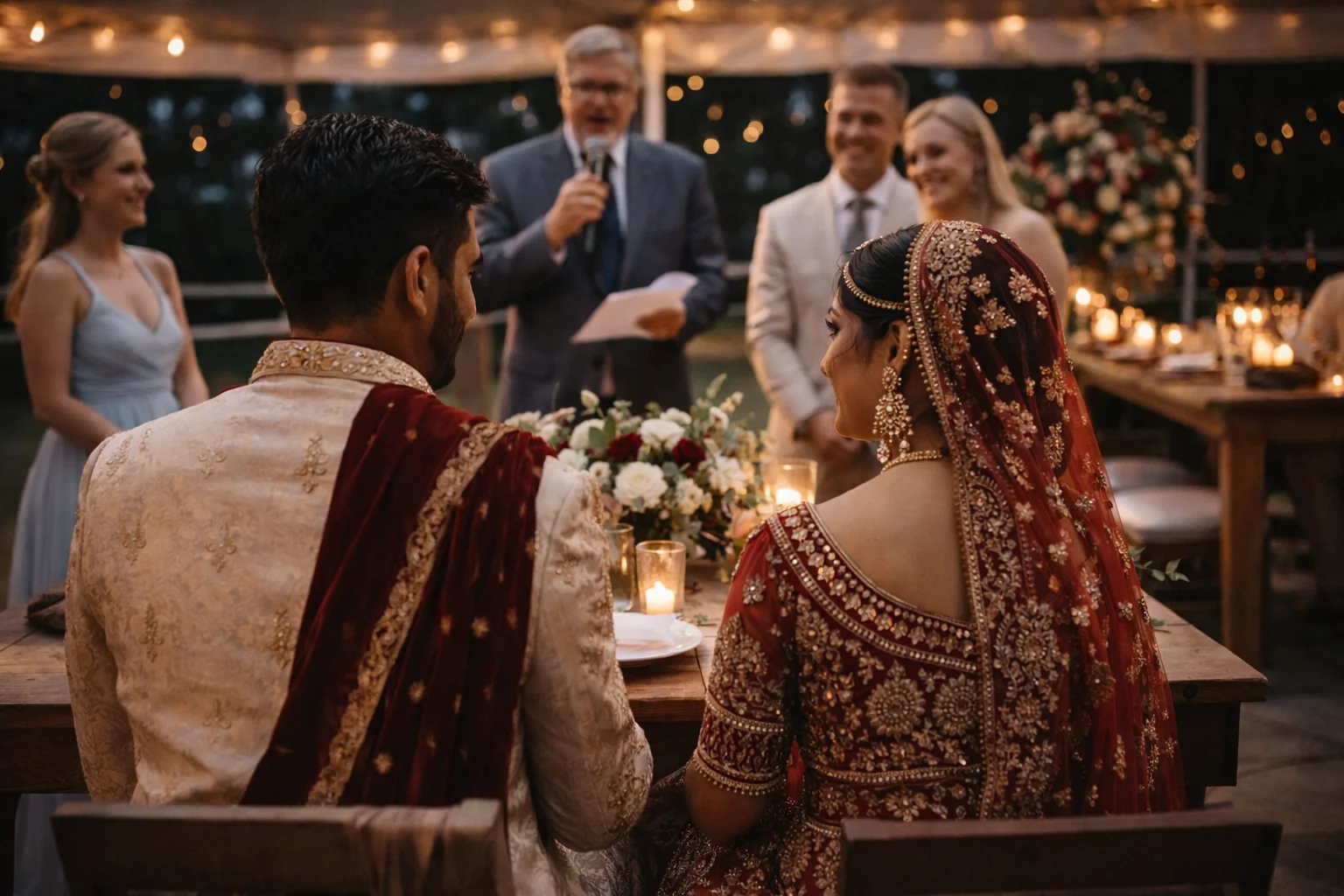
International Weddings and the Meaning of What Is Not Said
An international wedding brings visible complexity, but its deeper challenge often lives in the quiet layer beneath logistics. Between cultures, traditions, and expectations, what remains unspoken can shape the ceremony as much as anything that is formally planned.
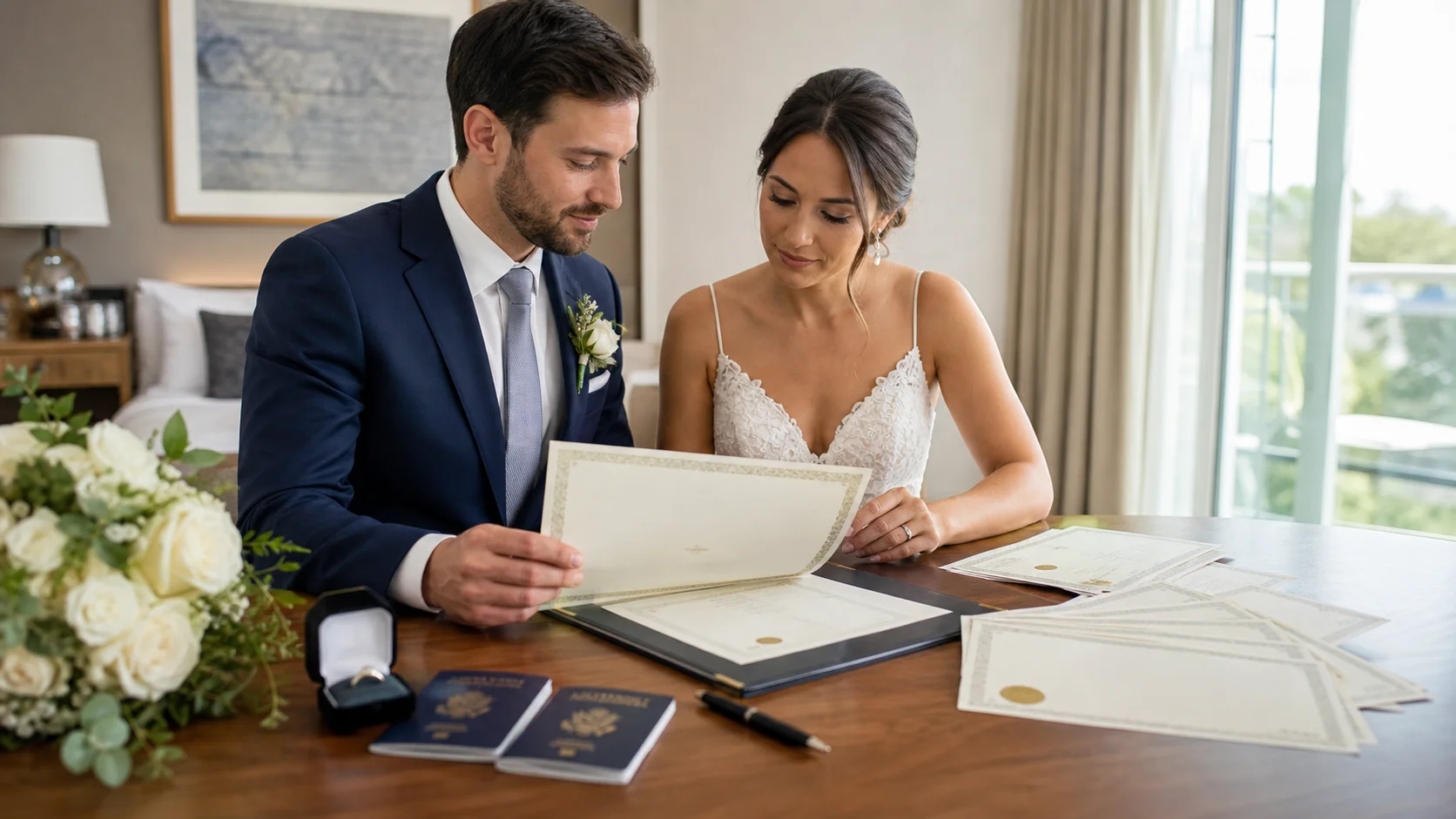
Marriage Certificate Checklist: Why One Document Keeps Returning After the Wedding
A marriage certificate often feels like the final paper of the wedding, but it keeps returning in ordinary life. This article looks at certified copies, scans, translations, apostilles, name changes, travel, banking, insurance, and the quiet imprint one document leaves after the celebration.

Speech Moment Checklist: What Makes a Toast Feel Held, Not Exposed
A wedding toast depends on more than good writing. It lands differently depending on attention, sound, timing, room tone, and the unspoken signals that tell a speaker whether the moment is carrying them or leaving them alone.

Flowers Near Food at Weddings: Buffet and Dessert Table Placement
Flowers sometimes end up close to food. Not always by clear decision. More because the rest of the room is already filled, and these zones remain. Then something gets added there too. It does not look unusual once it is in place.

When Wedding Decoration Says More by Saying Less
In wedding planning, decoration is often discussed in visible terms: florals, candles, tables, color, scale. But the rooms people remember are rarely memorable because they were crowded with ideas. They stay with us because the space knew when to pause. A ceremony arch with air around it, a table that holds only what matters, a doorway left almost bare so that the people moving through it become the focus: these choices do more than decorate. They create emotional direction through wedding decoration that feels considered rather than performed.

Who Pays for What? A Wedding Budget Checklist for Couples and Families
When families help pay for a wedding, money can bring generosity, relief, pressure, or quiet control. This checklist helps couples discuss contributions, boundaries, priorities, and expectations before financial support begins shaping the day in unspoken ways.

Name Change Checklist: What Couples Should Decide Before the Forms Decide It for Them
A name change after marriage is not only paperwork. This article looks at identity, travel, work, family communication, digital names, and the small everyday places where a new or unchanged name starts to matter after the wedding.

DJ, Live Band or Hybrid Concept: Choosing What Truly Fits
Music is one of the earliest wedding decisions and one of the least understood until the day begins to take real shape. The choice between a DJ, a live band, or a hybrid concept is rarely only about taste. It changes timing, movement, conversation, and how the evening is allowed to breathe.