
When Is a Wedding Ritual Meaningful — and When Is It Just Decoration?
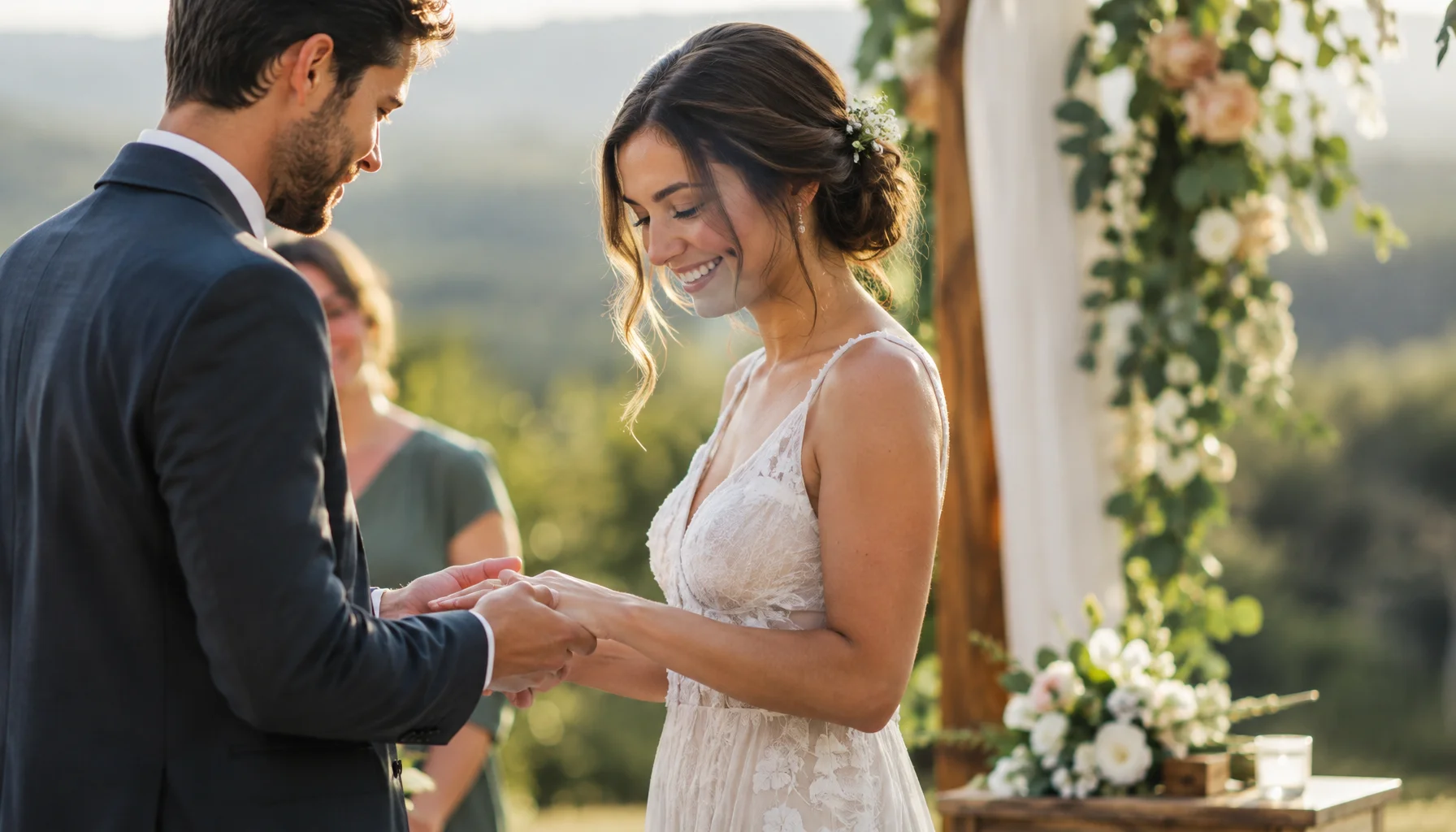
A wedding can contain dozens of symbolic gestures and still feel empty. Another can contain only one or two and feel deeply charged. The difference is not how many rituals are present. It is whether the people performing them know what the act means, whether the action changes anything socially or emotionally, and whether the form is connected to the couple, family or community carrying it.
Meaning is not the same thing as beauty
Wedding culture makes symbolic objects easy to aestheticize. Rings, candles, fabrics, crowns, flowers, cords, glasses, bread, wine, written vows and inherited objects can all become part of the visual language of a ceremony.
But visual appeal does not tell you whether something is functioning as ritual. UNESCO's framework for intangible cultural heritage describes rituals and social practices as activities that are meaningful because they structure community life, reaffirm identity and mark important stages of life. The significance lies in what the practice does for the people involved, not merely in what it looks like.
That distinction is useful for weddings because it explains why two visually identical actions can mean very different things. Lighting a candle can be decorative lighting, a memorial act, a religious symbol, a family ritual or simply a beautiful photograph. The object is the same. The function is not.
The Meaning–Function Test
Before adding a symbolic action to the ceremony, ask five questions. The ritual does not need perfect answers to all of them, but the more clearly you can answer them, the more likely the act is carrying real meaning rather than borrowed appearance.
Five questions that reveal whether a ritual has meaning
| Dimension | Question | Warning sign | |
|---|---|---|---|
| Transition | |||
| Recognition | |||
| Relationship | |||
| Memory | |||
| Consequence |
1. Meaningful rituals mark a transition
Rituals become powerful because they create or mark a boundary. There is a before and an after: unmarried and married, private commitment and public promise, one household and another, one family relationship and a new one.
UNESCO explicitly places wedding rituals among social practices that mark stages of life. This is one reason wedding ritual remains recognizable across very different cultures: the forms vary, but the ceremony is usually doing more than decorating time. It is giving a transition a visible structure.
A ritual that does not mark any transition can still be emotionally valuable. It may be commemorative, expressive or aesthetic. The point is not to devalue it, but to name its function correctly.
2. Meaningful rituals are socially recognized
A purely private symbol can matter deeply to a couple, but wedding ritual is usually social as well as personal. Witnesses, family, religious communities or civil institutions recognize that something has happened.
Recognition does not require every guest to understand every historical detail. It means the action is legible enough that the relevant people know what is being expressed or changed.
This is why a short explanation can sometimes deepen a ceremony. When guests know that an object belonged to a grandparent, that a blessing comes from one family tradition, or that a gesture marks acceptance into another family, the ritual stops looking like unexplained choreography.
3. Meaningful rituals belong to a relationship
Wedding symbolism becomes thin when the symbolic act has no connection to the people performing it. A ritual becomes stronger when it expresses something that already exists or is genuinely being created.
That relationship can be between the couple, between the couple and their families, between the couple and a religious community, between the present and previous generations, or between private intention and public responsibility.
The stronger the connection, the less explanation the ritual usually needs. An inherited object passed from one generation to another may carry more meaning for a family than an elaborate imported ritual they discovered two weeks before the wedding.
4. Meaningful rituals create memory anchors
Ritual compresses meaning into an action that can be remembered later. The ring, the shared cup, the handfasting cord, the blessing, the family object or the public vow can become a reference point long after the details of the day fade.
UNESCO's description of living heritage emphasizes continuity and transmission between generations. That idea is useful even outside formal heritage contexts: rituals persist because people remember not only the object or movement, but what it meant when it was enacted.
A good planning question is therefore: if someone tells the story of this wedding in ten years, what will this ritual help them remember?
5. Meaningful rituals point beyond the ceremony
The deepest wedding symbols do not end when the ceremony ends. Vows imply future behavior. Rings remain on the body. Family blessings can change expectations. A public promise changes how other people understand the relationship.
That does not mean every symbol creates a legal or social obligation. It means a meaningful ritual usually has some consequence beyond the visual moment. It asks the couple, family or community to remember, recognize or live differently afterward.
Decoration can still be valuable
Calling something decorative is not an insult. Weddings need atmosphere, beauty and sensory memory. Candles, flowers, textiles, color, music and lighting can make the ceremony feel intentional even when they do not carry ritual meaning.
The problem begins when decoration is presented as inherited meaning that it does not actually carry. A visually borrowed cultural gesture may look impressive while leaving the couple, family and guests disconnected from what it once meant.
Keeping the distinction clear gives couples more freedom, not less. You can say: this is a ritual we inherited; this is a personal symbol we created; this is simply beautiful and we want it there. All three can coexist honestly.
A practical spectrum: from styling to ritual
| Level | What it does | Example type |
|---|---|---|
| Styling | Creates atmosphere or visual coherence | Candles chosen for mood, floral installation, color story |
| Personal symbol | Represents something meaningful to the couple but has no wider inherited structure | Two objects combined to represent shared life |
| Family ritual | Carries meaning recognized within a family or lineage | Inherited object passed, family blessing, repeated family custom |
| Community tradition | Carries shared cultural meaning beyond the individual couple | Recognized wedding custom within a community |
| Religious / formal rite | Carries structured theological, communal or legal meaning | Ritual performed under the authority and rules of a faith or institution |
How to turn a decorative idea into a meaningful personal ritual
Couples do not need inherited tradition to create meaning. A new ritual can be completely personal and still function as ritual if it is connected to a real transition, relationship and future memory.
Build meaning before choreography
When symbolism becomes performance
Performance is not automatically false. All public ritual has a performative dimension: people stand in specific places, repeat words, wear formal clothing and act before witnesses.
The problem is when the audience becomes more important than the act. If a ritual is chosen primarily because it will look impressive in photographs, impress guests or signal cultural depth that the couple has not actually engaged with, the symbolic form can become detached from meaning.
Loving Rocks already treats this distinction as central to intercultural weddings: cultural visibility becomes stronger when symbols are lived and understood rather than accumulated for display.
A meaning audit for ceremony planning
| Question | Strong answer | Weak answer |
|---|---|---|
| Why are we doing this? | It marks or expresses a specific transition, promise or relationship | Because weddings usually have one |
| Who does it belong to? | We can name the people, family, community or personal story connected to it | We found it online |
| What would be lost if we removed it? | A specific meaning or relationship would disappear | Mostly a photo opportunity |
| Will anyone understand it? | The relevant people recognize it or can understand it with brief context | Nobody knows what it means |
| What happens after it? | The object, promise, memory or relationship continues | Nothing beyond the moment |
| Are we allowed to adapt it? | We understand who carries the tradition and what normally varies | We assume public visibility means unrestricted use |
How this connects to changing a tradition
Meaning also helps answer a harder question: how much of an inherited ritual can change before it becomes something else? The answer is easier to see when you know which part carries the function.
If the form changes but the transition, core act, participants and recognized meaning remain, the ritual may still be a living variation. If only the visual shell remains, you may have created a new symbolic ceremony inspired by the original.
What would change this answer?
The threshold for meaning changes by context. A private elopement may rely almost entirely on meaning shared between two people. A religious wedding may depend much more heavily on community-recognized form and authorized participants.
The answer also changes over time. A personal ritual created by one couple can become a family tradition if children or later generations repeat it and attach shared meaning to it. Meaning can accumulate through repetition.
Conversely, an old tradition can lose personal meaning for a specific couple while remaining important to their family or community. That tension is real and cannot be solved by pretending that inherited meaning and personal meaning are always identical.
Limitations
No external framework can determine whether a symbol is emotionally meaningful to a couple. Personal meaning is not measurable from outside.
The Meaning–Function Test is therefore designed to clarify structure, not to rank rituals as authentic or inauthentic. Religious, cultural and family traditions should still be interpreted with the people who actually carry them.
Conclusion
A meaningful wedding ritual does not need to be old, elaborate or culturally famous. It needs to do something that matters.
Ask what changes, who recognizes it, what relationship the act expresses, what it will help people remember and what remains afterward. If those answers are clear, even a very simple gesture can hold real weight. If they are not, the gesture may still be beautiful — and it is perfectly acceptable to let beauty be beauty without forcing it to carry a meaning it does not have.
FAQ
Meaningful wedding rituals
What makes a wedding ritual meaningful?
Can we create our own wedding ritual?
Is a wedding ritual meaningless if guests do not understand it?
What is the difference between symbolism and decoration?
Can a decorative wedding idea become a family tradition?
Glossary
Key ritual and symbolism terms
- Ritual function
- The social, symbolic, religious or relational work a ritual performs, such as marking a transition, witnessing a promise or establishing a new relationship.
- Symbolic action
- An action that communicates meaning beyond its literal physical effect.
- Recognition
- The degree to which the relevant couple, family, community or institution understands and acknowledges what the ritual expresses.
- Memory anchor
- An object, gesture, phrase or repeated practice that helps preserve and reactivate the meaning of a significant event.
- Meaning–Function Test
- A practical planning method that evaluates transition, recognition, relationship, memory and consequence to distinguish ritual meaning from visual styling.
Sources and further reading
UNESCO — Social Practices, Rituals and Festive EventsExplains that rituals structure community life, reaffirm identity, mark stages of life and derive significance from their social meaning and practice.
UNESCO — Frequently Asked Questions on Living HeritageExplains that the importance of living heritage lies in the knowledge, skills and meaning it carries for the people involved, not only in the visible cultural manifestation.
UNESCO — Transmission of Intangible Cultural HeritageDescribes living heritage as continuously recreated and emphasizes transmission of the knowledge and skills needed to enact it.
Loving Rocks — Wedding Symbolism & MeaningEditorial foundation on why wedding symbols make commitment, memory and public meaning visible through repeated forms.
Loving Rocks — Wedding RitualsThe portal's core pillar on wedding ritual as the point where private commitment meets public tradition and symbolic structure.
Related Articles
How the Groom Stands Out Among the Groomsmen
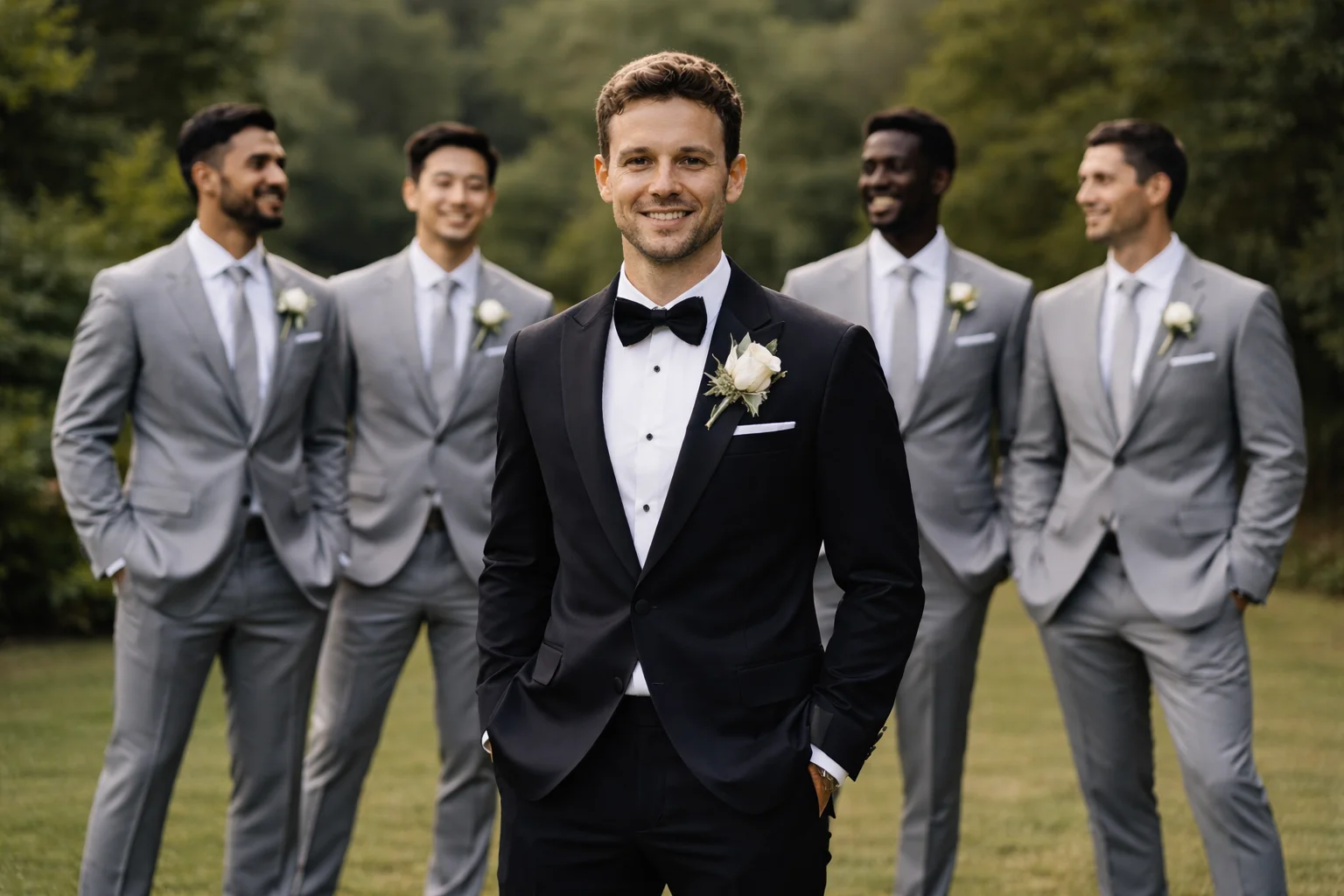
When several men stand together at a wedding the clothing often looks almost identical at first. Same color range, similar jackets, same shoes in many cases. The group reads as one block. This is not accidental. Wedding styling usually leans toward visual unity for the wedding party.
The Maid of Honor at the Wedding
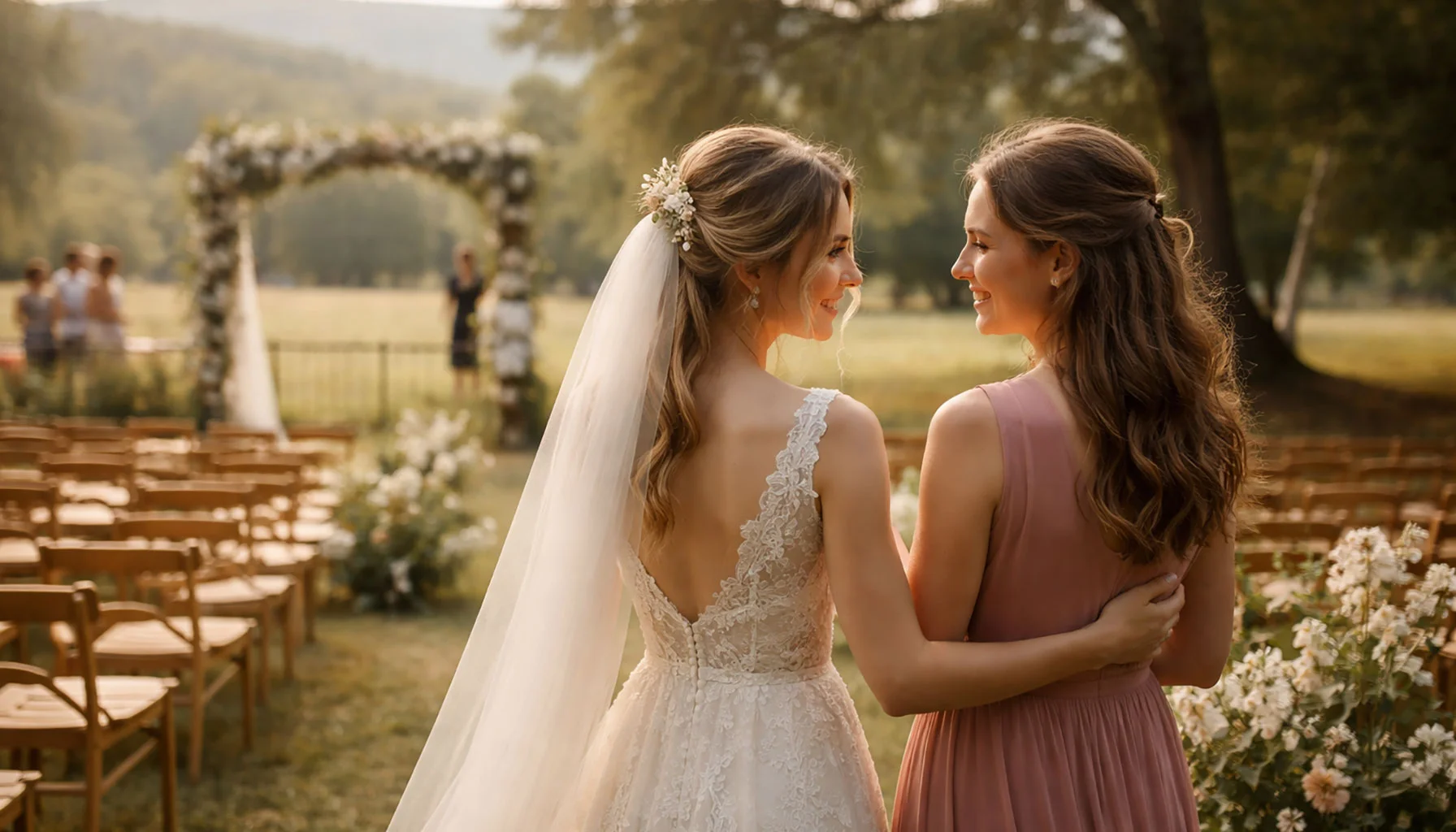
How bridesmaids are chosen, what tasks they perform, and why their presence often remains quiet. A text from observations of weddings, conversations, and moments away from the center.
The Art of Groom’s Style – Timeless Elegance, Modern Trends & Personal Expression for an Unforgettable Wedding Day
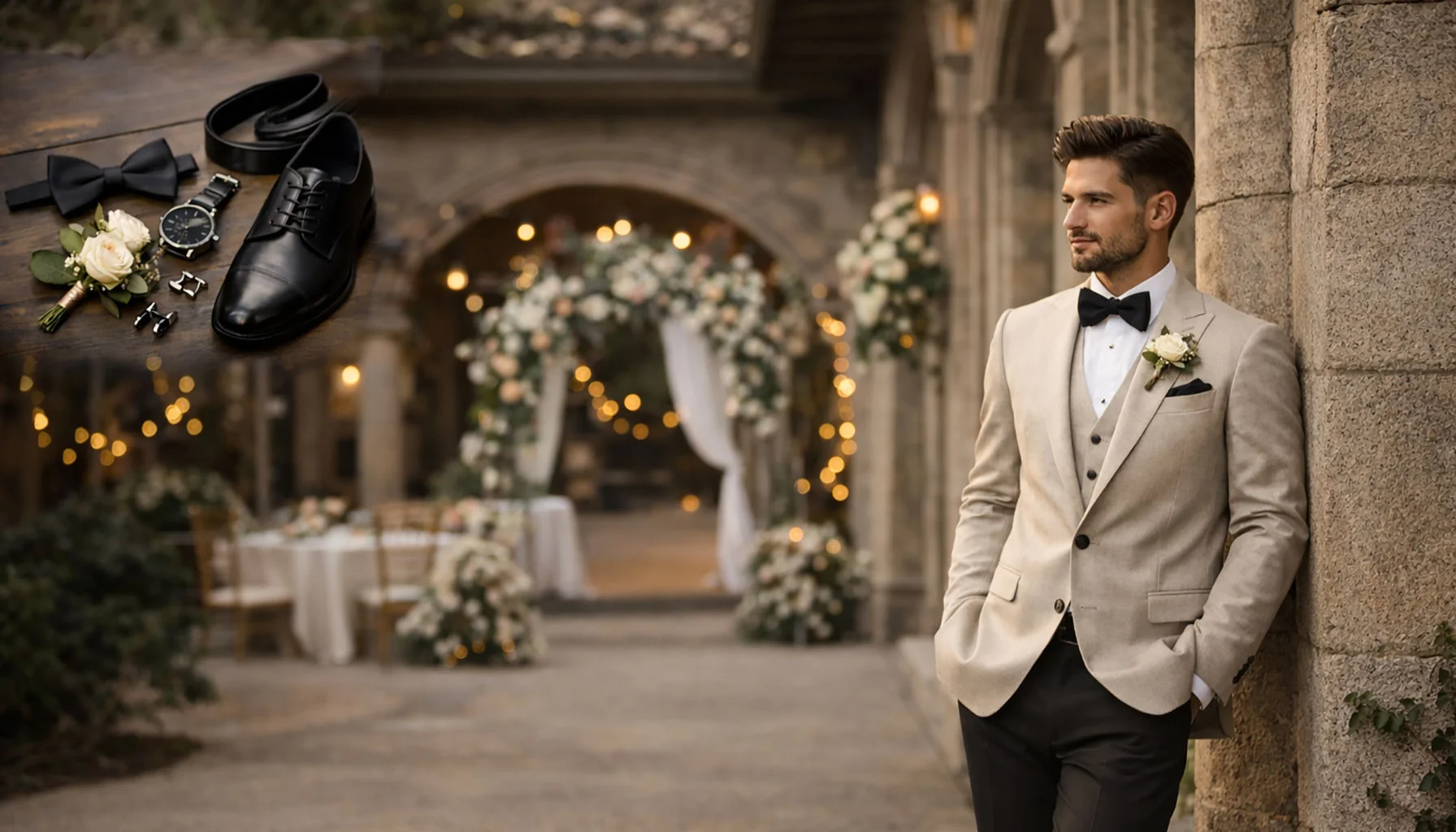
Groom’s style has become a stable part of modern wedding design. It no longer follows a fixed formula, yet it also avoids constant reinvention. This article looks at groom style as a form of visual presence shaped by fit, material, context, and the ritual structure of the wedding day.
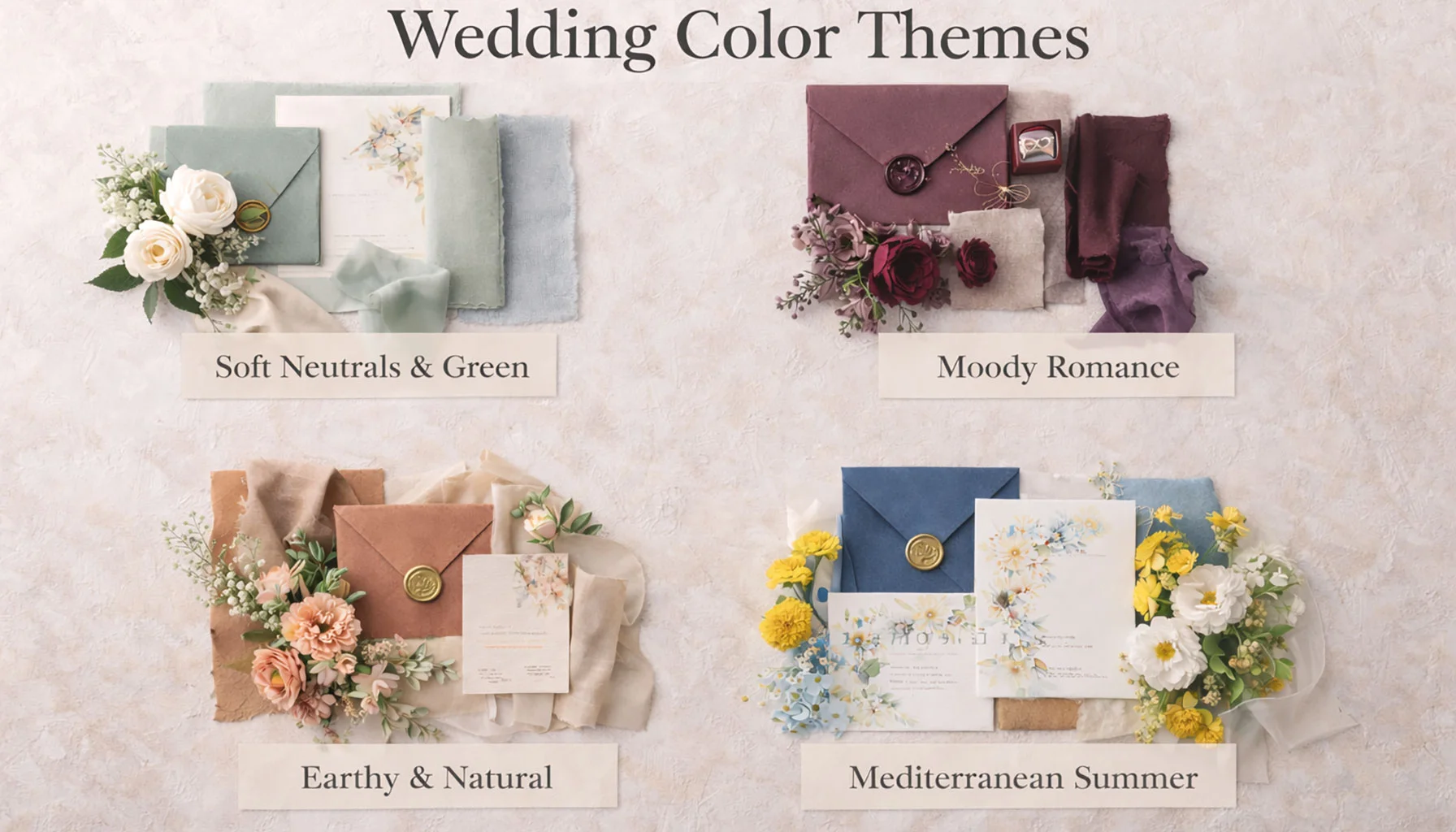
Color Palettes That Hold the Day Together
Color at a wedding is often felt before it is noticed. It settles rooms, links moments, and makes different elements seem as though they belong to one another without needing explanation. This article looks at wedding color not as decoration alone, but as a quiet symbolic structure that helps the day feel coherent.
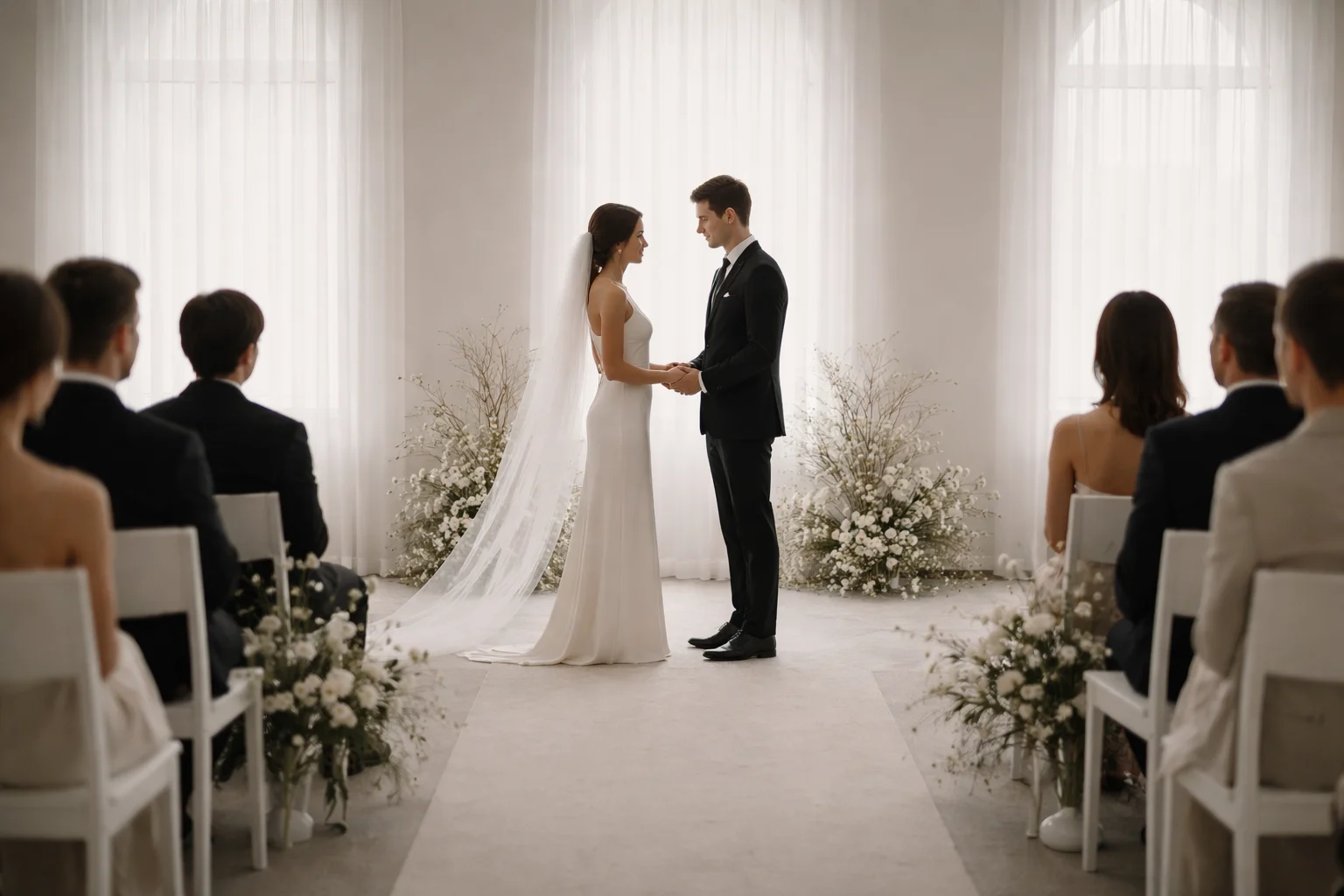
When Less Makes the Ceremony Clearer
Minimal weddings are often described as a reduction. Fewer elements, fewer decisions, fewer visible layers. Tables are cleared, colors are restrained, schedules are simplified. What remains can feel almost quiet in comparison to more elaborate celebrations.
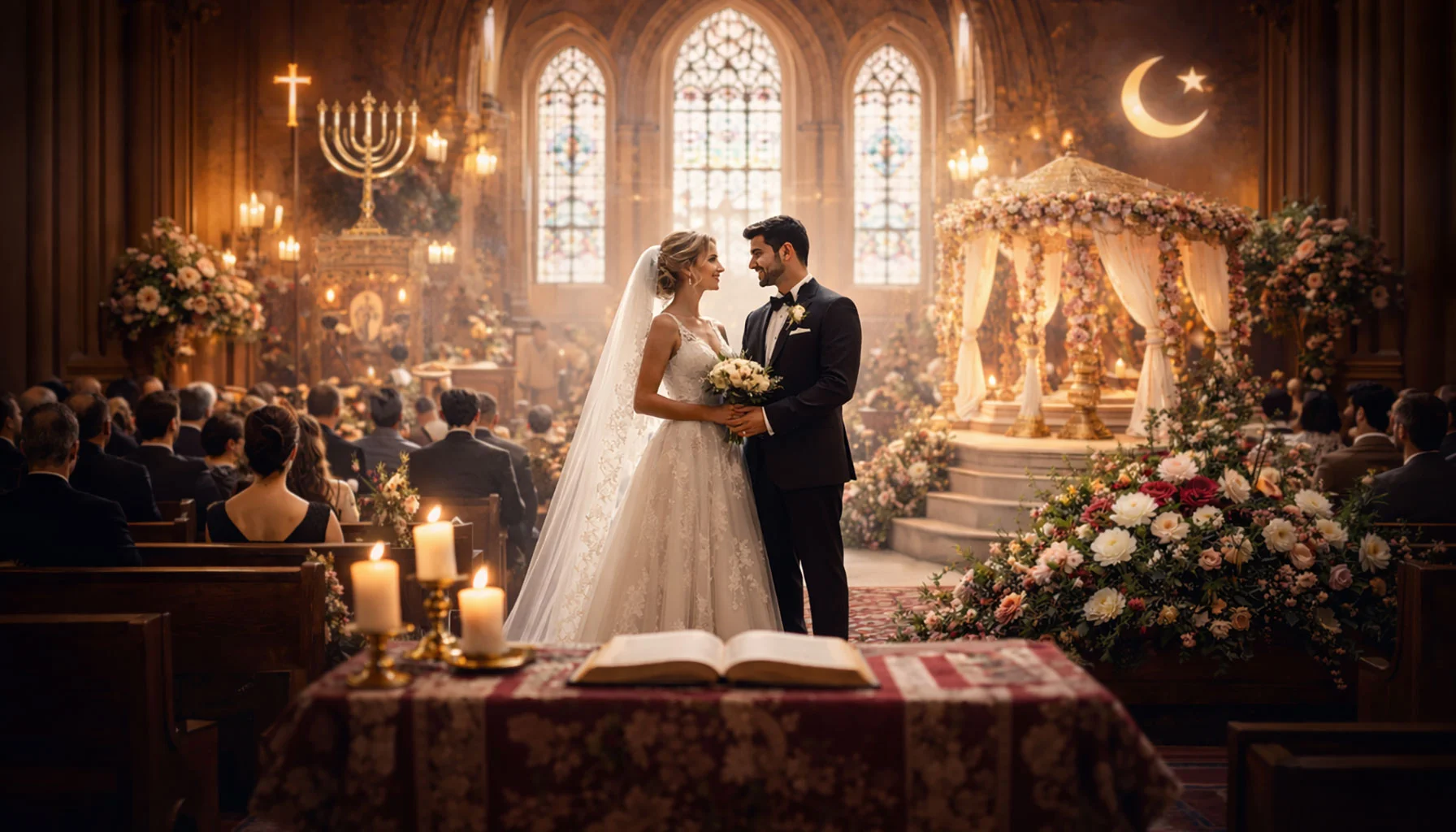
Religious Wedding Ceremonies: A Practical Overview
Religious wedding ceremonies are rarely designed around individual expression. They are shaped by inherited forms, religious authority, and symbolic acts that carry meaning through repetition. This article offers a practical overview of religious wedding ceremonies across countries and traditions while placing them within the wider logic of wedding rituals.
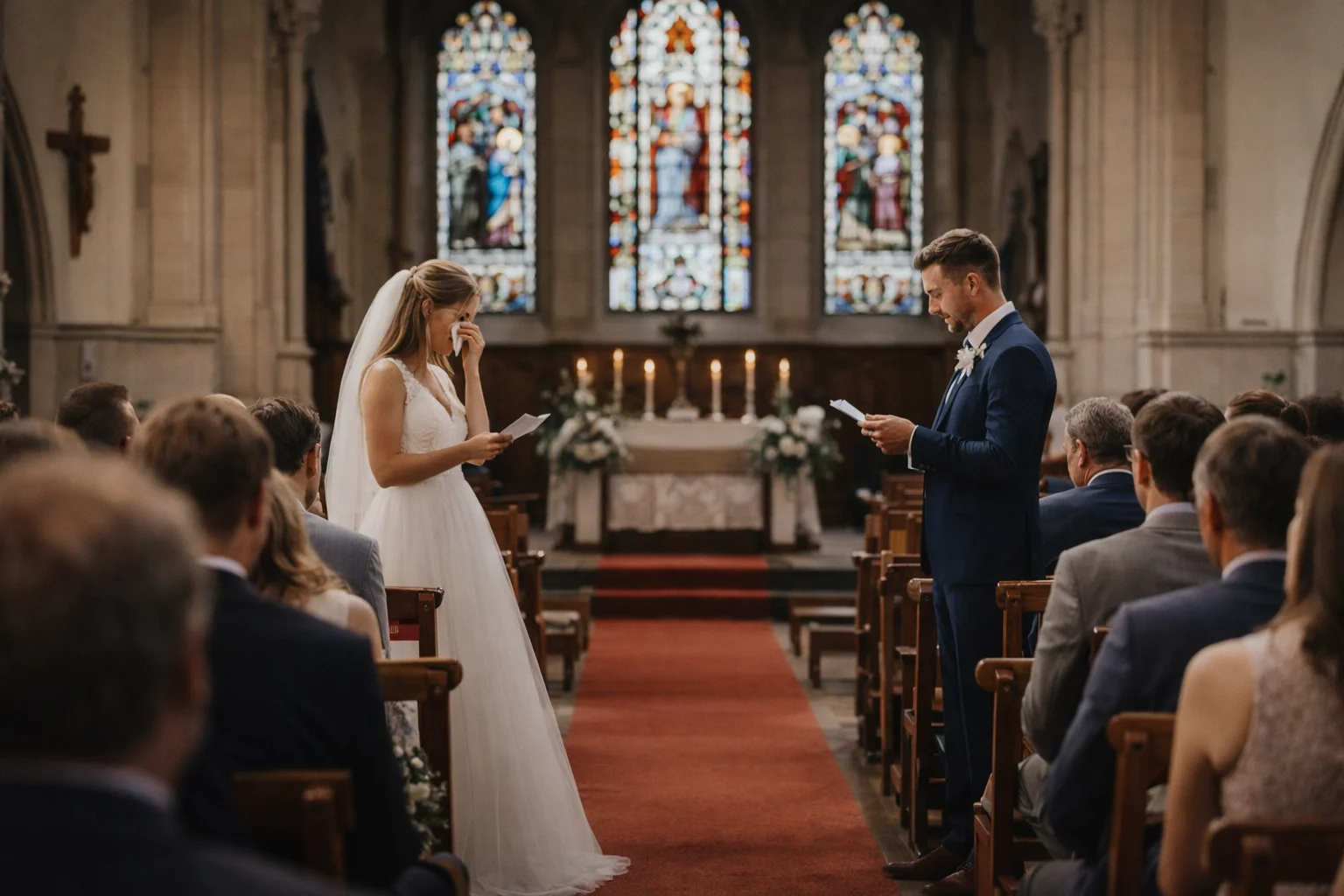
What Wedding Guests Actually Hear When Vows Are Spoken
Wedding vows are rarely received exactly as they are written. Guests hear emotion, rhythm, hesitation, clarity, imbalance, and the symbolic weight of what is being said aloud. This article looks at how vows sound in the room, what happens when the voice breaks, why shorter vows often feel stronger, and how spoken vows become more than text.
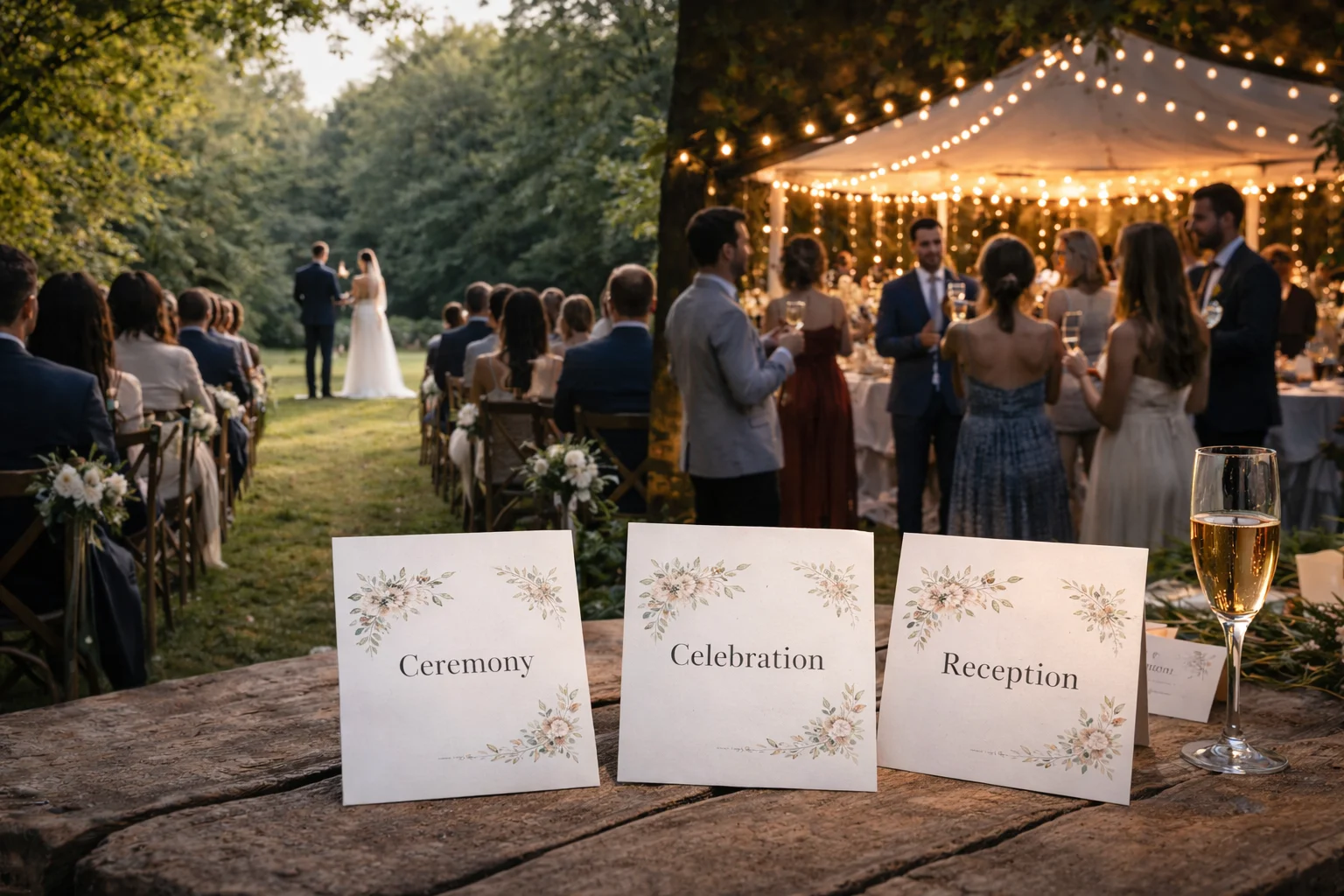
Who Is Invited to the Ceremony and Who Only to the Celebration
Not every wedding invitation has to include every part of the day. But the difference between being invited to the ceremony and being invited only to the celebration carries more meaning than many couples first assume. This article looks at how to make that distinction clearly, gracefully, and in a way that fits both the ritual weight of the ceremony and the social reality of the celebration.