
The Maid of Honor at the Wedding
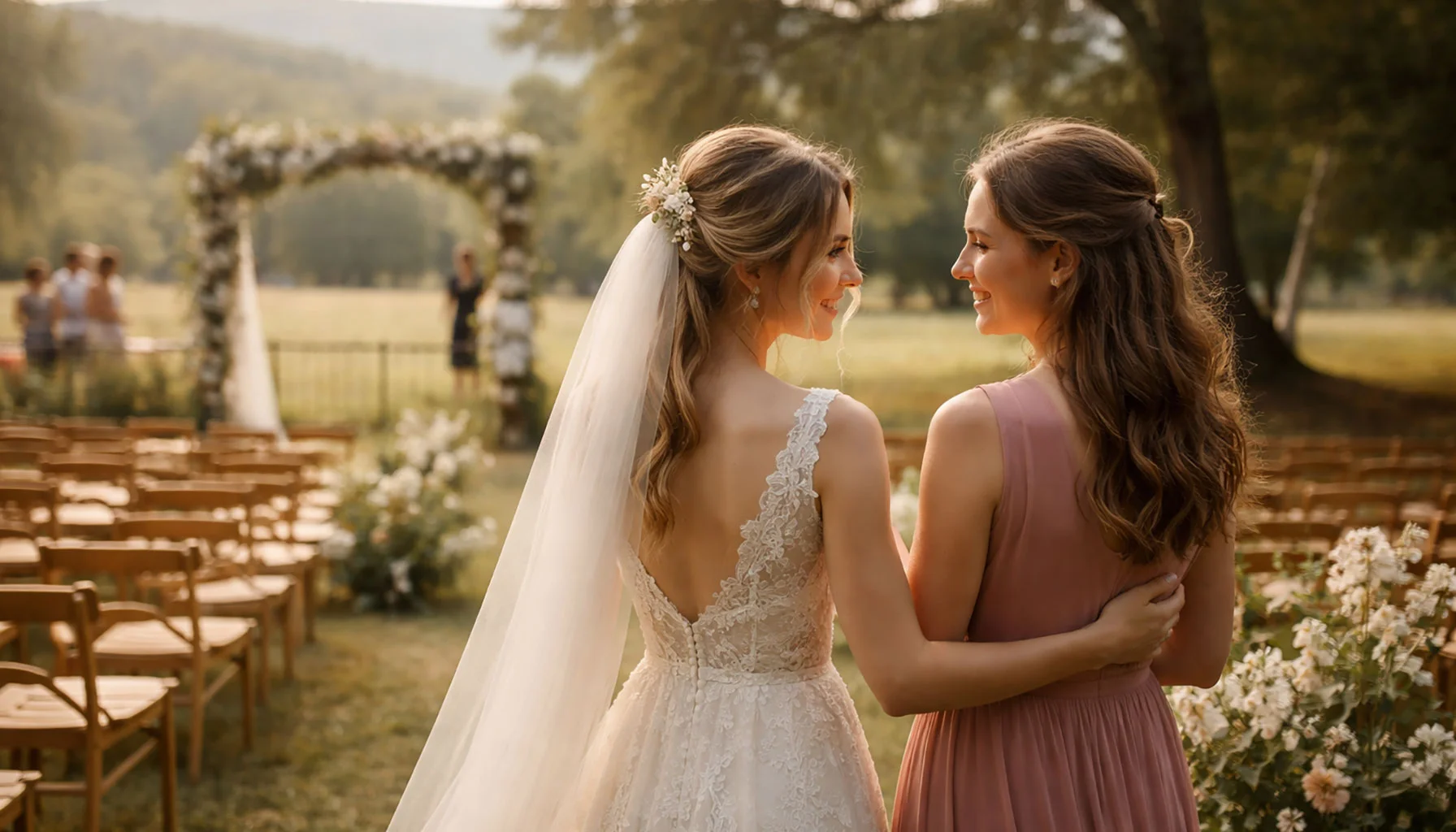
The maid of honor is rarely an agenda item. She belongs to a relationship that has grown over time. Her choice, her tasks, and her closeness to the bride do not begin with the wedding itself. They usually exist long before it. What becomes visible on the wedding day is only the outer form of something that has already proven stable.
This role belongs naturally to both Bride and Wedding Rituals. In practice, the maid of honor is not only part of the bride's visual and emotional environment, but also part of the ritual structure of the day. She helps transitions happen smoothly, often without being named as the reason. Her contribution is often quiet, but it holds more than many notice at first.
Bride – CategoryPersonal style and emotion come together in the overall appearance of the bride. From the wedding dress and accessories to hair and makeup, every detail contributes to a look that feels authentic and confident. A thoughtfully chosen bridal look reflects personality, complements the wedding style, and makes the bride feel truly herself on this special day.
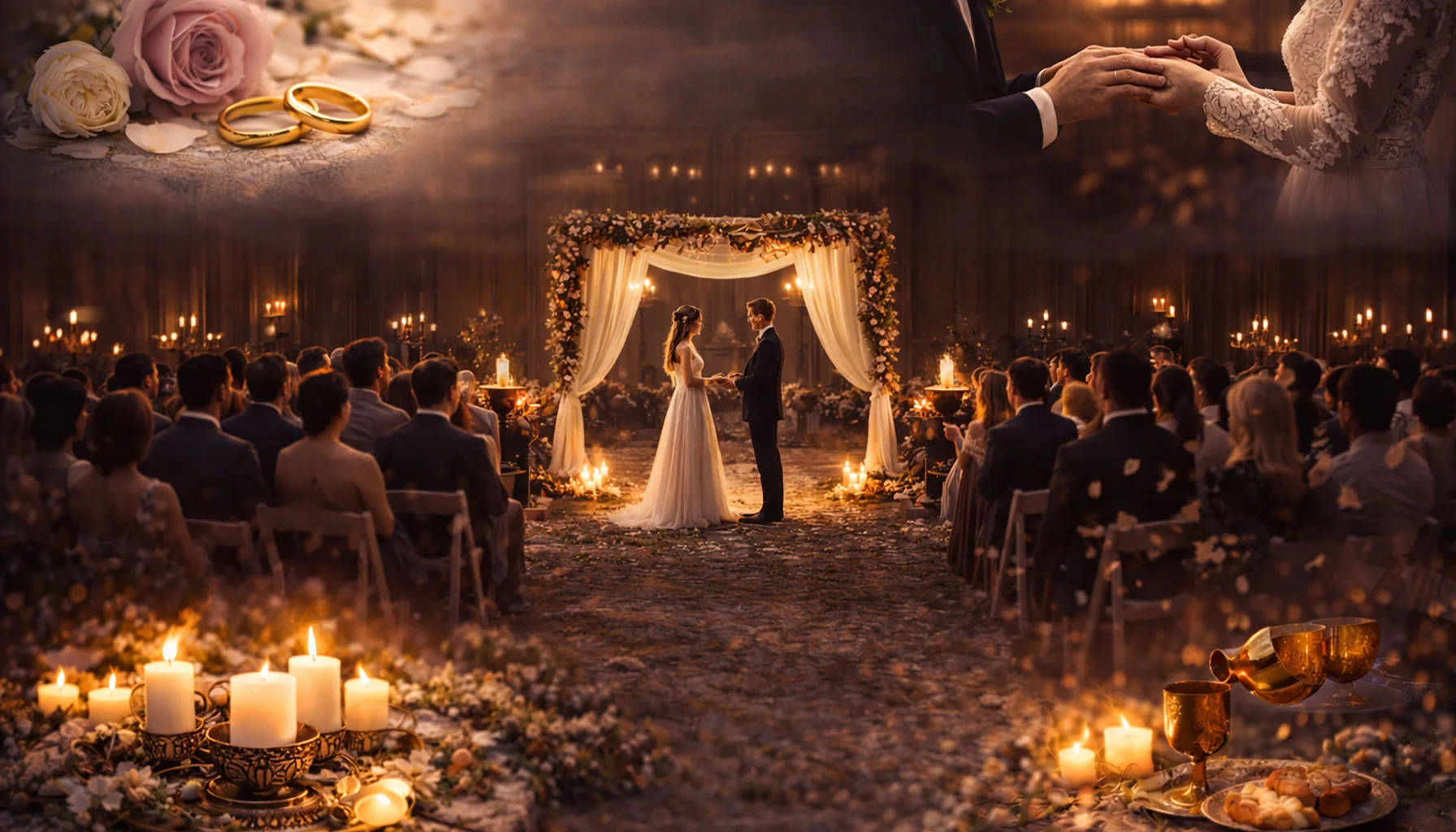
Wedding rituals are where private commitment meets public tradition. Symbols, gestures, and ceremonies attempt to hold what love alone cannot carry by itself.
Maids of honor are not an agenda item, but part of a grown relationship. Their choice, their tasks, and their closeness to the bride develop over time. This text collects observations from weddings, conversations, and moments on the sidelines. Without instructions. Without an ideal image.
Choosing the Maid of Honor
The choice of the maid of honor rarely follows formal criteria. It arises from time spent together. School years, transitions, breaks. Often, it is the person who has stayed, even when life plans have changed. Closeness is not shown in frequency, but in reliability. In many cases, the decision is made early, long before the date and location of the wedding. It is not extensively explained. It seems self-evident.
This is often what makes the role feel different from a task distribution. The maid of honor is not selected because a wedding requires one. She is selected because the relationship already carries a certain kind of trust.
Tasks
The tasks of the maid of honor are known, but their scope varies. Organizing appointments. Accompanying the bride to fittings. Coordinating small processes. On the wedding day itself, presence without being the center of attention. Many tasks are invisible. Recalling times. Calming when processes falter. Passing on information so that the bride remains unburdened.
What matters in practice is often less the visible planning and more the reduction of friction. The maid of honor becomes the person through whom uncertainty is quietly filtered away before it reaches the bride.
By the Bride's Side
By the bride's side, the true role reveals itself. Less through action, more through attitude. The maid of honor knows boundaries. She knows when closeness is needed and when distance. During the celebration, she is both an observer and a support. She intervenes without drawing attention. Her presence is rarely commented on, but noticed.
This is one of the quieter parts of the role. Not constant visibility, but availability. Not control, but steadiness. The best maids of honor often seem unforced because they do not try to perform the role. They inhabit it.
The Story of the Choice
The story of how a maid of honor is chosen is often quiet. No formal moment. Sometimes a casual remark. Sometimes a shared laugh over old memories. In retrospect, the choice seems logical. It is explained by shared experiences. By trust that does not need to be re-established.
That quietness matters. It shows that the role is usually less about announcement than recognition. The relationship already knows what the wedding will later confirm in visible form.
What the Role Quietly Holds
In many weddings, the maid of honor carries a part of the emotional structure of the day. She often knows family tensions, the bride's rhythm, what kind of reassurance helps, and what kind of intervention would only create more pressure. Because of this, the role often extends beyond organization. It becomes a way of protecting the bride's attention.
This is why the role belongs so clearly within wedding rituals. Rituals do not only depend on what happens in the center. They also depend on the people at the edge who help hold the form together.
Voices from Weddings
She was just there. Always. That she would be my maid of honor was not a decision, but rather a knowing.— Bride, civil ceremony
I did not have to explain anything. She knew what to do. And what not to do.— Bride, free ceremony
Her calmness helped the most. Not the planning.— Bride, church wedding
Concluding Observation
The maid of honor is rarely remembered for a single visible action. More often, she is remembered for how the day felt while she was there. Steady. Clear. Less difficult than it might have been otherwise. That is why the role matters. Not because it needs to be emphasized, but because it often holds the bride's world together without asking to be seen doing so.
Related Articles
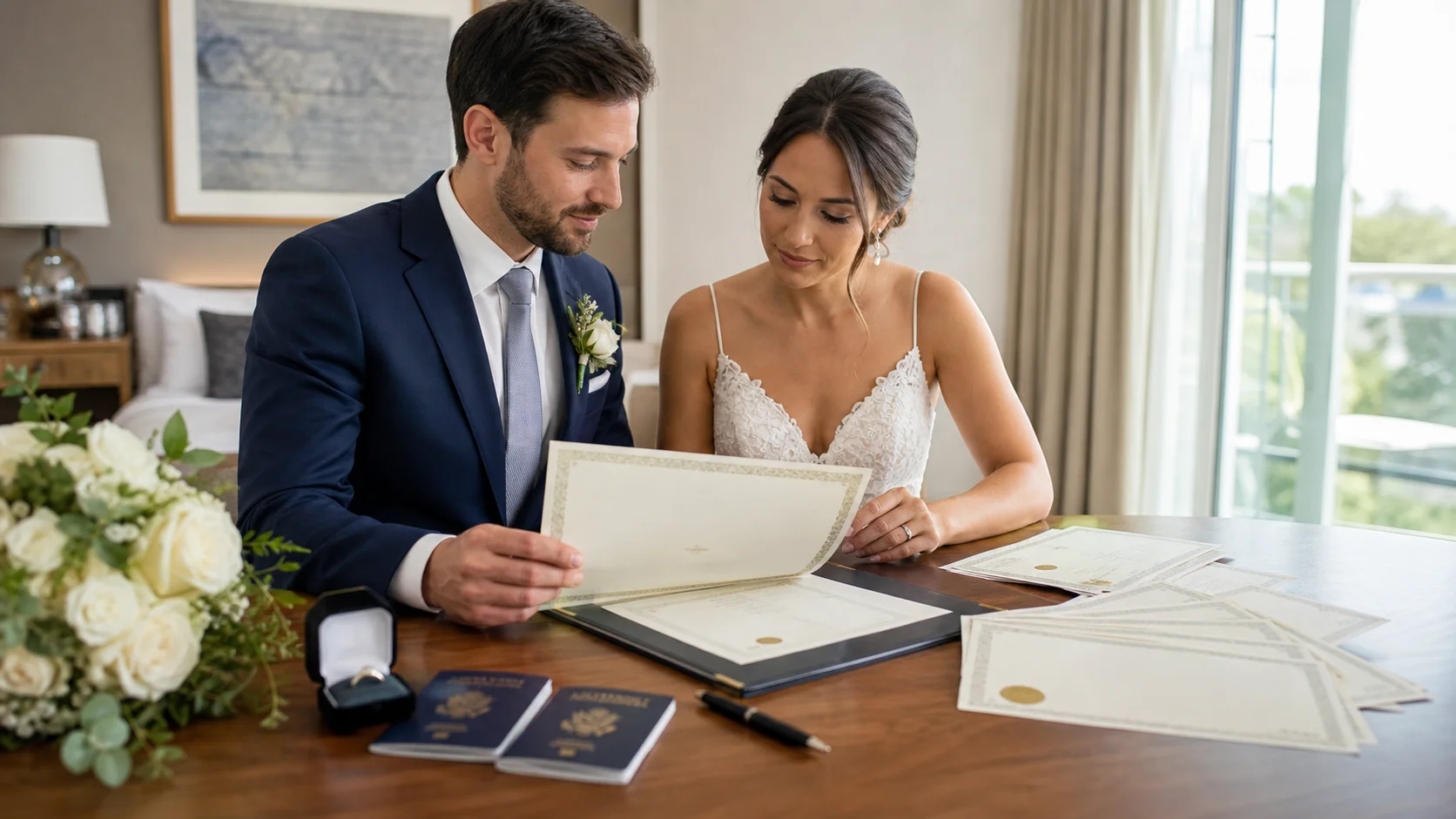
Marriage Certificate Checklist: Why One Document Keeps Returning After the Wedding
A marriage certificate often feels like the final paper of the wedding, but it keeps returning in ordinary life. This article looks at certified copies, scans, translations, apostilles, name changes, travel, banking, insurance, and the quiet imprint one document leaves after the celebration.
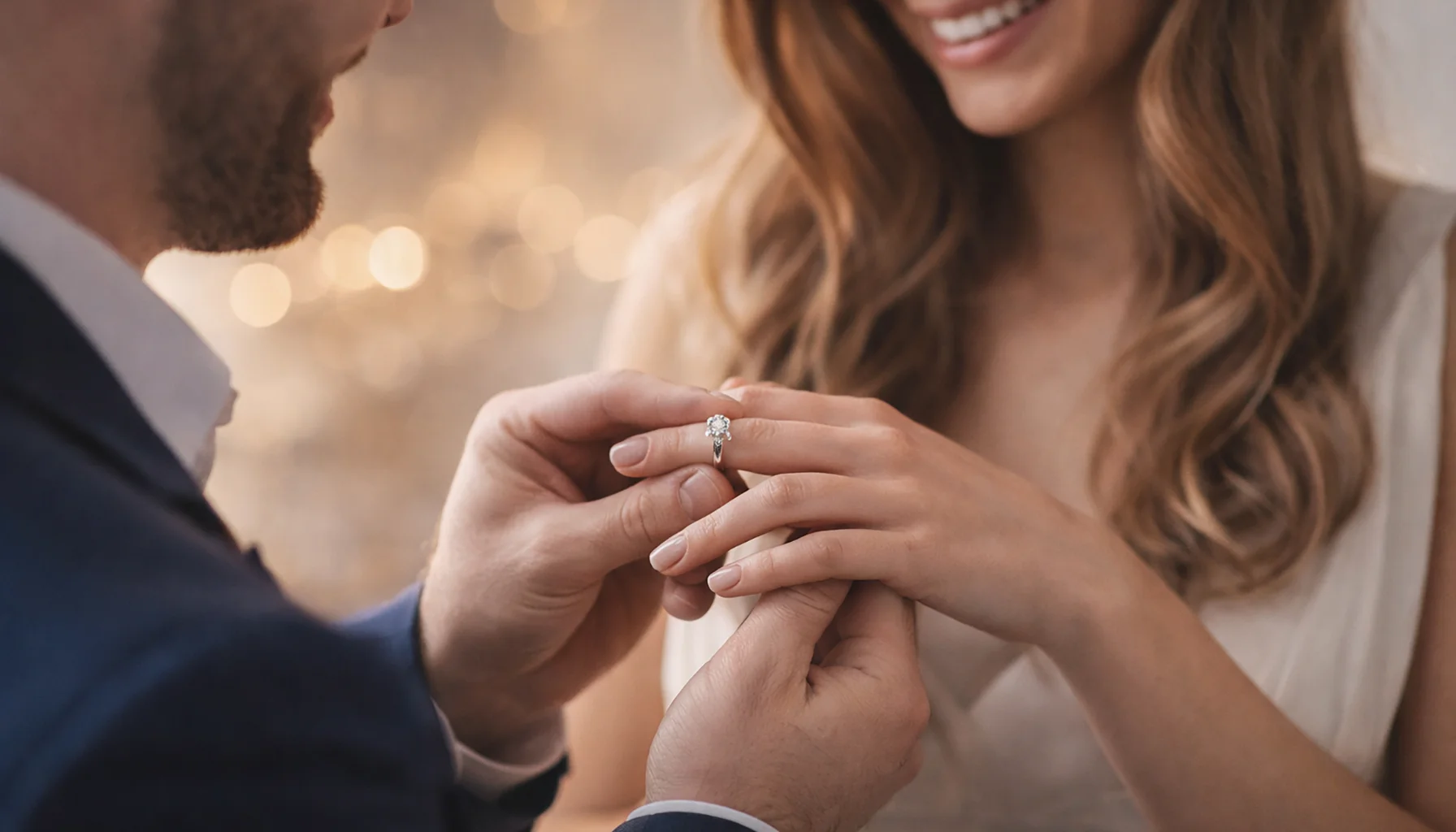
Engagement Ring and Wedding Ring: Two Moments, One Commitment
Engagement ring and wedding ring mark different stages of the same decision. One appears at the beginning, often tied to a single moment. The other enters daily life and stays there. Their forms, materials, and proportions follow different needs, yet they are meant to exist together. Understanding how they differ helps explain why both matter, and why their combination often says more than either ring alone.
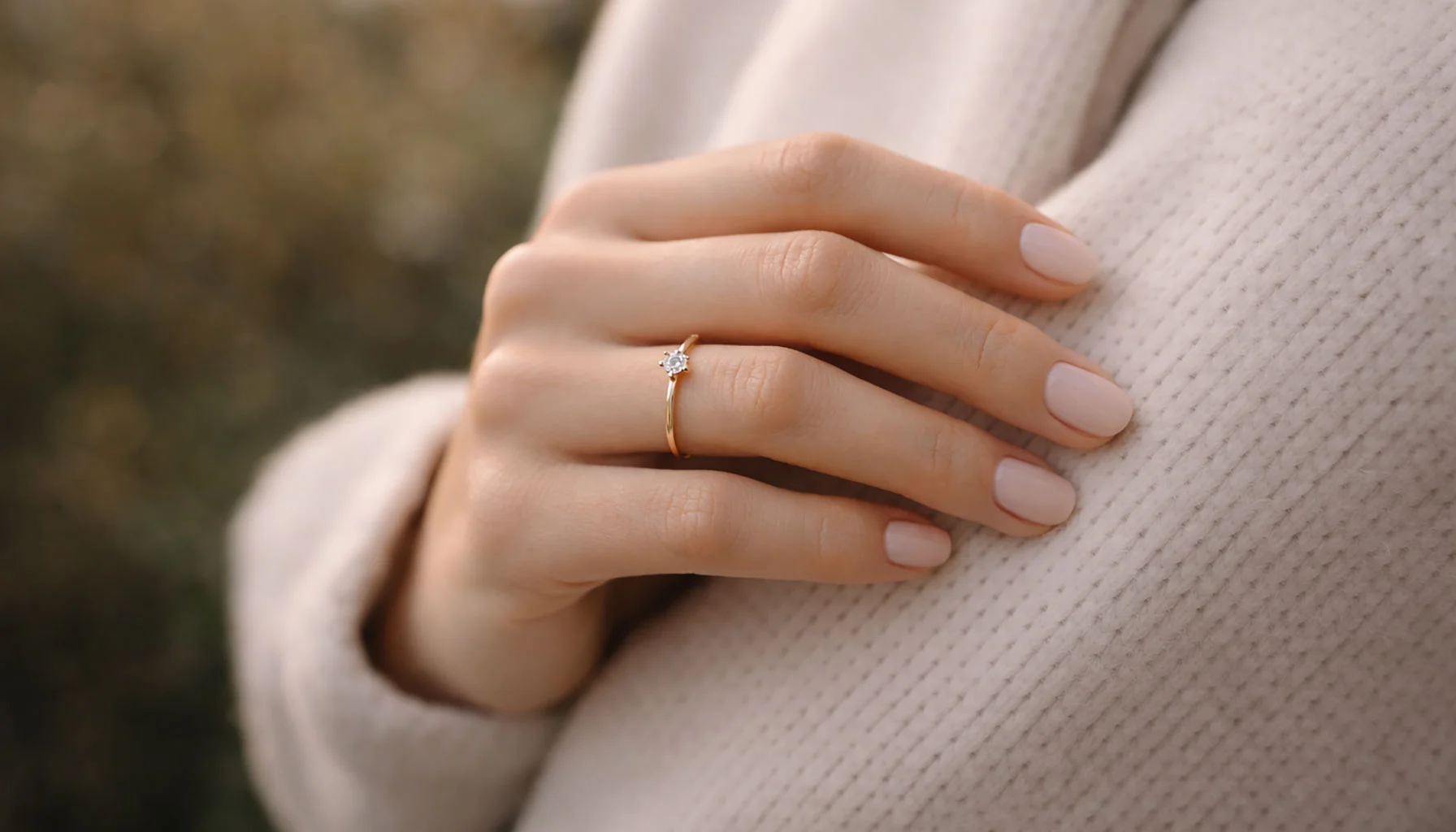
The engagement ring as a sign of a decision
The engagement ring stands on the edge of a big moment and remains present for a long time afterwards. It is part of everyday life, not just a memory of a proposal. This text describes what makes an engagement ring, how it is selected, and why decisions regarding shape, material, ring size, and wearing style mostly arise from observation. It is about common variants, the handling of diamonds and alternatives, as well as developments that have quietly established themselves. In the foreground are experiences, voices from practice, and the question of how a ring fits a person without defining them.
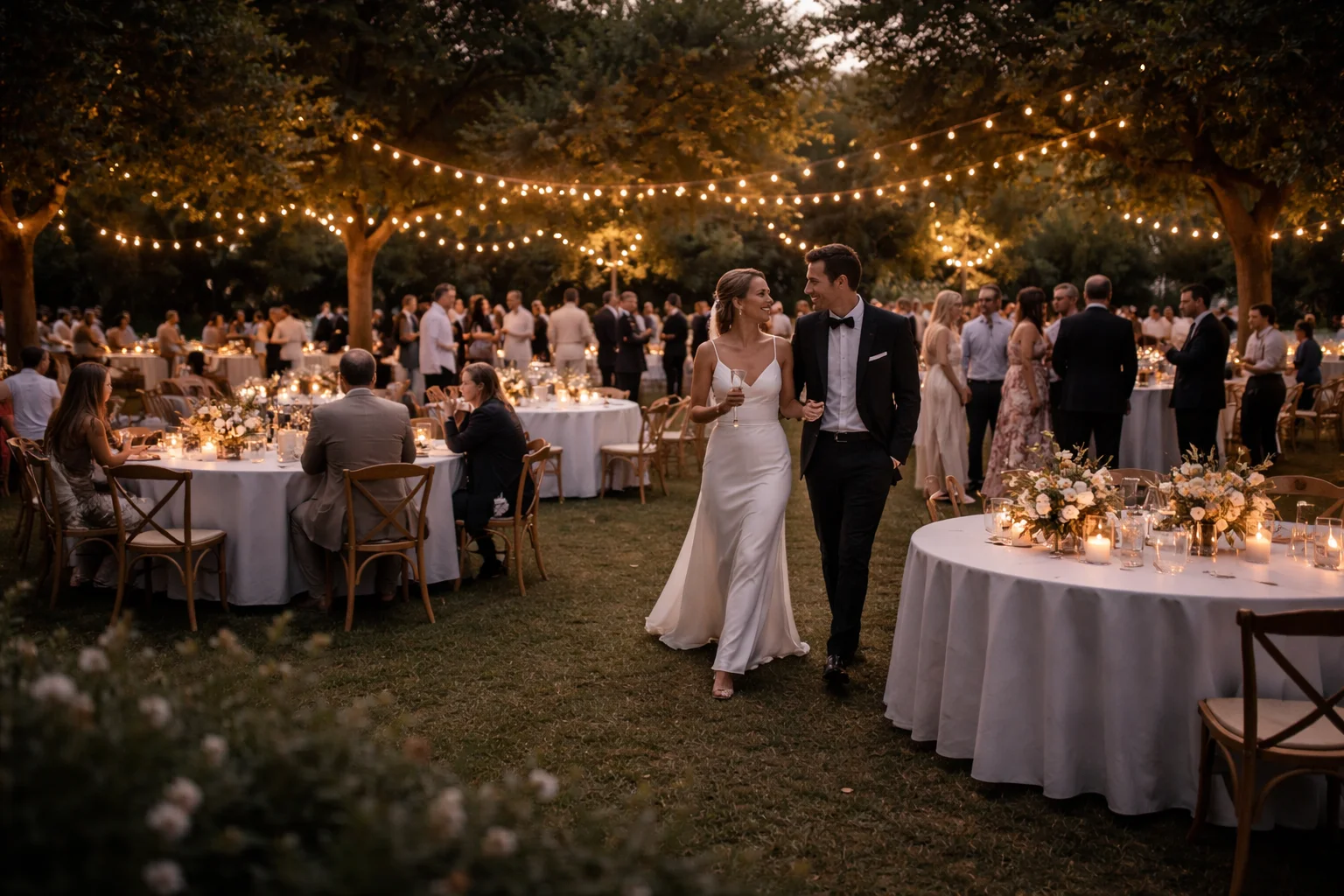
Second Dress for the Wedding Reception
At many weddings the clothing does not stay the same from start to finish. After the ceremony and formal photographs, a quiet shift sometimes happens. The bride disappears for a short time and later returns wearing something different. Guests notice it in small ways. A lighter fabric. Shorter hem. Movement that feels easier during the evening.
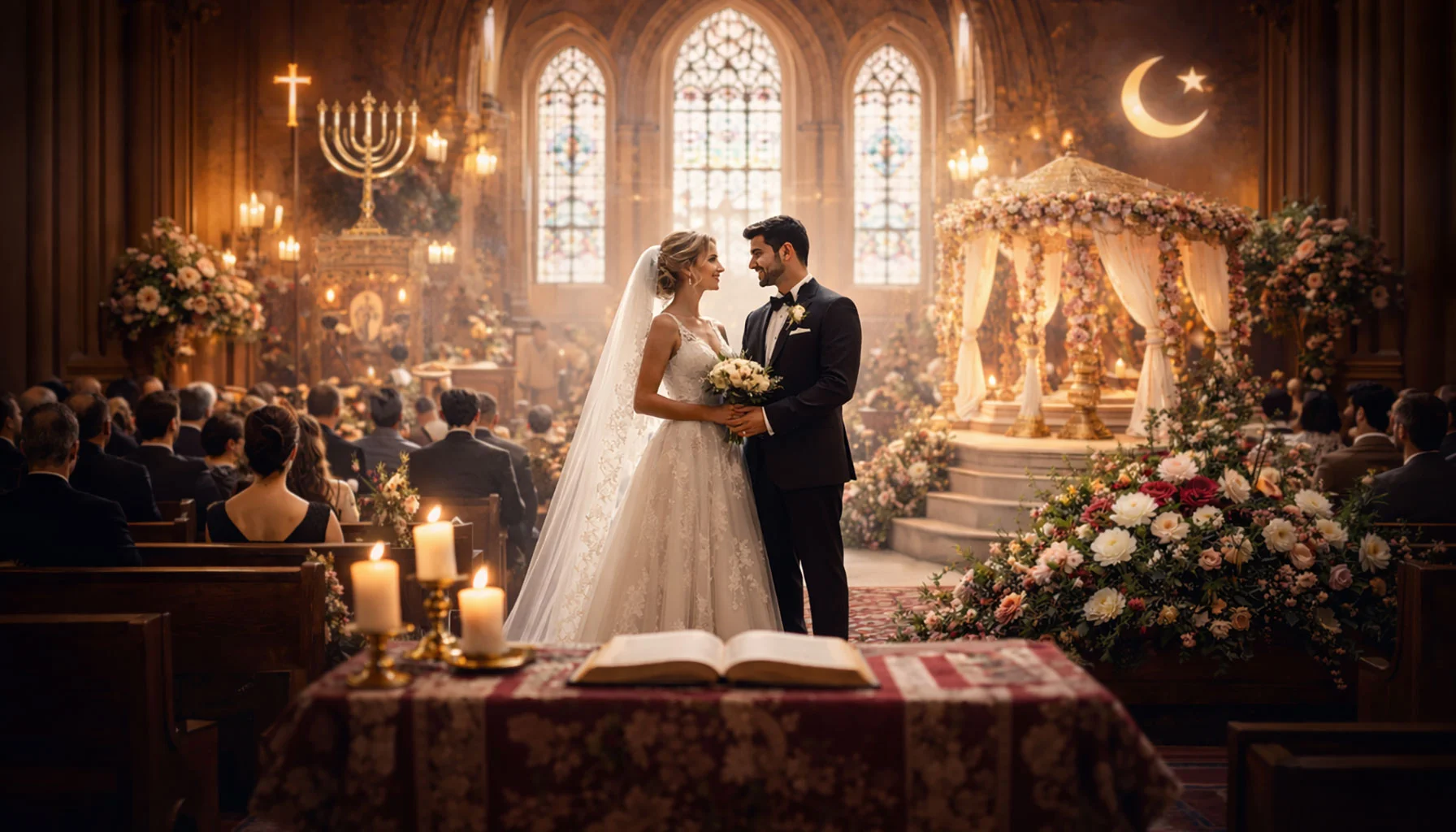
Religious Wedding Ceremonies: A Practical Overview
Religious wedding ceremonies are rarely designed around individual expression. They are shaped by inherited forms, religious authority, and symbolic acts that carry meaning through repetition. This article offers a practical overview of religious wedding ceremonies across countries and traditions while placing them within the wider logic of wedding rituals.
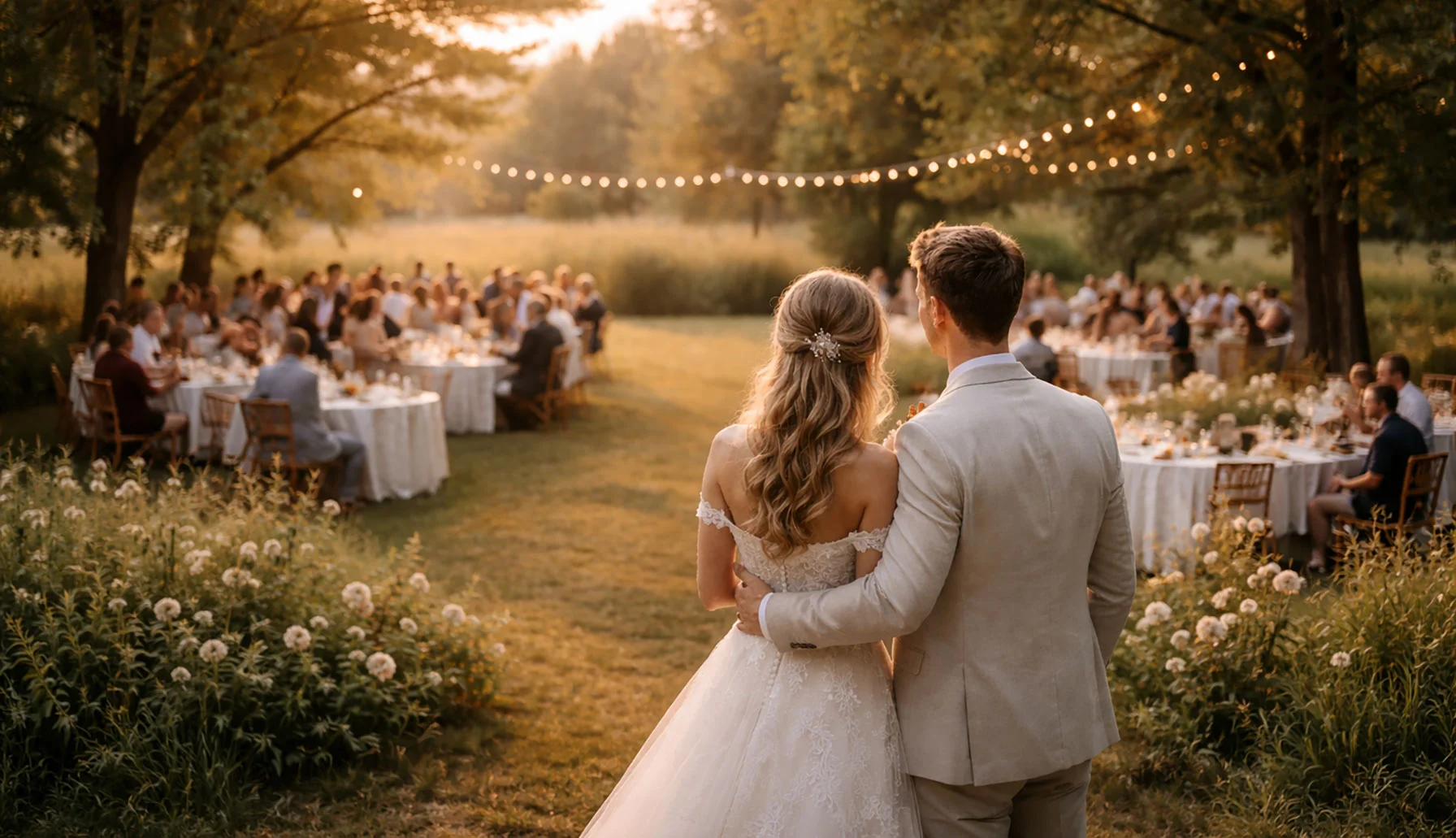
Looking good on the wedding day – quiet preparation, visible effect
A good appearance on the wedding day rarely arises spontaneously. It is the result of time, attention, and recognizability. This text collects observations concerning bride and groom, without ideal images or instructions. It's about skin, hair, and posture, about preparation instead of change. And about what remains when nothing needs to be explained.
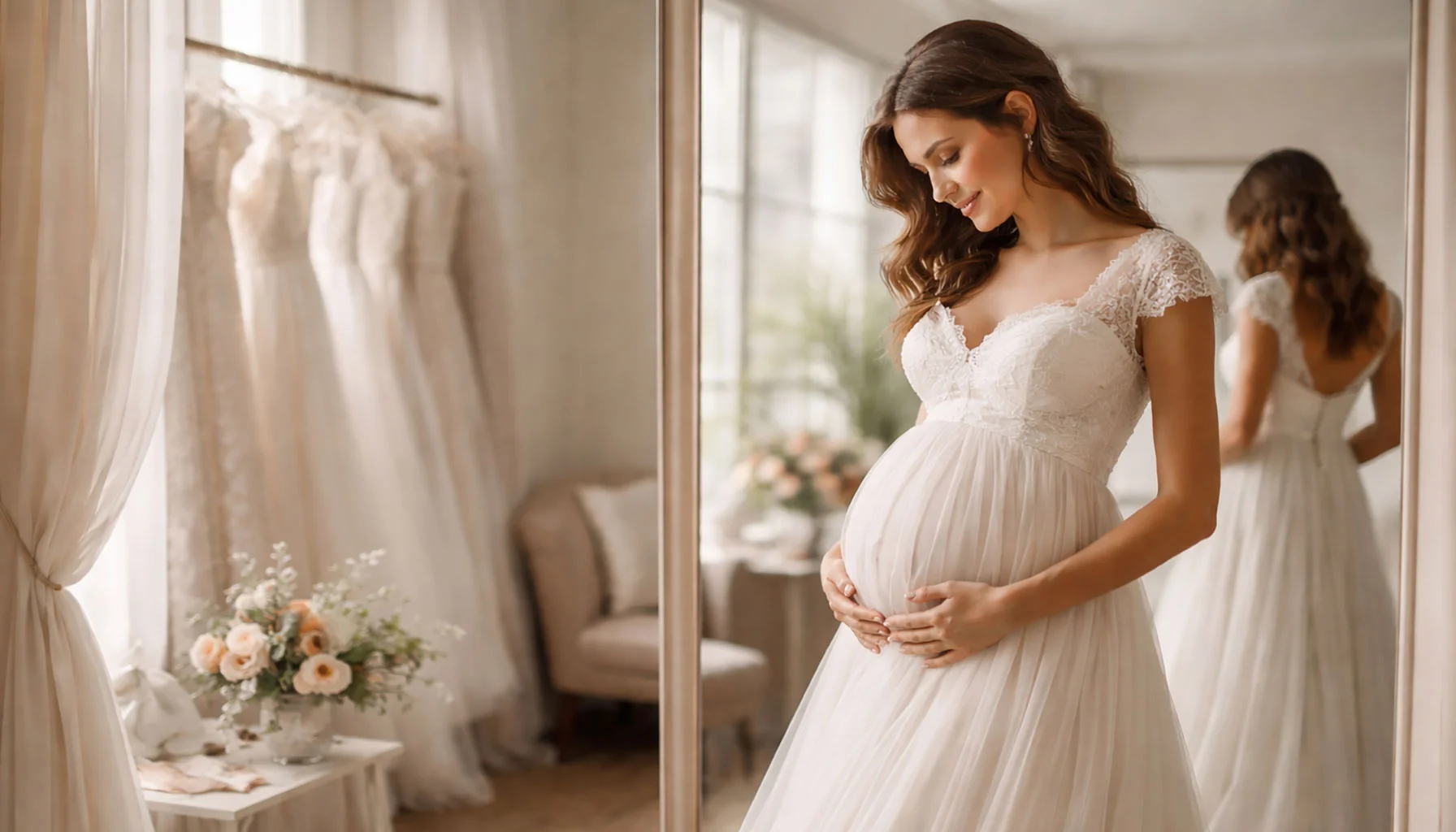
The Wedding Dress During Pregnancy
A wedding dress chosen during pregnancy follows different rules, even when no one names them. The body leads. The day sets limits. Decisions are shaped by comfort, timing, and how the dress behaves over hours rather than moments. This text looks at maternity wedding dresses as they appear in fittings, ceremonies, and recollections afterward. Not as ideals, but as garments that had to work. The focus stays on what proved suitable, calm, and lasting, without dramatizing the process or framing it as exception.

Bachelor Party – A Day Between Everyday Life and Wedding
A bachelor party is not a loud statement, but a quiet transition. People come together who have accompanied them on their journey so far. For a limited period, nothing is on the agenda except shared time. Planning provides stability, openness creates space. Whether for men or women: What's crucial is that the occasion suits the person. Then something unique emerges. Understated. Enduring.
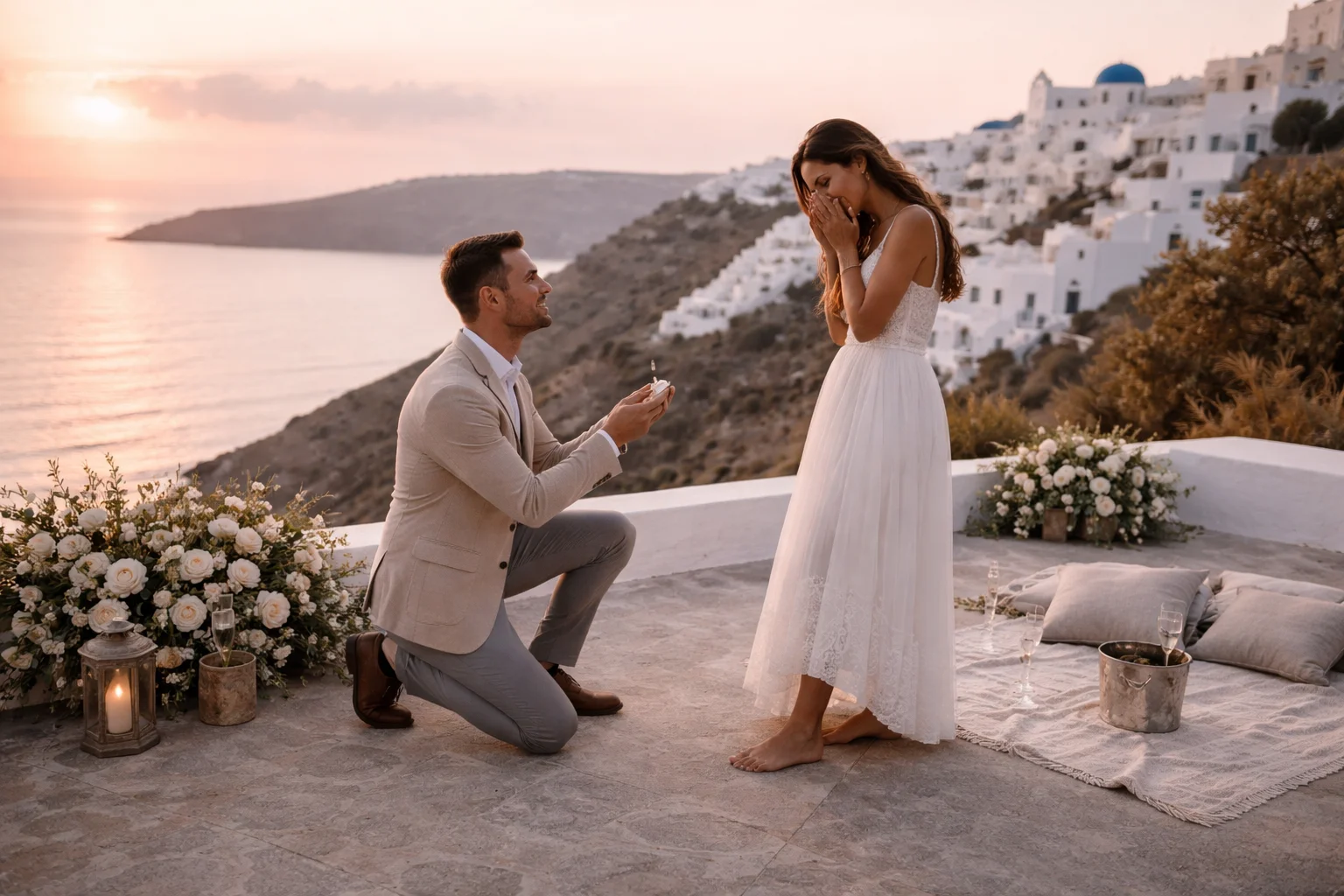
The Bride Look Begins Long Before the Dress
The bride look is often discussed as a final decision. A dress, a hairstyle, a set of details chosen close to the wedding day. It appears as something visual, something assembled. But in practice, it rarely starts there.
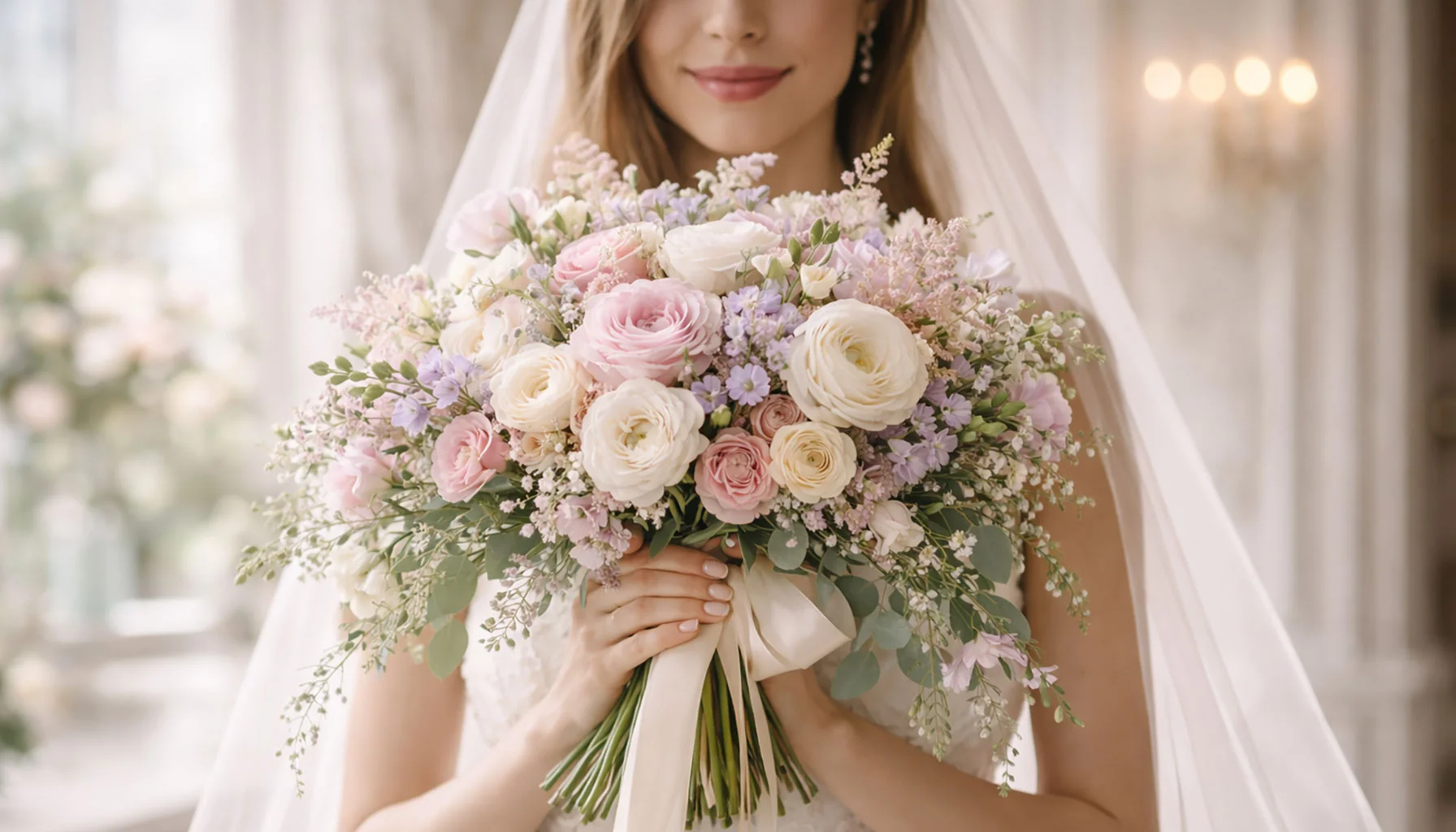
The Bridal Bouquet: A Silent Expression of Love, Style, and Timeless Emotion
The bridal bouquet accompanies the bride throughout the wedding day. It is held, adjusted, set aside, and taken up again. Its impact comes from balance rather than attention. Shape, weight, and color align with movement and appearance and become part of what is remembered.
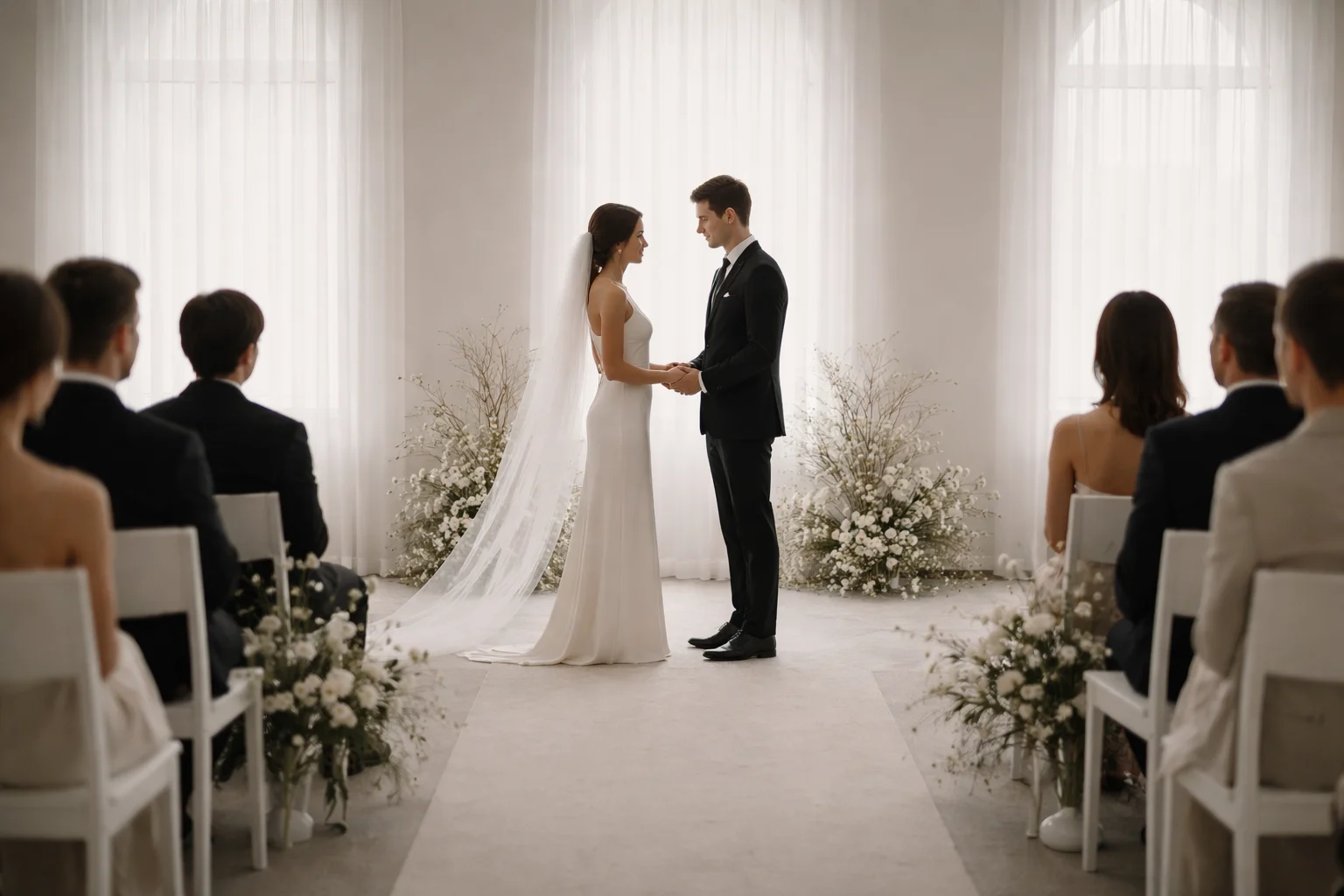
When Less Makes the Ceremony Clearer
Minimal weddings are often described as a reduction. Fewer elements, fewer decisions, fewer visible layers. Tables are cleared, colors are restrained, schedules are simplified. What remains can feel almost quiet in comparison to more elaborate celebrations.
Wedding Rings Between Decision and Everyday Life
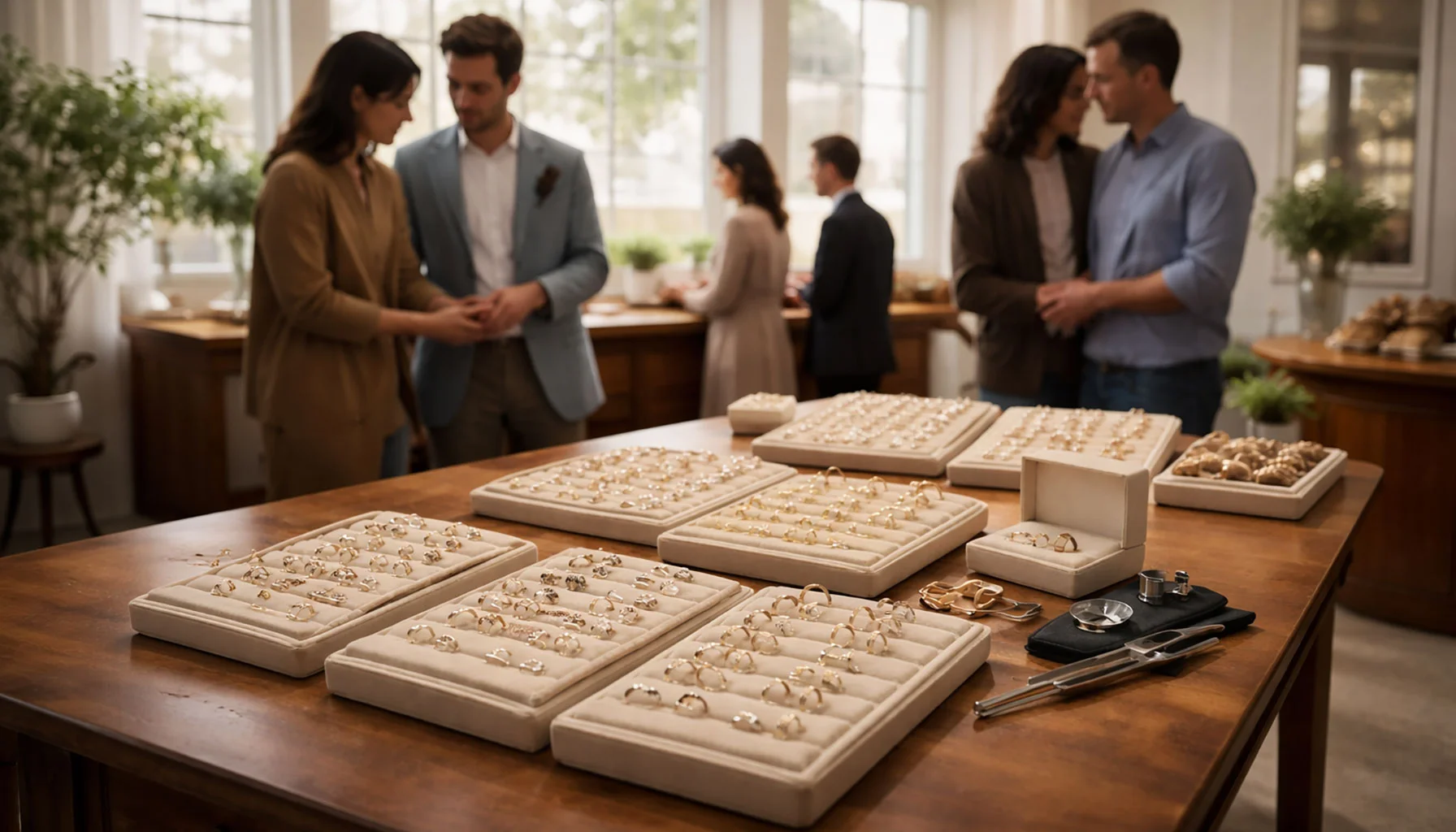
Wedding rings are rarely chosen as display objects. They are chosen for repetition, for wear, for the fact that they will remain present long after the ceremony itself has passed. This article looks at wedding rings through width, material, setting, and everyday use, while connecting them to the quieter emotional state of waiting that often surrounds such decisions.