
The Wedding Dress During Pregnancy
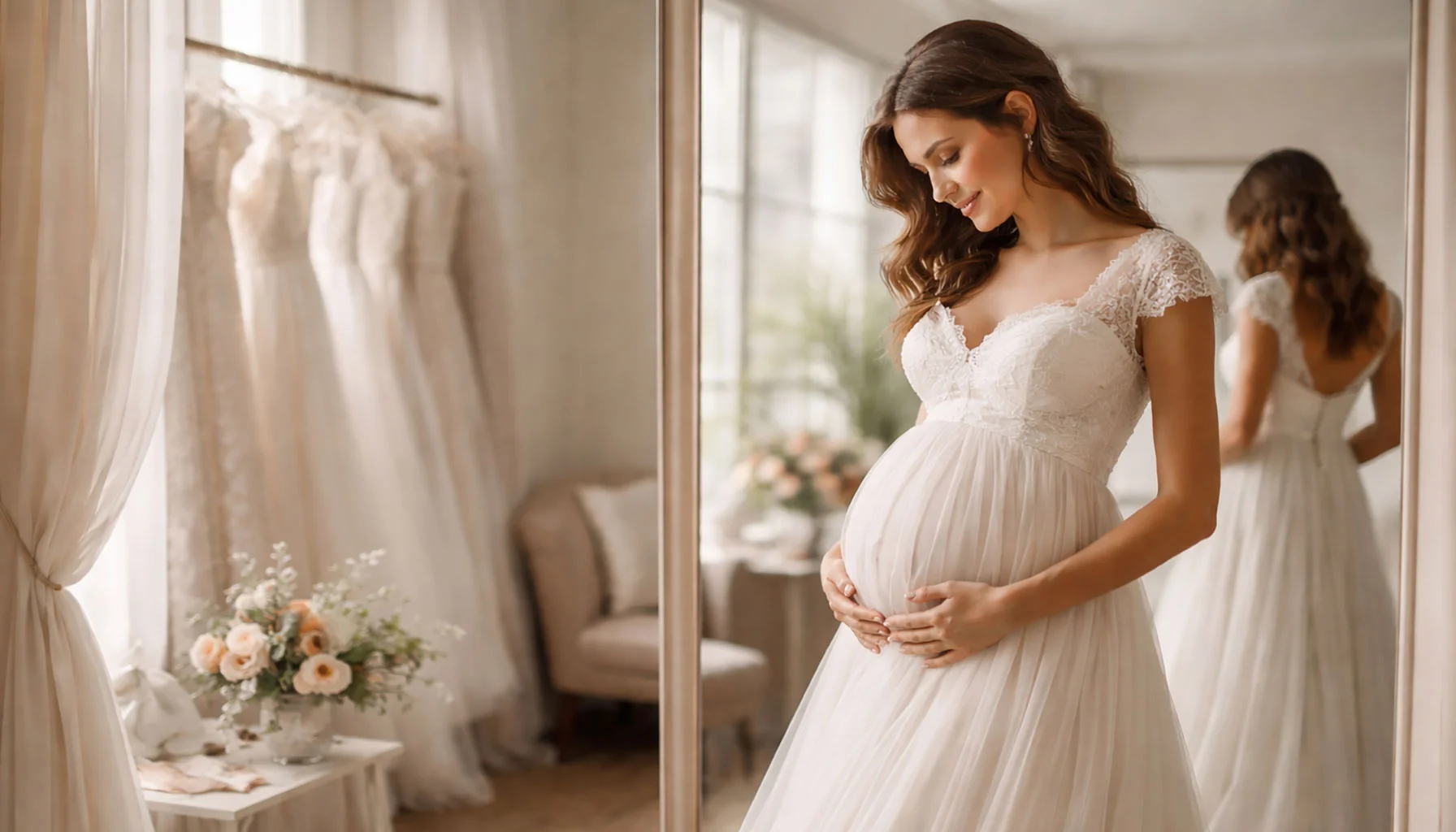
Maternity Wedding Dresses: Choosing a Wedding Gown During Pregnancy
Pregnancy changes the way a wedding dress is perceived, worn, and remembered. Not dramatically. Not suddenly. But steadily. Fabrics behave differently. Bodies move differently. Time itself feels structured around other priorities. In many ceremonies, the dress becomes quieter. More precise. Less about display, more about accommodation. This text is based on observation across fittings, ceremonies, and conversations around maternity wedding dresses, where the goal was rarely perfection and more often suitability.
Silhouette and Physical Reality
Maternity wedding dresses tend to follow the body rather than shape it. Empire waists appear often, not as a trend but as a solution. They allow the abdomen space without creating visual tension. A-lines are chosen for similar reasons. Dresses that rely on rigid corsetry or sharply defined waistlines are less present. Not avoided, but approached carefully. The body during pregnancy communicates clearly what it accepts. Dresses that listen tend to stay longer in memory.
Length becomes practical. Floor-length gowns are still common, though trains are shorter or absent. Movement matters more. Standing, sitting, slow walking. The dress is tested less in mirrors and more in motion.
Fabric Choices Observed Over Time
Soft fabrics dominate maternity bridalwear. Chiffon, silk crepe, lightweight satin. They respond gently to changing proportions and do not resist the body. Lace appears frequently but often layered, rarely stiff. Heavy embellishment is used sparingly. Weight, even when visually appealing, is felt differently during pregnancy. Comfort is not discussed loudly. It is simply prioritized.
Breathability becomes noticeable as the day progresses. Dresses that seemed appropriate in fittings are remembered fondly when they remained comfortable hours later. This detail is often mentioned after the wedding, not before.
Timing and Fittings
Maternity wedding dresses are rarely finalized early. Measurements change. Expectations adjust. Multiple fittings are common, though shorter and more focused. Flexibility in design matters more than precision at the first appointment. Dresses with adjustable closures, wrap elements, or discreet elastic inserts appear frequently. They are not highlighted in photographs, but they are remembered with appreciation.
Visual Presence on the Wedding Day
Photographs of maternity brides often show a different posture. Hands rest naturally. The dress frames rather than defines. There is less emphasis on structure and more on continuity. The gown becomes part of the day rather than the center of it. This is not perceived as loss. It is noted as balance.
Testimonials
“The dress didn’t ask anything of me. It stayed where it was meant to stay. That mattered more than how it looked on a hanger.”— Bride, ceremony in the second trimester
“I remember breathing easily. That sounds minor, but it shaped the whole day.”— Bride, late summer wedding
“It felt like the dress understood the situation. Nothing was forced.”— Bride, civil ceremony
Closing Observations
Maternity wedding dresses occupy a specific space. They are not alternatives to traditional gowns. They are responses to a moment in time. When chosen well, they are remembered as appropriate, calm, and quietly supportive. The dress does not compete with the pregnancy. It accompanies it. That balance is often what remains years later.
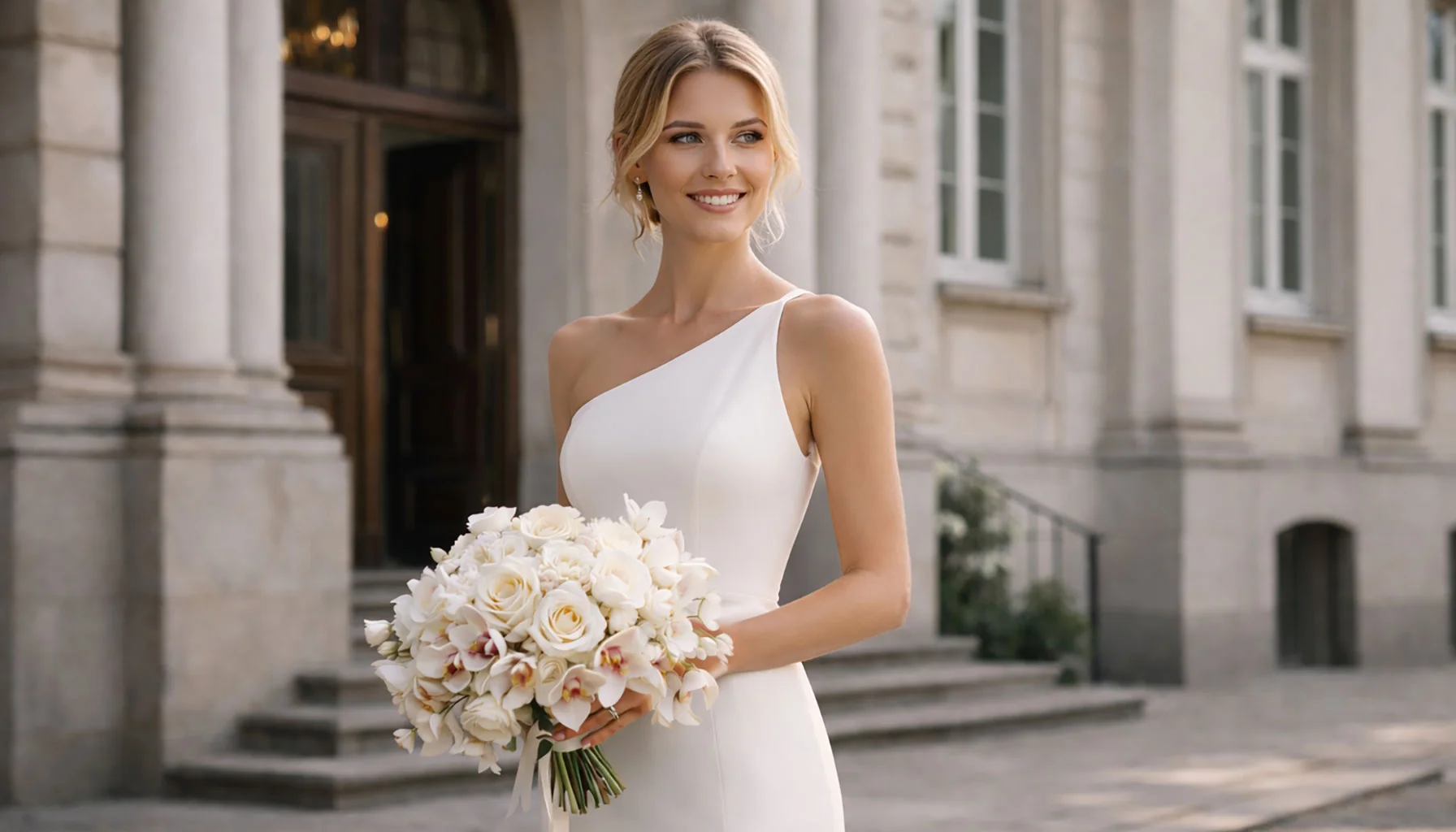
Civil ceremonies tend to be focused and quiet. The setting is smaller, the attention sharper. In this context, the bridal look does not perform. It supports. Fabric, cut, and proportion matter more than embellishment. What remains is a look that fits the moment, allows presence, and feels appropriate long after the ceremony ends.
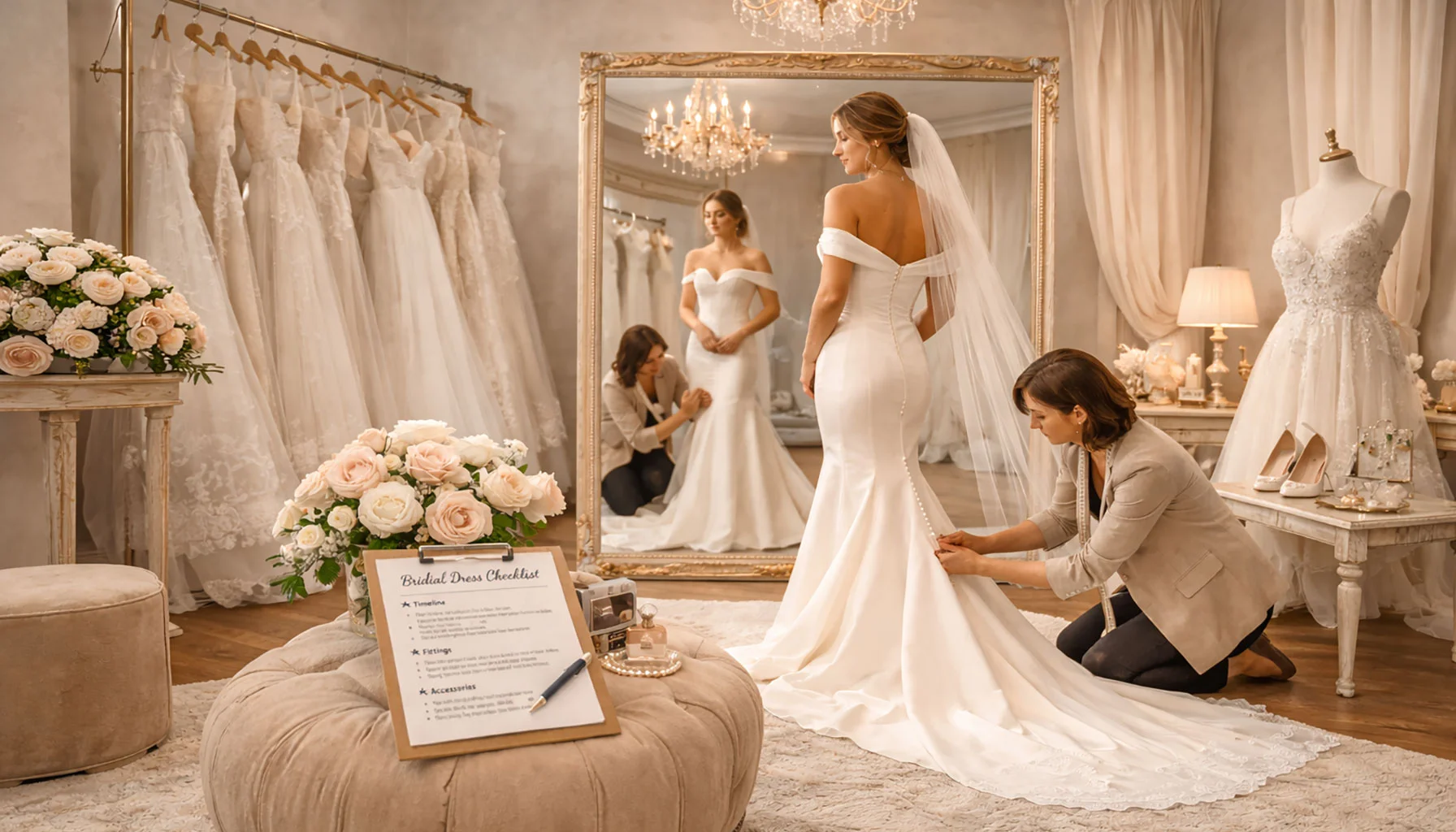
Ein Brautkleid entsteht nicht in einem Moment, sondern über Zeit. Auswahl, Anpassung und Vorbereitung greifen ineinander und schaffen Verlässlichkeit. Wenn Schnitt, Material und Bewegung zusammenpassen, begleitet das Kleid den Tag unauffällig und trägt zur Ruhe und Präsenz der Braut bei.
Related Articles
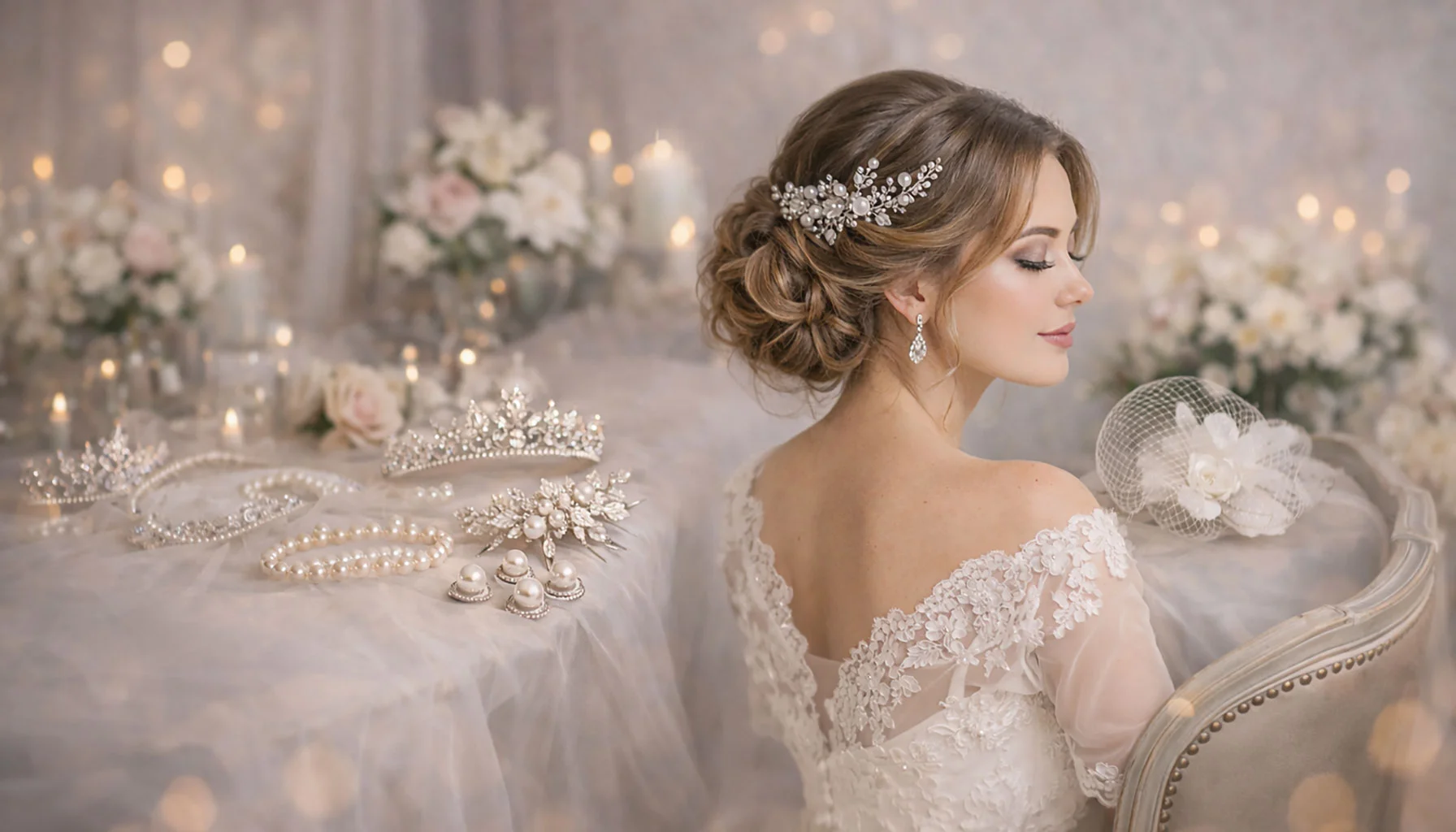
The Bridal Hairstyle as a Quiet Part of the Whole
A bridal hairstyle supports the entire look. It frames the face, works with the dress, and needs to hold throughout the day. In practice, the most convincing results come from aligning hair texture, proportion, and the flow of the wedding day. Less display. More coherence.
The Wedding Checklist That Grounds You: Turning Planning Into Something Meaningful
A wedding checklist isn’t just about tasks—it’s about clarity, intention, and trust. Here’s how to approach it in a way that feels calm, structured, and truly yours.
Speech Moment Checklist: What Makes a Toast Feel Held, Not Exposed
A wedding toast depends on more than good writing. It lands differently depending on attention, sound, timing, room tone, and the unspoken signals that tell a speaker whether the moment is carrying them or leaving them alone.
Wedding Morning Checklist: What Helps the First Hours Stay Calm
A wedding morning checklist helps protect the first hours of the day from avoidable stress. It keeps essential items, timing, room atmosphere, and communication clear, while leaving enough space for the morning to still feel calm and human.

The Marriage Proposal: A Moment between Decision and Trust
A marriage proposal is rarely only a surprise. More often, it gathers what has already grown in conversations, decisions, and quiet alignment. This article looks at the proposal as a visible threshold between decision and trust, while keeping close to lived experience, ring choice, gesture, timing, and the open reality of what may follow.
A Love Made Official: A Bridal Look for the Civil Ceremony
Civil ceremonies tend to be focused and quiet. The setting is smaller, the attention sharper. In this context, the bridal look does not perform. It supports. Fabric, cut, and proportion matter more than embellishment. What remains is a look that fits the moment, allows presence, and feels appropriate long after the ceremony ends.

Groom’s Morning Checklist: What Keeps the First Hours Clear and Unforced
The groom’s morning often looks simple from the outside, but it depends on small decisions made early. This article looks at clothing, food, rings, timing, communication, photography, transport, and the quiet rituals that keep the first hours clear without making them feel staged.

Conversations Before Marriage – Life Questions That Clarify the Relationship
A marriage is not just about feelings, but also expectations, imprints, and ideas about everyday life. This text compiles central life questions that couples should clarify with each other before saying 'I do': regarding money, family, children, conflicts, division of tasks, and personal values. Grown from observations, objectively considered, and close to lived everyday life. Conversations that make differences visible – and thereby strengthen connection.

Last-Week Wedding Checklist: What Still Needs Attention Shortly Before the Day
The last week before a wedding is rarely about major decisions. It is about clarifying what still has weight, what can no longer be improved by adding more, and what needs to be named before it starts shaping the day in silence. This article looks at what still deserves attention shortly before the wedding and why the unspoken layer often matters most at that stage.

Wedding Rings Between Decision and Everyday Life
Wedding rings are rarely chosen as display objects. They are chosen for repetition, for wear, for the fact that they will remain present long after the ceremony itself has passed. This article looks at wedding rings through width, material, setting, and everyday use, while connecting them to the quieter emotional state of waiting that often surrounds such decisions.
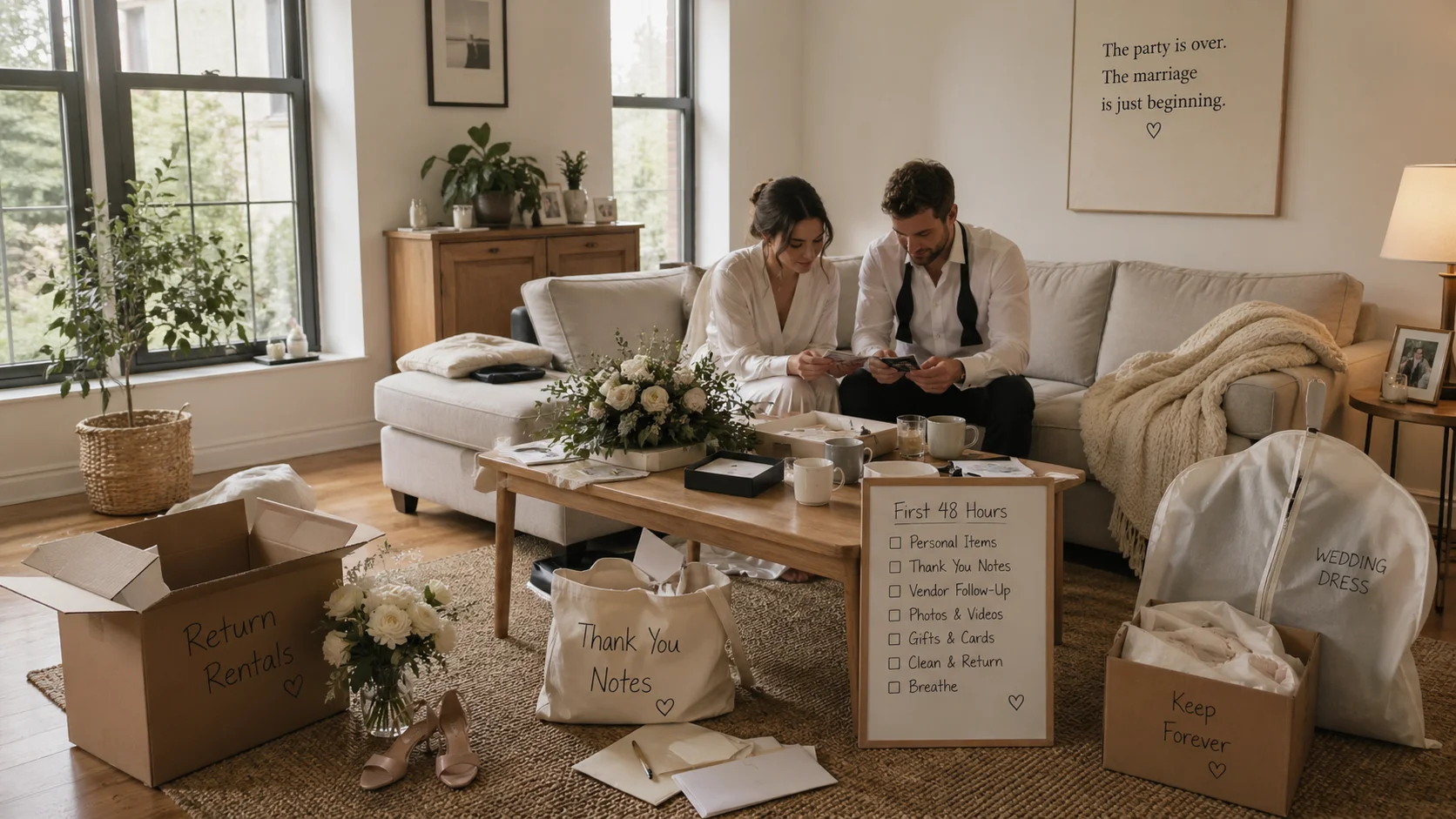
After-the-Wedding Checklist: What Needs Attention in the First 48 Hours
The first 48 hours after a wedding are quiet, practical, and easy to underestimate. This article looks at personal items, gifts, clothing, vendor closure, early photos, and the small tasks that help the after feel lighter instead of turning into scattered errands.
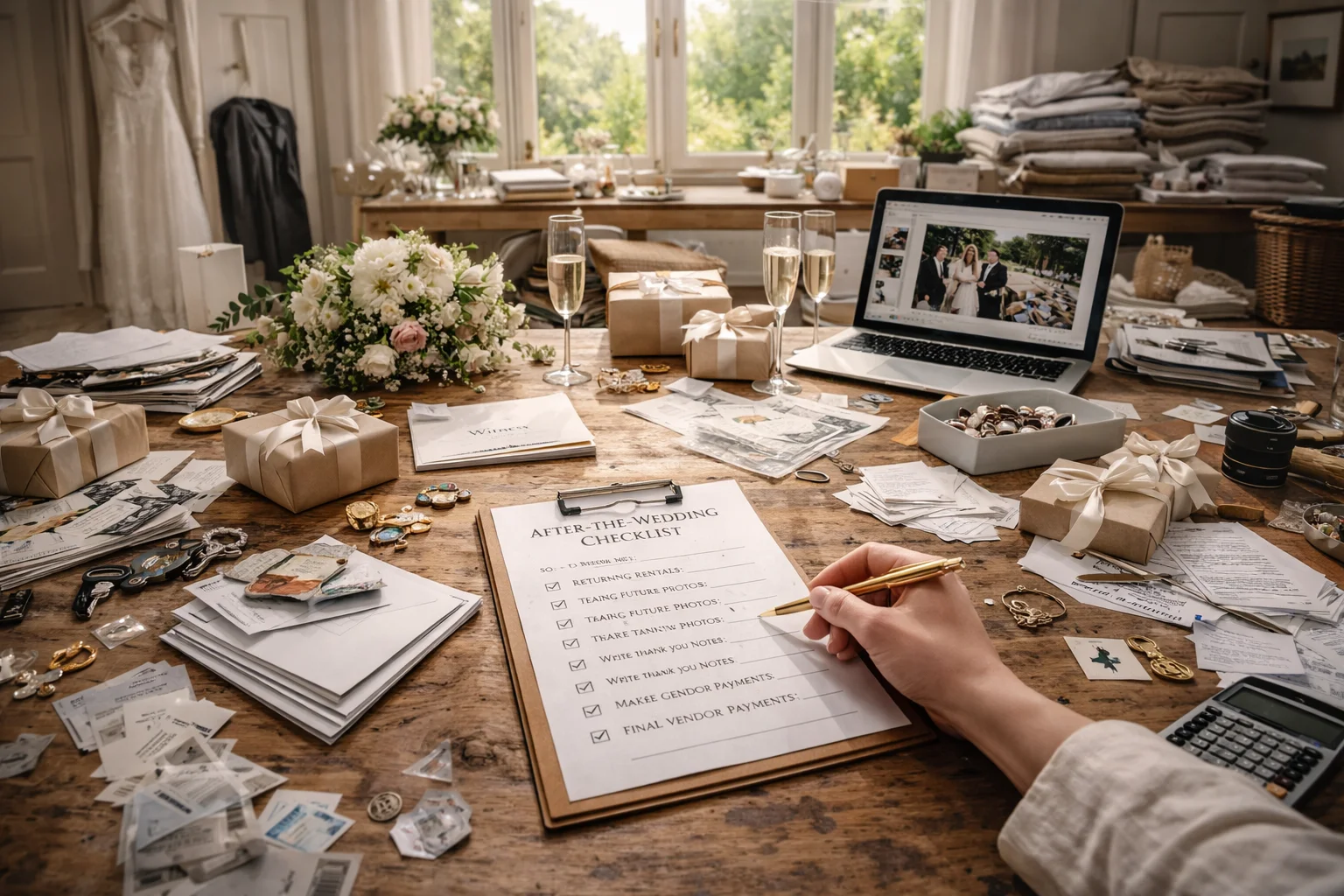
After-the-Wedding Checklist: What Still Needs to Be Returned, Paid, Thanked, or Closed
A wedding rarely ends when the last guest leaves. What follows is quieter, more practical, and often more emotionally mixed than couples expect. This article looks at what still needs to be returned, paid, thanked, or closed after the wedding, and why the days after the celebration are part of the wedding's meaning, not just its cleanup.