
The Bridal Hairstyle as a Quiet Part of the Whole
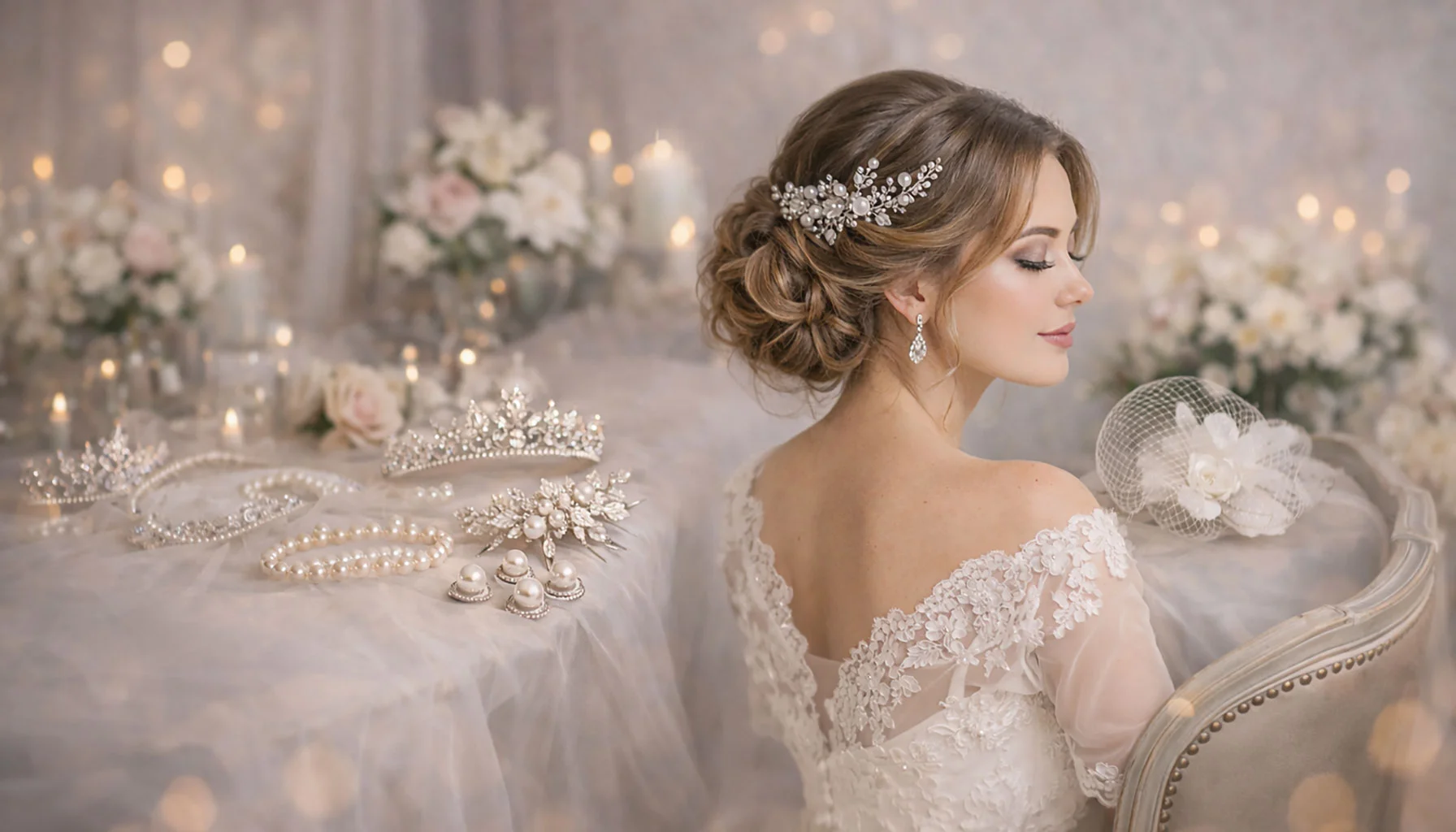
Bridal Hair, Clearly: Styles, Vocabulary, Accessories, Trials, and What Holds Up All Day
Bridal hair is not a small detail. It sits right next to the face in every close photo. It decides how the neckline reads, how earrings show, how a veil behaves, and how the whole look feels in motion. A good bridal hairstyle looks calm. Even when the day is long.
In practice, most issues are not about taste. They are about structure, anchoring, and clarity in communication. This guide keeps it plain: the main hairstyle categories, simple pro terms, accessory types (including curlies and fascinators), what usually happens in a trial, and a country guide with a table that can be shown to a stylist.
“The difference was not the style. It was the base. Once the base was right, everything looked easy.”— Hairstylist testimonial
1) What Typically Matters Before Choosing a Bridal Hairstyle
Most bridal hair decisions come down to five layers. Real hair, face framing, dress harmony, accessory plan, and day-long durability. The style can be romantic or clean. It still needs to behave.
The five layers (simple, useful)
- Hair reality: length, density, texture, and how the hair reacts to wind, humidity, and heat
- Face framing: how the face should read from front, profile, and three-quarter angles
- Dress harmony: neckline, back detail, shoulder line, and whether the dress is minimal or detailed
- Accessory plan: veil, headpiece, pins, combs, pearls, crystals, flowers, or one statement piece
- Durability: hugs, dancing, outdoor time, travel between locations, and planned touch-ups
Comfort shows in photos. Brides who feel exposed with hair pulled back often keep a few controlled face-framing pieces. Brides who want a cleaner silhouette usually prefer hair away from the jaw and neck. Both can look refined. The difference is placement and restraint.
“Once the hair stopped touching the cheeks, the whole face looked brighter on camera.”— Photographer testimonial
2) Main Bridal Hairstyle Categories, Plain Language
Most bridal hairstyles sit in a few categories. Knowing the category helps the conversation. It reduces guesswork. It also makes accessories easier, because each accessory needs a base.
Updo
Updo means the hair is pinned up and supported by an internal structure. It can be sleek, or softly textured. Updos tend to show earrings and necklines clearly. They also tend to hold well, when the base is built properly.
Examples often requested
- Low chignon at the nape: classic shape, clean silhouette
- Textured low bun: softer surface, modern finish
- Sleek ballerina bun: minimal lines, strong polish
- Twisted updo: sculpted look, controlled detail
- Braided bun: braid integrated into the structure, not sitting on top
Stylist sentence: “A low chignon with soft texture, secure enough for dancing, with controlled face-framing and a clean finish.”
Half-Up, Half-Down
Half-up gives structure at the top and movement through the lengths. It often feels approachable on the day. It also gives a place to anchor accessories without committing to a full updo.
- Soft crown lift with waves: gentle height, controlled movement
- Half-up twist: clean romantic shape, not heavy
- Half-up with braid detail: small braid used as a line, not a statement
- Half-up pony with glam waves: modern and camera-friendly
- Half-up with hair vine: vine woven through the pinned section for subtle sparkle
Stylist sentence: “Half-up with a subtle crown lift, soft face framing, and waves that stay defined without looking tight.”
Hair Down
Hair worn down can look very polished, but it still needs internal control. In many weddings, the down style that lasts is the one with hidden pinning, a strong parting decision, and a finish that keeps shine consistent. It reads expensive in close-ups when the surface is smooth.
- Hollywood waves: uniform wave pattern, glossy finish
- Soft romantic waves: looser, airy, modern
- Sleek straight hair with shine: minimal and couture
- Deep side part with tucked side: clear lines, strong profile
- Natural curls refined: defined curl pattern, controlled frizz, even shape
Stylist sentence: “Hair down with controlled waves and shine, structured so it holds the full day and still looks intentional.”
Braided Bridal Styles
Braids can be delicate or structured. They add detail without needing heavy jewelry in the hair. The bridal version usually looks best when the braid is placed with purpose and kept visually light.
- Crown braid with low bun: braid frames, bun stabilizes
- Side braid into waves: braid starts clean, melts into texture
- Braided chignon: braid wraps around the bun, subtle but present
- Hidden braid for structure: braid supports the style, stays discreet
- Braided half-up: small braids meet at the back, soft finish
3) Face Shape, Features, and Photo Angles
Wedding photos catch the face from front, profile, and three-quarter angles. Also from above. During hugs. During movement. Small decisions matter: parting, crown height, and what happens around the cheekbones.
- For a longer-looking face: subtle crown lift, less width at the cheeks
- To soften strong angles: waves, texture, gentle face framing
- For a clean couture look: sleek lines, precise parting
- For romantic softness: airy texture, controlled tendrils, movement
Stylist sentence: “The style should read flattering in profile and three-quarter photos, with balanced volume and a clean hairline.”
4) Dress, Neckline, and Veil: How Harmony Usually Works
Bridal hair looks strongest when it matches the dress structure. A structured dress often carries sleek hair well. A soft dress often carries texture well. That is the basic pattern seen again and again.
- Strapless or sweetheart neckline: low chignon, Hollywood waves, or half-up with controlled volume
- High neckline: sleek bun or polished updo for a clean silhouette
- Open back: updo or side-swept styling to show the back detail
- Lace or ornate dress: refined hairstyle with controlled texture, fewer competing elements
- Minimal dress: sleek hair or one statement accessory can carry the look
Veils need an anchor point. This is usually a bun base, a reinforced half-up section, or a pinned structure hidden under the surface. When anchoring is planned early, the veil sits cleanly and removes smoothly.
5) Bridal Hair Trends Seen Often in Modern Weddings
Trends shift, but the consistent direction is clear: refined texture, controlled softness, clean lines when needed, and accessories used with restraint. Not everything at once. A single strong choice tends to read better.
- Soft textured low buns instead of very tight updos
- Glossy Hollywood waves with a stable parting
- Minimal hair with one statement accessory (pearl band, crystal comb)
- Face-framing tendrils placed carefully, not left to chance
- Polished natural curls with defined shape and shine
- Sleek side parts for modern, clean weddings
- Hair vines or pins woven into structure for subtle sparkle
Stylist sentence: “Modern luxury with soft structure, refined texture, and a polished finish that stays consistent.”
6) The Bridal Hair Trial: What Usually Makes It Successful
A trial works best when it is treated like design work, not casual experimenting. The goal is a style that matches the face, the dress, and the accessory plan, and that remains comfortable for hours. A good trial also produces clear photos. Front, side, back. In daylight if possible.
What is typically useful to bring
- Three to five inspiration photos that match actual hair length and texture
- Dress photos (neckline and back are enough)
- Veil and planned hair accessories (or close equivalents)
- Makeup reference photo (simple is fine)
- Comfort notes: preferred face openness, preferred volume, and tolerance for pins
“The trial photo from the side saved the day. The front looked fine, but the side needed a cleaner line.”— Bride testimonial
7) Bridal Hair Vocabulary That Helps in Real Conversations
Many brides describe the goal emotionally. That is normal. Stylists still need a few technical words to lock in the result. This small vocabulary tends to be enough.
| Term | Meaning in simple words | Example sentence |
| Chignon | Low bun, usually at the nape | A low chignon with a soft finish and clean edges |
| Crown lift | Small height at the top for shape | A subtle crown lift, not high, not flat |
| Face-framing pieces | Controlled strands near the face | Gentle face-framing pieces, not heavy strands |
| Textured | Soft dimension, not perfectly smooth | Refined texture, not messy |
| Sleek | Smooth, polished lines with shine | Sleek finish with a precise parting |
| Hold | How well the style stays in place | Strong hold that still looks soft |
| Anchoring | How veil or accessory is secured | A strong anchor point for the veil |
Short phrases that tend to work well
- Soft structure, not stiffness
- Polished texture, not a messy look
- Balanced volume for photos
- Clean hairline and refined edges
- Accessory supports the style, not the other way around
- Comfortable to wear for many hours
8) Hair Accessories: Headbands, Pins, Combs, Vines, Fascinators, and Curlies
Accessories change the whole tone of bridal hair. The best results usually come from one clear accessory decision and a base that can hold it. Comfort matters. Weight matters. Close-up finish matters.
Headbands and Hair Hoops
Headbands are simple and effective. They read clearly in photos. They work well with hair down, half-up, sleek buns, and modern bridal styling.
- Slim pearl headband with a low chignon
- Crystal headband with Hollywood waves
- Minimal metal headband with a sleek bun
- Padded satin headband with soft waves
Hair Pins and Decorative Pins
Pins are small accents. They can be clustered for one focal area or scattered for a light shimmer. The refined version looks intentional. Even when it is subtle.
- Three pearl pins clustered above a low bun
- Crystal pins scattered through a braided chignon
- Gold leaf pins placed on one side
- Small star pins distributed through waves for evening light
Curlies: What They Are
Curlies are small spiral accessories that twist into the hair. They often carry pearls, crystals, or metallic details. Because they screw gently into place, they tend to feel secure and discreet, especially inside buns and braided structures.
Common placements that photograph well
- Placed inside a bun for controlled sparkle
- Followed along a braid line to highlight the shape
- Inserted into half-up sections without adding bulk
- Used in a light scattered pattern for a soft glow
Stylist sentence: “Pearl curlies placed evenly in the bun, secure and light, visible in photos but not heavy.”
Hair Combs and Bridal Clips
Combs slide into the hairstyle with teeth. They work well for anchoring a veil or creating one defined focal point. Clips can do similar work, often with a clasp mechanism. Both suit clean, polished bridal looks.
- Crystal comb above a low bun
- Pearl comb in a half-up base
- Minimal metal comb with sleek hair
- Floral-inspired comb with a textured bun
Hair Vines and Flexible Pieces
Hair vines are flexible, usually wire-based pieces with pearls or crystals. They can wrap around a bun, follow a braid, or frame the back of the head. They are popular because placement can be tailored to the hairstyle structure.
- Vine wrapped around a low chignon
- Vine woven through a half-up base
- Vine integrated into a crown braid
- Vine placed asymmetrically for a modern line
Fascinators: Statement Pieces
Fascinators are sculptural headpieces. Often used for city weddings and fashion-forward styling. The hairstyle underneath typically stays sleek and controlled so the piece looks deliberate and clean.
- Sleek low bun with a small sculptural fascinator
- Side-swept waves with a minimalist fascinator
- Polished French twist with a refined fascinator
- Short hair with finger waves and a fascinator
Veil and Accessory Coordination
When veil and headpiece are combined, placement decisions matter. Above bun, under bun, or into a half-up base. Some brides prefer an accessory that becomes more visible after veil removal. That choice can be planned.
- Veil above bun with comb: classic, stable
- Veil under bun: traditional, strong back view
- Veil in half-up base: soft, romantic movement
- Accessory revealed after veil removal: pins or vine become the focus later
9) Concrete Example Sets (Style Direction + Base + Accessory)
When inspiration feels overwhelming, a simple combination helps: a style direction, one base category, one accessory type. It keeps the look coherent. It also keeps decisions calm.
Classic and Timeless
- Low chignon with pearl comb and a clear veil anchor
- Sleek bun with a minimalist headband and clean parting
- Soft French twist with subtle crystal pins
Glamorous and Editorial
- Hollywood waves with crystal headband and deep side part
- Half-up glam pony with long waves and a statement clip
- Sleek bun with a small sculptural fascinator
Romantic and Soft
- Textured low bun with scattered pearl curlies
- Half-up twist with a hair vine woven through the back
- Braided chignon with delicate pins and controlled face framing
Modern and Minimal
- Sleek low bun with a thin metal headband
- Straight glossy hair with one statement comb
- Clean half-up with polished waves and minimal pins
10) Timing and Preparation: A Simple Bridal Hair Timeline
Bridal hair tends to go smoothly when the decision is made early enough for the trial to be meaningful. The last weeks then feel like confirmation, not re-invention.
- 6–9 months before: collect inspiration that matches real hair length and texture
- 3–4 months before: schedule the trial and bring veil/accessories (or close equivalents)
- 4–8 weeks before: finalize accessory decisions and anchoring plan
- 2 weeks before: refresh ends with a trim and confirm the wedding-day schedule
- Wedding week: keep care routine stable and finish-focused
11) Country Guide: Bridal Hairstyle Directions Often Seen as the Best Fit
Bridal hair preferences vary by region. So do expectations around glamour, structure, and accessories. The best choice stays personal, but local style patterns show up frequently. This table translates them into clear directions.
| Country | Bridal hairstyle direction | Why it often fits local taste | Accessory focus | A sentence that works with stylists |
| Germany | Clean low chignon or refined half-up waves | Polished, restrained elegance reads natural and sophisticated in photos | Pearl comb, minimal pins, delicate headband | A refined low chignon with soft texture and a clean, elegant finish |
| United States | Hollywood waves or voluminous half-up glam | Strong photo presence and high-shine finish are commonly appreciated | Crystal headband, statement clip, dramatic comb | Glossy Hollywood waves with long-lasting hold and a glamorous side part |
| Serbia | Polished updo with defined shape and luxury detail | Structured glamour is often expected; secure styles suit long celebrations | Sparkling pins, clustered pearls, ornate comb | A structured updo that looks luxurious, secure, and clean from every angle |
| China | Sleek updo with refined symmetry and clear lines | Clean structure supports formal aesthetics and accessory anchoring | Elegant comb, refined pins, minimal statement piece | A sleek updo with a smooth finish and a strong anchor for the accessory |
| Spain | Low bun with romantic texture or side-part waves | Expressive but elegant styling tends to feel fitting and confident | Decorative comb, floral-inspired pins, hair vine | A romantic low bun with soft texture and elegant accessory placement |
| France | Soft chignon with movement and refined simplicity | Natural-looking polish is often valued; softness reads expensive | Minimal pins, delicate vine, understated headband | An elegant chignon with soft movement, polished, not overworked |
| Italy | Romantic waves or textured low updo with shine | Craftsmanship and glamour often meet in soft, glossy finishes | Pearl details, refined comb, subtle sparkle | Romantic waves with a glossy finish and a softly structured shape |
| Russia | Luxurious structured updo with strong hold and refined volume | Defined structure and a flawless finish are often admired | Sparkling comb, crystal pins, clustered curlies | A luxurious updo with refined volume and a strong, secure hold |
12) Quick Checklist: What Usually Makes Bridal Hair Look High-End
- Balanced volume that flatters the face from multiple angles
- Refined texture with a secure structure underneath
- Consistent shine and finish close-up
- Accessories placed with intention, not scattered without a plan
- Comfortable wear that stays stable through the full day
- Clear veil anchoring and a clean removal plan
Conclusion
Bridal hair shapes the whole bridal presence. It frames the face, completes the silhouette, and becomes part of what is remembered in photos and video. When categories are understood, vocabulary is simple, and accessories are chosen with a plan, communication becomes easy and the result looks intentional.
A sleek bun with a fascinator. Glossy waves with a headband. A textured chignon with pearl curlies. Different looks, same principle. Clear structure, controlled finish, and a base that holds up.
Related Articles
The Bride Look Begins Long Before the Dress
The bride look is often discussed as a final decision. A dress, a hairstyle, a set of details chosen close to the wedding day. It appears as something visual, something assembled. But in practice, it rarely starts there.
Bridal Accessories in Interplay – A Silent Addition
Accessories for the bride mostly remain in the background. They don't impose themselves and are rarely noticed first. In bridal shops, however, it repeatedly becomes apparent that precisely these pieces structure and round off the overall look. Veils, shoes, jewelry or small accessories do not change the dress, but rather the bride's effect. Observations from practice show how subtle decisions are made and why accessories are often chosen only late – and then stay.
Vendor Contact Checklist: Who Needs to Reach Whom When the Day Starts Moving
A wedding contact list is not the same thing as a wedding communication plan. Once the day starts moving, what matters is not only who is involved, but who should contact whom, for what reason, and at which moment.
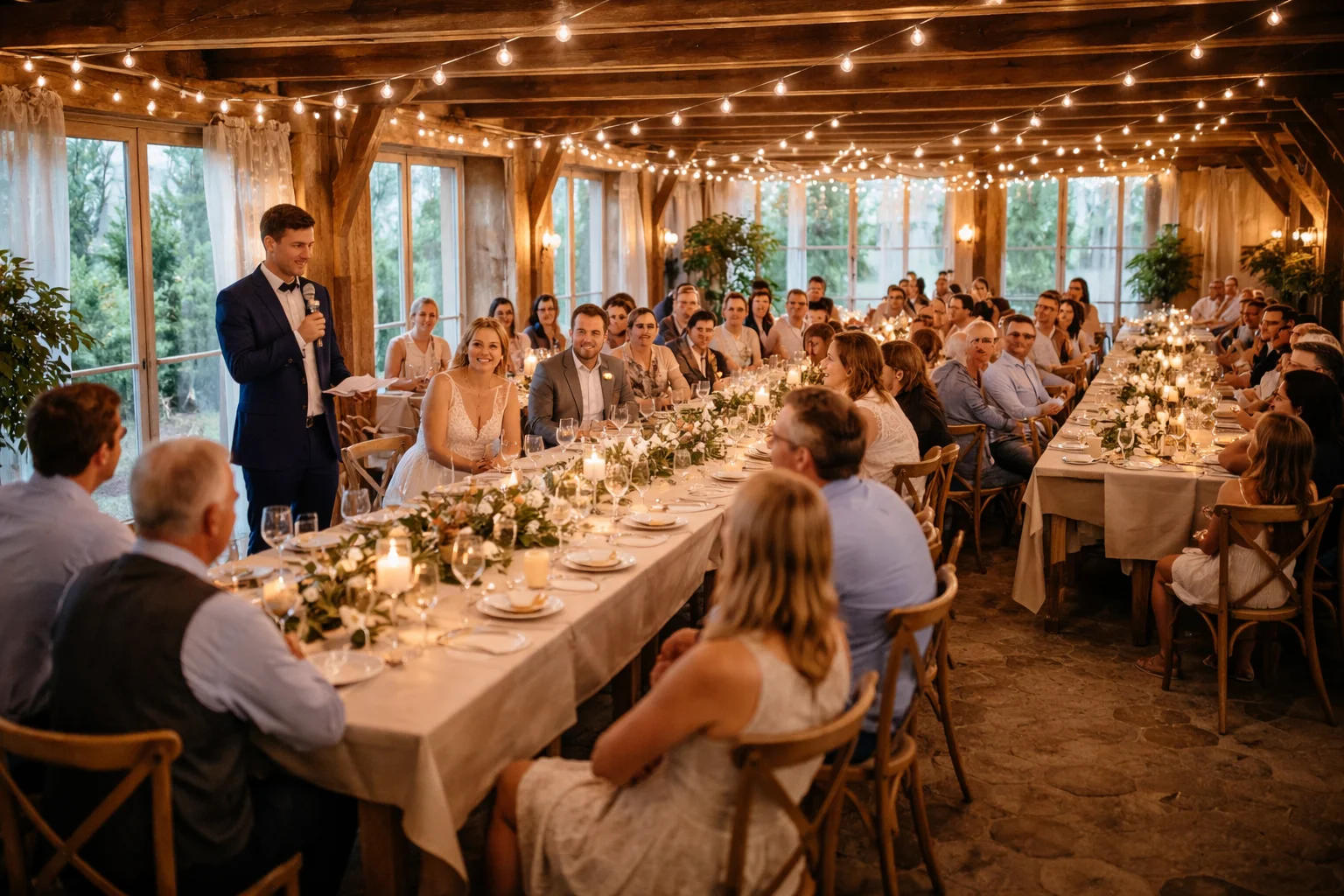
Speech Timeline During the Wedding Reception – Typical Order and Observed Patterns
During a wedding reception, speeches usually appear in small segments rather than as one long program. A few words early in the evening, then dinner continues, later another short speech surfaces between plates being cleared. The sequence looks informal from the guest perspective. Still, over many weddings a similar rhythm can be noticed.
Looking good on the wedding day – quiet preparation, visible effect
A good appearance on the wedding day rarely arises spontaneously. It is the result of time, attention, and recognizability. This text collects observations concerning bride and groom, without ideal images or instructions. It's about skin, hair, and posture, about preparation instead of change. And about what remains when nothing needs to be explained.
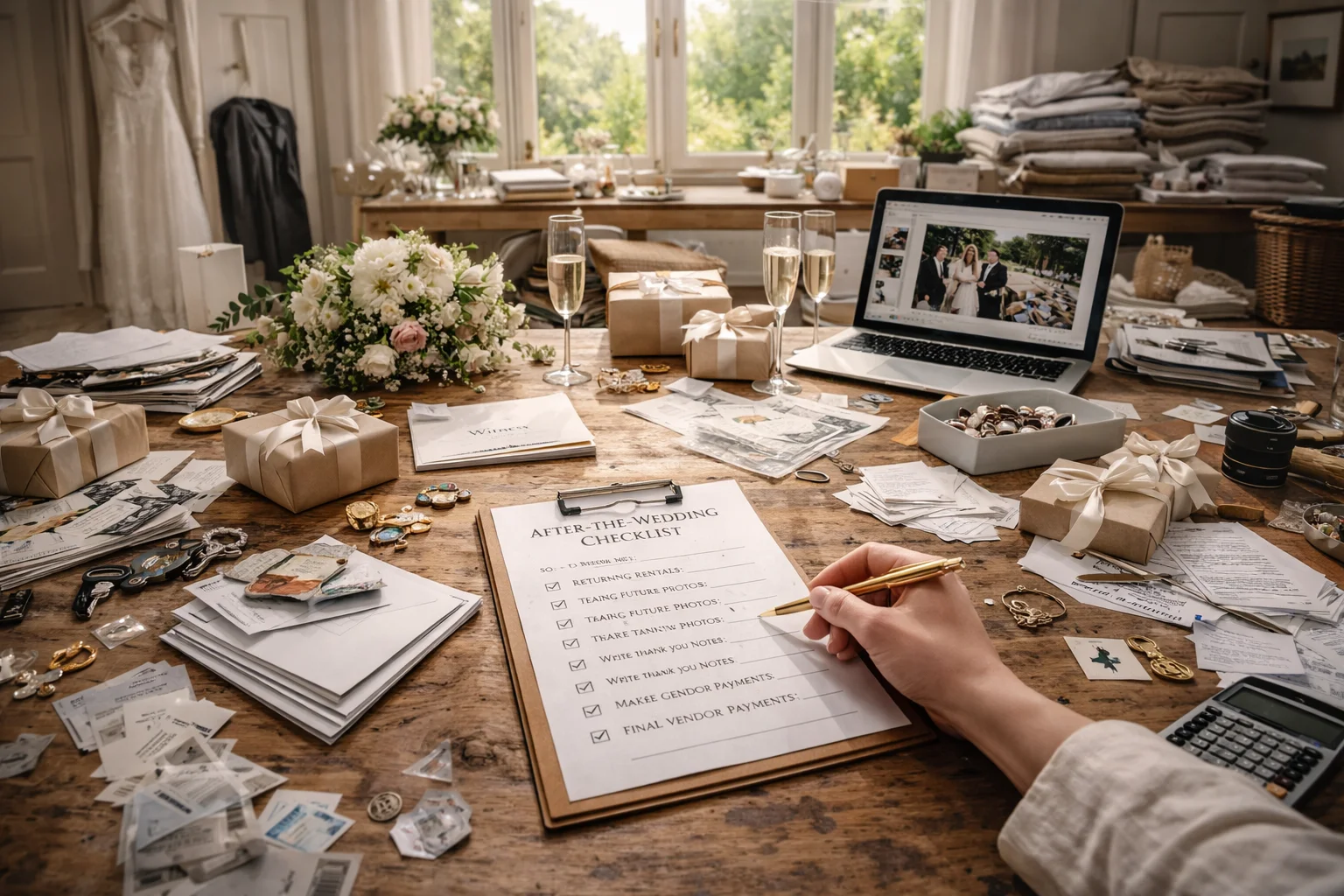
After-the-Wedding Checklist: What Still Needs to Be Returned, Paid, Thanked, or Closed
A wedding rarely ends when the last guest leaves. What follows is quieter, more practical, and often more emotionally mixed than couples expect. This article looks at what still needs to be returned, paid, thanked, or closed after the wedding, and why the days after the celebration are part of the wedding's meaning, not just its cleanup.
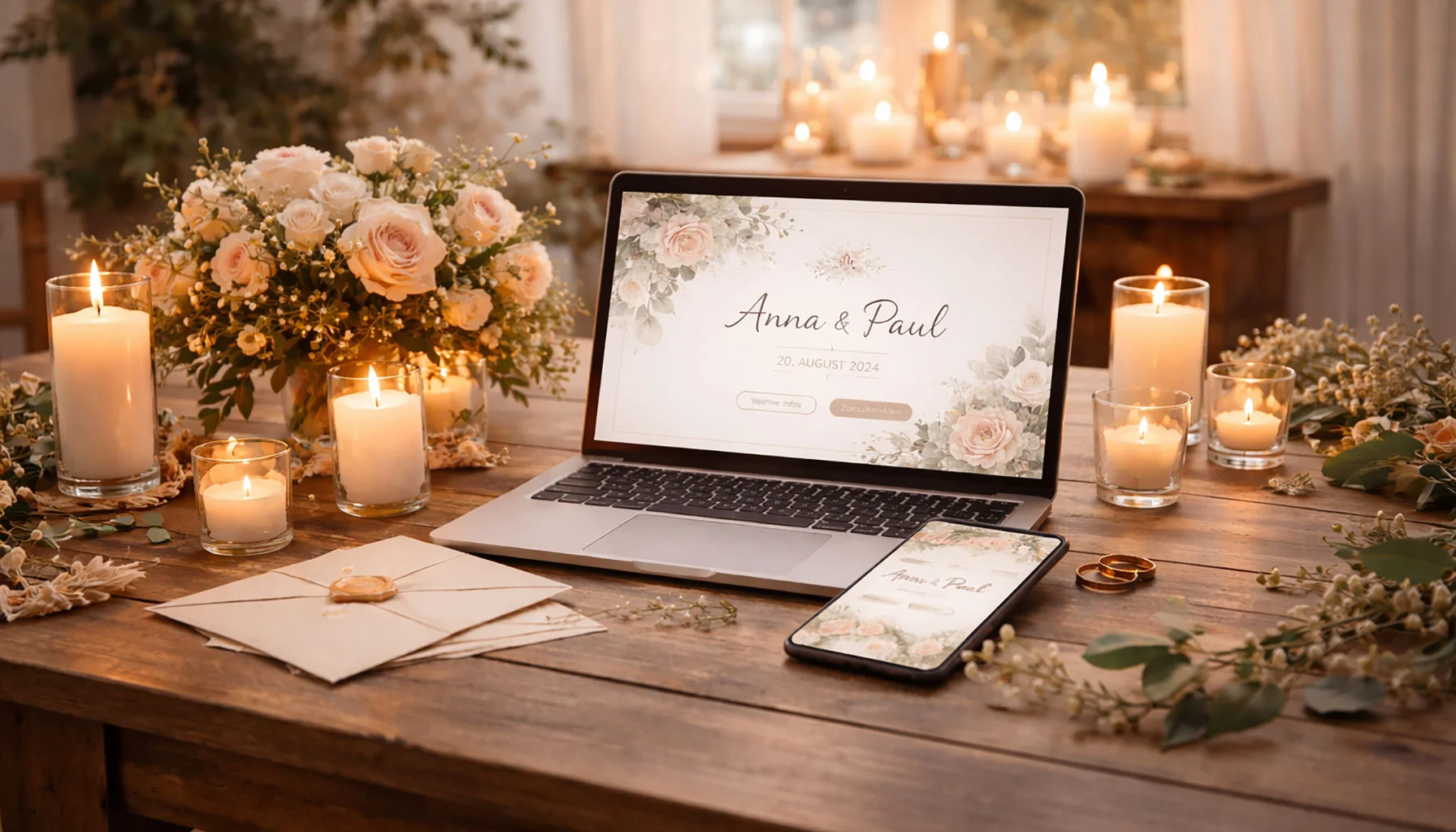
Wedding invitation online – Clearly organized, personally connected
Digital wedding invitations have established themselves in practice as a reliable organizational tool. They consolidate information, facilitate feedback, and connect guests regardless of their location. A wedding website provides clarity, reduces coordination effort, and allows for flexible adjustments to the schedule. Key are clear content, an uncluttered design, and a personal approach. This turns a technical solution into a fitting start for a shared day.
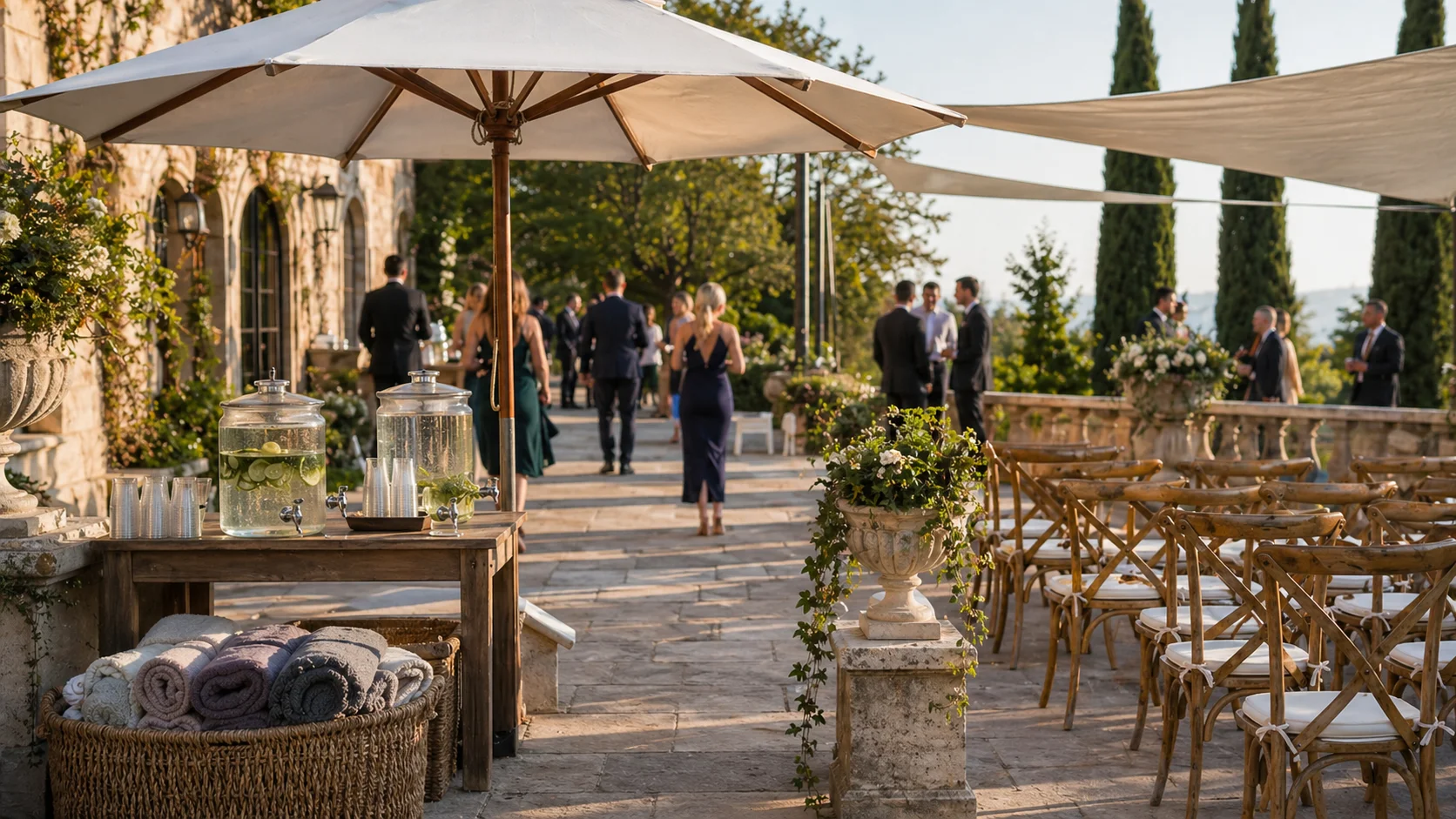
Backup Checklist for Outdoor Weddings: Shade, Wind, Cold, and the Things People Forget
Outdoor wedding backup plans are not only about rain. This article looks at shade, wind, cold, ground conditions, paths, loose details, guest comfort, and the small weather traces that shape how an outdoor celebration is remembered.

Wedding Venue Visit Checklist: What to Observe During a Location Tour
Before a wedding location is booked, couples usually visit the place in person. These visits are often short, sometimes just an hour between other appointments. During that time many practical details appear: distances, lighting, sound, room flow, the way staff answer questions. Notes taken during such visits tend to be uneven. Some things seem obvious on site and disappear from memory later. A checklist helps structure the visit so that small but relevant observations are not lost.
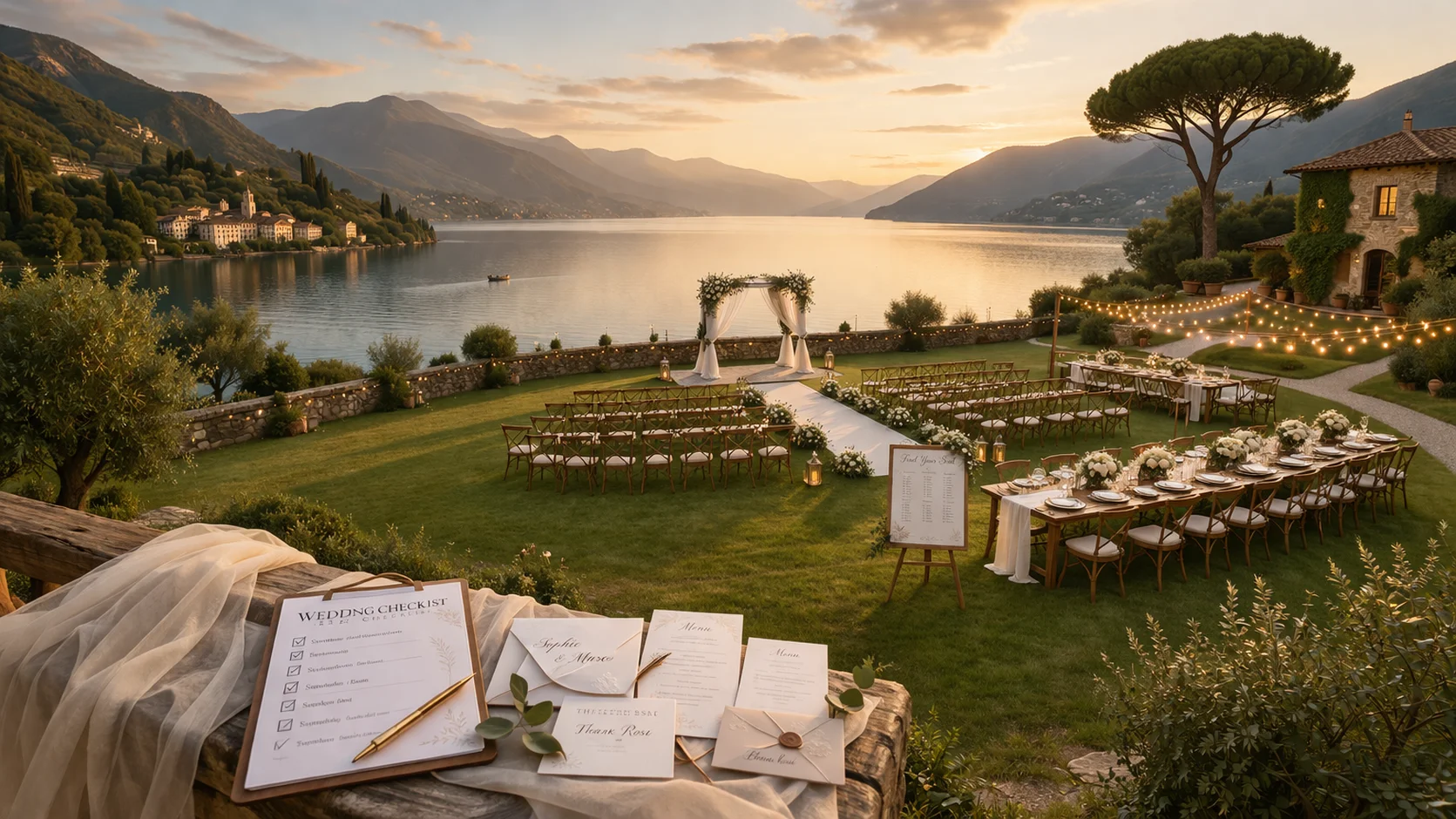
The Wedding Checklist That Grounds You: Turning Planning Into Something Meaningful
A wedding checklist isn’t just about tasks—it’s about clarity, intention, and trust. Here’s how to approach it in a way that feels calm, structured, and truly yours.
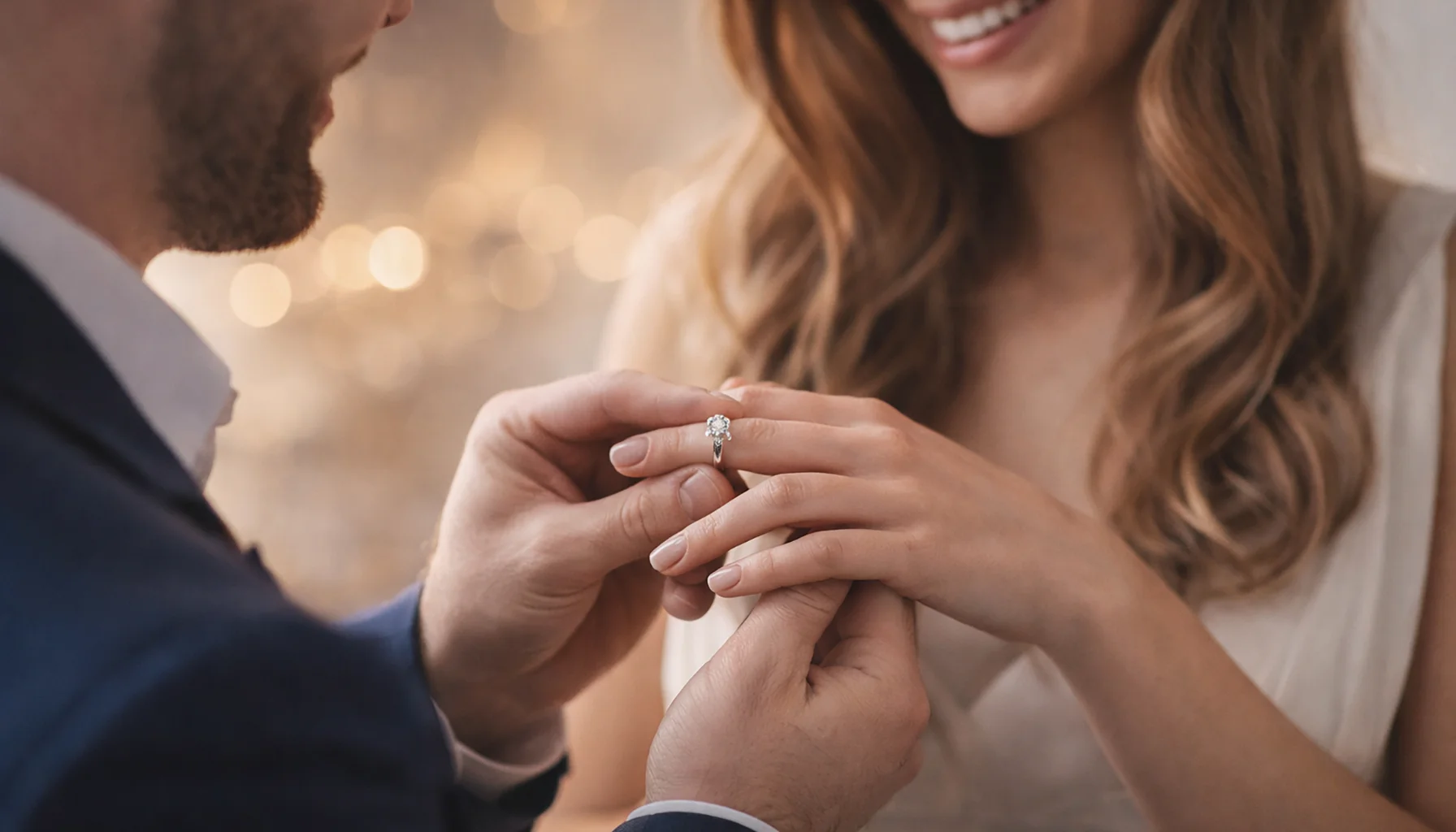
Engagement Ring and Wedding Ring: Two Moments, One Commitment
Engagement ring and wedding ring mark different stages of the same decision. One appears at the beginning, often tied to a single moment. The other enters daily life and stays there. Their forms, materials, and proportions follow different needs, yet they are meant to exist together. Understanding how they differ helps explain why both matter, and why their combination often says more than either ring alone.
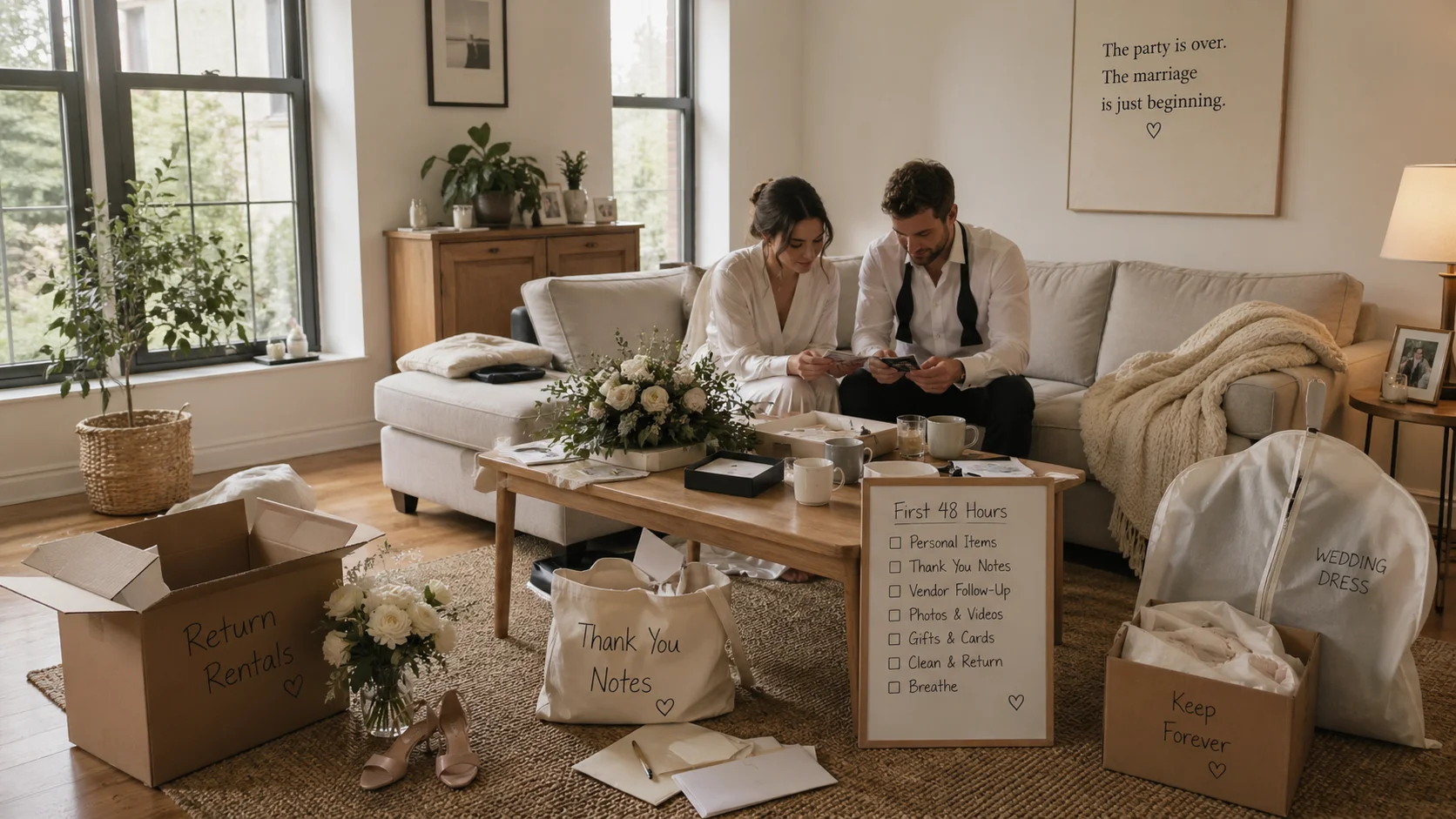
After-the-Wedding Checklist: What Needs Attention in the First 48 Hours
The first 48 hours after a wedding are quiet, practical, and easy to underestimate. This article looks at personal items, gifts, clothing, vendor closure, early photos, and the small tasks that help the after feel lighter instead of turning into scattered errands.