
Wedding Rings Between Decision and Everyday Life
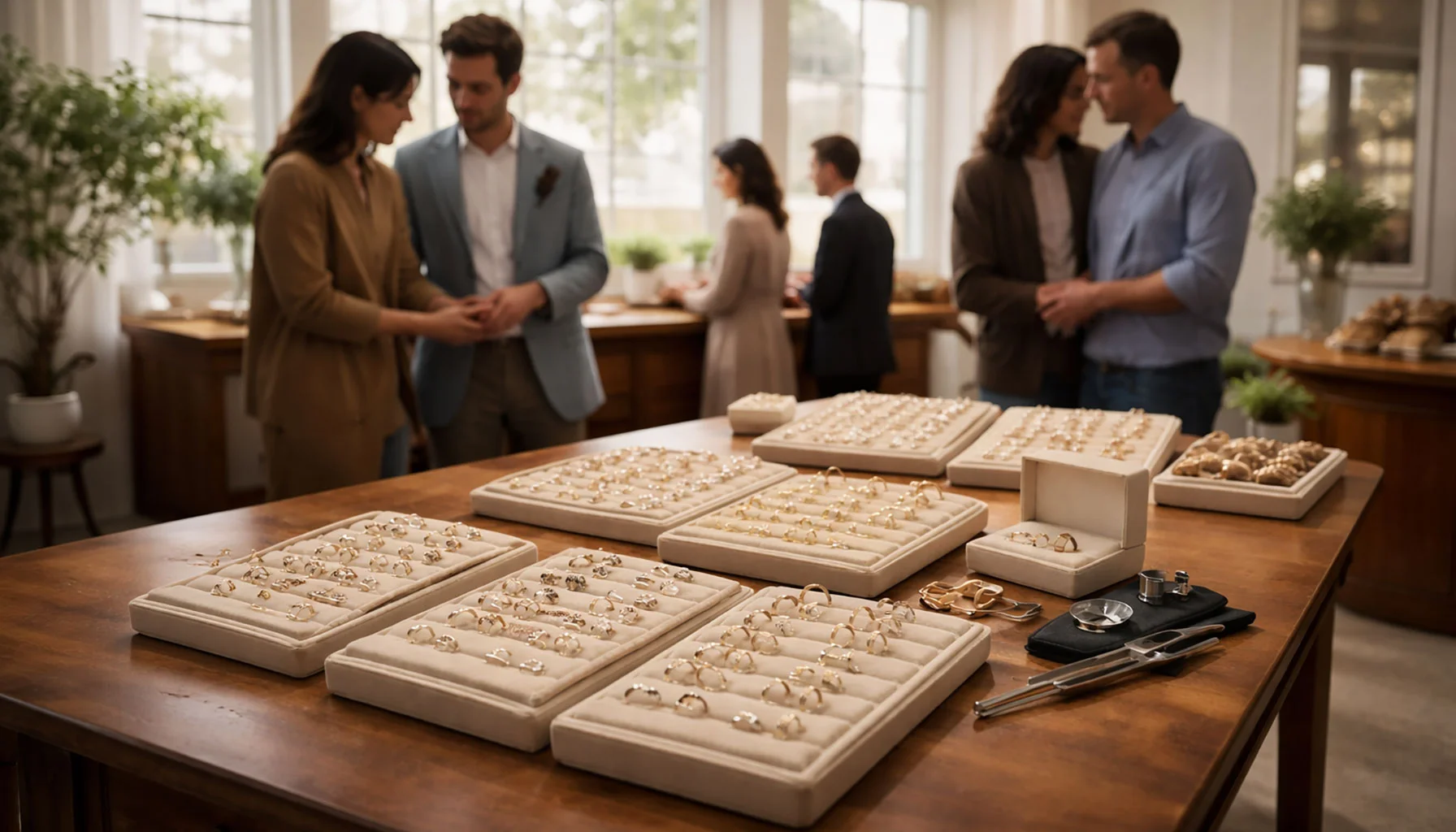
Wedding rings are not chosen like other pieces of jewelry. They rest on the skin, every day. Initially, they feel unfamiliar. Too smooth, too heavy, too visible. Then, after a while, they settle into the right place. Conversations about them are often quieter than expected. Less enthusiasm, more deliberation. Hands rest on the counter. You quickly notice which ring bothers you and which does not.
This is why the subject belongs naturally to both Bride and Waiting. Wedding rings often live precisely in that space. They are chosen before they become natural. Their meaning begins in decision, but settles only in use.
BridePersonal style and emotion come together in the overall appearance of the bride. From the wedding dress and accessories to hair and makeup, every detail contributes to a look that feels authentic and confident. A thoughtfully chosen bridal look reflects personality, complements the wedding style, and makes the bride feel truly herself on this special day.
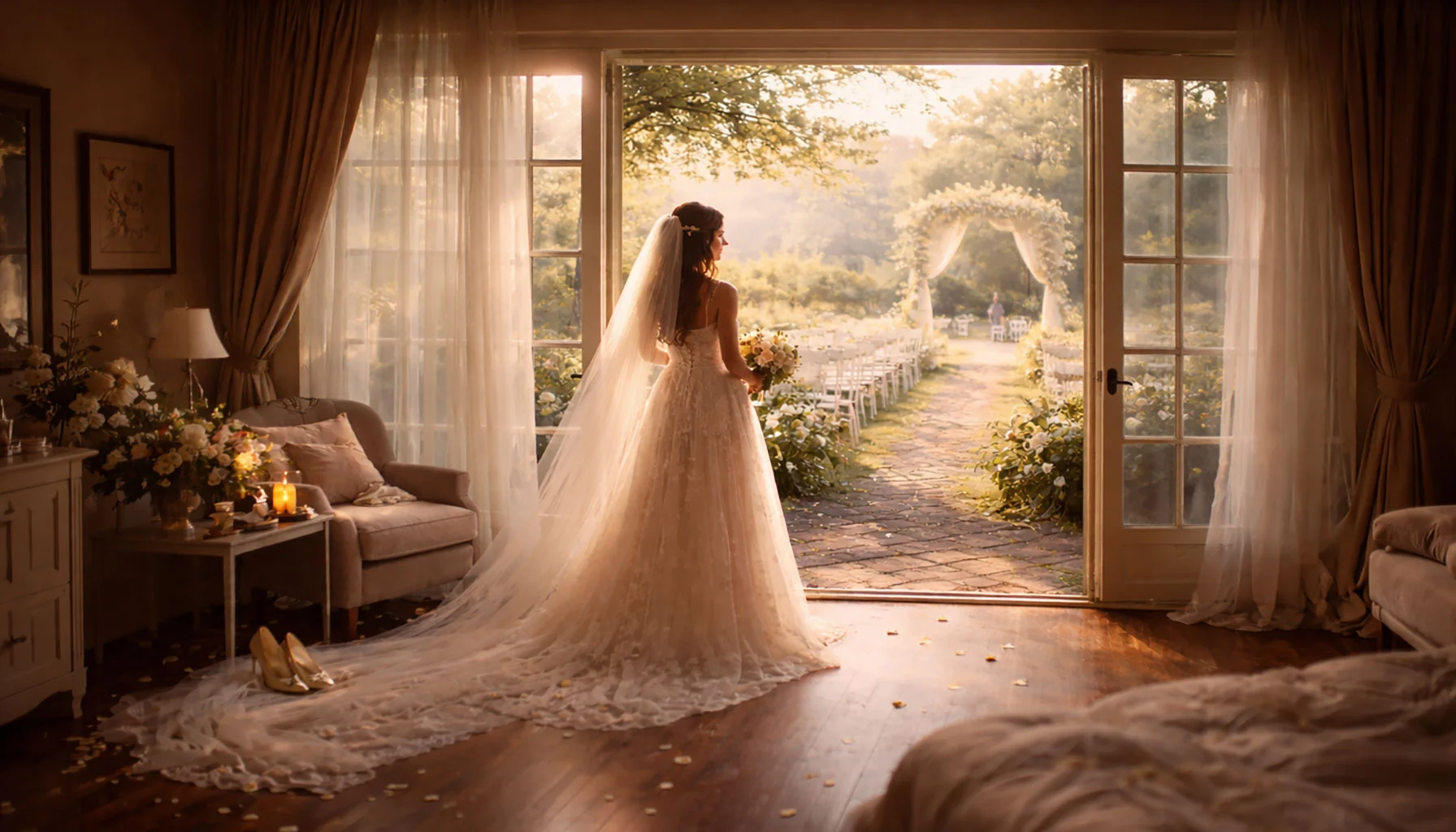
Waiting is not inactivity. It is the emotional state of knowing that something will happen, without knowing when or how.
Width as a Statement
Filigree rings are often underestimated. In the display, they appear inconspicuous. On the finger, they lose this restraint. They allow room for movement, remain subtle when working, grasping, or wearing gloves. Many who otherwise wear little jewelry stop here.
Rings of normal width are the calm center. Not too narrow, not too prominent. They allow for texture, small edges, different surfaces. Engravings do not disappear immediately. This width suits many hands, regardless of clothing style.
Solid rings are worn intentionally. Their weight is noticeable. Some find this very reassuring. Others take them off after a short time. These widths quickly show traces. Wear becomes visible. For many, this is part of it.
Materials in Everyday Life
Yellow gold remains constant. It changes slowly, becoming duller, softer in expression. Many describe it as familiar. White gold and grey gold appear more reserved. They adapt, do not compete with other jewelry, and are less noticeable in everyday life.
Red and rose gold react more strongly to light and skin. Warm on some days, almost cool on others. Especially with narrow rings, a calm image emerges. The color remains present without appearing loud.
Platinum is often only understood when trying it on. The weight is surprising. The surface remains even for a long time, even with daily wear. Palladium appears lighter, less intrusive. Many choose it because it demands little attention.
Carbon usually appears late in the conversation. It is matte, dark, calm. In combination with precious metal, tension arises without forcing contrast. Pure carbon rings are rarely chosen, more often as an accent.
Bicolor and tricolor rings often arise from a desire for connection. Two or three metals without clear dominance. Transitions are fluid or deliberately visible. These rings speak less of fashion than of compromise.
Stone Setting, Subtly Used
A single stone is enough for many. Flat-set, not raised. It remains part of the ring, not the center. Several small stones are evenly distributed or set as a fine line.
Large settings are less often worn permanently. In everyday life, simple solutions remain comfortable for longer. The ring remains calm, even after years.
Current Trends
- Matted surfaces with visible craftsmanship
- Bicolor and tricolor rings with soft transitions
- Narrower widths even for classic shapes
- Stone setting only on one ring of the pair
- Internally rounded profiles for long-term wear
Everyday feedback: The ring felt unfamiliar at first. After two weeks, I only noticed that it had always been there.
Observation after selection: In the end, it was not the appearance that mattered, but how calm it felt.
Wedding rings do not age, they change. Edges soften, surfaces tell stories of wear. Many only notice this after years. Then the ring does not feel new, but right.
Related Articles

Bachelor Party – A Day Between Everyday Life and Wedding
A bachelor party is not a loud statement, but a quiet transition. People come together who have accompanied them on their journey so far. For a limited period, nothing is on the agenda except shared time. Planning provides stability, openness creates space. Whether for men or women: What's crucial is that the occasion suits the person. Then something unique emerges. Understated. Enduring.
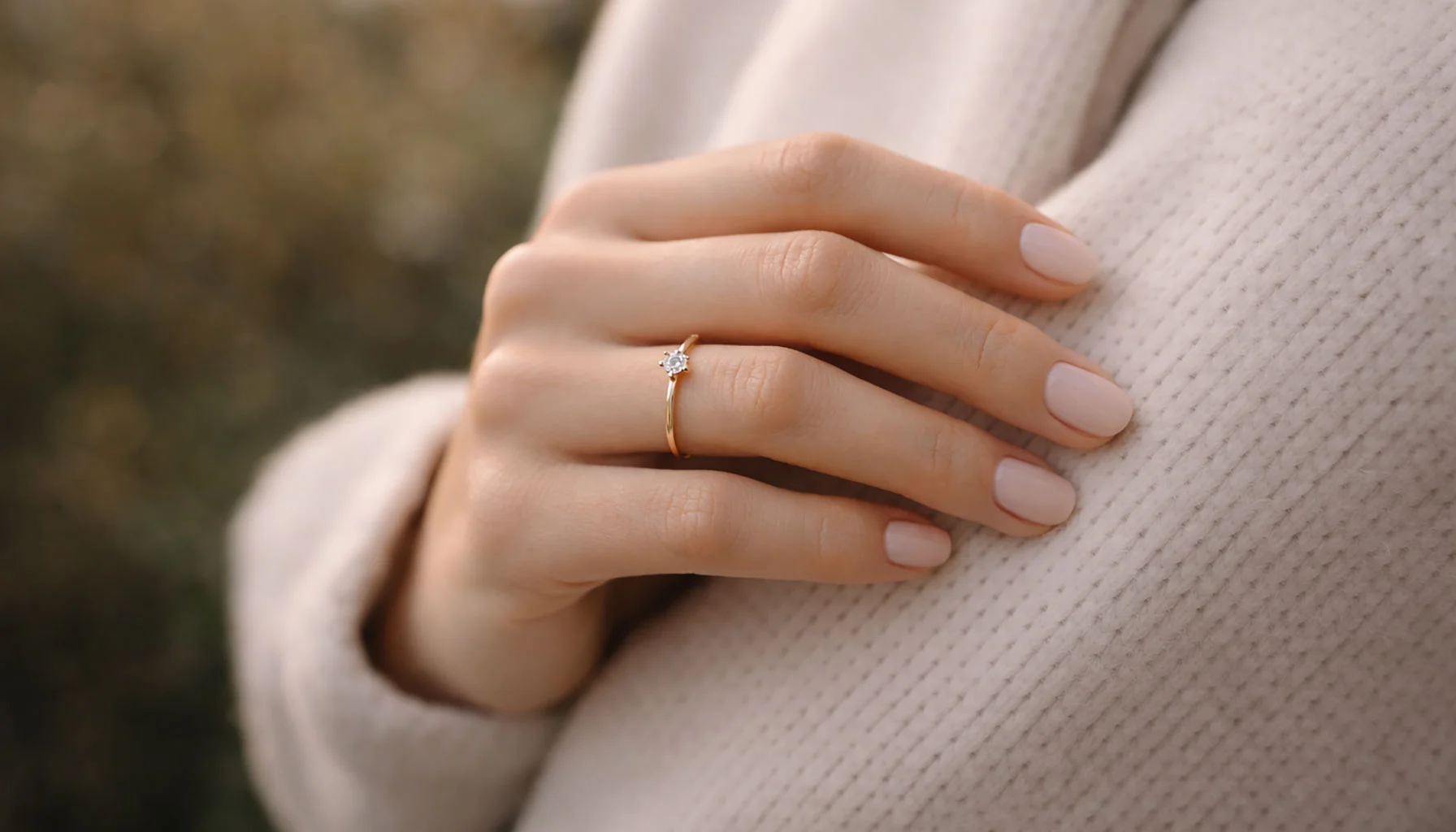
The engagement ring as a sign of a decision
The engagement ring stands on the edge of a big moment and remains present for a long time afterwards. It is part of everyday life, not just a memory of a proposal. This text describes what makes an engagement ring, how it is selected, and why decisions regarding shape, material, ring size, and wearing style mostly arise from observation. It is about common variants, the handling of diamonds and alternatives, as well as developments that have quietly established themselves. In the foreground are experiences, voices from practice, and the question of how a ring fits a person without defining them.
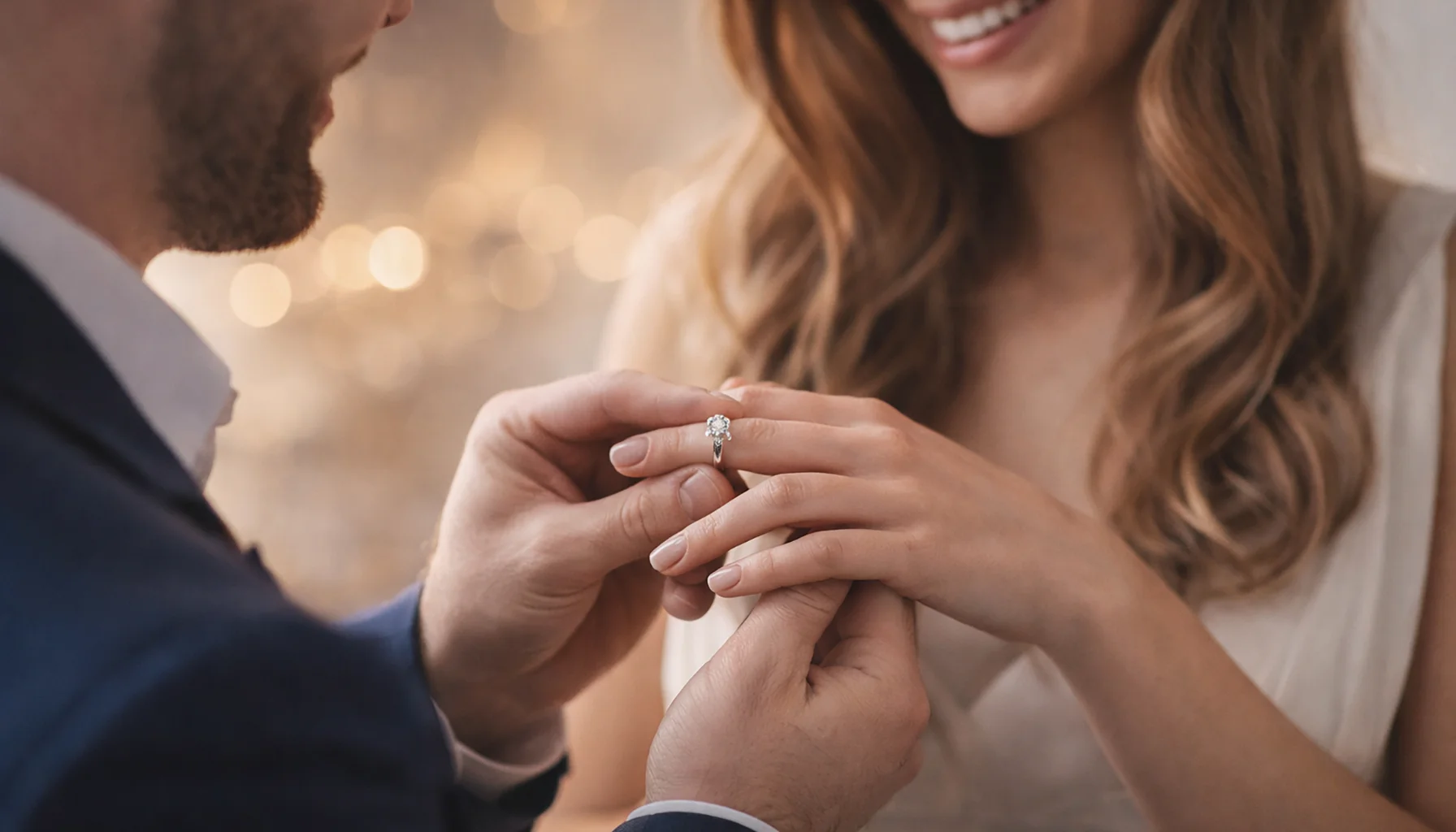
Engagement Ring and Wedding Ring: Two Moments, One Commitment
Engagement ring and wedding ring mark different stages of the same decision. One appears at the beginning, often tied to a single moment. The other enters daily life and stays there. Their forms, materials, and proportions follow different needs, yet they are meant to exist together. Understanding how they differ helps explain why both matter, and why their combination often says more than either ring alone.
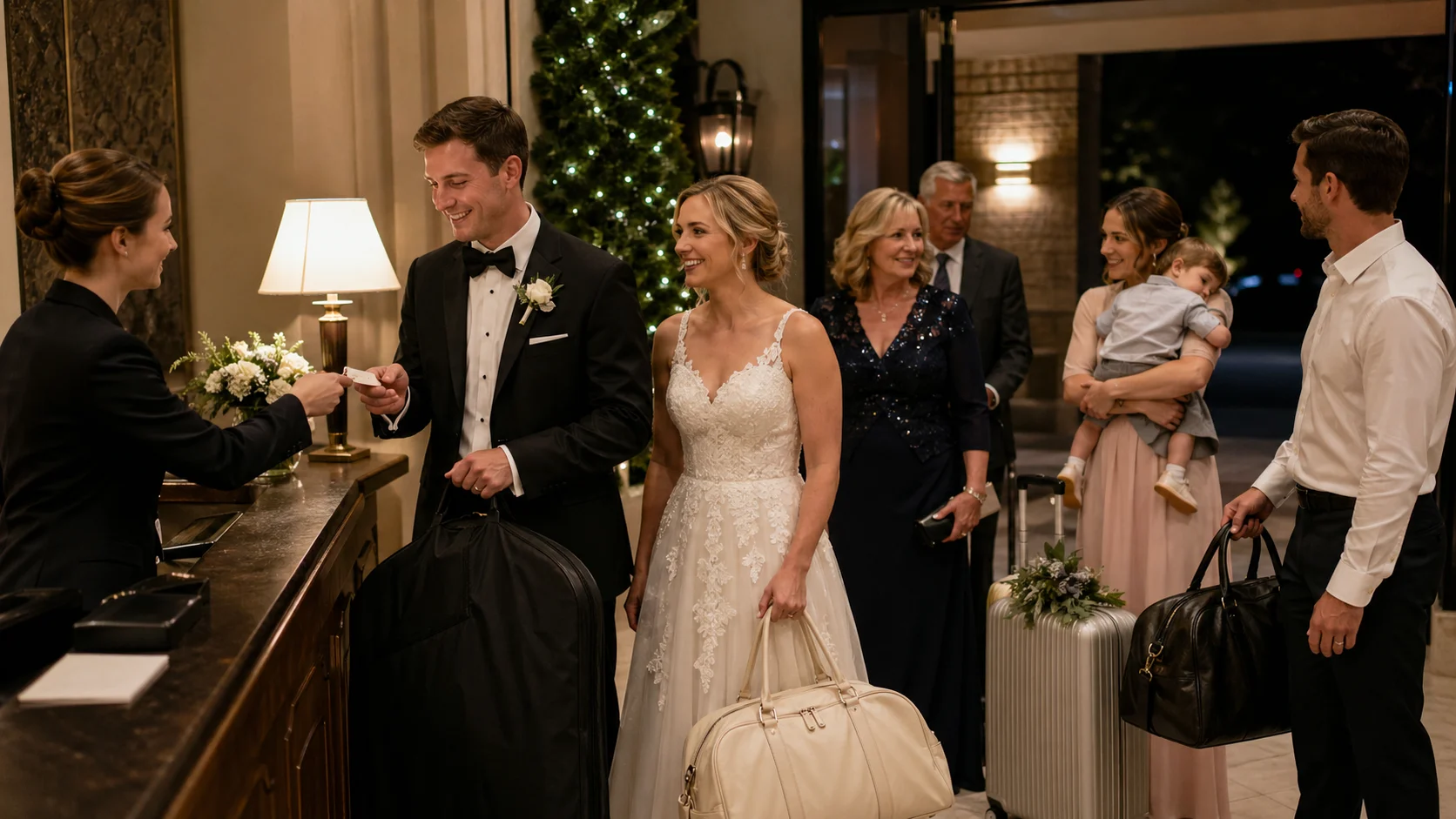
Overnight Stay Checklist: What Couples and Guests Often Realize Too Late
Overnight stays around weddings often seem solved once rooms are booked. This article looks at room access, bags, keys, transport, breakfast, checkout, and the late-night waiting moments couples and guests usually notice too late.
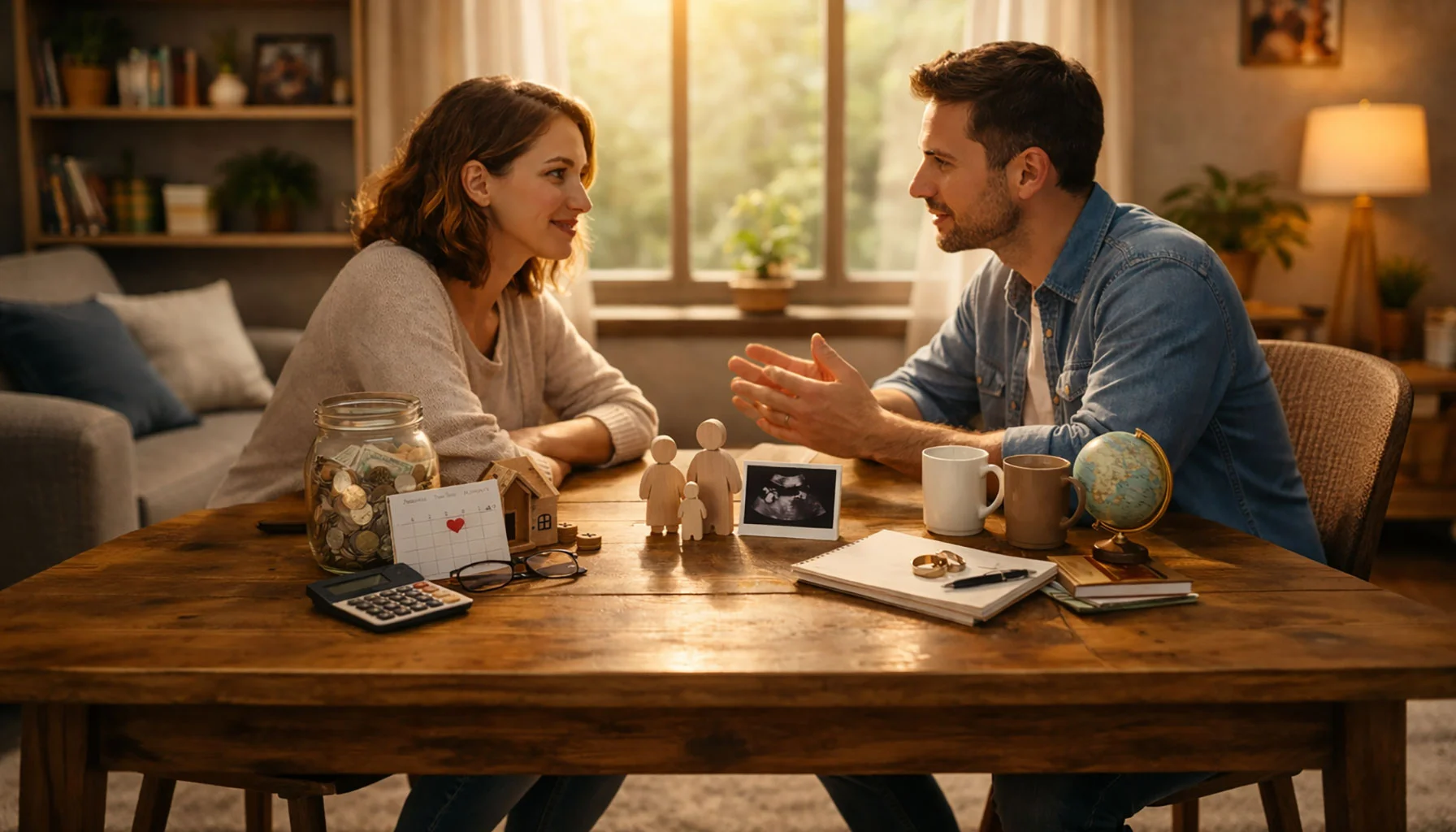
Conversations Before Marriage – Life Questions That Clarify the Relationship
A marriage is not just about feelings, but also expectations, imprints, and ideas about everyday life. This text compiles central life questions that couples should clarify with each other before saying 'I do': regarding money, family, children, conflicts, division of tasks, and personal values. Grown from observations, objectively considered, and close to lived everyday life. Conversations that make differences visible – and thereby strengthen connection.
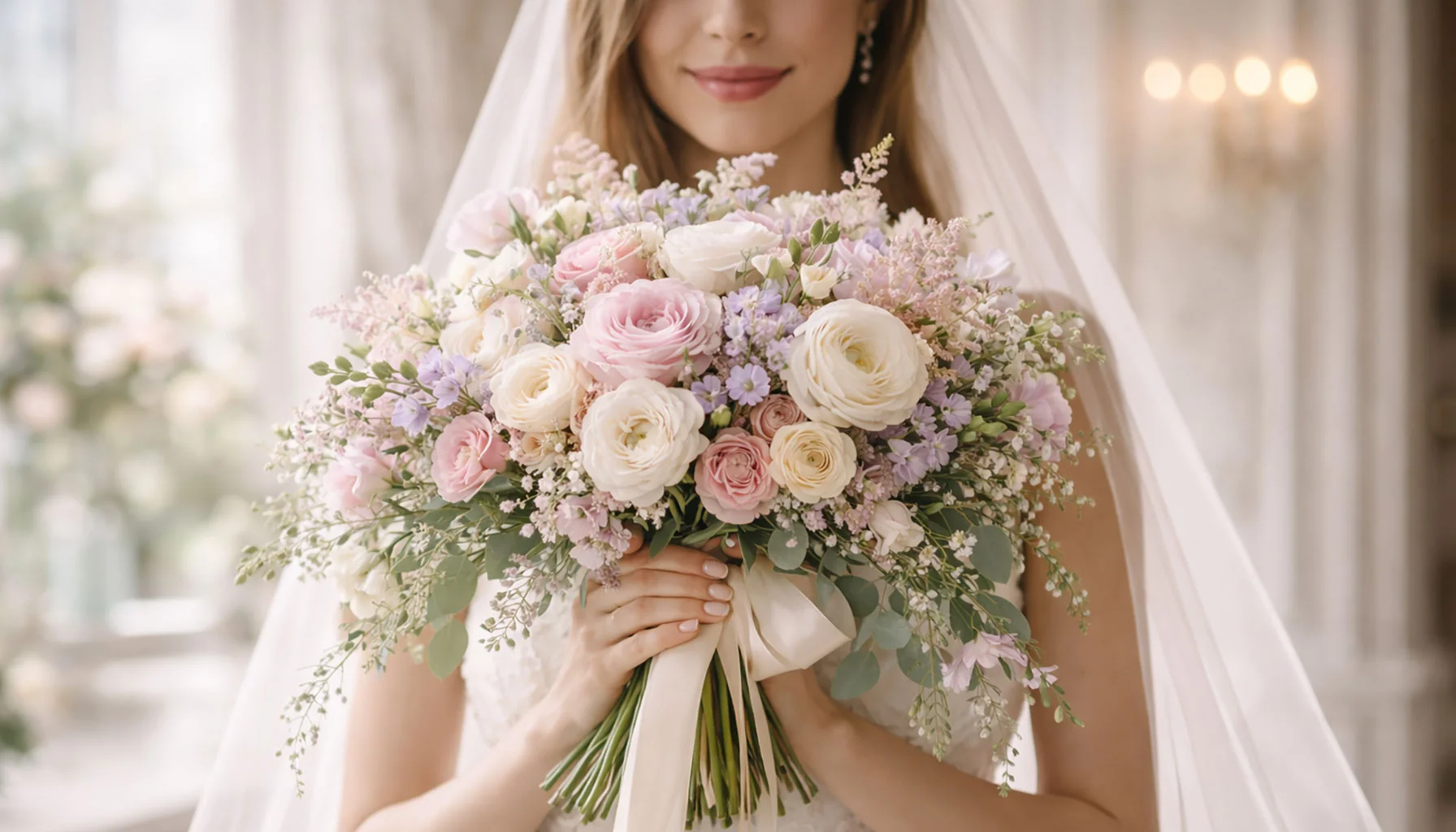
The Bridal Bouquet: A Silent Expression of Love, Style, and Timeless Emotion
The bridal bouquet accompanies the bride throughout the wedding day. It is held, adjusted, set aside, and taken up again. Its impact comes from balance rather than attention. Shape, weight, and color align with movement and appearance and become part of what is remembered.
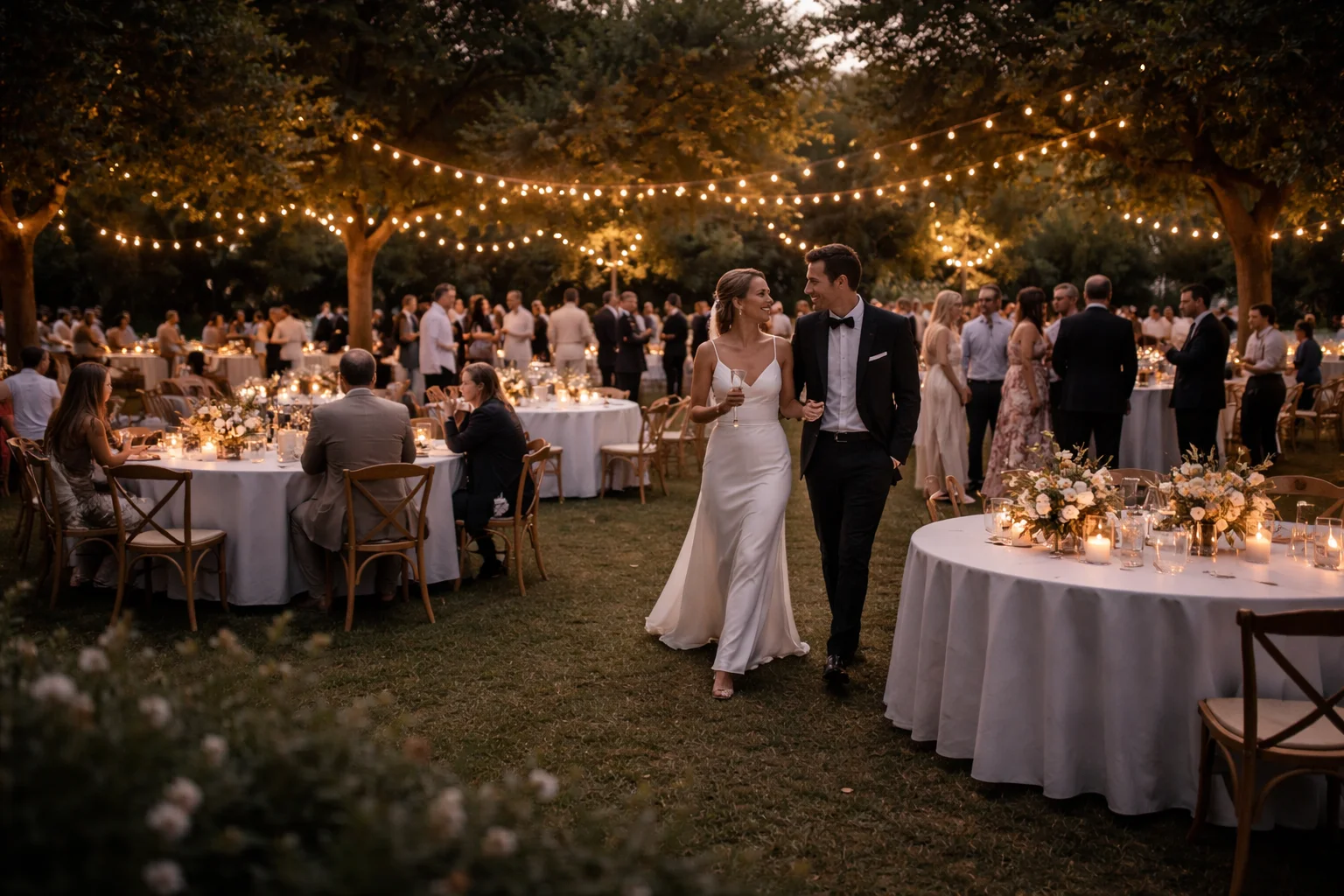
Second Dress for the Wedding Reception
At many weddings the clothing does not stay the same from start to finish. After the ceremony and formal photographs, a quiet shift sometimes happens. The bride disappears for a short time and later returns wearing something different. Guests notice it in small ways. A lighter fabric. Shorter hem. Movement that feels easier during the evening.
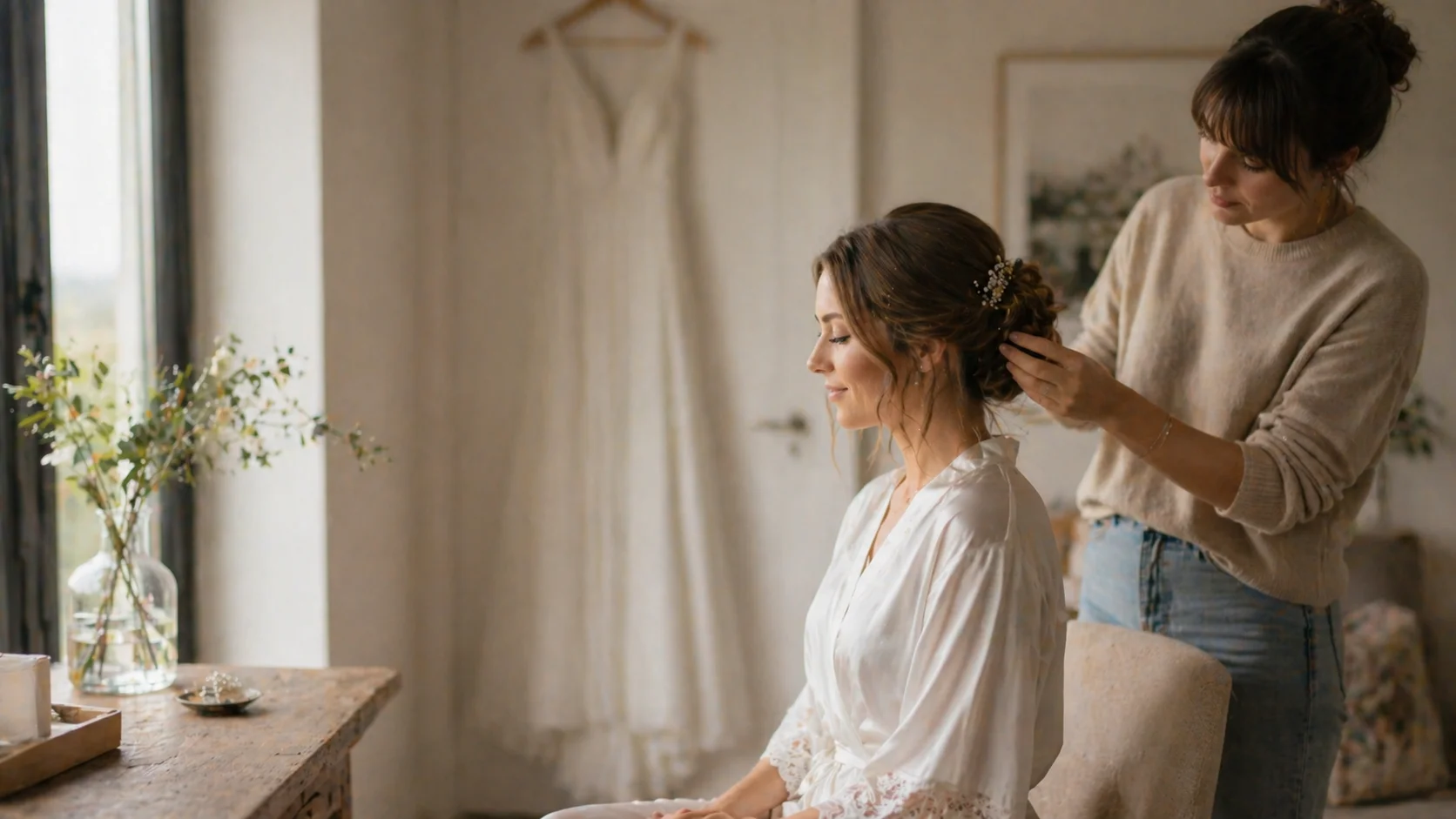
Bridal Getting-Ready Room Checklist: Light, Surfaces, Noise, and Movement
A bridal getting-ready room does more than hold hair, makeup, and dresses. This article looks at light, surfaces, noise, movement, privacy, and the quiet traces the room leaves on the morning before the ceremony.
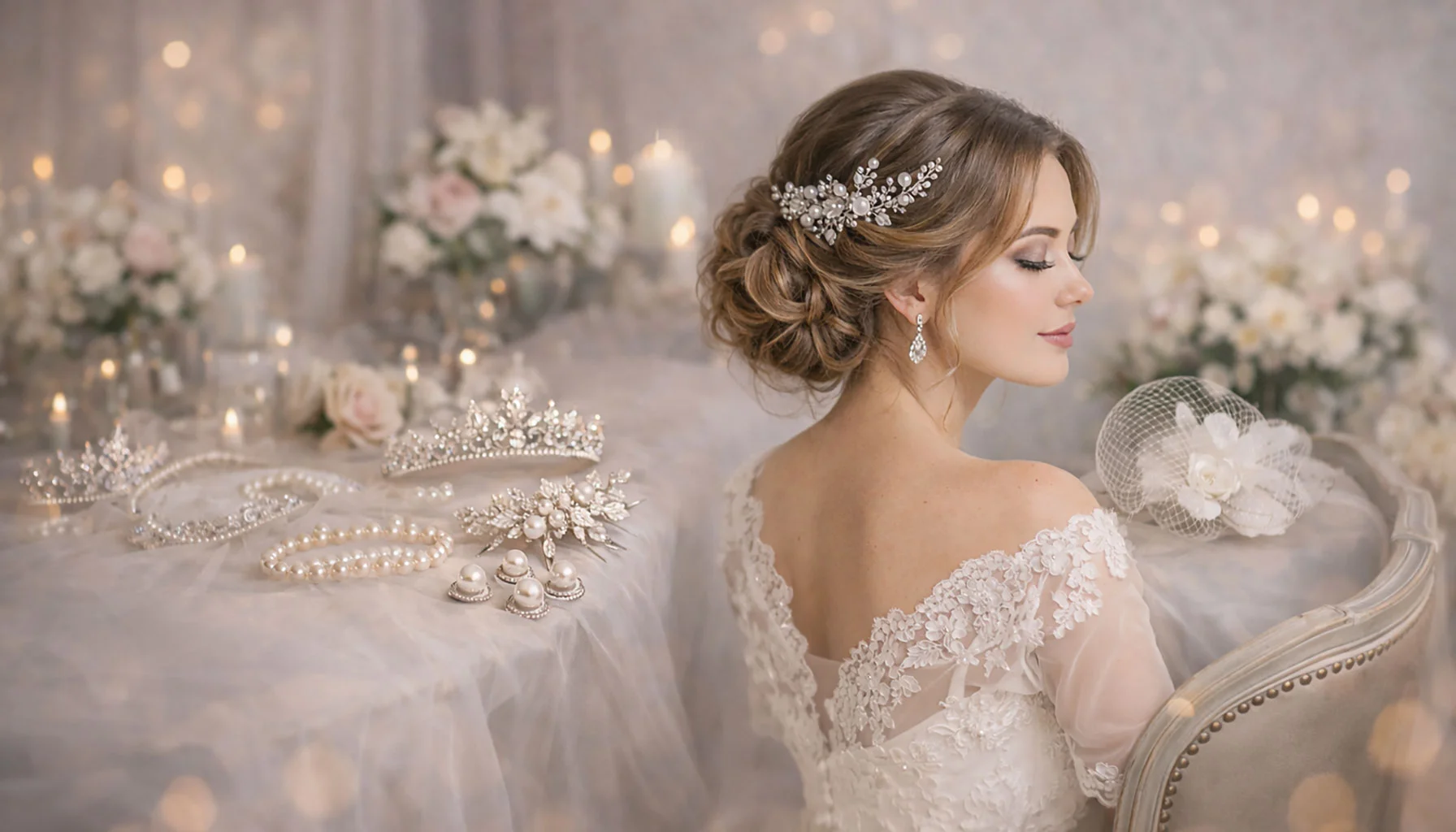
The Bridal Hairstyle as a Quiet Part of the Whole
A bridal hairstyle supports the entire look. It frames the face, works with the dress, and needs to hold throughout the day. In practice, the most convincing results come from aligning hair texture, proportion, and the flow of the wedding day. Less display. More coherence.
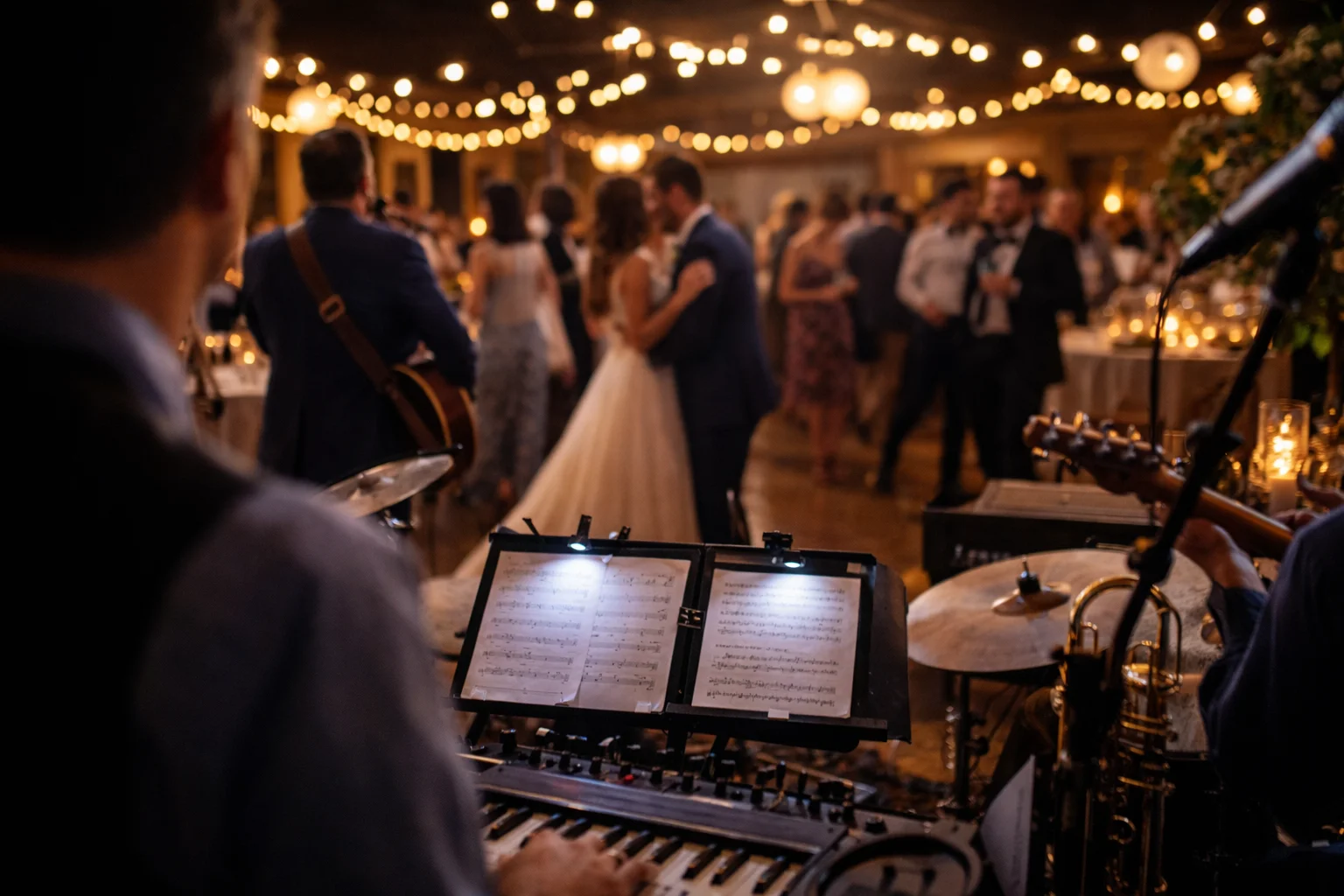
Situational Playlists at Weddings: Real Moments, Small Shifts
The best wedding playlists are rarely built around genres alone. They respond to hesitation, momentum, waiting, release, and the subtle changes that happen across a real evening, often through small song choices rather than big musical statements.
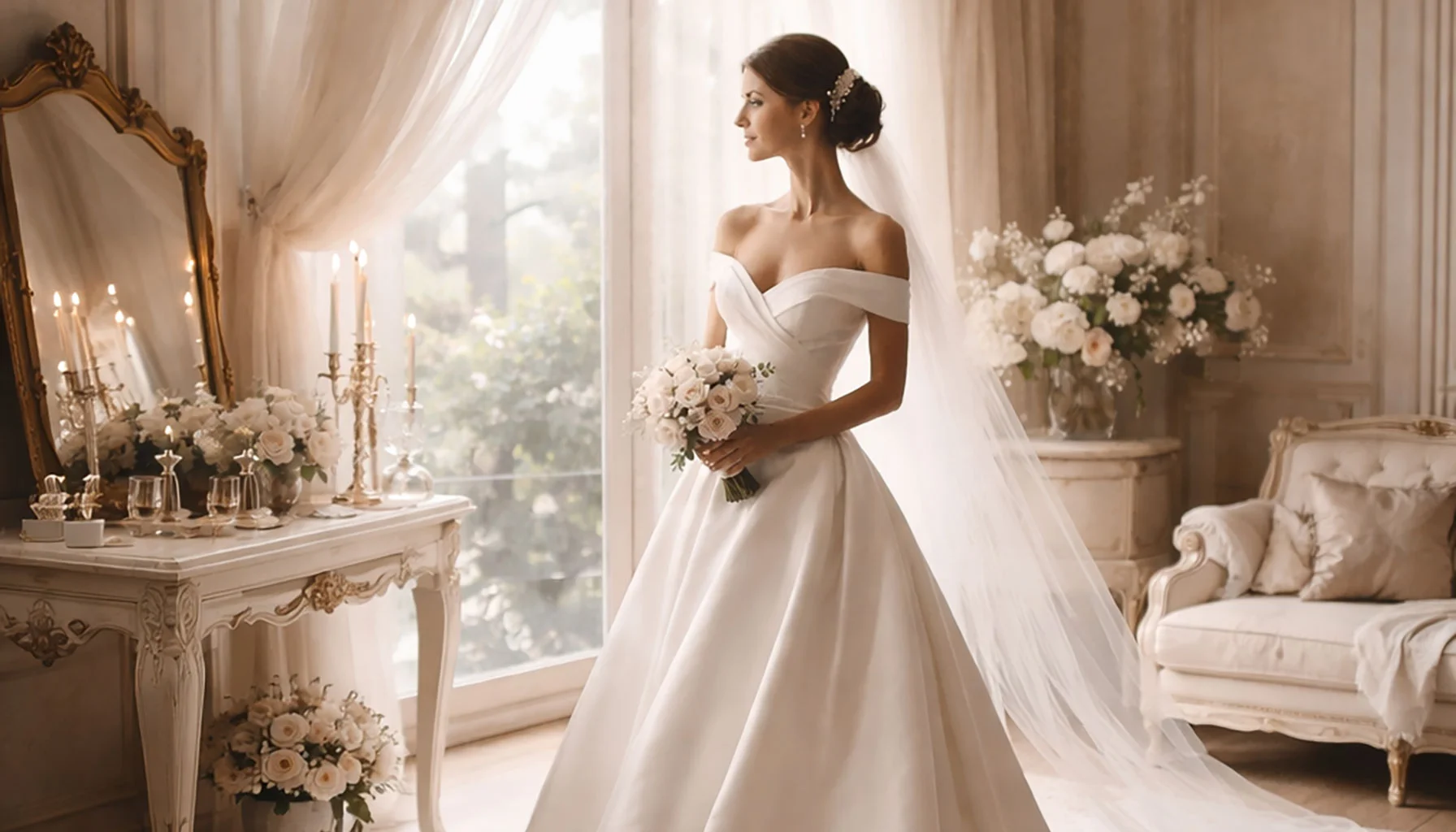
Beyond the Wedding Dress: What Truly Defines the Bridal Look and Experience
The bridal look is shaped long before the wedding day itself. It is created through thoughtful preparation, careful attention to detail, and a sense of inner calm that carries the bride through every moment. When styling, timing, and presence align naturally, beauty feels effortless rather than staged. Hair, makeup, accessories, and posture work together to support the bride rather than overshadow her. Yet what truly defines her appearance is how grounded and supported she feels. A bride who trusts her choices and releases the need for perfection radiates authenticity and quiet confidence. In this balance between outer expression and inner state, the bridal look becomes more than an image. It becomes an atmosphere — one that is felt, remembered, and carried far beyond the day itself.
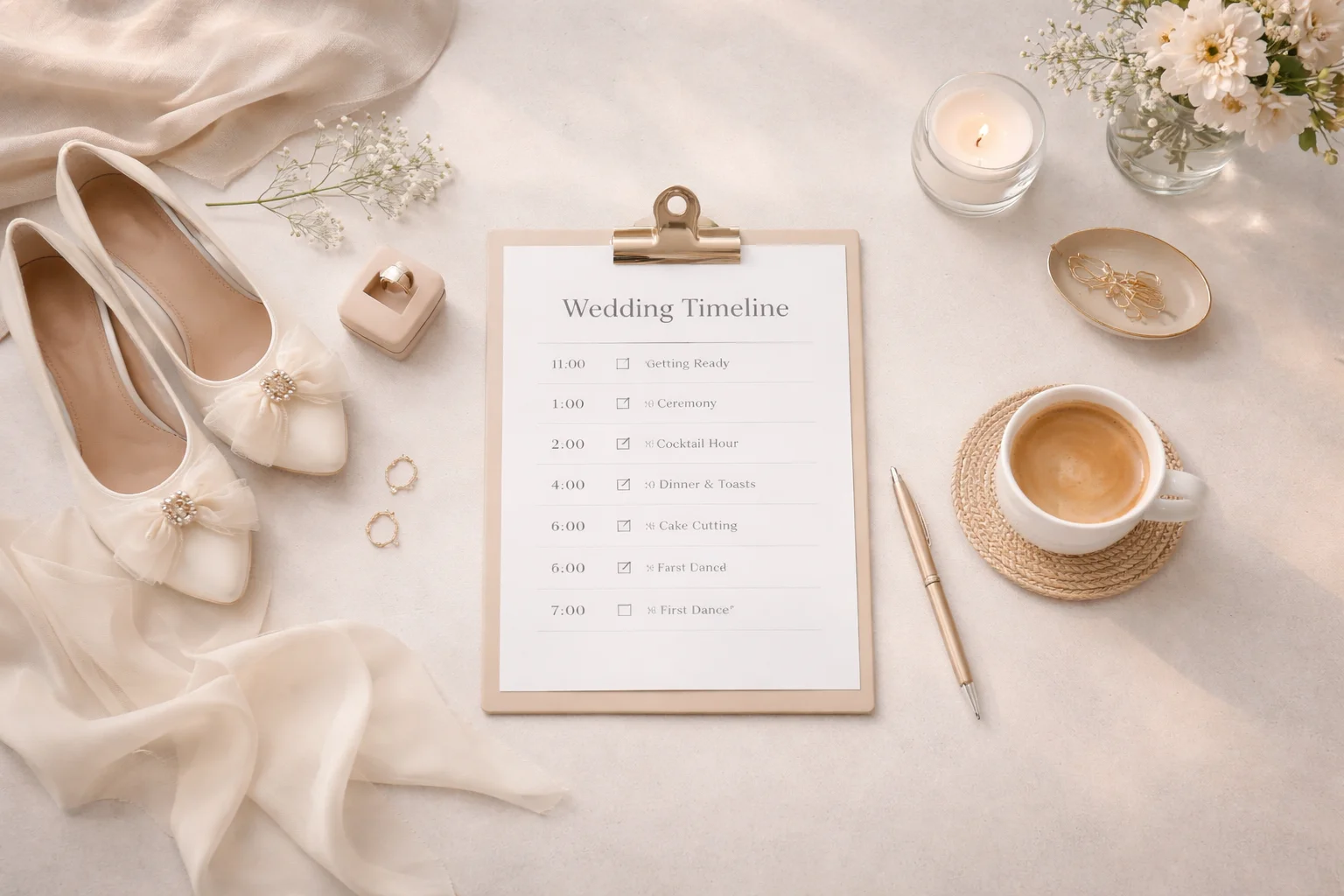
Minimal Wedding Timeline Checklist: How to Leave Space Without Losing Structure
A minimal wedding does not need to fill every moment too early. This checklist helps couples create a calm celebration with space, timing, and intentional restraint, while recognizing that waiting itself can shape the emotional atmosphere of the day.