
Conversations Before Marriage – Life Questions That Clarify the Relationship

Questions Before Marriage – Conversations that Endure
Before a marriage, not only feelings are present, but also habits, expectations, and quiet assumptions. In conversations with couples, it becomes clear that certain questions rarely arise on their own. They seem unspectacular. And yet, they shape everyday life. They are not grand speeches. Rather, quiet alignments. Sometimes hesitant. Then clear again.
Dealing with Money
Money is often treated organizationally, not personally. Yet, biographies are tied to it. Saving means security for some, restraint for others. Expenses can express freedom or structure. Couples who talk early about accounts, savings, and major purchases appear coordinated in everyday life. It's less about numbers and more about attitude.
Closeness and Personal Space
The desire for closeness is rarely identical. One person seeks conversation in the evening, the other silence. One plans weekends together, the other needs hours alone. When discussed, a rhythm emerges. Not a plan on paper. Rather, a quiet settling in.
Family and Bonds
Parents, siblings, old friendships remain part of life. The question is not whether they get space, but how much. Holidays, visits, everyday support. Tensions arise here when expectations remain unspoken. Open agreements seem inconspicuous. Yet, they carry far.
Children and Life Plans
The desire for children is often affirmed, rarely specified. When, how many, with what division of responsibility. Career goals also belong here. Career phases, changes of location, further training. Those who listen here recognize not only plans but priorities.
Conflict Culture
What is crucial is not whether conflicts arise, but how they are handled. Some withdraw, others immediately seek conversation. Loudness, silence, irony – all of this has an effect. Couples who can name their patterns less often fall into repetitions.
Everyday Life and Tasks
Household, appointments, organization. What is casually arranged at the beginning sets the tone. Imbalances are not always addressed immediately. They accumulate. An early distribution creates clarity. Not every task has to be exactly shared. But it should be seen.
Values and Core Attitudes
Questions about religion, political stance, or social engagement seem abstract. In everyday life, they manifest concretely. In decisions, in conversations with others, in upbringing. Different views do not exclude connectedness. They demand clarity.
Voices from Conversations
“We thought we knew each other. Only the conversations about money and family showed us where we were shaped differently. After that, things became calmer.”— Anna and Tobias, married for eight years
“Talking about children before it became concrete took the pressure off. We knew we had similar visions for life.”— Miriam and Lukas, married for five years
“Our conflicts are clearer today. One needs time, the other words. This knowledge changes a lot.”— Sara and Daniel, married for twelve years
Conclusion
Marriage doesn't begin with a promise, but with conversations beforehand. Questions don't create a rigid foundation. They lay down lines along which two people can orient themselves. Differences remain. They lose their sharpness when they are known. Those who look and listen before marriage enter the shared path with a watchful eye. Quietly. And reliably.
Related Articles

Beyond the Wedding Dress: What Truly Defines the Bridal Look and Experience
The bridal look is shaped long before the wedding day itself. It is created through thoughtful preparation, careful attention to detail, and a sense of inner calm that carries the bride through every moment. When styling, timing, and presence align naturally, beauty feels effortless rather than staged. Hair, makeup, accessories, and posture work together to support the bride rather than overshadow her. Yet what truly defines her appearance is how grounded and supported she feels. A bride who trusts her choices and releases the need for perfection radiates authenticity and quiet confidence. In this balance between outer expression and inner state, the bridal look becomes more than an image. It becomes an atmosphere — one that is felt, remembered, and carried far beyond the day itself.

Groom’s Morning Checklist: What Keeps the First Hours Clear and Unforced
The groom’s morning often looks simple from the outside, but it depends on small decisions made early. This article looks at clothing, food, rings, timing, communication, photography, transport, and the quiet rituals that keep the first hours clear without making them feel staged.

Transportation Checklist: How Not to Lose Time Between Wedding Locations
Wedding transportation is rarely only about the drive. This article looks at pickup points, buffers, driver contacts, guest movement, accessibility, and the pause between locations that either keeps the day together or quietly costs time.

Guest Comfort Checklist: Small Conditions That Change the Entire Atmosphere
Guest comfort at weddings is shaped by small conditions long before anyone complains. This article looks at temperature, seating, sound, waiting areas, access, and quiet spaces of relief that change how the whole room feels.

Backup Checklist for Outdoor Weddings: Shade, Wind, Cold, and the Things People Forget
Outdoor wedding backup plans are not only about rain. This article looks at shade, wind, cold, ground conditions, paths, loose details, guest comfort, and the small weather traces that shape how an outdoor celebration is remembered.

Overnight Stay Checklist: What Couples and Guests Often Realize Too Late
Overnight stays around weddings often seem solved once rooms are booked. This article looks at room access, bags, keys, transport, breakfast, checkout, and the late-night waiting moments couples and guests usually notice too late.

A Wedding Shaped by Quiet Alignment
This wedding was defined not by individual highlights, but by its steady flow. Planning, design, and service worked together without drawing attention to themselves. For guests, the day unfolded naturally and remained consistent, carried by a sense of calm, closeness, and continuity throughout.

Emotional Load Checklist: Who Carries Too Much, and How to Notice It Early
Emotional load at weddings often hides behind competence. This article looks at who carries invisible responsibility, how to notice early signs of overload, and how to share care before one person quietly holds too much.

Ceremony Transition Checklist: What Should Be Ready Before Attention Has to Gather
Ceremony transitions often seem brief on paper, but they carry the difficult shift from movement into shared attention. This article looks at what needs to be ready before that moment arrives, from seating and sound to cues, stillness, and the quieter emotional readiness of the room.

Bridal Getting-Ready Room Checklist: Light, Surfaces, Noise, and Movement
A bridal getting-ready room does more than hold hair, makeup, and dresses. This article looks at light, surfaces, noise, movement, privacy, and the quiet traces the room leaves on the morning before the ceremony.
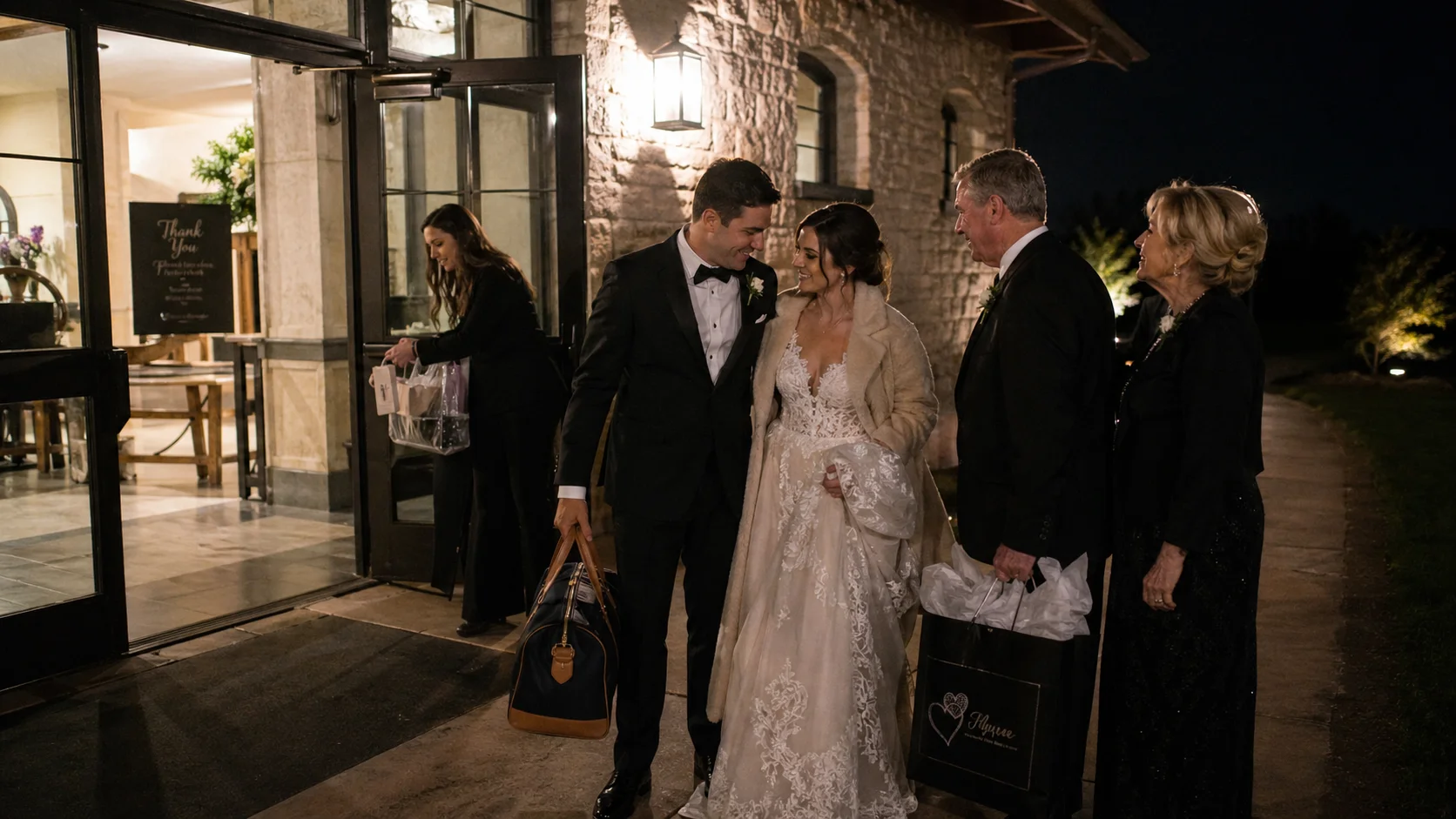
Exit Checklist: What Matters in the Last Thirty Minutes of a Wedding Night
The end of a wedding rarely happens in one clean moment. This article looks at the last thirty minutes of the night, from transport and personal items to final goodbyes, vendor handovers, and the quiet beginning of what comes after.

After-the-Wedding Checklist: What Still Needs to Be Returned, Paid, Thanked, or Closed
A wedding rarely ends when the last guest leaves. What follows is quieter, more practical, and often more emotionally mixed than couples expect. This article looks at what still needs to be returned, paid, thanked, or closed after the wedding, and why the days after the celebration are part of the wedding's meaning, not just its cleanup.