
Bridal Fashion and Attire: Timeless Elegance, Modern Trends and the Art of an Unforgettable Bridal Look
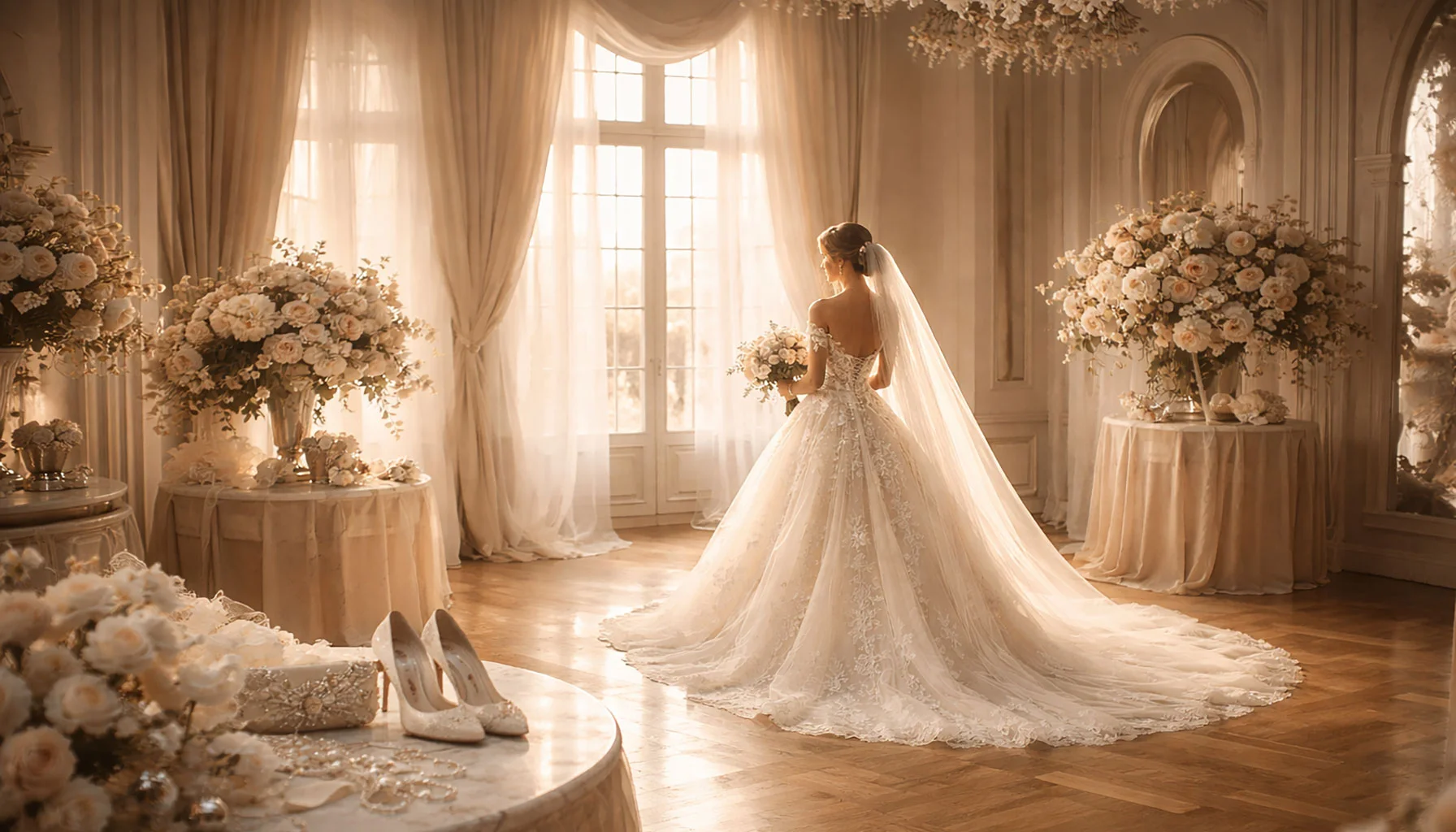
Bridal fashion is shaped over time, not in a single decision. It grows through fittings, conversations, and small adjustments. What remains visible on the wedding day is not the process, but its result: a composed appearance that feels settled in itself. When bridal attire works, it does not announce effort. It simply holds.
The complete bridal look is formed by more than the dress alone. Shoes, accessories, lingerie, and styling details contribute equally. Each element carries weight. Together, they create continuity across the day, from ceremony to evening. This is why the subject belongs naturally to both Bride and What Is Not Said. On Loving Rocks, the bride category already frames appearance as something that reflects personality and emotional presence, while What Is Not Said describes how silence and the unspoken remain active in shaping tone, distance, and intimacy. Bridal fashion often works exactly there. It communicates through proportion, restraint, and coherence long before anyone names what they are seeing.
BridePersonal style and emotion come together in the overall appearance of the bride. From the wedding dress and accessories to hair and makeup, every detail contributes to a look that feels authentic and confident. A thoughtfully chosen bridal look reflects personality, complements the wedding style, and makes the bride feel truly herself on this special day.
Not everything meaningful is spoken. Silence often carries what language cannot hold.
What Bridal Fashion Includes
Bridal fashion encompasses everything worn by the bride on the wedding day. The dress remains the central piece, but it does not stand alone. Veils, headpieces, jewelry, shoes, and undergarments shape how the dress sits, moves, and feels. In many regions, bridal attire is approached as a full composition rather than a single purchase.
- The bridal dress as structural and visual center
- Accessories that extend or soften the silhouette
- Shoes chosen for duration as much as appearance
- Lingerie that supports form and comfort without visibility
Style Direction and Consistency
Strong bridal looks follow a clear direction. Not a trend, but an internal logic. Fabric, cut, and detail respond to the setting and scale of the celebration. When decisions align, the look feels coherent without appearing planned.
Consistency across styling matters. Dress, hair, makeup, shoes, and accessories share the same visual language. When this balance holds, no single element pulls focus away from the whole.
Material, Color, and Construction
Materials influence how a bridal look behaves throughout the day. Weight, texture, and finish affect movement and light. Softer fabrics tend to shift gently, while structured materials hold shape. Both approaches can feel appropriate when matched to the setting.
Color choices have widened over time. Ivory, warm neutrals, and softened tones appear frequently alongside traditional white. What matters most is stability under different lighting conditions. Colors that remain calm tend to read quietly in photographs.
Current Developments in Bridal Fashion
Recent bridal fashion reflects a preference for adaptability. Dresses are designed to change over the course of the day. Detachable elements, second looks, and subtle transformations allow the appearance to shift without losing continuity.
- Clean silhouettes with emphasis on cut and proportion
- Focused details rather than layered decoration
- Convertible elements for ceremony and reception
- Alternatives such as suits or two-piece combinations
- Designs intended for reuse or later adaptation
Fit Beyond Measurements
Fit extends beyond tailoring. The dress must relate to climate, venue, and movement. Length, train, sleeve construction, and closure systems all influence how the bride moves through space. When these elements are considered, the look remains composed under changing conditions.
Coordination with the partner and wedding party contributes to visual balance. Similar levels of formality and complementary tones allow the bridal look to stand clearly without isolation.
Context and Cultural Influence
Bridal fashion is shaped by cultural context. Some regions favor restraint and craftsmanship, others embrace expression and ornament. In many celebrations, multiple looks are worn to reflect tradition and modernity within the same day. Respecting these layers creates depth without complication.
Closing
A successful bridal look feels resolved. It does not rely on emphasis or explanation. Through balanced choices in dress, material, and styling, bridal fashion supports the atmosphere of the wedding and remains visually steady from beginning to end. In that sense, bridal attire comes close to the logic of what is not said. It shapes perception quietly, and much of its effect remains active precisely because it never needed to overstate itself.
Related Articles
Second Dress for the Wedding Reception
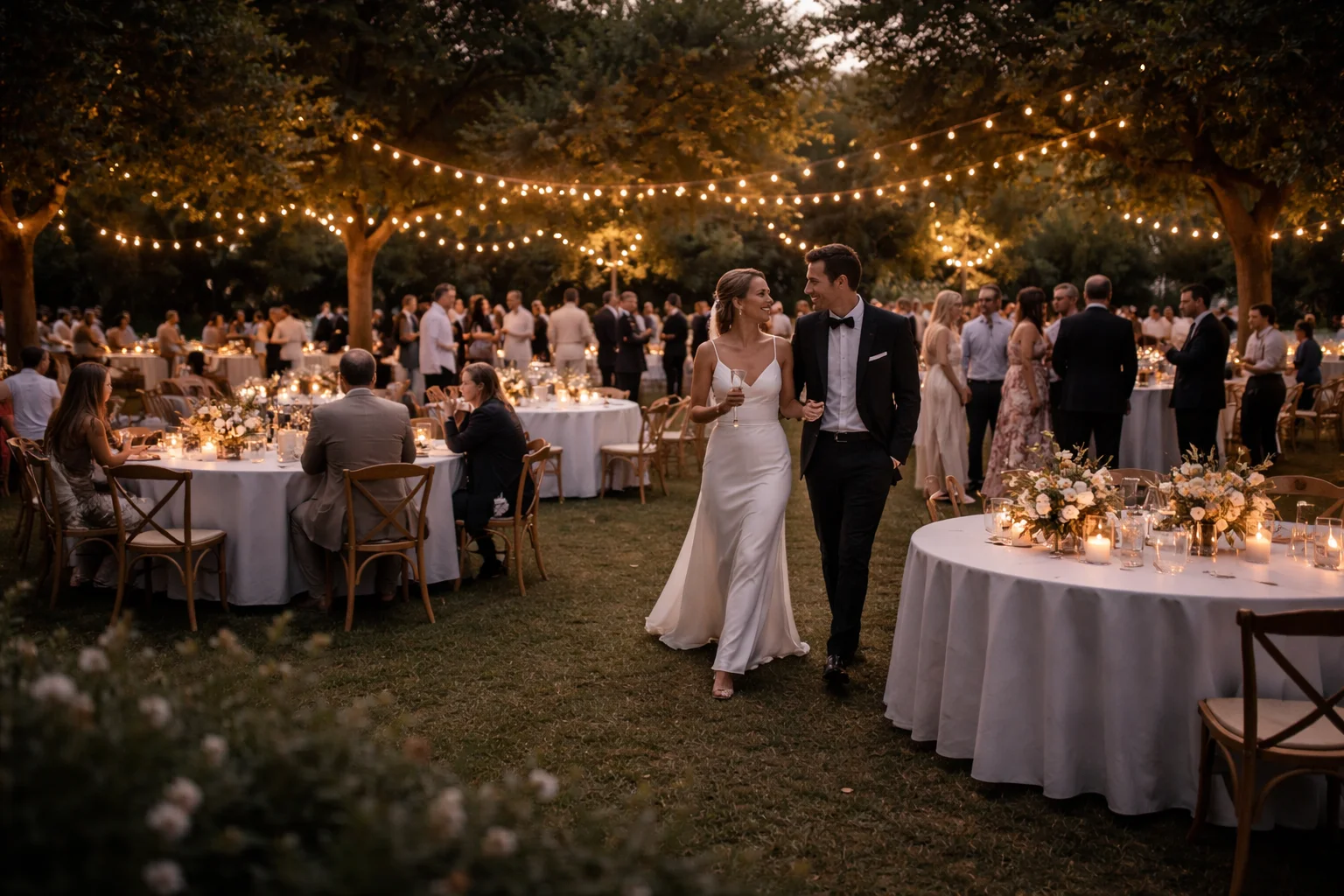
At many weddings the clothing does not stay the same from start to finish. After the ceremony and formal photographs, a quiet shift sometimes happens. The bride disappears for a short time and later returns wearing something different. Guests notice it in small ways. A lighter fabric. Shorter hem. Movement that feels easier during the evening.

Last-Week Wedding Checklist: What Still Needs Attention Shortly Before the Day
The last week before a wedding is rarely about major decisions. It is about clarifying what still has weight, what can no longer be improved by adding more, and what needs to be named before it starts shaping the day in silence. This article looks at what still deserves attention shortly before the wedding and why the unspoken layer often matters most at that stage.

Wedding Budget Conversations Checklist: What Should Be Said Before Money Turns Quiet
A wedding budget is rarely only about numbers. This checklist helps couples and families name financial expectations, priorities, and unspoken pressure before silence turns into confusion, tension, or unnecessary cost.

The Marriage Proposal: A Moment between Decision and Trust
A marriage proposal is rarely only a surprise. More often, it gathers what has already grown in conversations, decisions, and quiet alignment. This article looks at the proposal as a visible threshold between decision and trust, while keeping close to lived experience, ring choice, gesture, timing, and the open reality of what may follow.
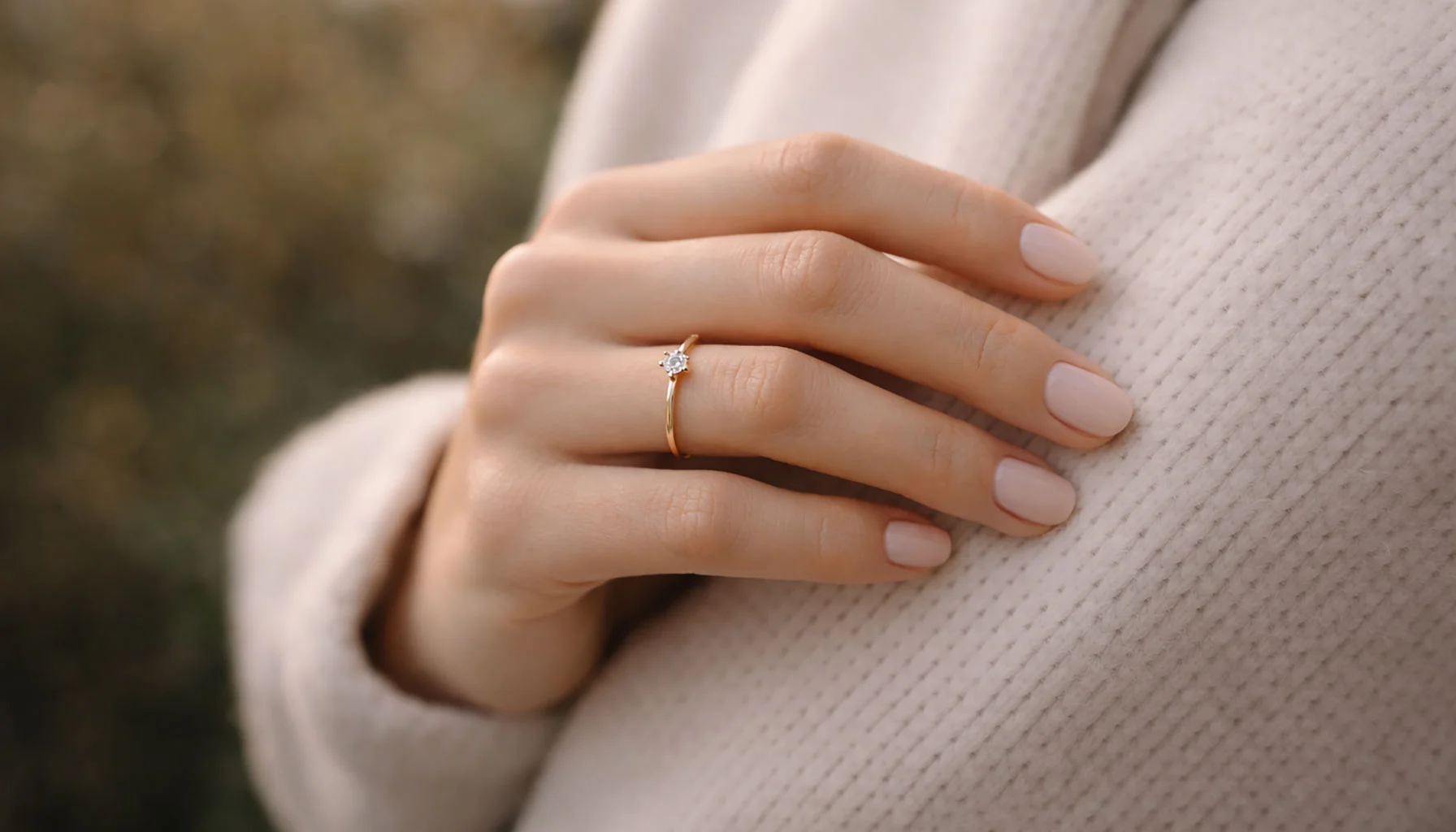
The engagement ring as a sign of a decision
The engagement ring stands on the edge of a big moment and remains present for a long time afterwards. It is part of everyday life, not just a memory of a proposal. This text describes what makes an engagement ring, how it is selected, and why decisions regarding shape, material, ring size, and wearing style mostly arise from observation. It is about common variants, the handling of diamonds and alternatives, as well as developments that have quietly established themselves. In the foreground are experiences, voices from practice, and the question of how a ring fits a person without defining them.
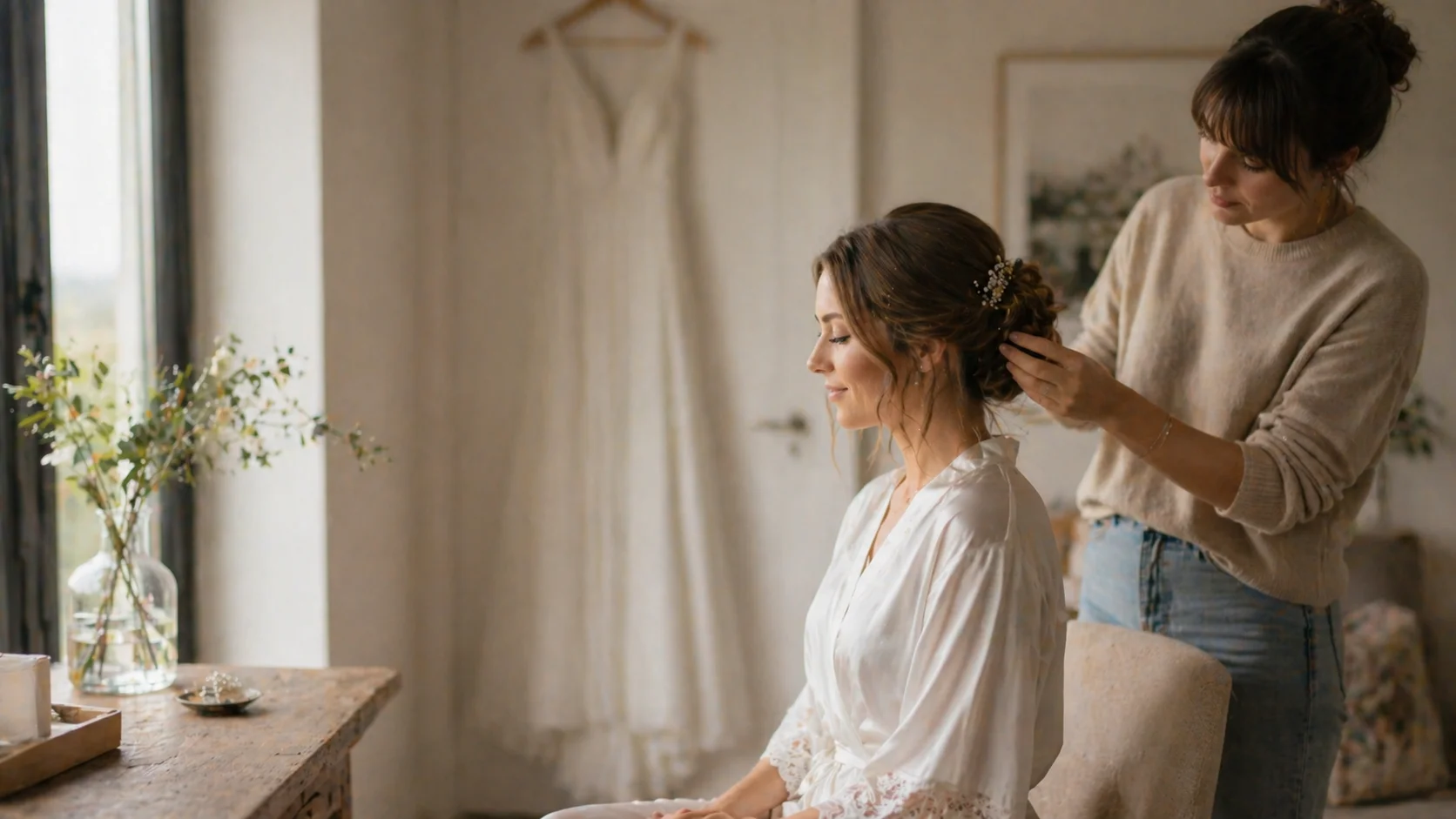
Bridal Getting-Ready Room Checklist: Light, Surfaces, Noise, and Movement
A bridal getting-ready room does more than hold hair, makeup, and dresses. This article looks at light, surfaces, noise, movement, privacy, and the quiet traces the room leaves on the morning before the ceremony.
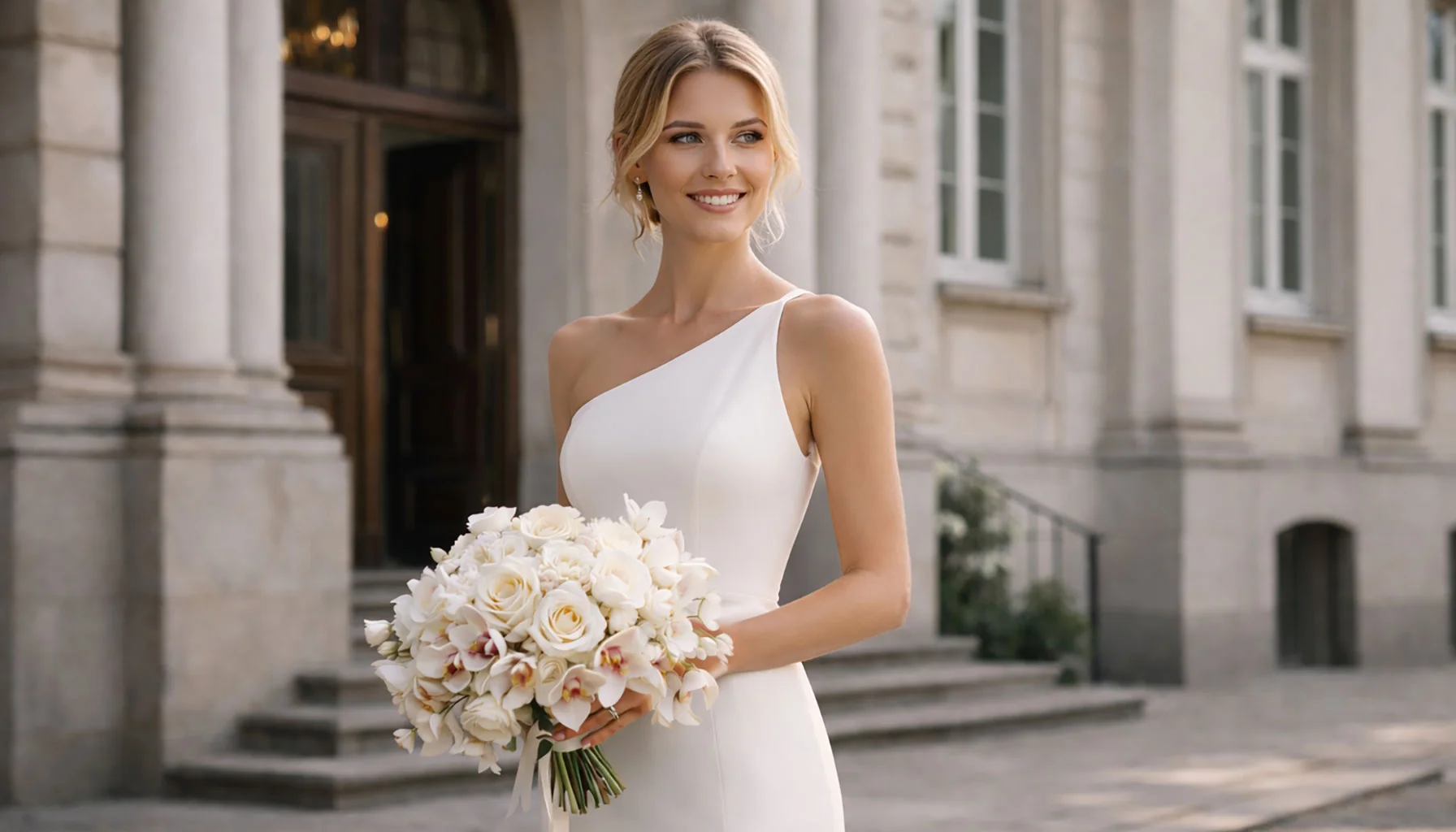
A Love Made Official: A Bridal Look for the Civil Ceremony
Civil ceremonies tend to be focused and quiet. The setting is smaller, the attention sharper. In this context, the bridal look does not perform. It supports. Fabric, cut, and proportion matter more than embellishment. What remains is a look that fits the moment, allows presence, and feels appropriate long after the ceremony ends.
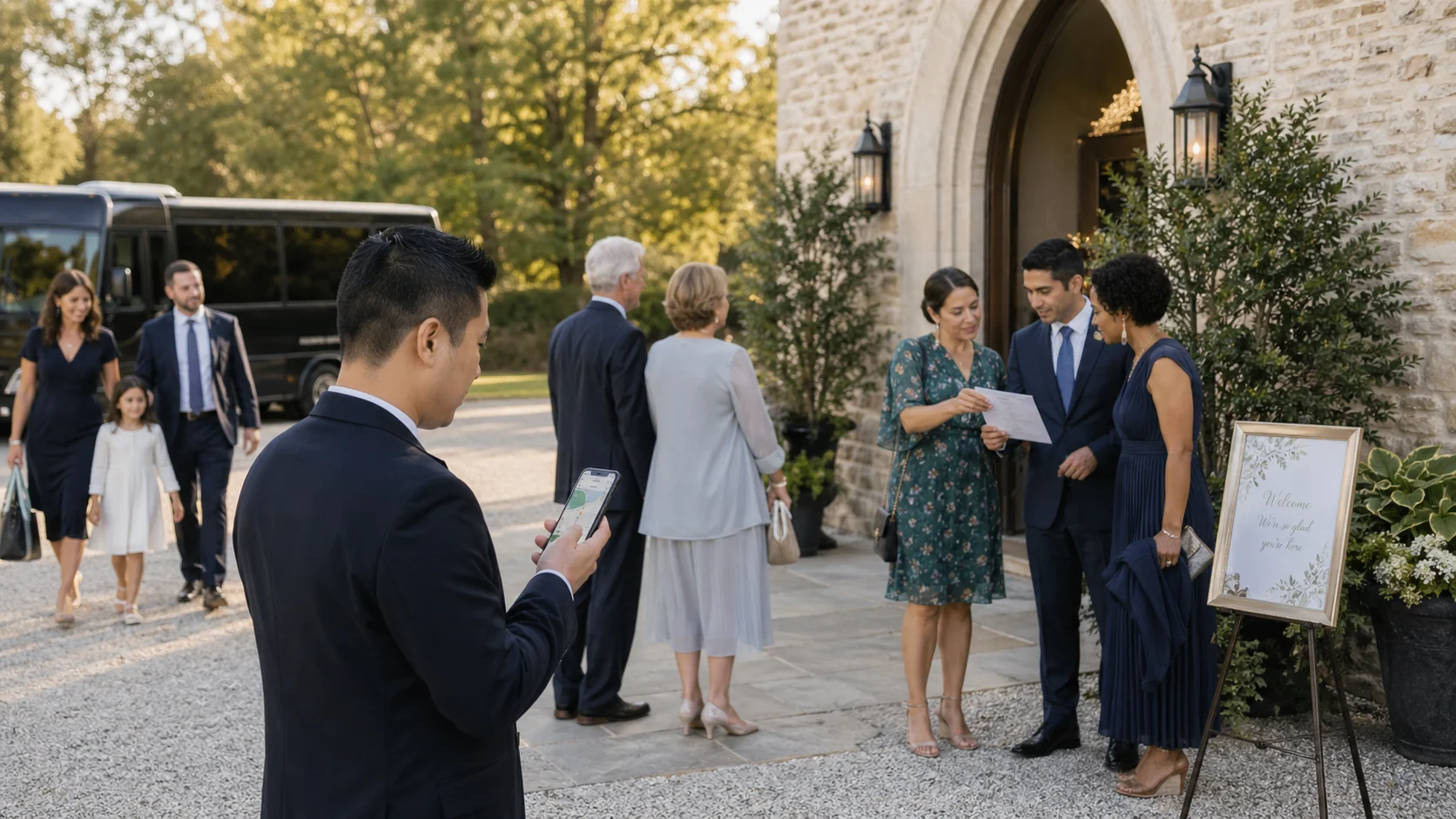
Wedding Website Checklist: What Guests Actually Need, and What They Ignore
Wedding websites work best when they reduce uncertainty instead of filling space. This article looks at what guests actually need to find quickly, what they usually ignore, and which unspoken questions a good website can answer before they become messages to the couple.
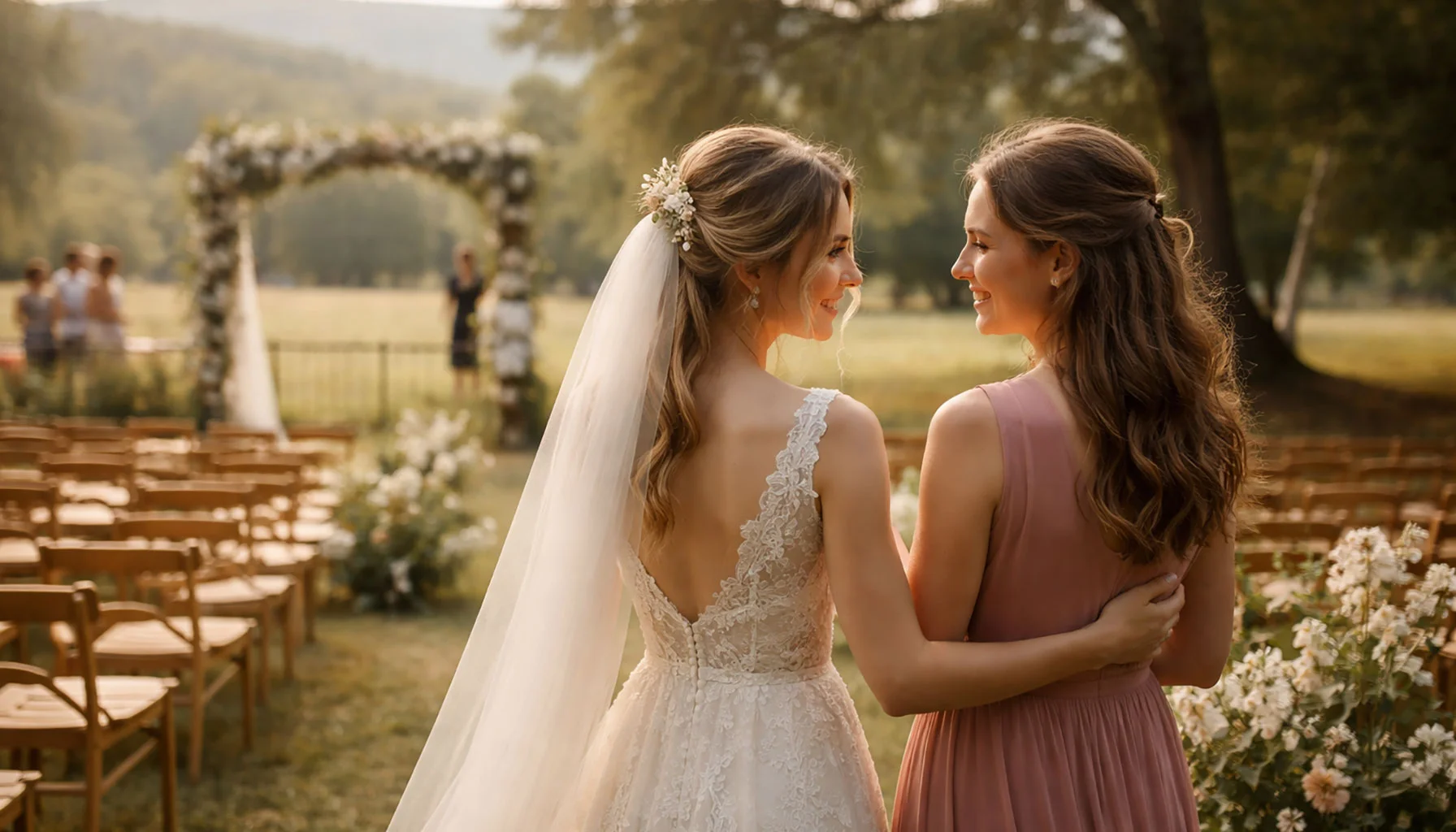
The Maid of Honor at the Wedding
How bridesmaids are chosen, what tasks they perform, and why their presence often remains quiet. A text from observations of weddings, conversations, and moments away from the center.
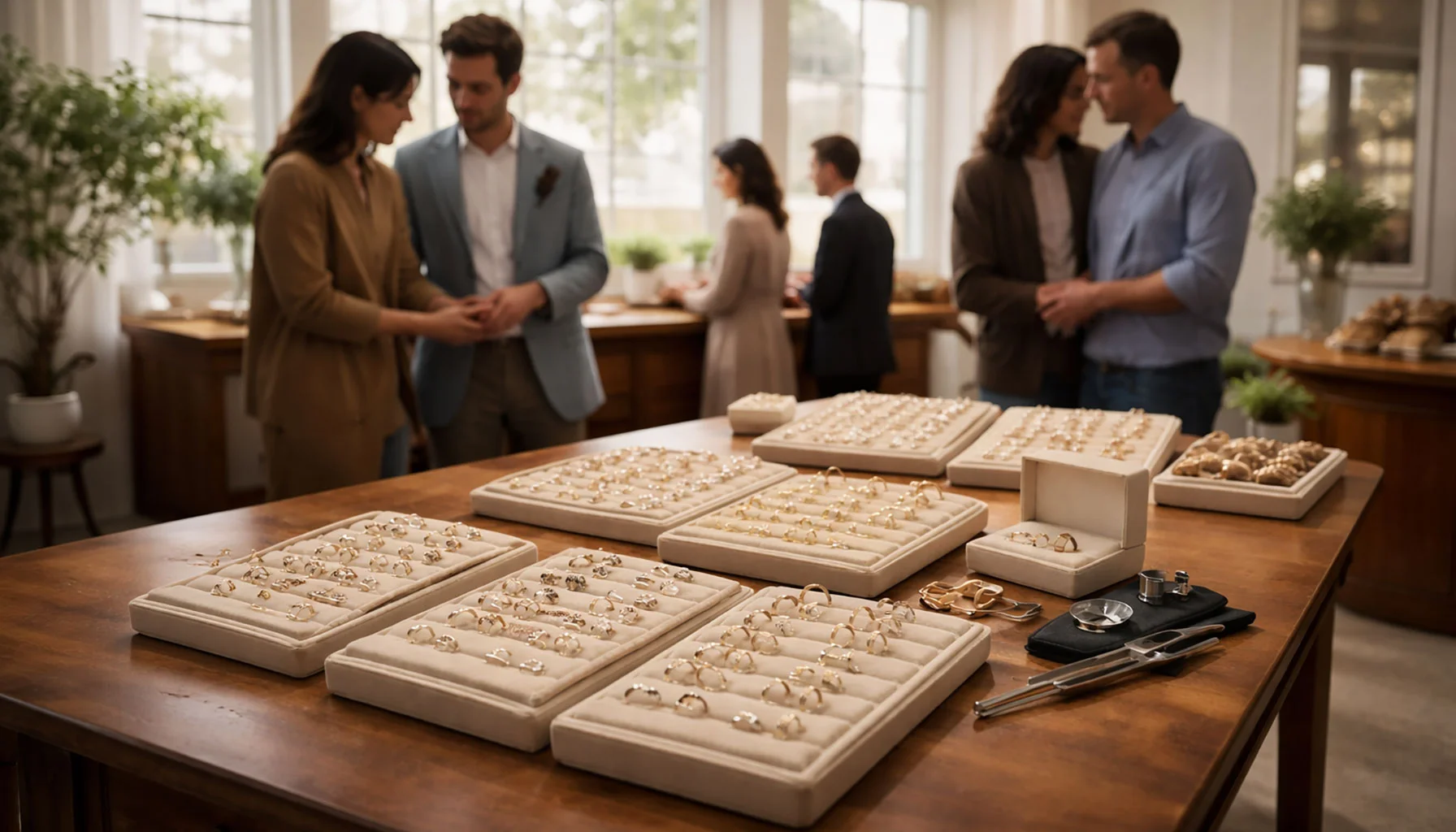
Wedding Rings Between Decision and Everyday Life
Wedding rings are rarely chosen as display objects. They are chosen for repetition, for wear, for the fact that they will remain present long after the ceremony itself has passed. This article looks at wedding rings through width, material, setting, and everyday use, while connecting them to the quieter emotional state of waiting that often surrounds such decisions.
A Timeline Holds the Day, Silence Holds the Meaning
A wedding timeline organizes what happens. But what shapes the experience often lives in the pauses, the unspoken moments, and the space between events.
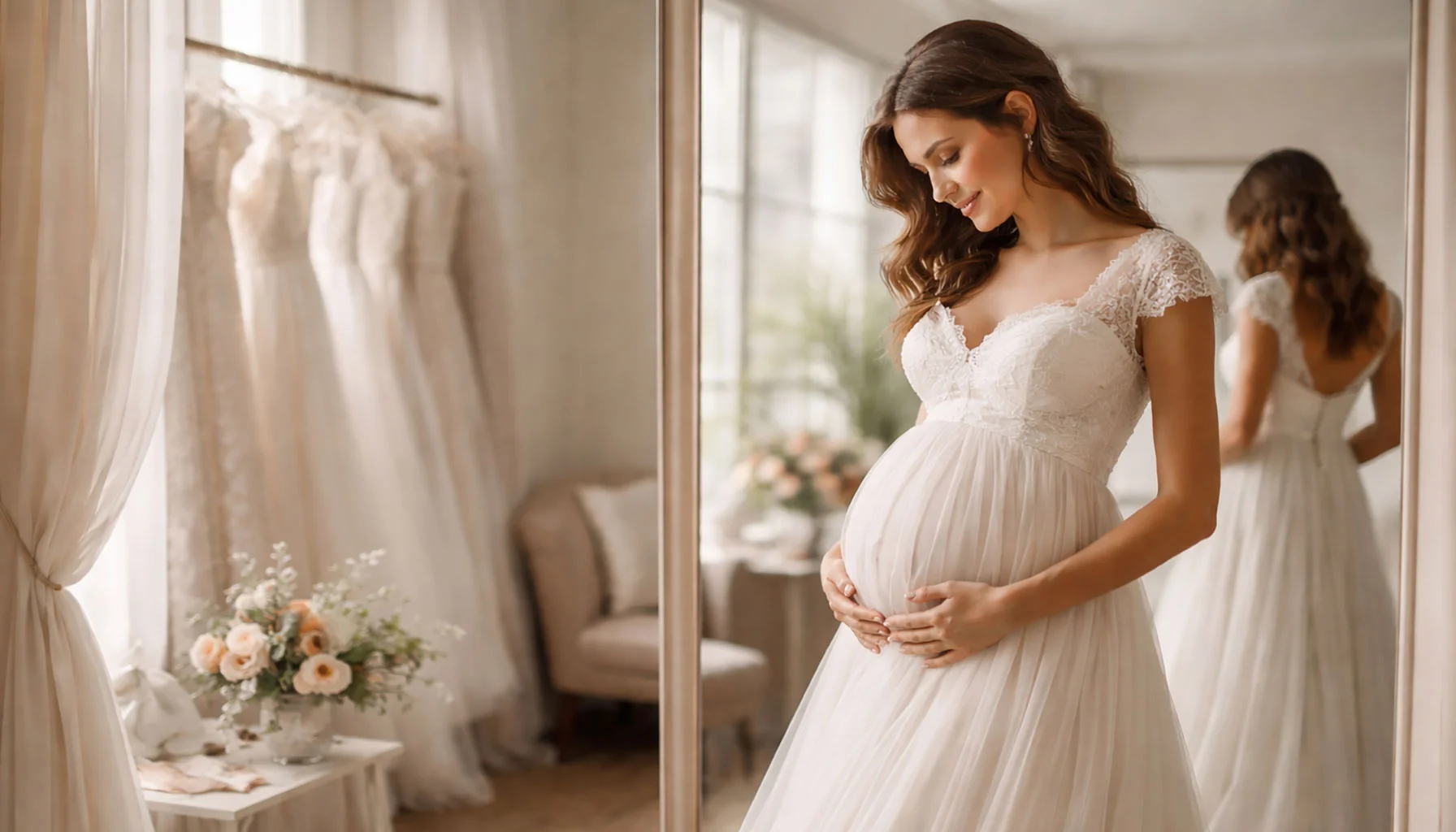
The Wedding Dress During Pregnancy
A wedding dress chosen during pregnancy follows different rules, even when no one names them. The body leads. The day sets limits. Decisions are shaped by comfort, timing, and how the dress behaves over hours rather than moments. This text looks at maternity wedding dresses as they appear in fittings, ceremonies, and recollections afterward. Not as ideals, but as garments that had to work. The focus stays on what proved suitable, calm, and lasting, without dramatizing the process or framing it as exception.