
Designing a Wedding Guests Can Enter: Light, Sound, Projection and Participation
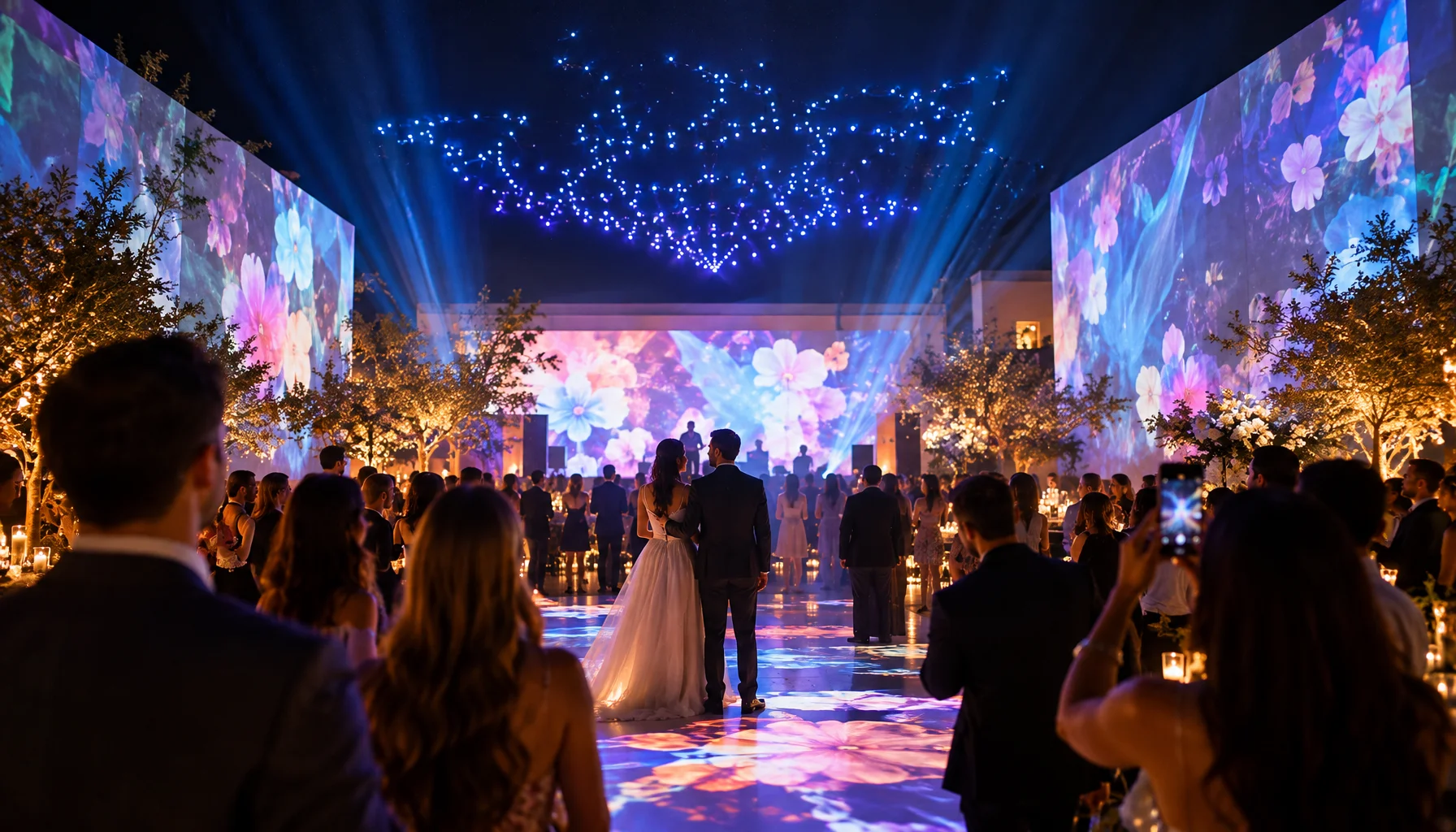
A wedding can contain beautiful objects and still feel strangely flat. Another can use relatively little decoration and feel completely absorbing. The difference is often not the amount of production. It is the way the room, people and sequence of moments work together.
Experiential wedding design starts there. Instead of asking what should be installed, it asks what guests should notice, anticipate, enter, influence or remember at different points of the celebration.
Technology makes an experience possible. It does not make it meaningful.
A room covered in projection can be visually impressive and emotionally empty. A single change in light during a speech can be technically simple and completely alter how the room feels.
That is the distinction between Technology and Experiences inside Loving Rocks. Technology asks what capability exists. Experiences asks what happens to the people because it exists.
The design therefore begins with perception: where guests look, what they hear, whether they are passive or active, whether the environment remains stable or transforms, and whether a moment belongs to one person, a table, the whole room or everybody under the same night sky.
The Wedding Experience Architecture
Four layers of experiential design
| Atmosphere | Transformation | Participation | Collective moment | |
|---|---|---|---|---|
| Core question | How should this space feel? | How should the space change? | What can guests influence or do? | What should everyone experience together? |
| Typical tools | Light, sound, scent, material, temperature, layout | Projection, lighting scenes, moving elements, media content | Sensors, interactive floors, mobile input, live performance | Reveal, performance, drone show, synchronized media moment |
| Typical duration | Continuous | Minutes to phases of the event | Guest-controlled or scheduled | Usually concentrated and finite |
| Main risk | Becoming generic decoration | Visual overload | Forcing guests to perform | Spectacle without personal meaning |
Experience design happens in time, not only in space
Event design is often reviewed through still images: table setting, stage, flowers, lighting, installation. Guests do not experience a wedding as a still image.
They arrive. They wait. They discover. They move. They listen. They eat. Their attention rises and falls. Some transitions feel deliberate; others feel like technical resets.
A room that looks identical for eight hours may gradually become invisible. A carefully timed change in light, sound or visual content can tell guests that one phase has ended and another has begun without anyone making an announcement.
The Guest Experience Curve
One possible experiential rhythm
Projection mapping can turn architecture into part of the narrative
Conventional projection treats a wall as a rectangular screen. Projection mapping treats the geometry of the wall, ceiling, facade, stage or object as part of the image.
The projected content is aligned to physical surfaces so architectural elements can appear to change, disappear, open, move or carry visual content specifically designed for their shape.
This is already a commercial wedding service. Current wedding-focused studios offer venue mapping, mapped ceilings and walls, mapped dance floors, custom visual narratives and live visual production for private celebrations.
The strongest mapping does not need to display the couple's initials all night
Projection becomes more interesting when it changes the emotional state of the space rather than functioning as an animated monogram.
- A restrained architectural texture during dinner that gradually changes toward evening
- A room that appears to move from daylight into an imagined night landscape
- Visual material connected to a place important to the couple
- A mapped first-dance environment that exists only for the duration of the song
- A ceiling that slowly changes rather than demanding constant attention
- A short narrative sequence built around family images or visual motifs
- A temporary visual transformation tied to one ritual rather than the complete reception
Projection mapping begins long before the projector is switched on
The image has to fit the real geometry of the venue. Projector position, brightness, viewing angle, throw distance, surface colour, ambient light and overlap between projectors all influence the result.
Professional mapping providers therefore previsualize installations, plan projector positions and use media-server workflows to warp, align and synchronize content across surfaces.
For a wedding, that means the venue must be treated as production infrastructure. A beautiful wall is not automatically a useful projection surface, and a concept that works after dark may be nearly invisible during a bright afternoon reception.
An interactive environment changes when guests enter it
Projection does not need to remain a one-way medium. Sensors, cameras and tracking systems can connect physical movement to visual or acoustic response.
Interactive floor systems already use this principle commercially: projected content can respond in real time to footsteps and movement across the surface.
At a wedding, the useful question is not whether the floor can react. It is what that reaction contributes.
| Interaction | Possible response | Experience |
|---|---|---|
| Guests walk through a threshold | Light or projected particles move around them | Arrival becomes discovery |
| First dance begins | Floor and surrounding visuals respond to movement | Dance becomes part of the visual composition |
| Children cross an installation | Projected objects react or scatter | A formal environment gains a playful layer |
| Guests add input | Names, words, drawings or choices alter a shared visual | The final media object is collectively produced |
| Crowd energy changes | Lighting or media scene changes | Environment becomes responsive rather than pre-recorded |
High-end immersive design shows what happens when the systems stop behaving separately
Large immersive studios already combine mapped projection, dynamic lighting, spatialized sound, sensors and responsive content as one environment.
Moment Factory's current installations provide useful reference points. Into the Northern Lights combines an LED floor, mirrored ceiling, 360-degree audio and 3D sensors so visitor movement changes the visual and sonic environment. Other projects combine projection mapping, lighting, sound and interactivity across architectural spaces.
These are not normal wedding packages and should not be presented as such. They demonstrate a design principle: immersion becomes convincing when visual content, sound, space and interaction respond as one system.
Immersion is difficult if only the eyes are involved
A projected environment can visually transform a room while the audio remains a normal stereo playlist from the same speaker positions used all evening. The result may look immersive without fully feeling spatial.
Sound can establish direction, distance and transition. A voice can appear to originate from one part of a room. Environmental sound can surround guests before a visual reveal. Music can expand from a narrow focal point into the complete space.
The Audio category explores preservation of sound as memory. Inside Experiences, sound performs another role: it actively shapes the space while the event is happening.
Light can change the emotional scale of the same physical room
Lighting is sometimes treated as a final decorative layer. Experientially, it is closer to architecture.
It determines what disappears, what becomes visible, where attention moves and whether a room feels intimate, ceremonial, social or theatrical.
The same tables, flowers and walls can feel like different environments when colour temperature, direction, contrast and illuminated surfaces change.
Technology can support a ritual without becoming the ritual
Experiential media becomes particularly sensitive around vows, blessings and symbolic acts. A visual environment can reinforce attention, but it can also compete with the thing guests are supposed to witness.
This creates a natural connection to Rituals. If a ceremony action already carries meaning, the experiential layer should help make that meaning legible rather than turning it into a backdrop for an effect.
Personalization should change meaning, not only insert names
A technically complex experience can still feel generic if the only personalization is a monogram placed inside a stock animation.
More meaningful personalization can come from material already belonging to the relationship: locations, drawings, handwriting, recorded voices, family imagery, cultural patterns, objects, maps, recurring colours or a story that develops across the evening.
That does not require literal biography on every wall. A subtle visual system derived from something real can feel more personal than a large display of names.
Generated environments need the same authenticity boundary as generated wedding images
AI-assisted visual production makes it increasingly easy to create impossible landscapes, animated environments and transformations that never physically existed.
As live scenography, that is not inherently problematic. A wedding can intentionally enter an invented visual world.
The documentary boundary becomes important later if generated material is presented as evidence of what the physical venue or event actually looked like.
A drone show turns the sky into a temporary media surface
The experiential space does not need to stop at the venue walls. Commercial drone-light-show operators now offer wedding productions in which coordinated aircraft form animated images, symbols and sequences above the event.
Current European and UK providers advertise wedding-specific packages, while documented wedding projects include bespoke sequences designed around a couple's story rather than a generic light pattern.
What makes the format experientially different from a screen is scale and collectivity. Everyone looks toward the same external space at roughly the same moment.
The permit question belongs at the beginning, not the week before the wedding
European UAS operations are regulated according to operational risk through open, specific and certified categories. Operations that fall into the specific category generally require an operational authorisation unless an applicable standard scenario or suitable operator privilege covers them.
For couples, the practical lesson is simpler than the regulatory framework: do not book the visual concept first and investigate whether the site can legally and safely support it later. A professional show provider should assess the venue, airspace, audience configuration and applicable authorisation path.
A spectacle needs a reason to occur at that exact moment
Projection, drone shows, live performance and large reveals become weaker when they are inserted simply because the event needs another highlight.
A stronger design asks why everyone should stop what they are doing at that moment and share attention.
- A transition from dinner into evening celebration
- A story or message that needs the whole room at once
- A cultural performance that belongs to both families
- A surprise deliberately kept outside the normal program
- A final collective moment before part of the guest group leaves
- A transformation of the venue that marks a new phase rather than merely filling time
Temporary experiences can still leave an imprint
An immersive wedding environment can disappear completely during teardown. That does not make it less connected to Imprints.
Its trace may survive through photographs, film, guest memory, recordings, generated media and the way people later describe the room.
This creates an interesting design question: if an experience exists for only ten minutes, what part of it should still exist ten years later?
More sensory input is not automatically more immersive
Brightness, movement, bass, flashing light, dense projection and interactive systems can make a room more stimulating. They can also make it exhausting.
Guests differ in age, mobility, hearing, vision, sensory tolerance and familiarity with interactive systems. A design intended to include everybody should therefore also offer quieter states, predictable circulation and places where the experiential layer becomes less intense.
Accessibility belongs inside the experience brief
Interactive and immersive systems should be checked for more than visual impact. Can a wheelchair user reach the interactive area? Does a floor effect depend on stepping or jumping? Is essential information available only through colour? Does spatial sound make speech harder to understand? Are captions still visible against moving projection?
Large immersive projects outside the wedding industry increasingly address these questions directly. Current installations combine features such as modular seating, tested caption visibility and optional sign-language guidance with immersive projection and audio.
A wedding production can adopt the same principle at a smaller scale: accessibility is part of experience quality, not an exception added after the creative work is finished.
The Experience Production Flow
From feeling to functioning system
Complex experiences need show control
Once projection, lighting, music, performers and interactive systems are expected to change together, the wedding contains a small live production.
Someone must know when the cue happens, whether the room is ready, whether guests are in the expected position and what to do if one system is late.
That responsibility should not fall onto the couple during the event.
Spend on the part guests can actually perceive
Immersive production can absorb budget quickly because equipment, content creation, engineering and crew are separate cost layers.
A smaller mapped surface with original content and precise timing can therefore produce a stronger experience than a technically larger installation filled with generic visuals.
| Budget layer | What you are actually buying |
|---|---|
| Creative direction | Concept, narrative, visual language and relation to the wedding |
| Content production | Animation, film, graphics, sound design or generative material |
| Technical design | Projection calculations, signal paths, networking, sound and control |
| Equipment | Projectors, lenses, media servers, lighting, sensors, screens and audio systems |
| Installation | Rigging, alignment, calibration, cabling and venue integration |
| Operation | Technicians, show calling, live visual control or interaction monitoring |
| Contingency | Backups, weather planning, redundant playback and alternative cues |
Questions to ask an experiential wedding producer
- What should guests actually feel, notice or do during this experience?
- Which part is custom-designed for our wedding and which part comes from an existing package?
- What surfaces, rigging points, power and darkness does the venue need?
- Can you previsualize the result in our actual venue?
- Which systems need to be synchronized?
- Who operates the experience during the wedding?
- What happens if one projector, sensor, network connection or media server fails?
- How much setup and calibration time is required?
- Will the installation interfere with photography, videography or guest circulation?
- Can guests who do not want to interact still enjoy the space?
- Are there accessibility or sensory-load issues we should plan around?
- What part of the experience can be preserved after the wedding?
- If drones are involved, who assesses airspace, venue suitability and authorisations?
- Who owns the custom visual and audio content after the event?
An Experience Showcase should reveal the invisible production
Experiences may become one of the strongest portfolio formats on Loving Rocks because a finished photograph rarely explains why the event worked.
The valuable editorial material is the transformation: initial brief, venue constraints, visual development, technology, testing, live execution, guest response and the final documented result.
Future Loving Rocks Experience Showcase
Not every memorable wedding needs to become immersive
There is a point at which experiential ambition starts competing with the social event itself.
Guests came to encounter people, not simply content. Couples may want to remember expressions that happened while nobody was looking at a screen. Conversation needs enough acoustic and visual space to survive.
The best experiential design therefore includes disappearance. Systems activate when they have something to contribute and become quiet when the wedding itself is already enough.
Frequently asked questions
Immersive and interactive wedding experiences
What is projection mapping at a wedding?
Can projection mapping work in any wedding venue?
Can guests interact with projected media?
Are wedding drone light shows already available?
Does an immersive wedding need VR headsets?
What makes an experience personal rather than generic?
Glossary
Key experiential-media terms
- Projection mapping
- A projection technique in which visual content is geometrically aligned to physical surfaces such as architecture, sets, floors or objects.
- Media server
- A specialized playback and control system used to distribute, align, synchronize and manipulate visual content across displays or projectors.
- Warping
- Geometrically transforming an image so projected content aligns correctly with a non-flat or specifically shaped physical surface.
- Interactive environment
- A physical or digital space in which sensors or other inputs allow visitor movement or actions to change media, light, sound or another environmental response.
- Spatialized sound
- Sound designed so its perceived direction and location become part of the experience rather than remaining a conventional left-right playback layer.
- Show control
- The coordinated management of cues and technical systems such as projection, lighting, sound, automation and performance during a live production.
- Previsualization
- A digital or physical simulation used before installation to evaluate visual composition, technical positions, timing or audience viewpoints.
- Drone light show
- A coordinated aerial display in which multiple unmanned aircraft use programmed light and movement to form animated patterns or images.
- Experiential design
- The deliberate design of what people perceive, do and feel as they move through an environment or sequence rather than the design of individual objects alone.
A wedding experience is something that happens between the room and the people inside it
Projection can make architecture move. Sensors can make a floor respond. Sound can change the apparent dimensions of a room. Hundreds of points of light can turn the sky into an image.
But none of those things defines the experience by itself.
The experience begins when the environment changes what people notice, how they move, whether they participate and what they experience together.
The most advanced wedding may therefore not be the one with the largest technical installation. It may be the one where every transformation happens at exactly the moment it has something worth changing.
Primary technology and implementation sources
Aether Immersive — Weddings & Private EventsCurrent commercial wedding implementation of projection mapping, custom visual environments, projection domes and live visual production.
studio : 3 — Projection MappingGerman production provider describing projection planning, media servers, surface mapping, previsualization, projector positioning and synchronization with light and sound.
Moment Factory — Into the Northern LightsCurrent reference implementation combining an LED floor, mirrored ceiling, 360-degree audio, 3D sensors and real-time visitor interaction.
Moment Factory — GeoverseImmersive environment combining wraparound projection, interactive flooring, spatialized audio and accessibility features including captioning and sign-language support.
FlightShows — Drone ShowsCurrent UK and European drone-show provider with documented wedding and private-event productions.
EASA — Specific Category Civil DronesEuropean Union Aviation Safety Agency guidance on risk-based UAS operations and operational-authorisation pathways for specific-category drone operations.
Related Articles
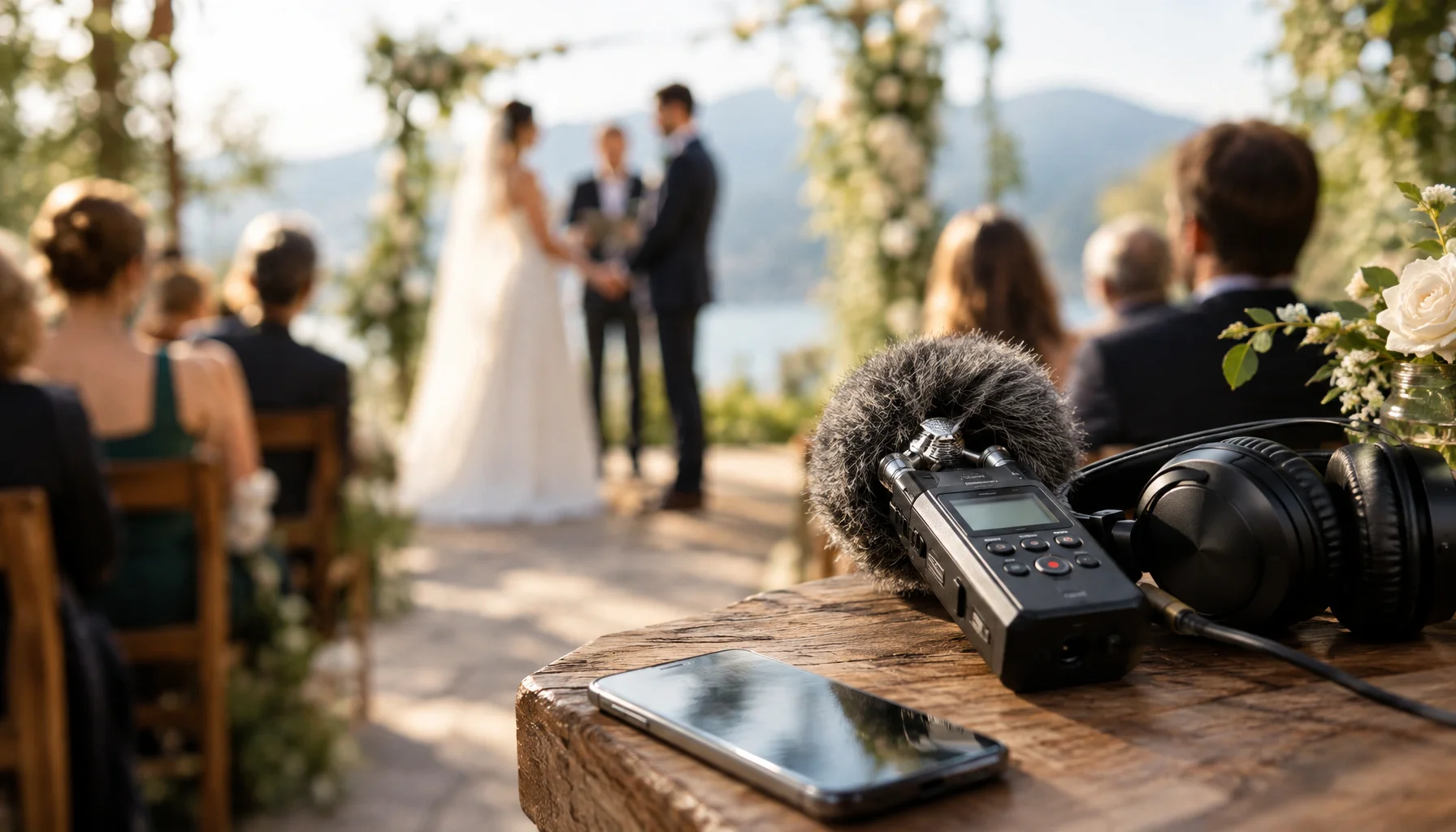
The Wedding You Can Hear Again: Voice, Room Tone and the Audio Memory of a Day
A wedding is remembered through images, but voices disappear differently. Vows, laughter, pauses, speeches, room tone and messages from guests can become an audio archive of people as they actually sounded on one particular day. This guide explores what is worth recording, how wedding audio is captured, and how to preserve it as more than an accessory to film.
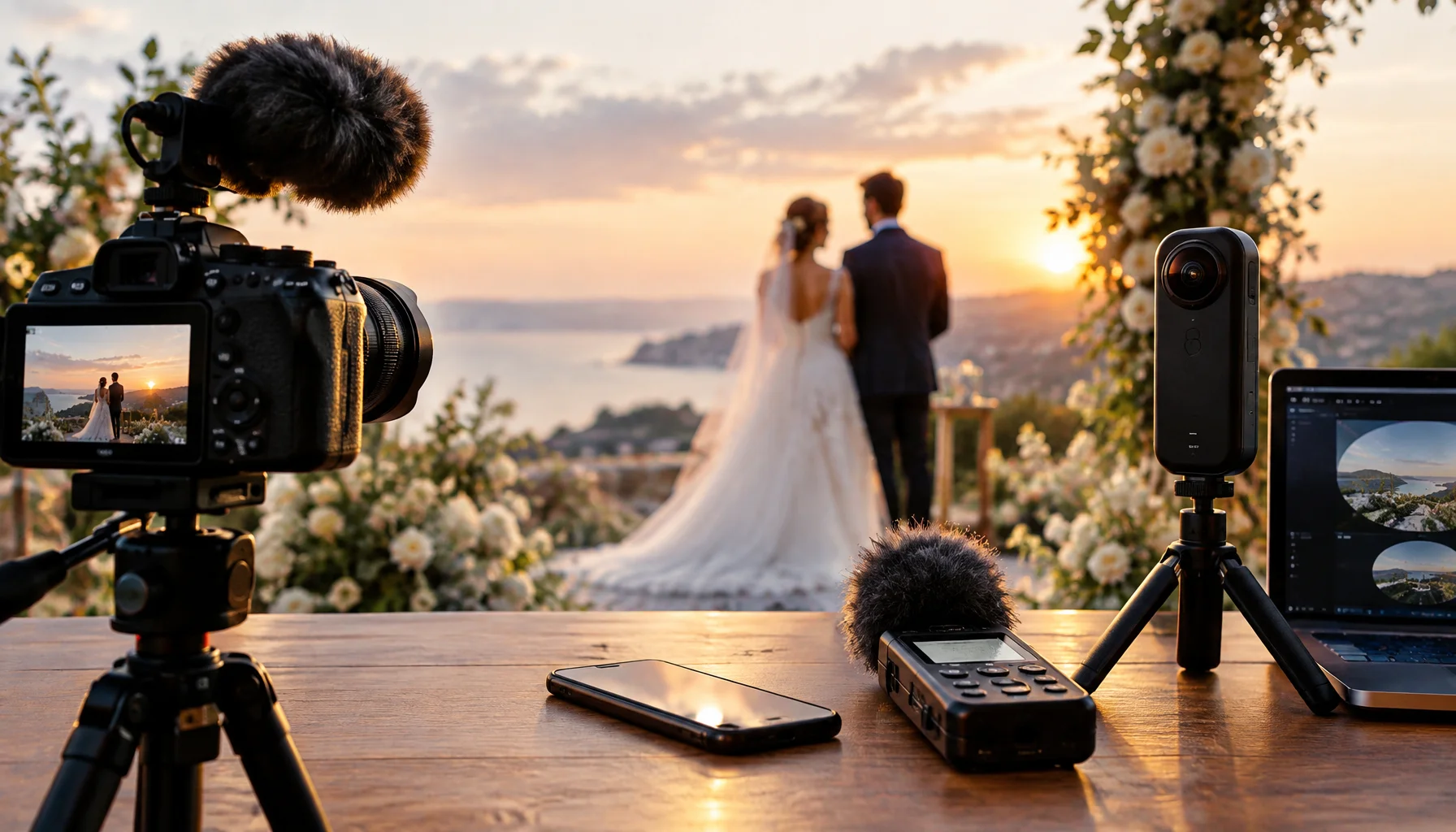
The Wedding Beyond the Photograph: What Film, Sound and Spatial Media Let Us Keep
A wedding no longer has to survive only as a set of photographs. Film can preserve movement, audio can retain voices and atmosphere, and spatial media can begin to record the shape of a place itself. The more interesting question is not which format is newest, but what each medium is capable of carrying forward.
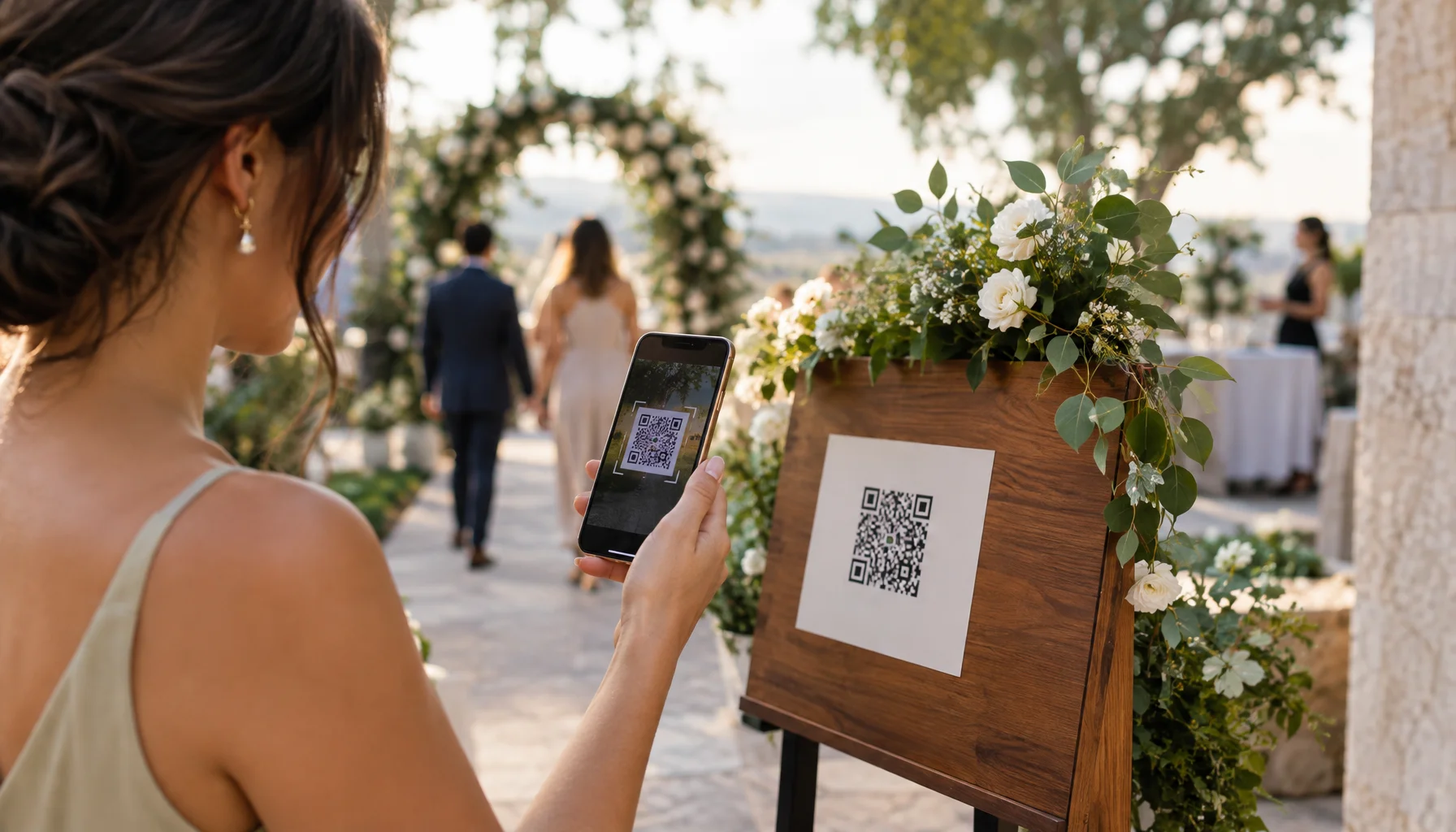
The Invisible Wedding Operating System: QR, NFC, Digital Passes and Real-Time Guest Journeys
Smart wedding technology does not need to look futuristic. A QR code can replace a queue, an NFC tap can reveal the right information at the right place, a digital pass can change when the schedule changes, and one connected guest list can follow someone from RSVP to seating and arrival. The real opportunity is not more screens — it is a wedding that quietly knows what information people need and when they need it.
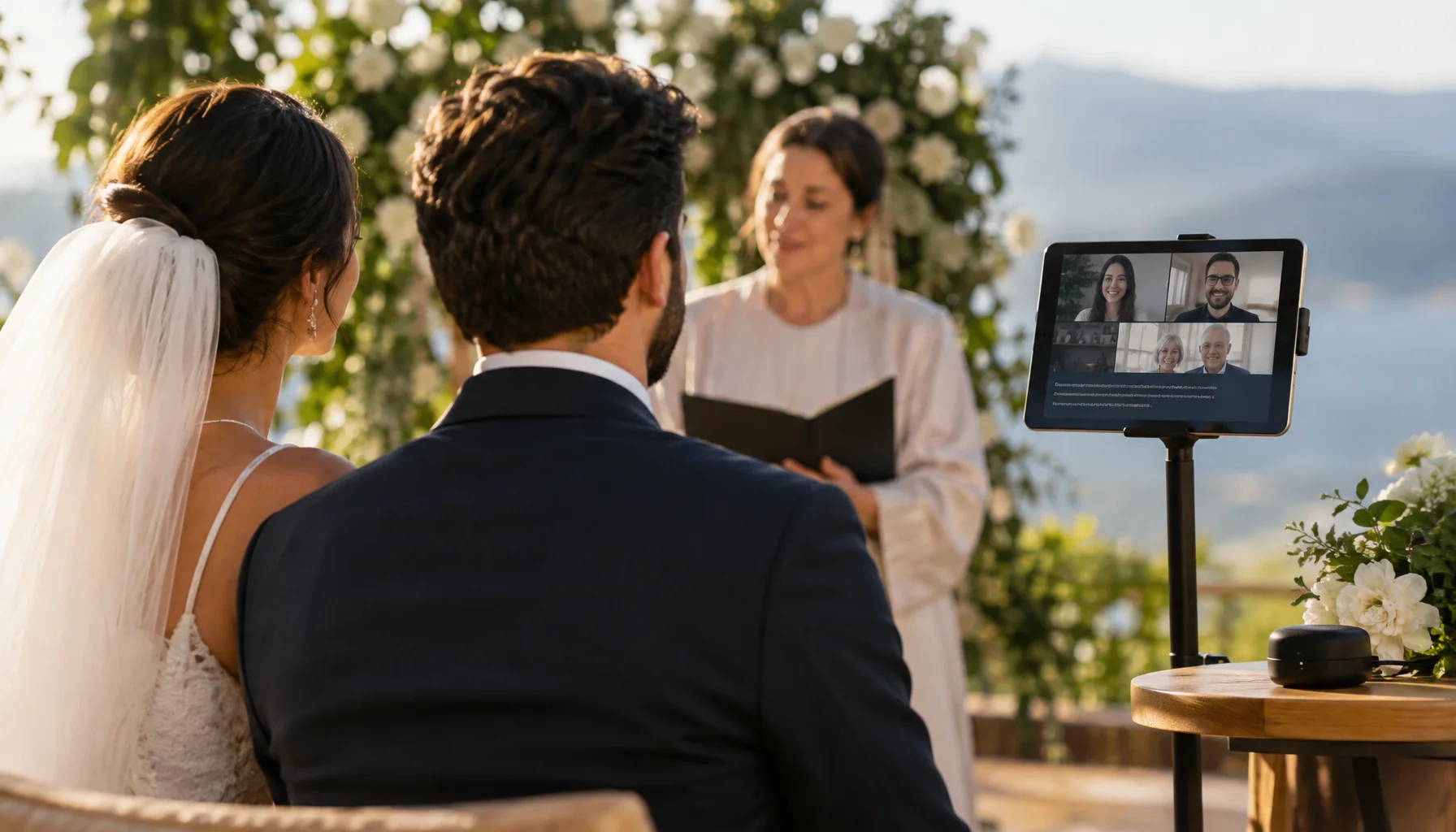
Wedding Technology Should Disappear: Translation, Captions and Shared Presence
The best wedding technology does not demand attention. It helps people understand a ceremony, hear what matters, participate across languages or distance, and then recedes into the background. This guide looks at live translation, captions, remote participation and AI-assisted communication as experience infrastructure rather than wedding gadgets.
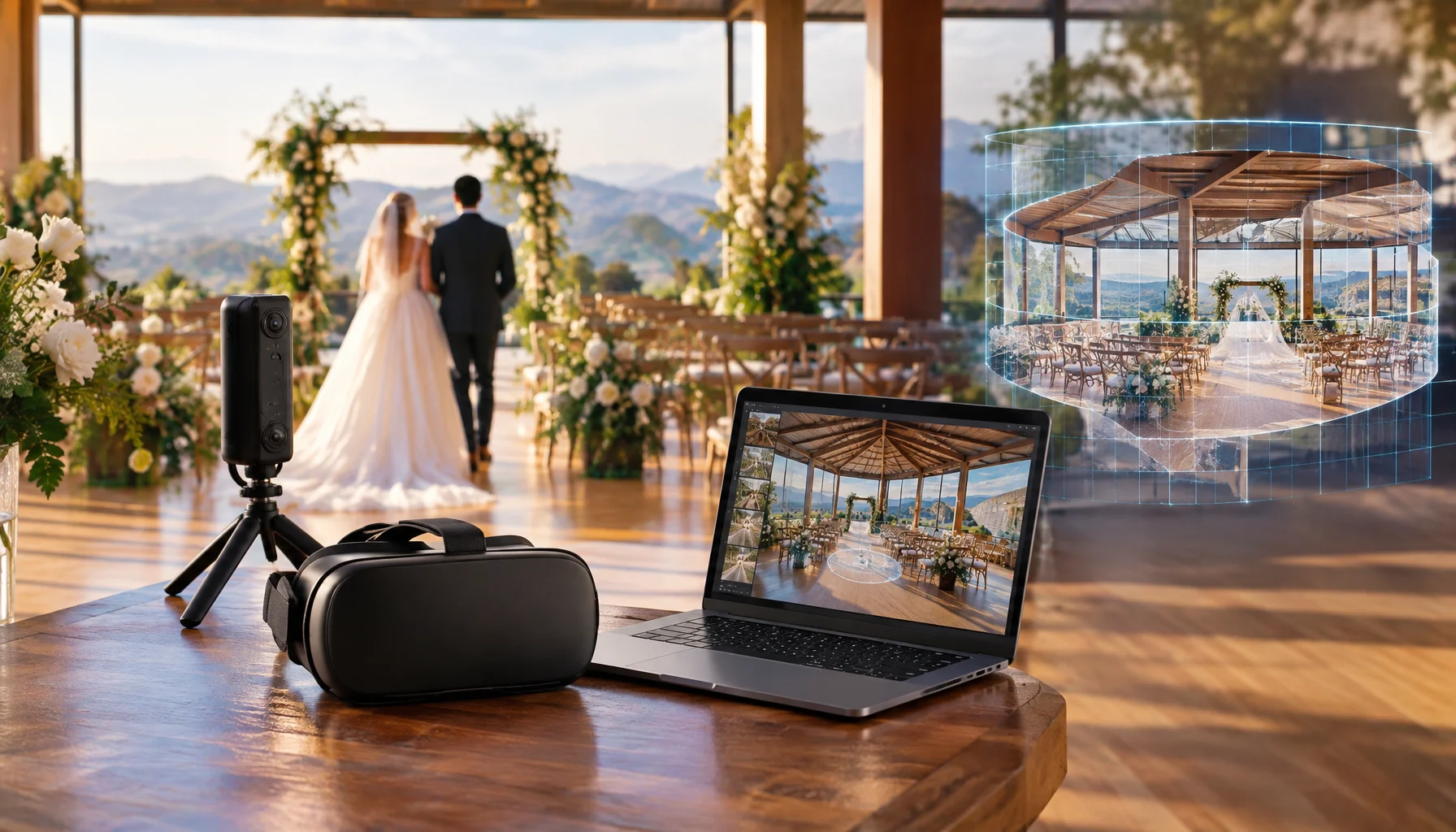
Can You Return to a Wedding? Spatial Video, 3D Venues and the New Memory Layer
Wedding media has traditionally preserved a view of the day. Spatial video, 3D capture, photogrammetry, 180° VR and volumetric video begin asking a different question: can part of the wedding be preserved as a space you can later revisit? This guide separates what is already practical from what remains complex, expensive or experimental.

Should a Robot Serve Your Wedding? Where Automation Helps — and Where Humans Still Matter
Robots can already serve drinks, transport trays, greet guests, enable remote presence and perform at events. But a wedding is not a factory floor. This guide separates useful automation from novelty and asks where robots can genuinely improve service, access and experience — without automating away the human parts people came to celebrate.
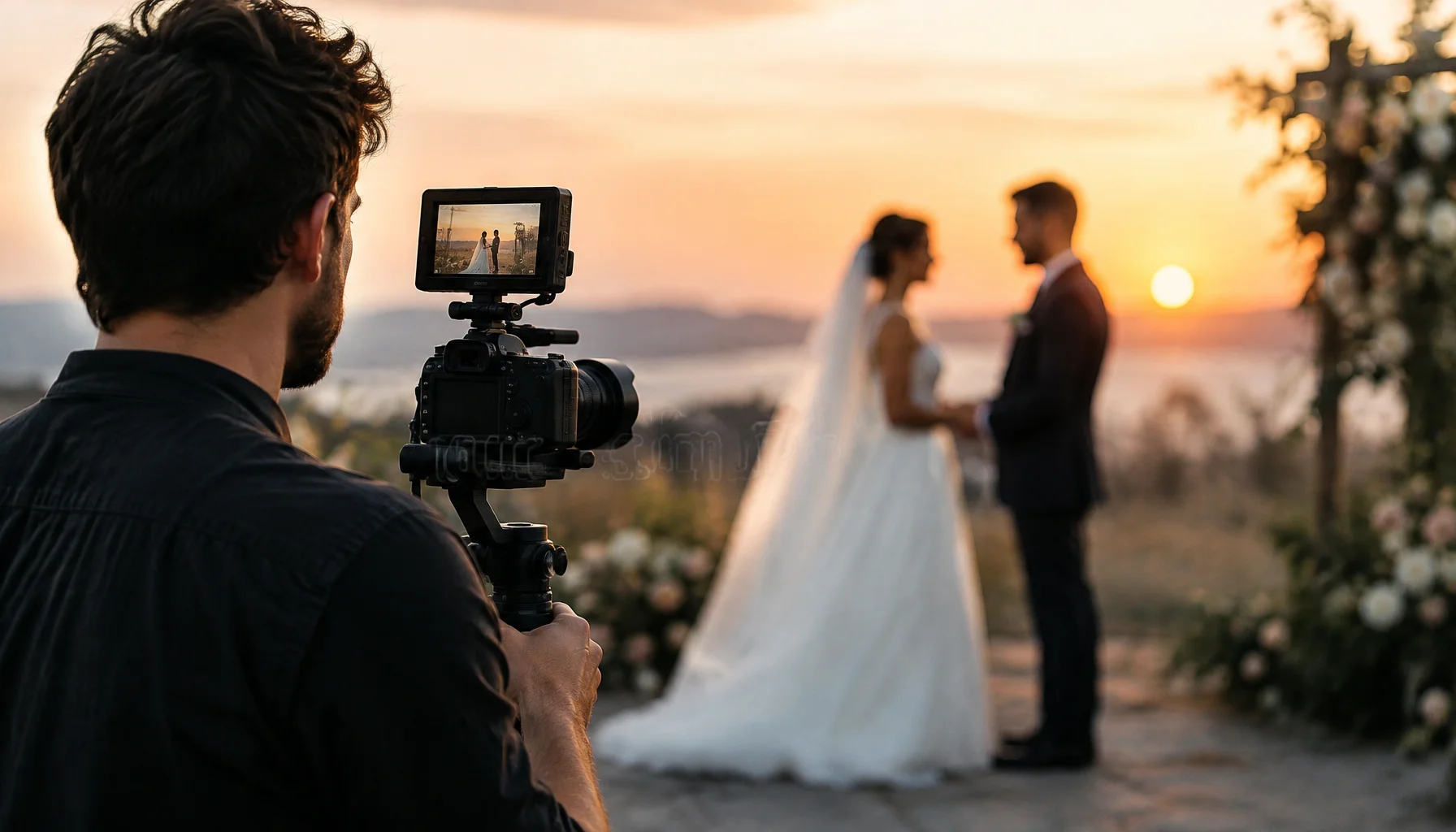
When a Wedding Becomes a Film: What Motion, Sound and Sequence Add to Memory
Wedding film preserves more than moving images. It can hold voice, pauses, movement, chronology and atmosphere — while editing also shapes how the day will later be remembered. This guide explores documentary, narrative, same-day and experimental wedding-film formats, how they are produced, and what couples should decide before cameras roll.