
Music for Kids and Families at Weddings: International Hits, Trends and Timeless Crowd Pleasers
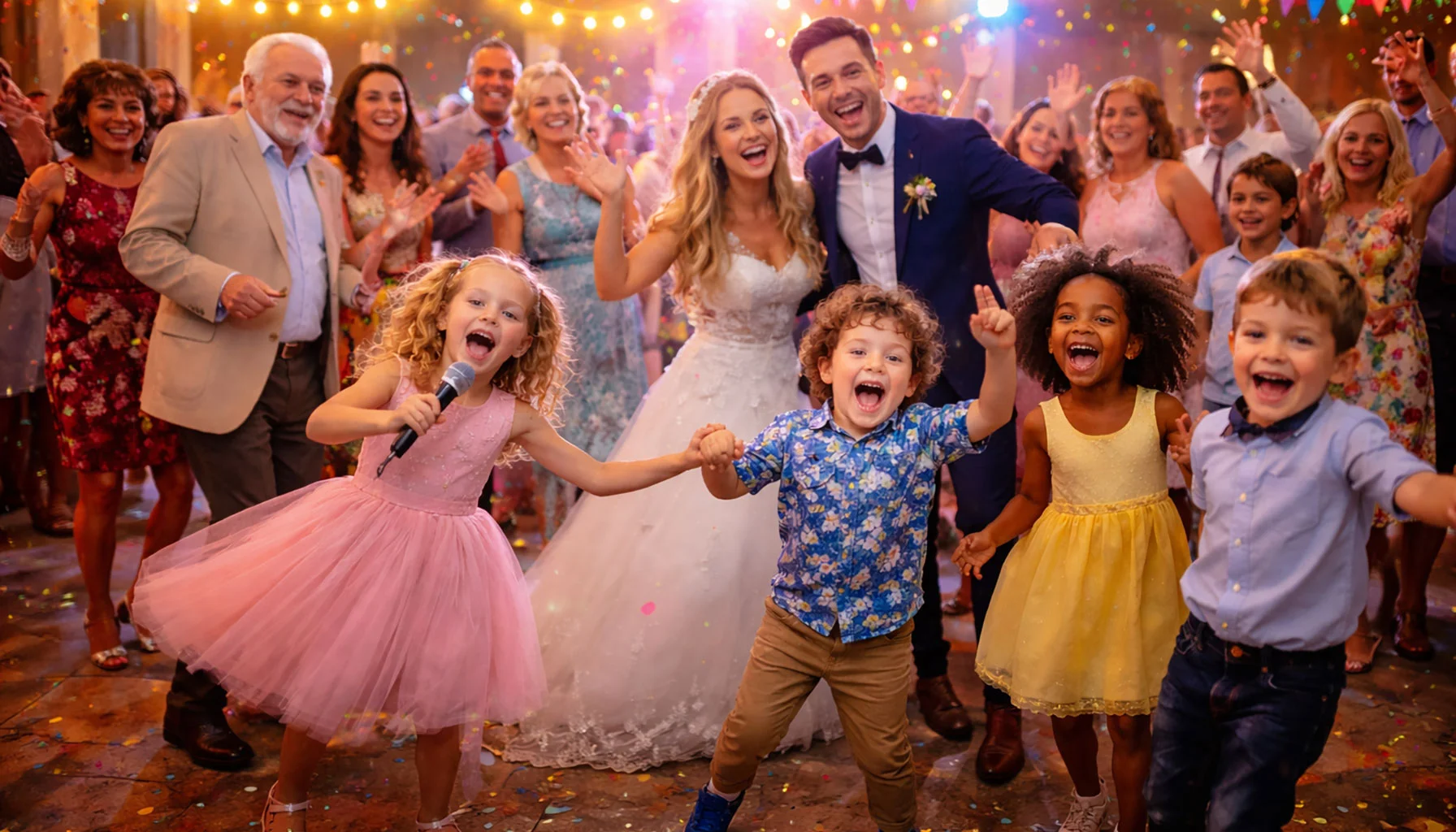
Family-friendly playlists rarely announce themselves. They reveal their presence slowly. A child moves closer to the dance floor. An older guest stays seated, but stops watching the door. Music does not need to convince anyone. It only needs to feel familiar enough. Across many weddings, the most stable moments come from songs that do not ask for attention. They offer recognition instead. Once recognition appears, hesitation often fades on its own.
This is why the subject belongs naturally to both Party Playlist Ideas and Stories. The playlist category on Loving Rocks already treats music as something that holds energy and flow together, while Stories describes the place where ideals meet reality and where love is carried in lived time rather than explained from outside. Family music at weddings often works exactly there. It is less a program than a sequence of small social events in which people decide, often wordlessly, whether to stay, move, sing, or simply remain in the room a little longer.
Party Playlist IdeasThe right mix of songs keeps the dance floor alive and the energy high throughout the wedding celebration. A well-curated playlist balances timeless classics with modern hits and reflects the couple’s taste as well as the mood of their guests. Thoughtful song choices help create unforgettable party moments and ensure the celebration flows effortlessly from start to finish.

Stories are where ideals meet reality. They do not explain love — they show how it is lived, carried, tested, and remembered over time.
Definition
Music for kids and families at weddings is not simply a softer version of the main party playlist. It is the part of the musical structure that lowers thresholds, creates shared recognition across generations, and gives children, parents, and older guests ways to remain present without pressure. Its strongest effect is usually social rather than musical in the narrow sense.
What Holds Different Ages Together
Across many weddings, a few patterns return. Songs are understood within seconds. Rhythms allow small and imperfect movement. Each music phase begins and ends clearly enough that guests trust it. Lyrics remain gentle even when half-heard. And there is enough space between moments for the room to breathe again. One recurring observation is that short, readable blocks of music tend to work better than long stretches that demand continuous energy. Short ones invite participation. Long ones test it.
Germany and the United States
In Germany, family dancing often begins earlier than expected. Schlager appears without explanation, and Eurodance follows once the room feels settled. Children move first. Adults join when repetition makes the structure clear. Songs commonly used include Helene Fischer - Atemlos durch die Nacht, DJ Oetzi - Hey Baby, Wolfgang Petry - Wahnsinn, Matthias Reim - Verdammt, ich lieb dich, Snap! - Rhythm Is a Dancer, Culture Beat - Mr. Vain, and Rednex - Cotton Eye Joe. In the United States, family music is more often framed as a defined window. Clean edits dominate. Spoken transitions are common and reduce uncertainty, especially for parents. Typical choices include Pharrell Williams - Happy, Justin Timberlake - Can’t Stop the Feeling, Bruno Mars - Uptown Funk, Kool and the Gang - Celebration, Village People - YMCA, and Taylor Swift - Shake It Off. In both settings, the same principle appears in different form. Shared movement works best when people understand quickly what kind of moment they have entered.
Serbia and China
In Serbia, traditional dance forms often structure the evening more strongly. Children are present from the beginning, and participation is learned by watching rather than by instruction. Kolo sequences remain central, supported by familiar pop-folk songs and simple international dances such as Macarena. In China, music often follows the program more closely. Dance appears briefly, then withdraws again. Silence remains part of the rhythm. Typical choices include Teresa Teng classics, Jay Chou soft pop songs, selected K-pop instrumentals, and familiar film melodies. These examples may seem far apart, but they share something important: music works best when it respects the social logic already present in the room instead of trying to replace it.
France and Italy
In France, retro and disco tracks often appear early and energy builds steadily rather than by abrupt change. Frequently used songs include Claude Francois - Alexandrie Alexandra, Jean-Jacques Goldman - Quand la musique est bonne, Daft Punk - Get Lucky, ABBA - Dancing Queen, and Earth, Wind and Fire - September. In Italy, singing often precedes dancing, children remain present late into the evening, and generations overlap more naturally. Common selections include Ricchi e Poveri - Sara perche ti amo, Eros Ramazzotti - Piu bella cosa, Volare Nel blu dipinto di blu, and upbeat Adriano Celentano songs. What these settings reveal is that music does not always need to push people toward movement first. Sometimes voices arrive earlier than steps, and that softer entry can hold the room more effectively.
What These Playlists Actually Do
Family-oriented playlists tend to work when they feel intentional but light. They do not compete with the wedding. They support it quietly. Across many celebrations, the same pattern appears. Music lowers thresholds first. Staying follows. Memory settles later. This is where the connection to Stories becomes strongest. A wedding playlist is not only heard in the moment. It becomes part of how the day is later told: when children first ran toward the floor, when adults unexpectedly joined, when a familiar chorus made the room feel briefly shared across age and habit.
Conclusion
The best family music at weddings is not necessarily the newest, the coolest, or the most carefully branded. It is the music that lets different generations recognize the evening as something they can still enter. International hits, small trends, and timeless crowd-pleasers all matter less as categories than as forms of recognition. When that recognition arrives at the right moment, the room holds together more easily, and the story of the celebration becomes easier for everyone to remain inside.
Related Articles
Family Table Checklist: What Helps Mixed Generations Sit More Easily Together
Family tables at weddings rarely depend on seating order alone. They work better when physical comfort, conversational balance, newer relationships, and older family stories are all considered before dinner begins.
Situational Playlists at Weddings: Real Moments, Small Shifts
The best wedding playlists are rarely built around genres alone. They respond to hesitation, momentum, waiting, release, and the subtle changes that happen across a real evening, often through small song choices rather than big musical statements.
Wedding Dinner Flow Checklist: What Keeps the Room Together Between Courses
Wedding dinners usually drift or hold together in the moments between courses, not during the food itself. This article looks at service rhythm, guest movement, music, speeches, and the small in-between conditions that keep the room socially connected.
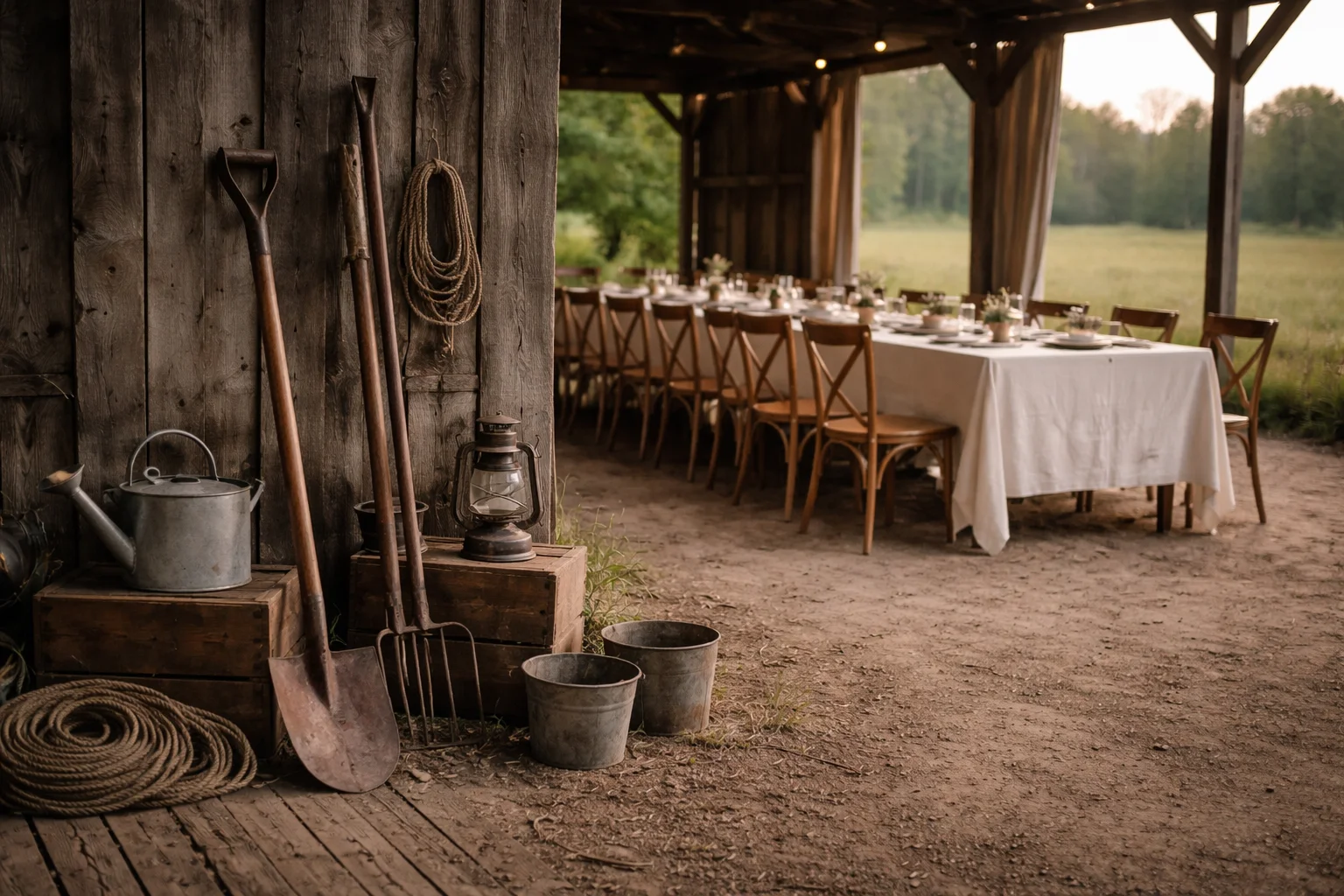
Vintage Tools as Static Objects in Rustic Weddings
Old tools can strengthen a rustic wedding space without ever becoming formal decor. This article looks at how leaving them quiet, slightly uneven, and largely untouched can preserve the character of a venue while adding depth, history, and a more believable sense of place.
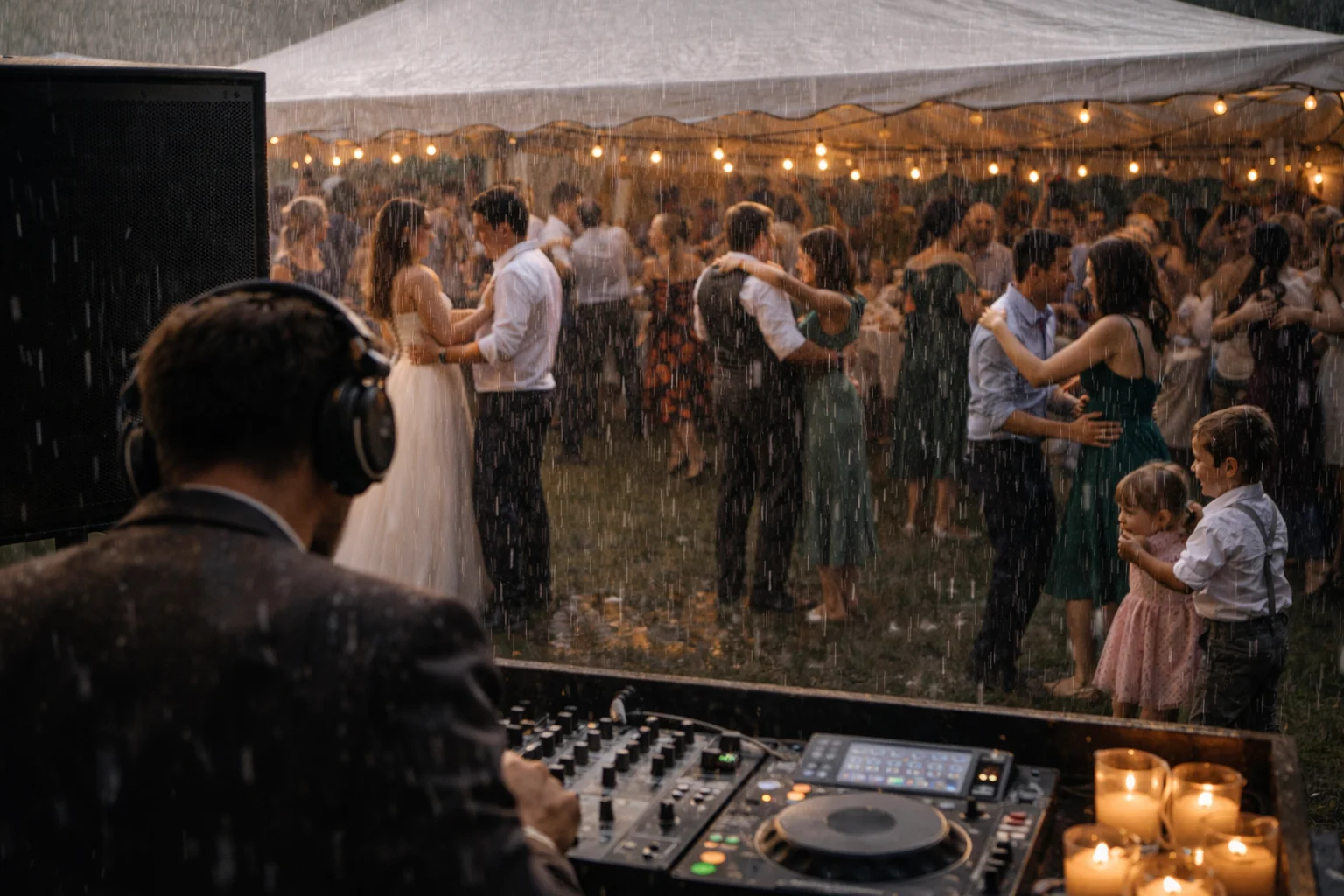
Rainy Wedding Playlist: Music That Works When the Weather Changes Everything
Rain changes a wedding faster than almost anything else. It alters timing, mood, movement, and expectation. This article explores how a rainy wedding playlist can steady the atmosphere, guide guests through uncertainty, and support practical decisions when the day suddenly shifts.
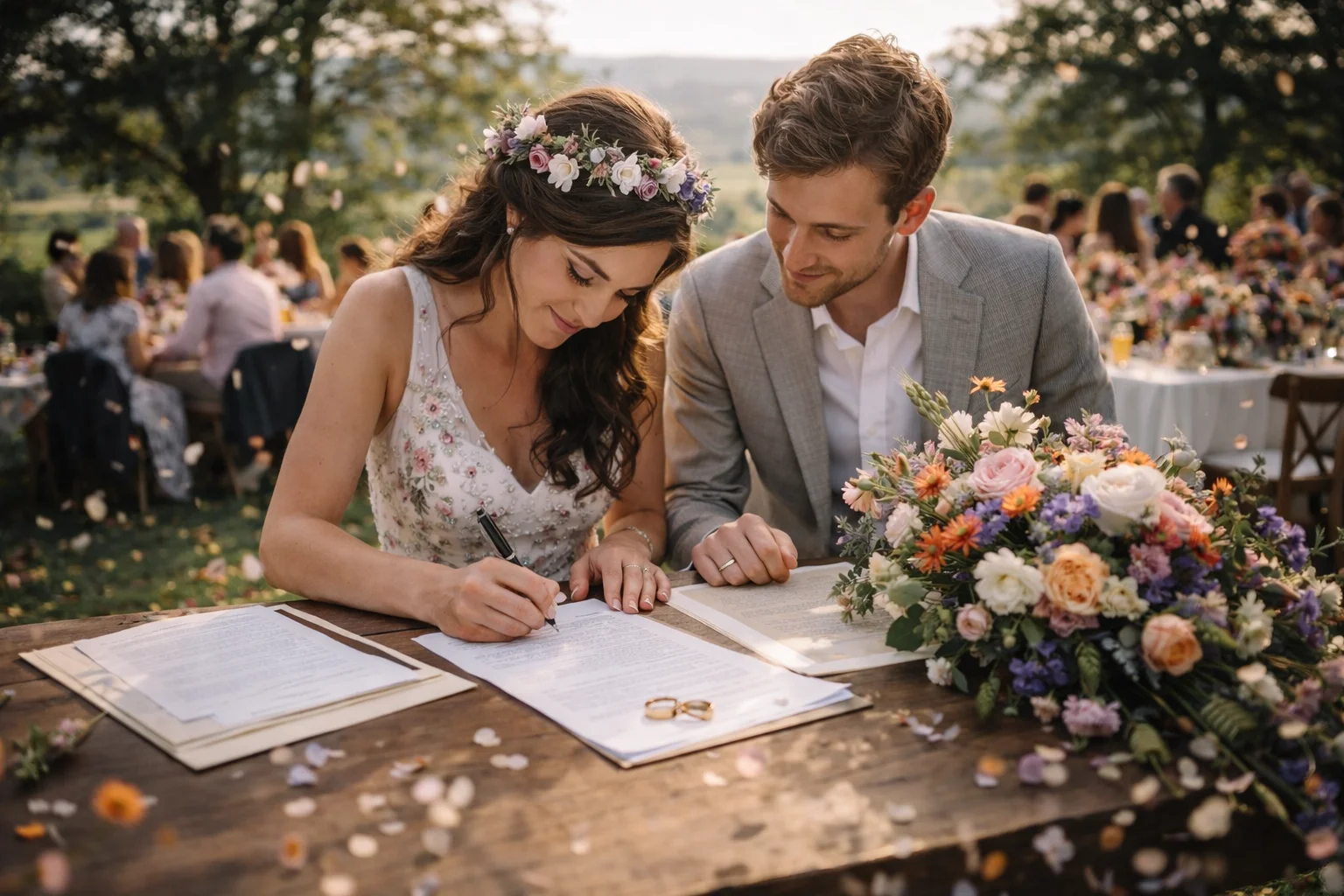
What Legal Documents Know, and What Marriage Learns Later
A wedding can be filed, certified, and recorded, but that is only one version of what has happened. The legal documents matter because they give the marriage standing in the world, while the story begins in the quieter space that no form can fully describe.
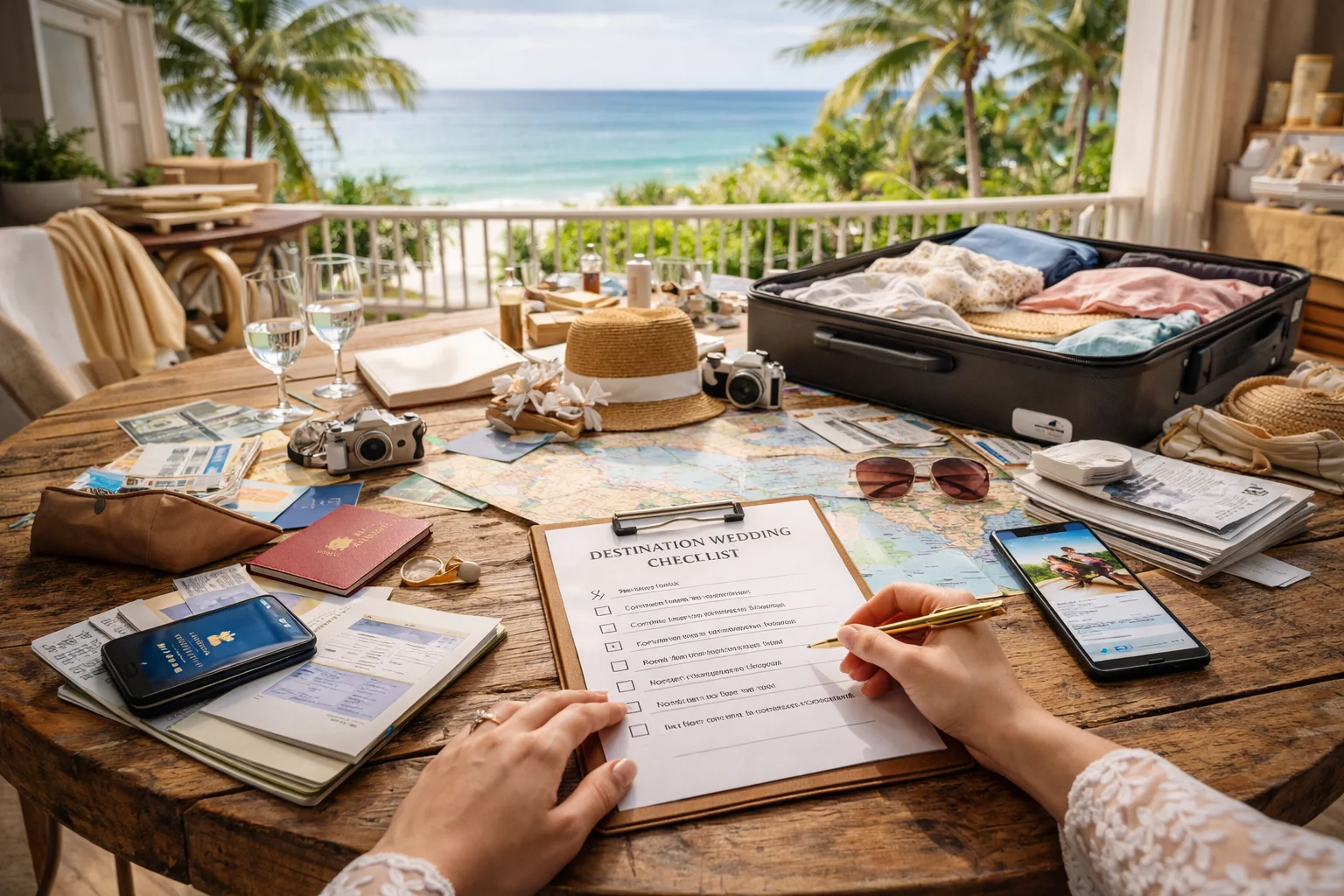
Destination Wedding Checklist: What Changes When Travel Becomes Part of the Plan
A destination wedding is never only a wedding in another place. The moment travel becomes part of the plan, the guest list, the schedule, the budget, the emotional pressure, and even the meaning of attendance begin to change. This article looks at what a destination wedding checklist really needs to cover and why travel turns a wedding into a lived story long before the ceremony begins.
Restaurant Weddings: Why Some Rooms Feel Social Without Much Effort
Restaurant weddings often feel warmer more quickly than larger, more neutral venues. This article looks at why certain dining rooms support conversation, movement, and shared atmosphere so naturally, and how that ease turns into the small social scenes people later remember.
Wedding Morning Checklist: What Helps the First Hours Stay Calm
A wedding morning checklist helps protect the first hours of the day from avoidable stress. It keeps essential items, timing, room atmosphere, and communication clear, while leaving enough space for the morning to still feel calm and human.
Outdoor Wedding Playlist: Music That Works in Open Spaces and Changing Atmospheres
Outdoor wedding music behaves differently. Open air changes volume, timing, and emotional focus, which is why a good playlist for an outdoor wedding needs more than beautiful songs. It needs rhythm, patience, and an understanding of how atmosphere shifts across the day.
Photographer Coordination Checklist: What Helps Without Overdirecting the Day
Wedding photography needs enough coordination to protect the important images, but not so much direction that the day starts feeling staged. This article looks at shot priorities, family helpers, light windows, access, ceremony limits, and the space photographers need to notice real stories.
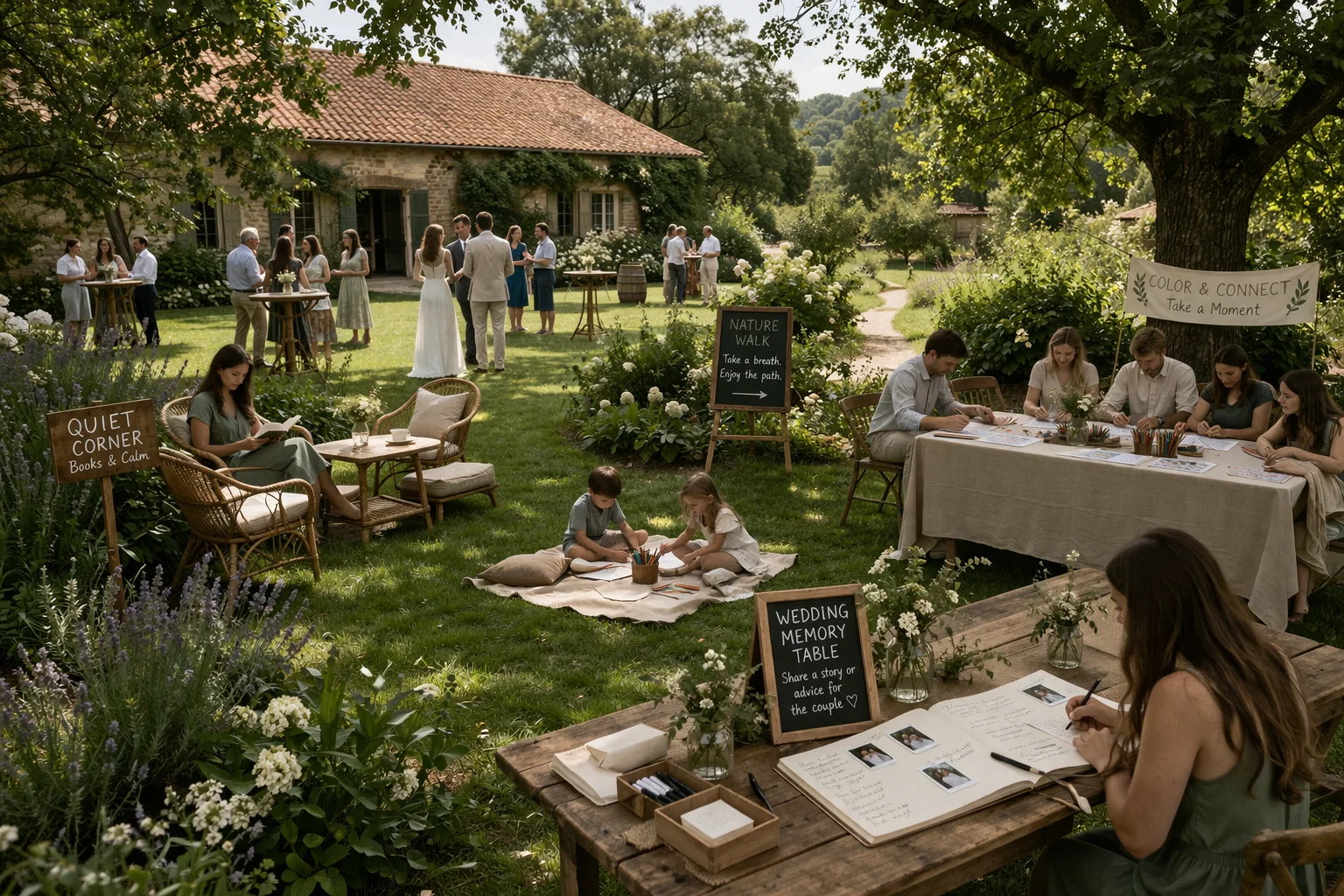
Quiet Wedding Activities for Introverted Guests
Not every wedding guest wants to fill the room with energy. Some feel most present in quieter moments, smaller conversations, and activities that do not demand performance. This article explores thoughtful wedding activities for introverted guests and why those quieter choices often create the most lasting stories.