
Engagement Ring and Wedding Ring: Two Moments, One Commitment
Engagement Ring vs. Wedding Ring: Meaning, Design Differences, Materials, Colors, Width, and High-Craft Details
Engagement rings and wedding rings sit on the same hand, but they do different work. One usually enters the story with a clear gesture. The other arrives with mutual exchange. In daily life, both become small, constant objects. They get noticed in quiet ways. Light on metal. The feel of the inside curve. Whether the set sits flush or fights for space.
Most ring choices that stay satisfying over years come down to proportion, comfort, and finishing. Not the headline feature. Not the size alone.
Definitions
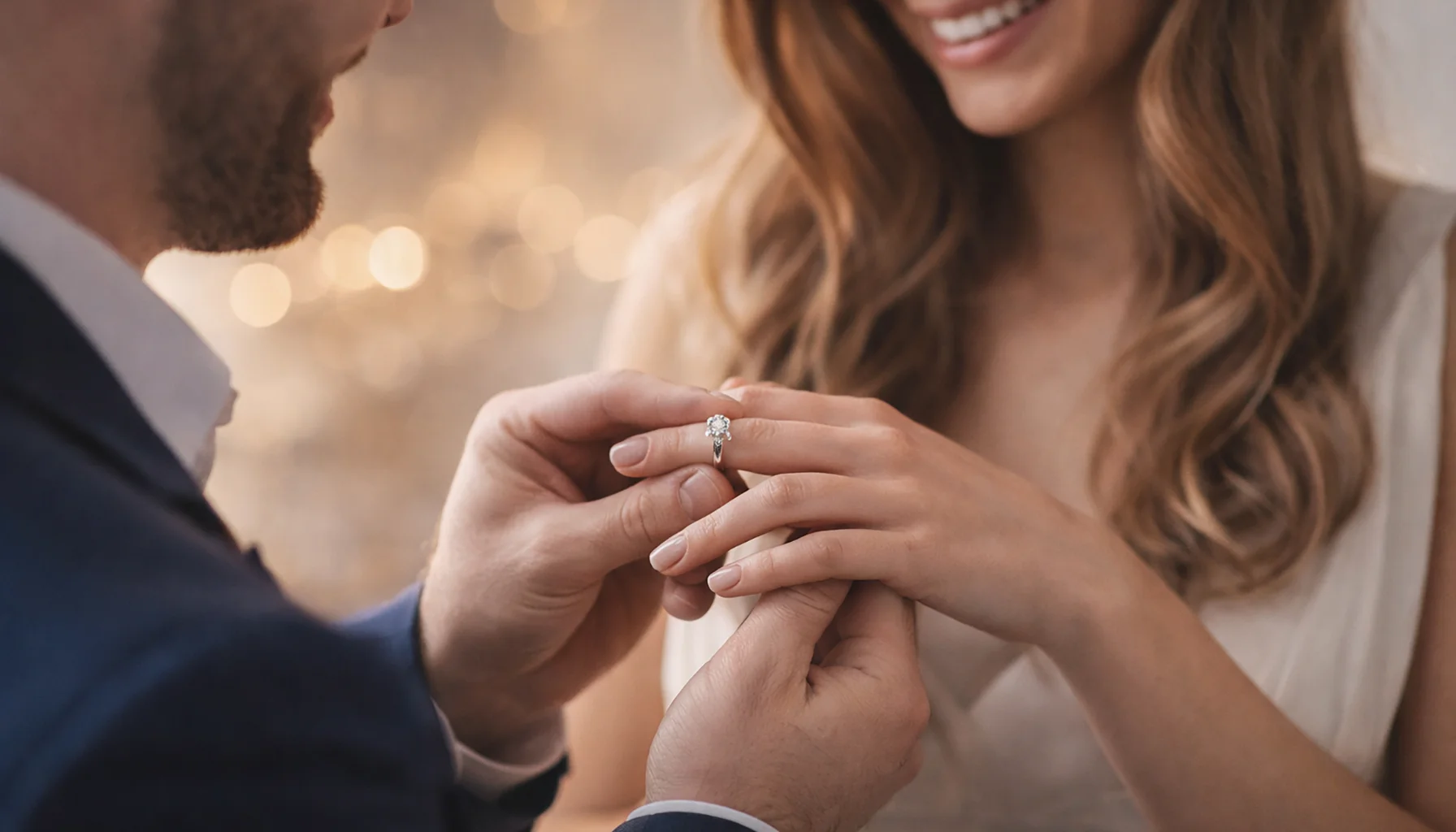
An engagement ring is typically given at the proposal. It represents intention and a decision that becomes public. Design is often more expressive and stone-led.
A wedding ring (wedding band) is exchanged during the ceremony. It represents the marriage itself. Design is usually engineered for daily wear: comfort, durability, clean contact with the skin.
| Aspect | Engagement Ring | Wedding Ring (Band) |
|---|---|---|
| Timing | Given at the proposal | Exchanged at the ceremony |
| Core meaning | Intention, promise | Union, continuity |
| Design focus | Stone presence + setting architecture | Band presence + wear comfort |
| Stones | Often a center stone (sometimes side stones) | Often plain or subtle pavé / channel / small accents |
| Wear pattern | Seen often, protected sometimes | Worn constantly, built for routine |
| Typical feel | More height, more structure | Lower, smoother, quieter on the hand |
The engagement ring felt like a moment. The wedding band felt like daily life. Both mattered, in different ways.— Couple
History and Why the Shapes Stayed
Across cultures, the ring shape has carried the idea of continuity for a long time. What changed over time was not the circle, but the style around it. Engagement rings became more stone-forward as gemstone cutting and setting craft developed. Wedding bands stayed closer to the original idea: a continuous band that lives well on the hand.
Materials and Color Direction
Metal choice sets the tone immediately. It also changes how a ring ages and how it feels in weight. Color direction usually reads as warm (yellow, rose), cool (white metals), or mixed.
| Material | Color direction | Wear character | Often chosen for |
|---|---|---|---|
| Yellow gold | Warm | Classic glow, visible warmth | Traditional sets, warm palettes, strong contrast to white stones |
| White gold | Cool | Bright, refined look (finish matters) | Modern styling, crisp look, pairing with diamonds |
| Rose / red gold | Warm-soft | Gentle warmth, personal tone | Romantic feel, softer contrast, mixed stacks |
| Platinum | Cool-natural | Weighty, dense, calm shine | Lifetime wear, secure stone settings, understated prestige |
| Palladium | Cool-light | Lighter feel, clean white-metal look | White-metal aesthetic with less weight |
| Bicolor / tricolor | Mixed | Design-led contrast | Unity symbolism, visual balance, flexible pairing |
Stones and Their Visual Language
When diamonds are used, cut tends to matter more than people expect. It decides the way light returns. Shape decides the silhouette on the finger. Colored gemstones are chosen for character and personal symbolism, often paired with quieter bands so the color can stay clear.
| Stone / shape | Typical impression | Notes on presence |
|---|---|---|
| Round diamond | Bright, classic | Reads balanced on most hands |
| Oval diamond | Elegant, elongating | Often feels modern-classic |
| Emerald cut | Architectural, calm sparkle | Large flashes, cleaner look |
| Cushion cut | Soft, romantic | Warm presence, gentle outline |
| Pear shape | Expressive, directional | Strong silhouette, refined drama |
| Sapphire (blue/other) | Color-led, composed | Often paired with minimal settings |
| Emerald (green) | Distinctive, deep tone | Usually benefits from protective settings |
| Morganite (soft pink) | Tender color | Often paired with rose gold for harmony |
Width: The Detail That Changes Everything
Width affects comfort, durability, and the way a ring reads from across a table. It also decides whether a set feels balanced. Many people only notice width after wearing a ring for hours. Then it becomes the main topic.
| Ring type | Refined range | Balanced range | More present range | What it tends to feel like |
|---|---|---|---|---|
| Engagement ring band | 1.6–2.0 mm | 2.0–2.6 mm | 2.6–3.2 mm | Thinner reads delicate; mid-range supports settings well; wider feels architectural |
| Wedding band (women) | 2.0–2.4 mm | 2.4–3.0 mm | 3.0–4.0 mm | Slim stacks easily; mid-range feels timeless; wider reads modern and bold |
| Wedding band (men) | 3.5–4.5 mm | 4.5–5.5 mm | 5.5–7.0 mm | Mid-range feels classic; wider feels confident and structured |
A small note that keeps showing up in fittings: comfort-fit interiors change the daily feeling of a band more than most visible design features.
Profiles and Finishes
Profile is the cross-section shape. Finish is the surface. Together they decide whether a ring looks quiet, sharp, soft, or crisp. They also decide how it feels against neighboring fingers.
| Detail | Options | How it tends to read |
|---|---|---|
| Profile (outside) | Court / rounded, Flat, Soft bevel, Knife-edge | Rounded reads timeless; flat reads modern; bevel reads tailored; knife-edge reads sleek |
| Interior | Comfort-fit (rounded), Standard (flat) | Comfort-fit often feels smoother over long wear |
| Finish | High polish, Satin/brushed, Matte, Mixed (polish + satin) | Polish reads classic; satin reads modern; matte reads calm; mixed reads crafted |
| Edge detail | Clean edge, Milgrain, Fine engraving | Clean edge reads minimal; milgrain reads heritage; engraving reads personal |
Modern, Timeless, Extravagant: How the Mix Usually Works
Timeless design often comes from proportion and restraint. Modern design tends to come from geometry and finish. Extravagant design usually comes from craftsmanship and stone quality, not only size. The sets people keep admiring years later often combine one calm foundation with one refined signature detail.
- Timeless: balanced widths, clear profiles, clean stone setting, consistent metal tone.
- Modern: flatter profiles, satin or matte finishes, bezel settings, minimal architecture.
- Extravagant: couture-level pavé, hidden halo, exceptional cut quality, sculptural settings with control.
The set looked simple in photos. Up close, the finishing was the whole point.— Guest
Stacking: How the Rings Sit Together
Some engagement rings sit high and leave a gap. Some sit low and allow a band to sit flush. Both can look intentional. What tends to feel best is clarity: either a clean flush stack, or a deliberate contour band that follows the engagement ring without friction.
- Flush stack: straight band + setting that allows close contact.
- Contour band: shaped band that hugs a higher setting.
- Balanced contrast: engagement ring as statement, wedding band as calm line.
- Equal presence: both rings similar width and finish, built as a pair.
Timeline: When Decisions Usually Land Well
- 9–12 months before: decide on metal tone, overall style direction, and daily-wear expectations.
- 6–8 months before: confirm widths, profiles, and whether stones will be part of the wedding band.
- 3–4 months before: finalize sizing, engraving, and any custom work.
- 4–6 weeks before: final polish, fit check, and wearing comfort confirmation.
Country Guide: Common High-End Directions
Preferences vary, but local taste often has a recognizable rhythm. The table below focuses on materials, widths, and small signature details that repeatedly show up in high-end choices.
| Country | Engagement ring direction (deep details) | Wedding ring direction (deep details) |
|---|---|---|
| Germany | Platinum or white gold solitaire (round/oval). Clean prongs. Band 1.8–2.2 mm. Optional hidden halo kept discreet. | Comfort-fit band in yellow gold or platinum. Women 2.2–3.0 mm, men 4.0–5.0 mm. Satin or high polish. Inside engraving kept minimal. |
| United States | Statement center stone (oval/round/emerald) with pavé shoulders or halo. Band 1.8–2.6 mm depending on setting. Stack-ready design is common. | Coordinated pair: women often half-eternity pavé 2.0–2.5 mm, men flat comfort-fit 4.0–6.0 mm. Brushed finishes appear often. |
| Serbia | Warm-toned gold with bright center stone (round/oval). Classic setting. Band 1.8–2.2 mm. Strong heritage feel. | Rounded court bands in yellow gold. Women 2.5–3.0 mm, men 4.0–5.5 mm. High polish. Symbolic engraving often included. |
| China | Clean solitaire in platinum/white gold. Low, neat setting. Band 1.6–2.0 mm. Clarity-focused styling. | Slim refined band in white metal. Women 2.0–2.6 mm, men 3.5–5.0 mm. Polish or soft satin. Comfort-fit valued. |
| Spain | Yellow or rose gold with oval or cushion stone. Band 1.8–2.3 mm. Subtle halo or pavé appears often. | Warm-toned bands, softly rounded. Women 2.2–3.0 mm, men 4.0–5.5 mm. High polish or light satin. |
| France | Delicate couture look: slim band 1.6–2.0 mm. Refined prongs. Micro-pavé used quietly. | Thin stacking band 2.0–2.4 mm in white metal. Minimal pavé or milgrain. Comfort-fit interior kept very smooth. |
| Italy | Craft-led glamour: yellow gold with emerald or cushion cut. Pavé accents. Band 2.0–2.6 mm for strong balance. | Handcrafted yellow gold band. Women 2.5–3.5 mm, men 4.5–6.0 mm. Mixed polish-satin contrasts. Fine engraving is common. |
| Russia | White metal with strong presence: oval or emerald cut, secure clean setting. Band 2.0–2.6 mm. Architectural feel. | Substantial band in white metal. Women 2.5–3.2 mm, men 5.0–7.0 mm. Flat with soft bevel. Satin finish, comfort-fit. |
What Makes a Ring Look Premium Up Close
High-end rings tend to impress in small moments. Close distance. A hand on a glass. The way the band edges meet the skin. The way stones sit symmetrical. The way polish transitions into satin without mess.
- Comfort-fit interior that stays smooth all day.
- Crisp symmetry: prongs, pavé lines, edges, spacing.
- Stone height that feels present but wearable.
- Finish quality: even brushing, clean polish, precise transitions.
- Quiet signatures: milgrain, fine engraving, hidden halo, or a small inside stone.
The band felt like nothing on the hand. That was the sign it was right.— Bride
Conclusion
Engagement rings and wedding rings are two different decisions that end up living as one set. One tends to carry the memory of a single moment. The other builds meaning through repetition. When material, width, profile, and finish are chosen with balance, the rings stop feeling like “jewelry choices” and start feeling like something that belongs.
Related Articles
Wedding Rings Between Decision and Everyday Life
Wedding rings are rarely chosen as display objects. They are chosen for repetition, for wear, for the fact that they will remain present long after the ceremony itself has passed. This article looks at wedding rings through width, material, setting, and everyday use, while connecting them to the quieter emotional state of waiting that often surrounds such decisions.
Groom’s Morning Checklist: What Keeps the First Hours Clear and Unforced
The groom’s morning often looks simple from the outside, but it depends on small decisions made early. This article looks at clothing, food, rings, timing, communication, photography, transport, and the quiet rituals that keep the first hours clear without making them feel staged.
A Calm Structure for Wedding Planning
The text follows wedding planning as it usually takes shape. Not in a straight line, but with continuity. Decisions emerge, shift, and settle. The overview provides a calm structure that supports the process without directing it, leaving room for individual choices.
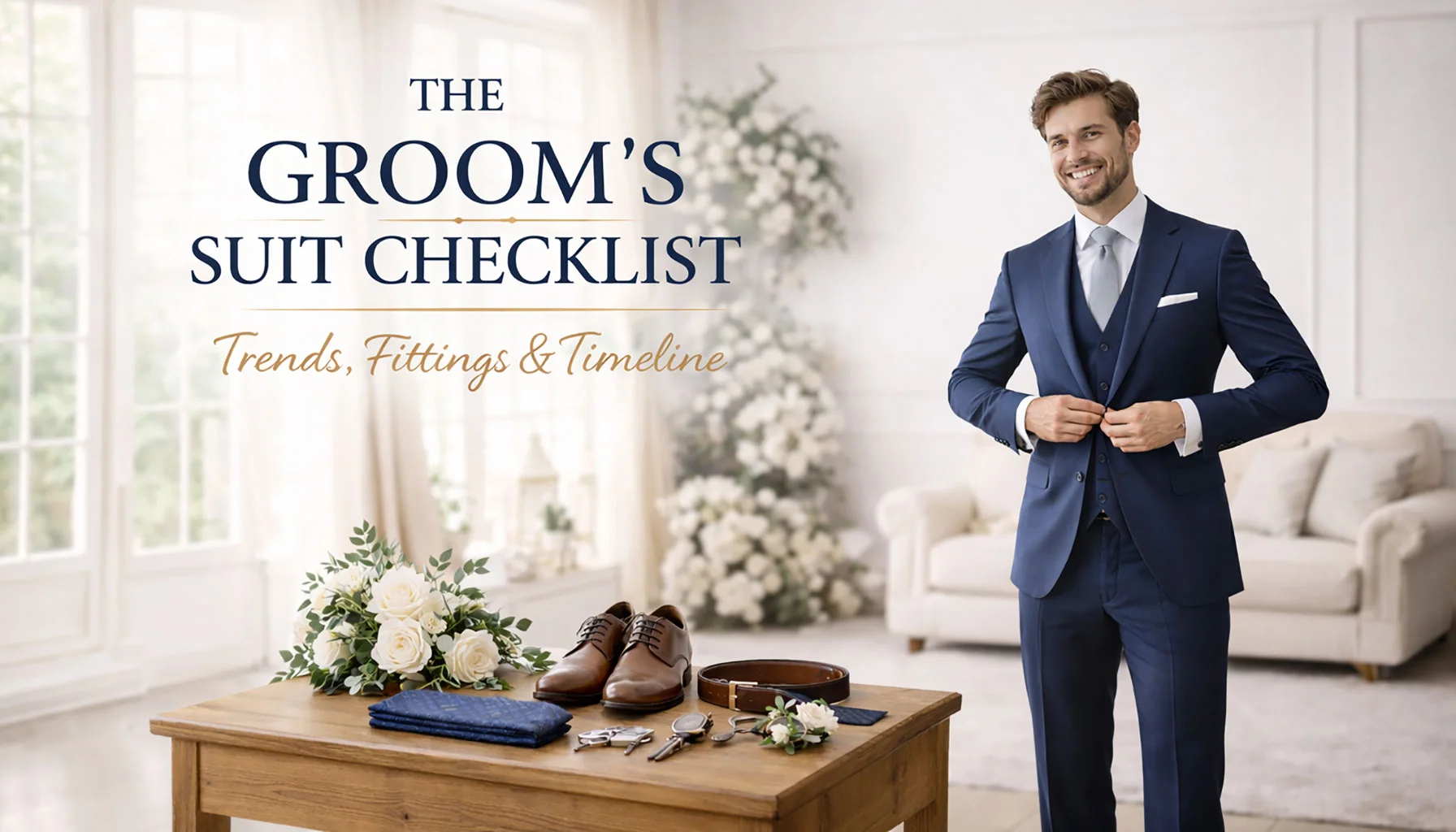
The Groom’s Suit Guide: Planning, Fittings, Trends & Timeline
A wedding suit does not come from a single decision, but from alignment over time. Cut, fabric, and fit develop in relation to occasion, movement, and personality. When these elements settle into place, the suit supports the day quietly and allows the groom to remain fully present.
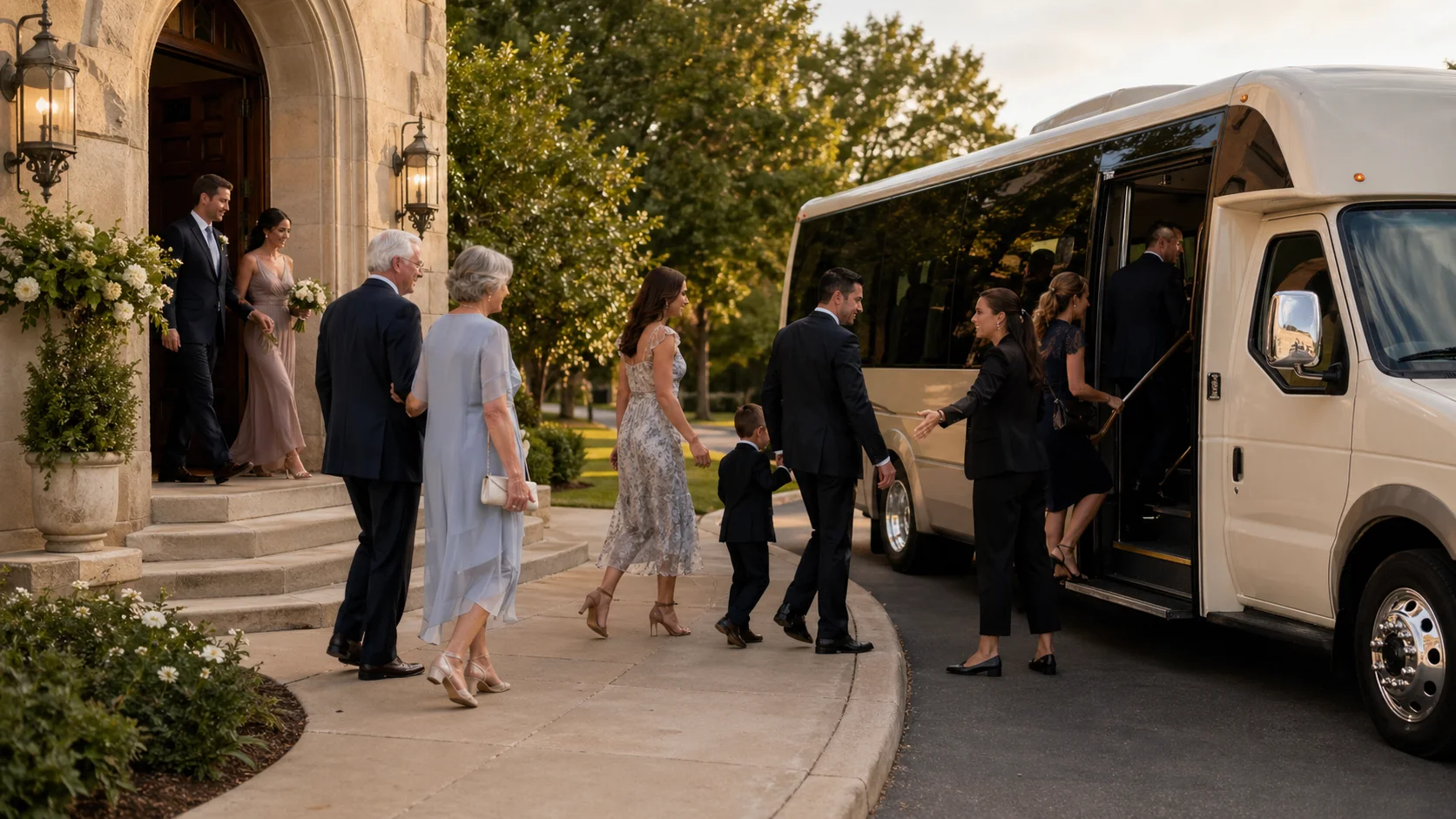
Transportation Checklist: How Not to Lose Time Between Wedding Locations
Wedding transportation is rarely only about the drive. This article looks at pickup points, buffers, driver contacts, guest movement, accessibility, and the pause between locations that either keeps the day together or quietly costs time.
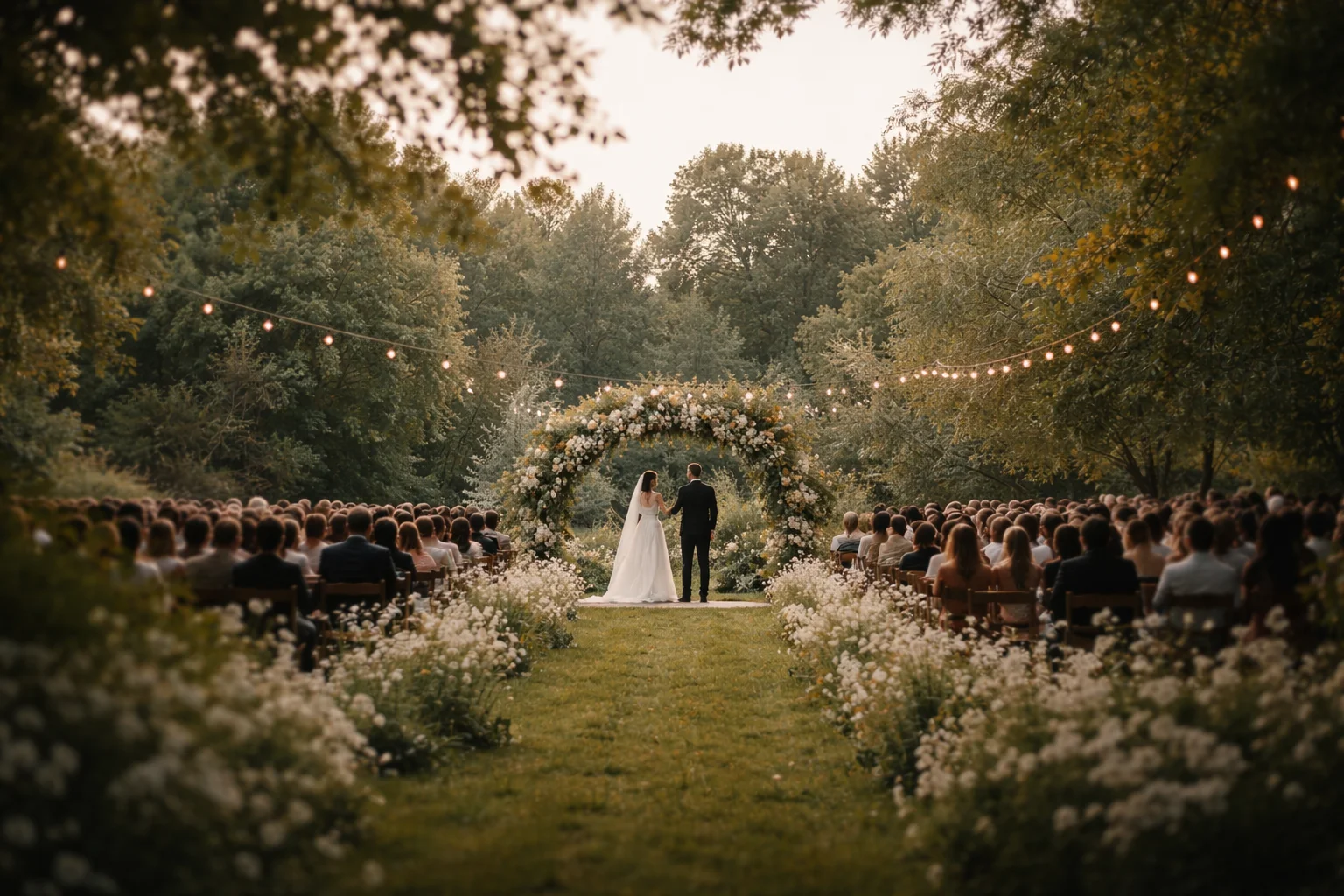
The Quiet Structure of a Wedding: How Checklists Become Rituals
Behind every calm, meaningful wedding lies a structure that no one notices. This piece explores how practical checklists and deeply felt rituals are not opposites, but partners in shaping a ceremony that feels grounded, intentional, and real.
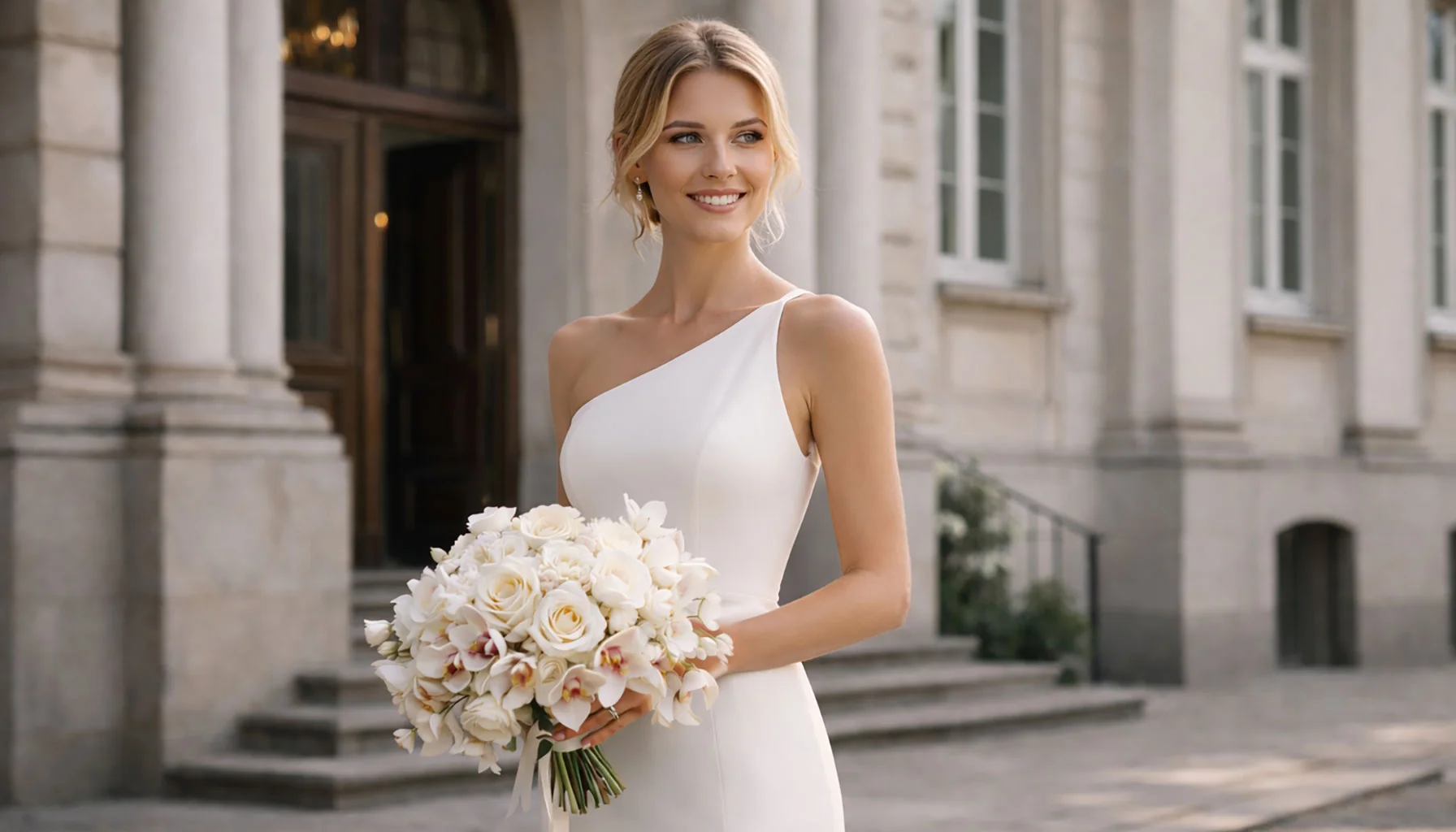
A Love Made Official: A Bridal Look for the Civil Ceremony
Civil ceremonies tend to be focused and quiet. The setting is smaller, the attention sharper. In this context, the bridal look does not perform. It supports. Fabric, cut, and proportion matter more than embellishment. What remains is a look that fits the moment, allows presence, and feels appropriate long after the ceremony ends.
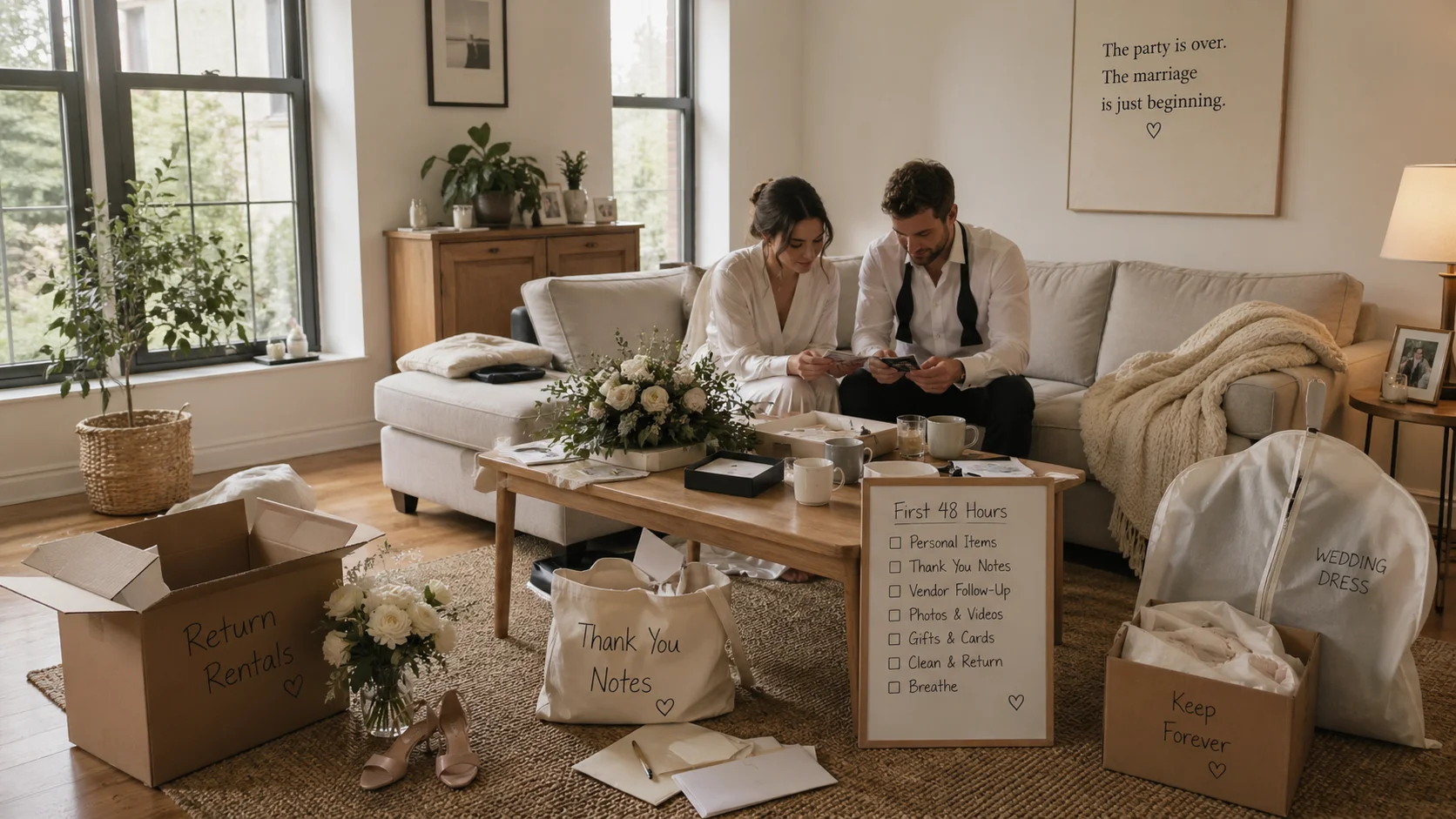
After-the-Wedding Checklist: What Needs Attention in the First 48 Hours
The first 48 hours after a wedding are quiet, practical, and easy to underestimate. This article looks at personal items, gifts, clothing, vendor closure, early photos, and the small tasks that help the after feel lighter instead of turning into scattered errands.
The Marriage Proposal: A Moment between Decision and Trust
A marriage proposal is rarely only a surprise. More often, it gathers what has already grown in conversations, decisions, and quiet alignment. This article looks at the proposal as a visible threshold between decision and trust, while keeping close to lived experience, ring choice, gesture, timing, and the open reality of what may follow.
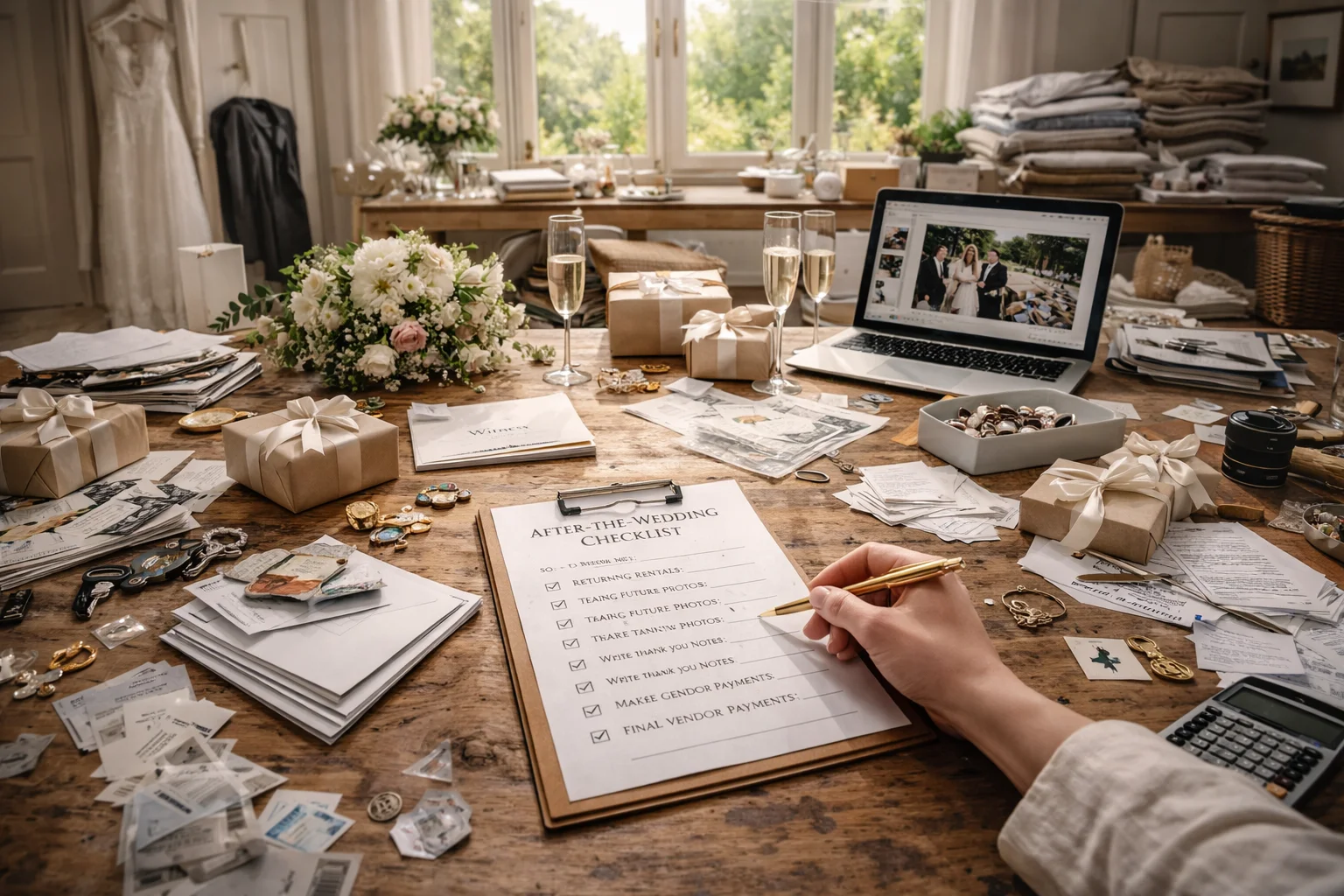
After-the-Wedding Checklist: What Still Needs to Be Returned, Paid, Thanked, or Closed
A wedding rarely ends when the last guest leaves. What follows is quieter, more practical, and often more emotionally mixed than couples expect. This article looks at what still needs to be returned, paid, thanked, or closed after the wedding, and why the days after the celebration are part of the wedding's meaning, not just its cleanup.
A Wedding Shaped by Quiet Alignment
This wedding was defined not by individual highlights, but by its steady flow. Planning, design, and service worked together without drawing attention to themselves. For guests, the day unfolded naturally and remained consistent, carried by a sense of calm, closeness, and continuity throughout.
Looking good on the wedding day – quiet preparation, visible effect
A good appearance on the wedding day rarely arises spontaneously. It is the result of time, attention, and recognizability. This text collects observations concerning bride and groom, without ideal images or instructions. It's about skin, hair, and posture, about preparation instead of change. And about what remains when nothing needs to be explained.