
Which Wedding Decisions Should Be Made First? A Dependency Map for Planning Without Rework

Wedding planning feels like a long list, but the decisions are not equal. Some choices sit upstream and quietly constrain dozens of later choices. Others are downstream and can wait without creating much rework. The practical problem is therefore not only what to decide — it is what to decide first.
Planning order matters because decisions create dependencies
A guest list influences venue size. Venue size influences catering, layout and transport. Budget limits affect almost every supplier decision. Ceremony format can affect location, timing and documentation. A destination decision changes travel, accommodation, guest feasibility and cost.
This means a wedding plan is not a flat checklist. It is closer to a dependency graph. When an upstream decision changes late, every connected downstream decision may need to be revisited.
The best early decisions therefore are not the most exciting ones. They are the decisions that reduce uncertainty for everything else.
The Wedding Decision Dependency Map
| Decision layer | Examples | Why it belongs here |
|---|---|---|
| Foundation | Legal path, budget range, guest-count range, geography, major non-negotiables | These variables constrain many later choices |
| Structure | Venue, date, ceremony/reception format, accommodation/travel model | These choices convert the foundations into a real event |
| Capacity | Catering scale, supplier scope, transport, staffing, rentals | These depend heavily on structure and guest volume |
| Experience | Timeline, ritual flow, music, food experience, guest communication | These depend on the structure already being real |
| Design | Palette, flowers, stationery, styling, lighting, table details | These are easier to shape once venue and format are known |
| Finishing | Signage wording, favors, small decor, accessories, final print items | These are highly reversible and should stay late |
1. Legal path: decide what kind of marriage you are actually planning
Before the wedding becomes an event plan, clarify whether the marriage itself will be civil, religious, legally recognized at the ceremony, legally completed separately, or symbolic at the main celebration.
This decision can affect documents, timing, location, officiant requirements and whether the public ceremony is legally operative or purely symbolic. The exact requirements depend on jurisdiction, so official local authorities should always remain the source of truth.
You do not need every document on day one. You do need to know which legal route you are planning around before booking a structure that assumes something different.
2. Budget range: define the constraint before suppliers define it for you
A useful early budget is not a perfect spreadsheet. It is a working range with a ceiling. Its purpose is to tell you what scale of event is realistic before individual quotes begin pulling the plan in different directions.
Loving Rocks' budget-planning guide treats budget as the financial framework that allocates resources across the celebration. That framework should exist before a venue, caterer or design concept consumes a disproportionate share of it.
The early question is not “How much should weddings cost?” It is “What amount can we commit without damaging priorities outside the wedding?”
3. Guest-count range: you need a number before you need a final list
Couples often delay guest decisions because the social side is difficult. But venue, catering, accommodation, transport, staffing and sometimes even ceremony format all depend on scale.
You do not need the final names immediately. You need a credible range: perhaps 45–55, 90–110 or 180–220. A range is enough to prevent you from falling in love with a venue or cost model that cannot accommodate the likely reality.
The final list can evolve later. The capacity assumption should not remain imaginary.
4. Geography: decide where the wedding belongs before choosing a room
A city, region or country decision affects more than venue search. It changes travel, accommodation, accessibility, legal administration, supplier availability, weather assumptions and how difficult attendance becomes for guests.
This is especially important for international and destination weddings. A visually perfect location can create an event structure that conflicts with the people you most want there.
Choose the geographic logic first: close to home, close to family, neutral ground, meaningful destination, or a location chosen mainly for the experience. Then evaluate venues inside that logic.
5. Non-negotiables: identify the few things that are allowed to constrain the plan
A wedding becomes difficult when everything is treated as equally important. Early planning needs a short list of real non-negotiables.
These may be specific people, a religious rite, accessibility for a family member, a location, live music, a cultural tradition, excellent food, privacy, a particular season or a date that matters.
Keep the list short. A non-negotiable is something the rest of the plan is allowed to bend around. If there are fifteen of them, the plan has no flexibility left.
The Reversibility Test
When two decisions compete for attention, ask which one is more reversible. The less reversible decision usually deserves to be made first.
High-lock decisions vs low-lock decisions
| Factor | High-lock decision | Low-lock decision | |
|---|---|---|---|
| Financial lock | |||
| Dependency | |||
| Scarcity | |||
| Meaning |
What can safely wait
Late decisions are not failures. Many choices become easier when they are intentionally postponed until the correct information exists.
- Exact color shades before the venue and lighting are known.
- Table styling before table sizes, room layout and catering format are confirmed.
- Invitation wording before date, location and schedule are stable.
- Final floral combinations before attire, season and venue conditions are clear.
- Seating assignments before RSVPs are substantially complete.
- Detailed signage before guest movement and access points are known.
- Favors and small decorative objects before the core budget is secure.
What should not wait too long
| Decision | Why delay becomes expensive |
|---|---|
| Legal route | You can build the wrong ceremony assumptions around the day |
| Budget ceiling | Early bookings can consume money needed elsewhere |
| Guest-count range | Venue and catering assumptions become unrealistic |
| Accessibility needs | Suitable venues or transport options may disappear |
| High-priority venue/date | Scarcity can remove the option completely |
| Religious or cultural authority | Preparation, officiant availability or required sequence may need lead time |
| Destination logistics | Travel, documentation and accommodation create longer planning dependencies |
A four-pass planning sequence
Plan from constraints toward detail
Why couples often plan in the opposite order
Downstream decisions are easier to imagine. A flower, dress, color or table setting produces an immediate picture. Budget ceilings, guest ranges and legal structure feel abstract.
That is exactly why mood boards can outrun the plan. The visual layer becomes detailed before the structure underneath it is stable. Rework begins when reality finally arrives.
There is nothing wrong with collecting inspiration early. The distinction is between exploring a possibility and committing money, contracts or other decisions to it.
Separate exploration from commitment
| Exploration | Commitment |
|---|---|
| Save venue ideas | Sign venue contract |
| Create broad palette references | Order all color-specific materials |
| Collect attire inspiration | Commission non-returnable custom work |
| Draft guest groups | Send invitations |
| Compare ceremony formats | Book an officiant or legal appointment |
| Estimate supplier ranges | Pay non-refundable deposits |
Exploration can happen early because it is reversible. Commitment should follow the dependency order.
What would change this answer?
The order changes when one downstream-looking choice is actually a true non-negotiable. If a specific artist, religious date, inherited venue, cultural rite or custom garment defines the wedding, that choice moves upstream because the rest of the plan must work around it.
The order also changes for very small weddings. With ten guests and a flexible symbolic ceremony, guest count and venue capacity may barely constrain the plan. For a 200-person international wedding, the same variables become dominant.
Finally, unusual access, health or family needs can move transport, accommodation or accessibility to the very top of the dependency map. The framework should follow the actual wedding, not a generic checklist.
Limitations
There is no universal planning order that fits every country, family structure, budget or ceremony type. Legal requirements in particular vary by jurisdiction and should be checked with the relevant official authority.
The Wedding Decision Dependency Map is therefore a sequencing tool rather than a fixed timeline. Its value is in exposing which decisions constrain other decisions in your particular wedding.
Conclusion
Wedding planning becomes lighter when you stop trying to decide everything at once. The real task is to stabilize the few variables that control the rest.
Start with legal path, budget range, guest-count range, geography and true non-negotiables. Use those decisions to choose the structure. Build the experience after the structure is real. Let the finishing details come last. The goal is not an earlier wedding plan. It is a plan with less rework.
FAQ
Which wedding decisions should be made first?
What should we decide first when planning a wedding?
Do we need a final guest list before booking a venue?
Should we choose wedding colors early?
How do we know whether a wedding decision can wait?
What is the biggest mistake in wedding planning order?
Glossary
Key planning terms
- Upstream decision
- A decision that constrains or changes several later planning decisions.
- Downstream decision
- A decision whose best answer depends on choices already made earlier in the planning structure.
- Reversibility
- How easily a decision can be changed later without major financial, logistical, relational or contractual consequences.
- Non-negotiable
- A wedding requirement important enough that other parts of the plan are intentionally allowed to adapt around it.
- Wedding Decision Dependency Map
- A planning model that orders wedding decisions by how many later choices they constrain and how costly they are to change.
Further reading on Loving Rocks
Loving Rocks — Wedding Budget Planning GuideA practical framework for wedding budgeting, priorities and real-cost decisions.
Loving Rocks — Wedding Guest List Planning GuideA guide to guest-count and invitation decisions across emotional and practical constraints.
Loving Rocks — Before Wedding Planning Takes OverAn engagement-stage checklist for expectations, family pressure, money, privacy and planning responsibility.
Loving Rocks — Legal & DocumentsA planning pillar for legal and administrative wedding requirements, with the reminder that official requirements depend on jurisdiction.
Related Articles
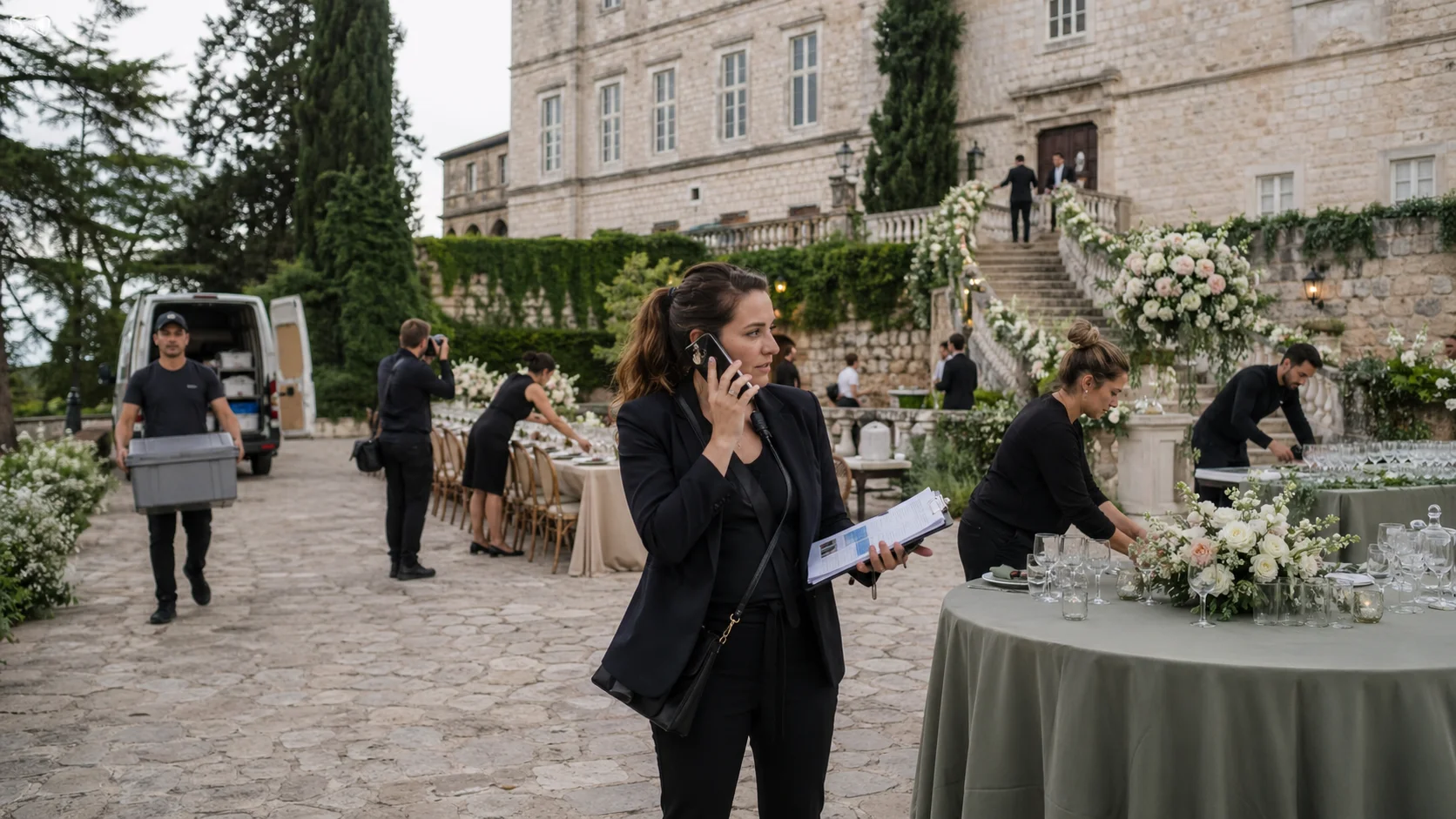
Vendor Contact Checklist: Who Needs to Reach Whom When the Day Starts Moving
A wedding contact list is not the same thing as a wedding communication plan. Once the day starts moving, what matters is not only who is involved, but who should contact whom, for what reason, and at which moment.

What a Budget Decides, What a Ring Still Means
A wedding budget is built on numbers, but its direction is often set much earlier. The engagement ring carries a meaning that quietly shapes how couples think about value, cost, and what is truly worth keeping as they begin planning.

Wedding Website Checklist: What Guests Actually Need, and What They Ignore
Wedding websites work best when they reduce uncertainty instead of filling space. This article looks at what guests actually need to find quickly, what they usually ignore, and which unspoken questions a good website can answer before they become messages to the couple.

Guest List Coordination with Families: Typical Situations During Wedding Planning
The guest list rarely develops in isolation. Once families become involved, the list begins to shift. Names appear from old address books, distant relatives, or long standing family friendships. The process is usually quiet and gradual. Conversations happen in small steps. Over time the list starts to reflect not only the couple but also the wider family network.
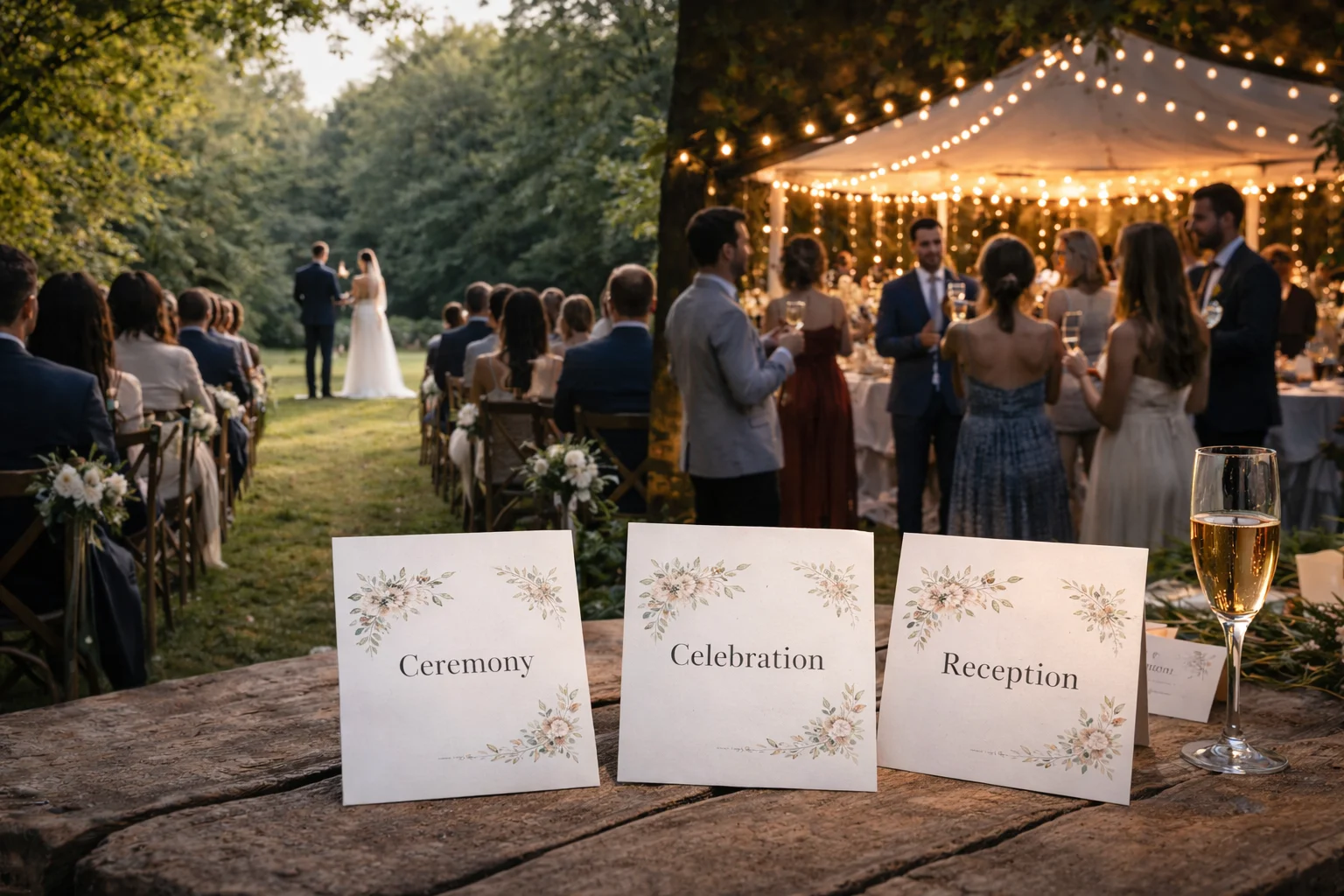
Who Is Invited to the Ceremony and Who Only to the Celebration
Not every wedding invitation has to include every part of the day. But the difference between being invited to the ceremony and being invited only to the celebration carries more meaning than many couples first assume. This article looks at how to make that distinction clearly, gracefully, and in a way that fits both the ritual weight of the ceremony and the social reality of the celebration.

Wedding Guest Communication Checklist: What Guests Need to Know and When
Good wedding communication is not about sending guests everything at once. It is about giving the right information at the right moment, so the day feels clear without becoming overexplained. This article looks at what guests actually need to know, when they need to know it, and why silence still has a place in wedding planning.
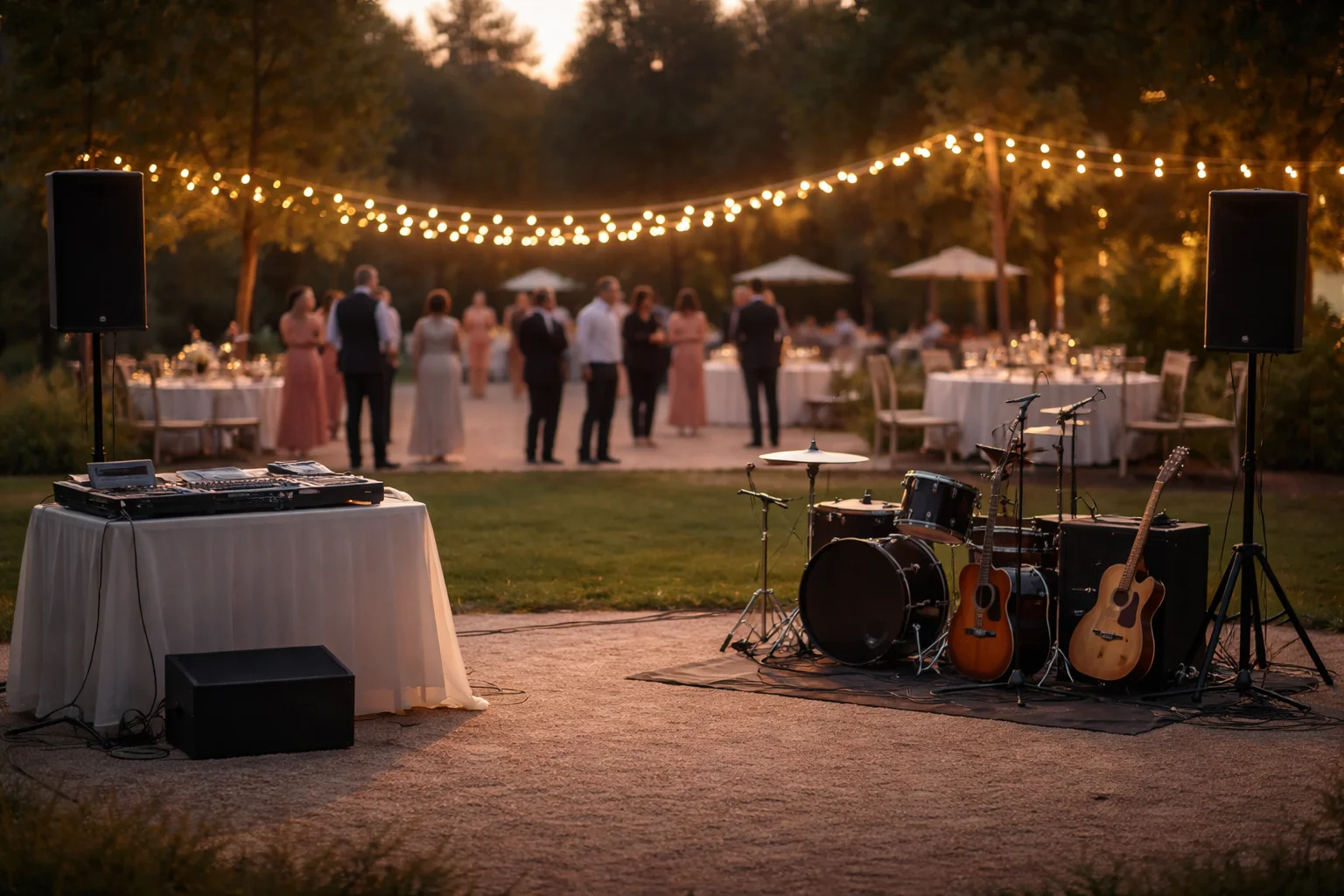
Music Budget: DJ, Band or Playlist at Weddings
Music is part of almost every wedding reception, although it is not always the first topic during planning. Venue, food, guest numbers. Those decisions tend to appear earlier. Later the conversation moves toward sound in the room. How the evening should feel once dinner ends and people begin to gather near the dance floor.
Who Stays in the Room After Everyone Leaves: A Wedding Guest List with the Marriage Beyond It
A wedding guest list is usually treated as a planning tool: numbers, families, tables, obligations. But it also shapes the emotional life that follows the ceremony. This article looks at how choosing who witnesses a marriage influences not only the day itself, but the quieter reality that begins after it.

Wedding Budget Conversations Checklist: What Should Be Said Before Money Turns Quiet
A wedding budget is rarely only about numbers. This checklist helps couples and families name financial expectations, priorities, and unspoken pressure before silence turns into confusion, tension, or unnecessary cost.

Guest Comfort Checklist: Small Conditions That Change the Entire Atmosphere
Guest comfort at weddings is shaped by small conditions long before anyone complains. This article looks at temperature, seating, sound, waiting areas, access, and quiet spaces of relief that change how the whole room feels.

Destination Wedding Checklist: What Changes When Travel Becomes Part of the Plan
A destination wedding is never only a wedding in another place. The moment travel becomes part of the plan, the guest list, the schedule, the budget, the emotional pressure, and even the meaning of attendance begin to change. This article looks at what a destination wedding checklist really needs to cover and why travel turns a wedding into a lived story long before the ceremony begins.

Who Pays for What? A Wedding Budget Checklist for Couples and Families
When families help pay for a wedding, money can bring generosity, relief, pressure, or quiet control. This checklist helps couples discuss contributions, boundaries, priorities, and expectations before financial support begins shaping the day in unspoken ways.